All Posts By

Jeff Meade

News, People

Big Night for the Mayo Association

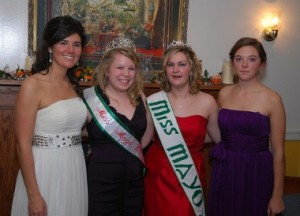
Kathleen Paulson, center; Katelyn D'Adamo, first runner-up, left; Miss Mayo 2009 Caitlyn Lotty; and Laura Clinton, second runner-up.

Kathleen Paulson, center; Katelyn D'Adamo, first runner-up, left; Miss Mayo 2009 Caitlyn Lotty; and Laura Clinton, second runner-up.

Early in the night, the crew at the Philadelphia Irish Center was rolling out extra tables. As the night wore on, if you had a tray full of drinks, you’d have a hard time making your way through the hordes of dancers that filled the floor.

That was the scene at the hugely successful 2010 Mayo Association of Philadelphia Ball last Saturday night. It was a night that saw the crowning of the new Miss Mayo, Kathleen Paulson, an accounting major at Neumann University, and the presentation of the President’s Award to Sister James Anne Feerick, I.H.M.

It’s hard to tell which was the greater highlight, so we’ll say both were. Sister James Anne is the longtime chaplain of the Mayos, a seasoned Catholic school educator and also a pretty fair dancer. (You’ll see her photos in our Flickr essay.) In addition to Ms. Paulson, the Mayo Association also named Katelyn D’Adamo first runner-up and Laura Clinton second runner-up.

As we say, we have a bunch of photos from the night, plus a neat little video of Olivia Hilpl’s Rince Ri School dancers, who performed for the crowd.

Check them out.

  • Watch the video.
  • Music

    Five Questions for Dana Lyn

    When Mick Moloney and friends take the stage (or altar) at the annual benefit concert for St. Malachy’s School, Dana Lyn usually is one of the guests. There’s no one sitting up there who isn’t gifted, but Lyn’s gifts are pretty interesting.

    She’s classically trained, with a degree in violin performance from Oberlin. At some point, one of her numerous online bios says, she “took a left turn” and was drawn to Irish music. The reality, though, is that her career has taken, and continues to take, many turns.

    Her own MySpace bio is mind-blowing: She’s played Carnegie Hall. She was cast as an onstage musician in the Public theatre’s production of “Hamlet.” She focuses on string arranging and composition. Her musical associations include The Green Fields of America, Dionne Werewolf, Bach Reformed and the Yeti String Quartet. And I could go on and on, but I invite you to read the whole thing for yourself: http://www.myspace.com/danalynfiddle

    Another one of those bios notes that “Dana was born in Los Angeles in 1974 to Taiwanese parents.” Lyn is one more of those non-Irish who has fallen head over heels for Irish music, enriching the tradition in ways that the old guys back in Clare and Sligo never could have predicted. (Pretty sure they’d like it, though.)

    Dana Lyn is one very busy musician, but we managed to snag her for a quick five questions. Here’s what she had to say.

    Q. How did you come to be in a Pogues cover band, and how did that influence your interest in Irish music?

    A. I was in a Pogues cover band in college. We played once a year, at St. Patrick’s Day. We thought it was a good idea to put a few instrumentals in the set, so we learned a few sets off an Altan record and that got me started. More importantly, Miles Krassen was the Judaic Studies professor at my college; he edited a version of O’Neills and is a fiddle player. He introduced me to recordings of Michael Coleman.

    Q. You’re certainly not the only non-Irish musician to play Irish music. What is there about Irish music, do you think, that speaks to people from a non-Irish background?

    A. That is a difficult question to answer if you’re speaking about the music itself, as an abstract, or a group of notes played in a certain way. Generally, I am attracted to music that either challenges or comforts. I know that I was attracted to Irish music largely because the context in which it is played was so different from the musical context I had grown up with; it was informal, community-based, and relaxed. Also I was intrigued by listening to music played on my instrument in such a different way than I was used to.

    Q. Once you discovered this interest, how hard was it to get into the scene?

    A. I never really thought about getting into a “scene.” All I wanted to do was listen to the music and learn tunes. So I went wherever there was a session, and lurked about, really; listening most of the time, especially in the first few years.

    Q. Who did you study with, and did you spend a lot of time honing your skill in sessions?

    A. I didn’t study with anyone. I listened to a lot of records—everything I could get my hands on, and a lot of field recordings and tapes of sessions. I spent a lot of time at home practicing and analyzing the recordings I liked the most. I spent a lot of time at sessions, of course, but in terms of ‘honing skills’ and learning—it was more about practicing at home in a quiet space, and playing with a few people whose music I loved.

    Q. You have a degree in violin performance, you have a classical background … and you play Irish music. How unusual is that kind of musical cross-pollination, really?

    A. I suppose people find it unusual—or perhaps impractical—that I decided to delve so deeply into Irish music after having spent so many years playing classical music. I like playing ‘art’ music and I also like to play ‘folk’ music, both for different reasons. I don’t think I would be musically fulfilled if I did just one or the other. It makes a lot of sense to me, and life is too short to just limit yourself to one way of doing things.

    Q. You’ve been involved in other projects outside of the classical. I’ve known classical musicians who have always and only played classical. How do you explain your diverse musical interests?

    A. My childhood hero was Ludwig van Beethoven, because he played the piano, the violin, and the viola, and was a conductor, an improviser, and of course a composer. It makes sense to me that to experience music fully, and to be a musician (which is all I have ever wanted to be), one would have to know it from all angles. So…. I play the piano, the violin, the viola; I play classical music, I play traditional Irish music, I back singer-songwriters, I work as a string arranger, I can improvise, and I spend a lot of time writing (and erasing) music. Maybe I have ADD or something. Probably.

    Music

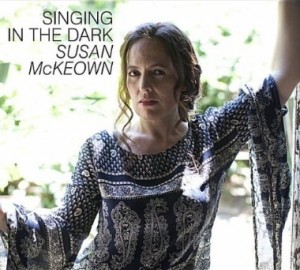
    Review: “Singing in the Dark,” by Susan McKeown

    Singing in the Dark

    Singing in the Dark

    The defining moment of “Singing in the Dark,” Susan McKeown’s moving meditation on the relationship between deeply debilitating mental illness and soaring creativity, comes toward the end of the recording, in a musical adaptation of the Welsh poet Gwyneth Lewis’s “Angel of Depression.”

    The words McKeown sings, Lewis’s words, are brutally unsentimental: “Don’t say it’s an honour to have fought with depression’s angel. It always wears the face of my loved ones as it tears the breath from my solar plexus, grinds my face in the ever-resilient dirt. Oh yes, I’m broken but my limp is the best part of me. And the way I hurt.”

    When McKeown hurls herself into the word “broken,” she tears through the upper registers like a razor blade through silk. In that single harrowing moment, you can begin to see depression for what it is at its worst, a soul-destroying cancer.

    This is strong stuff, in an album full of strong stuff. In “Singing in the Dark,” McKeown and her musical colleagues Frank London and Lisa Gutkin take on the daunting task of putting difficult words to music. The album celebrates the work of poets such as Anne sexton, Nuala Ní Dhomhnaill and and Theodore Roethke. Lord Byron makes an appearance. So do Leonard Cohen and Chilean singer-songwriter Violetta Parra. A recording industry pitchman might describe it as a tribute to troubled souls. It is far more than that.

    McKeown says she was inspired to make this album after reading Kay Jamison’s book, “Touched with Fire: Manic-Depressive Illness and the Artistic Temperament.” She also met with familiy members and friends of those suffering from mental illness, and she tapped into the melancholic themes that run like a dark vein through much of her native Irish music. Recording began in a studio on Ireland’s Achill island in August 2008. Thus emerged McKeown’s exploration of mental illness as the wellspring of creative genius.

    The source material is indisputably rich: Take, for example, Anne Sexton’s “Her Kind,” in which the poet casts herself in the role of madwoman-witch: “A woman like that is not a woman, quite. I have been her kind.” Or Roethke’s poem, “In a Dark Time,” which ponders life at the extremes but ends on a transcendent note: “A man goes far to find out what he is—Death of the self in a long, tearless night, All natural shapes blazing unnatural light.”

    Most of this material is not, by nature, “hummable.” None of this would work if the music didn’t just hold together, but hold its own with the world-class poetry. This, it does—in spades.

    Take, for example, “The Nameless One,” by 19th-century Irish poet James Clarence Mangan. With verses like the following, it’s hardly upbeat:

    “Him grant a grave to, ye pitying noble,
    Deep in your bosoms: there let him dwell!
    He, too, had tears for all souls in trouble,
    Here and in hell.”

    Amazingly, McKeown and colleagues deliver a wonderfully folky tune to accompany those words. The bouncy banjo treatment reminds me of Woody Guthrie’s “Gonna Get Through This World” on the group’s 2006 Klezmatics collaboration, “Wonder Wheel.”

    “The Crazy Woman,” based on the poem by Gwendolyn Brooks, is a revelation. If you think about the opening lines of the poem, “I shall not sing a May song. A May song should be gay. I’ll wait until November I shall not sing a May song. A May song should be gay. I’ll wait until November and sing a song of gray,” you may not be able to hear a jazzy little piano lounge tune in it. McKeown and friends did, and it’s a treat.

    I was wondering where I’d first heard the dolorous “In Darkness Let Me Dwell,” written by the lutenist John Dowland. It was on Sting’s 2006 CD, “Songs from the Labyrinth.” Susan McKeown’s version will easily make you forget Sting ever tried his hand at Madrigal singing.

    “The Crack in the Stairs,” based on the work of Nuala Ní Dhomhnaill, is a bit more challenging, both for the singer and the listener. It’s a dissonant modern piano piece written by Irish composer Elaine Agnew. Give it a chance. It fits the bleak material.

    And if not that, there’s more. The Latin standard “Gracias a la Vida,” by Violetta Parra, is a pretty piece. You may remember a Joan Baez version. McKeown’s version of Leonard Cohen’s “Anthem,” is performed with soulful elegance.

    That any song on the album would be sung otherwise is unthinkable. McKeown at her best is always balanced right on the edge: fragility on the one side, strength on the other. It’s perfect for material that is so emotionally weighted—and for painting a portrait of life at the extremes.

    People

    Immigration Center Gala Honors Immigration Activist

    Anne O'Callaghan

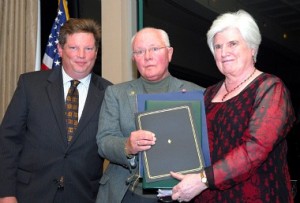
    Anne O'Callaghan, right, with her award. To her left is Liam Hegarty, president of the Irish Immigration Center board, and Wendell Young III (center), retired union leader and Welcoming Center volunteer.

    Nearly 200 people filled a ballroom at the Hyatt Regency on Penns Landing on Saturday, October 30, to see Anne O’Callaghan, founder of the Welcoming Center for New Pennsylvanians, receive the first ever Mathew Carey Hibernian Award in recognition of her years of service to the region’s immigrant communities.

    The award was presented by Melissa Hancock of the Mathew Carey Association, whose late husband was a descendant of Carey, an Irish immigrant from Dublin, an American patriot, and publisher. A protégé of Benjamin Franklin, Carey also founded the Hibernian Society for the Relief of Immigrants from Ireland.

    The award was the first ever to be given by the Irish Immigration Center of Philadelphia—and at its very first fundraising gala. Wendell Young III, longtime union leader and a Welcoming Center volunteer, brought the house down with his introductory speech in which said, “Nobody says no to this lady. When she sets out to get a program done it gets done. Her husband Sean said no to her once and look what happened to him.” He pointed to O’Callaghan’s husband, who was sporting a bandage around his eye. The crowd roared with laughter.

    Accepting her award, O’Callaghan said it was “absolutely beautiful and quite, I believe, undeserved.” She thanked members of her staff and her clients, then made reference to Young’s introduction. “You can always count on Wendell to stir things up.”

    O’Callaghan, a physical therapist who emigrated from Ireland in 1970, founded the Welcoming Center, which is a centralized employment and resource center for immigrants, in 2003. Since then it has served more than 7,000 immigrants from all over the world. She also founded a software company that serves the home health care industry. She is active in the National Alliance for the Mentally Ill and sits on the advisory board of the Southwest Community Enrichment Center.

    Music, News

    A Treat of a Halloween Party Does the Trick

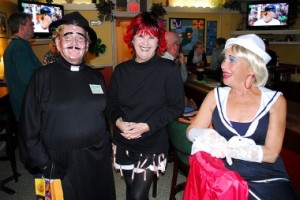
    Father John and his fellow merry-makers.

    Father John and his fellow merry-makers.

    My Samhain party at the Philadelphia Irish Center began with a weird proposition. A very creepy “Father John” offered to hear my confession.

    I respectfully declined. Maybe it had to do with the fact that Father’s face was clear and didn’t move. Eek.

    Samhain (SOW-en) is an ancient Gaelic festival that led indirectly to Halloween. So the Samhain Rambling House party was mostly an excuse for some people to dress up—everything from a Goth witch to a Cleopatra to a little Debbie Reynolds-esque sailor girl. (And let’s not forget Father John. We can’t.) For others it was a reason to dance to the music of Fintan Malone and Bob McHugh, who had their own Halloween gremlins to cope with in the form of an uncooperative sound system.

    For most of us, though, it was a great excuse to get together around the bar, swap gossip and laugh too much.

    Whatever … what a swell party it was!

    We have photos.

    Music

    Review: “Three Colours Ginger” by Brongaene Griffin

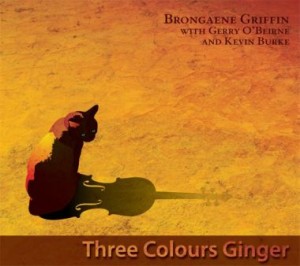
    Three Colours GingerA sun-soaked illustration of a cat casting a long violin-shaped shadow adorns the cover of “Three Colours Ginger” by Oregon fiddler Brongaene (Bronnie) Griffin. Most of the sets of tunes on the CD bear a feline-derived title: “Black Cat,” “Calico,” “Copy Cat,” and “Tortoiseshelled Chesire.” Between the musical tracks, the superb Irish fiddler Kevin Burke recites such odes to kitties as “The Cat of Cats,” “The Cats of Kilkenny” and even “The Owl and the Pussycat,” delivered in a voice like honeyed whiskey.

    Whimsically themed this new recording may be, but it is also seriously good. It could hardly be otherwise. Griffin cut her teeth on old-timey tunes, at which she excelled from an early age, but she is no less a whiz on Irish fiddle. She took instruction from Burke (which should say something), and he himself appears on two tracks. The master guitarist, singer and song-writer Gerry O’Beirne produced the CD, and he plays guitar and ukulele throughout.

    Some of the very best moments are those in which Griffin and O’Beirne play unaccompanied. (Check out track 3, ”In the Tap Room” and “The Foxhunter Reel;” track 5, a collection of slides, “Where’s the Cat,” “Behind the Bush in the Garden” and “The Cat Rambles to the Child’s Saucepan;” and the 10th track, “Margaret’s Waltz,” dedicated to Griffin’s sister.)

    Of course, there’s a lot to like about the sets in which Griffin has plenty of company. And good company it is. Griffin is joined by some high-powered traditional talent of the Pacific Northwest, including harper Elizabeth Nicholson, fiddler Bob Soper, Jim Chapman on bouzouki, guitarist Nancy Conescu and Johnny B. Connolly on button accordion. (Burke also resides in Portland, which apparently is knee-deep in world-class traditional Irish musicians.)

    I was especially fond of Nicholson’s bell-like handiwork on the opening track, Colorpointe (“The Cat in the Fiddle Case” and “The Fisher’s Hornpipe);” the second track, a set of jigs including “The Orphan” and “The Stray Away Child;” and track 8, another set of jigs fitted onto the tail-end (so to speak) of Burke’s recitation of “The Cats of Kilkenny.” Connolly and Chapman contribute a good deal of color and depth on the tracks on which they appear.

    Which brings up a minor point. All of the musicians appear in more places than the credits would indicate. The best example of that little oversight is Griffin’s sixth track, O’Carolan’s “Planxty Hewlett,” a lush waltz that reminds me a little of “Ashokan Farewell,” and even Pachelbel’s Canon in D. None of the accompanists is credited on this piece.

    The tune begins with a sure-handed Griffin and O’Beirne proceeding alone, but it builds in delicate, lacy layers—a second fiddle (could be Burke, could be Soper), then Connolly, and finally Nicholson. It’s my favorite number on the album, and it will bring to mind all the happy-sad moments of your life and leave you to dissolve into a puddle of weepiness. It’s a lovely, tender performance by Griffin.

    There are a few other faults in the credits but, really, it’s what’s inside that counts. You’re going to pay rather more attention to Griffin, who plays with confidence, poise and deep expression. (And she’s a musician with a conscience. The cat theme stems from her work in animal welfare, and a portion of the proceeds from the sale of this CD will benefit the Feral Cat Coalition of Oregon and Indigo Rescue, which rehabilitates rescued animals before they’re placed in adoptive homes.)

    You’ll be impressed by the ensemble work as well. The performance of Griffin and company seems less like a recording session than the spontaneous collaboration of a group of good friends at a traditional Irish music session.

    And that might be the highest compliment you can pay to any recording of Irish traditional music.

    News, People

    Bradley Accepts the Emerald Society’s Man of the Year Award

    Michael Bradley Emerald Award

    From left, Man of the Year Michael Bradley, Megan and Patsy McDonald, and Harry Marnie, president of the Philadelphia Emerald Society.

    If he does nothing else in his life, Michael Bradley is always going to be known as the man who, in the midst of a budget crisis that threatened the future of the Philadelphia St. Patrick’s Day Parade, simply refused to believe the old adage, “You can’t fight City Hall.”

    Last March, the city was demanding that the parade committee foot a hefty bill for parade-related municipal expenses. Either that, or no parade. Bradley, who directs the popular televised event, earned quite a rep for himself when, in return, he offered the city what amounted to a Hobson’s choice: a peaceful parade or an organized riot.

    The peaceful parade went on.

    The Philadelphia Emerald Society took note of Bradley’s gutsy accomplishment—and many other lifetime achievements—by naming him 2010 Man of the Year.

    Bradley has two demanding jobs: he’s president of a commercial flooring company and also a commercial real estate firm. He’s also well-known as a coach of soccer and several other sports. Bradley  also organizes the Penn’s Landing Irish Festival.

    Bradley accepted his honor last week on the same night Police Sgt. Patrick McDonald and his father Larry McDonald, a retired city fire department captain, received the group’s police and firefighter awards. Patrick McDonald was shot and killed in the line of duty in September 2008; Larry McDonald, a retired fire department captain, died of a heart attack April 7, 2010, while riding his bike in Northeast Philadelphia.

    The presence of the McDonald family was not lost on Bradley, who paid tribute to the fallen heroes.

    “It’s an honor to be in the same room with the McDonald family,” he said. “I can’t say enough about those two men (Patrick and Larry McDonald) and how lucky I am to be here tonight. It’s something I’ll never forget.”

    A proud Penn State grad, Bradley closes his e-mails with a quote from Joe Paterno: “Believe deep down in your heart  that you’re destined to do great things.” In the eyes of the Emerald Society, that’s just what he’s done.