Monthly Archives:

October 2014

How to Be Irish in Philly

How to Be Irish in Philly This Week

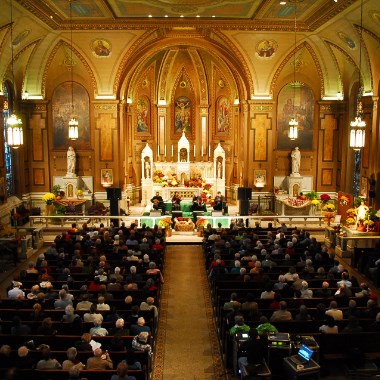
St. Malachy's Church: Great venue for a Mick Moloney concert.

St. Malachy’s Church: Great venue for a Mick Moloney concert.

There is so much Irish fun this week it will make your head spin. I’m going to have to go out on Halloween as the kid from The Exorcist.

First, there’s an intercollegiate Irish dance festival at Villanova (we’re fighting over who gets to go out and take photos) on Saturday, starting at 9 AM at the Jake Nevin Field House on campus.

On Saturday evening, the Mayo Ball takes place for the 109th time at The Irish Center. I’ve seen photos of the ballroom and it’s already sparkling in Mayo red and green.

Also on Saturday evening, Blackthorn in coming out for its 13th year in a row to raise money for little Kayleigh Moran (who’s not so little anymore). Kayleigh has a rare metabolic disease and the fundraiser helps with her treatment costs. The festivities are at Cardinal O’Hara High School in Springfield.

For our friends in Wilmington, you get Timlin and Kane at Katherine Rooney’ Pub on Saturday night—great music, terrific comedy.

And The Broken Shillelaghs will be appearing at Tavern on the Edge in Gloucester City, NJ, just over one of those bridges from Philly.

On Sunday, an event many of us wait for—Mick Moloney and Friends will be at St. Malachy’s Church in North Philadelphia for their annual Irish Concert. If you’ve never been, Moloney has some talented friends and the church is a jewel of a place with great acoustics for concerts. The money raised goes to St. Malachy’s School, a remarkable institution with a great track record for its alums.

On Wednesday, the Irish Minister for the Diaspora (that’s us) Jimmy Deenihan will be visiting The Irish Center, 6815 Emlen Street, Philadelphia, at 10 AM. All are invited.

On Wedneday evening, Dublin singer-songwriter Declan O’Rourke and Tyrone’s Mickey Coleman will be appearing at St. James Episcopal Church in Lancaster in a tribute to the dead of Duffy’s Cut, 57 Irish immigrants who died or were killed while working on the railroad in Malvern in 1832. Joe Devoy, himself an Irish immigrant and owner of Tellus360, a concert venue in Lancaster, will perform a spoken word piece about Duffy’s Cut. This is a WXPN and Tellus360 concert.

On Friday, November 7, Pearse Doherty, finance spokesperson for Sunn Fein and TD for Donegal South West, will be speaking at The Irish Center on current economic and other conditions in Ireland today.

Also on Friday night, Jamison will be performing at AOH 39 on Tulip Street in Philadelphia.

Next weekend, the Celtic Cultural Alliance in Bethlehem is sponsoring a Fest-Noz, a traditional dance gathering from Brittany, much like a ceili, at Sts. Simon and Jude Parish Hall in the city. Brittany is one of the “seven nations” that traces their roots back to Celtic culture.

Next Sunday, the Delaware Valley Irish Hall of Fame will be honoring the Philadelphia Ceili Group’s Jim McGill, former publican and Irish cultural promoter Emmett Ruane, and Bill and Frank Watson, twin brothers who brought the tragedy of Duffy’s Cut to light. A special new award, The Barry Award, will be given posthumously to Commodore John Barry, born in Wexford, who lived in Philadelphia and fought valiantly in the Revolutionary War. He is considered the father of the US Navy.

For more information on these events and others, see our calendar. Tell it we sent you.

News

The Top 10 Irish Coverlines Cosmo Never Wrote

Top o' the morning to ya, big fella

Top o’ the morning to ya, big fella

If you read the cover of Cosmo while you’re standing in line at the drug store or the supermarket, you know the magazine is famous for the cheeky, which is not to say that they’re obsessed with butt size, headlines that appear on its cover. Here’s one memorable example:

How Could He Have Left Me for That Brainless Sex Kitten?

It’s really hard to see how we could improve on that one, but we tried.

Here from the home office in Horseleap, County Offaly, the official irishphiladelphia.com Top 10 Irish Coverlines Cosmo Never Wrote:

  1. The 48-Hour Guinness Cleanse—It Really, Really Works!
  2. How to Get Him to Stop Calling You “Spud”
  3. Fashion Alert: Do I Look Fat in This Kilt?
  4. 13 Kinky Irish Dance Moves
  5. When a Guy Wears Curly Irish Dance Wigs: He Can Be Helped
  6. Enya: I Have a Thong in My Heart
  7. Boxty in the Boudoir: Betcha Didn’t Know Potatoes Were Aphrodisiacs!
  8. When Irish Eyes Are Leering
  9. Seduce Me, I’m Irish!
  10. 9 Fiddle Tunes that Will Drive Him Crazy!
How to Be Irish in Philly

How to Be Irish in Philly This Week

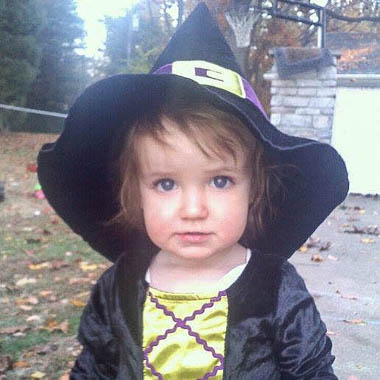
Hannah Griffin of Newtown Square is ready for Samhain--are you?

Hannah Griffin of Newtown Square is ready for Samhain–are you?

A Halloween-themed beef-and-beer, the first of several fundraisers for the Philadelphia St. Patrick’s Day Parade, takes place this Saturday at St. Denis Church Hall in Havertown. Wear a costume—there are prizes!

And don’t forget, this week is also Samhain (pronounced sow-in, it’s Irish for Halloween). It’s traditional to eat barmbrack to celebrate this end-of-summer holiday. It’s also traditional to have plenty of candy on hand for the ghosts, ghouls, goblins, and Disney princesses who come to your house and yell, “Trick or treat!”

“A Night with Lady G,” featuring three plays by Irish playright Augusta, Lady Gregory continues this week at Plays and Players Theater in Philadelphia, as does “The Weir” by Conor McPherson in Jenkintown.

On Sunday, there’s a ceili at the Irish Center in Wilmington, a ballad session at Fergie’s in Philadelphia with John Byrne. You can ask John about his upcoming tour of Ireland—one you can join!

Irish language classes continue at Villanova on Monday.

Next Saturday is a biggie. There’s an Intercollegiate Irish Dance Festival at Villanova Field House, the 13th Annual Ceili for Kayleigh, a Blackthorn fundraiser for a young girl with a rare disease, and the 109th Mayo Ball will be held at the Irish Center.

And on Sunday, former Limerick and Philadelphia resident, musician Mick Moloney, will be bringing some talented friends to the city for a concert, an annual event to raise money for St. Malachy’s School in North Philadelphia. The event is held in the magnificent church, built more than a century ago by Irish immigrants.

News, People

Philadelphia City Council Honors Its Rose

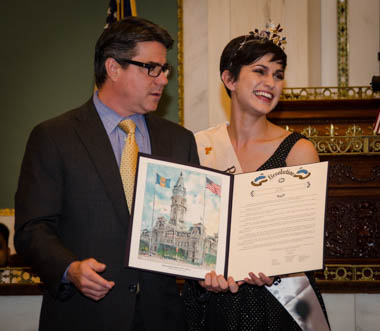
Philadelphia City Councilman Bobby Henon and Rose of Tralee Maria Walsh

Philadelphia City Councilman Bobby Henon and Rose of Tralee Maria Walsh

The Philadelphia City Council on Thursday honored International Rose of Tralee, Maria Walsh of Philadelphia, with a proclamation congratulating her on bringing the Rose crown to the city.

The event occurred during the regular business meeting of the council on the fourth floor of City Hall. Walsh brought a cheering section with her, including Karen Conaghan Race of the Philadelphia Rose Center. Walsh, who was born in Boston, raised in Shrule, County Mayo, and now makes Philadelphia her home, was the first Philadelphian to become an International Rose since the center started a decade ago.

Since she was crowned in August, Walsh, who is studio manager at Anthropologie, a fashion brand headquartered in Philadelphia’s Navy Yard complex, has been shuttling back and forth between the US and Ireland. And on Friday, she was scheduled to leave for Calcutta, India. for a week-long stint with Hope Foundation, a nonprofit that works with vulnerable children and families.

Below you can see some of our photos from “Rose of Tralee Day” in Philadelphia this week.

[flickr_set id=”72157648936035511″]

News, People

McKenna’s Irish Shop Is Saying Goodbye

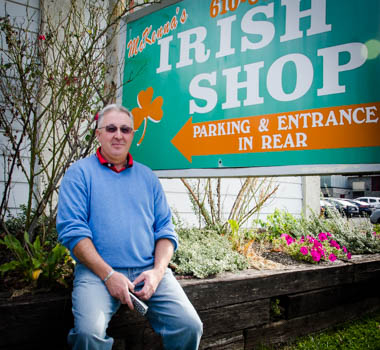
Pat Durnin, outside McKenna's Irish Shop in Havertown

Pat Durnin, outside McKenna’s Irish Shop in Havertown

McKenna’s Irish Shop started in Anne Gallagher McKenna’s tiny living room more than 35 years ago, when neighbors would traipse in on Friday night to see the sweaters, mittens, scarves and vests Anne had knitted and place their orders.

“She’d clear off the dining room table and there’d be sweaters and scarves all over the table, the couch, hung up in the corners,” recalls her son-in-law, Pat Durnin, who with his wife, Nancy, eventually took Mrs. McKenna’s little business and ran it in Ardmore, in the current location on Darby Road in Havertown, and, for seven years, in Sea Isle City, NJ.

In the old days, customers would find Mrs. McKenna sitting at a table in the middle of her store, having a cup of tea and knitting. Many would sit down with her and share a cup. “At Christmas, you got a little shot of whiskey,” remembers Durnin with a smile.

But those were other times, before the heady economic days of the Celtic Tiger sent salaries and prices soaring in Ireland and altered the face of Ireland’s cottage industries. Anne Gallagher McKenna died two years ago. The store that bears her name will close by Christmas this year, the victim of what Durnin calls “a perfect storm” of economic forces that has reduced the number of Irish shops in the US from 500 to less than 200. Locally, the Glenside Irish Shop closed over a year ago and two other stores seem to be faltering, says Durnin.

“In Ireland, wages went up, the cost of goods went up, and the cottage industry fell. A lot of the older people [who made Irish goods] have died off,” said Durnin this week, as two women looked over the sweaters and jewelry in the five-room store with its homey fireplace and sunny windows. “It’s expensive to pay people to stay out of the workplace to knit sweaters. It took Mrs. McKenna 40 hours to knit a sweater—that’s a week’s wage.”

That’s the reason why a fine Aran sweater can now cost $300 or more. When Mrs. McKenna began her business, says Durnin, it was before the Internet and email and she would personally visit knitters all over Ireland, most of them homemakers who were “happy to make a few extra shillings for the family.” The cost of making the woolen goods wasn’t as high as it is today.

Then, in 2008, the world economy crashed. Suddenly there wasn’t any money for extras. Waterford Crystal—that fallback wedding gift—went into bankruptcy. Companies that made Irish goods “couldn’t afford to make it at home so they went offshore,” says Durnin. “People don’t want to buy something Irish that’s made in Indonesia.”

And people changed too. “The table top industry crashed,” says Durnin. “You couples aren’t buying 12- piece sets of Beleek china. Most of them don’t have dining rooms, unless they have McMansions, and even if they do, they don’t want to have to store it for the times when they use it. They pick out something that they’ll change every five or 10 years when they don’t like the pattern anymore.”

The store phone starts to ring and Durnin excuses himself to answer it. The call illustrates yet another pressure on McKenna’s and other Irish shops—the price of gold. The woman on the phone wants a St. Brigid’s Cross in gold as a gift for her niece, who is making her confirmation. He doesn’t carry them in stock, he tells her, a pained look spreading across his face. But yes, he can order one for her. He hangs up the phone. “Wait till she see the price,” he says, shaking his head.

Gold jewelry, particularly wedding ring sets, used to be a big part of the shop’s business. “There was a time when Irish wedding rings, like Claddaghs, were really hip and we sold so many of them, even to people who couldn’t even spell Ireland,” says Durnin. “Then, a popular ring set for both man and woman would cost $700. Today, a lady’s ring alone is $900. For the past three years, the price of gold has gone up and up to $2,000 an ounce at one point. “

Not only can’t many couples afford them, there’s a smaller profit for the retailers, says Durnin.

And the last “piece of the puzzle,” as Durnin puts it? Probably the Internet, where today you can get everything from groceries to a date for Saturday night.

“I understand that. We have two sons, 23 and 28, and the older one doesn’t know what the inside of a store looks like,” says Durnin, laughing ruefully. “I talked to a lot of people about it and the local community doesn’t really realize what happens when you you’re not supporting local businesses. Mom-and-pop stores are the lifeblood of a community,” he says.

For one thing, without them, downtowns become nothing more than strip malls of franchises selling Starbucks’ coffee, Subway sandwiches, and Hallmark gifts. Neighborliness, the personal touch—seeing a storeowner knitting while drinking her cuppa, for example—is part of the social fabric of a community, its charm. When the change comes, as it has to many communities across the US, that element of a town, unquantifiable for the purposes of a spread sheet, becomes lost forever.

Durnin and his wife didn’t make their decision overnight. “It took us a long time to come to this reality,” he says. “We really did this as a labor of love, but financially, it wasn’t going to be a good finish. We decided that we had to make this decision with our heads, not our hearts.”

He made the announcement earlier this week on Facebook. “I had to have a few cocktails after I hit send,” he admitted.

The store will remain open through the Christmas season and after that, Durnin says, he’ll be moving ahead with another plan—one that might keep McKenna’s corner as Irish as it is now. But it’s still in such an early stage he doesn’t want to talk about it. “We’re pretty excited about it,” he says. “I hope it works.”

Food & Drink, News, People

A New Brew Pub Comes to Town

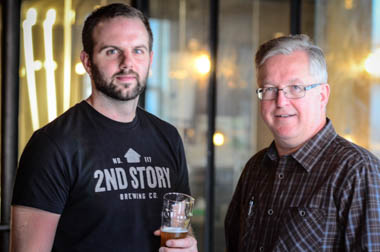
Second Story's John Wible and Ken Merriman

Second Story’s John Wible and Ken Merriman

The twos were just too overwhelming to ignore.

When native Dubliner Ken Merriman was looking for a name for his new brew pub, Second Story Brewery seemed like a natural. It’s at 117 Second Street, a few steps from Front Street, in Philadelphia’s Old City neighborhood. The gleaming stainless steel brewing vats that once held Triumph Brewing’s craft beers are on the second floor of the 19th century former cotton and silk warehouse.

And it’s a second story—meaning a real passion for something–for Merriman, his partner, Debbie Grady, and brewer John Wible. “Deb is a farmer (Tilted Barn Farm in Pottstown) and we’re going to be using the wheat, hops, barley and probably yeast from her farm to make the beer,” explained Merriman last week during an invite-only preview that served as a dry run for the pub. “John is an IT guy in Cherry Hill who started as a home brewer. And me, I’ve been drinking beer all my life and now I’m making it!” He laughs.

It’s a second story in another way for Merriman, who grew up in the hotel/restaurant business. It’s his second Philly restaurant adventure. He was until fairly recently the general manager and partner at Tir na Nog at 16th and Arch and continues to run District Riverton Bistro in Riverton, NJ, where he lives.

Serendipity brought the three together. Merriman and Grady met years ago on the rugby field while watching their sons play for St. Joseph’s Prep. Wible is married to Grady’s daughter who started him on his obsession with beer making when she suggested he “find something to do with my time” while she was living temporarily in Vancouver.

“I didn’t know anything about home brewing but then I found a place close to my office that sold the equipment,” says Wible, 29. “Within two months, my new hobby had become a serious obsession.”

It was something of a learning curve to go from making 10 gallons to 500 gallons, but Wible started brewing and testing his own tried and true recipes on a grander scale for Second Story back in July and has 8-10 winners that will be available, along with a few ciders and six outside beers, including Guinness, and a test line done in 10 gallon batches. There’s also a beer engine at the bar for naturally carbonating beer as it’s pumped from the cask which adds a different texture to the beer, explains Wible.

“He’s really not happy about that Guinness,” Merriman confided later with a grin. “He says he’s working on a good dry Irish stout for me so we may be carrying that.”

Like the craft beer, the food is also farm-to-table, including an imaginative array of “bar bites” like black bean egg rolls, sliders with tomato jam and manchego cheese, and grilled wings that are brined, then baked, then grilled.

And the venue, warmed by oak floors, exposed brick walls, a working fireplace, and heavy fire doors that date back to its warehouse days, does double duty—both as a restaurant and event space. There’s a large room with a separate bar upstairs that can handle large parties.

Surprisingly, in a big beer town like Philly—where one section of the city is called Brewerytown—there are only a handful of brew pubs so Second Story doesn’t have lots of competition and certainly not in its neighborhood.

“Philly is a huge craft beer town but what it has is craft breweries,” says Merriman. One of the latest, for example, is St. Benjamin’s in Kensington, where they brew and deliver beer to local bars but don’t yet have a pub (one is in the planning stage). “If you go to a place like Denver, for instance, there are brew pubs on every corner,” Merriman says.

The brew pub is even catching on in Ireland, where traditional pubs are in decline. “I got a great laugh the last time I was in Ireland,” Merriman says. “The Irish were always trashing American beer. When I was back there in February and on the computer researching brew pubs, when I came across six or seven of them in Ireland and they were all advertising ‘American style craft beers.’” He laughed. “I just loved it.”


[flickr_set id=”72157648404266970″]

Arts, History, Music, News, People

Duffy’s Cut: A Voice in the Arts

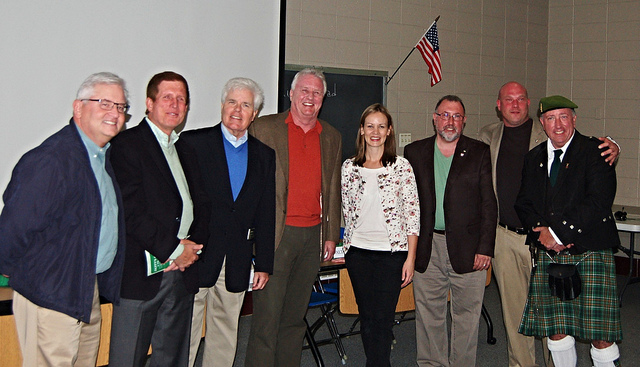
Matt Patterson, Walt Hunter, Bill Daly, Pat McDade, Anna McGillicuddy, Bill Watson, Earl Schandelmeier and Frank Watson

Matt Patterson, Walt Hunter, Bill Daly, Pat McDade, Anna McGillicuddy, Bill Watson, Earl Schandelmeier and Frank Watson


They’ve been called the “forgotten souls” of Duffy’s Cut, but the 57 Irish railroad workers whose deaths in 1832 remained a mystery for nearly 180 years are now well on their way to achieving immortality.

The story of the immigrant laborers hired by Philip Duffy to work Mile 59 of the Pennsylvania-Columbia Railroad in Malvern, PA, but who died within six weeks of their arrival and were buried in a mass grave alongside the tracks, has captured the interest of the news media since it first came to light through the efforts of the Duffy’s Cut Project, led by Bill and Frank Watson, Earl Schandelmeier and the late John Ahtes.

But the story is far from finished (there is still much excavation work to be done, DNA testing, historical and genealogical research), and the impact of the discovery of the Duffy’s Cut site has significance that demands an audience far beyond the one it’s already found.

Irish Network Philadelphia President Bethanne Killian, who is also deeply involved with Duffy’s Cut, realized that the project has established a voice in the Arts. To promote awareness of the presence it’s found in film, music, theater, painting and literature, as well as to raise funds for the continuation of the work, she organized “Duffy’s Cut & the Arts: A Symposium.” Held at Immaculata University, where Bill Watson is both a professor and the History Department Chair (and it’s also the home of The Duffy’s Cut Museum as well as the center of the project), the Symposium was a daylong event that focused on the artistic achievements that are bringing Duffy’s Cut into greater public awareness.

“I’m still amazed at the number of people from the Philadelphia area who are completely unaware of Duffy’s Cut,” Bethanne explained. “Anyone I’ve shared the story with who hears it for the first time is fascinated and appalled. We need to get the word out there—this isn’t just for history buffs. This is a human story—and given its reach into the art world—the humanities as well.”

With an appearance by Irish Vice-Consul Anna McGillicuddy, who braved the trip down from New York for the occasion, the Symposium officially was underway.

Throughout the day, there was music provided by Vince Gallagher and his Band, Marian Makins (who sang Wally Page’s haunting song “Duffy’s Cut”), Pat Kenneally (who sang her original song “Duffy’s Cut” that won first place in the 2013 Pennsylvania Heritage Song Writing Competition), Karen Boyce McCollum, Rosaleen McGill, the band Irish Mist and Bill and Frank Watson on the bagpipes.

There were readings by poet John Bohannon who recited three poems from his collection, “The Barmaids of Tir na Nog,” writer Kelly Clark who has a forthcoming book called “Duffy’s Cut—A Novel” and writer Kristin Walker whose forthcoming book is titled “Between Darkness and the Tide.”

Maria Krivda Poxon performed scenes from her play “Ghost Stories of Duffy’s Cut” with actor Mal Whyte, there were showings of the documentaries “Ghosts of Duffy’s Cut” and “Death on the Railroad” and the presentation of the music video “57” from Kilmaine Saints.

A lot of interest was generated by the panel discussions. The first was “Duffy’s Cut and The Pennsylvania Railroad” with Bill and Frank Watson and Earl Schandelmeier. The second was titled “Duffy’s Cut: Why It Matters” featuring CBS3 news reporter Walt Hunter, film producer and director Bill Daly and actor and Drexel University Film Studies Professor Pat McDade.  Daly and McDade have partnered to form their own production company, Duffy’s Cut Films. They have three feature films in development, and first up is a movie based on Duffy’s Cut. They have the script written, and filming is scheduled to begin in Ireland in April of 2015.

Walt Hunter, who was the first Philadelphia area reporter to cover the Duffy’s Cut discovery explained why the story resonated with him from the beginning. “This was a no-brainer for me. My grandfather was a railroad engineer. He came over from Ballina in County Mayo…it is a very captivating story…at it’s most basic level it is a deeply human story of people with a hope, a dream…and everybody dead within six weeks.”

It was Pat McDade who summed up the the motivation behind the upcoming film he and Bill Daly are developing. “These guys who died, these 57 men, they’re the real Irish story, and we never hear that…here is the beginning of it. Because there are 8,000 other stories out there, about these hardworking, honest people that come to try and find America and don’t find it. And then some of them do. And we’ve got to make sure to get the story told.”

A CD titled “Songs of Duffy’s Cut” was introduced at the Symposium, with all proceeds going to raise money for the Duffy’s Cut Project. It will be available at future Duffy’s Cut events and may also become available for purchase online.

Check out our photos from the day’s events:

[flickr_set id=”72157648281641087″]


Food & Drink, People

Memorable Monthly Mondays: The Senior Luncheon at The Irish Center

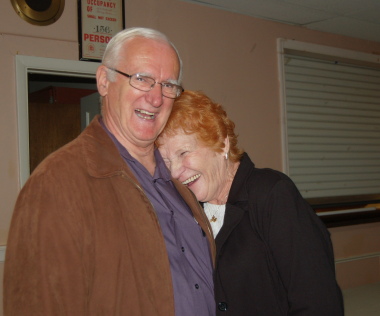
Sean McMenamin & Kathleen Murtagh Sharing a Laugh at the Irish Center Senior Luncheon

Sean McMenamin & Kathleen Murtagh Sharing a Laugh at the Irish Center Senior Luncheon

They call it the “Senior Luncheon,” but organizer Sean McMenamin thinks they need to come up with a more  dynamic moniker to characterize the monthly lunches at The Irish Center in Mt. Airy.

And anyone who has attended one of these social gatherings would agree that there is nothing “senior” about the energy and camaraderie that fill the room.

Co-sponsored by The Irish Immigration Center of Philadelphia and The Commodore Barry Irish Center, and subsidized by the Irish government, the lunches take place at noon one Monday each month, and there is no cost to attend. There are also volunteers who coordinate a transportation schedule for those who want to attend, but don’t have a way of getting there.

The Immigration Center has held weekly luncheons for seniors for years at their home in Upper Darby, but Sean reached out to Siobhan Lyons, the Center’s Executive Director, to arrange an additional lunch at The Irish Center. “We started about 4 years ago, with 36 people attending the first one, and now that it’s been established, we get a regular crowd of about 100 people coming,” Sean explained.

So popular has the luncheon become, that in addition to the newsletters from the Immigration Center, there are also informal pipelines in place to make sure everyone knows the date of the upcoming lunch. Mary Cannon, of Hatboro, has a regular group of 10-18 people she brings with her. She calls her friends after she confirms the date with Leslie Alcock, the Director of Community Programs at the Immigration Center, and they get there about an hour early to make sure they can get their two tables. “I’ve been coming since they started the lunches. It’s really marvelous. They do a great job, the food is marvelous and I get to have lunch with all my friends,” she said.

Mary Jane Rogers and her husband Ted (a former president of the Mayo Society), are also devoted attendees. “We come pretty much every month. It’s a wonderful thing. I don’t know how they do it—and they don’t charge. There is always an abundance of good food. And they do a 50/50 raffle every month, with different prizes.” They usually share a table with their friends from the Irish Community: Betty and Tom Broderick, Arline and Wayne McKeever, Mike Lyons and Jim McDonald.

Talk to anyone at the luncheon, and the reaction is the unanimously the same: It’s a great time. Tom Staunton, who was among those who were at the very first event at The Irish Center, the Mayo Ball in November of 1958, expressed it this way, “It’s a social gathering. You get together with people you don’t see all the time, people you’ve known for a long time in a nice setting.”

Chickie Harvey (real first name Helen), is another regular. “I’ve been coming here for years. My husband Charles was a manager here for 2 years about 25-30 years ago, before he got sick. Now I come to these luncheons, and it’s a real good time. I’ve met a lot of nice people.”

Because the luncheons aren’t just for folks who have been lifetime members of the Irish Center; among the group that Mary Cannon brings with her are friends who were initially unfamiliar with the Mt. Airy home to the Irish community. But once they started to attend the luncheons, they’ve been coming back ever since. “It’s a welcoming place,” one of them said. “I just enjoy everything about it.”

For more information on which Monday of the month the luncheon will be held, or for assistance with transportation, contact Leslie Alcock at The Irish Immigration Center of Philadelphia at 610-789-6355.

And take a look at the fun that goes on there:

[flickr_set id=”72157646488794014″]