Monthly Archives:

January 2009

News

Brother, Can You Spare a Dime?

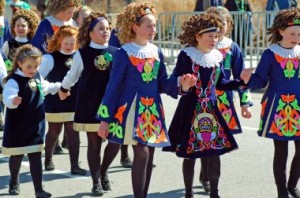
Keep these girls marching and dancing.

Keep these girls marching and dancing.

Like everything else, the Philadelphia St. Patrick’s Day Parade has fallen on some hard times, largely because of the city’s huge budget deficit.

This year, says parade director Michael Bradley, city officials said they couldn’t pick up the expense for police and post-parade cleanup, which leaves the parade committee about $40,000 short. “We’ll do it, that’s all, I’m pretty much an optimist,” says Bradley. “But it will be difficult to come up with that money in a short period of time.”

The parade is scheduled for Sunday, March 15.

In past years, the parade association has paid for things like bleachers, stands, and portable toilets “that other parades don’t pay for,” says Bradley. That makes these additional costs (which include police over-time) more onerous.

“We’ve had the suggestion that we charge participants more money, but the city really didn’t give us a lot of turnaround time so I don’t think I want to do that to the groups,” says Bradley. Instead, he and committee members want to do some old-fashioned fundraising, hitting up the high rollers and the low.

“I was honored a couple of years ago by the March of Dimes and I hadn’t really thought about their name and how they raised money by collecting dimes,” he says. “Nickels and dimes count too.”

So, check around the house. Donate the jar of change on the dresser, the coins you can find by fishing around underneath the cushions of your chairs and couch, the ones that jingle at the bottom of your purse and pocket. If you have some spare change to donate, contact Bradley at info@philadelphiastpatsparade.com.

Columns, How to Be Irish in Philly

How To Be Irish in Philly This Week

It’s almost too quiet out there. Oh, if you don’t count the sessions that run every night of the week in the Philadelphia region. We’re lucky. A reader recently asked us about sessions in Atlanta where he was heading on a trip. We did a little search and didn’t turn up much. Oh, they have their Irish pubs, but most of the music is either provided by DJs or patrons using the karaoke machine. Now, there’s a little bit of hell for you.

There is one great event this weekend you won’t want to miss. The Next Generation, a group of local youngsters who are following in the footsteps of some of the great session musicians we have here, will be performing at the Garden State Discovery Museum in Cherry Hill on Saturday.

And we have one correction. The Ambassador’s and Taoiseach Awards luncheon of the Irish American Chamber and Business Network that has appeared on our calendar for this Sunday is actually scheduled for February 27. We apologize for the error. So don’t be showing up at the Ritz Carlton this weekend.

Since there’s a light schedule now, we want you to rest up, because the events are starting to build up in February and March, when you won’t have a moment to even think. But if you have some time, get out for a pint and some craic at your local Irish pub. They need the business, and we need them.

On the horizon: The World Irish Dance Championships are coming to Philadelphia in early April (thousands and thousands of curly wigs—imagine it!). To get yourself ready, there’s a regional dance competition next Saturday at the Irish Center you an attend. Trust us, it will put a smile on your face. And we need that too.

Check out our calendar for all the details. Most of them correct, we hope.

People

Meet the 2009 St. Patrick’s Day Parade Grand Marshal

Never make the mistake of calling Philadelphia’s Irish Memorial at Penn’s Landing the “famine memorial” in front of Jim Coyne. To Coyne, those dark years in Irish history when millions died and a millions emigrated to America, had nothing to do with famine. It was “starvation,” he says. What the Irish call “an gorta mor,” the great hunger. His great grandfather was one of those immigrants, a farmer who left his home in Connemara, County Galway “because the choices were clearcut—either you left or you starved to death.”

The truth, as Coyne points out, is that “only one crop failed”—the potato, on which the Irish were entirely dependent for food. “There were other crops that were exported to other countries while the Irish starved,” he says. “When you call it a famine, it’s as if you were blaming God for it. It wasn’t God. It was the English.”

When Jim Coyne looks at the sculpture by artist Glenna Goodacre, he sees in the 35 bronze figures—men, women, and children—ordinary people forced by prejudice and politics to become adventurers, people who climbed onto what were known as “coffin ships” to leave horror behind and sailed, some bravely, most terrified, into the unknown. Like his great-grandfather, who wound up in the coal mines of Pittston, PA, where Coyne grew up.

When others look at the memorial, they see Jim Coyne, president emeritus of the Irish Memorial Inc., who spent 13 years of his life working to see it built. “He’s an unsung hero,” says Michael Bradley, former president of the Philadelphia St. Patrick’s Parade Observance Committee, which chose Coyne as Grand Marshall of the 2009 parade. “Not only did he come up with the vision, he put together the team to raise the money—more than $3 million. I know how hard it is for me to raise the money for the parade, which is a fraction of that. I admire that he never gave up. Whenever I hear his name, I think ‘Gentleman Jim.’ He’s the perfect gentleman, and he’s a great human being.”

Coyne was at the meeting of the board of the Friendly Sons of St. Patrick in the late 1980s when historian Dennis Clark, PhD, author of “The Irish In Philadelphia,” proposed that a memorial be built in the city. “At the time, the only memorial to the starvation was in Quebec,” says Coyne. If anyone had had any doubts that one was needed, Coyne erased them when he asked the men in the room what they knew about the events that led to the Irish diaspora. “Only one person had a grasp of what happened. The rest said, ‘There was a famine and the Irish starved.’ So we knew there was room for education.”

Coyne, who heads his own company (Coyne First Aid, which teaches basic life support to diverse groups across the country), suddenly had a new job that would take more than a decade to complete. Originally, the Friendly Sons and the Memorial group that grew out of it wanted the memorial in place for the Sesquicentennial of the An gorta mort, 1995-2000, but the amount of money that needed to be raised pushed the unveiling to 2003.

He remains in awe of many of the organizations that supported the memorial from the beginning—so in awe, that he joined them. For example, he’s a member of the Ancient Order of Hibernians Sean McBride Division 2 in Glenside although he and his family (with wife, Ginny, he has 5 children, 18 grandchildren and 5 great grandchildren) have lived in Hilltown, Bucks County, for 30 years. “They passed out pamphlets during the St.. Patrick’s Day parade, collected money, held fund-raisers—I thought, I’d like to be involved with an outfit like that.”

Over the years, he’s also been president of the Galway Association, a member of the Irish Society, and is director emeritus of the Friendly Sons, which was founded in Philadelphia in 1771 and counted among its early members Commodore John Barry and at least nine other military men who distinguished themselves in the War of Independence.

But it may be the memorial of which he’s most proud. “When I look at it, I feel great personal pride,” he admits. “In the beginning, every time I would walk away from it I felt like I was leaving a child.”

“It’s a lasting contribution to the city of Philadelphia that will be there forever,” says Michael Bradley. “Jim has left his mark and a legacy to Philadelphia that will endure.”

And while his family is proud of Coyne’s work in the Irish community, his selection this year as parade grand marshal has created even more enthusiasm.

Last year, four generations of his family marched in the parade. This year, they may do some riding.

“When John Cardinal O’Connor of New York was grand marshal of the New York parade, he said, ‘My family is more excited and enthused about me being grand marshal of the parade than when I was made a cardinal.’ That’s true for me too,” he laughs.

Columns, How to Be Irish in Philly

How to Be Irish in Philly This Week

The Irish are Celtic. TheScots are Celtic. So it’s not a far stretch for an Irishman or woman to celebrate the 250th birthday of Scotland’s beloved poet, Robbie (or Rabbie) Burns.

This is a man (a very handsome man, if his portraits are any indication) who once wrote a poem to a haggis which, in case you didn’t know, is a Scottish dish made from sheep intestines stuffed with sheep’s heart, lung,and liver with spices and oatmeal. (Now, now, the Scots might experience a little bile in the craw if you told them about scrapple.)

Here’s how Rabbie felt about stuffed sheep’s intestine:

“Fair fa’ your honest, sonsie face,

Great chieftain o the puddin’-race!

Aboon them a’ ye tak your place,

Painch, tripe, or thairm:

Weel are ye wordy of a grace

As lang’s my arm.”

We wouldn’t be surprised if there’s haggis on the menu somewhere in Bethlehem this weekend as the city celebrates Burns’ big one. They’re kicking it off Friday night, January 23, with an art show, poetry reading, and other events at the Hotel Bethlehem. On Saturday, there will be a lecture and supper (look for the haggis there) at the Hotel on Bethlehem’s Main Street, and a whiskey tasting cross the street at Donegal Square/McCarthy’s Tea Room. On Sunday, at the Braveheart Highland Pub in nearby Hellertown, there will also be a Burns supper featuring kilts and music.

Sligo Pub in Media is still offering free Gaelic lessons on Monday nights. And on Friday, popular local duo Gerry Timlin and Tom Kane (we love them!) will be appearing at The Shanachie Pub in Ambler, where Timlin is part-owner and genial host.

Just a peek at the following week: Those wonderful pint-sized musicians called The Next Generation will be performing at the Garden State Discovery Museum in Cherry Hill next Saturday, January 31 for the museum’s Irish American Children’s Festival.

On Sunday, February 1, the Irish American Chamber and Business Network will be giving out its 2009 Ambassador’s and Taoiseach’s Awards to ICON PLC and ICON Clinical Research, headquartered in North Wales and Warrington, and John and Joan Mullen of Apple Leisure Group and AppleVacations respectively.

Speaking of business, we’re going to take this opportunity to again urge you to eat, drink, and buy Irish. If you’re a local business owner, let us know what you’re doing to bring in the crowds and separating them from their money and we’ll mention it here.

For example, we think Kildare’s idea of offering a bottomless bowl of stew for only $10.99 is great and we told you about it here last week. Brittingham’s Irish Pub in Lafayette Hill is offering “recession proof prices” for food and drink specials during the week: On Tuesdays, enjoy burgers and fries for less than $5 from 4 to 10 PM, and prime rib for under $20 on Thursdays, when appetizers are half price and beers are $3.

Can you say “free advertising,” boys and girls? Email us!

Music

They Do Make Beautiful Music Together

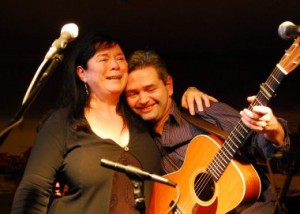
Mary McPartlan gives Aidan Brennan a hug.

Mary McPartlan gives Aidan Brennan a hug.

When they met last year during the Willie Clancy Summer School in Miltown Malbay, County Clare, singers Susan McKeown and Mary McPartlan vowed they would one day perform together. Lucky for us, they kept their promise.

The two, accompanied by remarkable Irish guitarist Aidan Brennan, sang separately and together on the stage at the Irish Center in Philadelphia on January 10. McKeown, who won a Grammy for her work with the New York-based klezmer group, The Klezmatics, performed an eclectic mix of Yiddish and Irish tunes along with her own inspired songs. McPartlan, whose voice has been compared to that of Dolores Keane, did several sean nos or unaccompanied traditional tunes, and even did a little rocking out. The two women and Brennan sang one song together in tight, gorgeous harmony.

But don’t take my word for it. Watch and listen.

Check out our videos.

View our photos too:

News, People

Walking in Friendly and Historical Footsteps

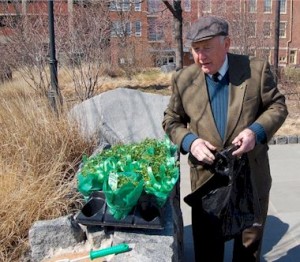
Ed Last, helping with St. Patrick's Day plantings at the Irish Famine Memorial.

Ed Last, helping with St. Patrick's Day plantings at the Irish Famine Memorial.

What does Ed Last have in common with George Washington’s bodyguard, Stephen Moylan? Moylan was the very first president of the Society of the Friendly Sons of St. Patrick, back in 1771. Ed Last is the latest in this long line of presidents that began with Moylan.

As a member of The Friendly Sons for 45 years, Last is in some very historic company. Founding fathers and signers of the Declaration of Independence John Dickinson and Robert Morris were members of the Friendly Sons; so were General Anthony Wayne (Scots Irish) and Commodore John Barry. (Washington was a member, too, though honorary.) Presidents John F. Kennedy and Ronald Reagan were among modern-day members.

The Friendly Sons—the oldest such organization in the United States—have their roots in the immigrant movement of the late 18th century. In fact, the full proper name of this group is The Society of the Friendly Sons of St. Patrick for the Relief of Emigrants from Ireland.

Leading the Emerald Pipe Band.
“Ireland was in great turmoil during the 1700s,” says Ed Last (also the drum major for the Philadelphia Emerald Society Pipe Band. From Cromwell on (in the mid-1600s), a lot of the Irish lands were forfeited to English noblemen resulting in a lot of Catholic and Protestant immigration to the New World by people displaced from their land. The uprising of the United Irishmen in 1798 caused more to flee to the new world. For all these Irish ex-pats, The Friendly Sons was a welcoming committee at the dock.”

The Friendly Sons later became heavily involved in relief for the suffering victims of the Great Hunger (An Gorta Mor), as depicted in the monument at Front and Chestnut Streets, and have continued their involvement in many charitable causes to this day.

More recently the organization has expanded its efforts to include the promotion of Irish scholarship (including establishment of a scholarship fund at St. Joseph’s University). The Friendly Sons has also become involved in special projects, including the Commodore Barry Statue at Independence Hall and the Fitzsimons statue at the Cathedral. The organization also commissioned a reproduction of the Book of Kells for the library at Gwynedd Mercy College. (The original is in the Long Room at Trinity College in Dublin.) In addition, The Friendly Sons make contributions to many local charities and hospices, and to charitable organizations in Ireland, such as The 174 Trust in Belfast, a non-denominational charity, and Croi in the west of Ireland, a cardiology foundation. They also support Irish teachers visiting the U.S. in the summer).

Last, of Havertown, a retired executive, had worked for Unisys and Amtrak, among others. He started out in the Donegal Society in the late 1950s: “I had uncles and other relatives involved in the Donegal Society.” He joined the society and held various offices including treasurer and secretary in the late ‘50s and ‘60s. His parents are from Counties Tyrone and Donegal. “That’s when I also became interested in the Clan na Gael Pipe Band (which later morphed into the Emerald band). The band played for The Friendly Sons dinner every year, which is how I first became acquainted with it.” (He has attended every Friendly Sons dinner except four years, with the pipe bands or at the dinner.)

Then, after a stint in the Navy, Last decided he wanted to join The Friendly Sons. “I guess the friendship and the camaraderie appealed to me and a very good friend invited me to join,” he recalls. ”I liked that it crossed all religious backgrounds. And a lot of people who were very influential in the city, state and federal government were members as were many business leaders. It was a great group who was proud of their Irish heritage and joined to celebrate the feast day of their patron saint (who was not Irish).”

About 12 years ago. Last became a member of the Friendly Sons’ board. He served as secretary for four years, and vice president for two and will serve as president until March 2010.

One of the most appealing aspects for Last is the continuing ecumenical nature of the Friendly Sons, a tradition that has continued even during some religiously tumultuous times in Ireland. Catholics and Protestants take turns in leadership posts. Last is a Catholic. His predecessor Russ Wylie is a Quaker.

“The presidency rotates back and forth between the two groups,” says Last. “The organization tries to keep clear of nationalist things”

The Friendly Sons seeks members from all backgrounds—the only essential requirement being Irish descent and come from all backgrounds.

Contact Ed Last at edwardlast@comcast.net or call 610.853.1155 or the office of the society located in Dublin (PA) on the internet at friendlysons.com for membership information.

The organization will be celebrating their 238th dinner on Saturday evening March 14. This black tie event is being held at the Union League in Philadelphia and all are welcome to attend. Entertainment by the Theresa Flanagan Band, the Emerald Pipe Band and The McDaid Stepdancers, and join in the toasts with The University Glee Club.

Then think spring and the golf outing planned for June 8, 2009, at Sandy Run Country Club.

Columns, How to Be Irish in Philly

How To Be Irish In Philly This Week

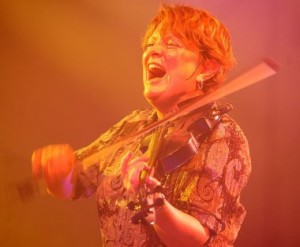
Eileen Ivers

Eileen Ivers

There’s an embarrassment of riches this weekend in the Philly region. Three great Irish women performers will be in town at the same time Saturday night: Eileen Ivers, fiddler extraordinaire, in Media, and singers Susan McKeown and Mary McPartlan, together for the first time, on stage at the Irish Center. And if you’re in Delaware, the Scottish group Malinky will be performing at the Blue Ball Barn in Wilmington.

I hate when that happens.

But things could be worse. It could be quiet here, and we don’t like that.

There’s also a remarkable Irish play debuting at the Adrienne Theater on Sansom Street with a performance that same night, but Paul Meade’s “Skin Deep,” a production of the Inis Nua Theatre Company (they brought us the darkly funny “Trad”) will be here till January 18 so you have more than one chance to see it. Knowing Inis Nua’s Director Tom Reing’s record for finding the best in Celtic theater, you may actually want to see it more than once.

For those of you worried about cost, some reassurance: It’s the rare Irish event that will put you out more than $50. Most musical and theatrical events cost somewhere in the $20-$25 range, by any standards a bargain (and possibly why so many Irish musicians can’t quit their day jobs).

On Monday, head over to the Sligo Pub in Media for another free Gaelic lesson. Or, if you’re in Bethlehem, hear the Celtic group BUA at the Bethlehem BrewWorks. Are you from Derry? The Sons and Daughters of Derry, one of the oldest county associations in Philadelphia, is making a comeback and is holding a meeting Monday night at the Irish Center.

There’s more coming up this month. In fact, it’s the rare day in January that there isn’t something Celtic going on that will remind you of where you came from. Pick something and go. Pubs, restaurants, gift shops, musicians and actors are all hard-hit in economic downturns. Let’s support them. Eat, drink, and buy Irish! Check out our calendar for all the details.

Music

McKeown and McPartlan: Two Great Irish Voices In Harmony

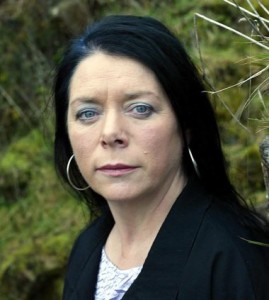
Singer Mary McPartlan

Singer Mary McPartlan

It doesn’t happen often, but sometimes you meet someone who makes you suspect you were separated at birth. You laugh at the same things, love the same music, have so much in common that it’s a little like meeting. . .yourself.

That’s how Grammy-winning vocalist Susan McKeown felt when she met trad singer Mary McPartlan last summer in a café in Miltown Malbay, where they were both attending Willie Week, the annual Willie Clancy Summer School music festival.

“We only chatted a few minutes but we talked so much we planned out our next five years,” laughs McKeown, who was born in Dublin but now lives in New York. “We had so much in common.”

One of those plans was to work together someday, and they are. The women, considered two of the finest Irish traditional singers today, will be appearing for the first time together at the The Irish Center in Philadelphia on Saturday night.

Although McKeown won her Grammy for her work with The Klezmatics—singing Klezmer music, the Yiddish version of Irish trad—she and McPartlan are both steeped in Celtic folk. In their brief encounter, they also discovered that they both love the music of Mali, the western African nation, and have a penchant for weaving the music of other lands with the tunes of their roots. They both also have a theatrical background. McKeown graduated from the American Musical and Dramatic Academy in New York, and for the last dozen years McPartlan has been a producer and director of numerous music and theatre projects, many for TG4, Irish language television.

They also learned that they loved each other’s music. “There is something deep and honest about Mary’s voice that appeals to me,” says McKeown. “When I first heard her, she reminded me of [singer] Dolores Keane. She has very soulful voice that seems to tap into the past.”

McPartlan—whom I caught up with by phone as she was cooking supper for her family in Galway—has heard that comparison before and was pleased to hear McKeown thought so. “I love Dolores Keane,” she says. “She’s been a massive inspiration.”

McPartlan is a relative late-bloomer in Irish music. Though she began singing in the 1970s, she didn’t decide to make music a career until 2003. “My life was totally taken up with my job—working in the arts–and rearing my kids (she has four, two in their 20s and two teenagers),” she explains. “It was a very demanding time and I pulled back from solo performance. The fact that I’m a professional producer of the arts and especially music kept me spending a lot of time in the company of musicians and being involved in making music programs kept me going.”

While in the midst of a time-consuming project that kept her away from home for weeks, she says, “I made a tape of my songs for a lift.” She gave the tape to her good friend, piper Paddy Keenan, and asked him what he thought. “He said, ‘Mary, quick, go get a producer,’ which I did and I’ve never looked back.”

Her first CD was “The Holland Handkerchief,” which debuted to critical acclaim in January 2004. But her burgeoning new career was almost derailed: That same year, McPartlan was diagnosed with breast cancer. “I struggled with the breast cancer treatments and went on stage whenever I could,” she says. “But I never gave up. I think that music healed me faster than anything ever could.”

At the same time, she was also studying for her master’s degree. While it sounds like the perfect storm for stress, her performances and studies provided a welcome distraction from doctor’s visits and radiation treatments, she says. Four years after her diagnosis, McPartlan released her second CD, “Petticoat Loose,” which contains some interesting collaborations between McPartlan and a variety of musicians, including a Romanian string quartet.

Like her new friend, McKeown is musically adventurous. Her Grammy came for “Wonder Wheel,” a collection of Yiddish music (with lyrics by American folk musician Woody Guthrie) she performed with the Klezmatics. “Now you might think that Yiddish and Irish songs had nothing in common, but it’s not such a great leap as you might think,” she says “The tunes are so vibrant and exuberant, as they are in the Irish tradition, and they also tap into the same great sadness and depth of emotions.” They are, after all, songs born of love—and pining–for a homeland.

McKeown was born in Dublin, the fifth of five children. “The story is told that my parents had four children, none having a talent for music, so they had a fifth child, me. My aunts told me this. My mother was an organist and an entertainer at social events, and I always sang with her. So she was struck lucky the fifth time. We used to go around in the car together singing, doing harmonies, singing everything—religious music, popular music, the Beatles—whatever was on the radio.”

Her passion for singing was fueled by “winning medals in competitions—I liked that,” she laughs. “I was always asked to sing at religious events in school and I always got parts in the school musicals.” She went to college in New York with a scholarship and toured Europe with a group of Irish musicians with whom she released a cassette called “The Chanting House.” While in New York, she collaborated with musicians like Seamus Egan (Solas) and Eileen Ivers. The release in 1995 of “Bones,’ which features McKeown’s take on traditional Irish keening (caoineadh)—the poetic, emotional crying over the dead—led to her solo career. Like McPartlan, she is entrenched in traditional Celtic music, but she also writes her own tunes and employs musical elements of other cultures in her work.

“I’ve worked with a number of Malian musicians, quite frequently the kora player Mamadou Diabate,” she says. The kora, she explains, the is African version of the harp, a stick plunged into a gourd with 21 strings, sounding remarkably like the Irish harp. “I worked with the Malian Ensemble Tartit, me sitting on the ground with 12 of them, men and women, playing instruments, clapping, singing.” The music was remarkable, but McKeown also remembers it as a moment of motherhood magic. “I had my daughter, Roisin, with me. She was a baby and still nursing Another Mali singer, Mah Damba, got a big piece of cloth and tied it on me like those baby snugglers they sell, and she was asleep in a few minutes.”

Both McKeown and McPartlan expect some magic moments on Saturday night. “We’ll probably be doing the set list as we come down in the van,” McKeown jokes. “And it will be the first time we’ve ever heard each other live. Sure, and we only just met for five minutes!”

Those five minutes make McPartlan believe the magic will last. “I really think Philadelphia will be the nucleus f what I hope will be great, exciting, creative things to come.”

Susan McKeown and Mary McParlan will be performing at the Irish Center, Carpenter and Emlen Streets in the Mt. Airy section of Philadelphia, on Saturday, January 10, at 8 PM.