Monthly Archives:

October 2011

How to Be Irish in Philly

How To Be Irish in Philly This Week

Kevin Burke and Cal Scott

It’s getting closer, that day when ghouls and zombies scare the living daylights out of us—before they take our stuff.

No, I’m not talking about election day. It’s Halloween, silly! What were you thinking?

In Ireland, the holiday is known as samhain (pronounce sow-in). In Ireland, it was always a harvest festival, the end of the “lighter” half of the year and the beginning of the darker half. It used to involve bonfires (perhaps where our lighted Jack O’Lanterns got their start) and gatherings were stories were told.

That said, there’s not a lot of Halloween-themed frivolity going on, except for the Bogside Rogues Halloween Party on Friday, October 28, at Con Murphy’s Pub in Center City and a Ghost Tea and Haunted Tour of Bethlehem sponsored by McCarthy’s Tea Room and the Moravian Book Shop in Bethlehem on Saturday, October 29. Of course, there’s the Pennsylvania Renaissance Faire in Manheim where they dress in costume all the time.

But there is a lot going on in Irish Philadelphia so here we go:

Also on Friday night, Scottish singer Julie Fowlis is performing at Bryn Mawr College.

On Saturday night, Sligo-style fiddler Kevin Burke and his frequent co-conspirator, multi-instrumentalist Cal Scott, will be performing at the Irish Center at 6815 Emlen Street, Philadelphia. The concert and workshops (learn from the best) are sponsored by The Philadelphia Ceili Group.

On Sunday, join the Donegal Association at its annual mass at the Shrine of the Miraculous Medal in Germantown. A meal follows at the Irish Center.

On Tuesday, Booker-nominated novelist Patrick McGuinness will be giving a reading at Villanova University. McGuinness is a fellow at St. Anne’s College in Oxford, a poet (“The Canals of Mars” is his latest book of poetry) and novelist (“The Last Hundred Days,” about the last months of the Ceausescu regime in Romania).

On Thursday, BUA, a traditional band—and a boy band—from Chicago will be at the Irish Center. Their lead singer, Brian O hAirt, is the youngest and first-ever American to win the top award for singers at the Fleadh Cheoil na hEireann in Listowel, County Kerry, in 2002. That’s the equivalent of getting an Olympic gold medal in Irish music.

On Friday, Dr. Sean Kay, a professor of politics and government at Ohio Wesleyan University, will be speaking about the rise and fall of the Celtic Tiger—Ireland’s first economic boom that went bust—at Temple University. Dr. Kay’s appearance is sponsored by Irish Network-Philadelphia, a networking organization for people of Irish descent. See our interview with Dr. Kay. 

Support the Crossroads Dancers on Friday night at McFaddens on 3rd Street in Philadelphia. The group made up of adult dancers, regular winners in the Philadelphia St. Patrick’s Day parade, is raising money for costumes, competitions and more. They’ll be competing on Thanksgiving weekend at the Mid-Atlantic Oireachtas, the regional dance competition that draws hundreds of Irish dancers to Philadelphia.

Even more to do on Friday night: You can see what happens when you mix one popular Celtic group with another. Enter the Haggis and Scythian will be appearing at Union Transfer, the newest Philly music venue, located on Spring Garden Street. Or you could go to Brownies 23 East in Ardmore to hear local Celtic rockers Jamison.

Coming up: The Mayo Ball is on November 5, as is the comedy show featuring Joe Conklin at Sellersville Theatre, AOH Comedy Night At Richard Rossiter Memorial Hall (home of the Gloucester County, NJ, AOH division), the Feast of All Irish Saints at the Church of the Holy Family in Sewell, NJ, and a house concert in Lansdale featuring Bob McQuillien and Old New England.

Don’t forget – Mick Moloney and Friends will be here on November 6 for the annual Concert for St. Malachy’s in North Philadelphia (which is usually SRO so get there early and grab a pew), the Irish Immigration Center’s Winter Celebration fundraiser with the Bogside Rogues (who always put the fun in fundraiser, also November 6), and the fundraiser for WTMR-800AM Irish radio show, “Come West Along the Road,” (again, on November 6) at Molly Maguire’s Pub in Phoenixville, featuring The Jameson Sisters, Paraic Keane, Fintan Malone & Company, the King Brothers, Kane and Beatty, Matt Ward, Mary Malone and Den Vykopal and dancers.

Don’t say no one gave you a heads up. Check our calendar for all the details.

Music, News, People

A Samhain Celebration in Lansdale

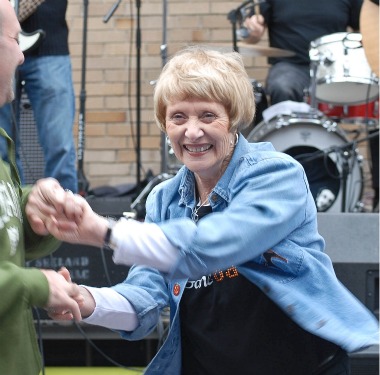
Was it a good time? That smile ought to tell you.

It was a taste of samhain–that’s Gaelic for Halloween–at Main and Wood Streets in Lansdale on Saturday at the annual Molly O’Ween street festival at Molly Maguire’s Pub. There was nonstop music–Scotland’s Albannach and Philly’s The Hooligans took turns on stage–and the Celtic Flame Dancers filled in the rest. There were vendors and costumes. Oh, were there costumes. Some people really know how to dress up for the holiday.

Don’t take our word for it. We were there and took pictures!

Check them out here.

News, People

The Return of the “Baron of Bass”

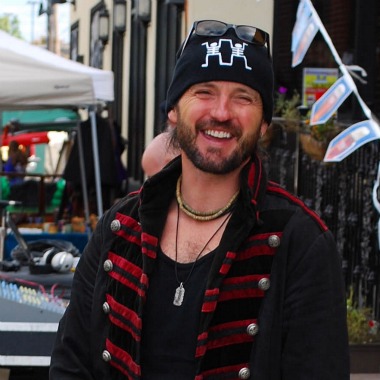
Jamesie Johnston of Albannach, looking healthy.

He’s baaack.

Jamesie Johnston, the popular, long-haired “baron of bass” for the Scottish percussive group, Albannach, literally wasn’t missing a beat on Saturday in Lansdale despite a three-month respite to recover from stab wounds he received after a Scottish festival in Kentucky last summer.

On June 5, an intoxicated fan stabbed Johnston in the mid-section and thigh, puncturing his lung. Johnston had been attempting to eject the man, who had become belligerent, from the cabin where the band was relaxing after their show.

“It took a good two or three months to recover from that,” Johnston said, as the band was setting up for the first of half a dozen sets they would play at the annual Molly O’Ween street festival at Wood and Main streets, outside Molly Maguire’s pub. “Three weeks out I was so out of breath I couldn’t do anything and with the wound in my thigh it was hard to walk. I like to jog and exercise most days, so it got depressing.”

The punctured lung kept Johnston from returning home to Glasgow, Scotland. “I was on a no-fly thing because I couldn’t be in a pressurized cabin,” he explained. Band mate Jacquie Holland stayed with Johnston for a time while he recuperated in the University of Louisville Hospital and later at the home of a friend.

He refused blood transfusions and rehab. “I ate healthy, took lots of vitamins and stayed as active as possible,” Johnston explained. “I just wanted to get on with it so I would get up and move about as much as I could.”

On Saturday, only his fifth gig since rejoining the band in September, he appeared none the worse for wear, rocking and jumping as he hammered out the heart-pounding rhythms that make Albannach (the Gaelic word for Scotland) one of the most popular bands on the Celtic circuit. They appear every year at the Mid-Winter Scottish and Irish Festival in Valley Forge, at Molly O’Ween, and occasionally at Brittingham’s Irish Pub. They’re managed in the US by Bill and Karen Reid of East of the Hebrides Entertainments in Plymouth Meeting.

Like many who’ve been through a life-threatening experience, Johnston considers himself lucky to be alive. “If I’d been stabbed an inch to either side, it could have been much worse,” he said. “I’m very lucky.”

History, News, People

The Rise and Fall of the Celtic Tiger

Dr. Sean Kay

Ireland is famous for its writers and storytellers, but these days, numbers, rather than words, are what tell the Irish story. Numbers like these:

• Between 2006 and 2010, the average family income in Ireland was cut in half.

• The average per capita debt is 37,000 euro ($51,544).

• Ireland lost 20,000 jobs between the years 2000 and 2006.

• The country’s debt now stands at 876 billion euro ($1.2 trillion).

Sean Kay, PhD, has been a regular visitor to Ireland since 1987. He traces his roots there and his wife is an Irish citizen. But until recently, his private and professional lives hadn’t meshed the way they do now. As Gershon professor of politics and government and chair of international studies at Ohio Wesleyan University, Kay had written about, in his words, “the big wars, global security stuff, and big international security issues,” the kind of thing that got him noticed by Barack Obama during the 2008 presidential campaign.

“I was asked to be part of a team advising Obama on issues related to Europe and Afghanistan, and because I had contacts in Ireland, I asked if I could also advise on Irish issues,” Kay explains. “I’m not a political person, but I was interested in getting involved and it was a good experience that I would never do again. But it got me thinking that there was a story to tell about Ireland and I wanted to tell it.”

That story is Kay’s latest book, “Celtic Revival? The Rise, Fall, and Renewal of Global Ireland “ (Rowman & Littlefield Publishers, 2011). He’ll be speaking about Ireland’s boom and bust, along with Irish Consul General Noel Kilkenny, on Friday, November 4, at Temple University Center City. The program is sponsored by Irish Network-Philadelphia. For more information, see our calendar.

We talked to Dr. Kay this week about the collapse of the “Celtic Tiger” and what the future holds for Ireland.

In your book, there are a couple of lines that really struck me. “For a young generation that had never experienced bad times, a wealthy and comfortable Ireland was the new norm—and the expected future. Thus the desperate condition Ireland found itself in by 2008 came as a horrific shock to a country that had never previously experienced boom and bust.” Ireland is one of the “young” countries in Europe—that’s at least a quarter of their population and they’ve never known anything but prosperity until now. Where does this leave them?

By about 2001 an entire society for first time in history had disposable income, purchasing ability, all built on loose credit. It was a mirage. It wasn’t real. When it burst, you had an interesting set of layers going on. The first one is that this was brand new wealth. People got rich pretty fast and that was just gone. The second layer is that people under 35 who didn’t cause any of that are going to be feeling the effects for the rest of their lives probably, between emigration and having to pay back somebody else’s broken promises on debt.

What went wrong?

There were really good foundations for the original Celtic Tiger of the late 1980s and mid-1990s. [In the book, Dr. Kay writes that Ireland benefited from its well-educated population and low business taxes which attracted significant foreign investment largely by pharmaceutical, technology, and healthcare companies.] Then the politicians got so obsessed with the electoral rewards and manifestations of the idea of large growth. Instead of slowing economic growth to about three percent and going for strong, gradual growth, they wanted eight, nine, 11 percent annual growth. But the export market flattened as had the impact the foreign direct investment. Ireland had lost its competitiveness, which was the premise of the Celtic Tiger. The way they sustained it was by artificially inflating the economy by allowing de-regulation of the mortgage market. Then you got a microcosm of what happened here: people leveraging a mortgage to pay for two or three other mortgages and then there was less revenue for the budget. [In his book, Dr. Kay quotes Irish economist Morgan Kelly who captured the housing bubble fiasco succinctly: “We have spent the last five years learning to believe that exports and competitiveness don’t matter, and that we can get rich by selling houses to each other.”] But what has shocked me the most is how steep the decline Ireland’s education system has been. It’s off the cliff. It went from being one of the best education systems in Europe and now ranks at the bottom in how much the government spends for education.

One of the things I learned from your book was that U2, whose lead singer Bono is linked to African causes including hunger and AIDS, actually took its publishing arm out of the country when the tax laws for artists changed and they were going to be taxed on anything above a quarter million euro. I found that hypocritical and disappointing.

To be fair, they didn’t do anything illegitimate or illegal. They’re not tax dodgers. They still live there and pay taxes as individuals. They were taking advantage of a tax loophole that the government tried to rein in. In Ireland, artists lived tax exempt. Of course, the idea was to help struggling artists, not massive bazillionaires. It was to give them a leg up as they got started. When it changed, U2 packed up and left. That represented a loss of 40 million euro a year to the Irish people. There is a point to be made that keeping the tax rate friendly to business is a good thing. The problem is that U2 posture themselves as a moral business, their own countrymen are hurting and they’ve taken their money out. But lots of wealthy Irish people moved to Monaco and Cyprus, and that money has yet to come back.

You talk in the book about how the cultural lack of self-esteem and avoidance of talking about serious problems has kept Ireland from asking for help and for getting back on track in ways both economic and social. What exactly did you mean by that, and has it changed?

You know, when I mention that to people, everyone knows exactly what I’m talking about. Look at the church for example. For years, people never talked openly about the Catholic Church and the scandals they knew were in it. I spent some time talking to [singer] Sinead O’Connor about her ripping up the photo of the Pope on Saturday Night Live [in 1992], something that was offensive to me and to many other people at the time. I asked her why she didn’t tell people why she was doing it. Americans didn’t understand, but people in Ireland knew what she was trying to say and they didn’t want to grapple with it. Now, with the child abuse scandal in the church and the economic crisis, all these things that couldn’t be talked about before are forced on people. Debt is not something anyone wanted to talk about, but now the whole country is in debt and it’s affecting everyone at the kitchen table level. We’ve picked that up in America too. The president didn’t even mention the oil spill in the Gulf in his state of the union speech this year and it was one of the biggest things we should be talking about—our dependence on oil. This is one place where the Irish are leading the world.

You’re sounding a little hopeful. Do you think things are going to get better in Ireland?

I see a ray of hope, but it’s different from what people might expect. It’s not going to one of getting back to where things were by any means. But there are
five key reasons there’s good reason to be optimistic about Ireland’s future. The first point has to do with fact that the Irish are being brutally frank now, demanding an accounting from their leaders and their banks and demanding transparency because of harsh lessons they’ve been through. Now they’re talking about it and even having some basic discussions of what it means to be responsible citizen in a democracy. Because of the church issues, you also see a real desire for justice and equality. You have [Taoiseach] Enda Kenny giving a speech where he says “this is not Rome, this is the republic of Ireland 2011.” And you see a major social transformation going on involving the face of Ireland. Walk around Dublin today and it’s not all white Irish-looking people you see. It’s multicultural, multi-religious, and much more progressive than most people realize. Ireland has much more progressive national legislation on civil partnerships, for example. Seventy-two percent of the population say they support gay marriage, so it’s not really the conservative country many people think it is.

What does that have to do with getting Ireland back on its feet?

This kind of thing sends a message to the world and to business that Ireland is open and welcoming. That’s really important because businesses want a good environment. I also think that they’re sending a message of peace out of Northern Ireland though I still think that needs a lot of work. That brings me to the fifth reason I’m optimistic about Ireland’s future. The country’s foreign policy has been very innovative and sends a signal of goodwill to the rest of the world. Ireland does peacekeeping, provides food aid in Africa and other Third World countries, and the Irish were the architects of the nuclear proliferation treaty. Those things provide a basic foundation on which a new economy and political and social life can be built. Their economy is not going to save them. It’s going to be these other things that make Ireland a role model for how to think about priorities. There’s much the Irish can do to teach the world. What’s going to get Ireland through ultimately is its classic sense of home, family, and community.

Music

An “In Your House” Concert

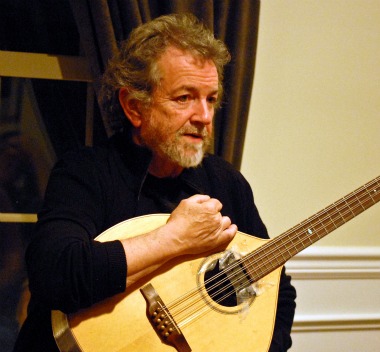
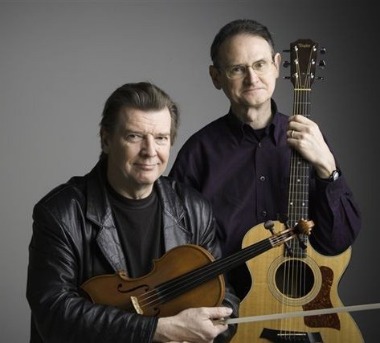
The legendary Andy Irvine in Philadelphia.

We had an embarrassment of musical riches this week in Irish Philadelphia. Teada’s Oisin MacDiarmada was in Coatesville, Winifred Horan and Mick McAuley of Solas with friend and occasional bandmate, Colm O’Caoimh, played a house concert in Ambler, and the legendary Andy Irvine of Planxty and Patrick Street, helped christen the new Philadelphia home of musicians Gabriel Donohue and Marian Makins.

And we were there. We brought back a few photos but, more important for you, loads of videos so you can have a “in our own house” concert. It’s not as much fun as actually being there, but it will have to do.

Click on the links below which will take you to YouTube where you can enjoy the shows! Photos by Denise Foley and Lori Lander Murphy; video by Lori Lander Murphy.

Mick, Winnie and Colm in Ambler:

Mick, Winnie and Colm
Another
And yet another

Oisin Mac Diarmada in Coatesville:

Oisin Mac Diarmada

Another

And yet another


Andy Irvine in Philadelphia

Andy Irvine

Another

Another

And another


 Check out our photos from all three concerts. 


How to Be Irish in Philly

How To Be Irish in Philly This Week

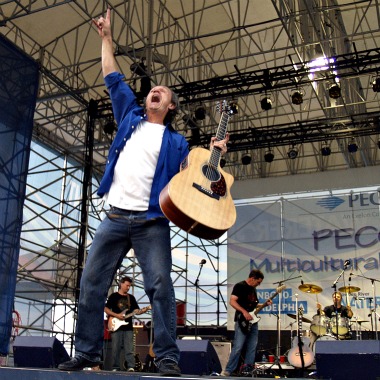
The Hooligans, acting up at Penns Landing.


The annual Molly Maguires’ street fair in Lansdale—known as Molly O’Ween– s on Saturday and the music will be wild, to say the least. You can hear the heart-throbbing percussion stylings of Albannach, those kilted purveyors of barbarian rock from Scotland. And the only thing that might be wilder than that is Luke Jardel who is bringing his Hooligans to the party. All fabulous musicians. It’s free, there’s a costume contest with prizes, and loads of activities for the kids. You can’t go wrong.

Blackthorn also has two gigs this week—on Friday night, October 21, at the Blarney Stone in West Chester and on Saturday, at JD McGillicudy’s newest spot in Roxborough. Get there early—there’s always a crowd. These guys can fill a room and then some.

AOH Div. 61 is having it’s Crab Night and Derby at St. Dominic’s Hall in Frankford. For $30 you get all the crabs you can eat plus hot roast beef, wine, and beer. Wish they’d let us know what the Derby part of the event is. We have images of crab races, but that’s probably not right. Go and find out and report back to us.

The John Byrne Band will be rocking Cherubini Yachts in Delran on Saturday night too, part of the Circle of Friends house concert series. Go, listen, pick out a boat.

Feeling goodly? The Irish Memorial Garden at Front and Chestnut needs some work and you can help. They’re looking for volunteers for clean-up, planting, mulching, and getting the garden ready for winter. Pauline Hurley-Kurtz, an landscape architect from Temple, will be giving and overview of the garden and its plants at 11 AM. And you don’t need to bring tools or snacks—they’ll be provided by the Pennsylvania Horticultural Society. Work details start at 9 AM.

Next Friday, October 28, Julie Fowlis—Gaelic singer of the year in 2007 and 2008—will be at Bryn Mawr College. This talent from Scotland has performed with a wide variety of musicians including James Taylor, Martha Wainwright, Ronan Browne, Liam O’Maonlai of the Hothouse Flowers, Mariead Ni Mhaonaigh of Altan, and Karen Matheson of Capercaille.

And on Saturday, another treat—Kevin Burke and Cal Scott in concert, a Philadelphia Ceili Group production at the Irish Center in Philadelphia. Burke is a master of Sligo style fiddling (just try to keep your feet from tapping—not possible). He’s often teamed with Scott who pretty much plays everything—and does it all well.

Coming up: Mick Moloney’s annual concert at St. Malachy’s Church in Philadelphia is on tap for November 6. Moloney will be back in Philadelphia on November 12, along with New York’s Billy McComiskey, master of the East Galway accordian style, and violin virtuoso, Athena Tergis. Billy and Athena will also be giving workshops and Moloney, a folklorist, will provide an illustrated talk on “Into the West.” This is part of the Philadelphia Ceili Group’s year long series, “Irish Traditional Music: Influences from the West of Ireland.”

Also on November 6: The Irish Immigration Center of Philadelphia will be holding a fundraiser at Finnigan’s Wake in Philadelphia and there’s also a fundraiser the same day for the “Come West Along the Road” radio show with Marianne MacDonald at Molly Maguire’s in Lansdale.

Some great theater happening in November too—but more about that later (unless you want to sneak a peek at the calendar now, always a good thing).

Music, People

Traveling Man Oisin Mac Diarmada Touches Down in Coatesville

Oisin Mac Diarmada At Play

Tucked away in Coatesville, about an hour off of Philadelphia’s beaten track, lies Coatesville Traditional Irish Music Series, one of the Irish music world’s true gems. Five to six times a year, organizer Frank Dalton presents the best in traditional music to audiences keen for the sounds of trad. This Sunday, October 16th, for the 44th offering, Sligo-style fiddler Oisin Mac Diarmada will be performing a solo concert.

Perhaps best known for his playing with Teada, the band he founded in 2001, Mac Diarmada is making a flying solitary visit to the U.S. in the next week. Booked for the Northeast Tionól  in The Catskills from October 21-24, his stop in Coatesville will be his only concert this time over.

Mac Diarmada is a man in demand. And rightly so. In addition to his work with Teada, he’s highly sought after as a teacher for workshops and festivals, as a lecturer and also as a producer with his company Ceol Productions Ltd. Born in County Clare, he started playing the fiddle at age 6, and it wasn’t long before he discovered the Willie Clancy Summer School in Milltown Malbay.

“That was the very popular event even back then. It’s been going on since the 70’s, and I started probably around 1986. It was a really great way of getting exposed to the larger musical community. It was there I got to see some of the great West Clare fiddle players who were still alive at that time. I’m thinking of people like John Kelly, Bobby Casey, Joe Ryan, Junior Crehan. It was a great introduction to the sort of breadth of the music, the scope and the interest that people have. So that became a sort of yearly pilgrimage to me. And ever since 1997, I think, I’ve been teaching there every summer. There’s a few of those kind of weeks in Ireland, but Willie Clancy is the most prominent and established.”

Mac Diarmada spends a good portion of the year touring, with the longer trips taking place in the U.S. He estimates that over 3 months, and some years it’s closer to 4, are spent in the States. He’s just home from a week in Germany, teaching at a workshop event over there. This Saturday, the night before he arrives in Coatesville, he’ll be in Sligo performing with The Innisfree Ceili Band at the Peter Horan Memorial Concert.

“It’s going to be a big night. Dervish will be there, and Michael Flatley. It’s a commemorative concert for Peter Horan, who passed away a year ago. They’re doing a fundraiser for the local hospice (Northwest Hospice) where he was cared for.”

And there’s no rest when he returns home, either: “I’m going to Russia the following week, to St. Petersburg, with Teada. It’s our first time there.”

After that, a few weeks off, and then it’s back here for the highly celebrated annual Irish Christmas in America tour that Mac Diarmada has produced for Teada since 2005. This year promises to be especially sensational with the Teada musicians being joined again by Seamus Begley and Brian Cunningham, and, debuting for the first time in the States, the highly acclaimed group Lumiere. Singers Pauline Scanlon and Eilis Kennedy, along with Donogh Hennessy (formerly of Lunasa), have recorded one beautiful CD, the stunning self-titled “Lumiere,” and are currently working on a follow-up.

Lumiere isn’t the only one with a new CD in the works, either. “Over the last little while, during the summer, myself and Seamus Begley recorded a duet album. It’s just waiting to be mixed now. Donogh Hennessy recorded the album for us, and will be mixing it; it should be released fairly soon after that’s finished.”

“Seamus is great,” Mac Diarmada affirmed. “It’s been a real treat to get to know him and to play with him. He’s such an amazing singer and musician. And a superb man to tour with, as well.”

“This year, for the Philadelphia area, we’ll be in Wilmington at The Grand Opera House (on December 11). We’re also in D.C. for our yearly appearance at National Geographic. And we also have another yearly appearance at The  Strand in Lakewood, New Jersey. It will be brilliant having Lumiere with us this year.”

Mac Diarmada thrives on his life in motion. “I do quite a few music related things, as many things as I can get done. It’s a bit of a balancing job, but I think it saves it from being the same. I’ve never gotten to that stage of being in any way bored with it yet. It’s always exciting. It’s good musically, as well, to be playing a few different types of things with some different people as well. So, overall, I think it’s a healthy thing.”

And the music is the top priority for the fiddler from Clare, also steeped in the Sligo tradition, who seeks to understand not just the notes, but the background of the music as well.

“It’s a process that goes on over a number of years. Some of the information you seek out deliberately while others you stumble across and just assimilate over the years. It’s an informal type of learning in a way, but it’s very much part of the background and part of the context, and part of the color of being interested in the music. There used to not be a lot written about traditional Irish music, until the last couple of decades. Now, there’s more being written about it, both in an academic sense and in sort of general music publications. Before, the stories behind the music were mainly passed on informally.”

And what about original tunes from Mac Diarmada, who has written music in the past? “It’s been a good few years since I’ve written any, but I’ll get back to it!” he assured me. “There’s no panic. But it’s a lovely thing to do. Sometimes you just need an excuse to do it. And I just haven’t had that excuse for awhile.”

For more information on this Sunday’s concert at Coatesville Traditional Irish Music Series, go here: http://www.ctims.info/

Information on Teada’s upcoming Christmas in America tour can be found on their website: http://irishchristmasinamerica.com/


News, People

2011 Delaware Valley Irish Hall of Fame Inductee: Tom Farrelly

Tom Farrelly

By Kathy McGee Burns

You’d never know by his accent, but Tom Farrelly is from Virginia. That’s the Virginia in County Cavan, Ireland, a small farming town of 4,000 people halfway between Belfast and Dublin.

It’s not without its celebrity. Jonathan Swift wrote “Gulliver Travels” while visiting there. But it’s also where the Farrellys, James and Margaret (nee Lynch), raised their 10 children. Fourth from the top was Tom, a successful businessman who will be honored this year at the 11th Annual Delaware Valley Irish Hall of Fame for his longtime work in the region’s Irish community where he serves on the Irish Center board and has been elected president of the Cavan Society five times.

Thomas Edison once said that “genius is 1% inspiration and 99% perspiration.” This describes Tom Farrelly—hard-working his whole life and successful at all he does. While at school, he worked on the family farm and at the Park Hotel, a 100-acre estate on Lough Ramor, as a “Jack of all trades:” growing flowers and vegetables, and working as a handyman, waiter, bartender, even a maitre’d.

Between school and his job, he walked miles every day. His boss, Mrs. McDonald, took pity on him and lent him a bicycle. He was then known as the “king of the students”– the only kid with a bike.

There is no telling how many miles you will have to run while chasing a dream.
Tom, who left school early, worked for a time at various bars in Dublin and, like every young man at the time, longed to go to America where his sister, Sarah, lived. At the age of 19, Tom left Ireland for Overbrook, Delaware County, where his sister lived. He recalled being shocked to see grass growing. All the postcards he’d seen at home showed only high-rise city buildings.

He took an astounding array of jobs: bookkeeper at Provident National Bank, landscaping with the Travers Brothers, night shift at the Acme, dairyman in Ardmore, after which he opened his own business, Shamrock Farm, a landscaping concern also known as Farrelly Brothers.

Tom met other Irish immigrants at the many dances that were so much a part of Philadelphia many years ago. (He told me a cute story about his car, a Crown Vic which he called Victoria. Someone once asked him why he never brought a girl to the local dances. He said he didn’t have a girl. The man said. “Well then, who’s Victoria?”)

It was at one of those dances that he met a pretty, petite blonde named Christine Scanlon, from County Galway. And it all unfolded like the song:

“So I took her hand and I gave her a twirl
And I lost my heart to a Galway girl.”

He and Chrissy have been married or more than 40 years. (A story they tell proves that it was meant to be: After they met, Chrissy agreed to let him pick her up from her job at Stouffers Restaurant. He sat in his car, out front and waited and waited and waited. She stood out back and waited and waited and waited! Fortunately, they finally figured it out.) They’re the parents of two children, a son, Tom, Jr., a daughter, Irene, and granddaughter, Kaitlyn Marie.

When I asked Tom who he admired most, he didn’t even stop to think. “My parents,” he said. “They had nothing for themselves but yet the children wanted for nothing! They might have been poor but they thought they had everything in the world.”

Tom’s story is the epitome of every immigrant’s dream—to  create a good life in the land of opportunity. His business is thriving. His friend, fellow landscaping contractor and Irish Center President Vince Gallagher, says Tom has “built up an amazing business” and includes high profile clients such as Villanova University.

But even more, he says, “Tom has helping hands He would never turn anyone down. Whenever there is a benefit, Tom is the first to show up.”

He’s also a Gaelic Athletic Association supporter (for 35 years) and its honorary president in 1988; a longtime supporter of the McDade School of Irish Dance, president of the Old Timers group at the Irish Center and president of the Cavan Bowling League.

Tom is also emcee of everything—a job he earned by his quick wit. There’s only one problem. He’s been the emcee of the Delaware Valley Irish Hall of Fame awards dinner every year. This year, as an honoree, he’ll have to be replaced. But we’re looking forward to a very funny acceptance speech.

Tom Farrelly will be honored, along with Kathleen Murtagh (profiled last week) and John Donovan, at an awards presentation dinner on November 13 at the Irish Center, 6815 Emlen Street, Philadelphia.