Monthly Archives:

September 2011

Music

Five Questions for Andy Irvine

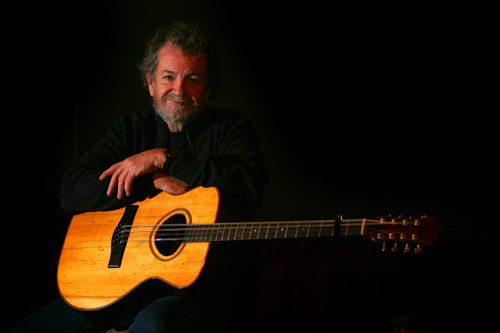
Andy Irvine

Andy Irvine (Photo © Brian Hartigan)

For 45 years, Andy Irvine has been entrancing audiences with his superb voice and deep musicality.

Irvine has managed to take traditional music and turn it into something uniquely his own, while still paying homage to the art form’s origins. He has been in on the ground floor of some memorable ensembles, including Sweeney’s Men, Planxty,  Patrick Street and the sensational Andy Irvine & Dónal Lunny’s Mozaik.

There are still some tickets left to hear him in an intimate house concert October 18 in Center City Philadelphia. If you’re interested, e-mail the Barn Star Concert Series at barnstarconcerts@gmail.com.

As a tune-up to the concert, we asked him five questions about his career, his take on the evolution of Irish music … and what he’d love to try next.

Q. What do you think about the evolution in traditional Irish music? You can still find many, many musicians and bands who hold fast to tradition. You get the sense that, whatever tune the flute player is playing in the session down at the pub, it might not be all that different from how the tune was played in the 18th century. But clearly, for some time there have been non-traditional instruments in the mixI’ve heard trombonesand many ways to express the music that obviously owe a large debt to tradition, but then go off in some completely new and different direction.

A. Well… I guess I’m someone who went “off in a completely new and different direction!” When I started accompanying Irish Traditional song on bouzouki & mandola, the road ahead was pretty open. My feelings, generally, are that immersion in the tradition should lead to playing with good taste. If you trust your sense of taste, you will satisfy yourselfwhich is the primary aimand hopefully others as well.

Crossing “Reuben’s Train” with Romanian riffs underlined for me that people’s music, in Europe anyway, all comes from the same wellhead.

Q. Some people reject that kind of cultural cross-pollination: “An Irish band shouldn’t play a Bruce Springsteen song.” You obviously have an appreciation of other genres. Certainly no one can question your Irish music credentials–you’ve been called a “legend”and yet right from the start you’ve been experimental. Do you regard yourself simply as a musician, and to heck with the labels? Is music just music for you in the end?

A. I have always enjoyed attempting cross pollinationor cross-pollution, as Donal Lunny called the music of Mozaik! Mozaik was my favourite band ever. Crossing “Reuben’s Train” with Romanian riffs underlined for me that people’s music, in Europe anyway, all comes from the same wellhead.

Q. I’ve chatted with other musicians—Eileen Ivers comes to mindwho insist they’d be bored if they always and only played the music the way Michael Coleman played it. Does that describe you? Would you be bored if you always played and sang the same things?

A. I’d be pretty sure that Eileen didn’t phrase it quite like that! (Editor’s note: she didn’t.) There was only one Michael Coleman! On a long tour sometimes a song becomes a chore but after a day off it comes back renewed. Having said that, it’s always a great feeling when you introduce something new.

Q. Can you go too far? Can you tinker too much with traditional Irish music? Have you heard tunes or bands and thought to yourself: That was a bit much? (I’m not asking you to name names.)

A. Yes, I have. Quite often. There’s an awful lot of dreadful music available…!

Q. What haven’t you tried yet musically that you’re still dying to to try?

A. I’d like to get Mozaik back together again. A new album would be a serious challenge! Bruce Molsky is rarely available and I took the step a few months ago of asking Annbjørg Lien if she would play with us when Bruce wasn’t available. Both were receptive to the idea but nothing has happened yet. There are so many musicians I’d like to have in that band! Jackie Molard, Theodosii Spassov, George Galliatsos from Apodomi Compania to name but three.
Arts

Inis Nua Theatre Company Nominated for 3 Barrymore Awards

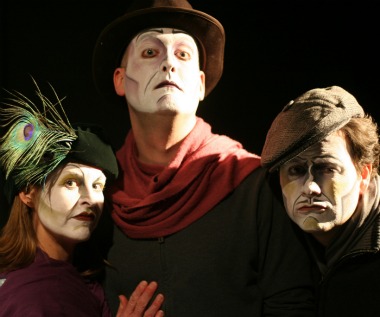
Members of the "Dublin by Lamplight" cast. Photo by Katie Reing

The Inis Nua Theatre Company has received three nominations for the 2011 Barrymore Awards for Excellence in Theatre from the Theatre Alliance of Greater Philadelphia, all for its production of “Dublin By Lamplight,” a play by Irish playwright Michael West.

Nominated are the cast of “Dublin by Lamplight,” which has spent nearly a month in New York as part of the New York Irish Theater Festival, for “outstanding ensemble in a play,” as well as Charlie DelMarcelle for outstanding lead actor in a play, and John Lionarons for the Clear Sound Award for outstanding sound design and original music.

Inis Nua Theatre Company presents contemporary plays from Ireland and the UK.

“Dublin by Lamplight” wasn’t the only Irish play recognized by the Theatre Alliance. Theatre Exile’s production of the Martin McDonagh play, “The Lieutenant of Inishmore,” was nominated for five awards including outstanding overall production of a play, outstanding direction, outstanding set design, outstanding choreography/movement, and outstanding supporting actor (Pearse Bunting).

The 17th Annual Barrymore Awards ceremony will take place on Monday, October 3, at the Walnut Street Theatre, 825 Walnut Street, Philadelphia. The evening is black tie optional.

How to Be Irish in Philly

How To Be Irish in Philly This Week

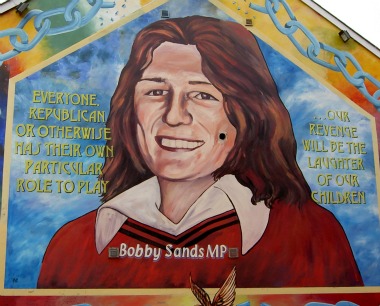
The Bobby Sands mural in Belfast, Northern Ireland.

In 1981, a small group of Irish prisoners in Long Kesh (Maze) Prison in Lisburn, County Antrim, Northern Ireland, began a hunger strike to press the British government to recognize them for what they considered themselves—political prisoners protesting a foreign occupier, not criminals. Most were members of the Irish Republican Army (IRA).

By the time the strike ended a few months later, 10 men were dead, including Bobby Sands, 27, who had been elected a member of parliament (MP) for Fermanagh and South Tyrone a month before his death by starvation.

There have already been marches and other 30th anniversary commemorations in Ireland, Northern Ireland, the US, and around the world. In Philadelphia on Sunday, the Irish community will gather for a special Mass at the Irish Memorial at Penns Landing. Breakfast will follow at The Plough and the Stars. Cost: $25.

Also on Sunday, St. Malachy Parish and School will be holding its Jubilee Mass and reception at the church in North Philadelphia that was founded in 1850 by Irish immigrants and the Sisters of Mercy, an Irish order.

This is also the weekend of Hungerstock, featuring rocker-writer Patty Smyth and our own John Byrne Band, all taking place in Camden. Proceeds go to local food banks.

On Sunday night, the Tartan Terrors will be at the Sellersville Theater for those who love their bagpipes and dancing and don’t mind that it’s Scottish.

Speaking of the broad definition of Celtic, on Tuesday, the Paul McKenna Band and the Celtic group, Comas, who mix Irish, Scottish, and Breton with a little Belgian thrown in there, will be performing at The Grand Opera House in Wilmington.

Speaking of John Byrne (we did, way up there), he’s launching a new Irish session at The Blind Pig in Northern Liberties on Tuesday night. Members of his band will be there to keep the tunes flowing at this great pub where John is a co-owner and bartender.

Speaking of The Blind Pig (gee, this is getting repetitive), Irish Network-Philadelphia is hold its latest networking happy hour there on Thursday evening. Food is yummy, so head on down to meet your peeps.

Thursday is a busy night. Orla Fallon, late of Celtic Women, is on stage at the Musikfest Café at ArtsQuest in Bethlehem. Tenor Ronan Tynan is performing at the Patriots Theater at the Trenton War Memorial in Trenton, NJ. And County Down singer-songwriter Fil Campbell is performing at The Shanachie Pub and Restaurant in Ambler.

A heads up for next weekend: the amazing Celtic harpers William Jackson and Grainne Hambly will be performing at West Chester University on Sunday night. There are also harp workshops in the afternoon, so throw your instrument in the back of the car (carefully) and head on down (register first!). There’s a session afterwards at Kildare’s, West Chester.

Galway Guild (they promise Irish rock and rebel songs) will be at Marty Magees in Glenolden.

And Saturday also marks the final Ancient Order of Hibernians National President’s dinner for Philadelphia’s Seamus Boyle, who has helmed this organization for the last few years. There’s a Mass at 4 PM and dinner at 7 at the Radisson Hotel in Trevose.

Music

Órla Fallon: Living the American Dream

Órla Fallon

Órla Fallon

Órla Fallon can’t remember a time when she didn’t sing.

You’ll remember Fallon as one of the original members of Celtic Woman—she’s the one with the harp and the glorious voice. Like so many exceptional Irish musicians, Fallon grew up surrounded by the tradition.

“I’ve been singing since I was a very small child. I was singing before I could talk,” she says. “My love of music and singing was encouraged from a young age. My mother (Eileen) comes from Kerry, and her parents gave her a deep love of Irish language and folklore. When we were little, we would spend a good deal of time down in Kerry. Many of the songs I sing I learned from my grandmother (Bridget Clifford). I think of singing songs with her in the kitchen then, and singing the same songs now in America. I’ve never known anybody who has such a passion for the old traditional songs. I think she gave me the passion.”

You can hear that passion ringing through in Fallon’s stage shows (she’ll be at Bethlehem Musikfest on Thursday, October 6), her televised concerts, and on her albums, including the most recent, “My Land.”

Maybe Fallon was always going to be a talented singer. For that, she can thank her parents and grandparents. As a player of Celtic harp, she’s doubly gifted. And for that, she can thank the Sisters of St. Joseph of Cluny.

“I was a teenager, 13, when I started,” Fallon says. “I was really lucky. I went to a boarding school in Phoenix Park, Dublin, called Mount Sackville. It has a brilliant harping tradition. My mother was really excited when she heard about it. When I heard (one of) the nuns playing the tunes and found out she was friends with Derek Bell of the Chieftains, I just fell in love with it. If I had not gone there, my life would have been so different.”

With so much talent, it was clear from an early age that Fallon was never going to remain just a farmer’s daughter from Knockananna, County Wicklow.

Early on, she distinguished herself by winning the International Feis Ceoil in Dublin and the International Pan Celtic Competition for singing with harp accompaniment. And in 1996, she performed with the well-known Irish choral group Anuna.

She is, of course, best known as one of the original members of the definitive Irish “girl group,” Celtic Woman, with whom she performed from 2005 through 2008.

Fallon says she could still be with Celtic Woman, but, in that final year, after all the flash, it was time for something new.

“It was great to be part of something as successful as Celtic Woman, but I wanted to be in control of my own destiny,” she says. “It (Celtic Woman) is a big lavish production; I prefer a smaller, earthier production. I don’t believe you need a big massive production to reach out to people. And I can tell stories. I like telling stories. Then it’s really ‘me’ on stage.”

Fallon’s more intimate show these days is an engaging mix of Irish traditional music, mixed in with traditions from other places–including America.

“I like trying American songs. The band I have on tour with me are a very bluegrass-y band. I always call our show ‘a little melting pot.’ There’s a nice variety of songs. It’s nice, because it keeps it fresh. Music is a living thing.”

That she has become so popular in the United States is, for Fallon, the fulfillment of a dream she has entertained from an early age. “Someone once said to me, ‘There’s a big stage waiting for you in America.’ I always dreamed of coming to America and playing songs. I know it sounds cheesy, but I really am living the dream.”

And if you want to see Órla Fallon for free, have we got a contest for you. All you have to do is subscribe to our weekly e-alert known as Mickmail. (Alternatively, if you already subscribe, you can enter by forwarding Mickmail to a friend.) There are two pairs of tickets available, as well as a pretty nice consolation prize: four “My Land” CDs.

We pick the winners on Monday, September 26. So you gotta be quick.

How to Be Irish in Philly

How to Be Irish in Philly This Week

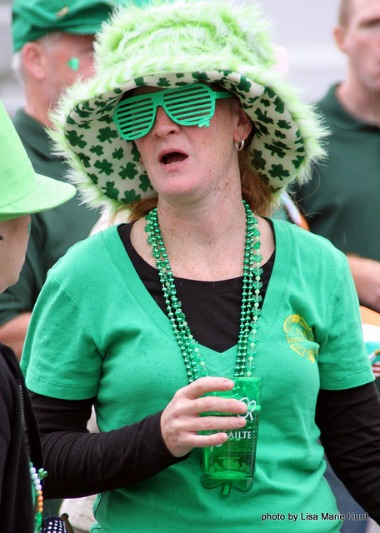
Correct attire for this weekend. Photo by Lisa Marie Hunt.

Hello!

Hello?

Hello? Is anybody out there?

Well, I guess just about everyone is either in North Wildwood for Irish Fest or Blackthorn’s Irish Weekend or in Bethlehem for Celtic Classic (where Solas is appearing on Saturday night). This is one of the best weeks of the year to be Irish because if you’re in one of those two places, you can’t be anything but. We’ve been to both and had a great time, even though we drank in moderation. (Seriously, folks, after a point, beer doesn’t make it better.)

Check our calendar for details on both festivals and remember to party responsibly.

We did have a couple of additions this week. Raymond Coleman is appearing tonight (Friday) at Westy’s in North Wildwood. If you’re down there, check him out. Raymond is a talented musician and singer. We’re big fans of this man from Tyrone.

If you’re going for a more medieval weekend, the Pennsylvania Renaissance Faire (the extra “E” lets you know it’s authentic) is happening in Manheim, PA.

If you’re staying at home (oh hi, I didn’t see you there), there’s a more serious event going on at the World Affairs Council in Philadelphia: a meeting of so-called “banished babies,” people who were born in Ireland but adopted in the US, a common practice in the ‘50s and ‘60s. RTE is filming the meeting, organized by Mari Steed, an Irish adoptee from Levittown, for an upcoming episode of the Irish TV program, Prime Time.

Also on Saturday, but in New York, Glucksman Ireland House is hosting a day of talks about Irish crime fiction with some of the leading lights, including John Connolly, Declan Hughes, Declan Hunt, Stuart Neville, and Arlene Hunt, among others. American writers Pete Hamill and Peter Quinn will also be on hand.

Closer to home, Celtic Thunder is on stage at the Tower Theater. Those are the homies of that cutie, Damian McGinty, who won a spot on the popular TV show about the unpopular, “Glee,” this season. We hear he’ll play an Irish exchange student (now there’s a stretch) who is living with the family of the childlike Britney who apparently believes he’s a leprechaun. (Really, “Glee” people? A leprechaun? Could ya get any more clichéd?)

In King of Prussia, Scythian, the wild Celtic-Balkan group from DC, is playing a concert under the stars—hopefully not under the raindrops.

Paul Brady will be at the Sellersville Theatre on Tuesday night. He’s one of Ireland’s most prolific songwriters and highly regarded singer. Never heard of him? You have if you like country music (like most of the Irish people I know). He’s written for Trisha Yearwood, Brooks & Dunn, and John Prine, as well as Cher, Tina Turner, Joe Cocker, Bonnie Raitt and Santana. Now that’s eclectic.

Looking ahead: October starts next Saturday and with it Hungerstock, featuring Patty Smyth and a host of other acts, including the Irish community’s own John Byrne Band. Best of all, this nearly all-day event raises money for the Food Bank of South Jersey. If you’ve been paying attention at all, you know that food banks all across the region—and the country—are seeing more and more people hit hard by the economic downturn. So think about putting this fun event on your calendar next weekend.

Arts, Dance, Music

A Festival of Videos

Dan Isaacson

Dan Isaacson in concert with his band Simple System.

A lot can happen in three days and nights.

And let’s be honest, we couldn’t be everywhere, my partner Lori Lander Murphy and I.

Or could we …

Looking at the videos we collected at the 2011 Philadelphia Ceili Group Festival, it certainly seems like we must have violated some of the fundamental laws of space and time.

You are traveling through another dimension—a dimension not only of sight and sound but of mind. A journey into a wondrous land whose boundaries are that of imagination. That’s a signpost up ahead… Your next stop: The Twilight Zone!

OK, so maybe it wasn’t as far out as all that.

But we think it was still cool.

You decide:

Here ‘s this year’s video playlist.

Dance, Music

The 2011 Philadelphia Ceili Group Festival in Pictures

Shannon Lambert-Ryan

Shannon Lambert-Ryan of Runa, the opening band at the Saturday night concert.

Anna Ryan was up to her elbows in thin reeds, patiently twisting and turning the slender stems into something delicate and uniquely Irish in its symmetry: St. Brigid’s crosses. Now and again, kids would make their way over to the table in the Philadelphia Irish Center’s Barry Room, gracelessly grab reeds like hands full of pickup sticks and, with patient instruction from Ryan, begin to learn how to craft something sacred from nothing more than spaghetti-like strands of dried grass.

Ryan looks forward to the Philadelphia Ceili Group Festival, which celebrates Irish culture through music and dance, of course, but also through the arts, history, genealogy and more.

Ryan has been a fixture at the event for years. “I don’t know how many years it’s been,” she says,” when asked about her ties to the festival. “It’s been over 10 years, anyway.”

For many of the organizers and participants, it’s been at least that long—and often longer.

And yet, it never gets tired. You see a lot of the same faces year after year, but the thing about the Ceili Group festival is this: It’s feels like a kind of Celtic renewal. Fluters and dancers, harpers and artisans flock to the Irish Center every September in the way Monarch butterflies return to Mariposa. Or maybe it’s like a Philadelphia Irish version of Burning Man—except with banjos and hard shoes instead of naked people who paint themselves silver.

Whatever.

We captured the spirit of the thing in photos.

Here ya go.

Music

In Memory of Mike Rafferty

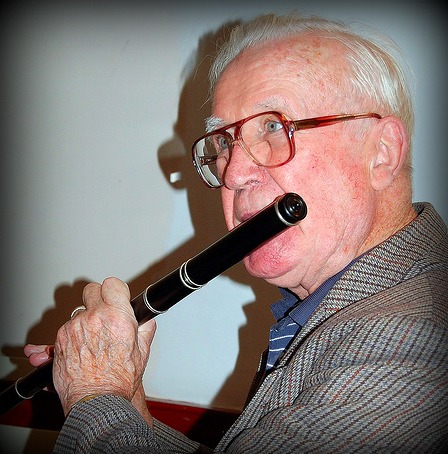
Mike Rafferty, playing at the Philadelphia Irish Center in 2006.

Mike Rafferty, playing at the Philadelphia Irish Center in 2006.

When Mike Rafferty played flute, it was with the unmistakable lilt and lift of his native East Galway. Named a National Heritage Fellow in 2010 by the National Endowment for the Arts, he was a bona fide national treasure.  Through his teaching, recording and performing, he passed along the tradition to new generations.

Mike Rafferty, who was certainly no stranger to Philadelphia-area Irish musicians and fans of Irish music, died last week at the age of 84. Local flute players likely will not soon forget what a rare honor it was to sit by his side and soak of knowledge from a master, as they did at the Tom Standeven-Liz Crehan Anderson Tional at the Philadelphia Irish Center in 2006.

Rafferty’s passing struck a sad note with many, many musicians who knew him well, including singer-songwriter Gabriel Donohue (himself no stranger to Philadelphia).

Here is Donohue’s remembrance:

A lovely man was Mike Rafferty.

I met Mike Rafferty on what I believe was my first weekend in New York. ( I met Joe Madden one block over on the same night.) I had gotten a room above Christy O’Connor’s apartment off of Mosholu Parkway and every night would have to pass Kingsbridge Road to get home. Unless of course I wanted to take the short cut that bypassed Durty Nellie’s, The Archway and the Old Brogue, which was earlier called the Bunratty. Andy McGann and Johnny Cronin would hold court there and it was a magnet for people who loved the pure drop, surrounded by tenements, bodegas and across from the armory. The Irish still held out in these neighborhoods where cheap rent was the main attraction and, secondly, the pub scene which anesthetized them from the despair brought about by having traded the bucolia of Galway and Mayo for the tar and cement of New York.

“Raff” showed up there on occasion and would play till the wee hours, his wife Terry documenting everything on her tape recorder. Her personal archives are a virtual repository of all the sessions he played over the years, I’m quite sure. She adored the man and obviously his music. No wonder his daughter Mary has accomplished so much as a fine exponent of East Galway music on the accordion. Mary also could not help exhibiting her adoration for the father who carefully and gently passed on his riches of music to his little girl. Her husband Donal also made his affection for his Da-in-law clear when he joined them both on many concerts and a couple of the later albums.

I made a few records with them in the mid-’90s, The first was the “Dangerous Reel.” I think the second was “The Road to Ballinakill.” It was great having them in my studio, to be getting the stories that went with every tune. And there were stories. Mike Rafferty was never just stringing notes together. He was weaving a tapestry with love, pure love. For the people who gave him the tunes, and the people who came play with him to learn or just listen. Some were new, as was “The Caucus of Secaucus,” written by Canadian Jean Duval; many were old and gotten from his dad Barrel Rafferty. Barrell lost his eyesight in mid-life, and Mike’s mother thought it might be because of the flute playing. That always got a good laugh. One thing for sure he had that barrel D sound prized by lovers of flute music.

Mike Rafferty was never just stringing notes together. He was weaving a tapestry with love, pure love.

I recall Mike Rafferty played a silver flute in those days and later he told me it was “mean strength and ignorance” that kept him playing it. He returned to the wooden flute eventually and it was then I believe his sound came into its own. This may be just my prejudice as I adore that instrument. Joanie Madden has found a way, through embouchure manipulation to mimic its sound on her lovely Miyuzowa instrument—and of course the ability to travel in all keys makes it more ideal for an all-rounder such as she. But the gentle East Galway music benefits I believe from that lovely dark timbre imbued by the, well, dark timber.

Speaking of the Maddens… I think of Mike’s love for Joe and his inability to talk about music without mentioning his best friend. They were cut from the same East Galway cloth and were visibly connected on so many levels through a sub-genre whose depth perhaps can not even be understood by younger players who never heard a curlew crying over the woodlands of Portumna, Woodford or Ballinakill. Or experienced this music before technology came into their homes and the carefully cultured boredom of long winter nights were usurped by TV and computer screens. It’s easy to find the tunes online these days, but you cannot recreate the feeling between the notes without the life experience which made the relevant to the older generation. Whether by their connection to the parish dances or to “The Old Fireside,” as Mike would say. Of course they do have their own relevance in modernity but it’s just different from what it represented to the people in those small rural communities.

Many times when I would run into Mike around New York he would quote the poem below which mentioned my little parish Kilconoiron/Clostoken, famous for very little but for “rough hurlers” (Father Charlie Coen would say) and being the birthplace of piper Patsy Touhy. It is no crude sporting tome, especially where it rhymes my parish with the esteemed poet Lord GG Byron. I hope Terry has a recording of him reciting it as I would cherish it as I do memories of this lovely, softhearted, gentle man, who had so many tunes going around in his head. A lifetime was hardly enough for him to play them.

The last time I saw Mike was in his backyard in Hasbouck Heights. We had a session in his garage. It was a farewell party for Mary and Donal and the kids on leaving for a new life in Ireland. Joanie and Helen Madden were there. Father Charlie, Mattie Connolly. Don Meade, Deirdre Connoly, Felix Dolan and Martin Mulhaire. He was in great form and really looked like he’d be around for a long time.

He’ll be sadly missed. Thanks to Mary and Terry who supported him in recording many albums, he left us lots of tunes.

Woodford Hurling team 1914

By Michael Power (Powerscross)

From Woodford town of old renown, went our sturdy team one day,

From the hillside brown the streams rushed down, Barkhill beside the bay.

We’re proud of you, brave hurlers true, we’re proud our parish bore you,

Throughout the soil of Erin’s Isle, you have beaten all before you.

Could I lines unfold like Moore of old, were I Thackeray or Byron,

I would sing for you the praises due, for twice beating Kilconoiron!

On the Loughrea train, one day again, we went with pride and joy,

To view our fifteen hurling men, in the town of Athenry.

We reached the station midst animation, of both the East and West,

From Woodford Bay to Claregalway, we were known to be the best.

But to decide it on the field we tried it, ‘neath Summer’s scorching sun,

In weather glorious we were victorious, now we’ve the County honours won.

The whistle sounded, the ball was grounded, Stanley found it and sent it high,

While opponents feared him, all men cheered him, on the Gaelic fields of Athenry.

He is straight and tall and admired by all, you could compare him to no other.

You could Ireland pick to rival Dick, our gallant captain’s brother.

With the Coens in back we fear no attack, from German, Greek or Turk,

Submarine or bomb, let Zepplins come, they’ll be manned by Conroy and Burke.

The Fahys three and Jack Grady, are worthy of our attention,

With Kelly and Page on the fullforward stage, the Gormans here we’ll mention.

Now we have named our team that was famed, in North, South, East and West,

On that bright June day, when all Galway did say, Woodford are again the country’s best.

If on those lines you muse, I pray you’ll excuse, if the composer has been unruly,

For in haste did he stitch these lines on the ditch, and as ever he remains yours truly.