Monthly Archives:

July 2010

News

Learning from Multicultural Philadelphia

Recent remarks posted to an online news forum:

  • “We cannot afford any more illegal immigrants, especially illegal liars.”
  • “Most welfare fraudsters are illegal immigrants.”
  • “We cannot afford to pay for non-nationals, and we do not want this many here, anyway.”

And finally, lest you assume these comments were written by an angry Arizonan about illegal entry into the United States:

  • “Is it unreasonable for us to expect that Ireland be governed for the Irish first? When will the Irish government protect their own native population?”

At a time when many in the United States rail against the undocumented, the Irish are struggling with their own immigration problems. A survey a few years ago suggested that foreign nationals make up 10 percent of the Irish workforce. Those numbers probably have dropped since the Irish economy went into the tank, but all the same, Ireland is still learning to cope with the many non-Irish who are suddenly in their midst.

“Right now the Irish feel like they’re coming over and taking their jobs,” says Center City attorney and County Wexford native Laurence Banville, chair of Irish Network-Philadelphia. “In the rural areas there is culture clash. You have an older generation not happy to see a Polish shop setting up in the middle of town, or a section of a city becoming a Chinatown. It’s something different and they don’t like it.”

Such suspicion and animosity gives rise to ethnic tensions—something about which we Philadelphians know all too well, as witness violence against Chinese students at South Philadelphia High School. It’s that kind of experience that informs a special program this afternoon at 2 in Center City sponsored by IN-Philadelphia and the Brehon Society, to be attended by the 2010 Irish participants in the Washington Ireland Program (WIP).

The program is called, “What Lessons Can An Increasingly Multicultural Ireland Learn From Philadelphia’s Conflict Resolution Strategies.” It’s to be held at Janney Montgomery Scott LLC, 7th Floor Education Center, 1801 Market Street, in Philadelphia.

Over 70 people have already registered to attend the event, featuring a panel discussion by Pamela P. Dembe, president judge of the Court of Common Pleas in Philadelphia, City Council member Jack Kelly, and Amy S. Cox, Ph.D., adjunct professor, Arcadia University International Peace and Conflict Resolution. (Other local experts were expected to join the panel.)

The main purpose of the Washington Ireland Program is to support continuing peace and reconciliation efforts in Northern Ireland and Ireland by training future leaders, says Banville. There are 30 Protestant and Catholic university students in the Class of 2010, currently residing in Washington, D.C. Banville has no doubt that Philadelphia has a lot to offer them.

“These individuals who will be going back to Ireland will bring back the conflict resolution strategies that are implemented here in Philadelphia,” he says. “Ireland is behind Philadelphia in terms of how multicultural this place is… and how multicultural Ireland will be. It’s something they have to learn pretty fast. This program will be a benefit to Ireland directly.”

Music

No Rivalry Here: A Chat With Trad’s Top Sister Act

The Kane Sisters

The Kane Sisters

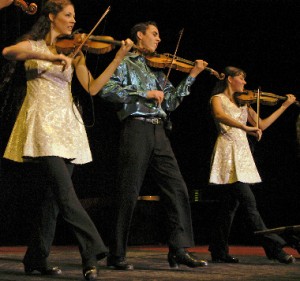
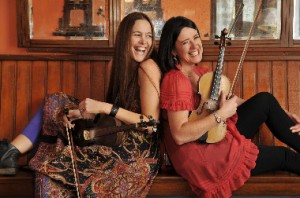
Seamless. Synchronized. Fluid. Flowing. Liz and Yvonne Kane are well used to hearing adjectives like these bestowed upon their beautifully matched fiddle playing. So it’s no mystery where The Kane Sisters got the name for their new CD, “Side By Side.”

“We get that all the time,” Yvonne laughed. “It’s a sibling thing, like. I think it happens for any siblings at all when they play together. Seamus and Manus McGuire are like that when they play. It’s nothing you could plan, it just happens naturally.”

The Kane Sisters, along with concertina player Edel Fox, are playing a Philadelphia Ceili Group concert at The Irish Center this Sunday, August 1, as part of their summer tour of the United States. It’s a routine that has become an anticipated annual follow-up to their presence at The Catskills Irish Arts Week.

“This was our fifth year in The Catskills, Paul Keating has kept asking us back,” Yvonne said. “It’s been great. And for the last three years, we’ve been down in Elkins, West Virginia, [for Irish/Celtic Week]. And then we do a few gigs.”

And this year, they launched “Side By Side,” their third CD, in The Catskills. It’s been six years since the release of their last CD, “Under the Diamond.”

“It didn’t feel like that long…but when we left the Catskills last year, we said, ‘We need to get to work on a new album.’ And we’ve gotten to know Edel through playing at CIAW. She was working on her first CD, ‘Chords & Beryls,’ so we also said, ‘We have to tour together next summer.’”

“It feels weird to have launched the album over here first… it hasn’t launched at home yet. We were supposed to launch it at Miltown Malbay, but we didn’t get the CDs until the day before we left for the States. But once we’re back home, we’ve got a good list of gigs beginning August 11th.”

Home for The Kane Sisters is their birthplace of Letterfrack in North Connemara.

“We love living there. We both lived away for a number of years. I was in Galway for 11 years, and Liz was in Cork for six years, then Galway for five. We’ve been back for nearly four years.”

“During the school year, we both teach… we love it. We have about 180 students, both kids and adults, and we travel all around Connemara. Liz commutes throughout South Connemara, and I have students in North Connemara… Clifden, Letterfrack, Inishbofin.”

Inishbofin? The island about five miles off the coast of Connemara?

“Yes,” Yvonne laughed. “I’ve got 10 amazing students out there… there’s only 18 kids in the entire school. I love going out there, and although I do now draw the line at taking the ferry in the bad weather, I have gotten on it before on bad days!”

Their musical heritage is steeped in the rich sounds of Ireland’s West. Their first instrument was the whistle because “everybody starts off playing tin whistles in school, whether you want to or not.”

They then moved on to the fiddle, being taught by musician Mary Finn as well as their grandfather, local fiddle player Jimmy Mullen.

“He would have us listening to all kinds of tunes. He just loved great tunes, flowing tunes. Like Michael Coleman from County Sligo, and Finbarr Dwyer.”

And they are much influenced by Paddy Fahey.

“He’s got great rhythm in his tunes… the East Galway fiddle style has got a good lift to it, similar to East Clare. The style’s not necessarily a slower one, I don’t know why people say that.”

The new CD, in addition to having tunes composed by Paddy Fahey, Finbarr Dwyer, Paddy O’Brien and Martin Mulhaire, also has three tunes composed by Liz.

“She’s the one who writes,” Yvonne explained. “I haven’t taken to it yet, but you never know…”

“When we make an album, we usually like to root and find new tunes, or tunes that haven’t been recorded. We’re always on the lookout for new tunes. We don’t work well unless we’re under pressure,” Yvonne acknowledged. “We’d be gone during the day teaching, and then we’d practice the tunes starting at 11 at night for about a week before we began recording, so the tunes were fresh in our minds.”

“We keep changing up the tunes all the time… we like changing the key of tunes, it makes them brighter, more enjoyable to play.”

And this time, esteemed musician and producer (and grandson of songbird Delia Murphy) Ronan Browne brought the recording studio to them.

“Ronan has a mobile recording studio, so we were able to sit at Liz’s house and record the tunes. We had great fun recording this CD… it probably has a different sound from the others, more of a live sound.”

And they are not alone; they are joined on “Side By Side” by Patsy Broderick on piano, Mick Conneely on Bouzouki, Dáith Sproule on Guitar and Ottawa Valley Step Dancer Nathan Pilatzke.

In fact, Nathan Pilatzke will be joining Liz and Yvonne and Edel onstage for some of the PCG concert, and his footwork is not to be missed. Seeing him dance last year in The Catskills was a thoroughly memorable experience.

And one last thing not to be missed: the notable and distinctive fashion style of these three brilliant women of Irish music.

“We’re all about our style,” Yvonne laughed when I couldn’t resist bringing it up at the end of the interview. “We love our style. When we get a day off, we go out and do some mini shopping. We love the fashion in New York, but it doesn’t compare to the fashion in Ireland—it’s too good.”

Music

The Plinkety Plink Diaries

Wednesday, July 28

Hello all, and welcome to the first installment of the Plinkety Plink Diaries.

The 10th annual Somerset Folk Harp Festival is about to begin. This event is a gathering for harpers of all levels, taking place this year in Parsippany, N.J., and is run by Kathy DeAngelo, half of McDermott’s Handy and director of You Gotta Have Harp Productions.

This is my first year attending, and I am simultaneously thrilled and horrified.

I am thrilled because I’ll get to meet harpers from all over the world. (The preliminary e-mail from Kathy mentions that there will be attendees from the Netherlands, South Korea and Taiwan.) I’ll also get a chance to listen to and learn from some of the best harp players out there (including Grainne Hambly and William Jackson, who have been featured on Irish Philadelphia before).

I am horrified because I’ve just realized that I have no idea what I am doing, have never bothered to learn what key anything is in and actually my playing is terrible. That’s a moot point, really, because I’ve suddenly forgotten every song I ever learned. Also, my suitcase won’t shut.

My status as a festival first-timer will be marked by a green dot on my name tag. I feel it would be more appropriate to stamp “NOOB” in large red letters on my forehead, but perhaps that would be excessive—after all, I’m not exactly a beginner. I’ve played Celtic harp for roughly six years, took lessons for a handful of them, and competed in the Mid Atlantic Fleadh in 2005.

However, I haven’t had lessons for some time now and, to
perfectly honest, do not practice every day. So I’m not really a total noob, but I am most definitely an amateur and a slightly rusty amateur at that.

Here’s hoping the other kids will want to play with me.

Friday, July 30

On Thursday morning, a low rumble wakes me at seven, and I wonder: was that thunder, or someone’s harp falling over upstairs?

Fortunately, it was only thunder. Within an hour or so, the morning rain cleared up and we had a sunny day for the beginning of the festival.

Figuring I might as well jump in with both feet, I’ve signed up for as many workshops in advance as possible. First up is Creative Marketing Techniques with Pamela Bruner, a Celtic harper and singer turned small business marketing coach. She possesses
apparently boundless energy and is full of smart, no-nonsense info for harpers looking to build a stronger brand and get more gigs.

My favorite piece of advice from her?

“There’s three cases in which you don’t follow up [with potential clients]: if they’re dead. If you’re dead. If they tell you to buzz off. And that last one’s negotiable.”

In the afternoon I have back-to-back workshops with Billy Jackson and Grainne Hambly: one is an introduction to Scottish music for harp, the other is on Irish traditional dance music.

Both classes are full to bursting, and at times they both gently remind us to stop noodling about on the strings. And with good reason: when twenty-some harpers all begin practicing trebles at the same time, they tend to sound like a room full of drunken
Tinkerbells.

By the time we’re finished, I have the beginnings of quite a few new tunes to work on and I’m pooped.

Luckily, we all have a chance to relax at the first of the evening concerts. Tonight’s performers are Nancy Hurrell, Janet Witman and Nicolas Carter. What strikes me most about the performances is how different their individual styles are, from Witman’s jazzed-up hornpipes to Carter’s more percussive Paraguayan pieces.

Yet all of them have that surety, a certain precision of fingering and control over volume (from feeling the bass in the floor to being just barely audible) that marks them as true masters (or
mistresses, as the case may be) of their instrument.

Before Nancy Hurrell begins her set, she says something to the new festival attendees: “You have no idea what you’re in for.”

I’m beginning to get an idea.

Columns

Aon Sceal?

Transport will be several steps up from this.

Transport will be several steps up from this. iStock image by Steve Jacobs.

It’s not too late—or too early—to think about a trip to Ireland. Or, at least, to see where your ancestors lived when they came here.

You can get the full Irish immigrant experience—except for the “No Irish need apply” part—September 18 and 19 in New York City, the gateway for millions of Irish immigrants. “The Irish Immigrant Experience” will take you by motorcoach to The Tenement Museum, which introduces you to life as our ancestors experienced it in many migratory waves. The building at 97 Orchard Street was built as a tenement in 1863 and was home to nearly 7,000 working class immigrants. Two books—“97 Orchard Street, New York: Stories of Immigrant Life” by Linda Granfield, and the just released “97 Orchard Street: An Edible History of Five Immigrant Families in One New York Tenement” by Jane Ziegelman”—will help you prepare for the trip.

There will be a visit to St. Patrick’s Cathedral for Sunday morning mass, a trip to the Ellis Island, which opened its doors in the early 1900s, and houses the Ellis Island Immigration Museum, and the Statue of Liberty. For $299 per person, you’ll stay at the Doubletree Jersey City, have dinner at O’Connell’s Pub in Jersey City with your own personal musicans—the Malones: Fintan Malone and Luke Jardel.

To reserve a seat or for more information, contact Marianne MacDonald at (856)236-2717 or rinceseit@msn.com or contact Johanna Greene at Mayfair Travel at: (215)331-8880 (office), (267)255-4417 (cell) or johanna@mayfairtravel.com.

Speaking of the Malones

This local musical group—Fintan Malone and Luke Jardel—are organizing their first tour of Ireland November 12-19. Along with sight-seeing, you’ll be treated to music wherever you go in the counties of Clare, Galway, Mayo, Kerry, Limerick, and Tipperary. Among the highlights: a stay in Spanish Point, Miltown Malbay, county Clare, birthplace of Fintan Malone and the site of his family pub, Tom Malone’s, one of the most famous musical pubs in Ireland (a focal point of the Willie Clancy School trad music event in July); a trip around the breathtaking ring of Kerry, and a tour of Limerick and the sights made famous in the late Frank McCourt’s celebrated memoir, “Angela’s Ashes.”

Price per person, based on double occupancy, is $1,499 and includes roundtrip airfare from Newark to Shannon, six nights lodging, daily full Irish breakfast (guaranteed you’ll be ordering porridge by the third day), and deluxe coach transport, among other things.

Contact Ian Duffy, Royal Irish Tours, 1-866-907-8687, or email ian@royalirishtours.com.

Irish Music on the High Seas

Galway musician Gabriel Donohue, who has been appearing frequently at the Philadelphia Irish Center, is one of the headliners on the Irish music cruise, Concerts at Sea, Eastern Caribbean escape January 29-February 5, 2011. He’ll be joined by the Irish Rovers, Archie Fisher, the Makem Brothers, and half a dozen other Irish musicans who will turn this Holland America cruise ship into the tune boat. The ports of call include Fort Lauderdale, Half Moon Cay, Turks & Caicos, San Juan, Puerto Rico, St. Thomas and the US and the US Virgin Islands.

Prices range from $1499 to $2979 (there will no “steerage” on this vessel) whch doesn’t include airfare. If you love Irish music and hate cold weather, contact Irish Music Cruises at 1-888-564-7474 or info@irishmusiccruises.com and get lots of one and none of the other, at least for a week.

Heading North

The Ulster American Society’s 2011 Northern Ireland Tour is tentatively scheduled for June 3-12. A brochure should be available this week. This leisurely 10-day, 9-night tour, with stays in Ireland and Scotland, will showcase Northern Ireland’s premier attractions and rich Irish and Scots-Irish cultures. Estimated prices start at $1,495 per person (land only). For more information, contact the Ulster American Society—which is headquartered here in Philadelphia—at info@ulsteramerican.org or (267) 328-6123.

Got news? Had a recent promotion, promoting your latest event? Do tell. Contact us at denise.foley@comcast.net.

Arts, People

Much More Than Child’s Play

Kathy O'Connell

Kathleen Ann Clare O'Connell, doing what she does best ... entertaining and educating kids.

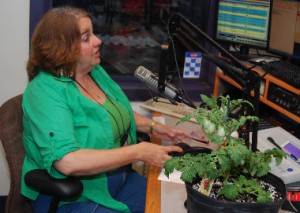
It’s a few minutes before 7 o’clock on a Wednesday night at the University City studios of radio station WXPN. Two floors below street level, tucked away in a boxy basement studio, Kathy O’Connell is seated before a stack of keyboards, blinking buttons and computer monitors. A boom microphone hovers just inches from her face, like an electronic cobra poised to strike.

O’Connell, longtime host of the station’s Peabody Award-winning “Kids Corner,” is having a leisurely chat with frequent guest Jeff Clarke about a tomato plant he has brought in from the Camden Children’s Garden, where he is the supervisor.

From an overhead speaker, we hear the voice of producer Robert Drake, who is tucked away in his own box on the other side of a large window. “Thirty seconds,” he says. O’Connell casually slips a chunky pair of Sony earphones over her graying red hair, and in a moment the familiar strains of the Kids Corner theme fill the room. It’s a catchy little tune, a cross between an electronic synthesizer and the sound of someone blowing across the lip of a Coke bottle.

This is as planned as “Kid’s Corner” gets. O’Connell arrived in the studio only a few steps ahead of Clarke. She wasn’t expecting her guest; Drake ducked in briefly to explain that there was a mix-up in the schedule. Clarke’s unexpected appearance doesn’t throw her off.

O’Connell appears to follow no script, but after the music stops, she smoothly and enthusiastically launches into her intro and then turns in her chair to interview Clarke. The rest of the show hums along with all the reliability of an atomic clock. Kathy O’Connell, every kid’s favorite fun radio aunt, is never at a loss for words.

“The number one rule here is, if something goes wrong, turn Kathy’s mic on right away,” she explains in a post-show interview. “I can talk through anything. This is just some quirky thing I know how to do.”

By all accounts, she does it spectacularly well. She now presides over one of the longest-lived, most acclaimed radio shows exclusively for children, but it is not a career anyone might have foreseen for her.

O’Connell’s early college career, which proceeded in fits and starts—and ultimately a hard stop—had nothing to do with broadcast. She graduated from secretarial school and, for a time, seemed to be following the office worker bee career path.

O’Connell’s long, storied life in radio began by accident—largely in response to a far more notable accident. It was in 1979 that the young O’Connell, riled up over the nuclear disaster at Three Mile Island, started volunteering at the listener-supported, lefty New York radio station WBAI. She answered phones, ran the elevator after midnight and became a member of the small cadre of volunteers—dubbed the “reception riffraff”—who kept the place running.

“As soon as I walked in the door (of WBAI), it was like, ‘Honey, I’m home.’ The only place I had ever felt that comfortable and that at home before that was when I started hanging out at Channel 5 in front of the Soupy Sales show in 1965,” she says. “I recognized that sense of familiarity, and I stayed. I wound up really building a life there.”

Regardless of what anyone else might have predicted, it’s not a complete surprise to O’Connell that her deep fascination with radio was able to take root at WBAI. “I was always the kid entering talent shows and doing dancing school. I did standup comedy for a while. While I went into WBAI without the agenda of ‘Oh, I’m going to get a career in radio,’ performing was part of the deal for me always.”

Kathleen Anne Clare O’Connell made her debut in Mary Immaculate Hospital in Bayside, Queens; she grew up in Huntington, Long Island. Given her name, her obvious Irish Catholic roots and her early childhood in two hotbeds of Irish-American culture, you’d expect O’Connell to have grown up—as the saying goes—as Irish as Paddy’s pig.

Certainly, Irish influences were everywhere in O’Connell’s life. Her father, Thomas John O’Connell, was a New York City cop. So was her grandfather, and her great-grandfather. Her uncle Eddie was with the New York City Fire Department and her Uncle Steve was a New York City cop. Her father was a Hibernian and, for a time, he ran the local St. Patrick’s Day Parade–about which, O’Connell has one standout memory.

“One year he died a puppy’s fur green. I’m not proud of that,” she laughs. “He did it with food coloring. The pictures were in Newsday, which was a black-and-white newspaper, so you have black-and-white pictures of this dog who was dyed a very light shade of green. This was my father’s publicity stunt. I think that was his equivalent of painting a green stripe down the middle of the road.”

She remembers a time when her father brought home a book called “Cry Blood, Cry Erin.”

“He said he wanted us to know where we came from,” she says. But the book sat on the coffee table, unread. In fact, no one other than her father talked much about their Irishness.

She remembers when Father O’Brian, pastor of St. Hugh of Lincoln Catholic School, called upon her during report card time and asked her, “When is St. Patrick’s Day?” “I said… March 19th? He made sure I never forgot it again!” she says.

That no one thought much about “the ould sod” wasn’t all that unusual in those days, she says. “There was a real disconnect between that country over there that we came from and the Irish identity here in America. That was a very strong thing. We’d probably tell you our family was from New York before we’d tell you we were from Ireland.”

So that was Kathy O’Connell’s early life… a plain-vanilla ‘60s American upbringing in a plain-vanilla town that was just a stop along the Long Island Railroad.

And then Soupy Sales happened along.

To most, Soupy was just the popular pie-in-the-face host of what was ostensibly a kids’ show. To a kid growing up in the far New York City suburbs, though, Soupy probably seemed like a major subversive influence.

At the age of 13, O’Connell started taking the train into the city and hanging out at Channel 5, the station where Soupy did his show. She joined a gaggle of girls who dogged Soupy’s every step. in time, she began to have conversations with him, and started to get to know him.

“May 27, 1965, was Ascension Thursday, and I had off from school. I was in 8th grade. That was the first time I went into New York to see the Soupy Sales show,” she recalls. “I became a regular. My friends and I basically stalked him. We would follow him everywhere. I was not as bad as a couple of my friends, who planted themselves outside of his house on 80th Street every weekend.”

For most of O’Connell’s teenage years, stalking Soupy was an all-consuming passion. But as she entered her late teens, she moved on to more adult interests and, in 1968, deeply adult concerns. That was the year, she says, that her family “fell apart.” Kathy O’Connell moved on from the passions of her early adolescence, unaware of the part that Soupy Sales would someday play in her life.

In 1972, O’Connell’s father died, followed in 1976 by her mother. Her mother’s life insurance settlement made it possible for her to explore interests beyond the secretarial pool. That’s when O’Connell started volunteering at WBAI.

Although she started by performing menial chores, she started taking classes offered by the station, learning how to operate the sound board. Then she was asked to read the community calendar—which she did to accompaniment of little comedy routines and wacky sound effects like the “Dragnet” theme. The station management liked her work so much, they offered her regularly scheduled shows.

She then moved to WNYC, the city’s large public radio station—not on air, but again working the board. One night in 1983 when she was pulling engineering duty, the two co-hosts of the station’s show for kids walked off with only minutes to go before air time.

“Four people in suits came walking in, one of whom was the program director, and he says to me, ‘We need you to help us out.’ None of them knew what buttons to push to keep the show on the air,” she says. “I said, ‘You let me talk and I’ll help you out however I can.’ That was when I got the job at ‘Small Things Considered.'”

The three-hour show wound up winning a Peabody Award. It morphed into a nationally syndicated show called “Kids America.” That was a pretty rapid rise, but O’Connell’s career seemed to come to an abrupt halt when the Corporation for Public Broadcasting declined to renew its financial support for the show.

Christmas Eve 1987, marked the show’s swan song. “A Merry Christmas, I don’t think!” she exclaims in her silly Kid’s Corner voice.

A couple of months before “Kids America” bit the dust, Philadelphia radio station WXPN picked up the syndicated show. Not long after the show folded, the station manager called up O’Connell and asked: How would you like to start a kids’ show in Philadelphia? She remembers her grateful response: “I said, I’ll give Philly a year, sure.”

O’Connell came to the city the weekend after Christmas. January 4, 1988, was the first show. Starting a new show in 10 days would be a daunting proposition for anyone, and O’Connell truly felt the pressure. But the show must go on… and it did.

“Here’s where WBAI’s training really, really helped. I said to myself, OK—I’ve got to talk for an hour and a half. I can do that,” she says. She resolved to play kids tunes she had hijacked from WNYC—”I think the statute of limitations has run out on that,” she says—and make up a history game, and then open up the phones.

“Thank God for WBAI and their live radio department,” O’Connell says. “I did worry about what I was going to do on that first show. I mean, there was planning. But I knew that I wasn’t going to know what would happen until the on-air light went on.”

She remembers WBAI talk radio being very confrontational. With kids, there’s no confrontation. “They may say ‘what?’ a couple hundred times, but they don’t come to argue,” she says. “They’re a really great starting off point. It’s not hard.

Amazingly (but probably not to O’Connell, who radiates self-confidence), the show went very well. There was even another Peabody Award. Life was very good indeed. In 2002, it got better.

O’Connell, who had continued to run into Soupy Sales now and again, renewed the relationship. “That’s when I got to know his second wife, Trudy,” she says. “Soupy and Trudy, from 2002 and on until the day he died, when I was with him, they were like my parents. “I got to see Soupy’s look of pride on his face, watching me up on the stage or coming to an event where my fans were, and watching me sign autographs. He was like my dad.”

It’s a sign of Sales’ high regard for O’Connell that, after he died in 2009, she inherited his two memorable puppets, “White Fang” and “Black Tooth.” She’s hoping to donate them to the Smithsonian.

When O’Connell looks back on her career, it’s clear to her now that Soupy Sales was always a profound influence. She knows she has a fairly large adult audience, along with the kids. It’s because her brand of radio works on both levels. She remembers Soupy’s “stuff” working the same way. “He could say something that worked on a goofy kids’ level, and then go on to make Leopold and Loeb jokes,” she says.

“I used to say to Soupy all the time, ‘Thank God I wasted my life on you. I still do his jokes and the things Iearned from him. I learned from the best. I learned from Soupy.”

Columns

Aon Sceal?

Image from "Spirit of the Fallen": by Brian Mengini

Image from "Spirit of the Fallen": by Brian Mengini

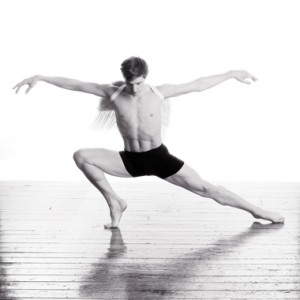
The loss of six Philadelphia police officers over a two-year period—killed in the line of duty—profoundly affected Phoenixville photographer Brian Mengini, who specializes in dance photography (some of his clients include the Mann Center for the Performing Arts, the Royal Ballet, the Brandywine Ballet, and www.tutu.com). He has a cousin in law enforcement and one of his early Irish ancestors served on the Philly police force. So he decided to utilize his talent—and his connections in the world of ballet—to create a tribute to the fallen officers. “The Spirit of the Fallen”—a series of black and white photograph of dancers wearing angel wings—is the subject of an exhibit and gala opening on August 29 at the Irish Center, 6815 Emlen Street, Philadelphia. All the dancers—from a variety of ballet companies in and around the Philadelphia area—volunteered their time. Money raised from the event will pay for the initial printing of a “Spirit of the Fallen” calendar, the proceeds from which will go to the Philadelphia Police Survivor’s Fund. If you’d like to be a sponsor, go to the event website. So far, Laine Walker Hughes, fiddler from Paddy’s Well, is signed up to perform at the August 29 event.

Dublin In the Rare New Time

If you trace your family roots back to Dublin’s fair city, where the girls are so pretty, you may be interested to know that there’s a movement afoot to add a Dublin Society to the six county societies (Cavan, Derry, Donegal, Galway, Mayo, and Tyrone) already in Philadelphia. Many of the Dubliners we know—including Siobhan Lyons of the Irish Immigration Center, singer-songwriter John Byrne, fiddler Paraic Keane, publican Fergus Carey (of Fergie’s Pub and others), and Ken Merriman, manager of Tir na Nog in Center City—are all fairly recent immigrants, so Philly may officially be welcoming the “new wave” of the Irish diaspora. No matter how far back you trace your Dublin roots (my great-great grandfather, Frederick Wiley, was a Dubliner), you can show up at the September 14 performance by the Young Dubliners (very clever, those Dubs) at World Café Live, featuring the John Byrne Band. Tickets to the performance are $20, but you insiders can get some cheaper from our local man from Dublin, John Byrne, by emailing him at info@johnbyrneband.com.


Kiera McDonagh

Kiera McDonagh

Good Luck to Philly’s Mary from Dungloe


Kiera McDonagh, Philly’s reigning Mary from Dungloe, left for Ireland this week to compete in the international pageant in Dungloe, County Donegal. There are 14 young women competing for the title and a week’s worth of activities, including a “bonny baby” show, a road race (Keira’s a runner so she may be competing, sans sash and tiara), raft racing on the lake, and, finally, the selection of the 2010 Mary from Dungloe at midnight, Sunday, August 1. It took Keira a long time to come up with an act for the talent portion of the competition (she’s a member of the Mairead Farrells Philadelphia ladies Gaelic football team, but she rejected showing her passing and blocking skills). She did tell us what she’s doing but it’s a secret. Just be assured, everyone will be thrilla-ed.


Emily Weideman

Emily Weideman

California, Here She Comes


Emily Weideman, recording secretary of the Donegal Association of Philadelphia and a member of the Inspirational Irish Women Awards committee, will be leaving the area on July 31. She accepted a job as Residence Life Coordinator, at San Jose State University in San Jose, California. Until recently, she held a similar job at Holy Family University in Philadelphia. Emily was the 2009 Mary from Dungloe and worked on this year’s Rose of Tralee event. Her departure leaves a gaping hole in several of the region’s most active Irish organizations.


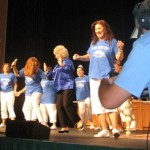
That's Coleen McCrea Katz, in her tiara, right behind Food Network star Paula Deen, dancing on stage in Savannah.

Coleen McCrea Katz, in her tiara, right behind Paula Deen

Philly’s Own Future Paula Deen?


Coleen McCrea Katz, who helps organize the Donegal Association’s Mary from Dungloe competition every year, was herself in the spotlight (tiara and all) a couple of months ago. In fact, y’all, she was on stage, singing and dancing with Food Network star, Paula Deen. Coleen was one of nearly 6,000 women who entered The Real Women of Philadelphia cooking contest. The Philadelphia actually refers to the cream cheese—each dish has to contain at least two ounces of the Kraft product. While she didn’t win (though you can see her luscious recipes here), she and a group of 35 women decided to travel to Savannah to cheer on the 16 semi-finalists. She really couldn’t afford to go, she says, then “my darling hubby”—Larry Katz—told her to “cancel our 30th wedding anniversary getaway” so she could make the trip. (No wonder she’s held on to him for so long!) The women, most of whom met on the competition website, wore matching “Real Women of Philadelphia” t-shirts and performed a song-and-dance routine they’d developed on the stage of the Lucas Theater, with special guest dancer, Paula Deen herself. “I had the time of my life,” says Coleen.

Happy Fourth of July from Ireland

When “Carmel’s Crew” takes part in the Susan B. Komen 3-Day Walk for a Cure in October, they’ll be handing over donations from a very unusual fundraiser—a Fourth of July barbecue held by the family of Carmel Porter Bradley in her hometown of Raphoe, County Donegal. Bradley, who was diagnosed with breast cancer a year ago, will be making the 60-mile walk herself, starting on October 15. Healthy now, she and her family—husband Louie, twin sons Shane and Conor and a daughter, Fiona– were in Ireland over the Independence Day holiday because Louie is the president of the Delco Gaels Gaelic Football Club, which was playing in an international Gaelic football competition. Her family and friends in Ireland raised more than $2,000 during this very American holiday celebration to support the walkers who call themselves “Carmel’s Crew.” Each participant must raise $2,300, so the fundraising isn’t done. You can help support Carmel’s Crew this Saturday at a karaoke beef-and-beer at Paddy Rooney’s in Havertown. Says friend and one of the Delco Gael’s team moms, Colleen Rafferty Boyce: Carmel “has just been such an inspiration really through all of it-so strong and positive and an absolute wonderful person all around.”

Update on Kingston Springs, Tennessee

A recent Irish Center benefit raised more than $2,000 for the people of Kingston Springs, TN, who lost their only elementary school in last spring’s flooding. The bulk of those donations came from a group of Philly Irish tourists who were stranded in the small town by those raging waters and were treated with such kindness by the people they encountered. (They offered immediate payback: The group, with its own musicians in tow, put together an impromptu ceili that had locals dancing and singing in the rain.) Tour leader, Marianne MacDonald, WTMR-800AM Sunday Irish radio host, has been in touch with the town manager of Kingston Springs. “She told me that they’re going to use the money to purchase school materials that were lost in the floods so we’d like to raise a bit more money,” she said. If you’d like to make a donation, contact Marianne at rinceseit@msn.com.

What’s Aon Sceal? It’s pronounced ay-n sh-kayl and it’s Irish for “what’s new” (or, technically, “any story”). It’s your chance to see your name in bold face print. Send your news to us at denise.foley@comcast.net.

Columns, How to Be Irish in Philly

How to Be Irish in Philly This Week

Celtic Spring

Celtic Spring in concert.

If you’re up for a little drive—just to Pottsville—the Clover Fire Company is holding its 23rd annual Irish Weekend from Friday through Sunday. It’s a freebie on Friday and only $4 for adults to get in to hear groups like The Martin Family Band, the Irish Lads, The Breaker Boys, the Kilmaine Saints, and Charlie Zahm and Tad Marks.

In Newfield, NJ, her friends are holding Haley’s Ceili to raise money for the seven-year-old fiddler Haley Richardson to Ireland to compete in the Fleadh Cheoil (All-Ireland) competition.

Also on Saturday, another group of friends are coming together to raise money for a group that calls itself Carmel’s Crew. They’ll be walking in the Susan B. Komen three-day in October. A karaoke beef-and-beer is scheduled at Paddy Rooney’s in Havertown to raise money for the team, walking for Carmel Bradley who was diagnosed with breast cancer a year ago. Carmel, now cancer-free, is walking too.

On Sunday, Celtic Spring—called the “vonTrapp family of Irish music” and featured on “America’s Got Talent—will be performing at the Keswick Theatre. The six Wood siblings all play the fiddle and dance—and yes, at the same time. Their dad plays drum and their mom plays piano.

This Thursday marks the return of Free Movie Night at the Irish Center. This week, watch a fascinating documentary that will take everyone back to their Irish roots—way back. Using archeological finds and DNA testing, researchers are now coming up with some interesting answers to the question, “Who are the Irish?” One clue: Part of the action takes place in Africa. Come for a late dinner—there’s a new menu at the Irish Center and most of the entrees are under $5.

Ceili Rain is taking the stage next Friday at the Sellersville Theatre. This Nashville-based band is led by Bob Halligan Jr., a songwriter who has penned hits for Cher, Joan Jett, Kathy Mattea, Judas Priest and Michael Bolton. Ceili Rain does Celtic music with a pop-rock flair.

Next Saturday, Celtic Women comes to the Mann Center for the Perfoming Arts.

And there’s plenty more on the way: The Kane Sisters with Edel Fox, are on tap for the Irish Center on Sunday, August 1. The two siblings are fiddlers in the Sligo style and Fox, who is on staff at the famous Willie Clancy Summer School in Miltown Malbay, is one of the most accomplished Irish traditional performers in Ireland today. The three recently performed and taught at the annual Catskills Irish Arts Week in Durham, NY.

Music

A Little Lunch Music

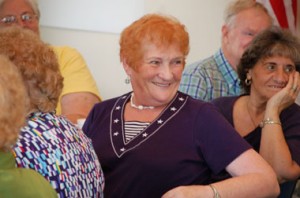
Kathleen Murtagh enjoys the music.

Kathleen Murtagh enjoys the music.

It takes a lot to quiet down the regulars at Wednesday’s Senior Lunch at the Irish Immigration Center of Philadelphia, but this week the usual chatter din dimmed as Dublin-born musician John Byrne and bandmate Chris Buchanan serenaded the ladies—and gents—who lunch.

There was some singing along too, though the many song requests caused Byrne at one point to retort, “Ladies, you need a jukebox.”

Videos: