Monthly Archives:

February 2009

Music

Danú Is Back, and Ready to Rock and Reel

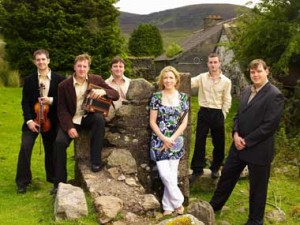
The multi-talented Danú.

The multi-talented Danú.

The great Irish band Danú hasn’t visited the States for about two years. But on March 7—just in time for an early St. Patrick’s Day celebration— Danú will be in Philadelphia for a concert at Penn’s Annenberg Center.

Button accordion virtuoso Benny McCarthy of County Waterford was one of the founding members of the band, which first roared onto the scene at the Lorient Inter-Celtic Festival in Brittany in 1995. The band, such as it was, didn’t even have a name before then.

Danú has more than made a name for itself since then. We caught up with McCarthy in a call to his home in Waterford, just prior to the beginning of the band’s U.S tour. Here’s what he had to say about Danú, his life, and Irish music in general.

Q. Danú has become one of the preeminent bands in Irish music. In the beginning, was that what you saw happening, with the band evolving and being together so long, or did you dare to think that big?

A. “I never thought that big. We never set out to be a full-time touring band. That evolved. We just found ourselves doing festivals and touring with bands we loved, like Dé Danann and Altan, and all these great musicians we grew up listening to, all of a sudden we knew their names and they ours.

All we really cared about, at the end of the day, is playing the music and having a good night and giving everyone else a good night. That remains our primary focus. We’re not too caught up in “what is our record sales for this month.” We’re a music-driven band rather than an industry-driven band.

Q. You started playing in ’87. How old were you? Did you come from a musical family? And why accordion?

A. I started playing when I was 13. I’ll be 34 the 6th of March.

My own parents didn’t play music, but they love music. My mother would have grown up in the ceili dance culture. Her grandfather would have been a great musician in the parish I grew up in. He was the musician that played every instrument.

My oldest brother, who has since passed away, and another brother did learn a bit of music when they were young. There was still an accordion stuck in a cupboard and a banjo in another cupboard. One day, my mother or father said, “Do you want to have a go at music?” (He chose the accordion.)

Well, I was fascinated. I must have been very young when I first saw the accordion and I was really fascinated with it. I got involved in the traditional music scene in Waterford. I remember seeing Raymond Dempsey, who was 12 at the time. He was younger than me and he was brilliant on the accordion. And I remember saying, “I’d love to be able to play like that.” (Both were taught by Bobby Gardiner.)

Q. You seem to have reached a point in your career where you’re probably an influence on other players. Do you reach a point where you stop being influenced yourself?

A. I think even the guy who taught me is still being influenced by people. That’s one of the things that keeps you going playing the music.

And you can’t learn it in a book—it’s a life experience that’s part of the whole tradition. Some of the best musicians all have that. They don’t over-think it. They listen to everything, they hear everything.

Q. You’ve grown adept at tuning and repairing accordions. Can they be a cranky instrument in the way pipes seem to be?

A. They re pretty robust, they can deal with temperatures fairly easily. The accordion I have now, I’ve had for six years; I’ve only had to tune it once. I have my own little workshop. It’s more or less a hobby with me. I’ve always been ripping up accordions and looking inside them. It’s good to now how to do it.

Q. How long is this particular road trip?

A. We’re doing 16 concerts in about 19 days—the East Coast the first half, West Coast the second. Then we’re going to Utah. Then, we’re coming back to New York, Baltimore, Washington.

Q. How does the band now compare now to what it was early on. Aside from personnel, how do you feel it’s changed?

A. Individually, I’ve changed myself—I’ve matured in my style. There’s kind of a natural evolution. The big change we had a few years ago, when we had a change in vocalists. Then, a couple of years ago things wound down for a bit as we all took more home time. Out of that everyone got a chance to do some solo work and to play with other musicians.

(Regardless of the changes,) I know I’m sitting on stage beside some of the best musicians in the country. The band is playing now better than ever. Now that we got together to do a tour it’s like we just met, there’s a lot of excitement when we get together to play. The band is ready to rock and reel.
Columns, How to Be Irish in Philly

How to Be Irish in Philly This Week

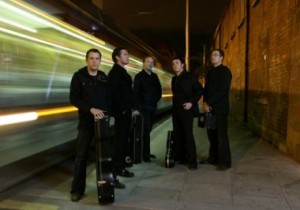
The acclaimed Irish group, Slide, is coming to town.

The acclaimed Irish group, Slide, is coming to town.

“They can sing, they can write, they can dance across fingerboards and piano keys, buttons and bows, and by crikey can they play.” Wish we’d written that, but it was reviewer Alex Monahan on the 2003 Slide release, Harmonic Motion. The five young Irishmen (who are waaaaay cuter than the Jonas Brothers) will be appearing on Saturday night at 8 PM at the Philadelphia Irish Center. In Ireland, they’ve been called “the next big thing” in traditional music. Listen for yourself.

Slide will be ringing in the month of March. Take your vitamins and get plenty of sleep, sweeties. There’s going to be plenty of ways to be Irish this month. (In fact, you can sneak a peek at our special 2009 St. Patrick’s Celebration calendar to make your plans now.)

The AOH Division 22 is holding a Celtic tea on Sunday at the Firefighters Union Hall in Philadelphia. We don’t expect lace napkins, but we could be surprised.

Derek Warfield and the Young Wolfe Tones will be bringing their great sound to the Springfield Country Club late Sunday afternoon too.

You can support the Philadelphia St. Patrick’s Day Parade on Sunday by attending a fundraiser at Finnigan’s Wake on Third and Spring Garden in the city. Philly’s budget deficit is infectious—it’s left parade organizers about $40,000 short for this year’s abbreviated event (another cost-cutting measure). Philadelphia Newspapers CEO Brian Tierney has vowed to match dollar-for-dollar the first $20,000 raised for the parade. Paddy’s Well provides the entertainment. Next week, Blackthorn raises the roof and some money for the parade at the Springfield Country Club.

And, on the same night (get used to this), the Three Irish Tenors will be performing at the Colonial Theater in Phoenixville. Lovely voices, nice lads.

Mid-week, Irish singer Tony Kenny, star of Jury’s Irish Cabaret in Dublin for years, brings his show to the Sellersville Theatre (it includes Irish comic Joe Cuddy, fiddler Sarah Rogers, and some great Irish dancers).

Thursday, the Celtic Tenors are coming to the Keswick, and Kildare’s in Manayunk is beginning the first of four weeks of Theology on Tap, an evening with guest speakers on many aspects of religion, with a free buffet.

If you missed the legendary Finbar Furey when he appeared at The Shanachie Pub and Restaurant in Ambler on October, you have your chance to see him on Thursday, when he makes a return visit with The Boatmen. It was an amazing night, not to be missed—don’t make the same mistake twice.

And Friday marks the return of the hit Broadway show, “The Irish and How They Got That Way” at the Kimmel Center in Philadelphia. The Frank McCourt (“Angela’s Ashes”) play is an irreverent but affectionate history of the Irish in America told in song and story. We’ll have a review in the next couple of weeks.

Also, next Friday, Shanachie owner and entertainer Gerry Timlin will play your favorite Irish tunes and keep you in stitches at a special concert to benefit the Courage to Create Capital Campaign for the Montgomery County Community College’s Fine Arts Center in Blue Bell.

The first of the many parades is next weekend (Mt. Holly kicks the marching season off) and the activities start to ramp up and they don’t stop even at the end of March. Check our calendar and start making your plans now. Pace yourselves!

And remember to buy Irish!

Music

Eight Kids, a Job, and She’s Also a Singer-Songwriter

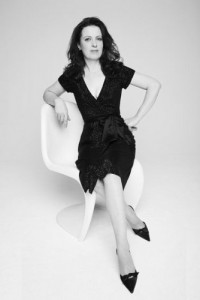
Linda Welby

Linda Welby

Linda Welby is raising eight children, manages holiday cottages, and runs bus tours in her native Connemara (she’s a licensed bus driver!). But don’t hate her because she’s beautiful and makes the Energizer Bunny look like a shirker.

In fact, if you listen to her much-acclaimed debut CD, “A Story to Tell” – yes, she’s a singer-songwriter too—you’re probably going to love her. Just read the lyrics to “The Galway Fiddler,” the first release off the CD, a spirited tribute to buskers.

“He said he had learnt from the birds in the sky
Their songs each morn he’d play till he die
He learnt to listen to the breeze
through the heather
And play to it’s whistling
in all types of weather.”

“I love to stop and listen to them entertain people and it’s many times they have brightened my day,” Linda told me recently. Though she admits she “never expected for a split second that it would take off or that it would even get airplay,” its infectious country sound has even inspired new dance steps In Ireland.

The CD is infused with personal meaning. Her songs are the consummation of a lifetime of writing poems that Linda discovered she had the gift for turning into music “The lyrics come to me first, and my feelings for the words would follow with music,” she says. “When I was working on my album, only then did I discover that I could compose reels, jigs, and hornpipes.”

Music has been a part of Linda’s life since she was born and her dad, Paddy Doorhy, “brought me out to his gigs and showed me to the world. I would sit on his knee while he played the drums and he would use my two hands to drum for him.”

The eldest of five children, and the only one who has taken up music full-time, Linda grew up surrounded by the heritage of rich musical tradition: her grandfather, also Paddy Doorhy, was in the Ballinakill ceili band, the Leitrim ceili band and many others. He was “an amazing fiddle player who could make it talk to you. Very strict when it came to how a tune was played and wouldn’t at all go with the trad ways of playing today. His style of playing would be slower, more relaxed and savored better. He taught me the fiddle–nails had to be short and no nail varnish. I did query the nail varnish…he said he just didn’t like the look of it.”

Linda has performed with the band Cois Tine for 14 years, initially playing the drums, but along the way learning the banjo, tin whistle, accordion, mandolin and the keyboards. In 2003, the group released a CD called “Memories.” Over the years, their musical style changed from the trad sound they started with—as Linda’s vision for the music she wanted to make expanded: “I’m a great lover of the Glen Miller ballroom era and to touch on what I really loved I had to leave the drums behind. We are still Cois Tine, we play three to four nights every week all year round, we do the social dances to the very small pubs…I do the odd concert and guest appearance apart from the band and to see a few hundred people wanting your autograph and queueing to talk to you is a so, so different scene. I have a fight with myself from time to time over where I should be.”

Family continues to be at the core of Linda’s music. “What keeps me passionate is my Dad to make proud which I know he is already,” she says. “My dad is my hero and a huge inspiration to me and I get emotional even saying that. When I wrote the song ‘Dear Dad’ he was so proud of his song, he never stopped playing it and telling everyone ‘that’s my daughter and she wrote that for me.’ My mum was proud of it too, so I felt she had to have a song too and I penned ‘We Love You Mum.’ The jig ‘Port Cait Dan’ is named after my mother Kathleen, Cait being the Irish of Kathleen; Dan is her father. People who’ve grown up in the native Irish-speaking areas were called by their dad’s name after their own to identify the family, ‘port’ is the Irish word for ‘jig’ (‘purt’).”

And she’d never be able to do everything she does without a supportive family. Her husband, she says, always tells her, “you’re better than you think you are.” Her kids, who range from 7-20, are equally helpful. “I have come home on many occasions from a gig to get into a bus and pick up people for tours and be home in time for breakfast and school runs. It can be difficult at the best of times to keep a balance but I’m lucky in the sense that my work is so flexible and it’s all about compromise. I have never had to turn down a gig yet because of my family.”

After listening to Linda’s CD, which can be sampled and purchased at her website, it’s difficult to believe that it wasn’t that long ago, she confesses, that she “couldn’t listen to myself singing at all and I never classed myself as a singer.” She recalls when one recording engineer at the music studio “started to panic when I wouldn’t sing because he was looking at me.”

On the brink of fame, she and her music are still focused on what’s important in life. “I love life,” she says, “and it’s the simplest things I get happiness from like giving or holding the door open for someone that’s strugglin’ with it, and to sit down at dawn and listen to the quietness. I’d give up every material thing I have to hold onto those little things.”

Music

A Chat With The Chieftains’ Kevin Conneff

“In 1976 I got a phone call from Paddy Moloney. I was working in a print shop, doing layout design and lithographic plates. The phone rang in the darkroom and he asked me if I’d consider doing bodhrán on a couple of tracks.”

So began Kevin Conneff’s long career recording and touring with the Chieftains. Conneff took a week off from the job, traveled from Dublin to London, laid down those “couple of tracks” on what would become the Chieftains’ sixth album, “Bonaparte’s Retreat.” And he figured, well, that’s that.

But Moloney had other plans. Conneff didn’t know it, but Peadar Mercier, the Chieftains’ second bodhrán player, was retiring. “Toward the end of the week, he (Moloney) asked me if I’d consider making it full time,” said Conneff in a call from Birmingham, Ala., halfway through the Chieftains’ latest tour—a tour that will bring them back to Philadelphia’s Kimmel Center Sunday, March 15, for a show in Verizon Hall at 3 p.m.

Conneff, secure and happy in his print shop job, had to think about it. “I remember thinking I’d do it a couple of years and I’d go back to the print shop, maybe start up my own” Conneff said with a laugh.

With each new Chieftains success—and there were many—it seemed less and less likely that Kevin Conneff would ever again lay hands on a lithographic plate. What followed instead was a remarkable career as the Chieftains’ singer and drummer.

For most of the Chieftains, some kind of lifelong involvement with traditional music was preordained. Not so for Conneff, who first became enamored of it when he was in his teens.

“I’m not really like Sean (Keane) and Matt (Molloy) and Paddy,” Conneff said. “They heard the music from the womb. My parents had a mild interest in Irish music and dance, but I just barely happened on it. Some of the lads I was working with were into Irish music.”

Conneff, a Dublin kid whose musical interests up to that point ran more to jazz and popular music, suddenly found himself criss-crossing the countryside in search of fleadhs and sessions on weekends.

“The first place I really encountered the music was in Mullingar in the midlands of Ireland when I heard these people playing, farmers really. I was absolutely knocked out,” he said. “I remember thinking; these guys are as good as the (jazz) musicians like Charlie Parker I’d been listening to on records.”

Getting to work on Monday morning in anything like decent shape was sometimes a challenge. “I went back the job very often still smelling of hay barn and Guinness,” he said.

As much as Conneff appreciated the instrumentalists, it was the singers who stole his heart. He started picking up the words to the old ballads and gradually, tentatively tried them out in sessions.
“I was always interested in singing,” he said. “I used to sing pop songs and whatever. I was into Ella Fitzgerald singing ‘How High the Moon,’ which bowled me over … and still does. The very fact that it (singing traditional songs) was just an interest, a hobby made it easy. I was just doing it for my own sake and to be a part of these sessions and not be peripheral to it.”

“If it became known that you sang a couple of ballads you had to sing them really well to be accepted in a session. It was quite a thing when one of the older players would say, ‘Let’s have a song.’”

Much later, Conneff learned to play the bodhrán, the traditional goatskin frame drum. And he also learned to practice restraint, to patiently wait to be invited to play.

“if you’ve respect for the musicians and the music, you hold your fire,” he said. “In those days, particularly a lot of the older players would frown at a bodhrán coming into a session. The last thing they wanted was some obnoxious, thundering, banging bodhrán to cover up all their talent. You just have to learn to be humble.

“Unfortunately, the bodhrán attracts a type that comes in, and very often they’re flamboyant in their dress or have bits of fur hanging off the drum and they just hammer away. They just have no sensitivity to the music.”

Conneff’s respect for the music led to his involvement in a pioneering venture called the Tradition Club, a gathering place for local Irish musicians at Slattery’s at 129 Capel Street in Dublin. It was while helping to run that club that Conneff rubbed shoulders with Moloney and other local stars of the traditional scene.

Conneff and the other organizers saw the Tradition Club as an alternative to the guitar-and-ballad style that was popular in folk music in the late ‘60s. The club was also a warm and welcoming venue for many of the country musicians—the ones who so impressed Conneff in his earlier days—who would be brought in to share their gifts.

“The guitar and ballad thing was more prominent in Dublin than the real thing, so to speak,” said Conneff, “so myself and some friends started the Tradition Club where the emphasis was on the traditional player and singer. We’d bring in people from rural areas to play for a night. That was a great education for those of us running the club. We hosted people like Willie Clancy and Seamus Ennis—the greats of the Irish music scene in those days.”

Conneff was still helping run the Tradition Club when he joined the Chieftains. The club continued on for a number of years.

Some would say the Chieftains have taken a few detours away from the tradition over the years. Probably a different way of looking at it is that they’ve helped to popularize the music by showing what it has in common with other forms of music. For example, the Chieftains are currently at work on a recording drawing on the story of the San Patricios Battalion, a group of largely Irish ex-pats who fought against the United States on the side of Mexico. “A lot of them were executed on the outskirts of Mexico City,” said Conneff. “To this day there is a pipe band called the San Patricios. Every Sunday they march out to this memorial at a convent where the soldiers were executed. Paddy has been working with this connection. He’s put together some wonderful music with a Mexican Irish theme. We’ll be doing some of that in the concert. We’re doing an album of the music. It should be completed by September.”

Conneff has also been pursuing a non-Chieftains project with three other phenomenal musicians. Fittingly, it’s called The Tradition Club. Along with Conneff, the band features Gerry O Connor of Dundalk on fiddle, Dubliner Paul McGrattan on flute and the Breton Giles Le Bigot on guitar.

With luck, you’ll get a chance to hear the results of the quartet’s handiwork. “We put down a few tracks and will try to put together an album toward the end of this year,” said Conneff. With one member of the band on the Continent, recording and playing concerts can be challenging, Conneff said. “The logistics of it are a bit difficult. Any time we do gigs he (Le Bigot) has to come over to Ireland. Very often the fees go to pay his expenses. It’s very enjoyable to be doing something like that.”

While you’re waiting for that musical experiment, you’ll just have to content yourself with Conneff’s other band, which arrives in Philadelphia for a concert (unfortunately) the same day as the Philadelphia St. Patrick’s Day parade. The Chieftains’ annual visit to Verizon Hall usually coincides with that event. After so many concerts and so many years on the road, many venues tend to blur together. Not so, Verizon Hall. For the Chieftains, it’s one of the best places to play.

“That’s a fantastic venue,” Conneff said. “Any time we’ve played there, it’s been an afternoon show. A lot of the times, we’ve had to detour going to the theatre because of the parade. Sometimes the older venues are the best from an acoustic point of view. But of the newer venues the Kimmel Center sound is wonderful.”

Music

irishphiladelphia.com Hosts GiveWay in Concert

GiveWay is a group of four Scottish sisters named Johnson who have been playing together professionally since 1998, when the oldest were barely in their teens. They include Fiona, an accomplished fiddle player, vocalist, guitarist, pianist and whistle player; Kirsty, a skilled pianist, accordion player and singer; Amy, a talented drummer and accordion player; and Mairi, an accomplished piano and keyboard player, vocalist and bass player.

The band plays a mixture of Scottish traditional music, and haunting airs, to lively jigs and energetic reels, with the occasional original song as well. After playing in competitions and clubs all over the UK, the girls got their real break when they won a prestigious “Danny Award” at Celtic Connections in 2001. Later the same year the band placed first in the BBC Radio “Young Folk Awards.” Appearances at Celtic Connections, Cambridge Folk Festival, Tonder Festival, Denmark, and Celtic Colours (Cape Breton), followed.

The band was also invited to take part in the BBC 1 “Hogmanay Live” television show, sharing the stage with a host of major UK artists, including Phil Cunningham and Aly Bain. In 2003 the band signed to Greentrax Recordings and their debut album “Full Steam Ahead” was released to stunning reviews. The second, “Inspired,” produced by Phil Cunningham, was released in 2005 and covered traditional Irish and Scottish tunes, as well as foot-tapping and jazzy folk songs.

In 2008, the band recorded a single, “The Water is Wide,” produced by Brian Hurren of Runrig. A new album is scheduled for release in Spring 2009.
For more information, visit; http://www.myspace.com/givewaymusic

Columns, How to Be Irish in Philly

How To Be Irish in Philly This Week

After last weekend’s Midwinter Scottish-Irish Festival in Valley Forge, I’m all pumped for St. Patrick’s Month. If you missed last weekend’s craic, you’re in luck. There’s more this week.

Remarkable Tipperary-born uilleann piper Michael Cooney will be appearing at the Coatesville Cultural Center on Sunday night. Winner of multiple All-Ireland championships in pipes and whistle, Cooney will be accompanied by guitarist/singer Pat Egan.

On Sunday morning, AOH Div. 22 is hosting an Irish benefit breakfast at Smoke Eater’s Pub at Franklin and Sheffield Streets in Philadelphia. And who is the recipient of this benefit? Aside from you, the money will go to the Philadelphia St. Patrick’s Day Parade, the Hibernian Hunger Project and the charities sponsored by Division 22.

In the Lehigh Valley, the Dublin Philharmonic plays Russian classics at Lehigh University’s Zoellner Center on Sunday afternoon. In York, PA, the Screaming Orphans (you may have seen them last weekend in Valley Forge) will perform at a benefit at the Harp and Fiddle Pub and Restaurant for the York St. Patrick’s Day Parade. Irish items will also be up for auction.

There’s also a benefit for the Allentown St. Patrick’s Day Parade on Sunday at Callaghan’s Pub on Tilghman Street.

Sunday night (yes, we’re still at the weekend), Irish singer-songwriter Noellie McDonnell will open for folk-pop winger Patty Larkin at the World Café Live in Philadelphia.

McGillins, a great Center City Irish pub, has some fun events planned this week, including its popular St. Patrick Daze—Countdown to St. Patrick’s Day event. Music will be provided Bostonians Patsy & John. On tap: Authentic Beamish Irish Stout, Seamus Irish Red Ale and O’Reilly’s Irish Stout from Sly Fox Brewery in Phoenixville, plus Chocolate Leprechauns. To eat: bangers and mash (Irish sausage and mashed potatoes), Shepherd’s pie, Irish lamb stew and corned beef with cabbage throughout March.

On Friday, Irish Ambassador Michael Collins will be in Philadelphia to give out the annual Taoisech and Ambassador’s Award at a luncheon at the Ritz Carlton in Center City sponsored by the Irish American Business Chamber and Network.

If you’re in Kennett Square on Friday night, head over to Kennett Flash for an evening of Irish and American folk music with Danny Quinn.

At Finnigan’s Wake in Philadelphia, there’s a beef-and-beer fundraiser Friday night for the Cardinal Dougherty soccer team. Music will be provided by The Hooligans, the Bogside Rogues, and No Irish Need Apply.

As we always remind you, check our calendar for all the details. And in these tough times, support your local Irish pub and merchant! Eat, drink, and shop Irish!

News

Come to the Rambling House

If you’re looking for an old-fashioned good time, next month try the Rambling House free entertainment event that’s scheduled for March 12 at 7:30 PM at the Irish Center in Philadelphia.

The program, the brainchild of WTMR 800-AM Irish radio hosts Marianne MacDonald and Vince Gallagher, debuted February 19 with music, dancing, recitations, joke- and limerick-telling, even a short lecture on the meaning of tradition by dancer Ed Reavy, Jr. Fiddler Mary Malone of The Morrigan, Blackthorn’s John Boyce, Fintan Malone, John Donnelly, and guitarist-singer Kevin Brennan provided the music in front of a roaring fire in a scene reminiscent of the old Irish “house parties” of long ago, when neighbors entertained one another in the kitchen. (The Irish Center provided hot snacks and desserts.)

We were there, and of course we took photos and video so you can see why we’re recommending it.

  • Check out our pictures too.
  • Music

    Martin Hayes and Dennis Cahill In Concert

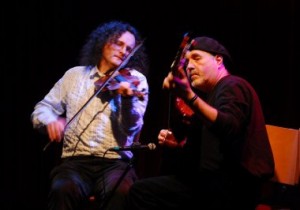
    Martin Hayes and guitarist Dennis Cahill

    Martin Hayes and guitarist Dennis Cahill

    Even though what they play is Irish music, fiddler Martin Hayes and guitarist Dennis Cahill coax the sound of gypsy tunes, classical violins, and a little bit of quiet jazz from their instruments while producing luscious slow airs and raucous reels and jigs.

    Don’t believe me? Watch these videos from their February 17 performance at the World Café Live in Philadelphia.

    Their latest album, the first in 10 years, is “Welcome Here Again.”