Monthly Archives:

April 2012

Arts

Philadelphia, Here They Come

Leaving Ireland, with regrets.

Leaving Ireland, with regrets.

Philadelphia is already blessed with one theatre company, Inis Nua, dedicated to presenting Irish and Celtic works. Perhaps as proof that you can never have too much of a good thing, we now have another: Irish Heritage Theatre, which presents its first play, Brian Friel’s well-traveled (but well-loved) “Philadelphia, Here I Come!,” May 5-May 20 in Walnut Street Theatre’s cozy Studio 5.

Of course, some people may ask: Do we really need two companies? The answer, from actress and Irish Heritage Theatre spokesperson Kirsten Quinn, is an unequivocal “yes.” The reason? Each company takes a different approach to Irish theatre.

“Inis Nua does contemporary pieces, but we try to stick to the classics,” Quinn explains. “We’re interested in presenting classical Irish plays. This play we’re doing now is as recent as we will get. It was written it the 1960s. We probably won’t go further forward.”

Quinn also points out that Tom Reing, artistic director of Inis Nua Theatre, is an honorary IHT board member.

The Irish Heritage Theatre has been a long time coming. Founding member and artistic director John Gallagher came up with the idea for the company about a year and a half ago, Quinn says. Other Philly theatre people quickly came on board.

“John had worked for the Irish Repertory Company here in Philadelphia. (The Rep ceased operations in 2006.) John really felt like he wanted to continue that (the Rep’s work), but to bring the focus on looking at Irish heritage, and what that means. We want to introduce younger audience members to these plays, and reintroduce older audience members to plays they haven’t seen them for a while. Since there is no other company in the vicinity doing this, we really felt that there was a gap to be filled.”

After Gallagher came up with the idea, planning began, and non-profit status was secured. One of the biggest challenges, Quinn says, was finding a theatre space IHT could afford. Walnut Street Theatre’s Studio 5 proved to be ideal.

“There’re very few spaces in Philadelphia for theatre, believe it or not. The Walnut is subsidized, so they don’t have to worry as much about the overhead, and they can rent the space out to companies for less than other buildings in the city, which is great. They’re really supporting small local theater doing that.”

Evidently not content merely to launch a new company, IHT decided to debut with “Philadelphia, Here I Come!,” a particularly ambitious work, featuring 14 actors.

Friel’s landmark tragicomedy was first performed in Dublin’s Gaiety Theatre in 1964, and it’s been a popular offering ever since. “Philadelphia, Here I Come!” follows the last moments of protagonist Gareth (Gar) O’Donnell in Ireland—specifically the fictional village of Ballybeg in Donegal—before he departs for America. Much of the action focuses on the relationship between Gar and his father, who evidently have spent a lifetime together without connecting emotionally—even though it’s clear they love each other. What we’ve got here is a failure to communicate.

Quinn plays the part of Gar’s one-time girlfriend Kate Doogan.

“The play is a lot of fun,” Quinn says. “The are comic moments to it, but also sad ones. It has very rich characters. There are so many characters, and yet they’re still very well constructed.”

“Philadelphia, Here I Come!” is the first of what the company hopes will be two plays produced this year. Two seems like a nice round number for future years, as well, says Quinn. From this point forward, expect to see productions drawing on the works of Yeats, Casey, Synge, and more of the classical Irish or Irish-American dramatists.

For now, though, Quinn relishes the launch of a grand new theatre company and the debut of its first play.

“For me, it’s huge. We’ve been in the works for such a long time, so it’s exciting to get ready to move into the space, and watch all these actors work, and see this thing coming to life. We’ve certainly undergone a lot of changes, and we’ve hit road blocks, but we just kept moving. It is incredibly gratifying, it really is.”
How to Be Irish in Philly

How To Be Irish in Philly

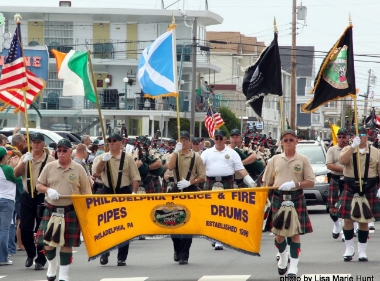
The Philadelphia Police and Fire Pipes and Drums. Photo by Lisa Marie Hunt.

A late addition to our calendar last week didn’t make it to Friday’s “How to be Irish” feature, so here it is:

On Friday, April 27, The Center for Emerging Visual Arts is hosting an exhibit called “Interchange: Contemporary Photography and Video from Ireland” at The Barclay in Philadelphia. The varied works provide a glimpse into contemporary Ireland. The exhibition is free and runs Monday through Friday, April 27 through May 18. At least one of the artists and the curator will be on hand on Friday night to answer questions.

Saturday, put up your dukes. Or rather, put up the cash to help the Young Irelands Gaelic Football Club raise some money with their fists (and, at least in one case, their feet). The YI’s are sponsoring “Fight Night” at The Irish Center in Mt. Airy, featuring local fighters. When we read the card, we recognized a couple of names, including Chuck Cawley. Last time we saw him, he was dancing. Cawley was one of the 16 volunteers who helped raise money for the Delco Gaels in the “Dance Like a Star” dance competition. Dancing, boxing. . .we like a Renaissance man. You go, Chuck!

Also on Saturday night, The Priests, the singing group from Northern Ireland (and yes, they’re priests) will be performing at the Scottish Rite Theatre in Collingswood, NJ.

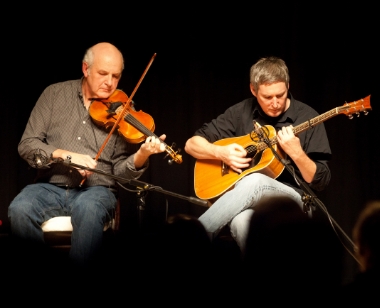
Fiddler Randal Bays with guitarist Davey Mathias is at the Coatesville Cultural Center on Saturday night as well. Read our interview with this amazing fiddler.

What isn’t happening on Saturday night is the appearance of The John Byrne Band at Milkboy in Ardmore. Bryne broke a leg while competing in a soccer game with the Irish Network-Philly 7-a-side soccer team. He expects to be up and around in a few weeks, and probably the worse for wear. The gig will be rescheduled and you can find out about it on our calendar.

Sunday is a major “what shall I do?” kind of day.

In the afternoon, Jamison, Ballina, and the Philadelphia Police Pipes and Drums will be Irish-ing it up on the Benjamin Franklin Parkway. It’s a Block Party on the Parkway to raise money for the Philadelphia Police and Firefighters Fallen Heroes Memorial. A great cause, a incomparable venue, and food and drink available at Con Murphy’s and Tir na Nog, right there in the ‘hood.

If you’re a fiddler or fiddler wannabe, Randal Bays will be offering a free fiddle workshop at West Chester University before he and partner Davey Mathias head over to Kildare’s West Chester for the session.

Cahal Dunne, the singer-songwriter and pianist, known as Ireland’s “happy man” will be performing at a fundraiser at the Lulu Temple in Plymouth Meeting on Sunday afternoon. All proceeds go to Shriners’ charities. Price includes lunch, beer, and setups.

There’s another benefit going on in Port Richmond. Raymond Coleman will be performing at the fundraiser to support the families of Irish Republican political prisoners. It’s being held at Bobby T’s Cigar Bar at Almond and Venango. There will be a bodhran raffle (the bodhran is an Irish drum) and buffet—and tickets are only $10 at the door.

All this week you also can catch “A Behanding in Spokane,” at Martin McDonagh play, at the Christ Church Neighborhood House in Philadelphia.

Check our calendar during the week–late additions are as common as dandelions on the lawn.

Sports

A Knockout Fund-Raiser for the Young Irelands

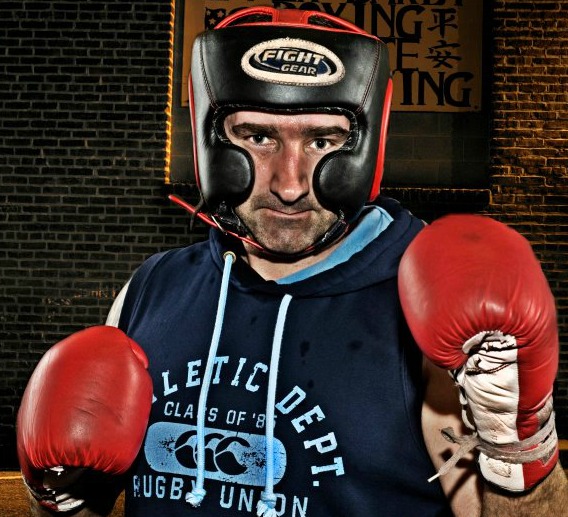
One of the contenders: Martin “Slieveboy Savage” McKernan

One of the contenders: Martin “Slieveboy Savage” McKernan

The gentlemen of the Young Irelands Gaelic Football Club were looking for a new kind of fund-raiser, not just another beef and beer or night at the races. They decided to think outside the box. They wound up in the ring.

“Fight Night” at the Philadelphia Irish Center is the result of their brainstorming and, if recent ticket sales are any indication, it’s going to be a knockout.

Twelve fights are on the card for the event, which takes place Saturday, April 28, starting at 7 p.m.

Each one should be a bruising affair, says the Young Irelands’ Declan Gormley, but local boxing aficionados are looking with particular interest at two matchups: Chris Flanagan against Dennis Friel, and Paul Welsh versus Paudraig McCaffery.

There’s been “a lot of buzz and talk around town about it (fight night),” says Gormley. “We are hoping for a great night. Fight nights being so popular as a fund-raiser in Ireland at the moment, we thought it would be a perfect opportunity to have one here.”

Though the fights are sponsored by a local Irish organization, Gormley expects the fights to appeal to a broader audience. “We will most definitely be drawing a good crowd outside the Irish community, with some popular American bartenders on the cards.”

Here’s the entire rundown:

1. Sean O’Neil vs. Gary McDonald
2. Pat Petit vs. Kevin Trainor
3. Ramie Conlan vs. Eddie Davenport
4. Mike Kavanagh vs. Martin Curran (kickboxing)
5. Adrian Mark vs. Martin McKernan
6. Mixed martial arts or women’s boxing
7. Dean Farrell vs. Raymond Coleman
8. Seamus Sweeney vs. Barry Hassan
9. Damien Butler vs. Chuck Cawley
10. Brian Mullen vs. Dan Schaffer
11. Chris Flanagan vs. Dennis Friel
12. Paul Welsh vs. Paudraig McCaffery

As of  Thursday, the club has sold more than 300 tickets. This week, as the fights get closer, Gormley is confident they’ll sell “a good few more.” Tickets cost $40. The price includes transportation from Upper Darby and Center City to the event and back, as well as admission and food. For details, email: deckygormley@gmail.c​om or x2express@hotmail.com.

How to Be Irish in Philly

How To Be Irish in Philly This Week

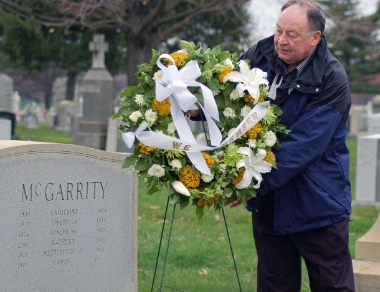
Laying a wreath at Joseph McGarrity's grave.

If harp music always makes you think of angels, you’ll be in heaven listening to Celtic harp masters Grainne Hambley and William Jackson, who will be doing “The Music of Mayo” at the Commodore Barry Club (The Irish Center) on Saturday night.

It’s the latest in the series celebrating the music of the west of Ireland sponsored by the Philadelphia Ceili Group.

Grainne Hambley, who is from Mayo, won the senior All-Ireland titles on both harp and concertina in 1994 and the prestigious Keadue and Granard harp competitions. Multi-instrumentalist William Jackson is a Glaswegian—we love the sound of that, but all it means is that he hails from Glasgow, Scotland—where he has been at the forefront of Scottish traditional music for more than 35 years. He’s also a noted composer.

They are also offering workshops at 3 PM on Saturday in harp and tin whistle.

Also on Saturday, the group Clancy’s Pistol will be providing the music at the 9th annual Project Children benefit at the Richard T. Rossiter Memorial Hall in National Park, NJ, which also features a beef-and-beer, auctions, raffles, and fun. The group needs to raise $1,000 for each child they bring over from Northern Ireland this summer.

Unless there’s a rain-out, it’s also St. Patrick’s Day (again?) at the Reading Phillies at FirstEnergy Stadium in Reading. The first 2,000 grownups get a 32 ounce Baseballtown Collectors’ Mug and there will live Irish music. Before the Reading Phils play the Akron Aeros, the Cleveland Indians’ farm team.

On Sunday there’s the annual commemoration of Joseph McGarrity, the County Tryone immigrant to Philadelphia who was a leading member of Clan na Gael and financially and politically supported the Irish war for independence/ The event is held at Holy Cross Cemetery in Yeadon, where McGarrity is buried. Members of his family still live in the area. A dinner will follow at the Oaks Ball Room in Glenolden.

Also on Sunday: the Nuala Kennedy Band will be appearing at the Blue Ball Barn in Wilmington, DE. Kennedy is an Irish singer and flute player from Dunkalk, County Lough, on the east coast of Ireland.

“A Behanding in Spokane,” a play by Irish writer Martin McDonagh, continues at the Christ Church Neighborhood House in Philadelphia.

On Monday, Jennifer Redmond, PhD, will speak at Villanova University about “Irish Women’s Migration,” an Irish studies event co-sponsored by the History and Gender Women’s Studies program.

Midweek, catch Portland, Oregon-based Colleen Raney with Colm MacCarthaigh and the region’s own John McGillian at Milkboy Café in Ardmore.

On Thursday, those wild Balkan gypsy lads, Scythian, bring their energy and fusion Celtic music to the Sellersville Theatre.

Also on Thursday, Pulitzer Prize-winning novelist William Kennedy (“Ironweed”) will be reading from his newest novel, “Changó’s Beads and Two-Tone Shoes,” at the Connelly Center Cinema at Villanova University as part of its 14th Annual Literary Festival.

Next Friday, catch Randal Bays and Davey Mathias at a house concert in Lansdale (they’ll be at Coatesville on Saturday night and the Kildare’s West Chester session on Sunday night, plus doing workshops at West Chester University earlier in the day).

Jamison is also on stage on Friday night, this time to help raise money for Father Judge High School football at Sprinkler Fitters Hall in Philadelphia.

Next weekend is huge: Saturday is “Fight Night,” a fundraiser for the Young Ireland’s Gaelic Football Club, at the Irish Center, with a roster of local fisticuffs experts; the John Byrne Band will be performing at Milkboy in Ardmore; and The Priests—three singing ones—will be performing at the Scottish Rite Theatre in Collingswood, NJ. Sunday. . .well, we’ll save that one for next week, unless you want to take a peek at our calendar, always a good idea.

Music, People

“One Fiddle Player, Sitting on a Chair”

Randal Bays with Davey Mathias

Randal Bays coaxes the sounds of Clare and Galway from his fiddle as though he had been born there. But when he starts to speak, it’s with the remnants of a Midwest accent reshaped by years in the Pacific Northwest.

When Bays talks about back home, like the song, it’s Indiana.

Randal Bays will be in the Philly region next weekend for two shows: the first, on April 27, is a house concert in Lansdale with singer/guitarist Davey Mathias, then the two will do a concert on Saturday night at the Coatesville Cultural Center in Coatesville. He and Mathias are also offering free—thanks to Kildare’s of West Chester—workshops on Sunday at West Chester University, then playing the Kildare’s session from 7-9 PM. See our calendar for details.

I asked Bays if people hearing him for the first time are surprised that he’s not from Ireland. But Bays, who’s been part of the Irish music scene since the mid-1970s, says he doesn’t notice it any more.

“I used to play with [Derry-born guitarist and singer] Daithi Sproule a bit and after an intermission at one of our gigs, he was talking with this guy who said, ‘It’s great that after all these years in America you still have that Irish accent.” Daithi said, ‘Yeah.’ Then the guy says, ‘But your friend has completely lost his.’”

Bays laughs. He doesn’t hear that kind of thing much any more—and when he does, he considers it a compliment–because Irish trad aficionados know that Bays is the real deal—or “the genuine article,” as one music reviewer put it–no matter where he comes from. No matter that he’s not even Irish.

“The problem with me is that I ain’t got no ethnic,” he confesses, laughing. “My mother’s and father’s families have been here since the 1600s and both sides were Welsh. My mother’s family was transported convicts from Britain. Australia was the big penal colony but the reason it opened up was that we got uppity. The American colonies had been the dumping ground for convicts, part of Britain’s social engineering policies that got rid of all their undesirables. Then the undesirables decided to have their own country, by god.”

He jokingly says he sometimes thinks that he’d get more people at his shows if he made up a story—that he was born in “the misty mountains of Clare,” like his friend, fiddler Martin Hayes, with whom he’s performed on several CDs, including Hayes’ first, where Bays accompanied him on guitar.

“I lived in Seattle and had a friend who was Martin’s booking agent then, Helen, and Martin was a total unknown at the time,” Bays says, weaving yet another story in the Irish style. “He had a house concert and wanted a guitar player to play with him. All the real guitar players in Seattle couldn’t make it so she called me. She said, ‘You used to play guitar, didn’t you?’ Then she told me that Martin Hayes was [Tulla Ceili Band fiddler] P.J. Hayes’ son and as soon as I heard that I was on board. I met Martin, had an instantaneous connection—we related musically as well as personally—and when we sat down to play it was an easy fit.”

They knew all the same songs, songs Bays had learned over the years from the likes of friends Kevin Burke, James Keane, Daithi Sproule, and Micheal O’Domhnaill after his first introduction to Irish music—“on a dark and rainy night as it usually is in Portland”—at a session in a small pub. “It was full of smoke, there was beer everywhere, and people playing passionately, and I went crazy for it on the spot,” says Bays.

He’d been a professional musician since he was 14, playing country-western guitar on a doughnut commercial on a local radio station in Indiana. By then he’d traded in the trumpet he’d been studying since the age of eight. Bays went to music school, but left after two years to earn his living making music—all kinds of music, from rock to blues, to classical guitar—in the Northwest, after leaving Indiana behind at 20.

His meeting with Hayes led to two recordings, the eponymous “Martin Hayes” in 1992, and “Under the Moon,” in 1995, both on the Green Linnet label, on which Bays played guitar. (He’s also featured on “Masters of the Irish Guitar.” He even toured with Hayes, leading to yet another funny story, this one taking place in Ireland where Bays was on stage with Martin and P.J. Hayes.

“Everybody loved us, but when we came off the stage, this old man came up to us and said, ‘It’s the Hayes’s and Bays’s, bejaysus.”

But Bays’ heart wasn’t in guitar accompaniment. He wanted to play the fiddle, so he parted ways with his friend and concentrated on fiddling. You can hear the results of that on his critically acclaimed CDs, including “Katy Bar the Door,” “Oyster Light,” “The Salmon’s Leap,” and “Dig With It.”

He didn’t intentionally lean toward the Clare-Galway style. “You listen for what you care for,” he says, “you go toward the musicians you feel something from. When I first got going, I was meeting Clare and Galway fiddlers at every turn. People would go to sessions in Doolin and Miltown Malbay [home of the famed Willy Clancy music festival] and bring me back cassettes and I cut my teeth on that. I lived and breathed tapes I had of P.J. Hayes so when I met Martin it all synched up in that way.”

Bays lives the semi-nomadic life of a musician, performing at venues large and small across the country, and teaching, including at the Catskill’s Irish Arts Week, at Swannanoa in South Carolina, and, until recently, his own Friday Harbor Irish Music Week in Roche Harboro, Washington.

He met his current partner, Mathias, at Swannanoa. He had been part of a Celtic trad group called The Corner House with his wife, Andi Hearn, though Mathias is also part of a long-running punk rock band.

“Oh no, all the trad heads are going to be saying, ‘Punk rock? I’m staying home.’ But it’s the wild spirit he brings to trad too,” says Bays. “Davey’s pretty good, as long as he doesn’t break parole.” He laughs heartily. “”He’s an unusual guy who learned the music just by hearing it. He has a great ear as well as a great spirit.”

But Mathias—and Bays himself—don’t bring elements of their other musical influences to trad. Bays doesn’t like Celtic rock. “Daithi said a funny thing one time about Celtic fusion. He hates to say anything negative. But he said, ‘If people fuse two kinds of music they should be able to play at least one of them well.’”

Bays says that electrifying Irish traditional tunes isn’t something he wants to do. “What I’m looking for in music is power, but I just don’t believe in getting it through volume any more. It’s not a function of age. I’ve been that way since I was in my 20s.

“The power of Irish music,” Bays says, “is in one fiddle player sitting on a chair, all the harmony and beauty of those melodic lines. When it’s working, it’s a rare thing in music. Pop music played at high volume with a strong beat and bass functions differently. It’s meant to overwhelm you. That’s a good thing. You can’t converse, you can’t think, you’re overwhelmed by it and go with it. Irish traditional music requires listeners to be able and willing to reach out with their minds and hearts to meet it halfway. That’s what attracted me to it and what I still love about it.”

News, People

Awards Time!

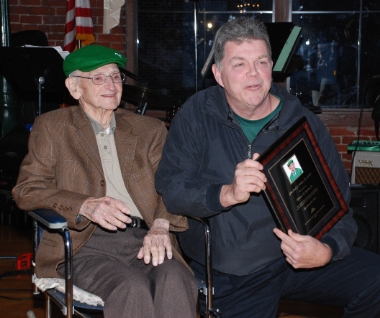
Thomas LaVelle, right, with Paul Phillips, as La Velle receives the first Paul Phillips Award honoring outstanding parade marshals.

The Philadelphia St. Patrick’s Day was more than a month ago but its spirit lingers on.

On Wednesday, April 18, prize winners picked up their awards at Finnigan’s Wake in Philadelphia, where the presidency of the Philadelphia St. Patrick’s Day Observance Association passed from Kathy McGee Burns to Bob Gessler, founder of the Hibernian Hunger Project.

The Vince Gallagher Band and singer, Karen Boyce McCollum, provided the dancing music at the event, which was attended by members of the CBS3 parade coverage team who also handed out awards.

We were there and have lots of photos.

How to Be Irish in Philly

How to be Irish in Philly This Week

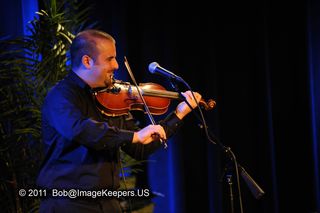
Matt Mancuso on fiddle.

We have the perfect Saturday for you. Head over to Kelly Drive in the morning to take in the annual Irish Memorial Run, which raises money for the Irish Memorial at Penns Landing.

You can rest up in the afternoon, then head over to Ambler to hear some fabulous Irish traditional music in someone’s livingroom! Not just anyone, but a member of the Philadelphia Ceili Group which is sponsoring an evening with fiddler-guitarist-mandolin-player Matt Mancuso (despite the name, he has Irish roots), an All-Ireland competitor and a member of the Irish supergroup Grada and the Cathie Ryan Band, and Patsy O’Brien, one of Irish music’s most respected guitar accompaniest and, an award-winning songwriter with three critically acclaimed CDs.

It’s a house concert, of course, so you need to RSVP and get directions (check the calendar for contact info). If you’ve never been to a house concert, believe me, it’s a real treat. You won’t want to hear music any other way.

Sunday is also a great day to be Irish. The Sons and Daughters of Derry are holding their very fun family social at the Irish Center, with music provided by Shantys and Irish dancing by the Cummins School. There’s a buffet dinner and lots of great activities for the kids. A real family-friendly day.

Martin Hayes, his musical partner Dennis Cahill and some of their most talented friends—the ones who can be called “masters”’—will be performing at the Annenberg Center for the Performing Arts in Philadelphia on Sunday night. They’re bringing the sound and some of the flavor of the Bantry, County Cork,, Masters of Tradition annual music festival to Philly. A must-see.

Mid-week, all the floats, dancers, and marchers who won award in the Philadelphia St. Patrick’s Day Parade will be getting their trophies and plaques at Finnigan’s Wake. Of course, there will be beer, food and entertainment.

The Irish American Genealogy Group is meeting on Thursday at the Irish Immigration Center in Upper Darby. Join genealogist John McDevitt and some of the regulars who can help you locate your Irish ancestors.

On Friday, Theatre Exile debuts “A Behanding in Spokane,” a play by Martin McDonagh that explores the violent American culture, post 9/11—in a powerful and funny way, of course. It is an Irish play, after all. Theatre Exile last year produced the very successful McDonagh play, “The Lieutenant of Inishmore.”

Next weekend is jam-packed. The 9th annual Project Children Benefit is being held at the Rochard T. Rossiter Memorial Hall in National Park, NJ, just over the bridge from Philadelphia. Tickets are disappearing for this fundraiser to support the program that brings children from Northern Ireland to the US for the summer.

Master harpers Grainne Hambly and William Jackson will be performing “The Music of Mayo” at the Irish Center (and doing workshops beforehand). This is another in a series of programs that explore the music of the West of Ireland, sponsored by the Philadelphia Ceili Group.

And it’s St. Patrick’s Day (again?) at the Reading Phillies at FirstEnergy Stadium in Reading.

Food & Drink, People

Smells Like Victory

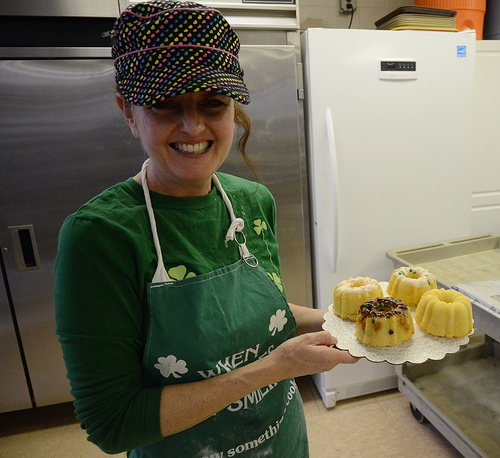
Deborah Streeter-DavittInside the Paoli Presbyterian Church kitchen, the air is heavy with the sweet scent of vanilla, orange and chocolate. Easy listening music blares from a boom box in one corner of the room, and in another corner, the industrial-sized twin Blodgett convection ovens emit a low roar.

Perched on cooling racks near an open screen door rest close to two dozen four-inch bundt cakes, a big 10-inch granddaddy bundt, and a coffee table-sized sheet cake. These tantalizing golden-brown confections are the result of a couple of hours’ labor by the exceptionally well organized Deborah Streeter-Davitt, the self-described “head caketress” behind MacDougall’s Irish Victory Cakes. She has help from her father, the Rev. Richard Streeter. (A former pastor of the church, he describes his role in the enterprise as “chief orange squeezer.”)

You might have seen, and tasted, Streeter-Davitt’s handiwork at a local Celtic festival. Her cakes are also available in more than a dozen small markets and farmers’ markets throughout the Delaware Valley. They’re also available online.

The success of MacDougall’s Irish Victory Cakes marks a kind of victory for Streeter-Davitt, who pursued a dream and became a baker following a layoff about three years ago from her longtime job in the financial services industry.

“Necessity breeds creativity,” laughs Streeter-Davitt, who seems not to break a sweat in the 80 degree-plus commercial kitchen, which she rents on Tuesdays and Thursdays from the church. (A local biscotti maker also leases the space.) Her green apron bears the imprint of floury hands. and she tucks her dark, wavy hair into a little heart-decorated painter’s cap, from which an uncooperative loose tendril escapes. Whisking flour and sugar into eggs, melting and stirring chocolate, scooping yellowy batter into heavyweight Nordic Ware pans, manhandling sheet cake pans into the oven, Streeter-Davitt seems the very picture of contentment.

The work consumes many more hours than she was used to devoting to her previous profession, but for Streeter-Davitt, it’s all worthwhile.

The layoff coincided with another imminent turning point in her life. “I was turning 50 in a few years, and I thought … hmmmmmmm. That was two and a half years ago. Up to that point, there was always something missing. Salary and travel all over the United States couldn’t fill that hole. I didn’t realize how fulfilling this would be. Now, I feel like I’m doing something I’m meant to be doing.”

Streeter-Davitt has been baking since the ‘80s. She says that’s when she came into possession of a recipe for a simple but rich, dense, buttery cake. The recipe belonged to her great-grandfather James MacDowell (of the MacDougall Clan) from Belfast. Before World War I, MacDowell had gained no small measure of fame for his delicious, lavishly decorated cakes. He baked for kings and queens. Just after the war, he left his fame behind and moved to the Syracuse, N.Y. area, where he toiled away in a tiny, neighborhood bakery. MacDowell decorated cakes for all the local wealthy households—all so his grandkids would have the opportunity for an education.

MacDowell’s story is the “victory” in the victory cake, says Streeter-Davitt. “It was his victory to bring the family here to the United States. He was a famous champion baker back home, but he gave it all up for his children and grandchildren.”

Streeter-Davitt, for her part, has taken some liberties with the basic butter cake recipe. She adapted the base recipe to create several distinctive, and distinctively named, flavors, from Dassie’s Traditional (with Wilbur chocolate and butterscotch chips) to Skeeter’s Grand Slam (chocolate, butterscotch, peanut butter and marshmallow) to Albie’s Loopy Leprechaun (chocolate, butterscotch and “two cheers of whiskey”). Many of the ingredients are local, and all cakes include at least a kiss of whiskey.

When the local appetite for Victory Cakes is at its greatest, it’s all hands on deck—mostly meaning “relatives, and friends of relatives.” It’s a huge amount of work, baking cakes in large quantities. For a batch, think in terms of two dozen eggs, a pound of butter, a pound of sour cream, five pounds of flour, and six cups of sugar. (And there are a few secret ingredients in the mix that make the cake deliciously different.)

St. Patrick’s Day, of course, is a major undertaking. “We probably made close to 800 minis (the four-inch individual cakes), 150 petites (the two-pound cake), and 20 mighties (the five-pounder),” Streeter-Davitt says.

Baking, she adds, is only half of the job. There’s frosting and decorating, wrapping and labeling, transporting, marketing and more. Yeoman’s labor, but all infinitely worthwhile to MacDougall’s energetic head caketress, both on a professional and a personal level.

“What’s fun about this job is that I get to work with my dad, and carry on his granddad’s legacy. You can’t put a price tag on that.”

More info:

610-608-6889
macdougallscakes@aol.com
www.macdougallscakes.com
PO Box 563 Malvern, PA 19355