Monthly Archives:

April 2008

News, People

Celebrate the New Mary

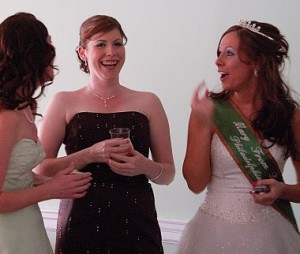
Michelle Mack, center, with Britney Lough, right, the 2006 Mary from Dungloe.

Michelle Mack, center, with Britney Lough, right, the 2006 Mary from Dungloe.

On Sunday, May 18, Michelle Mack will be crowned the 2008 Mary from Dungloe by the Philadelphia Donegal Society. She succeeds Meghan McGough, the 2007 Mary. The ceremony will take place at the Commodore Barry Club (The Irish Center), Carpenter and Emlen Streets, in Philadelphia. This event, which starts at 5 PM, is open to the public and dinner will be available for purchase.

Michelle has an undergraduate degree from Arcadia University in Sociology. She will be enrolled in the Masters of General Education Program at Holy Family University in the fall of 2008. Michelle is currently working at Holy Family University as Assistant Director of Residence Life.

Michelle will travel to Dungloe, Ireland in August to compete in an
international contest with other young women between the ages of 18 and 25 who are of Irish decent.

Michelle is an avid Irish dancer and enjoys Irish music and culture. She’s also a big fan of Blackthorn, and has been a member of the Donegal Association and active with the Mary from Dungloe competition for several years.

Anyone interested in participating in the 2009 Philadelphia Mary from Dungloe contest can get more information at www.philadonegal.com.

Arts, People

She Knows the Real Ending of the Story Told in the Film “My Left Foot”


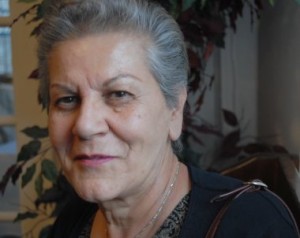
Hyacinthe O'Neill knew disabled=

Hyacinthe O'Neill knew disabled writer/artist Christy Brown.

What Hollywood calls the “biopic” –biographical films like the recent Johnny Cash-June Carter homage, “I Walk the Line”—tend to treat the facts of a life as though they were Silly Putty, not concrete. What’s ugly is gussied up; what’s pretty is sometimes muddied. The ordinary moments are edited for the sake of drama; the extraordinary, exaggerated for the same reason.

But those who knew Christy Brown—the severely disabled Dubliner who gained fame by using the toes of his left foot to write and paint—say his portrayal by Oscar-winning actor, Daniel Day-Lewis, in the movie “My Left Foot” was uncannily accurate.

“He completely did it,” says Siobhan O’Neill of Philadelphia, who grew up in the same Dublin neighborhood as Brown, a close friend of her parents, Hugh and Hyacinthe O’Neill. “As a little kid, I used to sketch and I would sit and study people. My mother would tell me to stop staring. But Christy would hold his hands in such a twisted way that I can’t even imitate it, and Daniel did it, not even knowing Christy. It was like he was channeling Christy.”

Day-Lewis also captured Christy Brown’s dark side. “He was very funny, a bit of a genius, in some ways great, but in other ways he was terrible,” says Hyacinthe O’Neill, who became close to the Brown family (“his sister Anne was my best friend”) as a 19-year-old engaged to Hugh O’Neill, a lifelong friend of Christy’s youngest brother. “A mind so active as Christy’s, being shut up in a body that doesn’t work was torture. He was depressed a lot which may be why he drank so much.”

Hyacinthe O’Neill will share her reminiscences of Christy Brown next Thursday night at 7:30 PM when The Irish Film Series at Philadelphia’s Irish Center, concludes with “My Left Foot.” And she will provide the disturbing epilogue to Jim Sheridan’s uplifting but unsentimental movie that ends with Christy lifting a glass of champagne with the woman who eventually becomes his wife, Mary Carr. Hyacinthe O’Neill and her daughter sat down at the Irish Center this week to talk to www.irishphiladelphia.com about their old friend, who died in 1981.

Hyacyinthe O’Neill, the daughter of a British Army officer and an Anglo-Indian missionary’s daughter, spent much of her childhood in India where she attended boarding school with Nepalese princesses and a Thai king’s son. After Indian independence, her father left the military and became a policeman in Scotland. O’Neill was living in London when she met Irishman Hugh O’Neill whom she married and with whom she had three children. She lived most of her adult life in Ireland, much of it in the Dublin neighborhood where the Brown family—Christy was the ninth of 13 surviving children—lived.

“His mother was a saint,” says O’Neill, who now lives in Mt Airy and works as an accountant for a Manayunk firm after years in a family business in London and California. Though Brown’s mother was told by doctors that her son was hopelessly mentally disabled, she refused to believe it. And when he picked up a piece of chalk with the only part of his body he could move—his left foot–and tried writing words on the floor, she began to teach him to both read and write.

“There were always tons of visitors at the Brown house and there was always a huge pot of stew on no matter when you went there,” O’Neill recalls. “She was a wonderful woman. I don’t know how she coped with such a huge family and a son who needed so much, but I never saw her lose her temper.”

Not so Christy. “Oh, he swore all the time,” says Siobhan, who works in the admissions office at the University of Pennsylvania. “He had little tolerance for fools, though he was always nice to kids. He really liked children. When we were little, there were always parties at Christy’s house. There were famous people there, like Peter Sellers and Richard Harris, but I guess we were too little to appreciate that. We were bored stupid by them. So we would go up to Christy and ask him if we could play with his wheel chair and he would say yes, and off we’d go, racing each other up and down the way.”

The O’Neills would often give the Brown family a much-needed break, and whisk Christy away to a nearby lake where he could paint. Or down to the neighborhood pub, The Stone Boat. “Christy loved to drink,” says Hyacinthe O’Neill. “There was very little else for him to do besides read.” They would also travel with him to the north side of Dublin to hear his favorite musical group, The Dubliners.

While the film of his life isn’t sugar-coated, it also celebrates Christy’s indomitable spirit—though he knew he would never live like a normal man, he was determined to wring everything out of life that he could. But the ending, which hints that Christy found both fame and the love of his life, says O’Neill, wasn’t truly the end.

“It was a horror story in the end. It was heartbreaking,” she says.

In the film, the nurse (called Julia) Christy meets and falls in love with was actually a former prostitute and lesbian named Mary Carr, once briefly a dental assistant who couldn’t hold a job because of her drinking and drug use, a claim made by a controversial biography, “Christy Brown – The Life that Inspired My Left Foot” by British author Georgina Hambleton, published last summer. Though the movie shows Christy and his future wife meeting at a gala event in his honor, in the book Christy’s brother Sean says that he introduced the two. Mary Carr, he says, was the lesbian lover of a friend.

“Oh, she was terrible,” says Hyacinthe O’Neill of Mary Carr Brown, who, like Christy, has since died. “But after he met Mary and married her, Christy was happy. She was not ideal, but he had a companion, someone to talk to. He influenced her to read and they could talk about books. Whether it was obsession, which is probably was, not love, right to the end, no matter what she did, he wanted to be with her.”

What she did, says O’Neill, besides having affairs with both men and women, was neglect her invalid husband, whom she hustled away to an ocean-front cottage in Kerry to keep him hidden from the prying eyes of his anxious family. “We went down there once and found Christy in his wheelchair perched at the edge of a cliff, looking out at the sea alone,” says O’Neill. “And he was emaciated. I don’t think he’d eaten in weeks. Sometimes she would lock him up in the house, leave him with bottles of whiskey and a straw, and go away for God knows how long.”

Yet, hospitalized by his family in Dublin for malnutrition, “he still wanted to go back to her,” says O’Neill. “He said if they didn’t take him back, he would crawl on his hands and knees to get back to her.”

In 1981, Brown choked to death while eating dinner. “All his food had to be cut up into very small pieces so he could swallow it,” explains O’Neill. “He choked on a piece of meat that was too big.” The implication remains unsaid.

After Christy’s death, O’Neill recalls, Mary threw out many of his paintings. Her husband, Hugh, was so disturbed by this that he went into the dumpster and rescued as many of them as he could. For years, the O’Neills kept them in storage. “They moved with us everywhere we went, including to California,” she says. “In the movie, all the paintings you see were the ones we rescued. Anne [Brown] told the producers that we had them, and they borrowed them.”

Unfortunately, all of these early works were all lost when a friend of the O’Neills, a German art conservator who was in the middle of restoring them, died of a heart attack. “We don’t know where they ended up,” she says.

Although the O’Neills, like Christy’s family, believe Mary Carr’s neglect led to his untimely death at 49, they also believe—hope really—that his love for her, however unwarranted, was a source of his happiness to the end. “He was happy with her and he was happy when they moved to Kerry,” says Siobhan O’Neill. “Hopefully, he died happy.”

“My Left Foot” will be shown at the Irish Center, Carpenter and Emlen Streets, in the Mt. Airy section of Philadelphia, on Thursday, May 1, at 7:30 PM. Hyacinthe O’Neill will introduce the film and answer audience questions. The Irish Film series was jointly sponsored by The Irish Center, WTMR radio host Marianne McDonald, and www.irishphiladelphia.com. Refreshments are available for purchase.

News

Camden Catholic Gets Jersey’s Irish Jumping

Mike O'Callaghan, banging the drum loudly.

Mike O'Callaghan, banging the drum loudly.

For the longest time, Jacob Griess was the only one on the dance floor. But he’s a toddler, and toddlers have no inhibitions.

But then Blackthorn took to the stage at the first Camden Catholic Irish Festival, and Jacob soon had plenty of company.

It was billed as a HUGE (all caps) Irish Festival, and,with more than 400 South Jersey Irish on hand, the description was apt.

Like most Irish festivals, it featured performances by Irish dancers and pipers, booths stocked with Irish hoodies and hats and such, and big steaming plates of ham and cabbage.

Of course, the big draw was Blackthorn. And even though it was a litle chilly in the big tent out behind the gym, the band soon hotted things up.

It was all music to the ears of Dennis “Archie” Archible, president of the school alumni association, class of ’74.

“This is going to be an annual event,” he said. “We have over 400 here today. We’re hoping to grow to over 1,000.”

Most if the revelers at Camden Catholic on Saturday are alumni, Archible said. A number of alumni also donated to the cause, he added, including beer and food. “It’s nice,” he said, “when it’s home-grown.”

The festival came together pretty quickly. Archible said it was first discussed following the school’s 120th anniversary in October. But the basic idea for the festival, he said, “has been inside my head for a long time.”

Proceeds of the event will help pay for bleachers and for improvements to the football field. As with most Catholic schools, tuition does not pay all of the school’s bills. Archible had no doubt that his fellow alumni would rise to the challenge. “We’re the oldest Catholic high school in South Jersey,” he said, “and the tradition is tremendous.”

Columns, How to Be Irish in Philly

How To Be Irish in Philly This Week

As usual, there are a couple of things we’d like to do this weekend that are going on at the same time. Ah well, it’s not such a bad thing to have an embarrassment of riches.

On tap for Friday night, County Cork’s Liam O’Riordan from the Irish group, Trad Roots, will be appearing at the Trinity Irish Pub and the Pier at Caesar’s in Atlantic City. Don’t worry if you miss him—he’ll be appearing again on April 20 at Emmett’s Place in Philadelpiha and on April 24 at The Shanachie Pub and Restaurant with local (but formerly of County Clare) musician Fintan Malone. We heard Liam about a year ago when Trad Roots made an all-too-brief appearance in the Delaware Valley, and he’s amazing.

On Saturday between 5 and 7 PM, the Irish-American Democrats are holding a rally for Hillary Clinton at Finnigan’s Wake in Philadelphia, featuring Maryland Governor Martin O’Malley and New York Congressman Joe Crowley. Primary Day is Tuesday—don’t forget to vote. This is an historic election.

Also on Saturday, you can hear the remarkable voice of Terry Kane at her CD release party at McCoole’s in Quakertown. Kane will be performing with the group, Trad Linn to celebrate their debut CD, “The Roads of Clare.” See our story.

On Saturday night, the Coatesville Irish Music Series presents three superb musicians—Dana Lyn, Tina Lech, and Donna Long—in concert.

And on Thursday night, don’t forget to catch the latest in the Irish Film Series at the Irish Center—“Bloody Sunday,” about the 1972 clash between the British Army and Irish protestors in Derry that left 14 people dead. See our review.

As usual, you’ll find all the details on our calendar, the only one in the world blessed by the Pope. (Was that lightning I just saw?)

Music

Local Singer Releases New CD

Growing up as the youngest of 11 kids in rural upstate New York, Terry Kane recalls bumping along in the family’s station wagon, her mother at the wheel, she, her mom, and siblings all singing at the top of their lungs.

“We sang in 10-part harmony which we made up, back when cars didn’t have child seats,” she says with a laugh. “I didn’t actually sit on a seat till I was about 12. No, I’m kidding, but I sat on people’s laps for a long time.”

The Kane family “loved music and dancing,” she recalls. “It was a part of our lives. My Mom is the one that pretty much taught us to sing, and her mom taught her to sing. Her Dad was a big dancer and his father was as well. My great-great grandfather bought a farm out there in the middle of nowhere, near the Finger Lakes, and he built a stage in the woods where they could do their Irish dancing. Apparently his second wife didn’t like when they danced in the house so they danced outside.”

So it’s no surprise that for the last decade, Kane, who lives with her husband Todd Daniel in a converted cigar warehouse near Quakertown, has been performing Irish music in the Delaware Valley, New York, and Washington, DC, sometimes solo, often with singer John Beatty as Kane & Beatty. She also anchors the monthly sessions at Granny McCarthy’s in Bethlehem and McCoole’s in Quakertown. But on Saturday, April 19, she’s launching her second CD as part of the group, Trad Linn, with New Yorkers Will Collins and Doug Lammer who play whistle and uillean pipes.

“Will is from a traditional family. His mother is from County Clare. His aunt, Kathleen Collins, is a traditional fiddle player. His father is a well-known accordion player,” says Kane. “I’ve played with Will and Doug at the East Durham Irish Festival in the summer. I don’t get a chance to play with them that often. But they stopped into the studio when I was recording and put down some tracks for me.” Also featured on the CD, called “The Roads of Clare,” are George Fairchild on bodhrán and his daughter Audrey Fairchild on cello.

And anyone who knows Terry Kane will expect to hear some of her unaccompanied sean nos singing, and she doesn’t disappoint. Kane has been studying this traditional form of Irish singing for more than 10 years. As a classically trained singer, it’s been quite a education. Sean nos (meaning “old style”) has many interpreters, but it is largely the antithesis of classical music with its emphasis on fluidity, sweetness, and vibrato. Sean nos can be fierce, almost unmelodic. “It’s also very nasal,” says Kane, who doesn’t think she’s yet achieved the sound.

“I don’t really truly sing in sean nos, though I’m getting very close to it now,” she says. “I have a masters degree in musical education so I sing in a more traditionally classic way. But I’ve been spending a lot of time with singers from Connemara. I’ve been taking workshops with Aine Meenaghan, a well-known sean nos singer who now lives in Chicago. I’ve taken classes with others too, including singers from the Aran islands. Any time I go to Ireland I’m always listening and picking up songs.”

She first became interested in Irish music when one of her older brothers came back from studying in Europe with a raft of recordings from Ireland. “He came back singing all kinds of rover and rebel songs,”” she laughed. “My brother, Pat, also got into the traditional stuff, so we found trad music again.”

Actually, it was for the first time. Though her mother came from a musical family, Kane says, her early ancestors tried to erase most vestiges of their culture, including their music—a familiar story in many families who arrived in America when the Irish were still the victims of strong and sometimes violent prejudice. “My mother’s mother used to sing sean nos type songs, but her husband didn’t like it. He wanted her to sing American,” Kane explains. “So that was the end of the sean nos stuff. My grandmother did teach her to sing the songs of the day. In fact, they used to sing while they were working. On a farm, there’s a lot of manual labor, so they would sing together while they worked. I know it sounds like a musical, but that’s the way it was.”

Today, she and her brother, Pat, who is also a professional musician, carry on the ancient and yet newfound family tradition. “Now,” she says, “this is not just my job but my passion.”

A CD release party is being held on Saturday, April 19, from 5:30 to 11 PM at McCoole’s Arts and Events Place, 10 S. Main Street, Quakertown. Tickets are $25 and come with a free CD. You can meet Terry and the band before the concert, and enjoy food and drink. The concert, which also features John Beatty, George and Audrey Fairchild, will start at 7 PM with a post-concert session at 8:30 PM.

You can contact Terry at 215-541-0282 or email tkane@netcarrier.com for tickets or purchase them at the door.

To listen to the CD, click here.

News

Remembering Joe McGarrity and the Martyrs of 1916

Patricia Bonner and Patty Loomer.

Patricia Bonner and Patty Loomer.

The Easter Rising ended—after one bloody, tumultuous week—more than 90 years ago. The heroes of the failed insurrection are long dead. Ireland is a prosperous republic, a leader on the world stage, thanks to their vision and sacrifice. (Thanks, too, to the disastrous miscalculation on the part of the British government in turning those courageous but flawed human beings into martyrs.)

Northern Ireland, the scene of so much heartache for much of the 20th century, is not without its troubles—but now, perhaps, with a small “t.” Still, Ulster appears to be “set for a new course,” as Northern Ireland Deputy First Minister Martin McGuinness put it in a recent visit to the White House with First Minister Ian Paisley.

A casual observer of history might wonder, then, why so many people—members of Irish Northern Aid, Clan na Gael, the Ancient Order of Hibernians—are still bothering to commemorate that abortive, long-ago rising.

We’re standing at the Holy Cross Cemetery gravesite of Joe McGarrity, the one-time Philadelphia wine and spirits merchant, leader of Clan na Gael, and one of the one of the world’s great physical-force republicans. McGarrity, who came to the U.S. from County Tyrone in 1892, died in 1940. And still, here we are in this sprawling Delaware County burial ground, and we’re listening to Tom Conaghan, executive director of the Irish Cultural & Heritage House of Pennsylvania, read from the Proclamation of Independence, crafted by Padraig Pearse, leader of the 1916 rising. The words of that brief address, read out by Pearse himself from the steps of the Dublin GPO, still hold tremendous power:

Irishmen And Irishwomen: In the name of God and of the dead generations from which she receives her old tradition of nationhood, Ireland, through us, summons her children to her flag and strikes for her freedom.

So, why? Why dredge up that abortive, long-ago rising and all those troubled dead generations, now that Martin McGuinness and Ian Paisley are singing “Kumbaya” at the White House?

Patty Loomer, a member of most of the organizations toting banners on that cool, drizzly Sunday afternoon, offered a few remarks during the ceremony. With her interest in history, organizer Pat Bonner tapped her to review the life of Joe McGarrity. This was her third time. To her, one big reason to march every year to Joe McGarrity’s final resting place is the man himself.

“He borrowed money to get the ship to New York,” she recalls. “He had to borrow maney from a guy on the ship so he could get from New York to his aunt’s house in Philadelphia. Whatever he did, he was very determined.”

The other reason is simple remembrance of Pearse and all the others who took such monumental risks for Ireland. Loomer says: “It’s a commemoration. It’s a reminder of all the people who sacrificed so much.”   

We have photos from the day.

Dance

Tiny Dancers

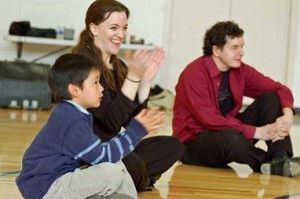
Darrah and Niall field some, at times, humorous questions from the kindergarten.

Darrah and Niall field some, at times, humorous questions from the kindergarten.

Champion Irish dancers Niall O’Leary and Darrah Carr had just spent an entire class period in the Woodward Gym at Chestnut Hill Academy, teaching a group of kindergartners all about Irish dance and music. Applying their great powers of concentration and persuasion, they managed to herd all of those energetic little cats and keep them focused on the subject at hand. They even showed them how to dance a jig.

At the end of this exhausting but fun-filled period, there was just enough time for a few questions about Irish culture.

First question, from a little guy in the back:

“Did the Vikings invade Ireland?”

Darrah: Yes, they did, many times.

Brief pause. 

Second question, same kid:

“How many times did the Vikings invade Ireland?”

Darrah: Not sure, but many, many times.

Third question, same kid again:

“And what happened to you?”

Darrah: Happened to me when?

Same Scandinavian pirate-obsessed kid:

“When the Vikings invaded Ireland.”

Proof once again that, in the eyes of very small people, we older people can seem unbelievably old.

O’Leary and Carr were visiting CHA this week as part of the Steele Guest Faculty Program, designed to expose students to irish culture. The program is overseen by Peggy Steele and honors her late husband Franklin Steele. Past guests have included Malachy McCourt and Irish fiddle champion Seamus Connolly.

O’Leary is the director of the largest Irish dance school in New York City; Carr is artistic director of a New York-based modern dance company that blends Irish culture with contemporary dance.

The two guest faculty members for the day had a very busy day indeed, visiting classes from morning to late afternoon. They also returned later that evening for a special presentation … for adults.

Whether showing off their hard-shoe skills or playing the spoons, the grown-ups were no less charmed than were the kids.

Music

New Local Group Releases CD

Call it the power of sibling rivalry, but John Gallagher reluctantly admits that he’ll be singing on stage and selling his first CD at Molly Maguire’s Restaurant and Pub in Phoenixville on Friday night, April 11, because his younger brother told him he “didn’t have the balls” to do it.

“My brother, Pat, and I were talking about art and writing,” explains Gallagher, an entrepreneur (he owns his own recruiting business) from Ardmore. “He told me I didn’t have the balls to do anything with it.” Pat Gallagher, also a recruiter, has launched a successful side career as a painter because he literally couldn’t stop “doodling,” as he called it. He was discovered in New York by an art dealer who saw him drawing in a bar and convinced him to pursue his talent.

“There’s always been a part of me that wanted to write and sing,” says John. He comes by it naturally. Both his parents, Donegal immigrants, sing; his uncle Vince Gallagher has his own band and an Irish radio show on WTMR. “I always sang for fun. After I decided I was not going to make it to the NBA, this is what my passion was.”

But, like many dreams, this one took a backseat to the practical. Gallagher needed to make a living. “I have my own company, I’m responsible for taking care of my family and my employees. I couldn’t focus on what I left behind. This is where my life took me,” he says like a man who was content with what seemed like fate.

Then, suddenly, fate laid out a slightly different path. A convergence of events—call it serendipity—sounded like a message from the universe to John Gallagher. His brother started painting and selling his work—without quitting his day job. He hired his first employee, Craig Newman, who had toured with the band, Sunflower. And his wife’s cousin is married to Patsy Ward, guitarist with the local Irish group Causeway. He, Craig, and Patsy started playing together as The Pointe. And John started writing songs.

“Last Memorial Day we went into the studio and this CD is what came out of that,” he says.

It’s called “The Other Side of the Tracks”—a reference to the fact that the Gallaghers grew up on the Main Line, but literally on the other side of the Reading line from its manicured mansions. One of the 11 songs, “Piece of Work,” is about John’s relationship with his brother, Pat. It has a distinctly country flavor and, despite the sibling rivalry that might have inspired it, it’s clearly about brotherly love. He’s already sung it a cappella at an open mike night. And he’ll be singing it Friday night at Molly Maguire’s.

“We’ll see how we’re received,” Gallagher says, his voice reflecting that same “what will be will be” attitude that guided his career. “I’m not really thinking about where it might go. Who knows what could happen? I’m doing it because I love it.”

And because, as anyone who has a younger sibling knows, he has a kid brother knew exactly what he was doing all along.