Monthly Archives:

September 2008

Arts, People

Local Filmmaker Revisits a ’50s Music Scandal

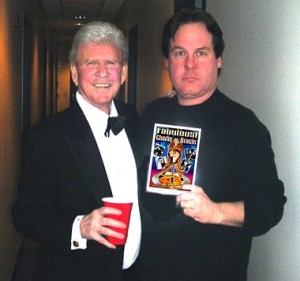
Shawn Swords with singer Bobby Rydell holding Swords' last release, Charlie Gracie: Fabulous.

Shawn Swords with singer Bobby Rydell holding Swords' last release, Charlie Gracie: Fabulous.

A couple of years ago, a young Irish-American filmmaker named Shawn Swords from Glenolden trailed a popular Irish-American band around and produced a critically acclaimed documentary called, “Blackthorn, It’s an Irish Thing,” which appeared on UPN.

Last year, Swords completed a documentary of Philly rock and roll pioneer Charlie Gracie, whose “Butterfly” knocked Elvis from the top of the charts in 1957 and sold more than 3 million copies worldwide—without benefit of the internet. “Fabulous” was picked up for World Wide Distribution by Oldies/Gotham/Alpha distribution and was a huge hit two summers ago during a PBS fundraiser.

This month, Swords, who went to film school at 32 and now steers Character Driven Productions (Conrad Zimmer, Blake Wilcox, Paul Russo), debuts a brand new documentary, this one on the American Bandstand Philly years with Dick Clark, on September 27 at the Wildwood By the Sea Film Festival at the Wildwood Convention Center.

But if you think “Wages of Spin” is a feel-good trip down memory lane with Bobbie Rydell, Chubby Checker, Frankie Avalon, Jerry Blavat, Justine, Eddie, Arlene and the other and all the other Bandstand dance regulars, you’re in for a shock. The same one I got when I caught Swords’ trailer on YouTube.

It opens with a black screen, like a chalkboard, on which is scrawled the word, “Payola,” with a definition for those who have no memory of the ‘50s music scandal, the origin of the term “pay to play”: “A secret or private payment in return for the promotion of a product, service etc, through the abuse of one’s position, influence or facilities.” Then you hear the voice of Artie Singer, who wrote the popular Danny and the Juniors’ hit, “At the Hop.”

“Where do you think Dick Clark made all his money? Initially where do you think he made it? From guys like me.”

Singer is looking at the off-screen interviewer. He raises his arms in the classic “but wait” move. “Granted,” he continues, “I can’t say anything derogatory. I can’t say anything bad because I owe my success in the record phase of it to Dick Clark.”

He had to “love the guy,” Singer tells the off-camera Swords, because without him, “there would have been No ‘At the Hop,’ no Danny and the Juniors.”

And by “without him,” Singer says, he means without Clark taking 50% of the publishing rights to the song. If the record producer hadn’t given it to Clark (as a gift, he later said, because they were friends) there’s a good chance that “At the Hop” would have gotten no play on what was the most popular teen program in the ‘50s.

Oh, say it ain’t so! America’s oldest teenager, the fresh-faced host who squeezed between two Philly teens every day from 3 to 4:30 PM to introduce the latest hit record or musical heartthrob, the guy who’s been counting that ball down on Times Square every New Year’s Eve? Dick Clark? Making hay to play?

To hear Swords tell it—and he’s talked to the players and read the transcripts—it was big time. He first came across the story when his friend, Paul Moore (formerly of Blackthorn, now of Paddy’s Well) asked if he was familiar with the story of Charlie Gracie. “Charlie was a talented musician, but he wound up being blacklisted back in the ‘50s, says Swords. “Charlie has a number one hit, at 19 years old, went on tour for a year, appeared on he Ed Sullivan Show, with [teen rock show DeeJay] Allan Freed, Dick Clark, then comes back home to Philadelphia and he’s not getting royalties. The record sold 3 million worldwide.”

Gracie discovered that Dick Clark owned 25% of “Butterfly.” Gracie sued the record producer and got $50,000, but that was the end of his career. Though he signed with a new label, he couldn’t get airplay. “He knocked Elvis off the charts and he couldn’t get airplay,” Swords says.

Digging deeper, Swords discovered that according to Congress, Clark was given somewhere in the neighborhood of 160 copyrights with the implied guarantee that those songs would air on Bandstand. But during the payola hearings before congress in 1960, Clark denied taking payola to play songs. In a New York Times article written at the time, Clark is quoted as telling the House Special Subcommittee on Legislative Oversight, “I have not done anything that I think I should be ashamed of or that is illegal or immoral, and I hope to eventually convince you of this. I believe in my heart that I have never taken payola.”

And in fact, says Swords, even if songwriters or producers never handed a fistful of cash over to Clark, he got paid. Instead, as was the case with “At The Hop,” he was given copyrights to songs, which meant that he benefited financially from their rise to the top of the charts. The New York Times report said that the Committee produced figures showing that over a three-year period, Clark had received $167,750 in salary and $409,020 in increased stock values, on investments of $53,773. That led one legislator to remark that if Clark hadn’t gotten payola, he’d certainly gotten plenty of “royola,” referring to royalties.

But by the time of he hearings, Swords says, Clark had divested himself of many of his holdings, including as many as 30 various businesses related to the record industry (as documented by Congress), so that the committee gave him nothing more than a slap on the wrist. Other DeeJays weren’t so lucky. Allan Freed lost his job and though he received only a small fine, his career was over; he died penniless at 43.

“Clark took the money from the divestiture and started Dick Clark Productions which became one of the most profitable independent TV production companies of all time,” says Swords.

While it took the filmmaker some time to uncover this chapter of the history of rock and roll, it really wasn’t hidden all that well. In fact, one of the producers of the film is John A. Jackson, author of the book that laid out many of the details, “American Bandstand: Dick Clark and the Making of a Rock ‘n Roll Empire.”

“John wrote a fantastic book, one of my favorite books, but it barely showed up on the radar,” says Swords. “Why isn’t more of this public knowledge?” One reason, he suspects, is that it’s hard to get corroborating evidence from some of the singing stars of the era, with whom Clark still has dealings. “Some of them are still getting checks from him for appearing in Branson [the Missouri musical destination where yesteryear’s idols play to packed houses of nostalgic audiences],” says Swords. Nevertheless, Swords has at least 7 interviews on tape, like Singer’s, detailing what went on, but that’s out of about five dozen interviews. “They would tell me what happened, but a lot of them just stopped talking when the camera was rolling,” he says.

While Swords admits he likes digging into “abuses of power,” he doesn’t want to be typecast as a muckraking filmmaker. As a boy, he attended Girard College where he watched “the epic films” on old projectors “because they could get better rates on the old films,” he recalls. “We wouldn’t see the first-run films like the karate movies everybody loved back then. But I loved those old films, great English pictures on Cromwell and Henry the Eight, the David Lean movies, like ‘Bridge Over the River Kwai,’ ‘Lawrence of Arabia,’ and ‘Dr. Zhivago.’”

“I like the art films too, and have a real affinity for John Ford films, which are very melodic and emotionally impacting. I love the great action films and the film noirs, where there’s a great story.”

It was those kind of narrative films Swords planned to make when he went to the New York at 32, after getting out of the Navy, working two jobs to put himself though New York Film Institute. In fact, he’s working on a new screenplay now. “I worked most of it out during the two hour walks I take every day,” he says. “The whole plot, twists and everything. If I could sit and write all the time I’d be pretty good. I can really kick them out. Right now I’m tightening up one of my better screenplays and working on a couple of pilots, including one that’s a black comedy.”

He has six finished screenplays that he’s going to shop in LA by the end of the year. “I’ have had two offers for talent representation,” he says.

And when we talked a few weeks ago, Swords was still putting the finishing touches on “Wages of Spin,” which meant weeks of “being nocturnal,” while readying the documentary for The Wildwood By the Sea Film Festival, which he co-founded with his executive producer Paul Russo. “I have black circles under my eyes,” he admitted.

Don’t let it be for naught. Check out “Wages of Spin,” Saturday, September 27, at the Wildwood by the Sea Film Festival. If you can’t make it to the shore, there will be four screenings of “The Wages of Spin” at The Elaine C. Levitt Auditorium, 401 S. Broad Street (Avenue of The Arts) at: Noon, 2 PM, 4 PM and 6 PM. on Saturday, October 11. Admission is $10 at the soor. Artists featured in the documentary will be present at screenings.

“The Wages of Spin” will run continuously from 5 P.M until closing on several screens at Rembrandt’s Bar and Restaurant, 741 N. 23rd Street in Center City, on October 18 with several music and entertainment industry notables in attendance.?Tickets are $30 and are available at the door.
Columns, How to Be Irish in Philly

How to Be Irish in Philly This Week

Thinking about heading up to Bethlehem for the annual Celtic Classic this weekend? Want a lift? The University of Pennsylvania Irish Club is offering a ride on Saturday morning, September 27, from 37th and Spruce on the Penn campus. The rented school bus leaves at 10, so get there around 9:45 AM. Anticipated return time is 6 PM. Cost is only $15.

It’s worth it. The beautiful city of Bethlehem hosts this convention of Celts of every stripe each fall, with a plethora of pipe bands, sheep dogs, Gaelic athletes, food, and traditional and rock music to keep you entertained for days.

If that doesn’t float your boat, there are plenty of other things that will. Villanova University has started a three-week run of Eugene O’Neill’s “Long Day’s Journey into Night,” about the dissolution of an Irish-American family and you can see starting this weekend.

On Saturday and Sunday, the Bucks County Visitors Center is hosting its second annual Ancestry Fair where you can learn about everything from searching your family history, old photo restoration, and scrapbooking. And it’s free.

On Saturday night, the band that the Fleadh built is coming to the Irish Center in Mount Airy. Beoga (the name is Irish for lively) is a five-piece band from County Antrim that met at a session at the All-Ireland Fleadh (music competition) in August 2002. In 2005, Beoga was nominated by Irish Music Magazine for the best traditional newcomers’ award. This promises to be one exciting evening of music. Prepare to clap and tap.

Also on Saturday, local Irish-American filmmaker Shawn Swords debuts his documentary on the Philadelphia music scene of the ‘50s, revolving around American Bandstand and the payola scandal, at the Wildwood By the Sea Film Fest. See our story for details.

On Sunday, you can go a little British with Rachel Unthank & The Winterset with Devon Sproule at the World Café Live. This wonderful all-girl group “with Geordie accents,” had their album, The Bairns, described thus in The Observer: “a bewitching, dream-like, down-to-earth masterpiece.” We’re sold. We’d go just for the Geordie accents.

Physicist-turned-poet (or is it the other way around?) Iggy McGovern will be reading his work at Villanova on Monday, September 30, at the St. Augustine Center at 4:30. Mcgovern is associate professor of physics at Trinity College in Dublin. His poetry relies on both humor and rhyme and he was, among other honors, the winner of the 2004 RTE Rattlebag Poetry Slam.

On Wednesday October 1, starting at 7:30 PM, you can see and hear Kevin Burke and Cal Scott (the stunning blend of Sligo fiddle and guitar) at the Moorestown Community Center in Moorestown, NJ. Burke is a graduate of the much acclaimed Bothy Band and Scott is a multiple-threat instrumentalist, composer, and arranger. They’ve played this area many times and to packed houses.

And we would be remiss if we didn’t mention Octoberfest at McGillins that starts this week. Yes, lots of German brews and food at the oldest Irish pub in the city, on Drury Street. You might find yourself rubbing shoulders with lots of tourists who read Gourmet Magazine’s list of 14 Coolest Bars in the US. Gourmet editors called McGillins one of their favorites, noting it “has plenty of old-time character.” It should. It was founded in 1860 and its current owners have operated it for the last 50 years. Congrats to our friends at McGillins, who have been generous with their recipes, sharing them with us for the last nearly four years.

Our calendar, which has been busy trying to figure out how it can qualify for government bailout money, has all the inside information on these events and more. Check it out.

News

What Happens in Wildwood Stays in Wildwood?

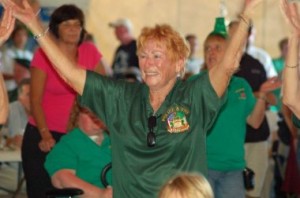
How can she keep from dancing? (Photo by Lisa Carberry)

How can she keep from dancing? (Photo by Lisa Carberry)

At 11 in the morning on Sunday, the vendors along New Jersey Avenue were doing brisk business in Guinness hats, Irish drinking team T-shirts, and shiny shamrock beads. The guys who shred spuds for butterfly fries were spinning out mountains of the things—and through the magic of boiling fat, turning them into thin, salty, crunchy chips for the masses. The Wawa at 4th Avenue was peddling plenty of hoagies, coffee and sun block.

A bar with wide-open windows provided the soundtrack: “Blow My Whistle (Bitch)” by DJ Alligator—a thoroughly unlovely, unsubtle, misogynistic sentiment for a Sunday morning down at the Shore, but really the only discordant note as the last day of the Wildwood Irish Fall Festival otherwise dawned bright and clear. It was a quiet morning down in Anglesey, with the promise of unrestrained, Irish-accented fun in the sun yet to come.

In a few hours, Paddy’s Well and a whole host of other bands were playing in the music tent. The beer taps were stuck in the open position more or less continuously.

And the parade finally kicked off down at 24th and Surf, bringing with it pipe bands from every corner of the Delaware Valley and beyond, the Irish American String Band, Reilly Raiders drum and bugle corps, dancers from everywhere, and Ancient Order of Hibernians divisions from Philly and the Shore. A short-sleeved Rev. Rev. William T. McCandless, the grand marshal, led the long procession up to the business end of the festival. The crowds seemed thinner this year than last, particularly at 1st and Central, the dogleg just before the parade turns up Anglesea Drive and into the festival grounds.

No matter—for all the folks who flock to Wildwood year after year, it was still the best way to end summer.

We have more photos than we count (thanks to pal Lisa Carberry for all her help) and some videos—including a little treat for Eagles fans.

News

The Wildwood Irish Fall Festival in Pictures

You'll run into lots of these guys.

You'll run into lots of these guys.

They say that what happens in Wildwood, stays in Wildwood.

That is, of course, unless we are there with cameras in hand, ready to capture the action.

If you’ve gone to the Wildwood Irish Festival before, let this get you pumped up for the weekend.

And if you’ve never been, let this be your sneak preview.

Columns, How to Be Irish in Philly

How to Be Irish In Philly This Week

You could be having this much fun. From last year's Wildwood weekend.

You could be having this much fun. From last year's Wildwood weekend.

I hope very few people are reading this because they’re making their annual trek to North Wildwood for the Cape May AOH’s annual Irish Fall Festival, with Paddy’s Well, Searson, Derek Warfield and the Wolfetones, the Bogside Rogues, the Sean Fleming Band and many other terrific bands rocking the Music Tent by the sea.

I hope you’re pub-hopping, practicing for the Tink Haldeman 5K Run/Walk on Saturday morning (sign up at the AOH Tent between 1st and 2nd Streets on Olde New Jersey Avenue to benefit Shriners’ Hospital for Children), or spending what little money you have left after this week’s momentous financial crisis on some funny t-shirts or bumper stickers available from the hundreds of vendors (because you just gotta laugh, it’s the Irish way). Proceeds from this annual festival go to AOH charities, which number many.

Two bits of bad news for long-time festival-goers: No Blackthorn this year, and no Keenan’s Pub.

We spoke to several members of the popular Irish rock group that has been holding its Irish weekend at the shore as long as the festival has been around. They told us that the band had some gigs lined up for the summer, including Irish Weekend, at a venue in North Wildwood, but decided not to play when a bit of a political “quandry” seemed to be shaping up after word got about over their potential return to that end of the Cape May Peninsula. For the past few years, Blackthorn has operated from the Borgata in Wildwood. No word on whether the tradition will pick up again next year, but we hope so.

And Keenan’s, the block-long North Wildwood pub where you could always wet your whistle and attend Mass (though not at the same time), was closed for 55 days for underage drinking violations, according to the Philadelphia Daily News, though it sounds like the family-owned bar got snookered by some legit-looking fake IDs.

If you’re sticking closer to home, you still have lots of choices. The incredible group, Solas, is appearing Sunday at the World Café Live. They’re one of our favorites.

If you want to get some great tips on tracing your family history (where did those Murphys come from anyhow?), the Genealogical Society of Pennsylvania and the Church of Jesus Christ of Latter-day Saints is sponsoring a day-long conference called, “Genealogy: The Basics and Beyond.” There are more than 20 sessions to chose from and more than a dozen exhibitors to visit. There’s a $10 fee and it includes a boxed lunch! It’s happening on Saturday, September 20, at the Valley Forge Family History Center in Broomall.

On Tuesday, you can meet Ireland’s Consul General Niall Burgess up close and personal at the September networking happy hour sponsored by the Irish American Business Chamber and Network, held on The Moshulu (sailing ship turned restaurant) on Penns Landing. You need to RSVP, so check the calendar for details.

After rubbing elbows with the Irish consul, head over to Villanova University’s Vasey Theatre for the opening performance of Eugene O’Neill’s “Long Day’s Journey Into Night,” the Pultizer Prize-winning play that chronicles the unraveling of a tight-knit Irish-American family. A laugh riot it is not (though there is some humor!), but it’s truly an unforgettable story. My favorite quote from the play: “There is no present or future, only the past, happening over and over again, now.” Sadly, true. It’s always been my contention that it’s important to not make the same mistakes over and over again when there are so many new mistakes to be made.

That same evening (lots going on for a Tuesday), you can hear Julie Fowlis singing Gaelic songs of Scotland’s Hebrides at The Grand in Wilmington, or, if you’re in the Quakertown area, attend the CD release party for the Canadian all-girl Irish band, Searson, fresh from their gig in North Wildwood.

On Thursday, it’s Tool Time at McGillin’s Olde Ale House in Center City: TV host and writer Joe L’Erario, host of TV’s Furniture on the Mend, Furniture to Go, and Men in Toolbelts, will be signing his new book, Wood Finishing. You can see more of his work upstairs at McGillin’s too—L’Erario refinished a 20-foot antique oak bar for the bar’s newly refurbished second floor.

Still reeling from this week’s Wall Street meltdown, our calendar, which will never be able to retire, has all the answers, except for the big philosophical ones, like, “What is the meaning of life?” Pay it a visit.

Dance, Music

Didn’t We All Just Have the Best Time?

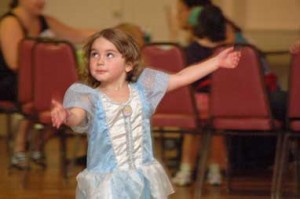
Stella means star ... and she is. One of many who just couldn't keep from dancing.

Stella means star ... and she is. One of many who just couldn't keep from dancing.

Not all that long ago, Irish newcomers to the Delaware Valley found a pretty fair treatment, if not a cure, for homesickness in the dances at the old VFW on 69th Street.

Rosemarie Timoney, one of the local legends of Irish dance, recalls working in Chestnut Hill in those days. She used to hop on a bus that would take her from Bethlehem Pike down to Cheltenham Avenue, and from there, she’d join her girlfriends on the E bus for the last leg of the trip down to Upper Darby.

There, she and her pals would dance the sets—Shoe the Donkey, the Siege of Ennis, the Philadelphia set (of course), and more.

A few of the folks who remember the dance hall days all too well—including Rosemarie, Ed Reavy Jr., Tommy Moffit and Kevin McGillian—were on hand over the weekend as the Philadelphia Ceili Group held its annual festival of Irish music and dance at the Philadelphia Irish Center. One very special feature of that three-day event was a Saturday afternoon dance to commemorate those days down on 69th Street. With Rosemarie herding the newbies, Tommy calling the tunes, Kevin playing accordion and Ed dancing up a storm, it felt like nothing had really changed at all. The dance hall was different, but the dance goes on.

It all felt like a great reunion party. But, then, the Ceili Festival always seems to reunite people who sometimes manage to see each other two or three times a week, as well as people who maybe haven’t been inside the Irish Center for years. Everyone just picks up where they left off, and they all throw themselves into hours and hours of great music—this year including a concert by the great New York fiddler Tony DeMarco—as well as endless hours of floor-shaking dancing. (You can hear the shoe-pounding pretty well in the parking garage under the ballroom.) The bar does a pretty fair business, and traditional music sessions go on and on into the night.

We’ve tried to capture some of the best moments in pictures.

Arts

A Look Behind the Scenes at “Long Day’s Journey Into Night”

Robert Hedley has been through it all before. Forty years ago, then a relatively new assistant professor in the theatre department at Villanova University, Hedley directed a production of Eugene O’Neill’s Pulitzer Prize-winning play, “Long Day’s Journey Into Night.”

It was the first production in Villanova’s Vasey Theatre and, by all accounts, a huge success.

Now Hedley—who has since moved on to become head of the Playwriting program at Temple University, co-founder of The Philadelphia Theater Company, artistic director of the Iowa Shakespeare Festival, and holder of the Barrymore Lifetime Achievement Award—is taking a fresh look at O’Neill’s master work in a new production at Villanova.

“Long Day’s Journey Into Night” is considered an autobiographical work, and it documents the torments and travails of a dysfunctional Irish-American family over the course of one day. It addresses some fairly well-known themes in Irish-American life, such as drink and Roman Catholicism. To summarize the play in such a Cliff-s Notes fashion, of course, does it a grave injustice

The play, which opens Villanova’s 50th season, runs from September 23 to October 5, 2008.

Hedley also serves as director of International Education for the School of Communications and Theater at Temple, which includes the Dublin program—so Irish themes do tend to resonate a bit.

We chatted with Hedley about the play, O’Neill, families—and Philadelphia’s large and appreciative Irish theatre audience.

Q. You first directed “Long Day’s Journey” at Villanova forty years ago. I’m told it was the first play staged in Vasey Theatre. Where were you in your career then?

A. I was a young assistant professor then. I was, I think, in my third year of teaching in the United States. I’m from Canada. I was moving into the Philadelphia area and got the job at Villanova. (He became the chairman of the theatre department.) It “Long Day’s Journey”) was the first play in the present theatre. Then, it was just a lecture hall with a high stage at one end and wooden fixed desks. We took over that space.

For me it was a tremendous experience, all in all, even though we were rushing to make that hall a do-able space for theatre.

Q. Tell us about that first show, 40 years ago.

A. I remember we had an unusually large Irish audience. I was surprised. Everyone in the play, of course, is of Irish descent. I never thought we’d find that particular audience. Night after night, those people would come up to me and talk to me about the play. I saw some of the same faces in the audience, every night.

Q. What does it mean to revisit the play so long after directing it the first time?

A. It’s a really powerful piece. Coming back to it after all these years, it’s [still] an extraordinarily intense look at a time in one family’s life.

Someone asked me whether I thought this play had a contemporary relevance. I said, it is probably more present now than it was 40 years ago. It has to do with morphine and addiction through medication, for example. (Mary Tyrone, the mother, is addicted to morphine.) That’s in the news today. And it’s about disjointed, disengaged families. It addresses questions like: How do you cope with family members not living up to your expectations, or following in your footsteps?

It’s such a human play. It’s the only play I know that is this intense among the four family members.

Then I went back to it, it was not only “present” to me, but I was frankly surprised at how contemporary it seemed.

Q. Why do you think this play has such a lasting presence?

A. What has sort of guaranteed its lasting is that it is really extraordinarily, brutally honest. People say things to each other that are pretty shattering. You have people who are suffering—in Mary’s case, because of addiction, or, in (son) Jamie’s case, because he’s never lived up to his father’s expectations. You look at that and how siblings are related, and it’s really powerful stuff. We go home exhausted.

Q. How else is this production different for you?

A. Last time, 40 years ago, I had a couple of professional actors and a faculty member up there, and a couple of students. It’s very much the same lineup (now) as before. Still, the productions are very different.

In the theatre 40 years ago, all the members of the audience faced the stage, and that meant that you were looking at it almost the way you look at a movie. For a director, that’s sometimes a lot easier.

In this case, though, most of the play takes place around a table, and with the theatre in its present configuration, were playing very far down front, There are audience members along the sides, and some practically behind us. That means that you feel like you’re really inside it. You’re very, very close. You can have the most intimate sort of things happening. You can have actors genuinely whispering and you can hear them just fine.

I love the notion that you have a play unfolding, and you are close enough to it to pick up the smallest nuances, the smallest flicker of emotion in somebody’s face.

Q. How did you get into theatre?

A. I’ve told this story many times.

My mother Wanted to be a concert pianist. She taught piano. My father was a pretty good musician, but he was also a painter and a photographer. My sister was a very good pianist. My brother had an opera program.

When I went to university, there was a requirement that you take one of the arts courses. Well, my family had covered all the other bases. There’s no way I was going to go into one of those areas that my family was already good at. So I chose a course in theatre. As soon as I got into it, it felt absolutely right. I was very, very comfortable in it. I just enjoyed everyday going into those classes.

For details on the Villanova production, visit the university Web site.