Monthly Archives:

September 2009

News

Put the Green In Immigration Reform

You may not know if from the national controversy over immigration reform, but some illegal aliens have Irish accents. And with double-digit inflation in Ireland, the number of undocumented Irish in the US is bound to increase.Put on something green and head down to City Hall on Monday, October 12, at 11:15 AM for a rally to support immigration reform.

“It is vital that the Irish community plays a visible role in the campaign for immigration reform, and I would love to see a green bloc at the rally,” says Siobhan Lyons, executive director of the Irish Immigration Center of Philadelphia.

The rally is scheduled the day before a major rally and march on Washington, DC, where immigration reform groups from all over the country will converge.  The Irish Immigration Center is sending a delegation. For more information, contact the center at 610-789-6355.

Columns, How to Be Irish in Philly

How to Be Irish in Philly This Week

Sure and you’re all worn out from Irish Weekend in Wildwood or Celtic Classic in Bethlehem, but there’s still lots to do.

On Friday, October 2, for instance, you can come out to the Irish Center in Mt. Airy and hear Northern Irish singer Fil Campbelll perform the music of five female singers of the 1930s to the 1960s. We heard her up in Bethlehem this past weekend and shot a few videos to give you a taste of her show.  

Speaking of taste, the inaugural meeting of the Eastern PA Whiskey Society is scheduled for Friday night at Maggie O’Neill’s Irish Pub in Drexel Hill. We have been assured that this is a bone fide organization with an interest in the complexities of good whiskey, and not a cover for. . .well, anything. 

On Saturday, there’s a fundraiser for the Shelby and Benjamin Chestnut Trust at the Legion Hall in Narberth. These two youngsters were born with severe disabilities—Shelby with a form of cerebral palsy and Benjamin with a rare neurological disease. Neither child can walk or talk, and their care is expensive.

There’s a second fundraiser on Saturday, this one to raise money for the Police Survivors Fund. It’s being held at Maggie’s Waterfront Café in Philadelphia and features Blackthorn.

And you thought the festivals were over: The Trenton Irish Music Festival is scheduled for Sunday at the Trenton AOH Grounds. On the bill: the Willie Lynch Band, the Bogside Rogues, Jamison, Barleyjuice and others. There will also be a tribute to longtime Trenton Irish publican, the late Billy Briggs.

Did your family come from Ulster? The Ulster-American Society is holding an informal meet-up at Kildare’s Pub in King of Prussia on Monday night from 5-9 PM. Ten percent of your food and drink receipts will be donated to the group.

On Wednesday, the legendary singer-piper-actor Finbar Furey returns to the Shanachie in Ambler with Brian Gaffney. 

On Thursday, another great musical event at the Irish Center—and listen up all you history buffs. Jimmy Crowley and Mairtin de Cogain are bringing to life the songs of the Irish at war with their Captain Mackey’s Goatskin and String Band show, which was a major hit at this year’s Milwaukee Irish Fest. They’re both fabulous singers, and Mairtin is an actor. If you saw the chilling film, “The Wind that Shakes the Barley,” you saw Mairtin. It should be an amazing evening. So buy your ticket, grab your beer, and travel back in time. . .

And on the theater front: Samuel Beckett’s “Happy Days” is at the Lantern Theater, and the Inis Nua Theatre Company’s production of “Trad,”–which was nominated for a top award at the New York Theater Festival this year–is coming to the Irish Center on October 11 for a one-off performance, thanks to the Philadelphia Ceili Group.

News

Wildwood Daze 2009

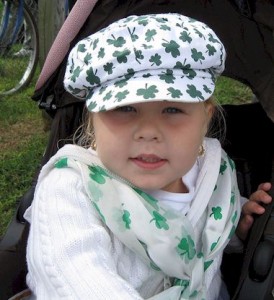
Her name is Erin (of course!). She was one of many festival-goers at the annual pipe band exhibition.

Her name is Erin (of course!). She was one of many festival-goers at the annual pipe band exhibition.

Sun and fluffy clouds. A cool breeze off the beach. A band, one of many Irish bands from the Delaware Valley, pounding out tunes in the music tent. Curly fries and pulled pork. Pitchers of beer. Bagpipe bands circling up and playing in the street. Kids (and not a few older folks) in silly hats and green Mardi Gras beads.

For many of us who have been to the North Wildwood Irish Fall Festival, it was groundhog day. We’d seen it all before, this exhuberant farewell to summer at the shore. Which is not to suggest that it was boring, or anything like it. If anything, this Fall Festival was as fun as ever. It might have been one of the better attended, best organized Fall Festivals the local Hibernians had ever put on. If you were there, you know what we’re talking about. (And you can take off the silly hat now.)

We have a pile of pictures and a video to help you remember the day. (You can remember something, can’t you?)

  • News

    The Celts Conquer Bethlehem

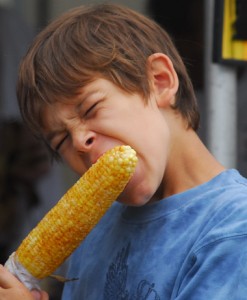
    This was the hands-down favorite festival meal.

    This was the hands-down favorite festival meal.

    Kilts, corn-on-the-cob, collies, haggis, fiddles, pipes, drums, beer, kids, guys with mountainous muscles. That’s the “tags” version of the the 22nd annual Celtic Classic in Bethlehem this weekend.

    After a disastrous 21st annual Celtic Classic—drowned last year by Hurricane Kyle—the Celtic Cultural Alliance did some cost-cutting (no bleachers at the Highland Games, for example) and squeezed the event into a smaller space to put some distance between festival goers and the Monocacy Creek which overflowed its banks in 2008. But it didn’t hurt this Celtic show piece of Bethlehem’s many full-city festivals. The crowds were big (except during a Sunday morning downpout), happy, and totally into it. We’ve never seen so many kilts in one place.
    We have pictures, video, and some nice memories.

    Watch our videos:
    News, People

    Help Two Children in Need

    They’re a family descended from Irish coal miners from Schuylkill County. They’re made of sturdy stock.

    Still, few would debate this point: Mary Ann Chestnut’s son Matthew and his wife Rachel have encountered more hardship than most.

    Mary Ann, of Narberth, tells the story of her grandchildren Shelby and Benjamin. They’re two of four children born to Rachel and Matthew. (Their two other kids are Patrick, 9, and Jordan Amanda, 6 months.)

    Four years ago, when Shelby was 3, she was diagnosed with cerebral palsy. It wasn’t a quick or easy diagnosis.

    Matthew and Rachel were still living in the Philadelphia area when they noticed something peculiar about Shelby’s gait. Her heels turned in, in a way that they clicked together.

    “She was perfectly gorgeous and she crawled like a little demon,” says Mary Ann. “I’m a pediatric nurse, and nobody would have picked up anything on her. The only thing we might have seen, in retrospect, was that she was a very quiet baby. When she went to walk, her feet were turned in, and they (her parents and doctors) thought it was some sort of orthopedic issue. They were looking at something correctable.”

    Later, the family moved to Portland, Oregon, and continued seeking care for Shelby at the local Shriner’s Hospital. Doctors there offered the same diagnosis: An orthopedic problem. ”But with each passing month it got worse,” says Mary Ann. “Then she started into muscle contractures. It took some time to develop.” Ultimately, Shelby was diagnosed with a very severe form of cerebral palsy.

    Today, this bright little girl is in second grade, sharp as a tack, and a whiz at the video game Wii, which they also use for therapy at Shriner’s. She can lift her arms from the wrists, but otherwise she is confined to a wheelchair. She can’t talk; instead she uses sign. From time to time, she requires surgery to relieve the contractures. She also takes Botox to prevent the muscle spasms.

    All of that was hard enough.

    Then along came Benjamin—like his sister, an active little person, full of personality.

    “He was born perfectly healthy and then, at 3, he had a cold for about a week, just like any child,” says Mary Ann. Then he spiked a pretty bad fever with it, and he seemed a little wobbly. My son took him to the hospital emergency room. The ER doctors took an X-ray and said he was constipated. He was, but that was a symptom of his illness. They sent him home with cold and constipation and said let it run its course.

    “One day, Benjamin just dropped to the ground and stopped walking,” says Mary Ann. “This was about a week after he was in the hospital, and they rushed him back. At first they didn’t know what it was. He was in pediatric ICU for two weeks. Ultimately, they gave him prednisone, but by then it was too late: He was already unable to move his legs at all.”

    The diagnosis: a rare disease called transverse myelitis, caused by an inflammation of the spinal cord. Benjamin, now 5, can now crawl, but he’ll never walk. He can’t speak.

    Like his sister, Mary Ann says, Benjamin is bright—so bright that in his special ed program, they put him into a regular kindergarten class. Though he can’t talk, he can sign. He has his own personal assistant with him. We’re hoping that (being in a mainstream class) will help bring back those language skills.”

    Matthew and Rachel are far from rich, Mary Ann says. So in a country where the definition of catastrophic illness coverage is a big mayonnaise jar with a coin slot next to the pizza parlor cash register, there’s little choice but to look for help wherever they can get it.

    This Saturday, you can help.

    The Second Annual Shelby and Benjamin Chestnut Fundraising Party will be held all day at the American Legion Hall, 80 Windsor Avenue, in Narberth. From noon to 4, you can attend a luncheon and an auction. Prizes include vacations, original artwork, sports tickets, gift baskets, gift certificates, and autographed books by St. Malachy Church’s well-known former pastor, Father John McNamee—Mary Ann’s cousin through the Garvey family.

    And/or: From 6 to 11 p.m. dance until you drop. The night includes great food, beverages and terrific music.

    The minimum donation is $25 for each event. Proceeds will go to help purchase a wheelchair van for the family.

    Long term, Mary Ann dreams of something bigger. “Our ultimate goal is to hopefully create a foundation, for families who have children with multiple disabilities. Having one child with a disability would be hard, but there are quite a few families with two disabled children, or more.”

    If you can’t make the Legion Hall festivities, you can still offer a helping hand. Send a donation to:

    The Shelby and Benjamin Trust

    In Care of:

    The Chestnuts
    102 Elmwood Avenue
    Narberth, PA 19072
    (610) 667-4582

    or

    The Beneficial Bank
    Attn: Regina
    901 Montgomery Avenue
    Narberth, PA 19072

    Music

    Songbirds: Nostalgic Music from Ireland’s Fil Campbell

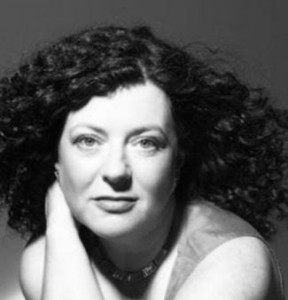
    Fil Campbell, photo by Khara Pringle

    Fil Campbell, photo by Khara Pringle

    Even through pints of amniotic fluid and layers of mom, an unborn baby hears music. Studies show that a year after they’re born, babies recognize and prefer the music they were exposed to in the womb.

    That may explain why Irish singer-songwriter Fil Campbell was so drawn to the songs of Delia Murphy, who died while Campbell was still a child in Beleek, County Fermanagh. “Delia Murphy’s was the music I grew up with,” says Campbell, who is bringing her award-winning show, “Songbirds: The First Ladies of Irish Music” to the Irish Center in Philadelphia on Friday, October 2.

    From a very early age, Delia Murphy songs were the ones she remembers her parents singing. Murphy’s recordings were always on the record layer or the radio when she was young. So it was natural for Campbell to add the tunes she may have heard before birth to her repertoire when she started singing professionally at 16.

    Before it was a road show and a CD, “Songbirds” was a series that Campbell co-produced and hosted which aired on the RTE network in Ireland to great acclaim. It chronicles the life of Murphy, a child of wealth from County Mayo, and four other female singers who each left indelible impressions on successive generations of Irish from the1930s to the 1960s.

    There was Margaret “Maggie” Barry, a ribald traveler who left an unhappy home to sing on the streets and market fairs and later influenced a young folk singer from Minnesota who called himself Bob Dylan and Irish balladeer Luke Kelly.

    Bridie Gallagher becameknown as “the girl from Donegal” after her eponymous debut LP in the mid-1950s. She sold millions of records over the last half of the twentieth century and influenced countless singers, including Daniel O’Donnell.

    Ruby Murray first appeared on television as a singer at the age of 12 and made her first recording just a few years later. Murray achieved dazzling success in 1955 when five of her songs appeared on the Top 20 in the same week. It’s a feat that has never been beaten, and was only matched this past July—posthumously–by Michael Jackson.

    But Murray, the sweet-voiced girl from Belfast whose biggest hit was the unforgettable tune, “Softly Softly,” came to a hard end. She died at 61 of liver cancer after years of alcoholism.

    Mary O’Hara’s was a life tailor-made for a Hallmark movie. Married at 21, a widow 15 months later, this harpist with the crystalline soprano voice joined an English monastery in 1962 and lived there for 12 years. She made a comeback in 1972 and quickly sped tothe top of the world again, appearing solo at Carnegie Hall in the late ‘90s. In his autobiography Memoirs of an Irish Troubadour, Liam Clancy writes that the music of Mary O’Hara inspired and influenced him and others of the Folk Revival period of the 1960s and ‘70s.

    Their voices and styles—and clearly, their lives–are as different as chalk and cheese, but together they form the nostalgic soundtrack of an Ireland long gone.

    The Ireland of Fil Campbell’s childhood is also long gone. “We lived out in the country and there was no cinema or anything. All we had for entertainment were ceilis or going to a relation’s house where everyone would do their party piece,” she recalls. “There was a lot of music in my family. My father was a really good singer and his brother and sister were musical too. His brother, Gerry Campbell, was a wonderful accordian player and he spent most of his life in Yonkers, NY. On my mother’s side of the family, they were all in ceili bands.”

    Once she went to school,Campbell got her second dose of music education. “I come from the little village of Belleek right on the border with Donegal,” she says. “The first day I went to school in Eniskellin, the nuns made everybody as first years sing or dance, and if you showed any ability at all they just instantly handed you instruments and you got on with it.”

    She started performing in her teens, then bounced between jobs on the periphery of music—promoting entertainers, doing radio—before taking up music as a career. “In the beginning, I did mostly my own songs,” says Campbell. “Then after attending the North American Folk Alliance event in the Catskills a few years ago I started thinking about doing more traditional music.”

    She immediately thought of Delia Murphy. “I wanted to do an album of Delia Murphy songs. I thought she was an amazing woman and such fun.”

    And, like the other Songbirds, she had a remarkable back story. As she does in her show, let Campbell tell it:

    “Delia’s father grew up during the famine in Ireland and like a lot of people he emigrated to America, making it to the west coast at the tail end of the Gold Rush. He had vowed when he left Ireland to buy the house the landlord lived it. He wound up making his fortune in America, managing a silver mine, and came back to Ireland and bought the house, with the result that the family was brought up as upper class citizens. They had a big estate, with hounds kept for the hunt, and they mixed with royalty and film stars. Delia grew up wth an incredible panache about her. She was college-educated which was unheard of for a Catholic girl. Though she came from a gentrified background, she had a broad west of Ireland accent (she was the first Irish singer to record in her own accent) and she sang songs of the common people and wound up marrying an ambassador. ”

    Ultimately, of course, Campbell wound up collecting songs from other remarable female singers she’d heard growing up. She calls them traditional, though she knows not everyone will agree.

    “It’s a really gray area,” she says. “There’s so much snobbery about Irish traditional music. Every traditional song was written at some point. Somebody wrote it. A lot of the songs associated with these women are known by the derogatory term “come-all-ye,” referring to songs that have a chorus that goes ‘come all ye, sing along with me.’ It’s a song everybody knows and can join in. Some of the songs, like ‘The Boys from the County Armagh’ and ‘WildRover’ are come-all-yes. Everybody knows them so everyone sings along.”

    This is a bad thing? Campbell doesn’t think so. She encourages it. “We want everyone to have a good time,” she laughs. “It’s a light show. We don’t take ourselves seriously.”

    here are times, she says,she thinks, “four years and here I am still Songbirding.” The show has played to packed houses in Ireland, England, and Germany, and the Irish Center show is the first time she’ll be performing it for American audiences. “I’m a bit nervous about it but it went well everywhere else,” she says.

    “It’s great fun. I love doing this material–despite the fact,” she laughs, “that I’m closet rocker Bonnie Raitt in my head!”

    Columns, How to Be Irish in Philly

    How To Be Irish in Philly This Week

    Two great festivals are already underway in the region, but they run all weekend so there’s still time to join in the craic.

    To our south, the AOH Irish Weekend in N. Wildwood, NJ, is so anticipated, many out-of-towners book their motels months in advance and take off work so they can start partying on Thursday night. If you don’t have a place to stay, it’s a fairly easy day trip, but make sure you designate a driver.

    Much of the action takes place at the Music Tent at the Inlet at Anglesea “where Olde New Jersey meets the ocean.” There’s pretty much nonstop music going on there, including Paddy’s Well, the Elders, Derek Warfield and the Young Wolfetones, The Broken Shillelaghs, the Bogside Rogues, the Sean Fleming Band, Love Seed Mama Jump, and the Secret Service Band. Dancing and cuteness will be provided by the Fitzpatrick School of Irish Dance from Bucks County. Blackthorn will be playing at the Anglesea Pub right nearby all weekend.

    There’s usually vendors as far as the eye can see, lots of great food, a pipe band competition, and lots of camaraderie. The event benefits AOH charities, so you can feel good about getting a little crazy. But get crazy wisely—you want the memories to be good. Heck, you just want to be able to remember. . . .

    The Celtic Classic is equally fun (we’ve been to both, many times), but in Bethlehem you also get to watch highland games (caber tossing, the hammer throw, the sheaf toss, haggis eating–no, wait, that’s a separate event, but eating an oatmeal-filled sheep’s intestine takes courage nonetheless), see border collies go through their paces, and watch drum major, pipe band and fiddle competitions.

    The Allentown Hibernians hurling team—in their second year of existence, they earned the right to compete on a national level—will be giving a demo, and then there’s music, music, music. Among the entertainers: Malinky, Albannach (Scottish drums and pipes–we like to think of their music as Barbarian rock), Scythian (you can join them for breakfast at McCarthy’s Tea Room in downtown Bethlehem—check our calendar), the Glengharry Boys, the Barley Boys, Barleyjuice, Burning Bridget Cleary,Timlin and Kane, Robert Watt and Charlie Zahm, Blackwater, Kane and Beatty, Seamus Kennedy, and Bua (fresh from their recent appearance at the Philadelphia Ceili Group Festival), to name a few. We’re excited to see Fil Campbell, who will be appearing on Friday, October 2 at the Irish Center and is scheduled to perform several times over the weekend in Bethlehem.

    Believe it or not, there are other things going on this week. The Lantern Theater Company is performing Samuel Beckett’s “Happy Days” till mid-October—and no, there’s no Richie Cunningham or Fonzie in this one. You can also catch the Inis Nua Theatre Company’s staging of “Trad” at the Amaryllis at the Adrienne in Philadelphia.They’re bringing a one-off performance to the Irish Center on October 11 too.

    Unfairly buried in all of this festival-ing is one of my favorite musicians, Tony DeMarco, a Sligo-style fiddler who is appearing at the Coatesville Cultural Society on Saturday night. Tony is magic—and I can’t say any more than that. Absolutely worth the trip to this wonderful venue.

    Speaking of fiddlers, Liz Carroll will be in York giving a fiddle workshop on Sunday. Later, she’ll be at the Yorktowne Hotel giving a concert with the group Trian.

    Want to learn to do Irish ceili dancing? A new class is being held this week at the E.T. Richardson Middle School in Springfield, Delaware County, and costs only $40 for a 10-week session, after which we expect to see you at the regular monthly ceilis at the Irish Center, kicking up your heels (when that step is called for, of course). On Thursday nights at the Irish Center, you can learn some ballroom dancing along with ceili dancing so you’re ready for the county balls, which are coming up soon.

    Dolores O’Riordan was the voice of the Irish supergroup, The Cranberries, and she’s bringing her solo act to the World Café Live on Monday, September 28.

    We bid a fond farewell to September this week, and with it goes the last of the big festivals until March, which we like to think of as St. Paddy’s month in the Philadelphia region because the fun never stops. But the craic goes on. Tune in next week!

    Or, go look at the calendar. That’s where you’ll also find the details about this week’s events.

    History, Music

    Traveling with the Irish Down Tin Pan Alley

    Limerick-born Mick Moloney, traditional Irish musician and NYU Professor of Music, admits to having once had a particular snobbishness toward the kind of Irish-American songs Bing Crosby used to sing. You know them: Songs that flaunted titles like “Who Threw the Overalls in Mrs. Murphy’s Chowder?”

    Speaking to a small but captivated audience at Villanova University last Tuesday evening, Moloney gave a lecture titled “If It Wasn’t For the Irish and The Jews.” It’s a moniker shared with both the 1912 song penned by the illustrious Tin Pan Alley song-writing duo of William Jerome and Jean Schwartz, as well as Moloney’s latest CD release. A CD that is the result of manifold years of research, and one that has culminated in an unabashedly uplifting celebration of just those kinds of Irish-American songs that Bing Crosby used to sing (go on…I dare ya…just try and not sing along to “Has Anybody Here Seen Kelly?”)

    “I came to the United States in 1971, lured over to play at The Philadelphia Folk Festival, and then to study with Kenny Goldstein in the University of Pennsylvania’s Department of Folklore & Folklife,” Moloney said. “I did a lot of touring…and it was during a 1995 tour in the Midwest, the heartland of America, that it flashed in me exactly where these songs came from.”

    The tour coincided with the 150th anniversary of the beginning of the Irish Famine, and it was this observance, coupled with talking to second and third generation immigrants, that sparked Moloney’s epiphany.

    “The immigrants that came to start a new life in America, they came from drama. They weren’t going to talk about the real Ireland, the place they were escaping. They wanted to present images of wholeness and happiness, a place of beauty and innocence where everything was good and wholesome.”

    At the same time, the music business was changing. “Stephen Foster, the great grandson of Irish immigrants from County Derry, changed the music industry forever. His song, ‘The Old Folks at Home’ sold 100,000 copies when it was published in 1851. No song had ever sold more than 5,000 copies before that.“

    “But by the 1880’s and 90’s…the music business shifted from an Irish to a Jewish enterprise…[and] despite the now overwhelming predominance of Jewish entrepreneurs and performers, Tin Pan Alley continued to issue streams of songs with Irish and Irish-American themes.”

    Intrigued by this early twentieth century collaboration between Jewish and Irish American songwriters, Moloney began his concentrated digging into the bygone days of America’s booming songwriting business during the years between 1880 and 1920.
    Some of the most curious examples of the blurring of the Irish-Jewish cross-cultural lines show up in the surprising number of songwriters and musicians who changed their names to sound either more Jewish or more Irish, accordingly, in order to further their careers (or so they believed).

    “There was the wonderful Nora Bayes, one of the most glamorous figures, she was kind of like the Madonna of her day. She started to sing and be associated with Irish songs, like ‘Has Anybody Here Seen Kelly?’ and ‘When John McCormack Sings a Song.’ She became the darling of Irish America. Turns out that Nora Bayes wasn’t Nora Bayes at all. She was Theodora Goldberg, and she had kept her Jewish identity completely hidden her whole life because she figured, inaccurately in the 1890s, that the business was going to stay Irish as it had always been in the 19th century. And this kind of ambiguity, people hedging their bets, started. And there was an awful lot of it. I’m amazed at how much of it there was.”

    Among the other for-instances: William Jerome, co-composer of “If It Wasn’t For the Irish and the Jews” was in truth the son of County Mayo famine immigrant Patrick Flannery. He changed his name when he saw the dominant figures in the business shifting from Irish to Jewish.

    And there was also David Braham, who collaborated on songs like “Maggie Murphy’s Home,” with son-in-law Ned Harrigan. David’s last name was originally “Abraham.”

    Moloney is nowhere near finished with this topic, “I’ve kind of figured out halfway into how the business switched from Irish to Jewish, but I haven’t figured out the why of it. Why did this happen? Why was this such a comprehensive wipeout, and the Irish turned their attention to politics and business?”

    In the meantime, there is music to be savored. Moloney will officially launch “If It Wasn’t For the Irish and the Jews: A Tribute to the Irish and Jewish Influences on Vaudeville and Early Tin Pan Alley” on Saturday, October 24t at the Peter Jay Sharp Theatre in New York City. He will be joined by a cast of musicians that include The Green Fields of America, Susan McKeown, Billy McComisky and Vince Giordano and the Nighthawks.

    Oh, and one little Irish Philly sidenote: Musician and publican Gerry Timlin, co-owner of The Shanachie Irish Pub in Ambler, has a harmony vocals credit on the CD!