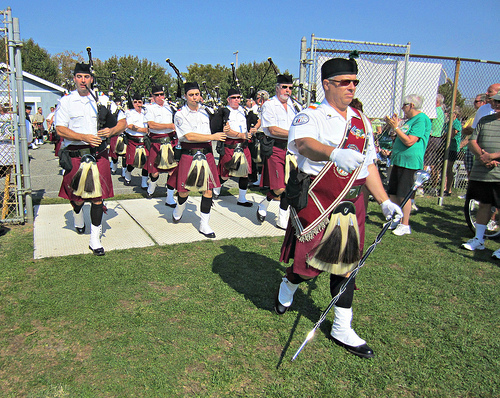
under takes to the field.” src=”http://irishinphilly.com/wp-content/uploads/2012/09/fallfestival2012home-300×238.jpg” alt=”Irish Thunder takes to the field.” width=”300″ height=”238″ />
Irish Thunder takes to the field.

under takes to the field.” src=”http://irishinphilly.com/wp-content/uploads/2012/09/fallfestival2012home-300×238.jpg” alt=”Irish Thunder takes to the field.” width=”300″ height=”238″ />
Irish Thunder takes to the field.
The t-shirt you see pretty much everywhere says it all: “What happens in Wildwood, stays in Wildwood.”
Which is not so suggest that the Irish Fall Festival is some kind of South Jersey Irish bacchanal. OK, so there are bars, and let’s face it, there is drinking, but … for the most part the festival is G-rated, with lots of music, dance, endless rows of vendor tables, and enough food to sink a battleship. Think of it as an excuse to wear a ridiculous leprechaun hat. (And pray the guys back at the office don’t see the picture we took of you.)
The 2012 festival, hosted by the Cape May County Ancient Order of Hibernians, lucked into some picture perfect weather, with sparkling blue skies, a gentle caressing wind, and temperatures in the 70s.
Hundreds of Irish folks flocked to the Wildwoods, in the way that swallows return to Capistrano, to take in the Irish pipe band exhibition on Saturday, and the big parade on Sunday.
We have the pics. Maybe you’ll see yourself. And don’t blame us … the hat was your decision.
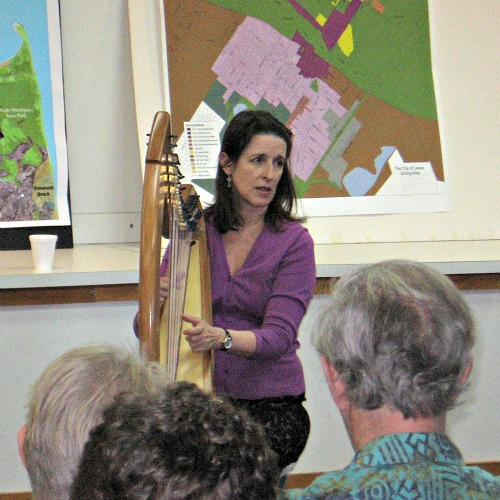
delphia.com/wp-content/uploads/2012/09/marykaymann-300×300.jpg” alt=”Mary Kay Mann” width=”300″ height=”300″ />
Mary Kay Mann
If an 11-year-old could compete in the world championships of Irish traditional music, harpist Mary Kay Mann reasoned, then so could she.
In this case, the then-fifth grader was Keegan Loesel, who took up the tin whistle at about 5 years old, and Mann was his teacher. Keegan is one of a small posse of incredibly talented local kids who have competed at the Fleadh Cheoil (pronounced flah KEE-ohl) on one or more occasions. Keegan put his skills to the test last year in County Cavan, Ireland, where the Fleadh was held.
Keegan played well but didn’t place in the under-12 whistle event, but it takes incredible talent, discipline and determination to get even that far. Inspired by her student, Mann decided to give it a shot.
Give it a shot she did … and even better than that: She came in third in over-18 slow airs.
It wasn’t easy. Unlike the local Fleadh kids, Mann, who lives in Media, has grown-up responsibilities.
“I have a day job, and students, and gigs, and a lot of things going on,” she says. In order to compete and have a snowball’s chance in Ireland, Mann knew she would have to choose the event best suited to her talents.
“I chose slow airs. I would have to really work to compete with 16-year-olds on jigs. I thought that, as a person who is not exactly young, slow airs might be something I could do. Slow airs don’t take speed; they take maturity. They’re slow and emotional and not rhythmic, and they are ornamented. I could probably study them for the rest of my life. I like challenges like that.”
Even then, Mann says, it was tough going. In order to compete in Ireland, Mann needed to know eight slow airs, and her playing of those eight airs needed to be bulletproof. “It takes a lot of time,” Mann says. “Once you get there, you have to play three of them … except that you don’t know which three, so you have to prepare all of them.”
Unlike other Fleadh contests, which can attract large numbers of contestants, over-18 slow airs for harp drew only six contestants. Mann thinks that might have improved her odds, but all the same—all six players were world-class.
“I think I was the only American … and these girls were incredible. Really young and really good. They’re driven, they’re self-driven, they practice all the time, and they love it.”
To her surprise, Mann more than held her own. But that’s not to suggest her third place medal was some kind of fluke. Mann, who took up Celtic harp in the mid-1990s, has always been a deeply committed performer and teacher, with a bachelor’s degree in instrumental music education. She already played classical flute and piano before she added the Celtic harp to her repertoire. (She also plays tin whistle.)
As for how Mann got her start, she blames another well-known local harpist, Ellen Tepper. “”I was playing flute in a duo with her, and at one point she just handed me the harp and said, ‘Try this, it’s easy.'”
It wasn’t all that easy, but it wasn’t all that hard, either. Celtic harp is often taught “by ear,” without aid of sheet music.
For Mann, that was just fine.
“I already played piano by ear,” Mann says. “I had already learned how to do that before I transitioned to the harp. It’s fun without all the little dots on the page. And it really is nice to start when you are older because you sound decent right away. If you started on fiddle, you’d probably sound pretty bad, but a lot of people start learning harp in midlife because it’s gratifying right away.”
After years of learning and trying to perfect her craft, competing and placing at the Fleadh is icing on the cake. For now, Mann is content to return to her teaching and performing life. She’s not sure the Fleadh experience she will repeat any time soon. “It costs a lot of money. I didn’t do benefit concerts; I had to pay for it. It’s a lot of money and time … and it’s exhausting.”
Huge Celtic doings in Bethlehem this weekend as the Celtic Classic gets underway with treats for those who trace their roots back to Ireland or Scotland. That means you can listen to Irish groups like the Glengarry Bhoys, Bua, Barleyjuice, Burning Bridget Cleary, RUNA, and Girsa, while eating haggis.
While the music is always fabulous, what we love about the Classic are the highland games, in which (mainly) burly (mainly) men toss big weights, hammers and cabers—think telephone poles—as far as they can. And there are also the border collies, who would herd butterflies if they could.
It runs throughout the weekend, and there’s plenty of parking and shuttle buses. We have the entire lineup for each day on our calendar.
There’s more—Blackthorn times two. The boys from County Delaware will be at Adelphia in Deptford on Friday night then at the Cardinal O’Hara All Class Reunion on Saturday night at The Deck in Essington.
Catch the Shantys at Paddywhack’s on Welsh Road on Saturday night too. They’re also doing a gig on Friday at the Hibernian Hall in Bristol Borough.
Two local musicians, Cara Frankowicz and Maeve Gilchrist, will be be playing a house concert in Lansdale on Saturday night.
Kevin McCloskey will be playing Irish and American folk songs at Dolan’s Irish Pub in Burlington, NJ, on Saturday night as well.
You’ll need your dress-up clothes for the Philopatrian Ball on Saturday night. It’s being held at the Doubletree in downtown Philadelphia and benefits St. Malachy’s School in North Philadelphia.
Also getting jiggy on Saturday night: No Irish Need Apply will be at Brittingham’s in Lafayette Hill, and Slainte, an offshoot of Jamison, will be at Curran’s Irish Inn in Palmyra, NJ.
On Sunday, there will be a mass in honor of the Northern Irish hunger strikers at St. Anne Church on East Lehigh Avenue in Philadelphia with refreshments afterwards.
At the Irish Center, hurling championships from Ireland will televised live. At 8:15 AM, catch the junior final with Dublin facing off against Tipperary. At 10:30 AM, Kilkenny takes on Galway for the senior final. Admission is $20 and breakfast is available for purchase.
AOH Notre Dame Div. 1 is holding its ceili on Sunday in Bridgeport. There will be dancing and music by Tom McHugh with Kevin and Jimmy McGillian.
More celebrations—the McDade School of Irish Dance invited back 50 years worth of students to help it celebrate the big one. There will be music and dancing and reminiscing at the Springfield Country Club in Springfield on Sunday night.
If you’re anywhere near Coatesville, you can hear the talented Irish brothers, Cillian and Niall Vallely at the Coatesville Cultural Society.
Do you have a business that could us an international arm? Find out how to do it on Monday at a conference at the Pyramid Club in Philadelphia. Experts, including several lawyers, will talk about the challenges and opportunities—including business-friendly taxes—of establishing your business in Ireland.
He doesn’t sound Irish until you hear him play. Carlos Nunez, an honorary member of The Chieftains, who plays the Galician bagpipes, performs “Celtic music with a Latin passion.” He’ll be at the Sellersville Theatre on Wednesday, October 3.
On Wednesday, join Irish Network-Philadelphia at the Twenty-Two Gallery, owned by member Shawn Murray, for some wine, cheese, chatter, and art-gazing. IN-Philly is also heading to Lancaster for a golf weekend at the end of the week. If you don’t play golf, one word for you: outlets.
Slainte will be playing at Con Murphy’s on the Parkway on Thursday night.
Lots of good music coming up in a few weeks, including Clannad at the Keswick. Mark your calendars for October 19 for the Irish Anti-Defamation Federation’s first major event, a night of comedy. And no, there won’t be any terrible Irish jokes.
s=”size-full wp-image-7594″ title=”whoo hoo” src=”http://irishinphilly.com/wp-content/uploads/2012/09/whoo-hoo.jpg” alt=”” width=”380″ height=”380″ />
Peter Gallagher and friends lead the cheers.
John Kildea was supposed to be getting ready for a christening, but, he confessed, he “sneaked out” wearing his Donegal shirt to catch the Donegal-Mayo match for the coveted Sam Maguire Cup, broadcasting live from Dublin’s Croke Park on six screens at the Commodore Barry Club “The Irish Center” in Mt. Airy.
“I have to be back by half 12,” he said. Kildea lives in Delaware County and could have gone to Paddy Rooney’s Pub. But he said, laughing, “it’s more of a Mayo bar. Win or lose we could get hammered.”
Now, we’ve seen photos of the crowd at Paddy Rooney’s in Havertown, and it was looking mighty green and gold to us. And that was the prevailing color at the Irish Center as well though the red and green of Mayo was well represented in hats, shirts, socks, and in a few cases, faces and hair.
More than 300 people saw the game at the center, where they could also enjoy a full Irish breakfast. Well, at least some of them could. Tyrone-born Geraldine Quigg, who helped prepare the meal, said they sold 180 breakfasts. “Then we ran out of food.”
That sounds bad, but it’s a good thing. It was also a good thing that there was barely room at the bar to breathe and that just about every seat in the place was taken. No one was complaining.
“This is the way it was when we were kids,” said Muireann McGill McFeeters, who is Philly-born and bred but whose father, Jim McGill, is one of the earliest members of the Irish Center. “We would wear our jerseys and paint our faces.”
Another infrequent visitor said it reminded him of Sundays when he was a kid. “Nothing’s changed,” he said, over the din at the bar. “It’s the same bar and the same nice people.”
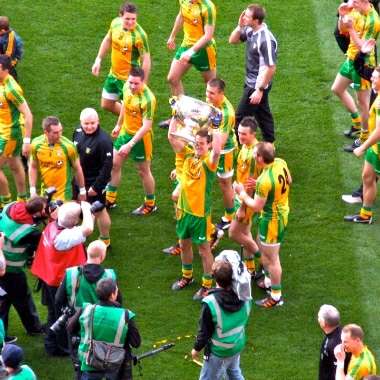
Donegal takes ownership of the Sam Maguire Cup on Sunday, September 23, 2012. Photo courtesy of Liam Porter.
“I really want the boys to win for the journey that they’ve been on and to end the journey on a positive. And once they have it, if they get it, nobody could ever take it away from them and that would be something for them. For them, for their kids, for their family. Everybody.” – Donegal Manager Jim McGuinness (pre all-Ireland final press conference)
As Donegal’s celebrations erupted on the final whistle on Sunday, there was only one thing that Martin McHugh wanted – and that was to hug and congratulate his son Mark.
Martin, a winner with Donegal in 1992 was on the sideline working for the BBC at the final whistle when Mark ran to him. The clip of that emotional embrace will become one of the iconic images of the 2012 final and in many respects sums up what all-Ireland day really means.
There is no doubt that to win the Sam Maguire is the pinnacle in the sporting sense for GAA footballers – but for their county it is also something bigger than that, something that transcends sport.
Donegal’s win over Mayo was, to use the words of Jim McGuinness, “a journey.” While he brought his players on a particular journey to achieve the pinnacle in sporting terms, they brought the rest of the county with them, re-affirming pride, passion and a real sense of belonging.
In essence it sums up the very best of the GAA. That sense of community pride, joy, energy and enthusiasm that permeates the organization to the grass roots and is replicated week in and week out in club games across the country.
To those involved in clubs, those who stand on a cold wet January evening watching a McKenna Cup game, it is something natural. It is part of their DNA.
And because of that, they don’t always grasp the phenomenon that sweeps a county into a frenzy – but it happens anyway.
It happens because, whether we like it or not, our lives are more often than not shaped to a large degree by lines drawn on a map.
Where we’re born, where we grew up, where we live, have a huge bearing in our sense of identity.
We can travel – but we always measure travel, where we go and what we do – to home.
It is where we start out, and it is where we know we will always to some degree belong.
That’s what brought people from all over the world – including many from Philadelphia -to Croke Park on Sunday to cheer on the team and it was that sense of home, that sense of family and community that made Sunday’s win such a memorable one.
It was highlighted not only by that wonderful McHugh embrace, or by the players’ children on the field at the end, but also by the hugs and sheer delight of family members and friends from all over Donegal meeting, often for the first time in ages, in such exciting and thrilling circumstances.
Family and friends – were reunited on the most delightful of days and everyone with a drop of Donegal blood beamed and almost burst with pride.
This was more than just a football game. The people of Donegal have a new family member.
Sam Maguire, we’re delighted to have you. We’ll make you more than welcome.
See more photos from the event here.
See some clips from the game.
Manager Jim McGuinness and Donegal singer Daniel O’Donnell duet on “Destination Donegal.”
“Jimmy’s Winning Matches,” with Mark McHugh and the team.
Liam Porter is a freelance sports writer in Donegal who has a large family right here in the Philadelphia region. Donegal manager Jim McGuinness played GAA football in Philadelphia in 1999.
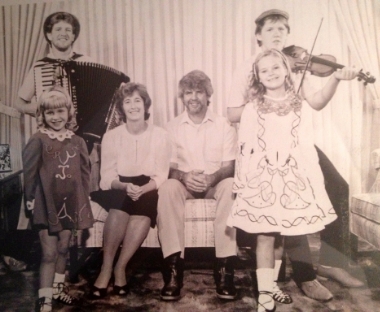
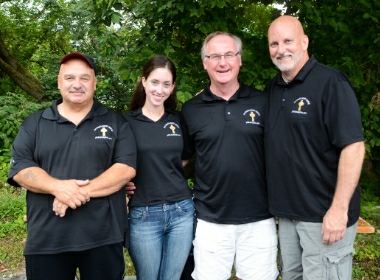
Maureen McDade McGrory and her family, including daughters Sheila, right, and Maureen, left, who took over her school after her death.
Maureen McDade McGrory used to tag along when her dad’s band, The All-Ireland Orchestra, played at all the dances and Irish events in the Philadelphia. That was back in the day when the dances were where the newly arrived Irish would meet to start new friendships and where countless marriages were made.
She’d listen to the music but mostly she would dance. She begged her parents for lessons. Both Philadelphia-born but with roots in Donegal and Scotland, they agreed. She learned the proper steps with the late Sean Lavery, a Donegal native and one of the leading Irish dance teachers in the area (for 50 cents a lesson!) in the ‘50s.
When Lavery died, his student decided to start a school of her own, right in her own home. She taught Irish dancing for the next three decades, training champion after champion, until her untimely death in 1993 of cancer at the age of 54. She left behind four children—and a legacy they refused to let die.
Her daughters, Sheila, then 18, and Maureen, then 14, along with one of her mother’s McDade School dancers, Bridget O’Connell, decided to keep the school going. Immediately.
“It was a crazy time,” remembers Sheila McGrory Sweeney, now a 37-year-old mother of three. “Mom passed away, we had the funeral, and Bridget was like, ‘Let’s go,’ and we had class the following Tuesday.”
To keep the school certified so its students could compete, Bridget had to get her certification as an Irish dance instructor. “You have to be 21 to be certified and we weren’t old enough,” says Sheila.
The three women (Maureen is now a Lisowski) have not only kept the school going, they’ve made it thrive. Today, the McDade School of Irish Dance is also the McDade-Cara School of Irish Dance, a merger that provided more times, locations and instructors to handle hundreds of students, from tiny beginners to top champions (there were nine world qualifiers from the combined schools his year).
McDade is celebrating its 50th anniversary this year with a reunion dinner of sorts, inviting back all those young men and women who learned their moves from Maureen McDade—and the grandchildren whose recitals they now attend. It’s scheduled for Sunday, September 30, at the Springfield Country Club in Springfield.
“We’re going to have people there from the first generation of my mom’s dancers,” says Sheila. “The minute we posted the event on Facebook we started hearing from people. My dad, John, who is a year in recovery from a stroke, told me that one lady stopped by the house—he still lives in the same house—and brought four of her old dancing costumes and a CD of pictures from 1962 to 1970. And she stayed for an hour and a half, talking about how her parents had come out from Ireland, didn’t know anyone, got involved in dancing and the people they met then are who are their friends today.”
That’s part of what’s kept up in the interest in Irish dance in the Philadelphia area long after the “Riverdance effect” wore off, says Sheila. Dancers become part of a community that persists even after everyone has sold their performance dresses and boxed up their wigs.
When she and her sister were growing up, dancing wasn’t just part of their world, it created their world. “It was a nice, tightknit group of girls who all had something in common. Our mothers were all friends, and we built weekends away around the dancing. But it was more than just about the dancing. All of my friends now are people I danced with.”
It’s been the same for her daughters, Regan, 11, and Darcy, 8. (Son Brendan, 14, “danced until kindergarten and then told us he was officially retired,” she laughs. “But he’s a musician. He plays piano.”)
“We just had a group of families go up to the Catskills, a trip built around a feis (an Irish dance competition). They all camped out and that’s all the kids can talk about,” says Sheila. “The kids love to dance, but they also love the opportunity to travel and love being on stage. My daughter, at 11, has already been to Scotland, England, and Ireland, for dancing. My husband says she has more stamps on her passport than he does! And they like to wear pretty dresses. But, really, it’s the friendships.”
That camaraderie is one of the reasons Sheila Sweeney has been teaching Irish dancing for the past 19 years. The same goes for her sister and their partner, Bridget, as well as their brothers, Jim and John McGrory, who have become accomplished musicians (and feis musicians too).
“I love it. I can’t imagine not having it as a big part of my life,” she says. And, she says, it makes her feel closer to her mother. “Of course, sometimes I shake my head and say, ‘Mom, what did you get me into?’ But it’s amazing to have that connection, to be able to carry on her tradition. If she was looking down, I think she’d think that she’d left it in good hands, between me, Maureen and Bridget. I think she’d be pretty darn proud.”
For a look back at the McDade School, check out the photos here.
ment wp-att-7551″>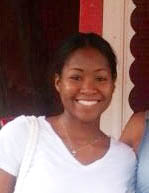
Jameeka Wilson will be the keynote speaker at a St. Malachy's fundraiser next week.
By Kathy McGee Burns
Every year, around this time, I write an article about St. Malachy’s School, the mission school in North Philadelphia, part of the parish founded by the Irish where my family worshipped when they came here many years ago. I do so in hope that you readers will be moved to donate money to continue their legacy of hope.
I thought I did this for two reasons. The first is in honor of my Grandmother, Mary Josephine Callahan who was baptized, educated, married and buried from St. Malachy’s. The second is because I love and respect the goodness of my long-time friend and Pastor Emeritus, John McNamee.
But, this spring I met someone who epitomizes why I am doing this begging again. I was at a fundraising meeting when this lovely, beautifully composed young woman addressed the crowd. Suddenly the light in my brain went on and I knew why I cheerlead for St. Malachy’s!
Jameeka Wilson,who is 20 years old and a graduate of St. Malachy’s, is the proof of its success. She is presently a senior at the University of Scranton where she is also a resident assistant, a police student officer, an advisor in the Panuski College of Professional Studies, and an eighth grade CCD teacher. Her goal is to attend Temple University School of Psychology as a graduate student.
And she’s no fluke. Her sister, Natasha, just graduated from Millersville; her twin, Chareese, is at Bloomsburg and Christopher, a younger brother, is also a sophomore at Scranton. It’s quite a family.
When Jameeka started her speech she said that her grandmother, Anna Frames, had given her this advice: “Always keep in mind the light at the end of the tunne.l” Anna, who had come to St. Malachy’s as an immigrant from Panama, is the driving force behind Jameeka’s family of seven siblings. Life hasn’t been a smooth path for the Wilsons. In fact, it’s been a series of rough, rocky roads. But for them all, there was the light, the “Beacon of Hope” that Anna talked about. It was St. Malachy’s,
During the troubled times, the teachers, counselors, and priests were there. They were there to comfort the children and keep them grounded. When baby Christina, their younger sister, died, “Father Mac said the Mass, paid for the funeral, and went with us to the cemetery,” says Anna Frames, with admiration and gratitude still in her voice.
Jameeka says she lives by two doctrines; one of them is St. Malachy’s School Creed:
I have faith in myself
I have faith in my teachers
I can learn if I study hard
I will learn because I will study hard
I respect others and seek their respect
I have self respect
I have self control
I love myself
And loving myself I will be myself
And know myself
I am the one who is talking.
She also loves the Serenity Prayer:
“God grant me the serenity
to accept the things I cannot change;
courage to change the things I can;
and wisdom to know the difference.”
Even at 20, Jameeka is a wise woman. These are just a few of the things I heard her say that impressed me so much:
“God places special people where we need them,” she says.
“When someone loves you, you can love yourself.”
“Use your situation as a reason, not as an excuse.”
“You can take St. Malachy’s out of the city but you can’t take St. Malachy’s out of the people.”
When Jameeka finishes her education, she plans to stay in the city and work with children. “I want to give them the knowledge that I’ve accumulated so that they can be all that they can be,” she says.
Father McNamee, in his latest message to the vast community that is St. Malachy’s, writes, “The measure of St. Malachy School is more than making Catholics. The mission is to take the children in from the highways and byways as the Gospel parable of the Wedding Feast envisions. Give them Catholic teaching and view the children and their families with the respect that they will do with this opportunity what they are able. In the end we give them the groundwork. What they do with it is their charge.”
So, in the long run, I beg for the money so that the Light, the Beacon of Hope, can keep illuminating the path these children are taking.
You can support St. Malachy’s by attending the Catholic Philopatrian Literary Institute’s Ball this year at the Doubletree Hotel in Center City on September 29. Proceeds from the event benefit the school. And you can also meet Jameeka Wilson for yourself. She’ll be the keynote speaker.
There are other ways to support St. Malachy’s. On November 4, musician and folklorist Mick Moloney will return for the 24th year with some of his musical friends to perform a fundraising concert in the church. It’s always a standing room only concert, featuring some of the leading lights of Irish traditional music.
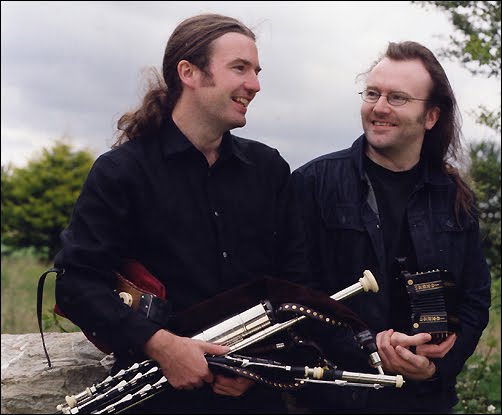
lely” src=”http://irishinphilly.com/wp-content/uploads/2012/09/niallandcillian-300×248.jpg” alt=”Cillian and Niall Vallely” width=”300″ height=”248″ />
Cillian and Niall Vallely
Maybe you have to really know Irish music, in the way that you know breathing and heartbeat, before you can begin to take creative liberties with it.
For uilleann piper Cillian Vallely, perhaps best known for his work with the exceptional Celtic fusion band Lúnasa, the seed of experimentation was planted early on.
First came learning Irish music in its purest form at a school known as the Armagh Pipers Club, following in the footsteps of both his father Brian, a piper, and his mother Eithne, a fiddler. Brian Vallely is the club’s director; Eithne, director of music.
“When my father started playing, there wasn’t a whole lot of Irish music at all, and there weren’t a lot of pipers in Ireland,” Vallely explains. And that was the main reason why his father and several other pipers started the club in 1966, he says. “It was a real mission they were on, to keep the music going. For political and cultural reasons, Irish music was almost underground. It was looked down upon then. People were almost embarrassed by it.”
The club gave the early members the opportunity to teach themselves, even as they taught their first pupils.
Vallely remembers trooping off to the club with his sister and three brothers once a week, all of them starting out on whistle, and eventually taking up different instruments. (In spite of the club’s name, it wasn’t all pipers and piping.)
“My father tried us all on the pipes, but they (his siblings) let it go,” Vallely says. “I remember my mother trying to teach me the fiddle. I remember not liking it. I started the pipes when I was 8. I think it was just a case of liking the pipes.”
In retrospect, he laughs, “My life would have been simpler if I’d learned the fiddle.”
As obsessed with traditional Irish music as the Vallelys were, all were expected to branch out in another direction: in this case, classical music. Eithne Vallely was also a music teacher, and Cillian Vallely learned to play flute and saxophone. This is where the Vallely kids began to take a broader view.
“I was probably never just playing Irish music,” says Vallely. “My parents were never too narrow-minded about the music. They were never saying to us that there is only one way to play. We were never above doing other stuff, playing other styles. My mother put together arrangements that, when I look back on it, were pretty modern.”
At the same time, Vallely recalls, he began to be heavily influenced by the Bothy Band, the Chieftains, Moving Hearts, and Planxty, all of which were known for pioneering innovations.
In the end, it was probably a surprise to no one who knew him that Cillian Vallely’s career would take him in many non-traditional directions. And then, in 1999, came an opportunity to play with the band with which he is most often identified.
“I had been playing professionally about four years before Lunasa came along,” Vallely says. “Lunasa was already up and running when they asked me to join. I understood where they were coming from. Their music made total sense to me—that’s what I wanted to play.”
At the same time, Vallely continued to explore other musical collaborations, including the Celtic Jazz Collective, Riverdance, and the New York-based band known as Whirligig.
Perhaps not surprisingly, his collaborations are more familial, as witness his upcoming Delaware Valley concerts with brother Niall on concertina.
“Me and Niall are less than two years apart, but we’ve been playing together since I was 10. He understands piping, and he understands my music. We play different instruments and we only play together maybe twice a year, but we both like the same kinds of music, and we are playing the same style in a lot of ways. His concertina style has been affected by piping. Neither of us have to travel to0 far to play well with each other. “
You have two opportunities to judge for yourself. The Vallelys will appear in a house concert in Voorhees, N.J., on Wednesday, September 26, and on the concert stage at the Coatesville Traditional Irish Music Series on Sunday, September 30. Do yourself a favor, and go to both.