Monthly Archives:

February 2012

History, People

Will They Go No More A-Roving?

A scene from the film, "Settling Down."

They’ve had many names: tinkers, travelers, gypsies, Lucht Siuil (“the walking people” in Irish), and Pavee, in their own tongue. There are only about 36,000 of them in Ireland and they’ve traded their distinctive horse-drawn carts for gleaming trailers and, increasingly, houses, just as they’ve given up tinsmithing and seasonal farm labor as 21st life encroaches on their centuries-old itinerant culture.

On Sunday, the University of Pennsylvania Museum of Archaeology and Anthropology will present the short film, “Settling Down,” a look at a small group of Irish travelers in Cork and how their identity and culture has been transformed as a result of bigger changes in Ireland.

Joseph Lennon, director of the Irish Studies Program at Villanova University, will be speaking about the film and the uncertain future facing the travelers. We spoke to Lennon this week.

What’s the film about?

It focuses on pretty localized incidents in Cork and right outside Cork City where the city corporation is trying to negotiate with a group of travelers about keeping some of their camp sites open and creating more open space and fields for their horses. One of the travelers asks many, many times, “Where can we go?” It seems like the big question in today’s Ireland. How are travelers going to find any place they can go? It’s a problem that endures. It’s about land. It’s about prejudice. There’s still a lot of fear of this pretty insulated community and what they do and what they’re about. As much as we know about them and studied them and talked to them, they’re a closed community with their own language, and people are fascinated by that.

Travelers are ethnic Irish. Why is there so much prejudice against them?

It’s half romanticism and half fear. Historically there has been this projection of the settled population, of us, onto this romantic itinerant group that seems to buck the rules of modernity. The truth is, for every incident of traveler theft there are hundreds of thousands of incidents of no theft, but things get magnified both in the media and our cultural imagination. You have to remember too that the population of Ireland had struggled to own their own land for hundreds of years after it was confiscated by the British. It was one of the goals of Irish immigrants to the United States and in Ireland to get land. They have a great passion for that; it’s seen as the most prized possession. For people who never aspired to that, there was a sense that they were the losers in life. Michael Hayes, a scholar in this area, calls it the dropout theory: They couldn’t make it in society so they dropped out. And as the documentary points out, the travelers were left out of Ireland’s economic boom times. They’re considered working class people who don’t have the same ambitions as settled people. They’re not seen as a different ethnic group or lifestyle, but a group that should assimilate and most travelers don’t want to assimilate. Their lifestyle and culture is to be on the road. Ireland has difficulty with multiculturalism. Only in the last 15 has Ireland had any immigrants. The immigrants who are coming to Ireland have brought awareness of the need for advocacy for the travelers.

What are their origins? I’ve read that they’re descended from ancient traveling poets or that they’re descendants of people turned out of their homes during the famine.

It’s difficult to say. There’s no absolute origin story for the travelers. Going back to the mid-17th century, there were these traveling bards or the Filid, people who would travel between districts or kingships as storytellers, bringing news, telling stories, acting as historians, doing genealogies, things that were very meaningful in those societies. It may be that the travelers picked up on that tradition, coopted it if you will, and picked up some of the stories and the oral culture. They are certainly more practiced in orality than, say, people who watch TV all the time, so there may be some truth to it.

I’ve also read that their language, shelta, can be traced back to that time.

Nowadays people have about 200 to 1,000 words of vocabulary and they mostly use it for bargaining. [Irish travelers trade in everything from dogs and horses to scrap metal.] A part of the language appears to be Norman Romany, a root of the language of Romany and what was to become English. Languages like shelta are actually what are considered “anti-language.” They’re there to obfuscate, to be intentionally not understood, which makes them useful in bargaining so people outside the community would not understand.

What do you think viewers will come away thinking after they’ve seen the film?

I hope they come away thinking that what’s going on with Irish travelers is much more complicated than they had guessed and the problems haven’t been solved for good reasons, including prejudice.
Music

A Chieftains Blast From the Past

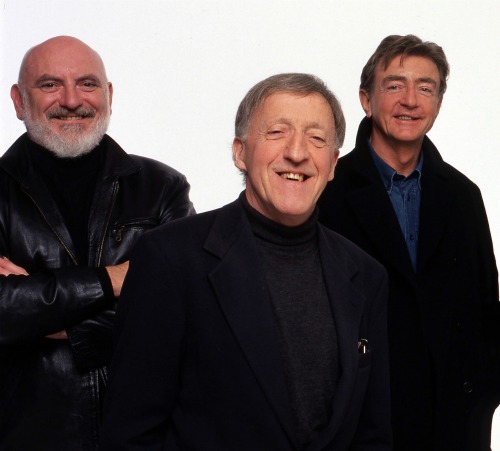
Matt Molloy, Paddy Moloney and Kevin Conneff

Matt Molloy, Paddy Moloney and Kevin Conneff

The Chieftains, one of the most revered of all Irish traditional music groups, will be in town for a concert at the Kimmel Center on Friday, March 9.

It seemed like a good excuse to resurrect two interviews with members of the band.

We chatted with band leader and uilleann piper Paddy Moloney just before the band's 2008 Kimmel show. (The Chieftains Go Caledonian.) That year, the band was highlighting the music of Scotland, and Moloney talked a good deal about that. He was the first non-Scot inducted into the Scots Traditional Musi

c Hall of Fame. But Moloney also talked about how he rose to prominence as an Irish musician—and how the Chieftains became the Chieftains.

A year later, Kevin Conneff took time to share his own story. (A Chat With the Chieftains' Kevin Conneff.) Conneff, who sings and plays bodhran for the band, joined the already well-known Chieftains in 1976. He planned on playing with the band for a year or two and then returning to work in a print shop. He'll be on stage on Friday, so you can see for yourself how that plan worked out.

We also want to remind you that Friday (March 2) is the last day of our Chieftains ticket contest. We have a pair of Kimmel show tickets to give away. All you have to do is:

Subscribe to our Mickmail weekly e-newsletter. (The signup box is in the right column.)

Or

If you already are a subscriber, forward Mickmail to a friend.

We'll pick the winner Saturday, March 3.

Click on the links below to read the interviews!

zp8497586rq
Dance, Music, People

Tommy Moffit’s Last Gift

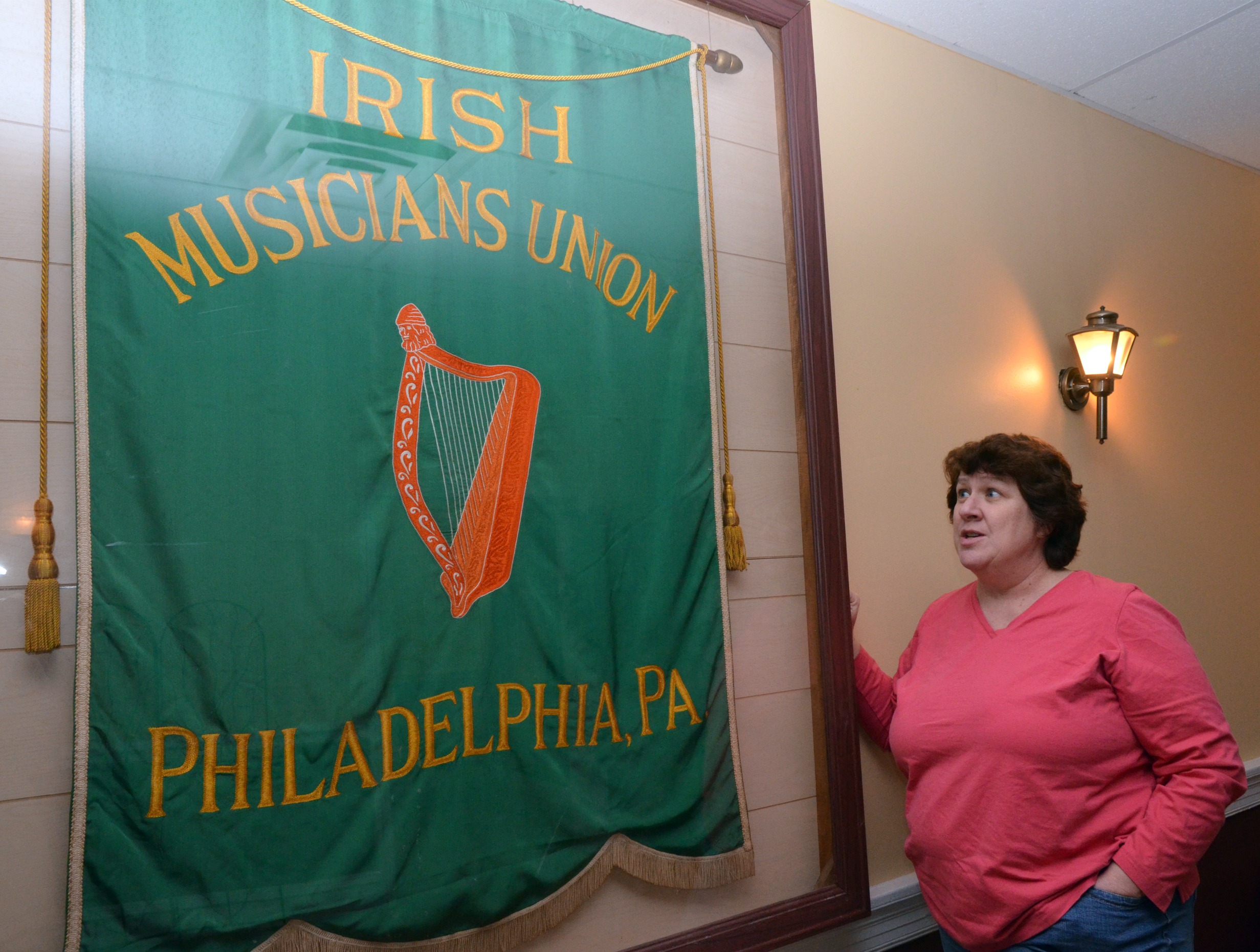
Mary Lou McGurk with the Irish Musicians Union banner.

Mary Lou McGurk with the Irish Musicians Union banner.

Mary Lou McGurk’s memories of beloved Philadelphia Irish musician and radio host Tommy Moffit go back to when she was a little girl, dancing to his music at the Philadelphia Irish Center with the McDade School.

Later on in life, she got to know him better when he turned out to be good friends with her in-laws.

But probably the way McGurk knew Moffit best was in his role as one of the founders of the Philadelphia Ceili Group, the highly regarded organization dedicated to Irish traditional music and dance. McGurk, now president of the Ceili Group, has served as the stage manager for the group’s annual festival since 1980. Back then, and for many years almost until his death in 2010, the soft-spoken man from Roscommon was the festival’s amiable emcee. “We’d sit backstage between acts, and talk,” she says. “I knew him for a long time.”

Like many who knew Moffit, McGurk misses her old backstage pal. Happily, Moffit left behind something to remember him by.

Something really big.

It’s a green, gold-fringed banner with an ornate orange Celtic harp in the center—the standard of the old Irish Musicians Union of Philadelphia. Moffit was the last official president of the group, which held sway in the Irish musical community in the first half of the 20th Century. Moffit presented the banner to the Ceili Group about five years before his death.

“He just came to our board at that time, and he said, ‘I found this banner. Would you like to have it?’ We jumped at it.”

The banner, about three feet by five, would have been carried by members of the union in the Philadelphia St. Patrick’s Day Parade, McGur

k says. In those days, she adds, “everybody needed to be in the union—they wanted to be, of course. Ed Reavy, Tommy Caulfield, Ed Cahill … all of the old greats were in it.”

Because Moffit was the last president, McGurk says, he wound up with the banner.

The thin, delicate artifact is preserved in a large, weighty case, handmade by Ceili Group members Brian and Lorraine Quinn, McGurk says. The problem? Where to put it. “It’s just very large. It’s a wonderful gift but we didn’t know where to put it.”

Until relatively recently, the Ceili Group stored the banner in one of the cramped, dusty rooms next to the ballroom stage, where tables and chairs are stacked and stored. “It was in its case, but it was just leaning against the chairs,” she says.

And so it sat for several years, concealed from public view, McGurk says. “We kept saying, ‘What are we doing about it?’”

A couple of years ago, when the Irish Center refurbished its second floor, the Ceili Group was invited to hang the banner there. But that was no good, either, McGurk says. “We were angling for a spot, but it’s just too heavy for the walls upstairs, too.”

Opportunity came knocking about a year ago, when the Irish Center received a grant to install a new elevator leading from ground level on Emlen Street up to the second floor entrance to the ballroom. Along with the new elevator, the Irish Center refurbished the sitting room just off the elevator vestibule. Visitors who take the elevator have to pass through the sitting room to get to the ballroom. And there, front and center in the sitting room, hangs the delicate banner. It’s the first thing you see when you enter the room.

That spot, McGurk, seems “perfect.” Folklorist Mick Moloney was one of the first to see the banner when he was in town in November for a concert and lecture. McGurk recalls, “He looked at it and said, ‘This is an amazing piece of history. You’re lucky to have it.’”

History aside, the banner also serves as a reminder of the man who gave it. Whenever McGurk sees it, she thinks of him. “He was,” she says, “a wonderful, wonderful man.”

zp8497586rq
Dance, Music, People

Tommy Moffit's Last Gift

Mary Lou McGurk with the Irish Musicians Union banner.

Mary Lou McGurk with the Irish Musicians Union banner.

Mary Lou McGurk’s memories of beloved Philadelphia Irish musician and radio host Tommy Moffit go back to when she was a little girl, dancing to his music at the Philadelphia Irish Center with the McDade School.

Later on in life, she got to know him better when he turned out to be good friends with her in-laws.

But probably the way McGurk knew Moffit best was in his role as one of the founders of the Philadelphia Ceili Group, the highly regarded organization dedicated to Irish traditional music and dance. McGurk, now president of the Ceili Group, has served as the stage manager for the group’s annual festival since 1980. Back then, and for many years almost until his death in 2010, the soft-spoken man from Roscommon was the festival’s amiable emcee. “We’d sit backstage between acts, and talk,” she says. “I knew him for a long time.”

Like many who knew Moffit, McGurk misses her old backstage pal. Happily, Moffit left behind something to remember him by.

Something really big.

It’s a green, gold-fringed banner with an ornate orange Celtic harp in the center—the standard of the old Irish Musicians Union of Philadelphia. Moffit was the last official president of the group, which held sway in the Irish musical community in the first half of the 20th Century. Moffit presented the banner to the Ceili Group about five years before his death.

“He just came to our board at that time, and he said, ‘I found this banner. Would you like to have it?’ We jumped at it.”

The banner, about three feet by five, would have been carried by members of the union in the Philadelphia St. Patrick’s Day Parade, McGur

k says. In those days, she adds, “everybody needed to be in the union—they wanted to be, of course. Ed Reavy, Tommy Caulfield, Ed Cahill … all of the old greats were in it.”

Because Moffit was the last president, McGurk says, he wound up with the banner.

The thin, delicate artifact is preserved in a large, weighty case, handmade by Ceili Group members Brian and Lorraine Quinn, McGurk says. The problem? Where to put it. “It’s just very large. It’s a wonderful gift but we didn’t know where to put it.”

Until relatively recently, the Ceili Group stored the banner in one of the cramped, dusty rooms next to the ballroom stage, where tables and chairs are stacked and stored. “It was in its case, but it was just leaning against the chairs,” she says.

And so it sat for several years, concealed from public view, McGurk says. “We kept saying, ‘What are we doing about it?’”

A couple of years ago, when the Irish Center refurbished its second floor, the Ceili Group was invited to hang the banner there. But that was no good, either, McGurk says. “We were angling for a spot, but it’s just too heavy for the walls upstairs, too.”

Opportunity came knocking about a year ago, when the Irish Center received a grant to install a new elevator leading from ground level on Emlen Street up to the second floor entrance to the ballroom. Along with the new elevator, the Irish Center refurbished the sitting room just off the elevator vestibule. Visitors who take the elevator have to pass through the sitting room to get to the ballroom. And there, front and center in the sitting room, hangs the delicate banner. It’s the first thing you see when you enter the room.

That spot, McGurk, seems “perfect.” Folklorist Mick Moloney was one of the first to see the banner when he was in town in November for a concert and lecture. McGurk recalls, “He looked at it and said, ‘This is an amazing piece of history. You’re lucky to have it.’”

History aside, the banner also serves as a reminder of the man who gave it. Whenever McGurk sees it, she thinks of him. “He was,” she says, “a wonderful, wonderful man.”

zp8497586rq
People

A Blessing for a Peacemaker

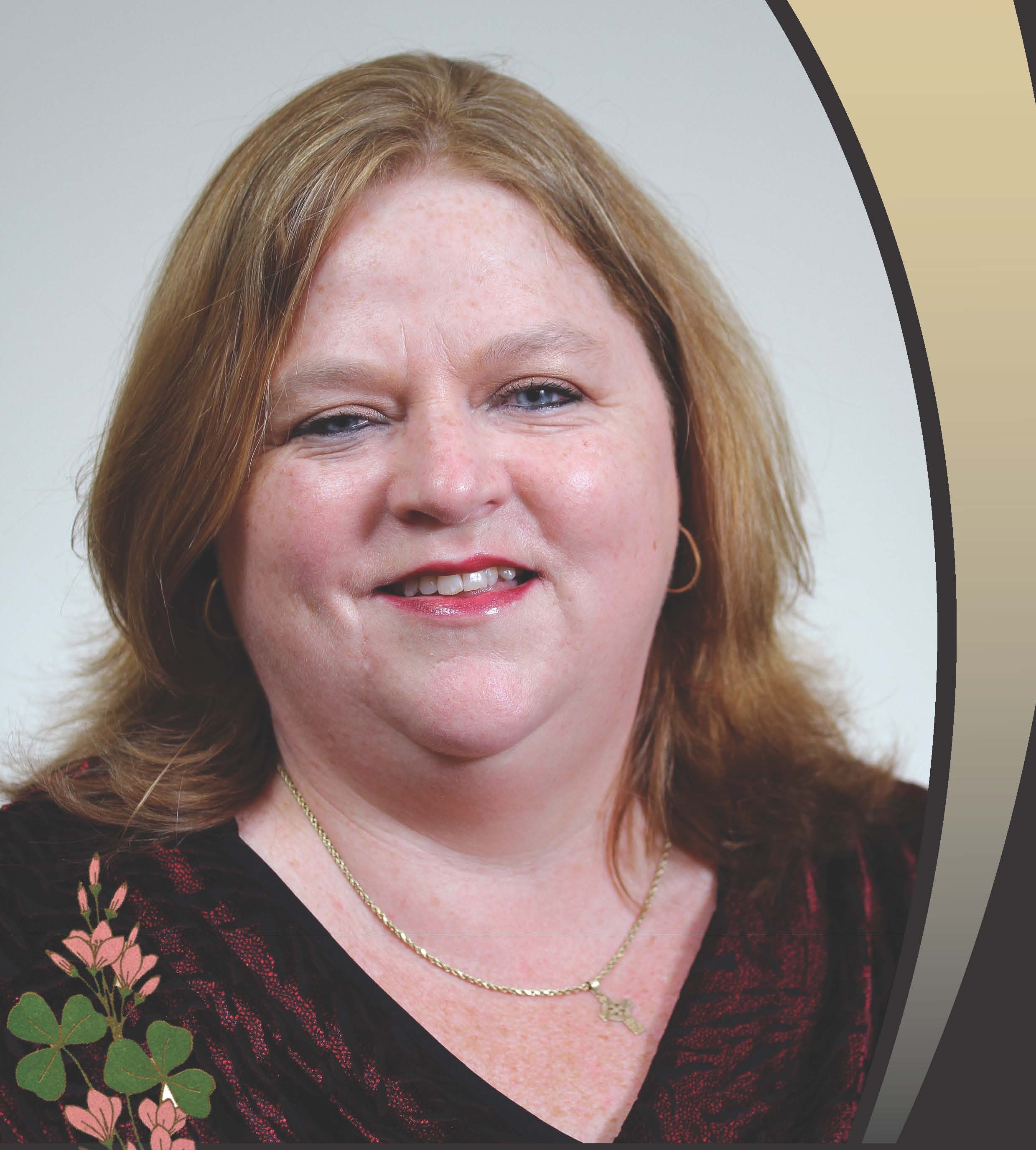
Marie Hempsey

Marie Hempsey

Every summer, “marching season” comes to Northern Ireland. For several weeks, members of the Protestant unionist Orange Order parade through towns and cities, often through politically sensitive Catholic and nationalist neighborhoods. This contentious time of year culminates in a torrent of parades on July 12, celebrating Protestant King William of Orange’s bloody victory over the Catholic King James II at the Battle of the Boyne in 1690.

All of this drama plays out an ocean away, but for the 2012 Burlington County St. Patrick’s Day grand marshal, Marie Brady Hempsey of West Deptford, N.J., this divisive tradition strikes close to home, and for two reasons. First, because she’s the child of a Catholic father and a Protestant mother, both first-generation Irish; and second, because she is the mid-Atlantic coordinator for Project Children, which every summer transports more than 20 kids out of Northern Ireland to the Delaware Valley for a different kind of season—a season of peace.

(Note to readers: The Burlington County parade, originally scheduled for March 3, has been postponed to March 31, due to the threat of heavy rains and thunder.)

Hempsey, a Realtor and the mother of five, comes by her deep understanding of Northern Ireland divisions as a result of early childhood experience. Her father James Brady of Philadelphia’s Fairmount section and mother Florence (née McKnight) from Southwest Philadelphia met in October 1961 and eloped in January 1962. The Bradys embraced Florence, but the union didn’t go down well among the McKnights.

“It upset my mother’s parents more, to be honest with you,” says Hempsey. “My dad’s parents were deceased, but his family were much more accepting of her. Ultimately, the families did not get along. My grandmother (Mary McKnight, from Bushmills, County Antrim) was very hard-nosed against my father. It kind of destroyed my family, I didn’t get to know my cousins. I’m getting to know them now, and I know what wonderful people they are, but it took a while.”

Religious divisions were nowhere evident within her immediate family. In fact, Hempsey was brought up with no religious preference; she was left to decide for herself.

Decide she did in 1990, when her third child Kelly was very ill with a rare autoimmune disease that affected her lungs and her crippled her ability to breathe. “They had to put her on a vent, and people said she needed to be baptized,” Hempsey recalled. “I had a wonderful family and husband (Phi), but I knew something was missing. Father (James) Curran came to the house, and I asked him what I could do. He said, ‘Picture Jesus holding her,’ and I did. “That was my epiphany. I just knew I was meant to be a Catholic.”

Kelly’s survived the ordeal, by the way.

One life-changing experience would be enough for most people, but one more awaited Hempsey. It came in 1995, when she and her family were attending an Irish festival in Gloucester City. A nun by the name of Sister Frances Kirk, then the local coordinator for Project Children, was handing out fliers when she suddenly dropped them. Hempsey, her husband and the kids chased them all down and returned them to their rightful owner.

Before Hempsey knew it, she found herself pumping Sister Frances for information about Project Children. “I asked her about it, and when she told me, I said, ‘I want to do that!’ She said, ‘Send me an application and we’ll see what we can do.’”

A few years went by before the Hempseys were approved to host kids from Northern Ireland for the summer. Hempsey suspects Sister Frances held back because she knew there were five kids in the house already. “It probably looked to her like I already had my hands full.”

The Hempseys became a host family in 2000, taking in up to four kids every summer since, most of them multiple times, 11 kids in all. This summer, they’ll take in three kids, making for one packed household. Hempsey takes it in stride. “We’re a little crazy … fun crazy.”

Right from the start, Hempsey knew she was doing the right thing.

“For some reason, we always get the kids who are the ‘real deal.’ They have parents in prison, or had grandparents who were martyred. They send us a lot of kids from Belfast and Derry and Armagh.

“A lot of the kids’ parents we talk to say they can’t afford to take them away somewhere over the summer. If you’re a kid living in live in Ardoyne during marching season, you don’t get much of a summer. You know the parades are coming.”

Hosting fulfilled a need for Hempsey, a way to restore a bit of sanity to the lives of deserving kids. She wanted to do more.

From the start, Hempsey was an enthusiastic supporter of Project Children, and that enthusiasm evidently impressed Sister Frances. In 2004, Sister handed off the coordinator role to Hempsey.

“She said she prayed and prayed for someone to have the passion and drive to do this, and ‘God sent her me.’ That’s the best compliment I could have received.”

Given a lifetime of accomplishment and dedication to Irish causes—Hempsey is also historian and chairperson of immigration and legislation for the Ladies Ancient Order of Hibernians Camden County Division 1—it perhaps should not be very surprising that she was selected as this year’s Burlington County grand marshal. And the first woman grand marshal in the parade’s seven-year history, at that.

Really, only one person was surprised: Hempsey herself.

Now that it’s all sunk in, Hempsey plans to just enjoy and treasure the moment.

“I was absolutely shocked,” she says. “When I was told I was the grand marshal, I just laughed. I said, ‘What, are you kidding me?’ I’m honored. I really am.”

———

You can help support Project Children by attending the group’s annual benefit April 21 at the Richard T. Rossiter Memorial Hall in National Park. Tickets are $30. Call Hempsey at 609-330-4484 for details.

News

Second Streeters Get the Party Started

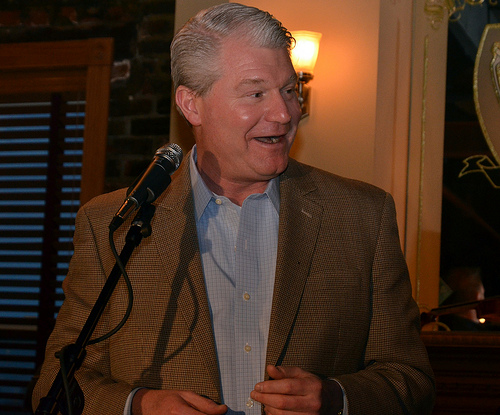
Johnny Doc, enjoying the day.

Johnny Doc, enjoying the day.

The Philadelphia St. Patrick’s Day doesn’t march up the Benjamin Franklin Parkway until Sunday, March 11, but anybody familiar with the parade knows the fun all starts a lot earlier.

So it was on Sunday, when the Second Street Irish Society hosted a big fund-raiser for the parade at their headquarters down in the Pennsport section of Philadelphia.

Party-goers made their way up the steep wooden stairs to the Society’s cozy third floor, there to catch up with their friends—both the friends they see all the time and the friends they hang out with once a year for a few short but busy weeks in February and March. There was music, too, the band Clancy’s Pistols stirring things up with rebel tunes like “The Broad Black Brimmer of the IRA.”

The Society’s dancers took to the hardwood floor for a preview of the style they’ll show in the parade, followed by the Society’s pipes and drums band, whose drones probably shook a few bricks loose.

Grand Marshal John “Johnny Doc” Dougherty and parade officials showed up toward the end of the celebration, there to thank the Second Streeters for their generosity and hospitality.

Dougherty spoke few words, but managed to convey the spirit of the season: “Being Irish is more than St. Patrick’s Day, having a beer in an Irish pub or getting an Irish tattoo on your 16th birthday.” He urged the assembled guests to take pride in their heritage every day of the year.

We’re guessing you don’t need any further reminder.

We captured a bunch of photos from the fund-raiser. In the days and weeks leading up to March 11, look for more such celebrations.

Music

Ivan Goff and Eamon O’Leary in Concert

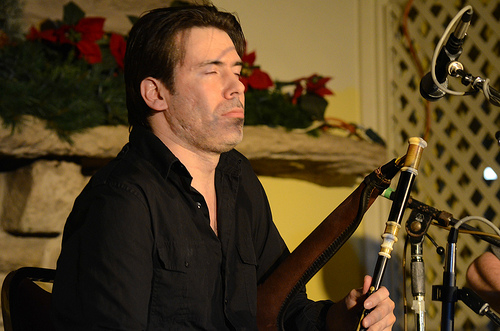
Ivan Goff

Ivan Goff

Piper Ivan Goff and singer/guitarist Eamon O'Leary are a couple of Dublin lads, transplanted to New York City, who nonetheless have a pretty good sense of how tunes are played in Ireland's West.

On Saturday in the Fireside Room at the Philadelphia Irish Center, as part of the Philadelphia Ceili Group's series highlighting the music of the West, Goff and O'Leary played a good many tunes evocative of Ireland's wil

d places. If you closed your eyes, you could imagine yourself in McDermott's Pub in Doolin, the tang of stout mingling with the heady aroma of peat smoke.

It's a concert that almost didn't come off. The Irish Center lost power in the late afternoon, and the juice didn't come back on until just before the show. And during the show, there were times when the Irish Center's clanging heating pipes competed for attention with Goff's uilleann pipes, but he and O'Leary made light of the fact and quickly moved on. There's no question whose pipes won that battle.

We captured the excitement of this concert in video (above) and pictures.

Check out the photos.

zp8497586rq
Music

Ivan Goff and Eamon O'Leary in Concert

Ivan Goff

Ivan Goff

Piper Ivan Goff and singer/guitarist Eamon O'Leary are a couple of Dublin lads, transplanted to New York City, who nonetheless have a pretty good sense of how tunes are played in Ireland's West.

On Saturday in the Fireside Room at the Philadelphia Irish Center, as part of the Philadelphia Ceili Group's series highlighting the music of the West, Goff and O'Leary played a good many tunes evocative of Ireland's wil

d places. If you closed your eyes, you could imagine yourself in McDermott's Pub in Doolin, the tang of stout mingling with the heady aroma of peat smoke.

It's a concert that almost didn't come off. The Irish Center lost power in the late afternoon, and the juice didn't come back on until just before the show. And during the show, there were times when the Irish Center's clanging heating pipes competed for attention with Goff's uilleann pipes, but he and O'Leary made light of the fact and quickly moved on. There's no question whose pipes won that battle.

We captured the excitement of this concert in video (above) and pictures.

Check out the photos.

zp8497586rq