Monthly Archives:

February 2009

News

Festival Warms Up the Midwinter

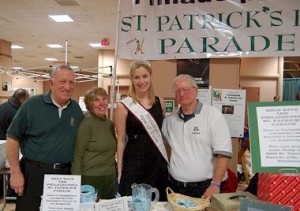
The St. Patrick's parade booth did brisk business.

The St. Patrick's parade booth did brisk business.

Our ears are still ringing from the big barbarian percussion troupe Albannach. Our feet ache from all the walking from one booth of Irish and Scottish tchochkes to the next.

In other words, the 2009 Valley Forge Midwinter Scottish-Irish Festival was its usual amazingly good time, and just the perfect warmup act for all the madness that is March.

Hibernian or Caledonian, there was plenty of fun for everyone, from Rosemarie Timoney’s dance classes to the stacks of meat pies and bridies to the tunes of the Hooligans. For the kids, there were sand bottles to fill and a juggler to exclaim over.

We have total photo and video coverage from Denise Foley, Jeff Meade, and Lori Lander Murphy.

Dance

Regional Competition Draws Nearly 200 Dancers from Around the Country

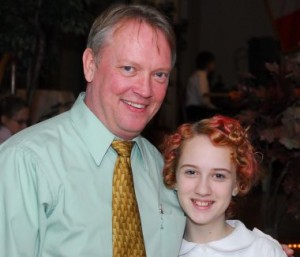
Kevin Kennedy and his daughter, Kaelah, of Southampton's Rince Ri school.

Kevin Kennedy and his daughter, Kaelah, of Southampton's Rince Ri school.

Kevin Kennedy is an especially empathetic “Irish dance dad.” His two daughters, Molly, 17, and Kaelah, 11, perform with Rince Ri Dance School in Southampton, where they live. Last weekend, they were at the Irish Center in Mt. Airy, competing for a chance to go to Ireland in May for the world championships of the Cumann Rince Naisiunta (CRN), an Irish dance association founded in 1982 that has only recently made its way across the ocean.

“I have nine brothers and we all danced,” says Kennedy, a biologist and businessman who was taking tickets at the door. “My Dad and his buddies at the Irish Club needed something to entertain them. We would do it after Irish football, or as we called it, ‘kill me with a ball.’ What we did wasn’t nearly as elaborate as what the kids do today. We were taught by someone who had about six Jamesons.”

His studiously deadpan face gave way to a laugh.

Olivia Hilpl, who founded Rince Ri five years ago, is a far more disciplined teacher than Kennedy’s was. The Sligo-born Hilpl began taking step-dancing lessons at 4 ½, before the Riverdance Effect high-kicked in. “We did a lot more steps on the floor than we did any high flying,” she says. That’s what drew her to CRN, which focuses on teaching students basic steps, then moving them up gradually at their own pace until they’re physically ready for more aerial work. The aim is to prevent injuries, so CRN-style dancers don’t do toe stands either.

While the nearly 200 dancers, from as far away as Santa Fe, NM, and Portland, OR, were competing this weekend to go to the championships, they were also, in effect, taking their final exams. Winners in each age group move up one level. “When they achieve that, they know they’re getting better,” explains Hilpl, who organized the competition.

They certainly had a good time, as their smiles will prove.

Music

5 Questions for Fiddler Martin Hayes

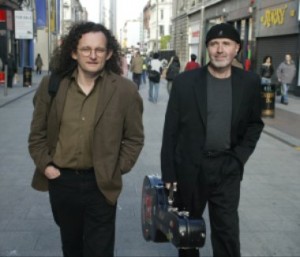
Martin Hayes, left, and Dennis Cahill. Photo by Derek Speirs.

Martin Hayes, left, and Dennis Cahill. Photo by Derek Speirs.

“Welcome Here Again” is the name of the latest CD from fiddler Martin Hayes and guitarist Dennis Cahill, widely recognized as perhaps the greatest combination since chocolate and peanut butter.

Not only is it the title of one of the tunes in this collection of silky, melancholic, syncopated East Clare music, it’s an acknowledgment that these two have been away far too long. “It suggests that it’s been a long hiatus since our last recording and here we are, we’re back, we know it took forever, but there it is,” explains Hayes, of whom one Los Angeles Times critic wrote, “[he] has one of the most ravishing violin styles in all of Celtic music.”

But the title was hard to come by. “It’s really hard to think of titles for albums,” confesses Cahill, who grew up in County Clare but now lives in Connecticut. “They seem obvious when you hear them, but I’m really not too good at them. I can’t come up with anything smart to sign when I have to sign a birthday card with 20 other people, so I settle for ‘best wishes,’ and titles are not my strongest suit.”

But playing the fiddle is, and you can hear Hayes performing with his longtime musical partner, the Chicago-born Cahill, on Tuesday, February 17, at the World Café Live in Philadelphia, starting at 7:30 PM.

Born near Feakle—famous for its music festival–Martin Hayes grew up surrounded by some of the greatest musicians Clare has ever produced, including Paddy Canny, Martin Rochford, Francie Donellen and Martin Woods. His father, P.J. Hayes, was leader of the legendary Tulla Ceili Band, and Martin, who started playing at 7, was touring with them by the time he was 13. Before the age of 19, he’d won six all-Ireland fiddle championships and today is considered one of the most influential musicians to come out of Ireland in 50 years.

We caught up with Martin Hayes recently and, truth be told, asked him more than five questions.

When you came to the US in the 1980s after college, you played with a rock band rather than playing traditional music. Why was that?

I continued to play traditional music, but I didn’t do it professionally. I played in the sessions with people like Liz Carroll. I was getting by by playing for money in bars and I wasn’t doing much else. I got pretty tired of that eventually and ended up in an experimental electric band with Dennis. That was my real transition to America, hanging out with these musicians, experimenting with what we’d got and what we each would bring to the table. Obviously, I was going to bring Irish music to the table. But it was an electric band, and there’s something about hearing that all the time that makes you crave subtlety. I had come to the conclusion that it really wasn’t who I was and it was never where I was going to find my soul in music. I knew I definitely needed to come back and play traditional music like I knew it as a teenager. But that experience had its effect. Because of having played in that band, I saw music in different context, and when I was playing particular tunes from my locality, I came to appreciate it even more.

It was from that experience that you also found Dennis Cahill. Critics have described you two as “having a rare musical kinship.” It’s almost as if you were born to play together. To what do you owe that?

I would say it’s got to do with the fact that we know each other really well. We’ve talked about the music and tried to get on the same page with it. In all music-making, jazz, rock or whatever, when it happens well, when you have the proper space for making music, then you have that instant rapport where everything is obvious and everybody understand everybody else. It doesn’t happen all the time, but when it doesn’t we’re pretty close anyway.

The East Clare style is very distinctive—slow, emotional, and genteel, even the reels and jigs which were composed for dancing. Why do you think it developed that way?

It’s very difficult to come up with any reason for a particular style. What’s often discussed is landscape: When you have gentle landscape, you have gentle music. There’s the possibility of that. It’s a bit beyond our knowing. But every region and locality is influenced by particular individuals who’ve shaped people’s ideas about music. The important factors in the music of East Clare, and there are two standards: They were always looking for music with feeling, which often meant a little taint of sadness and melancholy–the same element you have in the Blues–and rhythmic pulse and dance. It wasn’t about playing super fast, it was about playing real swing. Count Basie played swing but he didn’t go that fast. The tempo allowed dancers to dance in a more ornamented kind of way.

To me, the East Clare style sounds a lot like the old-timey music of the U.S. Appalachian region. Is there some connection?

Yes, I think it’s comparable to old-timey music. It’s the effect of a simple melody repeated over and over till you’ve created a kind of mantra, almost its own form of hypnosis, that similarly is going on in old-time music. I think if you go farther back you’ll find a convergence. And there are different versions. Some of it will take you to Scandanavia, some to Scotland, and some directly to Ireland. When I was a teenager, I went on a local “safari” to the houses of the old guys, the old musicians, where I would hang out, talk to them, tape them, and get all these old tunes. Over the course of the 20th century, a lot of recordings came to Ireland and people began to copy these styles of these fiddle players till the only variances you found where when people failed to copy them precisely. But these were the fiddlers I admired who kept the unique sound of the locality, like Junior Crehan, people who played a whole repetoire before all those recordings were available and didn’t change. They had an incredible rustic simplicity, like old-timey music, so simple that you might not bother learning it, some people thought. Yet it’s incredibly hard to achieve from a compositional point of view, oozing with earthiness and common sense. There’s nothing pretentious about it. You can’t be pretentious and be an old-time player.

There are some who say they can hear a little bit of the jazz or even rock in yours and Dennis’s style. Is that deliberate, or just incidental to your background?

I listen to loads of things—jazz, baroque, world music—but I don’t take it and put it into my music, though it influences how I look at music overall. There are universal things that you learn from different forms of music. Stepping into other worlds helps you see your own.

Sports

Taking Their Game On The Road

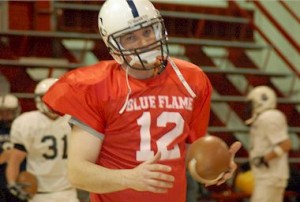
When it comes to football, these guys are all business.

When it comes to football, these guys are all business.

One day not long after the 2001 attacks, Joe Getter and his wife’s cousin Joe Hansbury had the television on; just flipping through the channels and looking for something to watch. They stopped dead in their remote-clicking tracks at ESPN.

“It was a special on New York City police and fire football teams,” Getter remembers. “It was right after 9/11. They played a game and got a big crowd, and ESPN did it up nice for them.”

Hansbury, who’s a cop in the Northeast, said to Getter, who’s not: “We should do this.” And so, says Getter, “we did.”

In the spring of 2002, the Philadelphia Blue Flame, a semi-pro football team made up of cops and firefighters from Philadelphia and surrounding areas, made its debut. Getter can’t forget: “That first year, when they lined up and looked like a team, there was a lot of pride in that.”

In their time, members of the team have played more than a few away games against their brothers in the National Public Safety Football League—as far away as California, Texas, Illinois and Florida. Come February 28, they’ll make their longest trip ever. They’ll be on a field in Dingle, County Kerry, suiting up against the University of Limerick Vikings as part of the Páidi Ó Sé Festival. (Ó Sé is well known in Ireland law enforcement and athletic circles. A former member of the Garda Síochána (the police), he also is remembered as a GAA champion footballer. Serendipitously, Páidi also owns a pub.)

American football, it turns out, is gaining a following in Ireland. (As if Irish football and hurling aren’t punishing enough.) Though the Americans are likely to give them a run for their money, the Vikings aren’t going to be pushovers. “Limerick won their league last year,” says Getter, who serves as treasurer of the Blue Flame. On the other hand, he adds, the boys from Philly grew up with the game. “Everybody on our team played high school and some played college. They all played youth football.”

The story of how the Blue Flame wound up going to Ireland starts with Páidi Ó Sé. Ó Sé had long wanted to bring American football into the mix at his festival, Getter says.

“Originally, Páidi approached the New York football teams,” says Getter. “They reached out and started talking to NYPD about a game over there against us.” Joe Hansbury, who’s a vice president of the team, said yes right away.
“Unfortunately, the New York team bailed out of the game,” says Getter. “By the time all the details got worked out, the New York guys basically got through Christmas and decided they didn’t have the money to make the trip.”

Hence, the match-up against the University of Limerick.

The Blue Flame expects to begin its season—they play in the spring—with about 50 guys. Of these, perhaps 34 players are expected to make the Ireland trip. Add in coaches and staff, and the trip is likely to cost about $32,000. The players are going into their own pockets for that.

For most of the players, many of whom are of Irish ancestry—and more than a few are associated with the Ancient Order of Hibernians—this will mark their first trip to Ireland. Understandably, they’re quite excited.

“Our hosts have a nice itinerary lined up for us,” says Getter. “They’re going to teach the whole team set dancing at Páidi‘s bar. He’s hired an instructor, and it should be fun just watching the guys do this.”

One of the highlights of the trip will be a special Mass for law enforcement officers in Ireland and the United States—and particularly slain Philadelphia Officer Patrick McDonald, former star athlete at Archbishop Ryan High School and a dedicated member of the Blue Flame. “Patrick played for us three years,” says Getter. “His mother, father and sister are making the trip with us as our guests.”

Getter still remembers McDonald—number 34—scoring a touchdown against a Chicago team in a league game at Soldier Field.

After the team returns, the real hard work of the team begins with the beginning of the season. While most of the team members come from the Philadelphia departments, there are a few other members from the suburbs, including Newtown, Lower Makefield, Warrington and Gloucester County, South Jersey. There’s also a SEPTA officer and a school cop. The youngest player is 21; the oldest, 47. Most games are played at Northeast High School.

On top of being able to pay their own way—and it costs about $65,000 a year to field the team—league rules require that the team raise funds for local charities. Members of the Blue Flame more than do their bit. “Our team, finishing up 2008, has donated more than $115,000 in cash to local charities since our inception,” says Getter. “It’s pretty cool stuff.” Organizations as varied as the Police Athletic League, the Hero Thrill Show, Pegasus Riding Academy for Disabled Children and Susan G. Komen for the Cure have benefited from the Blue Flame’s largesse.

Fund-raising activities include a police and fire boxing tournament at the National Guard Armory President’s Day Weekend.

Of course, the team also raises funds for the families of officers killed in the line of duty. On April 25, they’ll honor one of their own. “We’re going to have a Pat McDonald memorial game and retire his jersey,” says Getter. “Proceeds go to his family’s memorial fund for scholarships.”

For more information about the Blue Flame, visit their Web site at http://www.blueflamefootball.com

Music

How to Be Irish in Philly This Week

When Beoga plays, the joint is jumpin'.

When Beoga plays, the joint is jumpin'.

Beoga is endowed with massive musical talent. Much of “The Incident” is simply thrilling, an auditory high-wire act without a net. Button accordionist Damian McKee, in particular, is consistently acrobatic in his play, and bodhran player Eamon Murray is one high-flying goat whacker. I’m convinced that pianist Liam Bradley hasn’t encountered a sound or style he can’t play brilliantly. Let’s not forget the world-class Seán Óg Graham, who plays button accordion, guitar, bouzouki, banjo and low whistle on the recording. Finally, we have Niamh Dunne, the classically trained fiddler who also is blessed with a lush, luxurious voice.

With so many gifts, a band like Beoga simply has to push the boundaries. They can do anything—and they do. At times, the result is dazzling. At other times, it’s distracting. You find yourself scratching your head and asking yourself, “Why did they do that?”

Case in point: “Mister Molly’s,” a delicate set consisting of a slip jig and a jig, both masterfully executed. I very much liked some of the band’s artsy touches, including a few bell-like dings and even the cute whistling and hand claps on the exit. But in the midst of the set, right at the transition from the slip jig to the jig, we’re treated to a low whooshing sound effect that sounds like either a sink draining or a toilet flushing. Or maybe a jet taking off—it’s hard to be sure.

On the opening number, a rollicking set entitled “Lamped”—a set that gets progressively more rollicking as it goes on—the transition from a tune called “The Pandoolin Dumpling” into the reel “Silly Batteries” is marked (or marred) by a fire siren. We know the set is getting hot; we don’t need the clues.

There are more examples of gratuitous little excesses—musical nervous tics—but not worth dwelling on. Beoga is a fusion band, perhaps the purist and fullest expression of Celtic fusion I’ve heard. And if it seems like the lads (and one lass) of Beoga didn’t quite know how, when and where to curb their creative impulses, that’s both the blessing and curse of fusion. A pioneering band like Beoga takes risks, and there are far worse faults.

To adopt too purist a pose would be to miss out, for example, on the performance of Niamh Dunne on a Paul Kennerly tune, “Mary Danced with Soldiers.” The liner notes say Beoga became familiar with the tune from the Nitty Gritty Dirt Band and Emmylou Harris. Dunne’s voice is perfectly lovely on this heartbreak song. Her spare singing style also well suits the closing tune, “The Best is Yet to Come” and the soulful “Strange Things.”

Nor would you want to miss Murray’s creative bodhran pyrotechnics, which reminds me of John Joe Kelly.

Several sets, grounded in tradition but taking some creative liberties, are memorable. My favorite is called “The Flying Golf Club,” which starts out with something quirky that sounds like a horah, and moves into a seriously stellar set of reels, including “The Gooseberry Bush.”

“The Bellevue Waltz” is also particularly lovely.

So bring on the Hammond organ sounds and the kitschy Klezmer clarinet, and park your traditionalist expectations at the door. Here’s a band that will challenge those expectations and take you on quite a ride. It’s a bumpy ride at times, but a kick nonetheless.

Food & Drink

Got Champ?

February is a short month. Before you know it, March will be upon us and we’ll all be looking around for some great food to serve on St. Paddy’s Day. We already know that a lot of you come here for recipes. We know because our ham-and- cabbage recipe gets more hits every year than Jimmy Rollins.

So if you have a good recipe—for anything from soda bread to salmon—please send it along to us. Just click on the “contact us” button on the left and either send us your recipe or let us know how to reach you so we can get those hundreds of recipes you want to share with your fellow readers.

Columns, How to Be Irish in Philly

How To Be Irish In Philly This Week

We’re gearing up this week for what’s shaping up to be three slam-bang months of Irishness in the Philadelphia region.

First, this weekend the Cumann Rince Naisunta 2009 Regional dance championships will be held at the Irish Center, starting early Saturday morning with a parade of Irish dancers. Winners of this competition will be heading to Dublin in May for the world championships.

On Saturday night, Blackthorn will be performing at Archbishop Ryan High School, while the Barley Boys will be on stage at Porter’s Pub in Easton.

On Sunday, the Braveheart Pub in Hellerstown is launching the latest session in the area—the second Sunday session which will, of course, occur every second Sunday of the month.

You can take your favorite squeeze to the Springfield Inn in Springfield, Delco, for a Valentine’s dinner and dancing or head to the Sellersville Theatre to hear the McDades, a five-piece Canadian ensemble of siblings who fuse Celtic sounds with everything from jazz to global music.

On Wednesday night, The Grand in Wilmington, DE, is hosting an Irish Spectacular, featuring Irish performers Gerry O’Connor, Emer Mayock, Frankie Gavin, Cora Venus Lunny, Robert Harris and Regina Nathan with the Dublin Philharmonic Orchestra.

Make your way over to Camden, NJ, on Thursday night for a treat—the annual fundraising concert for Sacred Heart Parish featuring Mick Moloney and Friends, who this year includes legendary Northern Ireland singer and activist Tommy Sands (look for Sands to return in March to appear at Longwood Gardens with his daughter, Moya). Special bonus: There will be a raffle for a trip to Ireland with only 150 tickets available for $50 each. We like those chances.

Starting on Friday, there will be three days of Irish music, vendors, and whiskey tastings at the 17th Annual Scottish and Irish Festival at the Valley Forge Convention Center in King of Prussia. The lineup is incredible and includes the Tannahill Weavers, the McDades, Dublin City Ramblers, Brother, Five Quid, Searson, the Hooligans, and many, many more. This is one of those don’t miss events for the entire family. And the food is usually pretty good. Best of all—there’s lots of parking and it’s all free.

We’ve been updating our calendar almost daily, so if you want to take a peek ahead, please do. You’re going to get as excited as we are about what’s coming up this month and next.

Remember, support your local Irish merchant and if you have a few extra bucks, think about donating it to the Philadelphia St. Patrick’s Day Observance Committee, which runs the annual parade. Philly’s budget cuts have left the parade organizers $40,000 in the hole. Contact them at info@philadelphiastpatsparade.com.

Music

Got a Song in Your Heart?

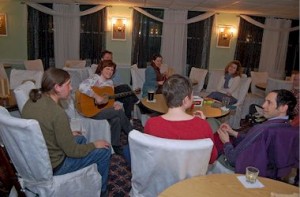
A cozy crowd gathers in a circle to pass around tunes.

A cozy crowd gathers in a circle to pass around tunes.

There was still snow on the ground at the Irish Center and it was wicked cold, but winter weather wasn’t enough to deter the 10 hardy souls who huddled inside the place for one reason: to celebrate their heritage in song.

Apparently, a song can keep you warm—with a little help from whiskey and beer, along with mini-éclairs and Trader Joe’s seedy little currant cookies.

The singers’ session—which takes place on the first Wednesday night of each month at the Mount Airy epicenter of all things Irish—is one of the newest additions to the traditional music scene in the Delaware Valley. Most sessions focus primarily on instrumental music, often with no vocalizing at all.

Sponsored by the Philadelphia Ceili Group, the session had an informal start in local homes some time ago, including that of local performer Courtney Malley’s. In October, the session became more formalized. “Now they give us a home at the Irish Center,” says singer Terry Kane, who leads the session.

The session typically attracts about 10 local singers, at all talent levels. “Last month,” Terry says, “we had a 10-year-old sit in. Tonight, we had a lot of very talented people. In the beginning, we go around the circle, and everyone gets a chance to sing. After that, it’s whatever people think of.”

Such a diverse group results in a lot of variety. On this night, the singers start out with traditional Irish, in the native tongue, but as they go around the room, practically every appropriate folk genre seems to find a place, from English country airs to old-timey tunes. (And for some reason, many of the songs, like “Three Jolly Fishermen,” revolved around the theme of fish—herring, in particular.)

Kathleen Warren, who often sings with Terry, says she has been singing her whole life. “I’ve been singing in Irish for probably 15 years,” she says. “I sing with Terry when she plays gigs, and I play Friday nights in Bethlehem. That’s where I’m from. I’m just getting back to doing my own stuff.” For her, the session is an indispensable outlet. “I don’t think I’ve missed a session yet.”

For Jerry Sweeney (who started going to the session after he discovered it on our events calendar), the session is an opportunity that less experienced singers highly value. “The singers who come are different every time,” he says. “There are some who come as regulars. It’s not any specific level, but it tends to be the good singers who draw the weak ones out.”

If you’d like to give your vocal chords a workout—or even if you’d like to just sit and listen—Terry invites who to attend. The session starts at 7:30. And don’t be shy. “We want to be sure everyone gets a chance,” Terry says. “You can bring music, if you want to sing with it. Most singers are unaccompanied, but sometimes people bring instruments.”

View videos: