Monthly Archives:

October 2014

How to Be Irish in Philly

How to Be Irish in Philly This Week

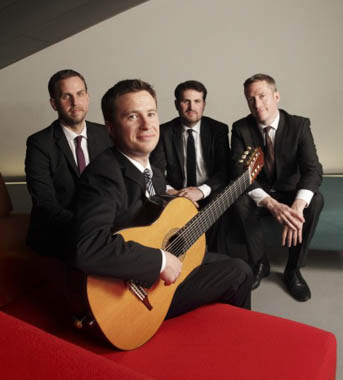
The Dublin Guitar Quartet

The Dublin Guitar Quartet

The Cavan Ball is this Saturday at The Irish Center. There’s a long tradition of county society balls in the Philadelphia area. They’re a chance to get dressed up, have a nice meal, listen to—or, more often than not—dance to some great music, this time from the Vince Gallagher Band.

Also on Saturday night, the Glenside Gaelic Club is holding a fundraising “Wine and Dine” evening, with gourmet food and wine pairings. It takes place at the McSwiney Club in Jenkintown and benefits the youth leagues.

Catch continuing performances of the plays, “A Night with Lady G” and “The Weir,” both Irish plays, in the area this week. (See our calendar for more details.)

Irish language classes continue at Villanova on Monday. Learn to speak Gaelic with a Donegal accent.

On Tuesday, the Dublin Guitar Quartet will be performing at Longwood Gardens in Kennett Square. Using eight and 11-string guitars, the quartet explores music not usually associated with guitars, including contemporary classical music. There’s a coffee reception with the performers after the show.

On Wednesday, the Shantys bring their musical talents—no shortage of rebel tunes!– to the stage at AOH Div. 61 Hall on Rhawn Street in Philadelphia.

On Thursday morning, it will be Rose of Tralee Day in Philadelphia, as city council issues a proclamation honoring the International Rose of Tralee, Maria Walsh, who lives in Philadelphia. Ceremonies take place at 10 AM at City Hall.

Singer Mary Black, making her last overseas tour, makes a stop in Phoenixville where she and her band—and her daughter, singer-songwriter Roisin O—will be at the Colonial Theater. Read our interview with the Dublin-born singer.

Next Saturday, try out your Halloween costume early at the first of several fundraisers for the Philadelphia St. Patrick’s Day Parade—a Halloween party at St. Denis Hall in Havertown. There will be prizes for best get-up, as well as food and music because this, after all, is an Irish event. (That means there will probably be raffles and a 50-50.)

You can add your own event to our calendar. Go to the top of the page, click on “Events Calendar,” then “Submit your event” and do everything the nice instructions tell you to do. Don’t look for your event right away. We get notified via email, then we have to do some clicking ourselves to put it up on the calendar.

Music, News, People

Last Call Tour for Singer Mary Black

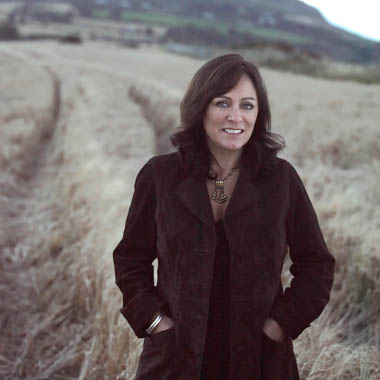
Singer Mary Black

Singer Mary Black

Just a couple of years ago, Dublin-born singer Mary Black was touring the world with a new album, “Stories from the Steeples,” her twelfth studio album. This year, she’s taking what might be called a victory lap around the world, marking the last time she’ll be singing abroad. At 58, with grandchildren to cosset, she’ll be bringing her “Last Call Tour” to Phoenixville’s Colonial Theater on Friday, October 24, and drawing it to a close this spring in Belgium, the Netherlands and the UK.

“Last Call” has an unmistakable finality about it. “I’m trying not to think about it too much,” said Black on the phone from her home in Ireland, where her daughter, Roisin, a singer-songwriter who will be opening for her, was making tea. “Cuppa tea, love,” she calls out to her. “I’m looking at her now,” she says into the phone. “I’d love a cuppa,” she says to Roisin.

Along with Roisin, Black has two sons with husband, Joe O’Reilly of Dara Records—Danny is part of the popular Irish group The Coronas and Conor “is the only one in the family with a real job,” she laughs. He’s a surveyor.

It was tough balancing motherhood and a music career that kept her away from home for weeks at a time. It occasionally burned her out—hence the long stretches between tours—and finally, she says, “I had enough of traipsing around.

“I’m not giving up singing,” she hastens to add. “I’ll still perform in Ireland and I may pop across the water to England and if the odd interesting festival pops its head up, I may go. But it’s time to call it a day.”

The tour coincides with the publication of Black’s autobiography, “Down the Crooked Road,” which she wrote, with Roisin’s help, at the request of Transworld Publishers—their second request for a book in two years. (The book was released in Ireland on October 9, but isn’t available in the US until late November.)

What made her say yes the second time?

“In light of my last world tour, if I ever needed to write my autobiography, this was the time,” she says. “Roisin stepped in, typing and drawing the stories out of me. She’s an avid reader and has a natural instinct for painting a picture and setting the scene. It’s hard to be objective about it because I was so involved in it, but I think for fans it will be a good read and will give them insights into who I am and how I handled the ups and downs of life.”

There are no big revelations, she says, but the “crooked road” reference is to more than just a line from one of her songs. “My life was all twists and turns all the way, little hills and dips,” she says. Fans may be surprised to learn that at the height of her career in the 1990s, Black was beset by depression. “It’s very personal, really, but I thought it was important to speak about these things because mental health issues are still a little bit taboo. At times it was a huge problem in my life, so it seems silly to write a book about my life an not say anything about that. At one stage it was really bad, probably the highest point in my life from a career standpoint, when I was really flying high—that was the toughest time. ”

She also struggled, like most working mothers, with the dreaded “work-life balance,” and she delves into the ways “the Catholic religion affected me,” both deep sources of guilt. “I was riddled with guilt and not even aware of it,” she admits. “When I finally realized I thought, well, what the hell was that about?”

Black was born into a musical family. Her father, who came from a rural part of Antrim, played the fiddle and other instruments. Her mother was a singer. Black began singing Irish traditional songs at the age of eight, and she and her four siblings, brothers Shay, Michael and Martin, and her sister, Frances, performed as The Black Family in little clubs around Dublin.

In the 1980s, Black joined a small folk group called General Humbert. They toured Europe and produced two albums. Then, in 1982, she put out her own solo album, Mary Black, which went gold in Ireland. She was part of the group De Dannan and the album, Anthem, which she recorded with them was named Irish Album of the Year.

Her subsequent solo efforts took her into new territory for someone who still sang centuries-old songs in Irish. She began to blend more contemporary tunes into the mix, drawing particularly from two songwriters she loved: Jimmy McCarthy, who wrote “Adam at the Window,” “Bright Blue Rose,” and “Wonder Child;” and the late Noel Brazil who wrote, among other songs, one of Black’s biggest hits, “Columbus,” from her “No Frontiers” album. “No Frontiers” was a career changer for Black. It stayed in the top 30 in Ireland for a year and went triple platinum. It’s also the album that won attention—and adoration—from a new group of American fans. She did her first American tour in 1991.

Though she has co-written several songs, Black does not come from the tradition of singer-songwriters, as her daughter and son are. Her gift and what she is recognized for is her remarkable voice, her interpretation of songs, and a talent for choosing the right material.

“Coming from a folky background, the tradition of writing isn’t there,” she explains. “You’re always on the lookout for a good song, something you hear at a session, but I never thought to pick up a pen. My real talent is interpretation, that’s what I’m good at. I leave the really good writing to people who are really good at it. If you’d ever heard Noel sing his own songs, you would not be impressed. He’s probably listening to me saying this from wherever he is.” She laughs. “But I would take them and put in a bit of magic, not change the lyrics but build on the arrangement. “

Nevertheless, the first piece of advice she gave to the offspring following in her footsteps was “Get the pen out and start writing. Number one, that’s where the money is,” she says, laughing again. “But you need to start from an early age learning the craft. When you’re younger you’re too full of emotions, with the ups and downs, the sadness and the heartbreak, and it’s easier to write when you’re vulnerable like that.”

Though she’s happy with her decision to pull the plug on extensive touring, Black admits that the words “last call,” when she does think about them, leave her “a bit emotional” knowing that this will be a final time she’ll be traveling this particular crooked road.

“But I’m looking forward to it and it’s great having Roisin with me and all the amazing musicians in the band,” she says. “As I said, I try not to think too much about it being the last tour, about it never happening again. I’m just going to try to enjoy it.”

Arts, News

“The Weir”: A Big Play by a Small Company

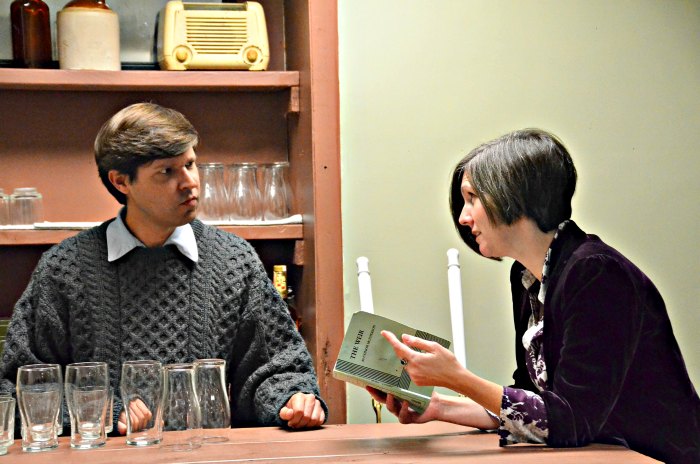
Bridget Reilly Beauchamp goes over lines with Jim Broyles.

Bridget Reilly Beauchamp goes over lines with Jim Broyles.

You could say “The Weir” is about ghost stories.

You could say it’s about faeries, and the forts where they hid.

You could say, as playwright Conor McPherson once described it, that “just people talking.”

“The Weir,” opening Friday, October 17, in a bright, cozy little performance space on the second floor of a commercial building at 305 Old York Road in Jenkintown, is much more than that, says Bridget Reilly Beauchamp, founding director of Pulley & Buttonhole Theatre Company.

Beauchamp, who read the play and fell in love with it, says she has trouble explaining it because, on the surface, it might not seem like much more is going on than a gathering of people—as McPherson would have it, just talking.

Presiding over a rehearsal one night last week, Beauchamp explained as best she could. “Weirs are dams that don’t restrict water. The currents downstream from the weir can be deep, and they can pull you down. This play is about what you do when you go over the dam and hit the currents. At the end of it, there’s such hope. It’s like a new family has been found. There’s a sense that they have broken free of the currents.”

In “The Weir,” four men gather one night in a sleepy pub in Ireland’s dark countryside, and they’re joined by Valerie, a far more worldly-wise young woman from Dublin. And, yes, the evening begins with some creepy ghost stories, but the conversation turns darker as the young woman shares her own harrowing tale.

A review in London’s Guardian summed it all up pretty well:

“When the stories are spun from the men’s lives, they have a competitive edge—but Valerie has a story that can top them all. As Jack (Brian Cox), the grumpy, melancholic garage owner, proves in the dying embers of the evening, we are all haunted by different kinds of ghosts.”

Ultimately, “The Weir” is a story about the sadness and isolation of the men’s’ lives out in the back of beyond, but there’s a hint of redemption at story’s end.

Beauchamp, who grew up in Jenkintown, understands the closeness—sometimes too close—of small-town life, and it gives her an even deeper appreciation for the play. “Every ‘hello’ here has 40 years of life behind it.”

Her Irish background—her mother a Costello, her father a Reilly, and a birthday two days before St. Patrick’s Day, with its legacy of green birthday cakes—also plays a small part in her understanding of “The Weir,” even though she has never been to Ireland. “There is an ‘Irishness’ to it. You have faeries, of course. There is that sadness, but there is also perseverance.”

“The Weir” opens the season for this tiny company, which draws in a fair number of people who have never acted before. Its name, Beauchamp, comes from a line in a poem by Naoli Shihab Nye, “Famous.” This is the verse:

“I want to be famous in the way a pulley is famous, or a buttonhole, not because it did anything spectacular, but because it never forgot what it could do.”

Beauchamp fell in love with acting and the theatre while she was in high school, as she sat on a stage and watched people dancing around her. She went on to earn degrees in theatre and French from the Allentown College of St. Francis de Sales. “I always knew that’s what I’m supposed to be, and what I’m supposed to do.” She now makes her living as a theatrical dresser, and, although she describes her job as “fun and interesting,” something was missing. That’s when she and friend Kate Pettit co-founded Pulley & Buttonhole.

Working with local people, only a few of whom have acting background, is for Beauchamp a fulfilling part of the process.

Watching the rehearsal, you can tell that her actors feel the same excitement—and they’re quite good, and very convincing in their roles as the take up seats around a bar, replete with Guinness bottles—the fact that the taps are down is a source of some consternation for one of the characters—and bottles of Irish whiskey. (Not real, says Beauchamp.) They’re accents are not quite always spot-on, but for people with no experience on the stage, they come a lot closer to the real deal than many actors with more experience.

One of the cast members, Mark Schule, spent some time in County Sligo, and he developed a good sense for the rhythms and inflections of native Irish, and he shared what he knew with his fellow actors. Beauchamp kept them practicing, and she even told them to do something a little chancy. “Go hang out with people who don’t know who you are, use your accent, and see if they fall for it.”

The experiment apparently worked. The result is some fairly convincing, almost musical, but in no way over-the-top Barry Fitzgerald hammery. “I told them: We’re not doing Lucky Charms here.”

The Pulley & Buttonhole Theatre will hold about 60 audience members. You can be one of them. The play runs October 17, 18, 24 & 25. There’s no elevator access to the theatre space.

Learn more here:

http://www.pulleyandbuttonholetheatre.org/the-weir.html

Here are a few photos from rehearsal.

[flickr_set id=”72157648208925329″]


Sports

Field of Dreams

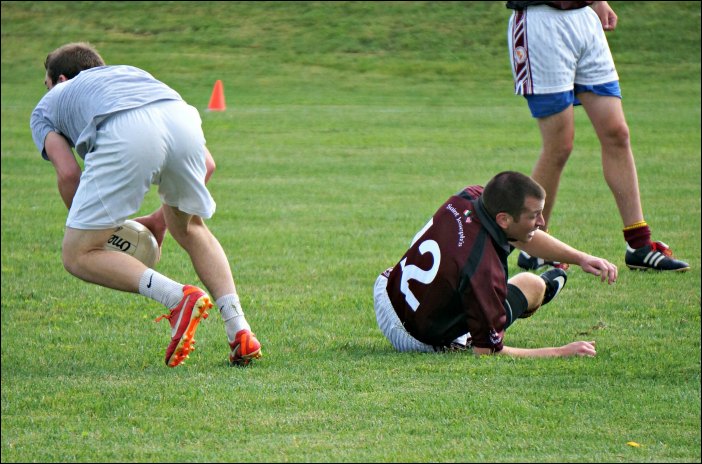
It didn't take long for players to become well acquainted with the field.

It didn’t take long for players to become well acquainted with the field.

The leaders of Philadelphia’s Gaelic Athletic Association were always convinced it was going to happen.

On Saturday, after planning and tireless fund-raising for more than 10 years, the GAA’s long-awaited Limerick Field hosted its first games of football and hurling. They started at midday, and went on for hours, men’s teams, women’s teams, Irish football and hurling, all played with the usual intensity—and maybe a bit of pride of ownership.

This marks the GAA’s long-awaited departure from the athletic field at Cardinal Dougherty High School in the Olney section of Philadelphia, where the league has played for about 20 years.

Nothing against Dougherty, says Philly GAA President Sean Breen. “They were always very good to us. But a regulation field is what we needed.”

Sean Breen

Sean Breen

In Ireland, hurling and football are played on fields a minimum of 130 to 145 meters long, and 80 to 90 meters wide. Rounded out, that would be roughly 140 yards by 85. The field at Dougherty is 130 by 65.

In the past, when out-of-town teams who played on regulation fields would face off against Philly teams, Breen says, “They’d be used to the bigger field, but the local boys wouldn’t.”

The new field, in the shadow of the Limerick cooling towers and the fluffy clouds of steam that hang over them, is nothing short of perfectly flat, with none of the ruts and holes the players contended with before. Even though the day started out rainy, the field was mostly dry by game time. Good drainage was an essential part of the planning for the new facility.

And this is just the start.

The 11 acre-property, Breen says, will have two fields and an 80- by 50-foot building, with four changing rooms, showers and a ballroom. The GAA will rent out the ballroom for receptions and parties, which should defray the costs of the facility. All of this comes at some considerable expense, in the neighborhood of $2.5 million, much of which came from local fund-raising, with a considerable contribution from the Gaelic Athletic Association in Ireland. “That was a big help,” says Breen.

“We’ll have to keep raising money. There’s going to be a big golf outing in the spring, and we’re looking for a sponsor,” he says.

The showers and changing rooms in particular will offer a marked improvement over the field at Dougherty, where players changed in their cars in the parking lot, and under trees along the sidelines.

The North American GAA’s Gareth Fitzsimons was on hand for the opening games. The new facility, he says, is about more than football and hurling. “When this is completed, it can only help grow Irish culture here in Philly.”

And it’ll do a lot for the GAA in the States, too, he says.

“In the last 15 years, there’s been a big push to promote our games to Americans. Having a place you can call your own can only help promote the GAA, and it will give the GAA new life.”

We have more photos than you can shake a hurley at.

[flickr_set id=”72157648389185052″]

[flickr_set id=”72157648342993346″]

Music

Matt Cranitch & Jackie Daly: Philadelphia Ceili Group Concert

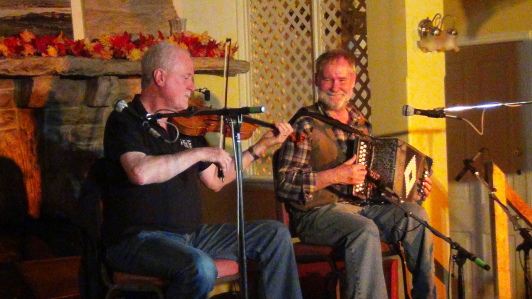
Matt Cranitch & Jackie Daly

Matt Cranitch & Jackie Daly


The Philadelphia Ceili Group hosted two of Irish music’s greats at The Irish Center last Saturday night: fiddle player Matt Cranitch and accordion player Jackie Daly. Their forte: the Sliabh Luachre style of playing that’s unique to the region of northwest Cork and east Kerry, and they’re considered to be among the preeminent interpreters of this music. And not only that, but they’re funny, too.

The two are on an October tour of the U.S. with their new CD, “Rolling On.” For more information on their tour dates, check out their website.

We captured a few of their tunes on video, but as Matt said at the end of the evening, “These concerts are only successful if there’s an audience…The world’s infested by disco culture, so let’s fight back and support live music. Make live music where it’s happening.”

Next up for the Ceili Group concerts: James Keane & Michael Tubridy at 8PM on Friday, October 24th and Rose Flanagan & Laura Byrne at 8PM on Saturday, November 15th. Come out and make live music where it’s happening!

Here’s a sample of what they played:


Food & Drink, News, People

The Irish Community Comes Together for the Meehan-Guilin Family Benefit

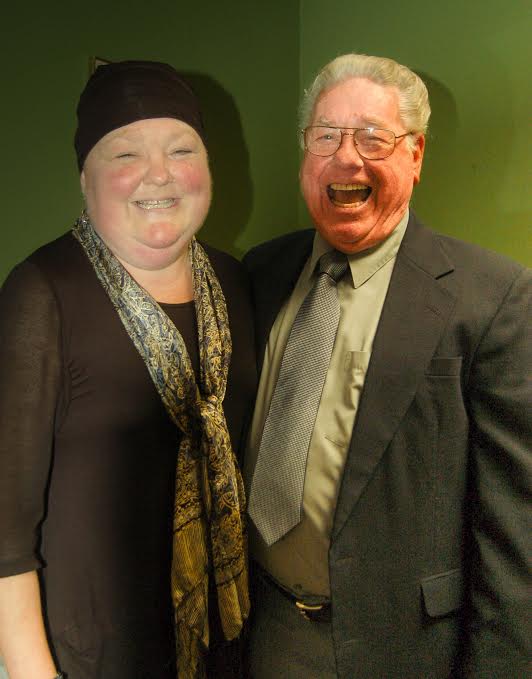
Kathy Meehan-Guilin with Her Father Jimmy Meehan

Kathy Meehan-Guilin with Her Father Jimmy Meehan


This past Sunday, close to 500 people gathered at the Irish Center to show their support for Kathy Meehan-Guilin. The daughter of Donegal native Jimmy Meehan, one of the most beloved members of Philadelphia’s Irish Community, Kathy was diagnosed with breast cancer in February of 2014, and it’s been a long road. From April to July, the mother of three children (Jimmy, 18; Moira, 14 and Anna, 13) underwent chemotherapy treatment, in early September she had a mastectomy and she’s about to begin six weeks of radiation. And in the midst of all of this, her husband of 19 years, Dave, was laid off from his job.

Among the Irish, there is a particularly strong tradition of community, and when someone in the extended family is in trouble, people come together.  So when word got out last spring about Kathy’s diagnosis, the Irish in Philadelphia mobilized. Calls were made, a committee was formed and Jim Boyle and Liam Hegarty took on the role of co-chairing a fund-raising effort.

“Tom Boyle called me and said, ‘Jimmy Meehan’s daughter needs help,'” Liam explained. “That was all it took. Thirty people showed up at the first meeting. Historically, you start out with a large group of volunteers, and people fall away. Not with this group. You couldn’t go wrong with this group. Everyone pitched in immediately, everyone took on a job.”

The fundraising initially began by reaching out with a leaflet that members of the group took to local parishes and grocery stores, telling Kathy’s story. Volunteers spent untold hours collecting money and selling raffle tickets.  Vince Gallagher and Marianne MacDonald talked about Kathy’s story on their Sunday Irish radio shows. Leslie Alcock, who is the Director of Community Programs at the Irish Immigration Center of Philadelphia, was appointed the group’s Public Relations person, and set up a Facebook page and sent out newsletters. In June, the planning began for Sunday’s big event—a culmination that brought out everything that is wonderful about a community that knows how to pull together.

The Irish Center donated the space, Paddy Rooney’s Catering in Havertown donated the food, local musicians donated their time and talents, raffle donations poured in from local pubs and restaurants and individuals who donated baskets of goods as well as larger items that included a bicycle, a signed Donegal Jersey and tickets to an Eagles game.

“I’m overwhelmed,” Kathy said. “I’m amazed at how many people showed up. The way these people have been so generous, it’s a source of strength. It’s really lifted my spirits—people just want to help. Strangers, people I don’t even know. I don’t know how to thank everybody. People come up to me and say, ‘You’re Kathy, Jimmy’s daughter, I know your father.’ People have been so good. I feel cocooned, wrapped in so much love.”

Jimmy Meehan understands: “It’s the Irish Community. With this community, you can’t lose. We’ve been a very active and close-knit family for years. It’s how you were raised. You take care of family and neighbors and anybody close to you. If a time arises when someone needs help, we’ll take care of each other.”

And Leslie Alcock understands why so many people want to help the Meehan-Guilin family: “Everyone knows how much Jimmy has done for the community over the years. He always looks out for his friends, he’s always so kind, the first to volunteer and do anything to help out; he’s never just sitting back.You ask him to do something and he always says yes.”

The community isn’t finished helping yet. As Kathy begins her radiation treatment, a “Take Them a Meal” program has been set up. The schedule can be accessed by going to the website:  TakeThemAMeal.com and typing in the name “Meehan-Guilin” and password “4829.”

As Leslie summed it up, ” All the work that went into this, all the time and energy, it warms your heart. There’s so much good in the world.”

For more information, visit the Meehan-Guilin Family Benefit FB page

Some photos from the day:

[flickr_set id=”72157648603220181″]


How to Be Irish in Philly

How To Be Irish in Philly This Week

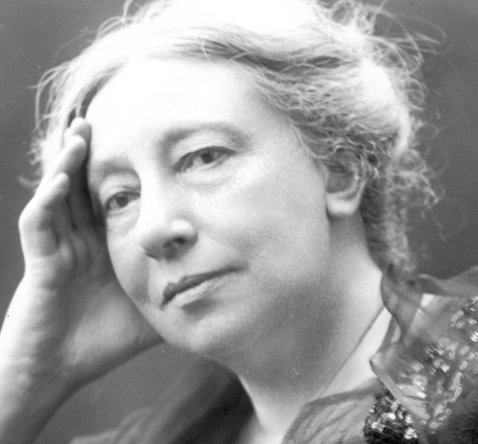
The real Lady Augusta Gregory, whose plays are in Philadelphia for a run.

The real Lady Augusta Gregory, whose plays are in Philadelphia for a run.

Duffy’s Cut dominates the calendar this week. Along with a day-long symposium on Saturday at Immaculata which employs the arts to explore the mystery of the deaths of 57 Irish railroad workers in Malvern in 1832, Immaculata Professor William Watson, who led an archeological dig that found the bodies, will also be speaking on Tuesday at AOH Division 39 Hall on Tulip Street in Philadelphia.

History buffs might also enjoy “A Night with Lady G,” a trilogy of funny plays by celebrated Irish playwright Augusta, Lady Gregory, which opens at Plays and Players Theater on Delancey Street in Philadelphia. My favorite Lady Gregory quotes: “It is the old battle, between those who use a toothbrush and those who don’t” and “I feel more and more the time wasted that is not spent in Ireland.”

For some great music, head to the Tin Angel, where The John Byrne Band opens for the Palm Ghosts at the Tin Angel on Second Street in the city.

The JBB will be in Jim Thorpe on Sunday for the Fall Foliage Fest. History buffs can enjoy the fest and also check out the jail where the Irish miners, the Molly Maguires, were hanged, in this beautiful little town.

On Sunday, be prepared to burn some serious calories at the Ceili at AOH Notre Dame Div. 1 in Bridgeport.

Later, head down to the Annenberg Center for the Performing Arts to hear the Makem and Spain Brothers (yes, that Makem—they’re the sons of Tommy Makem) for an evening of Irish folk music.

There won’t be any Irish language lessons at Villanova on Monday, October 13 because the university is closed that day. Classes will resume on October 20.

On Friday, the Pulley and Buttonhole Theater Company is performing Conor McPherson’s play, The Weir, which will run Fridays and Saturdays, the 17, 18, 24. and 25 at 305 Old York Road in Jenkintown (the theater is on the second floor and there is no elevator).

Looking ahead: Iconic Irish singer Mary Black will be appearing on October 24 at the Colonial Theater in Phoenixville. This is her “last call” tour—she’s retiring from touring the world after 30 years. The first of the Philadelphia St. Patrick’s Day fundraisers takes place on October 25—a beef and beer at St. Denis Church Hall in Havertown.

Please check our calendar for details and updates.

History, News

A Day for Duffy’s Cut

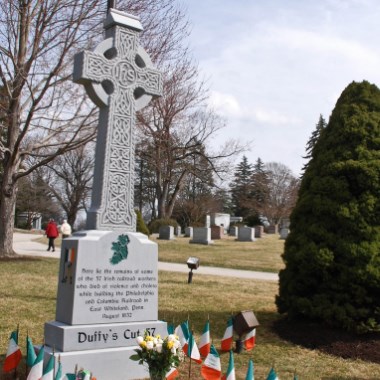
The memorial at Wesst Laurel Hill Cemetery where some of the victims are buried.

The memorial at Wesst Laurel Hill Cemetery where some of the victims are buried.

You’ll learn everything there is to know about Duffy’s Cut—its history, the songs, poems, novels, and plays written about it, films made and in the works, and even view artifacts recovered from the archeological dig—at a special day-long symposium at Immaculata College on Saturday, October 11.

Sponsored by Irish Network-Philadelphia, the day starts at 1 PM with screenings of the Kilmaine Saints’ video of a song about the 57 Irish immigrant railroad workers who died or were killed during a cholera epidemic in Malvern in 1832. That’s followed by screenings of “The Ghosts of Duffy’s Cut” and “Death on the Railroad,” two documentaries about the event and the work of Bill and Frank Watson and the late John Ahtes, who spearheaded the investigation into Duffy’s Cut which led to the discovery of mass graves not far from the Immaculata campus, where Bill Watson is a history professor.

The Duffy’s Cut Museum, which contains artifacts including clay pipes, coffin nails, and railroad spikes, will be open throughout the day. Take a virtual tour here.

Music will be provided by Marian Makins, Rosaleen McGill, Vince Gallagher, Pat Kenneally, and Mickey Coleman, as well as the Watson brothers on bagpipes. There will be two panel discussions, including one on Duffy’s Cut and the Pennsylvania Railroad and the other on “Duffy’s Cut: Why It atters,” which will feature CBS3 reporter Walt Hunter, and former Warner Brothers’ VP Bill Daly and actor and Drexel film studies professor Pat McDade, who, with Daily, has formed a company, duffyscutfilm, which is producing a feature film on this 19th century tragedy.

Novelist Kristen Walker will read excerpts from her forthcoming novel, “Between Darkness and The Tide,” which was inspired by Duffy’s Cut. Kelly Clark will be reading from her forthcoming book, “Duffy’s Cut—A Novel” and John Bohannon will read selected poems from “Barmaids of Tir na Nog.”

Ticket prices, which include a meal and a beverage provided by Tellus360 of Lancaster, range from $35 for students and seniors to $120 for the event and a IN-Philadelphia membership. Proceeds from the event will help pay for the next phase of the Duffy’s Cut dig—to recover the bodies of 50 of the victims.

So far, the remains of only seven have been recovered. Six were interred in a plot donated by West Laurel Hill Cemetery in Bala Cynwyd.

The seventh, identified as teenager John Ruddy from Inishowen, County Donegal, was buried in a family plot owned by Vincent Gallagher, president of the Philadelphia Irish Center, in Ardara, County Donegal.

To learn more about the second phase of the Duffy’s Cut dig, read our story.

Photos of some of the Duffy’s Cut artifacts, including bones, are below.

[flickr_set id=”72157621435007203″]