All Posts By

Jeff Meade

Food & Drink

Dreaming of an Irish Christmas

A great finish to your Christmas meal.

A great finish to your Christmas meal.

When it comes to Christmas meals, every family has traditions. For some, it’s a repeat of Thanksgiving: turkey, stuffing, cranberry sauce and green bean casserole. in other families, ham, rack of lamb, roast beef or even pasta takes center stage.

Here’s another tradition you might want to try: Celebrate an Irish Christmas.

Once upon a time, a traditional Irish dinner would have started with smoked fish, and moved on to roast goose with a potato stuffing, and maybe baked or boiled ham, says Margaret M. Johnson, celebrated author of “Tea & Crumpets,” an afternoon tea cookbook, and the forthcoming (September 2011) “Flavors of Ireland: Celebrating Grand Places and Glorious Food”. These days, she says, the Irish do celebrate more American-style: turkey with all the trimmings, cranberry sauce and all the rest.

But there are differences. Stuffing might be apple and black pudding, for example, or prepared with apricot, she says. “Tart ingredients are often mixed with bread and spices to counter the flavors of the poultry,” she says.

Of course, there’s no end to the ways the Irish can prepare spuds. Champ (mashed potatoes with scallions or chives) might find their way to the table, or colcannon (mashed potatoes with kale or cabbage). “You might also find garlic mash, fondant potatoes, or potato gratins with local Irish cheeses,” Johnson says.

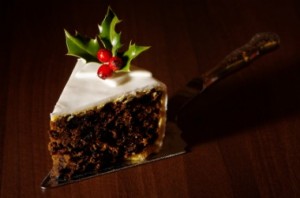
Desserts might be a bit different, too. “Christmas cake and pudding are almost always included in the Christmas menu,” she says. “The cake is a traditional fruitcake where the fruit begins to ‘mature’ in whiskey for at least a month or more; Christmas pudding is a ‘steamed’ pudding, with the fruit ‘plumped up’ with Guinness or whiskey and served with brandy butter (hard sauce), and mince pie–originally dried fruit mixed with suet, but now maded with jarred mincemeat.”

Want to try your hand at replicating Irish Christmas traditions? Try these dessert recipes by Margaret Johnson. File one of these–Christmas Cake–away for next year. It takes several weeks. But two other desserts can be made with far less preparation. Here they are in her own words:

Traditionally, the biggest and most important festival in the Christian calendar is Christmas, and nowhere is it greeted with more enthusiasm than in Ireland. The spiritual preparation begins with Advent, but the practical preparation begins as early as late October when Christmas cakes, puddings, and mincemeat start to be made and readied for the season.

A well-known chronicler of tales of rural Ireland, Alice Taylor says that Christmas was the highlight of the year—“a time of great expectations which climaxed with Christmas Eve and Christmas Day, and then the Wren Day (December 26) brought a burst of color and music into the quiet countryside.” In her book The Night Before Christmas, she says, “The thought of the variety that Christmas would bring filled us with great anticipation. Lemonade, sweet cake, and chocolates in our home at that time were like manna in the desert.” 

These three Christmas treats are the most popular. (Recipes from Margaret M. Johnson’s Puddings, Tarts, Crumbles and Fools, Chronicle Books, 2004)

Irish Whiskey Christmas Cake

This is the “Great Irish Cake,” the traditional pièce de résistance into which every Irish cook sinks her reputation. Spiced, sweet desserts like this cake have been a part of Irish holiday celebrations for centuries and were highly prized because they included spices and dried fruits that were once difficult and expensive to obtain.

The traditional topping for the cake is a layer of almond paste and Royal Icing.

2 cups dried currants
2 cups golden raisins
1 cup dark raisins
2 ounces candied cherries
2 ounces candied mixed citrus peel
Grated zest and juice of 1 lemon
2/3 cup chopped almonds
1 1/2 teaspoon mixed spice or pumpkin pie spice
1/2 teaspoon ground nutmeg
1 cup Irish whiskey
1 cup (8 ounces) Kerrygold Irish butter, at room temperature
1 cup soft brown sugar
5 large eggs
2 cup all-purpose flour, sifted
1 egg white, beaten until frothy, for brushing
One 7-ounce package almond paste, such as Odense brand

Royal Icing

2 large egg whites
4 cups confectioners’ sugar
2 tablespoons fresh lemon juice
Holly sprigs for decoration (optional)

The day before baking (and several weeks before serving), combine all the dried and candied fruit, peel, zest and juice, almonds, and spices in a large bowl with 1/2 cup of the whiskey. Cover and let stand at room temperature overnight.

Preheat the oven to 275° F. Butter a 9-inch round spring form pan and line the bottom with a round of parchment or waxed paper. In a large bowl, beat the butter and brown sugar with an electric mixer until light and fluffy. Add the eggs, one at a time, beating in each thoroughly and adding some of the flour with each egg. Fold in the remaining flour, and mix in the soaked fruit one half at a time. Pour the batter into the prepared pan. Bake for 2 to 2 1/2 hours, or until the top is firm to the touch and a skewer inserted into the center comes out clean.

Remove from the oven and let cool in the pan on a wire rack for 30 minutes. Prick the top of the cake with a skewer in several places and pour the remaining 1/2 cup whiskey over the top. Run a knife around the sides of the pan and release the sides. Invert the cake onto the rack to cool completely. Remove the lining paper and turn right side up. Wrap the cake in plastic wrap, then aluminum foil, and store in a cool, dark place to allow the cake to mature. Unwrap the cake every week and sprinkle a few tablespoons of Irish whiskey over the top.

On the day before serving, unwrap the cake and brush the top with the egg white. Shape almond paste into a flat disk and place between 2 sheets of wax paper. Roll out to a 9-inch circle and place on top of the cake. Cover with plastic wrap and refrigerate overnight.

To make the icing: In a large mixing bowl, combine the egg whites, confectioners’ sugar, and lemon juice. With an electric mixer, beat for 5 minutes, or until the mixture is stiff enough to spread. With a flexible rubber spatula, spread the icing over the top and sides of the cake. Decorate with sprigs of holly, if desired. 

Serves 10 to 12

Guinness Christmas Cake

1 cup (8 ounces) Kerrygold unsalted butter, cut into pieces
1 1/4 cups Guinness Stout
1 cup packed light brown sugar
3 1/2 cups mixed raisins and sultanas
4 ounces candied mixed citrus peel
4 cups self-rising flour
2 teaspoons mixed spice or pumpkin pie spice
4 ounces candied cherries
3 large eggs, beaten

Preheat the oven to 325° F. Line an 8-inch square cake pan with a double thickness of waxed paper. In a medium saucepan over medium heat, combine the butter, sugar, Guinness, raisins, sultanas, and citrus peel. Bring gently to a boil and cook, stirring frequently, for 3 to 4 minutes, or until slightly thickened. Remove from the heat and let cool for 10 to 15 minutes.

In a medium bowl, sift together the flour and spice. Stir in the raisin and stout mixture and the cherries. Add the eggs and stir until well blended. Spoon into the prepared pan and smooth the top. Bake on the middle shelf of the oven for 60 to 70 minutes, or until a skewer inserted into the center comes out clean. Remove from the oven and let cool on a wire rack for 30 minutes. Invert the cake onto the rack to cool completely. Remove the lining paper and turn the cake right side up. If not serving immediately, wrap the cake in plastic wrap, then aluminum foil, and store in a cool, dark place for several weeks to allow the cake to mature.

Serves 8 to 10

Christmas Pudding

Often called “plum pudding” — despite the fact that it contains no plums whatsoever — this  steamed or boiled pudding was first recorded as “Christmas Pudding” in 1858 in a novel by British author Anthony Trollope. The name is probably derived from the substitution of raisins for dried plums as an ingredient in pies during medieval times. In the 16th and 17th centuries, dishes made with raisins retained the term “plum,” and in the Victorian era, Christmas plum puddings became a well-loved dessert. Curiously, plum pudding was a latecomer to Ireland, but it caught on quickly and today it’s one of the most traditional of all Christmas dishes. Not to be confused with fruitcake, it’s actually more like a dense spice cake and is delicious served warm with Brandy Hard Sauce.

3/4 cup dark raisins
1/2 cup golden raisins
1/3 cup candied cherries, halved
1/3 cup chopped candied pineapple
1/2 cup brandy or dark rum
1 1/4 cups all-purpose flour
3/4 teaspoon baking powder
1 teaspoon grated orange zest
1 teaspoon ground cinnamon
1/2 teaspoon ground ginger
1/8 teaspoon ground cloves
1/2 cup packed light brown sugar
4 tablespoons unsalted Kerrygold Irish butter at room temperature
4 large egg whites
1/3 cup pecan halves
2 tablespoons Irish whiskey

Combine the raisins and candied fruit in a glass jar or bowl. Add the brandy, cover, and let stand at room temperature for 3 days. Butter a 6-cup pudding mold or deep, heatproof casserole dish. In a medium bowl, combine the flour, baking powder, orange rind, cinnamon, ginger, and cloves.

In a large bowl, beat the brown sugar and butter with an electric mixer until light and fluffy. Add the egg whites and beat well. With a wooden spoon, stir in half of the flour mixture, then half of the fruit mixture. Repeat, stirring in the remaining flour and remaining fruit. Stir in the pecans. Spoon the batter into the prepared mold, cover with parchment or waxed paper, then cover tightly with foil. Tie the foil in place with kitchen twine.

Place the mold in a stockpot or Dutch oven fitted with a rack, or place a folded kitchen towel on the bottom of the pot to prevent direct contact with the bottom of the pot. Add enough hot water to the pot to come halfway up the sides of the mold or casserole dish. Cover and steam on medium-low heat for 2 to 2 1/2 hours, or until a skewer inserted into the center comes out clean. (Check the water level once or twice during cooking and add more water when necessary.)

Carefully remove the pudding mold from the pot. Remove the foil and parchment, and run a metal spatula around the sides to loosen. Place a serving plate over the mold and invert. Drizzle the whiskey over the top. Slice and serve warm. (If not serving immediately, let the pudding cool, covered, in the mold. When completely cool, unmold, wrap in plastic wrap, then aluminum foil. Refrigerate the pudding for up to 1 week or freeze. To serve, put the pudding back into its mold, cover with waxed paper or foil, and steam for 1 hour, as above, or until heated through. Thaw frozen pudding before reheating as above.)

Serves 10 to 12

Brandy Hard Sauce

1/2 cup (4 ounces) unsalted Kerrygold Irish butter at room temperature
1 1/2 cups confectioners’ sugar, sifted
2 tablespoons brandy

In a small bowl, beat the butter and sugar together with an electric mixer until light and fluffy. Add the brandy and beat until smooth. Transfer to a small bowl or crock, cover, and refrigerate for up to 2 days Return to room temperature before serving.

Makes 3/4 cup
News, People

Santa Claus Visits the Irish Center

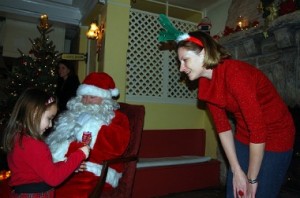
Santa's little helper, Sarah Conaghan, and the Big Guy himself.

Santa's little helper, Sarah Conaghan, and the Big Guy himself.

Nobody pouted. No one cried.

These essential contractual preconditions having been met, Santa Claus came to town.

Even better than that, he came to the Philadelphia Irish Center on Saturday for a Christmas party sponsored by the Mid-Atlantic Rose of Tralee Center.

Before the jolly old elf arrived, in the Nick of time of course, the many kids who crowded into the Fireside Room found plenty to help them occupy their waiting time. They crafted their candy cane bracelets with care. They colored. They glued things to other things. And they snacked. (They were joined by the many kids who had shown up for a feis in the ballroom, who seemed only too happy to help.)

We’ve several photos of the party. And remember, he sees you when you’re sleeping. Which, when you come to think about it, is kinda creepy.

Check out the pics.

Music

Music and Memories

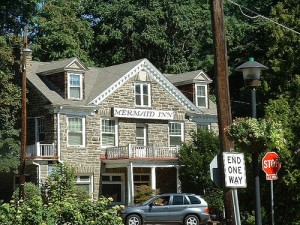
A memorial to Don Trefsger at the Mermaid Inn session Sunday.

A memorial to Don Trefsger at the Mermaid Inn session Sunday.

Some glad morning when this life is o’er,
I’ll fly away;
To a home on God’s celestial shore,
I’ll fly away.

I’ll fly away, Oh Glory
I’ll fly away;
When I die, Hallelujah, by and by,
I’ll fly away
.
They were all there on Sunday: singers, fiddlers, an uilleann piper, and tin whistle, accordion, mandolin and harmonica players. Traditional Irish and bluegrass. Old guys with gray beards and young kids wearing flip-flops. The Mermaid Inn’s barroom isn’t all that spacious, but musicians of all stripes took up half of it.

They sat facing each other in a circle of hard-backed wooden chairs, the afternoon sunlight pouring through the bar’s stained glass windows, and they sang songs of remembrance. Songs like “Amazing Grace,” Hank Williams’ “I Saw the Light” and the Gospel bluegrass standard, “I’ll Fly Away.”

When bassist Don Trefsger left this world, a year and a half after the motorcycle accident that left him paralyzed, he clearly left behind many good friends, and a surfeit of songs.

Non-musical relatives, friends and fellow congregants from Cumberland County Community Church took up the rest of the room and overflowed into a small adjoining dining room. There were so many, they required name tags. maybe the only person who didn’t need a name tag was Chris Brennan Hagy, who organized the memorial. She attended to Trefsger and was so often at his side that he referred to her as his “angel.”

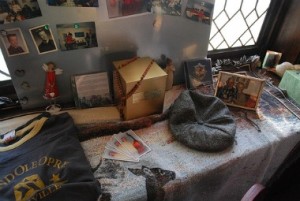
Trefsger himself was there, in a way. A small gold box containing his ashes sat on a wide window ledge off in a corner, surrounded by memorabilia, including his tweed cap, a souvenir shirt from his visit to the Grand Ole Opry, “live at the Mermaid” CDs on which he played, and a cluster of snapshots.

One by one, the people who loved him stood to share their memories and tributes.

Fiddler Kay Gering recalled a man who, even in the toughest time of his life, found room in his heart for everyone. Seeing him in the nursing home where he spent his final months and seeing how he responded to his many visitors, she said, “made me see the grace a person can have in the most difficult situations. Don had a beautiful soul in him. His spirit just came out in that difficult process.”

Sal Roggio, pastor of the Cumberland County Community Church, where Trefsger played in the musical group, recalled times when he would just sit with him between services and talk about music and life. Little did he know how much that life was going to change.

Visiting him in the nursing home, Roggio said, he saw Trefsger in his darker moments. But he came to terms with his fate, he noted, and certain hymns spoke to him, especially “Blessed Assurance, Jesus Is Mine.”

In coming to grips with his own sense of loss, Roggio perhaps spoke for everyone in the room. “He was only with us a short time,” he said, “but he left a big footprint. He left a mark.”

People

Remembering Don Trefsger

The memorial service will take place at the Mermaid Inn.

The memorial service will take place at the Mermaid Inn. (Photo by Chris Woods)

Devotees of the Irish traditional music session at the  Mermaid Inn in Chestnut Hill will remember Donald Trefsger. He was hard to miss. “Donny” was the big guy with the big upright bass.

Friends today are mourning his loss. Paralyzed following an accident on his treasured Harley on July 11, 2009, Trefsger died November 20 of complications from his injuries. He was 62.

Fiddler Chris Brennan Hagy, who anchors the Mermaid session, was one of his closest friends. She recalls meeting him for the first time at a weekend gathering of the Philadelphia Folksong Society. “There was this big fella in the back of the room playing bass, smoking a cigar. He had tattoos,” she remembers. “That was Donny.”

That meeting was about 26 years ago. Hagy and Trefsger became fast friends, and they played together in the SPUDS contra dance band. It was only a matter of time before he would wind up taking his place in the circle at the Mermaid. He would go on to play on two “live at the Mermaid” recordings, including Hagy’s.

Trefsger was devoted to music, Hagy says. “He played in a lot of groups. He loved bluegrass. He went to folk conferences, and he traveled to the Grand Ole Opry. When he was a kid, he and his dad marched down Broad Street in the Dick Crean String Band. He was always around music.”

For the past 16 months, Hagy and other musical friends were his constant companions at Arista Care in Plymouth Meeting. They would talk for hours and play CDs. “He always had a smile for you,” she recalls.

This Sunday, a group of musicians will gather once again at the Mermaid for a celebration of Don Trefsger’s life. Hagy plans to bring along Trefsger’s trademark stool and his cremains. Before he died, Hagy says, she and Trefsger never talked about anything like a memorial, but she has a feeling he’d have liked the idea. It’s hard saying goodbye to such a good friend, but in his time Don Tresfsger had an impact on local music, and those who knew him appreciated his contribution. “Don was a good fellow, a good-hearted guy,” says Hagy. “And he loved to play.”

Columns

Behind the Scenes for 25 Years, This Year She Leads the Parade

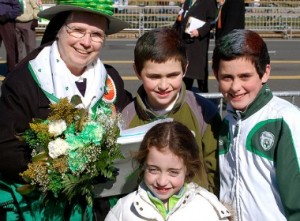
Sister James Anne and friends.

Sister James Anne and friends.

There was never any question that Sister James Anne Feerick would grow up with pride in her Irish heritage. The 2011 Philadelphia St. Patrick’s Day Parade grand marshal recalls her childhood in Cobbs Creek:

“My father was from Ballinrobe, County Mayo, and my mother was born here, but her parents were from Foxford, in County Mayo. When we were kids (there were six), my father would tell us stories about Ireland, and on Sundays we would go over to my grandparents’ house, and they would tell us about Ireland. As kids, we were fascinated by the history that our parents had. We grew in love with the music and everything about Ireland.”

As if growing up in the household of James J. and Anna (Caulfield) Feerick were not enough in itself to inspire that love of Ireland, the broader Irish community also was a profound influence. Sister James Anne recalls house parties, sometimes at her own house and sometimes at a neighbor’s, in which Irish emigres would congregate. “They would get together and talk about their homeland. Musicians would come and bring their violins and accordions, and some would sing songs. Our parents would dance. It was just something we were accustomed to. We saw our parents having fun and enjoying each other, and it just grew on us.”

Born Anne Marie Feerick, this lifelong Catholic school educator and member of the Sisters, Servants of the Immaculate Heart of Mary (I.H.M.) recalls a childhood surrounded by the warmth of family and friends. Her family belonged to Transfiguration of Our Lord parish at 56th and Cedar in Cobbs Creek, and she attended the parish school. Transfiguration was a close-knit parish, mostly Irish and Italian. It was, she says, the center of community life in those days.

“I loved my schooling there,” she says. “I remember it being a happy time. I remember the sisters being very interested in what we were doing. We had the support of a lot of people, neighborhood people, your classmates and everything.

“After school, you’d go to your friends’ houses and ask if they wanted to play ball. There was no planning of activities. You just did it. That was our happiness—just being able to be with each other and share and learn. It was wonderful.”

That’s not to say there were no planned activities and, indeed, Sister James Anne had plenty to keep her occupied. Early on, she began to learn violin and later piano. Her parents loved all kinds of music, and this passion they successfully imparted to Sister James Anne.

Those who know Sister today can attest to her love of Irish dancing. That too is a passion acquired in childhood. She began taking Irish dance lessons when she was 7 at the nearby home of Sean Lavery, from Donegal. Every Friday night, she recalls, kids from throughout the city would converge upon his house to learn dance. Classes were from 5 to 9 p.m. Lessons were 50 cents. Those Friday nights at Sean Lavery’s house further reinforced her sense of Irishness.

“His home was packed on a Friday night,” she says. “For us, it was another connection. We would go to various competitions together and we would rent a bus. Our parents would go with us. And on the bus, you’d hear more stories of Ireland, and the music. It was just another way of keeping alive the Irish culture.”

As important as Irish cultural identity was, her parents also instilled in her the importance and significance of being an American. Immigrants to America don’t take citizenship for granted, and her father was no exception. Sister James Anne’s father studied for three years to become a citizenship, and it meant the world to him when he took the oath of allegiance. “He never wanted to forget where he came from, but he was proud to be an American.”

Catholic faith also mattered deeply. Like many of the Irish Catholic households in the neighborhood, hers proudly displayed pictures of the Holy Father and the Sacred Heart and a statue of the Blessed Mother. On Sundays, the Feericks attended Mass as a family. It was not simply an obligation to be fulfilled. In the Feerick family, faith was essential and deeply nourishing. Though they couldn’t have known it, they—together with the good example of her teachers at school—were laying the foundation for a life wholly devoted to God and service.

In her senior year in high school—she attended West Catholic Girls High School, class of ‘62—Anne Marie Feerick decided to enter religious life.

“I just think my parents were an inspiration to me,” Sister James Anne says. “Through good times and bad, they held on to their faith. And through some of the sisters that taught me, I just saw something special in them that hit me. I was already accepted to college but it was just something I wanted. There was just something special about what the sisters showed me—their kindness, their caring, their patience and their wanting to make us the best we could be. But still, I would say that the first example was my parents.”

As a member of the I.H.M. order, Sister James Anne became a teacher, serving in many capacities, including principal. With her own teachers as an example, she says, there really wasn’t any question that education was her calling.

“I liked teaching,” she says. “When I was in high school, I helped the dance teacher teach the younger kids. I also taught C.C.D. as a junior and senior in high school. I just always enjoyed the idea of being able to teach someone. It’s just the grace of God that speaks to you when you least expect it. I knew that if it didn’t work out, I would be able to pursue something else, but I really had to see if it was for me. And here I am 50 years later.”

Teaching has never been easy, and as a field it undergoes constant change. Teachers need to be up to the challenge; Sister James Anne was.

“When I first started teaching, I had 105 first graders. I remember teaching back then was very simple. Every school was doing the same thing; you did a lot of phonics and reading. Each grade covered a certain area, and you never skipped ahead. And then, later on, as they came in with the new math and the new reading I kind of got into it. It’s always good to learn something new. It was a big change, and it’s been changing ever since.”

Sister James Anne is still solidly involved in education, as director and teacher at the I.H.M. Educational Center in Bryn Mawr.

Of course, total immersion in he world of the I.H.M.s did not mean she left her heritage behind. For one thing, Sister has often taught Irish dance to students. It’s a way of developing coordination—and the kids like it. And she has continued to dance. At the recent Mayo Association Ball, were she was honored with the President’s Award, she was on her feet all night. (She is also chaplain of the Mayo Association.)

Also near and dear to her heart is the Philly St. Patrick’s Day parade, where she has been judge for 25 years.

According to parade director Michael Bradley, Sister James Anne has always been one of the parade’s unsung heroes.

“In my mind, she always does something to the best of her ability and she never looks for any credit,” Bradley says. There are a lot of people who want to stand in front and get recognition. But Sister’s been behind the scene for all these years and no one knows it. Well, I know it.”

Bradley also notes that Sister was the unanimous choice for 2011 grand marshal—the first unanimous choice in years.

Kathy McGee Burns, president of the St. Patrick’s Day Observance Association, echoes Bradley’s sentiments: “In my first year of presidency of this great parade, having Sister James Anne as grand marshal is like icing on the cake. Spiritually, she has been the chaplain of the Mayo Association for many years and as an Immaculate Heart of Mary nun, has been a positive influence on many a student. Emotionally she is a sincere, loving being who is kind and unselfish to all. Her Irishness she wears proudly on her beautiful face and in her involvement with dance, family and organizations. I am thrilled to count her as my friend.”

For Sister’s part, being named as grand marshal was a bolt out of the blue, and an honor for which she is very grateful. “I never considered myself as being a grand marshal of the St. Patrick’s Day Parade at all,” she says. “My cousins and family, they’re all excited. And I know my mother and father will be very happy up in heaven.”

Music

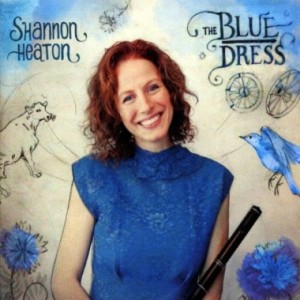
Review: “The Blue Dress” by Shannon Heaton

The Blue Dress

The Blue Dress

“The Blue Dress” is all softness and satin. On her new solo album, the delicate sound of Shannon Heaton’s Irish wooden flute is accompanied nearly throughout by lighter-than-air instruments such as Maeve Gilchrist’s harp and her husband Matt’s guitar and bouzouki. The result is 12 tracks of beautifully played tunes that all blend together like the threads of some silvery, fairy-spun fabric.

That’s not to suggest “The Blue Dress” is insubstantial. All of the choices are firmly rooted in traditional music, from “Boil the Breakfast Early” and “Eddie Duffy’s Reel” to “Campbells Are Coming” and “Irish Washerwoman.” The tune selection is a nice balance of reels and jigs, with a set of hornpipes (“Grandfather’s Thoughts” and “Fairy Queen”) and a pair of polkas (“#99 Polka” and “High Caul Cap”) thrown in for balance.

Heaton also is supported by Paddy League on bodhran, percussion and bouzouki, and by Liz Simmons on guitar. League is especially effective on the polka track, playing what sounds like djembe on these very syncopated tunes. It’s the kind of set that, on a Lunasa CD, probably would transition to a mazurka. League’s bodhran play on the “Dennis Watson’s” reel set (“Wheels of the World,” “The Flogging Reel” and “Dennis Watson’s”) really propels the tunes with wild, burbly energy in support of Shannon and Matt Heaton. He shows up again in a few places; he provides an interesting contrast to Heaton and Gilchrist on the last track, a set of reels (“Hornless Cow” and “Boil the Breakfast Early”).

There are three more pensive tunes, as well, all of them Heaton’s own, including the delicate “Blue Dress Waltz,” one of the highlights of the CD. Gilchrist begins the tune, with Heaton joining a couple of verses in. It’s a lovely dance, a perfect pairing of two very complementary instruments and styles. “Blue Dress Waltz” is dedicated to all the fans who supported the recording on Kickstarter.com.

Two other pieces by Heaton, “Nights on Caledonia Terrace” (a slow air) and “Frost Place” (a slow reel) are especially lovely and show off her talent and sensitivity. She’s one of the leading wood flute players in the world, and these tunes help illustrate why she is held in such high regard.

All told, this is music played with a sure hand and faithfulness to the tradition, aided by a strong supporting cast. Together with Flook frontman Brian Finnegan’s earlier “The Ravishing Genius of Bones,” “The Blue Dress” is one of the most impressive and most completely realized albums of the year.

People

At Last, a Sash of Her Own

Kathleen Paulson

Kathleen Paulson

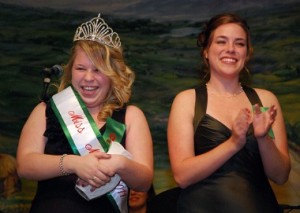
When Neumann University accounting major Kathleen Paulson decided to enter Philadelphia’s 2010 Miss Mayo pageant, she already had a pretty good idea what to expect. Caitlin Lotty, Miss Mayo 2009, is one of her best friends at Neumann and was her roommate in sophomore year. And when Caitlin, a nursing major, traveled to Ireland last summer—her prize for winning the pageant—Kathleen went along.

And it was Caitlin who encouraged her to give it a try this year?with an added nudge from Sister Marguerite O’Beirne, Neumann’s vice president for mission. (Sister Margaret, something of a queen maker, also gave Caitlin a gentle shove last year.)

Without such encouragement, Kathleen says, “I don’t think I would have done it. She (Sister Margaret) and Caitlin both pushed me to do it. Sister Marguerite sent me the application form. She’s very persuasive.”

The thought that she might win also never entered her head. “The other girls I was talking to, they were all so accomplished,” Kathleen says. “I’m just a 20-year-old trying to get through college, I’m not doing anything life-changing. (Knowing that) kind of relaxed me because I didn’t think I was going to win. I thought maybe I‘d do OK, but I definitely didn’t think I was going to win.”

Looking at Kathleen’s background, she clearly had a better shot than she realized. She’s been an Irish dancer all her life, first at the McAleer School of Irish Dancing in Wilmington, Del., her home town, and later with the Broesler School of Irish Dance. Her mother Eileen also has been involved in dance as well. She danced as as a girl and serves as co-chair of the Irish Culture Club of Delaware Feis. Brother Nick dances competitively. Like most dance dads, father Nick was also pulled into the act, accompanying the kids to competitions and lugging all the costumes and other paraphernalia. (He has a bumper sticker, Kathleen says: I Don’t Dance, I Finance.)

As for many kids who wear the wigs and the ghillies, dance was Kathleen’s entree to Irish culture and, indeed, to Ireland. She’s traveled there five times. Her Miss Mayo trip will mark her sixth. She believes her great familiarity with the culture helped her snag the tiara.

“I’m fifth generation Irish, so I don’t have any direct connection,” Kathleen says. “Still, I identify with my Irish heritage. As an Irish dancer, we always went over to Ireland. Some of my closest friends are from dancing. For a lot of kids, your friends are from school and your neighborhood, but mine are from dancing, and they’re from all around the world.

“A lot of the people I encountered through dance (like Veronica McAleer), they had direct relatives in Ireland. Those relatives would all take us in like we were a member of their family. We have a couple of good friends in Killarney; we like to say they’re our adoptive family. They love to have us over and it’s always a lot of fun.”

In her interview with the Miss Mayo judges, Kathleen says, she thinks her love of the culture and people of Ireland shone through. She says she especially appreciates the legendary hospitality of the Irish. “They’ll always ask you in for a cup of tea and a scone and a biscuit,” she says. “They always have time to sit and chat with you.”

Now, with her Miss Mayo win, Kathleen will have another chance to experience the warmth and companionship of the Irish up close and personal. And of course, she says, the win itself is gratifying.

Even though she danced for years, competition was never her thing. She was always in it mostly for the ceilis and socializing. Her brother Nick was the one who racked up all the medals. But winning Miss Mayo makes up for a lot. “My brother always won the sashes,” she says. “So now I finally got my own sash.”

Dance

Video Special: Philly’s Irish Dancers Step Out

Getting ready to compete.

Getting ready to compete.

You’ll be eating turkey in the comfort of your own home. The hordes of Irish dancers competing in the Mid-Atlantic Regional Oireachtas will be downing their Thanksgiving feast in a Center City hotel or one of the surrounding restaurants. Maybe that’s the Irish dance equivalent of carbo loading.

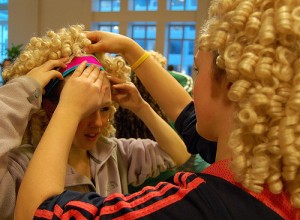
Whatever, they’ll have a couple of days to work off all that stuffing and pumpkin pie. Once the competition starts, those kids (well, most of them are kids) will be dancing their legs off pretty much non-stop. When they’re not competing in the halls, they’ll be practicing in the hallways.

In celebration of this high-stepping festival, we put together a playlist of over 30 videos highlighting Irish dance in the Philadelphia area. We’ve tried to show every school. If we’ve missed any, let us know, and we’ll see if we have a video in our now vast collection. If it’s there, we’ll add it.

Happy watching!