All Posts By

Jeff Meade

News

The Wildwood Irish Fall Festival in Pictures

You'll run into lots of these guys.

You'll run into lots of these guys.

They say that what happens in Wildwood, stays in Wildwood.

That is, of course, unless we are there with cameras in hand, ready to capture the action.

If you’ve gone to the Wildwood Irish Festival before, let this get you pumped up for the weekend.

And if you’ve never been, let this be your sneak preview.

Dance, Music

Didn’t We All Just Have the Best Time?

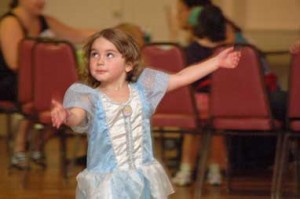
Stella means star ... and she is. One of many who just couldn't keep from dancing.

Stella means star ... and she is. One of many who just couldn't keep from dancing.

Not all that long ago, Irish newcomers to the Delaware Valley found a pretty fair treatment, if not a cure, for homesickness in the dances at the old VFW on 69th Street.

Rosemarie Timoney, one of the local legends of Irish dance, recalls working in Chestnut Hill in those days. She used to hop on a bus that would take her from Bethlehem Pike down to Cheltenham Avenue, and from there, she’d join her girlfriends on the E bus for the last leg of the trip down to Upper Darby.

There, she and her pals would dance the sets—Shoe the Donkey, the Siege of Ennis, the Philadelphia set (of course), and more.

A few of the folks who remember the dance hall days all too well—including Rosemarie, Ed Reavy Jr., Tommy Moffit and Kevin McGillian—were on hand over the weekend as the Philadelphia Ceili Group held its annual festival of Irish music and dance at the Philadelphia Irish Center. One very special feature of that three-day event was a Saturday afternoon dance to commemorate those days down on 69th Street. With Rosemarie herding the newbies, Tommy calling the tunes, Kevin playing accordion and Ed dancing up a storm, it felt like nothing had really changed at all. The dance hall was different, but the dance goes on.

It all felt like a great reunion party. But, then, the Ceili Festival always seems to reunite people who sometimes manage to see each other two or three times a week, as well as people who maybe haven’t been inside the Irish Center for years. Everyone just picks up where they left off, and they all throw themselves into hours and hours of great music—this year including a concert by the great New York fiddler Tony DeMarco—as well as endless hours of floor-shaking dancing. (You can hear the shoe-pounding pretty well in the parking garage under the ballroom.) The bar does a pretty fair business, and traditional music sessions go on and on into the night.

We’ve tried to capture some of the best moments in pictures.

Arts

A Look Behind the Scenes at “Long Day’s Journey Into Night”

Robert Hedley has been through it all before. Forty years ago, then a relatively new assistant professor in the theatre department at Villanova University, Hedley directed a production of Eugene O’Neill’s Pulitzer Prize-winning play, “Long Day’s Journey Into Night.”

It was the first production in Villanova’s Vasey Theatre and, by all accounts, a huge success.

Now Hedley—who has since moved on to become head of the Playwriting program at Temple University, co-founder of The Philadelphia Theater Company, artistic director of the Iowa Shakespeare Festival, and holder of the Barrymore Lifetime Achievement Award—is taking a fresh look at O’Neill’s master work in a new production at Villanova.

“Long Day’s Journey Into Night” is considered an autobiographical work, and it documents the torments and travails of a dysfunctional Irish-American family over the course of one day. It addresses some fairly well-known themes in Irish-American life, such as drink and Roman Catholicism. To summarize the play in such a Cliff-s Notes fashion, of course, does it a grave injustice

The play, which opens Villanova’s 50th season, runs from September 23 to October 5, 2008.

Hedley also serves as director of International Education for the School of Communications and Theater at Temple, which includes the Dublin program—so Irish themes do tend to resonate a bit.

We chatted with Hedley about the play, O’Neill, families—and Philadelphia’s large and appreciative Irish theatre audience.

Q. You first directed “Long Day’s Journey” at Villanova forty years ago. I’m told it was the first play staged in Vasey Theatre. Where were you in your career then?

A. I was a young assistant professor then. I was, I think, in my third year of teaching in the United States. I’m from Canada. I was moving into the Philadelphia area and got the job at Villanova. (He became the chairman of the theatre department.) It “Long Day’s Journey”) was the first play in the present theatre. Then, it was just a lecture hall with a high stage at one end and wooden fixed desks. We took over that space.

For me it was a tremendous experience, all in all, even though we were rushing to make that hall a do-able space for theatre.

Q. Tell us about that first show, 40 years ago.

A. I remember we had an unusually large Irish audience. I was surprised. Everyone in the play, of course, is of Irish descent. I never thought we’d find that particular audience. Night after night, those people would come up to me and talk to me about the play. I saw some of the same faces in the audience, every night.

Q. What does it mean to revisit the play so long after directing it the first time?

A. It’s a really powerful piece. Coming back to it after all these years, it’s [still] an extraordinarily intense look at a time in one family’s life.

Someone asked me whether I thought this play had a contemporary relevance. I said, it is probably more present now than it was 40 years ago. It has to do with morphine and addiction through medication, for example. (Mary Tyrone, the mother, is addicted to morphine.) That’s in the news today. And it’s about disjointed, disengaged families. It addresses questions like: How do you cope with family members not living up to your expectations, or following in your footsteps?

It’s such a human play. It’s the only play I know that is this intense among the four family members.

Then I went back to it, it was not only “present” to me, but I was frankly surprised at how contemporary it seemed.

Q. Why do you think this play has such a lasting presence?

A. What has sort of guaranteed its lasting is that it is really extraordinarily, brutally honest. People say things to each other that are pretty shattering. You have people who are suffering—in Mary’s case, because of addiction, or, in (son) Jamie’s case, because he’s never lived up to his father’s expectations. You look at that and how siblings are related, and it’s really powerful stuff. We go home exhausted.

Q. How else is this production different for you?

A. Last time, 40 years ago, I had a couple of professional actors and a faculty member up there, and a couple of students. It’s very much the same lineup (now) as before. Still, the productions are very different.

In the theatre 40 years ago, all the members of the audience faced the stage, and that meant that you were looking at it almost the way you look at a movie. For a director, that’s sometimes a lot easier.

In this case, though, most of the play takes place around a table, and with the theatre in its present configuration, were playing very far down front, There are audience members along the sides, and some practically behind us. That means that you feel like you’re really inside it. You’re very, very close. You can have the most intimate sort of things happening. You can have actors genuinely whispering and you can hear them just fine.

I love the notion that you have a play unfolding, and you are close enough to it to pick up the smallest nuances, the smallest flicker of emotion in somebody’s face.

Q. How did you get into theatre?

A. I’ve told this story many times.

My mother Wanted to be a concert pianist. She taught piano. My father was a pretty good musician, but he was also a painter and a photographer. My sister was a very good pianist. My brother had an opera program.

When I went to university, there was a requirement that you take one of the arts courses. Well, my family had covered all the other bases. There’s no way I was going to go into one of those areas that my family was already good at. So I chose a course in theatre. As soon as I got into it, it felt absolutely right. I was very, very comfortable in it. I just enjoyed everyday going into those classes.

For details on the Villanova production, visit the university Web site.

Music

Review: “Sirius” by Aidan O’Rourke

“Sirius” (just released on the Compass label, but originally released in 2006 by Vertical Records) takes some serious liberties with traditional music.

That’s usually OK by me. In this case, I’m mostly OK with Scots fiddler Aidan O’Rourke’s audacious little CD.

By turns jazzy, funky—and yes, traditional—“Sirius” carves out some new territory. O’Rourke swings, he syncopates, and he twists times signatures into exquisite little knots. He also brings together instruments that, some might protest, simply never should be brought together. (To my way of thinking, being told that something never should be done often is the best reason to do that something.) O’Rourke is accompanied by horns, piano, double bass, drums, guitar—and melodeon, flutes and whistles. At times, I felt like I might be hearing Average White Band. Or Lunasa. Sometimes in the same tune.

Of the 10 tunes on “Sirius,” “Lochaber Drive” and “Peoples Park Part 2” are particular favorites. “Lochaber” features an improbable pairing—melodeon, flute and O’Rourke’s fiddle with hot licks from the aforementioned AWB-style horn section. “People’s Park Part 2” starts out all traditional and then quickly transitions into Solas-style syncopation—hey, kids, let’s play “Find the Time Signature!”—and from there O’Rourke starts to coax some slick Eileen Ivers-style squeaks, squeals, whines and moans from that fiddle of his.

And, as I say, I mostly like this intriguing recording. There were moments when I thought we were crossing over into “just because you can, doesn’t mean you should” territory. But whatever faults I might find are pretty minor. And, on balance…it’s a pretty good balance.

Not everyone’s cup of tea, to be sure, but well worth a listen.

Music

Review: “Starfish,” by Catriona McKay

Comparisons aren’t always fair to musicians. But it’s the only way I can think of to explain the Scottish harper Catriona McKay. If the Swiss New Age harpist  Andreas Vollenweider and the Indie rock guitarist Kaki King were to have produced a love child … ah, but that doesn’t really quite work, either.

And it’s weirding me out.

Catriona McKay is pretty much her own baby.

I don’t play Celtic harp, but I know enough harpers to say … some of you might not like her latest offering, “Starfish.” It’s not the pure traditional stuff. Nothing like it, actually. Like the harper itself, most of this recording (from Compass) is hard to classify. Part jazz, part Celtic …part all kinds of things. However, the whole of this lithe and lively little recording—just 10 tunes—is greater than the sum of its parts. You’ll wonder how two hands can produce such lush, complex and original sounds and rhythmic patterns, all served up with astonishing clarity. One explanation is that she’s playing a Franken-harp of her own creation. You harpers will recognize that it has some really weird tuning. But the more meaningful explanation is that Catriona McKay is just that scarily good, with some truly dazzling left-hand work on the faster numbers, including the title track, the jazzy “Greenman,” and a wild set of tunes called “Lums O’Lund.”

Oh yes, she can play the fast stuff. But she also plays the slower pieces with extraordinary feeling.

A particular favorite is a gorgeous piece with the inscrutable title, “Swan Lk243.” (Harp teacher alert: Your kids will want to learn it.) McKay performed the piece as part of the BBC series, “Transatlantic Sessions.” She is backed up by the great Jerry Douglas on dobro and Scottish fiddler Aly Bain. If this doesn’t melt your heart, you probably don’t have one. Here it is on YouTube.

McKay has some very able backing on “Starfish,” including Fionan De Barra (guitar), Alistair MacDonald (fiddle, guitar and strings), Séamus Egan (nylon guitar), Donald Grant (fiddle), and Matt Baker (double bass). The Red Skies string ensemble also figures prominently. The pairing of McKay with Egan on “Aval Moon” is especially lovely.

You can hear a sneak preview on McKay’s MySpace page.

Then, run right out and buy this one.

People

Nurturing the Sound of Traditional Music

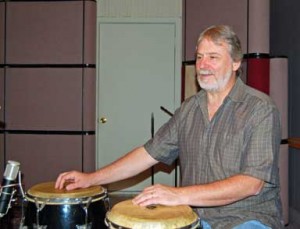
John Anthony in his studio.

John Anthony in his studio.

Here’s what soul crooner Gerald Levert, indie singer-songwriter Jim Boggia, jazz bass virtuoso Gerald Veasley and the inventive young Irish ensemble Solas have in common: John Anthony.

All are brilliant artists in their own right. But it is Anthony—audio engineer, producer and owner of Maja Audio Group in Society Hill—who helps give them their voice.

Anthony’s career path in music began one Sunday night in February, 1964, when a new band from England debuted on the Ed Sullivan Show. The drummer—a mop-haired guy with a memorable nose—made quite an impression on the kid from Newtown Square.

“It was Ringo,” says Anthony, a talented percussionist who lends a hand on many Solas recordings. “My dad had a big custom stereo that he built, and it had big speakers. The TV came through the stereo, which was revolutionary in those days. But I just watched that show with my head between the speakers. After that, that was pretty much it.”

Anthony went on to pound away in his fair share of bands, but his interest in just playing music always took a back seat to recording it. His early knack for extracting crisp, true sounds out of a performance eventually blossomed into a successful career.

How successful? In addition to the above, consider this eclectic artists’ roster: Grover Washington Jr., Omar Hakim, Karan Kasey, Dru Hill, Sara Hickman, Phil Lee, the Hangdogs, John Doyle, Liz Carroll, Sue Foley, Niall Vallely, Cathy Ryan, Susan McKeown, Jim Boggia, Eileen Ivers, Michael Manring, and the Dixie Hummingbirds. He has also worked on a number of films, including “The Brothers McMullen,” “Philadelphia,” “Beloved,” “Two Bits,” “The Siege,” “Barnyard,” “The Illusionist” and “Meteor Man.”

Anthony’s musical tastes are pretty clearly catholic, but his passion for Irish traditional music also is well-known. His skills have gained the attention of many Irish and Celtic recording artists, including piper Cillian Vallely, who is scheduled to begin recording at Maja in September.

We visited Anthony’s studios recently for a wide-ranging conversation about Irish music, and his long association with Solas, most recently on the new CD, “For Love and Laughter.” 

Oh, yeah … and a bit about John Coltrane.

Q. How did you become so popular with Irish artists?

A. It’s all because of Seamus (Egan). I first worked with Seamus on a solo album of his, “When Juniper Sleeps.” I think that was in 1994.

Seamus had done his first solo record with my former partner Michael Aharon, who’s a producer and arranger. He (Aharon) was renting space at Sigma Sound Studios, and I was a staff engineer at Sigma. Michael was going to see if he could do the next record at Sigma, with me engineering. Seamus and I just kind of hit it off.

“Juniper” was really a great musical experience. To me, that’s always the best part of the project. The technical stuff, I either take for granted or I learn what I have to learn. But the music part of it is what has always interested me. I mean, I’m a musician, so the band dynamic and the music are what motivate me.

That project was just a total gas. It was the beginnings of the Solas organization. I mean, it was (guitarist) John Doyle, (accordion player) John Williams and (fiddler) Win Horan and Seamus and some other people like (drummer) Steve Holloway, who all went on to play with Solas. It was just a ton of fun. Seamus and I have stayed connected ever since.

Q. You’ve worked with other Irish artists since then. What do you think appeals to them?

A. I worked with Cillian and Niall (Vallely) on a record of theirs, I think, and also with Niall on Karan Casey’s next-to-last record. It just seemed a natural thing. I have a lot of enthusiasm for the music. I’m pretty good at editing, and I know where I am in the tunes. That’s of value to people. They’re not dealing with someone who doesn’t understand the structure of the tunes. Or if they say, “That bit there, it isn’t very good,” I know why. If it’s an ornament that didn’t quite happen … it just makes it much easier to communicate.

Q. What appeals to you about Irish music? It’s probably unavoidable that you approach it from a percussionist’s perspective. You play bodhran on many of the Solas recordings, including the 10th anniversary performance.

A. It occurred to me, after a couple of years, that I was doing records where the acoustic guitar took the place of the drums. The tracks were really big-sounding. They weren’t necessarily big-sounding from a rhythmic point of view. But it just kind of developed that way. It’s a really great sound, particularly when you’re working with John Doyle or Éamon McElholm. They have a great sound and a lot of the rhythmic underpinnings of a song are in their part. I just have a fascination with percussion in that music.

Q. I think I’ve noticed.

A. (Laughs.) Seamus is a really great bodhran player. He has a natural “feel.” The first time he played on a track, way back when, I thought … wow, what a great sound. And we sat down and he played me maybe five things where the bodhran was a really cool part of the arrangement, like some Donal Lunny stuff where he was playing with his hand … all different approaches to playing the instrument.

It can have so many different functions—tonally, rhythmically. It can be this big pillowy, low-end sort of thing, or it can be really cracking, like the first set of tunes on the new record.

Q. It can be more melodic, too.

A. Seamus really does that. He’s really sensitive to the notes and tones that the drum is playing, and bending the notes and crafting a part to the melody.

Even “Juniper,” going back, has really great percussion arrangements on it. As far back as that first project, there’s a slow piece—”Mick O’Connor’s,” I think—and that’s got at least four percussion parts on it. There’s Daryl Burgee, Ron Crawford and me, and we’re all playing percussion parts. The first set of slip jigs has a really great percussion arrangement. It’s a really crazy arrangement that John Doyle came up with on guitar that people think is in a completely odd time. The pattern of accents is really long—it’s like a four-bar pattern. And it doesn’t repeat again. So if you just pick it up somewhere in the middle, you have no idea what’s going on.”

Q. So you never played bodhran before working with Seamus?

A. No, I hadn’t. I had a fascination with Irish music, but I didn’t understand it well. But back in the early ’90s, I went to Ireland for the first time and I stayed out on the Aran Islands. There’s a little pub in the harbor where they have music all the time. I was sitting next to a guy who was playing bodhran, and it totally blew me away. I thought—I really want to learn how to do that! I’m still learning.

I’m pretty much a journeyman drummer-percussionist. I feel pretty lucky to have gotten to play with these people and not embarrass myself.

Q. When you were a kid in garage bands, what did you play?

A. We played all the early Cream and Jimi Hendrix, all the ’60s music. The first bands I was in played covers of “In My Room”—Beach Boy songs and all that crazy stuff.

Toward the end of high school I got into jazz. I was listening to blues music, and someone said to me, “If you like that you should listen to some John Coltrane. I had no idea what they were talking about. So I went to the record store and bought a John Coltrane record. I think it was “Ascension.” (1965) If you listen to it, it sounds like the band is tuning up for the whole first side. It’s pretty free. They play this one figure over and over again. They pass it all around, everybody plays it, and it just builds to this craziness.

I kept moving the needle, waiting for them to start playing something. And eventually I put the needle down on Freddy Hubbard’s trumpet solo. And it was like: Oh, my.

I waited a little while and went back and listened to it from the beginning. And all of a sudden, I just got what they were doing. So then I was totally into every jazz record I could get my hands on—Miles and Monk, Newport ’58.

Q. And here you are today recording Irish music.

A. You might think this is a digression, but the thing that totally blows me away about Irish music is the nuance and power of the ensemble playing. It’s the same as a really great Blue Note front line.

When Solas is playing live and you’re in the audience, it’s like a freight train. When they’re all just on, it’s just unbelievable. It doesn’t matter if they have a drummer or not. It’s the strength of the melody and the way that they phrase. Great Irish players are like that and they always have been. Irish music has that sensitivity. It’s not completely freely improvised the way jazz is, but there is definitely an element of interplay. It’s subtle and you have to be tuned into it. But it’s there for sure, and it really keeps the music alive.”

Music

You Know How to Learn Irish Music, Don’t You?

You’ve gone to the local traditional Irish music sessions and you’ve watched all the musicians plucking away on guitar or tootling on a whistle or flute. And you’ve surely said to yourself: “I really wanna do that!” 

Hey … now you can!

The Delaware Valley Branch of Comhaltas Ceoltóirí Éireann will be sponsoring a 10-week series of classes in traditional Irish music at the Philadelphia Irish Center starting Wednesday, September 17.

Here’s the class schedule:

6:30 p.m. – Beginner/intermediate tin whistle and flute
7:15 p.m.- Intermediate/advanced tin whistle and flute
8:00 p.m.- DADGAD (a kind of tuning) guitar accompaniment of traditional Irish dance tunes

Don’t have a whistle? You can buy one at the first class.

The class costs $70 if you’re a member of CCE, and $110 if you aren’t. If two family members hold membership in CCE-DV and are taking classes, the cost is $60 each. If three or more family members are taking classes, the cost is $50 each.

If two or more classes are taken, the cost is $60 per class for CCE members.)

Please bring completed registration forms with you. Forms are available for printing at:

http://www.cce-dv.org/cce/registration.htm

Membership to Comhaltas (or renewal) will be accepted at time of registration. For additional information, please contact Dennis Gormley at (856) 795-7637, or e-mail: gormley@hslc.org

CCE-DV also will be sponsoring classes in the Irish language. Contact Poilin Ni Dhuill at (215) 233-2450. Also, Terry Kane will teach Irish singing. Contact Terry at (215) 541-0282).