Arts

“Trad,” the Play, Makes Its Philly Debut

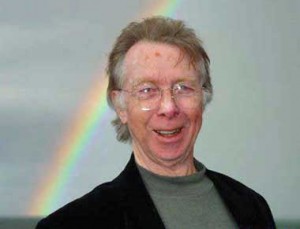
"Trad" director Tom Reing

"Trad" director Tom Reing

In the play, Trad, by Irish comedian Mark Doherty, which will open September 12 at Philadelphia’s Mum Puppettheater, the character, old Thomas, a 100-year-old Irish bachelor farmer, sets off with his ancient “Da” to find the son Thomas fathered many years before in a short-lived dalliance with Mary, whose last name he can’t recall but who “had a certain stare on her.”

In this comic take on the hero’s journey, Thomas is the reluctant Don Quixote (fill in your favorite literary quester) who sets out on the road because his father, on his death bed, has been lamenting his lack of an heir. To the old man (make that older man), that means “the end of the name,” the end of everything. When Thomas confesses his apparently singular indiscretion to his dying Da, his father makes a remarkable recovery. “Get me my leg,” he orders, and the two men hobble off into the countryside in search of the lad, who is 70 if he’s a day–or alive.

On their way, Thomas and his Da encounter the realities of modern Ireland, a country now wired on coffee and wireless with Bluetooth, where the waitress serving you tea might speak Polish and those nice folks who moved into the McLaughlin’s old cottage emigrated from Abuja, Nigeria. Director Tom Reing (it’s a Cork name, he says) experienced a little of that culture shock between 2002, when he lived in Ireland on an Independence Foundation fellowship, and just recently when he met with the author of “Trad” in Dublin.

“In 2002, I stayed in a hostel, and when I was in the area again, it had been completely transformed into a Chinatown. Even the signs were in Chinese,” says Reing, a Penn graduate who used his fellowship to work with the Rainbow Theater Company in Belfast, a cross-community group for Catholic and Protestant children and teens. (He founded a similar company in Philadelphia’s diverse Gray’s Ferry neighborhood.) “The old Irish pub on the block was the only thing still in existence from my previous visit.”

Playwright Doherty mocks not so much tradition as he does those who cling to it. He’s like the modern Irishman who snickers (or bristles) when American tourists are disappointed not to find thatched roofs, craggy farmers, and barefoot beauties in a farmyard, but a bustling, thriving economy and all–good and bad–that Ireland’s new prosperity entails. When Da praises the Irish tradition of never giving up, Thomas retranslates this cultural precept as, “standing still and facing backwards.”

“The father is into tradition–Ireland’s old ways are the best ways–so the play examines tradition versus modernity, what you need to keep of the past, yet at the same time with the knowledge that you can’t stop change,” says Reing. But Doherty is a comic actor, so the play doesn’t take its solemn side seriously. Not in the least.

“He uses the stereotype of old bachelor farmers and takes it over the top and subverts it,” explains Reing. Although the Abbey Theater, which commissioned the work, is meticulous about regional dialects, in “Trad,” even the accents are exaggerated. “Not quite ‘ Lucky Charms’ but definitely not realistic,” laughs the director, who is also an adjunct professor at LaSalle University, where he is the resident theater director, and the founder of the Inis Nua Theater Company in Philadelphia, which is producing the play.

“Trad” is a perfect play for this fledgling company which Reing founded three years ago to produce contemporary works from Ireland and the UK. Inis Nua is Gaelic for “new island,” and Reing’s choices reflect a leaning toward the modern; don’t hold your breath waiting for him to direct “Playboy of the Western World.” Nothing against Synge–but a new generation of playwrights has its own take on the changing human condition.

Unfortunately, Inis Nua doesn’t have its own theater, so the company has had to improvise. The first Inis Nua play Reing produced and directed, “A Play on Two Chairs,” was staged at an art gallery. Fortunately, the play is performed on, yes, two chairs, so the production wasn’t expensive. Last year’s Fringe Festival entry, “Crazy Gary’s Mobile Disco” by Welsh playwright Gary Owen (the story of three guys stuck in the same deadend small Welsh town) was staged outside the upstairs men’s bathroom at the Khyber, a rock club and bar on Second Street. That led to some interesting improv.

“In the middle of a performance, someone from the bar got incredibly sick in there. No one mopped it up–they just threw bleach in. The actor was almost nauseous,” Reing says.

You can see “Trad” at the much more comfortable Mum Puppettheatre at 115 Arch, where, normally, the actors are made of cloth or plastic. “Theater space is at a premium,” says Reing. “But it’s a legitimate theater, with 100 seats, and we won’t have to endure bleach or anything.”

That’s good to know.

“Trad,” starring Mike Dees, Jared Michael Delaney and Charlie DelMarcelle, will run from September 12 through 15 at the Mum Puppettheatre at 115 Arch Street. Curtain goes up at 7 PM. Call 267-474-8077 for tickets or go to the Live Arts Festival website to order online. Price: $15.
Columns, How to Be Irish in Philly

How To Be Irish In Philly This Weekend

The best place to be Irish in Philly is at a German club on Friday night, August 31. That’s when the Philadelphia Police and Fire Pipes and Drums will be holding its Second Annual Halfway to St. Patty’s Day Party at Canstatters, 9130 Academy Road, in northeast Philadelphia.

This is your chance to hear Philly’s finest and bravest play “Do You Think I’m Sexy?” on the highland pipes (only they would have the cojones to do that) and help them raise money to keep the band in clean kilts. It’s also your chance to hear Blackthorn, one of the hottest Celtic bands in the area, do their thing (it involves lots of great music, dancing, and laughing.) Last year, we actually saw some firefighters doing the lambada, which was worth the price of admission–a donation of $35 per person. That includes food, drink, and an opportunity to buy a raffle ticket for a trip to Ireland (or cash). Also on the bill: The Immortals.

The festivities get underway at 5 PM.

As for the rest of the week, read “See You In September” Part 1, below, for all the great goings-on planned for the annual Philadelphia Ceili Group Festival–lots of music, dancing, and frivolity. For all you word lovers, there’ll also be an evening of readings by local Irish poets and authors. We’ll see you there!

Sports

Shamrock Hurlers Off to the Windy City

A stormy afternoon for Brian Boru.

A stormy afternoon for Brian Boru.

By Paul Schneider

OK, so there was a little bit of rain.  OK, make that a LOT of rain.  But for the Shamrocks and Brian Boru hurlers, that just didn’t seem to be enough reason to postpone last Sunday’s Joe Lyons Cup final.

One after another, Shamrocks coach and goalkeeper Eamonn Lyons dripped the reasons why:  “There was no lightning,” he said.  “The field was in good condition.”  And finally, “We’ve all played in worse conditions at home.”

This was Sunday afternoon, some time after the Shamrocks broke a 4-4 deadlock midway through the first half to romp to a 2-11 to 0-4 victory, and minutes after Philadelphia GAA chairman Eamonn Tohill had awarded them the Joe Lyons Cup.

On a day that seemed to favor slower, heavier teams, it was the fleet of foot who came through.  Bobby Rea, a whippet on the front line, alternately was picking himself up off the turf or scoring points.  He finished with the Shamrocks’ two goals and placed another four through the uprights.

Frank O’Meara added another three for the winners, who also got strong midfield play from Benny Landers, whom Lyons dubbed the day’s MVP.  Lyons himself provided key goalkeeping, particularly in the critical early going. 

When Landers, netminder on last year’s Shamrock squad, opted to play in the field this season, Lyons stepped in to fill the nets on a temporary basis.  “I kept waiting for someone to take the position, but nobody wanted to, so I stayed,” he said.

Next stop for the Shamrocks are the North American GAA Championships in Chicago over Labor Day weekend.  With any luck, maybe there’ll be a little rain?

History

Are You A Coal Miner’s Granddaughter?

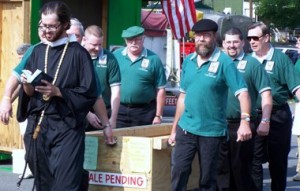
Members of the Cass Township AOH take Finnegan to his final resting place.

Members of the Cass Township AOH take Finnegan to his final resting place.

By Tom Slattery

If you’re like many Philadelphians, your  forefathers came from the coal regions of Schuylkill County to escape the mines. If you’re a descendant of a miner–or a Molly Maguire–I may have seen you a few weeks ago in Heckshersville for the 20th annual Clover Fire Company Irish Festival.  Every year at the end of July, descendants of Irish coal miners from the five-county Philly area come to this remote valley (where cell phones are useless unless they have an extendable antenna) to celebrate their heritage.

Heckshersville is a town so small (how small is it?) that it doesn’t have a post office and the name on the highway sign  is spelled one way entering from the east and another if you’re coming in from the west. Remote, yes. Small, yes. But one of the friendliest places to spend a weekend, whether camping out or staying in one of the nearby (10-15 miles) motels ($50 including continental breakfast).

The festival starts Friday night with a concert and runs from 1 PM both Saturday and Sunday. No matter who else is performing, you can always count on seeing the Irish Balladeers and the Irish Lads, local groups that have been playing Irish traditional music for over 25 years (actually the Balladeers are closing in on 40 years). This year, the Balladeers played to an overflow crowd, lounging in beach chairs under a huge canopy, and they kept it going from 1PM to 6PM on Saturday with breaks featuring Irish dancers, awards ceremonies, and a Finnegan’s Wake put on by the Cass Township AOH. What an afternoon! Hearing “The Sons of Molly Maguire” sung by the group that wrote it was worth the price of admission ($4).

Then there was the Wake! Jaysus, you never heard so much keenin’ and yowling in your life, and such accolades heaped on the well-dressed figure in the coffin. Actually he looked much better than he did in his life, bum that he was. All this and they were only able to collect $1.81 to help defray the funeral expenses, an amount so small that the “priest” pocketed it himself.
 Birnam Wood, a Celtic Rock group from New Jersey, closed out the evening. There was plenty of “picnic” food available  – hot dogs, hamburgers, French fries, colcannon, bleenies – water, sodas, a lots of sudsy stuff at $1.25 a glass and $6 a pitcher. A man has got to be very careful, ‘cause for less than $10 them mountain roads can become mighty curvy.  They’re that way even before you imbibe. Best to have a designated driver, a position well respected in this remote area.

On Sunday they serve an Irish breakfast from 7AM and then around 11AM there is a parade to the old St. Kiernan’s Church for an Irish Mass. Charlie Zahm, one of the Philadelphia area’s best known Celtic singers, entertained the crowd from 1PM until 4PM. Then another Wake! Somebody shoot the keeners, please.
 
Then, as they have since the Festival started 20 years ago, the Irish Lads closed out the entertainment. They were scheduled from 4 to 8, but about 5:15 the mighty rumbles started, and the weather Heckshersille had escaped all weekend announced its arrival in no uncertain terms – boom ditty boom boom. Of course, the Irish Lads said there was nothing to worry about, that is, until the third time lightning took out the sound system.

I just managed to load my car as the rains started. I pondered having a few with some friends. However, the idea of a fully loaded down Lincoln Town Car getting stuck in what quickly would become a swamp, unpondered me quickly, and wasn’t  I but two miles down the road when the torrents started. Boy, somebody must have really ticked Him off, because He must have had the whole holy crowd throwing down bucketsful. Ah, but I will be back there next year on the last weekend in July – back to one of the friendliest festivals around, listening to great music, eating food guaranteed to keep you from blowing away and hearing the stories of life in the mines.

Music

“Michael Black” (Compass)

To start with, Michael Black’s eponymous first CD is produced by the supremely gifted Celtic guitarist John Doyle. Doyle also plays on several tracks.

Add to Doyle, this supporting cast: Seamus Egan of Solas, Philadelphia bassist and veteran setman Chico Huff, fiddle master Liz Carroll, Kentucky Celtic fiddler Liz Knowles, Solas alum and accordion virtuoso John Williams, and Appalachian fiddler (think “Cold Mountain”) Dirk Powell. Oh, yes, and throw in a few members of the unnaturally gifted Black family, with backing vocals by Mary, Frances, Shay and Martin. Additional backing vocals are by Eoghan Scott, and Danny and Roisin O’Reilly.

So how is the album? Ummmm, OK, I guess … you know, if you like genius and an overabundance of talent and things of that sort.

At the center of it all, of course, is Michael Black. During a week in which we noted the passing of Tom Makem, I found myself listening to this CD and thinking that the tradition truly lives on in the form of so many younger traditional artists—but it is clearly alive and well on Black’s work on this album.

Black’s vocal style compares favorably to that of Makem and the Clancys. (There are times, too, when he sounds vaguely like Harry Chapin.) In any event, Black’s story-songs, a couple with anti-war undercurrents— “The Deserter,” and “When the Boys Are on Parade”—would have fit right in at the old Newport Folk Festival.

It’s not all serious, though. Take, for example, the loopy “My Father Loves Nikita Kruschev,” a tune performed by Makem himself on an old Polydor album, “In the Dark Green Woods.” “Billy O’Shea” is a great sing-along song—and I guarantee that you will sing along to this one in the car.

“Michael Black” might be the best ‘60s Irish folk album released in the early part of the 21st century. Tommy Makem can rest easy. The tradition is in able hands.

Music

“A Letter Home” – Athena Tergis (Compass)

Fiddler Athena Tergis approaches her task with the ease and delicacy of a glassblower.

It’s probably because of Tergis’s deceptively light style of play that, at first, I was not over the moon about her debut CD on the Compass label, “A Letter Home.”

Tergis, a San Francisco kid, was on track to become a classical violinist when, she says, she was “tricked” into attending Alasdair Fraser’s Valley of the Moon fiddle camp. One of the teachers that summer was Altan’s Mairead Ni Mhaonaigh. She went on to study with Ni Mhaonaigh, Alasdair Fraser and Cape Breton master fiddler Buddy MacMaster. She was the Junior National Scottish Fiddling champ three years running.

When it came time to attend college—she was slated to attend Berklee—she decided instead to live in Ireland for three years and soak up the music.

I can only imagine that there were some interesting conversations in the Tergis household at the time. Turning your back on Berklee? Yikes. But judging by her performance on “A Letter Home,” she made the right choice. It was time well spent.

The CD is produced by the gifted guitarist John Doyle, who also plays guitar and bouzouki on several tracks. Tergis is also accompanied by Liz Carroll on fiddle, the ubiquitous Chico Huff on bass, Natalie Haas on cello, Billy McComiskey and Sharon Shannon on accordion, and Ben Wittman on percussion.

My tastes generally run to the so-called “supergroups” like Solas, Flook and Lunasa. Performances by those bands are muscular, even a little macho. It eventually dawned on me that I was listening to Athena Tergis’s performance with the wrong ears. If Solas is Celtic stadium rock, Athena Tergis is cool jazz. Comparing Athena Tergis to Seamus Egan would be like comparing Diana Krall to Roger Daltrey.

There are no trombones or soprano saxophones on “A Letter Home.” No conga drums or timbales. Instead, there is Haas’s lush and luscious cello and some slick, whispery brushwork by Wittman. The accompaniment here never threatens to overwhelm or dominate. Instead, it gently, unobtrusively frames Tergis’s polished performance on a wide variety of traditional tunes, from “Johnny McGreevy’s” (a reel) to “Bi Falbh O’n Uinneig” (“Be Gone from the Window,” a slow air).

I particularly liked (as determined by the number of times I left my car CD player setting on “Repeat”) “In Memory of Coleman/Paddy Fahy’s)”, a lovely set of reels – not pounded out at the usual breakneck tempo but instead played at a leisurely pace. Tergis seems to be not so much playing the tunes as savoring them. (You will, too.) “Coleman” was written by Philly’s own Ed Reavy. (One other local tie: Many of the tracks were recorded at Morning Star Studios in Springhouse, outside of Philadelphia.)

I also gave the “Repeat” button a workout on another set, which began with a strathspey, “Miss Lyall”—I love the jerky percussiveness of strathspeys—which smoothly morphed into a set of reels, including “Paddy Ryan’s Dream,” “Con Cassidy’s Highland” and an unknown Donegal reel.

The concluding slow air, “Be Gone from the Window” is heartbreakingly lovely.

 I suspect “A Letter Home” will earn your own stamp of approval.

Sports

Irish Eyes on the Prize

By Paul Schneider

It’s not time to load the bus to Chicago, but you can’t blame the Brian Boru hurling club if they’re looking ahead.

Two years after winning the North American Gaelic Athletic Association Junior A hurling finals – and less than a year after finishing out of the money in the wind and rain of Ernesto last September – the Brian Boru hurlers are pointing once again toward the North American league’s Labor Day playoff marathon.

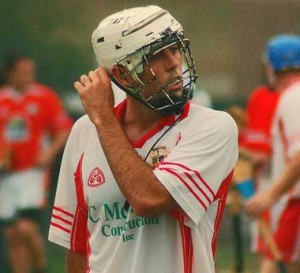
“They’ve come on since the start of the season,” said head coach and sponsor Colm McNally, whose “C. McNally Construction” plug is emblazoned across the front of the team’s jerseys.  “We started the season with a strong base of players; the guys who’ve come over from Ireland have strengthened the squad.  As the season has gone on, they’ve been getting used to playing with each other.”

Bolstered by the addition of recent arrivals Arron Hater, Eamonn Keley and Cahill O’Keane, and with strong performances by Barry Hasson (three goals), Derek Glennon and Luke Coyle (one goal each), the Upper Darby-based squad boosted its season record to 3-1 last Sunday with a 5-18 to 2-5 romp over the Washington, DC Gaels.  The Brian Boru side also got strong performances by brother Brendan and Paul McCarthy, Noel Doherty and Patrick McAnn in net.

Next up:  The hurling final on Sunday, August 19, at Cardinal Dougherty High School.  “Our guys want to get back into the championships,” said McNally.  “That’s our ultimate goal:  To win Philadelphia and then to get out to Chicago and win the American League finals.”

Music, People

Farewell to “The Bard of Armagh”

In Ireland in 2003. From the Makem Web site.

In Ireland in 2003. From the Makem Web site.

“Tommy Makem was my hero and the reason I wanted to perform,” says Tyrone-born musician Gerry Timlin, co-owner of Ambler’s Shanachie Pub and Restaurant, who in June visited the man known as “The Godfather of Irish Music” and “the Bard of Armagh” for the last time at his home in Dover, NH.  Makem, 74, died Wednesday, August 1 and, after a three-day wake, was buried August 9 in Dover. He had been diagnosed with lung cancer in May 2006.

Timlin has shared the stage with Makem and The Clancy Brothers many times and Makem became his mentor when Timlin arrived in the US with his guitar, a beautiful singing voice, and irreverent humor in the 1970s.

“I loved his wit, his commitment, and his bravery. He came to the US and made a path for the rest of us and with the Clancy’s carved out a course for us to follow,” says TImlin, who was in Ireland when Makem died. “He created new venues for us and helped us all make a living doing the one thing we all loved. Without him the world of music will never be the same.”

Makem was “the consummate performer,” says Timlin. In fact, Makem died with gigs on his schedule stretching into November.  Though a solo performer, for much of his career, this banjo-playing baritone performed with friends Liam, Tom, and Paddy Clancy. He’d come to New York from Ireland with Liam, and  they initially both embarked on acting careers until fate and their love for music drew them together for the magic that was the Clancy Brothers and Tommy Makem.

Many people were introduced to Irish music by Makem and the Clancys and, at least among the listening public, they are perhaps known best for what every Irish performer thinks of as the crowd-pleasers, the drinking songs like The Jug of Punch, Irish Rover, and Finnigan’s Wake. But Makem was a trad musician at heart. “He sang all kinds of folk music,” says Timlin. His mother, Sarah, was a renowned folk singer who collected traditional Irish folk tunes that might have otherwise been lost.

Traditional purists have tended to be dismissive of the way The Clancys and Tommy Makem popularized Irish roots tunes, but in recent years, many have come to recognize that their rise and that of the Chieftains–during the nascent folk era in the US–helped create a resurgence in popular interest in Ireland’s own musical history which, at the time, seemed to be heading the way of the thatched roof.

As one trad musician wrote on a message board after Makem’s death, “I listened to Tommy, and the Clancy Brothers — kinda hard to separate them, even though he hasn’t played with the band for years — for a lot of my childhood, dismissed them in my late teens as hokey and cliche, then ultimately realized how much they’ve all meant to the music.”

Makem meant everything to Timlin’s music–and his life. ” I was proud to say he was my friend and I will miss him sadly every day,” he says. ” ‘Onward and upward’ he would say and so ‘Onward and Upward Tommy.'”

Here’s what others have to say about Makem. First, Liam Clancy, who first made note of Tommy’s passing on his message board:

He was a friend and partner-in-song for over fifty years. We shared a great hunk of our lives together. We were a hell of a team. Tommy was a man of high integrity, honesty, and, at the end, courage. Our paths diverged at times but our friendship never waned. He was my brother every bit as much as my blood brothers.”

Irish President Mary McAleese:

‘In life, Tommy brought happiness and joy to hundreds of thousands of fans the world over. Always the consummate musician, he was also a superb ambassador for the country, and one of whom we will always be proud.”

Singer-songwriter Eugene Byrne, quoted in the Dover newspaper Foster’s Daily Democrat:

“Not one of us who play a note of Irish music on a guitar today would be playing if it wasn’t for Tommy Makem, along with the Clancys. He gave us pride in our country and our culture. Bono (U2’s lead singer) was influenced by him. Michael Flatley’s new show, Celtic Tiger, has Four Green Fields in it.”

From Marianne MacDonald, host of the local radio show, “Come West Along the Road” (Sundays from noon to 1 p.m. on WTMR-800 AM):

“One of the bright twinkling stars from the constellation of Irish music faded today.  We’ve lost the great Tommy Makem.  I was fortunate to have seen him at Appel Farms, the Guinness Fleadh and, years ago, at the Holmdel Arts Center when my mother dragged me to my first Irish Festival.”

From Ed Ward of the Milwaukee Irish Fest:

“I spoke to him about two weeks ago, the day after he returned from Ireland. We talked for about a half an hour about his trip, how wonderful it was to see the parade of people who came to visit him in the hotel, relatives, old friends, the archbishop. He said he was very sad when he boarded a plane to leave Ireland, clearly knowing he would not see it again.”

He desperately wanted to make it to Milwaukee this year so we discussed plans on what we would do as it was evident he would not be able to perform. But he planned to be there anyway. We are going ahead with these plans and Tommy’s slots will be billed as “Remembering Tommy Makem” and will be led by his nephews Tom and Jimmy Sweeney, Brian Doherty, Kevin Evans and Eugene Byrne and other close friends. The Makem and Spain Brothers will also be in Milwaukee so it should be a special celebration of Tommy’s life and love for the music of Ireland.”

From Ira Goldman, editor and publisher of the Trad Music News:

“Just about anything and everything that can, and should, be said about Tommy Makem’s music has been said since his death last Wednesday evening. The great and the not so great have been crowding the Tasker Funeral Home in Dover NH for his wake since yesterday and Thursday morning we will fill to overflowing St, Mary’s Church in that lovely New England village Tommy called home for decades.

Most people know Tommy as a balladeer and partner of the Clancy Brothers and especially of Liam Clancy. Many know him as the composer of fine songs, some of which have become standards of Irish music. Some of us have had the joy of knowing him as a fine ‘sean nos” singer and traditional musician on the banjo and whistle. His musicology as well as his music made him a true treasure of Irish Traditional Music.

Some of us have been blessed to have the invaluable, immeasurable, and lasting delight of knowing Tommy Makem as a person and as a friend. In the some 25 years I knew Tommy I never heard an unkind or angry word pass his lips. His countless acts of warmth and kindness will never be forgotten. For example, Tommy recorded a wonderful song, as delightful for “grownups” as for children, called “Waltzing with Bears.” When he was told two wee boys in Co. Carlow (aged 5 and 6) were learning the song from his cassette tape so they could entertain their Yank friend at Christmas, Tommy wrote each of them a note congratulating them for learning the song and thanking them for learning it from him.

And there was once a quiet, sunny afternoon in the empty bar of the hotel by the Sligo railroad station when Tommy played piano and let a Yank friend sing with him (much to the dismay of Liam Clancy who had to listen).

There are not enough tears to truly mark your passing, Tommy. There will always be the memories and the music and the love.

Slan, old friend.

Ar dheis De go raibh a anam uasal.”