Music

Slide Returns to Philadelphia with Another Great Show of “Daireobics”

Slide

Slide

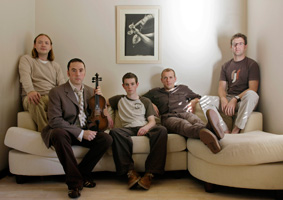
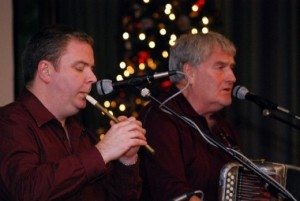
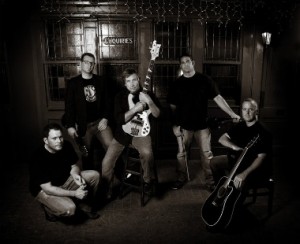
The crowd at The Annenberg Center was treated to a tuneful Christmas concert by innovative Irish group Slide on December 11, 2010.  Onstage this tour were Daire Bracken on fiddle; Eamonn de Barra on flute, whistle, keyboards and bodhran; Mick Broderick on bouzouki; Colm Delaney on concertina; and Dave Curley on guitar, bodhran and providing some beautiful vocals.

Bracken’s energetic fiddling style (the “daireobics” of the evening) is always worth a special mention, and his performance at The Annenberg Center was no less than its usual dazzling ball of fire. Broderick’s bouzouki playing and Delaney’s head banging concertina style were an integral part of the consistently high energy of the evening, but Dave Curley, a more recent addition to the band, subtly seduced the audience with his “velvety vocals.”

And de Barra, in between switching from one incredibly played instrument to another, gave a special shout-out to his local connection in the audience: his brother Fionan is married to Philly girl Shannon Lambert-Ryan. Along with Cheryl Prashker, and occasionally Isaac Alderson, Fionan and Shannon are part of the up and coming band Runa.

We have some videos from the evening; make sure to catch Dave Curley’s solo rendition of The Pogues’ Christmas classic “Fairytale of New York.”

Music

We Had Ourselves a Merry Little Time

Tommy Martin and Séamus Begley.

Tommy Martin and Séamus Begley.

“Irish Christmas in America,” Sunday night at the Philadelphia Irish Center, was a great show. So great that we wanted to share plenty of videos with you so that you could see precisely how great it was. Really, really great.

But a funny thing happened on the way to the Web site. Our camera walked—and with it went all our videos. We blame the wiki-hackers.

We can tell you about it, of course. With members of the Irish band Teada at its core and led by fiddler Oisín Mac Diarmada, the ensemble was aided and abetted by uilleann piper Tommy Martin, County Mayo harper Gráinne Hambly and singer-box player-part time comedian Séamus Begley. Sean-nos dancer Brian Cunningham took to the stage frequently throughout the night, threatening to slam through the Irish Center stage. (The crowd—and it was a pretty good crowd—loved him.)

Irish Christmas in America crosses an ocean and cultural boundaries to share the traditions of the Irish—both at home and in their adopted country. So there were stories of the Wren Boys, Little Christmas and the bittersweet “wake” that became the tradition of those who parted from friends and family as they departed for the distant shores of America.

These poignant stories were accompanied by brilliant slides that set the mood and served as a counterpoint to the reels, jigs, airs and songs served up all night by the band. When he wasn’t regaling the audience with off-topic but hilarious stories of his own, Begley held the audience in rapt attention as he sang tunes like “Silent Night”—first in Irish, then in English—and “The Parting Glass.” One minute, you were laughing so hard you almost fell out of your seat, the next moment you were a puddle of tears.

As we’ve pointed out: No videos. But we do have a few photos to help you get into a seasonal mood.

News

Last Minute Gift Ideas for the Irish Person on Your List

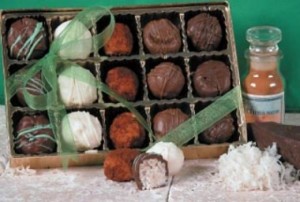
Chocolate-covered Irish potatoes: magically delicious!

Chocolate-covered Irish potatoes: magically delicious!

You do this every year, right? You wait till the last minute to buy Christmas presents and the people on your list wind up with expensive but impersonal boxes of perfume and bath gel that smell like an alcoholic fell into a rose garden or with bottles of calamari liqueur because you liked the way the bottle was tricked out and you don’t speak Italian (calamari=squid).

We know you’re not going to shop any earlier no matter what we say, so we’re going to encourage you to shop Irish instead. Here are some last-minute gift ideas from the staff of www.irishphiladelphia.com. This is stuff we like, have, or want to have. Don’t forget to check out our Irish Gift Shop finder too!

Sqian dubhs. For the kilt wearer on your list (like our own Jeff Meade), this is a little knife that can be tucked into the tops of their hose. It should only be used for peaceful purposes (opening CDs, slicing cheese) and not if someone insults their hairy legs. You can get your sqian dubhs and other very cool kilt acoutrements such as buckles, dirks, kilt pins and of, course, kilts themselves, at Pipers Way Imports, 109 West Church Street, in West Chester. We personally love sporrans—that’s the Scottish man purse worn with kilts.

Irish Yummies. We recently heard from a San Francisco friend that she ordered Taytos at an Irish pub, thinking they were Tater Tots, and is now addicted to these potato crisps from Ireland that come in flavors like cheese and onion and malt vinegar. Want Taytos? Or Cadbury Dairy Milk Bars? Some bangers for Christmas breakfast? You can find a taste of Ireland right here in the Delaware Valley: Your first stop is the Irish Coffee Shop at 8443 West Chester Pike; the second is (yes, really) an AM-PM Minimart just a couple of blocks away at 8203. What you don’t find in one, you may find in the other. If you plan your trip right, you can hang around the Irish Coffee Shop for a full Irish breakfast. (It’s great.)

Chocolate Covered Irish Potatoes. Okay, what fiendish mind came up with these? That would be Jodi Boylan of Emerald Confections who has a stand at the 263 Marketplace (Booth C3), 700 York Road, Warminster, PA. She has these devilishly delicious candies there—along with other gift items, including local high school shirts with a Celtic flavor—Friday, Saturday and Sunday, so this is your last weekend before Christmas to buy them. Check out her website.

A Civilized Tea. A family member visiting from out of town told us he checked our “Find a Local Tea Shop” page to choose a place for afternoon tea. He and his significant other chose the Mary Cassatt Tea Room at the Rittenhouse Hotel in Philadelphia (on the square) and kindly invited us along. It was heavenly. There were delicious little sandwiches, scone, and sweet treats, and everyone got their own little pot of tea — a twee little pot covered in violets with matching porcelain cups (the only way to drink tea). The Signature Tea is only about $25 per person. You can learn more at their website.

Books! There’s a great treasure trove of books by local Irish and Irish-American authors to choose from. Here are our recommendations:

“You Can’t Get to Heaven on the Frankford El,” by Thomas J. Lyons II is a funny, touching, poignant book about growing up in Philadelphia from the 1940s to the 1960s. If you ever played buck-buck, got your bread from Friehofer’s, were taught by nuns or priests, and know the rhyme that the book’s title comes from, you’ll enjoy this bit of nostalgia. You can buy the book at Magis Press.
“John Barry: An American Hero in the Age of Sail,” by Tim McGrath, chronicles the history of Wexford and Philly’s favorite son, Commodore John Barry from his boyhood in Ireland where he took to sea to his exploits as a ship’s captain in the American revolution. This often forgotten hero, father of the US Navy, has a story worth telling and it is told well in this book which is available at www.amazon.com.

“Mother from Hell,” by Ken and Patrick Doyle, is an unforgettable, horrifying, yet ultimately uplifting story of two young Irish boys who were tortured by their sadistic mother and yet lived to tell this tale. Ken Doyle, now of Gloucester City, NJ, sells the books on his website.

“Confessions of a Second Story Man: Junior Kripplebauer and the K & A Gang” by Allen M. Hornblum, tells the story of a group of mostly Irish burglars known as the K & A Gang who plied their trade (and well) in wealthy suburban neighborhoods from Bar Harbor to Boca Raton. Though not so much in their own blue collar Philly neighborhood around Kensington and Allegheny. Available from amazon.com.

“Past Forward” by Maureen Wlodarczyk will interest all you amateur genealogists who’ve hit a brick wall. Wlodarczyk (who is Irish) spent three decades tracking down her ancestry and shares details of her journey to uncover her family history that may help you. You can order her book at her blog.

“Beat Cop to Top Cop: A Tale of Three Cities,” by John F. Timoney is a fascinating autobiography that takes John Timoney from his boyhood in Dublin to his rise through three major metropolitan police departments, New York, Philadelphia (where he was police commissioner) and Miami. A great gift for the cop on your list (surely we all have at least one!). Also available at amazon.com.

A Cup of Kindness. There are many ways to share the love this season, but we can’t think of anything more worthy than the Hibernian Hunger Project, a nationwide community service program of the Ancient Order of Hibernians that feeds hundreds of needy families every year. We’ve seen first hand the generosity of this organization, which started in Philadelphia: Right now, as you’re reading this, there are volunteers taking time out of their busy schedules delivering food baskets and gift cards to families who might have a sparse holiday without them. If that’s not the spirit of Christmas, we don’t know what is. Visit them at their website and find out how you can help.

We leave you with the last stanza of the Christmas hymn, “Good King Wenceslas,” which celebrates the many benefits of doing good to others.

“Therefore, Christian men, be sure, wealth or rank possessing, ye who now will bless the poor, shall yourself find blessing.”

Columns, How to Be Irish in Philly

How to Be Irish in Philly This Week

Get set for a Blackthorn Christmas.

Get set for a Blackthorn Christmas.

Not invited to any Christmas parties? I’m sure you’ll be welcome at the Derry Society Christmas party at the Irish Center on Friday night at 7 PM. They know how to throw a great bash.

You can party with Coyote Run at the Sellersville Theatre on Friday night too. They’re presenting their annual “A Kilted Christmas.” And “Dublin Carol” is still on at the Amaryllis Theatre in Philadelphia.

Just want to kick back and relax? Or jig? The Broken Shillelaghs are at Dublin Square Pub in Bordentown on Friday night too. Brew, burger, Irish music. . .it’s all good.

Saturday is jam-packed:

The O’Grady Quinlan dance school is holding two Christmas celebrations, featuring performances by their championship dancers and comic performer Seamus Kennedy at the Allentown Symphony Hall in Allentown.

Robert Mouland will again be portraying Irish harper Michael Keane, who came to America in 1754, presenting songs of the season on ancient instruments including the wirestrung harp, clavicord, baroque violin and others at the Old Dutch Parsonage in Somerville, NJ.

Fiddler Patrick Mangan and guitarist-singer Ryan McGiver will be in town on Saturday too, thanks to the Philadelphia Ceili Group. Mangan, from Brooklyn, is a two-time All-Ireland champion who appeared in Riverdance on Broadway at the age of 16 and was a featured soloist from 2006 to the present. McGiver is a critically acclaimed guitarist and singer who has appeared on stage with many performers familiar to Philly’s Irish audiences, including singer Susan McKeown, Kevin Crawford of Lunasa, piper Ivan Goff, The Kane Sisters and Edel Fox. They’ll be performing both Irish and American tunes at this evening concert at the Irish Center.

And Blackthorn will be singing Christmas carols at the Blarney Stone in West Chester on Saturday night too–their annual Christmas show!

As we inch closer to Christmas, there’s a lovely evening of Christmas music planned at St. Vincent DePaul Church in Richboro featuring local musician Bill Monaghan and others. Admission is free, though donations are appreciated—they’ll go to Philabundance, which provides food for the needy, and Bridge to Uganda, a nonprofit that is building a high school in Uganda, Africa. Bring canned goods—specifically cans of string beans, sweet peas, corn, gravy, whole cranberries and cranberries for food baskets being assembled by a local charity.

If you’re doing your last minute shop in downtown Philadelphia on December 23, stop in to hear Bob Hurst and Tim Murphy of the Bogside Rogues performing at Con Murphy’s Irish Pub, right on Benjamin Franklin Parkway. It’s mighty pretty downtown right now.

That brings us right up to. . .Merry Christmas, from me, Jeff, and Lori. And I’m sure our friends, including the ghost of Christmas Past, Present and Future, our paranormal reporter, SE Burns as well as our stable of volunteer photographers Gwyneth MacArthur, Brian Mengini, Eileen McElroy, and Lisa Marie Hunt join us in saying, “Nollaig Shona Daoibh!” and “Athbhliain faoi Mhaise Daoibh!” Though it’s quite likely, only a few of us will say it correctly.

Music

From Michael Coleman to Riverdance

Patrick Mangan

Patrick Mangan

For years to come, two words inevitably will precede Patrick Mangan’s name: “Riverdance fiddler.”

Which is OK by him.

Although he is well-grounded in traditional Irish music—and you’ll hear plenty of it Saturday night when he plays a concert at the Philadelphia Irish Center with friend and singer-guitarist Ryan McGiver—Riverdance is a major part of his life, and has been for a decade.

Mangan, born in Brooklyn and trained in the ways of New York Sligo-style fiddling by the great Brian Conway, first came to the attention of the show’s producers in 2000, when he was just 15, By that point in his life, he had already won the Fleadh Cheoil na hÉireann (the world competition of Irish music, also known as the All-Irelands) twice, in 1994 and 1997. He was young, but he’d already had experience on the world stage.

Riverdance was quite another thing altogether.

He remembers when he first considered trying out for the show. “I saw something in one of the New York Irish papers. It was just a little listing saying Riverdance was looking for substitute fiddlers for the show on Broadway,” he says. “So I recorded a little four-track demo and sent it in. They invited me to audition, and I remember playing in front of the show’s composer Bill Whelan and the piper Declan Masterson. (After that) I didn’t hear anything for almost a year. Then they invited me to audition again.”

It turned out that one not-so-little factor gave the show’s producers pause. “They had never had a male fiddler before. It broke the mold. Eileen Ivers had made it an iconic role for a female fiddler, and they were a little on the fence about that, but they decided to give it a shot.”

That was in 2001. He was 16.

That shot turned into a fill-in gig that Mangan wound up squeezing into his high school and, later, college schedule.

The relationship with Riverdance evolved into something deeper and longer-lasting not long after his graduation from Tufts with a degree in English, with a minor in music. The degree seemed like the right thing to do, and it played to his strengths, but after graduation Mangan still hadn’t settled on a career path.

And then Riverdance came calling again. “I had maintained the connection with them throughout high school and college. Then, just after graduation, a full-time spot opened up with the American touring company. I’ve been touring with them full-time since college. I’ve been all over the world. It’s lucky Riverdance came along when it did.”

(His long relationship with Riverdance also changed his life in another significant way. It’s where he met his future wife, fellow cast member and Russian dancer Natia Rtveliashvili. They were married in June of this year. At last count, there have been over 30 marriages among Riverdance cast members.)

Mangan came to Riverdance already well-schooled in the traditional style of fiddle play. In fact, because he was taught by Brian Conway, and Conway was mentored in part by Andy McGann—and McGann himself was schooled by Coleman—Mangan has been described as a “direct artistic descendant of early 20th-century Irish-American fiddler Michael Coleman.” It’s worth noting that Mangan himself, when he was very young, also played with McGann, and McGann’s contemporary Paddy Reynolds.

“Just to have that influence and those older musicians being so gracious and generous when I was growing up, i was very lucky to be growing up at that time,” Mangan says.

And because his parents were devotees of traditional music, there was never a time in Mangan’s young life that he was not exposed to the old tunes of Ireland. He recalls listening to the music from his stroller at the Irish festival in Snug Harbor on Staten Island.

His love of that form of music has never gone away. As much as Riverdance has helped him gain in popularity and name recognition—and it has done that—he’s eager to play the old style with his partner McGiver.

Still, Mangan began his fiddle schooling with classical music taught in the Suzuki method, and he maintained his familiarity with the classical throughout his childhood and high school.

Between his deep familiarity with both styles—traditional Irish and classical—Mangan says he felt well qualified to play the Riverdance style of Irish music, which is nothing like the way Michael Coleman played it. In addition, Mangan himself relishes many styles and types of music.

“Riverdance at its core is based in Irish music,” he says, “but it’s good to have a grounding in classical music. You can play in different styles if you have the technique. And I always enjoyed improvising. I’ve never had too much of a problem with that. When I first learned the (Riverdance) music, it was a fun challenge. By now, I’ve played it so many times, I could do it in my sleep.”

For Mangan, playing in the blockbuster Irish show that laid the groundwork for all the Celtic women and Irish tenors who would follow still holds his deep interest. In fact, he’s soon going to go out on the road with Riverdance again.

And that’s just fine with him, too.

“As many times as I’ve heard that music,” he says, “certain musical moments in the show still get to me. There’s a reason why that show has gone on as long as it has. It’s just amazing how much my life has been touched by it, how one thing has led to another.”

Columns

Aon Sceal?

Winners of the best Irish band contest: Jamison.

Winners of the best Irish band contest: Jamison.

Everyone should send a big “woo-hoo!” out to local Celtic rock band, Jamison, which was voted best Irish band in the annual Strangford Lough Brewing Company’s annual Battle of the Bands.

So, now that you’ve won the big prize, Jamison, what are you going to do? What? No Disneyworld? No, the winner of the competition is going to Vegas! That’s where this County Down brewer is sending its winner and Jamison couldn’t be happier.

Lead vocalist Frank Daly, who also plays a slew of instruments, told us they entered the contest because “we just through it would be fun if we played Vegas.”

The band credits family, friends, their bar venues and local organizations (like the AOH/LAOH and the Philadelphia St. Patrick’s Day Observance Association) for supporting them. And social media played a big role. “As soon as we made it to the finals it was like Facebook exploded,” Daly told us. “The night before the contest closed I counted 31 Facebook statuses that were asking people to vote for us. It felt pretty awesome.”

The brewery folks say it was the closest in their three-year history (Jamison won by only 70 votes!). Jamison won’t just be gambling and seeing shows in Vegas—they’ll be playing at McFadden’s at the Rio Casino.

The band, which also includes John O’Callaghan on guitar and lead vocals; Sean Callaghan on drums; Dave Lynd on bass guitar and backup vocals, and C.J. Mills, on fiddle, mandolin, and backup vocals, has been around the Delaware Valley for six years.

You may have seen them at Kildare’s (where Daly works), Con Murphy’s Pub, the Penns Landing Irish Festival, in the St. Patrick’s Day Parade, headlining at the Phoenixville Concert Series, or the Mount Holly St. Patrick’s Day Parade where they won the “best band” prize in 2009. In 2006, the band recorded its first live CD, “Live at the Arsenal Theater,” and the following year released two original songs, “Rebel Heart,” and “Mayo Rain,” which debuted on Midwest Radio in Ireland.

You can see them perform on Saturday, December 18, at the Running of the Santas, a charity race featuring more than 5,000 jogging Santas. Starting line is Finnigan’s Wake at 3rd and Spring Garden Street in Philadelphia, ending at the Electric Factory where there will be a huge indoor-outdoor party (and a heated tent!).

Happy Birthday, Fergie’s!

Fergie’s Pub at 1214 Sansom Street in Philadelphia celebrated its 16th birthday last week and they have a present for you!

Fergie’s (named for Dublin-born owner Fergus Carey) just hired new a head chef, Mark Coates, late of Bebe’s BBQ, and there’s a new menu that will turn this great Irish pub housed in a former Bavarian brauhaus into the new mecca for Carolina barbeque in Philadelphia.

Just listen to this menu item: “Bebe’s Brisket. A Philadelphia Favorite. Angus beef brisket, hickory smoked for 16 hours, encrusted in our delicious rub, served sliced or chopped, with a roll or Texas toast, and marinated cucumbers.”

You can even build your own “Lava Burger”—not sure what that is but we’re guessing there’s molten cheese inside–or have that brisket in a chili.

Whew, our LDL cholesterol (that’s the bad one) is going up just thinking about it.

You can still get shepherd’s pie and Fergie’s fish and chips, but you may want to switch off occasionally for a country fried steak and gravy or deep fried mac and cheese. EMTs will be standing by with the defibrillator. But it sure sounds like a good way to die to us. Mmmmm.

And if you run out of things to do Christmas day, bring the bodhran or fiddle Santa brought you down to Fergie’s—they have an Irish music session on the schedule, starting at 4. Have some barbecue for us.

Give the Sunday Irish Radio Shows a Happy Holiday

The current radiothon to raise money for the Sunday Irish Radio Shows at WTMR 800AM is about halfway there, but more help is needed, says “Come West Along the Road” host, Marianne MacDonald.

“We still need to raise a good bit of money,” Marianne told us. With ads in a slump along with the economy, Marianne and her fellow host, Vince Gallagher, have been pulling money out of their own pockets to pay for radio time, which totals more than $30,000 a year. Two fundraisers are planned for this winter—one at McGillicudy’s in Drexel Hill on Saturday, January 15, and another on February 27 at the Shanachie Pub and Restaurant in Ambler.

Marianne is looking for musicians willing to donate their mad skills and time. She’s also in the market for prizes for raffles. You can contact Marianne at rinceseit@msn.com to volunteer and donate. It you’d like to contribute to the general fund, make checks out to WTMR Radio and send them to 2775 Mt. Ephraim Avenue, Camden, NJ 08104.

And a big shout out from Marianne and Vince to the volunteer pledge takers and co-hosts: St. Paddy’s Day parade director Michael Bradley; singer Karen Boyce McCollum; Jane Kane and Kathleen Murtagh from the Mayo Association, Larry Prelle and his wife from AOH #1, National Park, NJ, dance instructor John Shields, historian and writer Frank Hollingsworth and John Kildea. Oh, and me.

Aon Sceal is Irish for “what’s the story.” Got a story? Let us know! We’ll tell everyone. Email denise.foley@comcast.net.

Food & Drink

Dreaming of an Irish Christmas

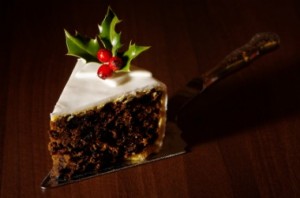
A great finish to your Christmas meal.

A great finish to your Christmas meal.

When it comes to Christmas meals, every family has traditions. For some, it’s a repeat of Thanksgiving: turkey, stuffing, cranberry sauce and green bean casserole. in other families, ham, rack of lamb, roast beef or even pasta takes center stage.

Here’s another tradition you might want to try: Celebrate an Irish Christmas.

Once upon a time, a traditional Irish dinner would have started with smoked fish, and moved on to roast goose with a potato stuffing, and maybe baked or boiled ham, says Margaret M. Johnson, celebrated author of “Tea & Crumpets,” an afternoon tea cookbook, and the forthcoming (September 2011) “Flavors of Ireland: Celebrating Grand Places and Glorious Food”. These days, she says, the Irish do celebrate more American-style: turkey with all the trimmings, cranberry sauce and all the rest.

But there are differences. Stuffing might be apple and black pudding, for example, or prepared with apricot, she says. “Tart ingredients are often mixed with bread and spices to counter the flavors of the poultry,” she says.

Of course, there’s no end to the ways the Irish can prepare spuds. Champ (mashed potatoes with scallions or chives) might find their way to the table, or colcannon (mashed potatoes with kale or cabbage). “You might also find garlic mash, fondant potatoes, or potato gratins with local Irish cheeses,” Johnson says.

Desserts might be a bit different, too. “Christmas cake and pudding are almost always included in the Christmas menu,” she says. “The cake is a traditional fruitcake where the fruit begins to ‘mature’ in whiskey for at least a month or more; Christmas pudding is a ‘steamed’ pudding, with the fruit ‘plumped up’ with Guinness or whiskey and served with brandy butter (hard sauce), and mince pie–originally dried fruit mixed with suet, but now maded with jarred mincemeat.”

Want to try your hand at replicating Irish Christmas traditions? Try these dessert recipes by Margaret Johnson. File one of these–Christmas Cake–away for next year. It takes several weeks. But two other desserts can be made with far less preparation. Here they are in her own words:

Traditionally, the biggest and most important festival in the Christian calendar is Christmas, and nowhere is it greeted with more enthusiasm than in Ireland. The spiritual preparation begins with Advent, but the practical preparation begins as early as late October when Christmas cakes, puddings, and mincemeat start to be made and readied for the season.

A well-known chronicler of tales of rural Ireland, Alice Taylor says that Christmas was the highlight of the year—“a time of great expectations which climaxed with Christmas Eve and Christmas Day, and then the Wren Day (December 26) brought a burst of color and music into the quiet countryside.” In her book The Night Before Christmas, she says, “The thought of the variety that Christmas would bring filled us with great anticipation. Lemonade, sweet cake, and chocolates in our home at that time were like manna in the desert.” 

These three Christmas treats are the most popular. (Recipes from Margaret M. Johnson’s Puddings, Tarts, Crumbles and Fools, Chronicle Books, 2004)

Irish Whiskey Christmas Cake

This is the “Great Irish Cake,” the traditional pièce de résistance into which every Irish cook sinks her reputation. Spiced, sweet desserts like this cake have been a part of Irish holiday celebrations for centuries and were highly prized because they included spices and dried fruits that were once difficult and expensive to obtain.

The traditional topping for the cake is a layer of almond paste and Royal Icing.

2 cups dried currants
2 cups golden raisins
1 cup dark raisins
2 ounces candied cherries
2 ounces candied mixed citrus peel
Grated zest and juice of 1 lemon
2/3 cup chopped almonds
1 1/2 teaspoon mixed spice or pumpkin pie spice
1/2 teaspoon ground nutmeg
1 cup Irish whiskey
1 cup (8 ounces) Kerrygold Irish butter, at room temperature
1 cup soft brown sugar
5 large eggs
2 cup all-purpose flour, sifted
1 egg white, beaten until frothy, for brushing
One 7-ounce package almond paste, such as Odense brand

Royal Icing

2 large egg whites
4 cups confectioners’ sugar
2 tablespoons fresh lemon juice
Holly sprigs for decoration (optional)

The day before baking (and several weeks before serving), combine all the dried and candied fruit, peel, zest and juice, almonds, and spices in a large bowl with 1/2 cup of the whiskey. Cover and let stand at room temperature overnight.

Preheat the oven to 275° F. Butter a 9-inch round spring form pan and line the bottom with a round of parchment or waxed paper. In a large bowl, beat the butter and brown sugar with an electric mixer until light and fluffy. Add the eggs, one at a time, beating in each thoroughly and adding some of the flour with each egg. Fold in the remaining flour, and mix in the soaked fruit one half at a time. Pour the batter into the prepared pan. Bake for 2 to 2 1/2 hours, or until the top is firm to the touch and a skewer inserted into the center comes out clean.

Remove from the oven and let cool in the pan on a wire rack for 30 minutes. Prick the top of the cake with a skewer in several places and pour the remaining 1/2 cup whiskey over the top. Run a knife around the sides of the pan and release the sides. Invert the cake onto the rack to cool completely. Remove the lining paper and turn right side up. Wrap the cake in plastic wrap, then aluminum foil, and store in a cool, dark place to allow the cake to mature. Unwrap the cake every week and sprinkle a few tablespoons of Irish whiskey over the top.

On the day before serving, unwrap the cake and brush the top with the egg white. Shape almond paste into a flat disk and place between 2 sheets of wax paper. Roll out to a 9-inch circle and place on top of the cake. Cover with plastic wrap and refrigerate overnight.

To make the icing: In a large mixing bowl, combine the egg whites, confectioners’ sugar, and lemon juice. With an electric mixer, beat for 5 minutes, or until the mixture is stiff enough to spread. With a flexible rubber spatula, spread the icing over the top and sides of the cake. Decorate with sprigs of holly, if desired. 

Serves 10 to 12

Guinness Christmas Cake

1 cup (8 ounces) Kerrygold unsalted butter, cut into pieces
1 1/4 cups Guinness Stout
1 cup packed light brown sugar
3 1/2 cups mixed raisins and sultanas
4 ounces candied mixed citrus peel
4 cups self-rising flour
2 teaspoons mixed spice or pumpkin pie spice
4 ounces candied cherries
3 large eggs, beaten

Preheat the oven to 325° F. Line an 8-inch square cake pan with a double thickness of waxed paper. In a medium saucepan over medium heat, combine the butter, sugar, Guinness, raisins, sultanas, and citrus peel. Bring gently to a boil and cook, stirring frequently, for 3 to 4 minutes, or until slightly thickened. Remove from the heat and let cool for 10 to 15 minutes.

In a medium bowl, sift together the flour and spice. Stir in the raisin and stout mixture and the cherries. Add the eggs and stir until well blended. Spoon into the prepared pan and smooth the top. Bake on the middle shelf of the oven for 60 to 70 minutes, or until a skewer inserted into the center comes out clean. Remove from the oven and let cool on a wire rack for 30 minutes. Invert the cake onto the rack to cool completely. Remove the lining paper and turn the cake right side up. If not serving immediately, wrap the cake in plastic wrap, then aluminum foil, and store in a cool, dark place for several weeks to allow the cake to mature.

Serves 8 to 10

Christmas Pudding

Often called “plum pudding” — despite the fact that it contains no plums whatsoever — this  steamed or boiled pudding was first recorded as “Christmas Pudding” in 1858 in a novel by British author Anthony Trollope. The name is probably derived from the substitution of raisins for dried plums as an ingredient in pies during medieval times. In the 16th and 17th centuries, dishes made with raisins retained the term “plum,” and in the Victorian era, Christmas plum puddings became a well-loved dessert. Curiously, plum pudding was a latecomer to Ireland, but it caught on quickly and today it’s one of the most traditional of all Christmas dishes. Not to be confused with fruitcake, it’s actually more like a dense spice cake and is delicious served warm with Brandy Hard Sauce.

3/4 cup dark raisins
1/2 cup golden raisins
1/3 cup candied cherries, halved
1/3 cup chopped candied pineapple
1/2 cup brandy or dark rum
1 1/4 cups all-purpose flour
3/4 teaspoon baking powder
1 teaspoon grated orange zest
1 teaspoon ground cinnamon
1/2 teaspoon ground ginger
1/8 teaspoon ground cloves
1/2 cup packed light brown sugar
4 tablespoons unsalted Kerrygold Irish butter at room temperature
4 large egg whites
1/3 cup pecan halves
2 tablespoons Irish whiskey

Combine the raisins and candied fruit in a glass jar or bowl. Add the brandy, cover, and let stand at room temperature for 3 days. Butter a 6-cup pudding mold or deep, heatproof casserole dish. In a medium bowl, combine the flour, baking powder, orange rind, cinnamon, ginger, and cloves.

In a large bowl, beat the brown sugar and butter with an electric mixer until light and fluffy. Add the egg whites and beat well. With a wooden spoon, stir in half of the flour mixture, then half of the fruit mixture. Repeat, stirring in the remaining flour and remaining fruit. Stir in the pecans. Spoon the batter into the prepared mold, cover with parchment or waxed paper, then cover tightly with foil. Tie the foil in place with kitchen twine.

Place the mold in a stockpot or Dutch oven fitted with a rack, or place a folded kitchen towel on the bottom of the pot to prevent direct contact with the bottom of the pot. Add enough hot water to the pot to come halfway up the sides of the mold or casserole dish. Cover and steam on medium-low heat for 2 to 2 1/2 hours, or until a skewer inserted into the center comes out clean. (Check the water level once or twice during cooking and add more water when necessary.)

Carefully remove the pudding mold from the pot. Remove the foil and parchment, and run a metal spatula around the sides to loosen. Place a serving plate over the mold and invert. Drizzle the whiskey over the top. Slice and serve warm. (If not serving immediately, let the pudding cool, covered, in the mold. When completely cool, unmold, wrap in plastic wrap, then aluminum foil. Refrigerate the pudding for up to 1 week or freeze. To serve, put the pudding back into its mold, cover with waxed paper or foil, and steam for 1 hour, as above, or until heated through. Thaw frozen pudding before reheating as above.)

Serves 10 to 12

Brandy Hard Sauce

1/2 cup (4 ounces) unsalted Kerrygold Irish butter at room temperature
1 1/2 cups confectioners’ sugar, sifted
2 tablespoons brandy

In a small bowl, beat the butter and sugar together with an electric mixer until light and fluffy. Add the brandy and beat until smooth. Transfer to a small bowl or crock, cover, and refrigerate for up to 2 days Return to room temperature before serving.

Makes 3/4 cup

News, People

Santa Claus Visits the Irish Center

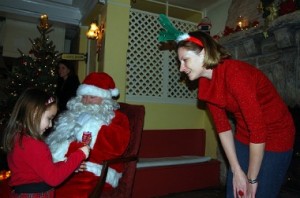
Santa's little helper, Sarah Conaghan, and the Big Guy himself.

Santa's little helper, Sarah Conaghan, and the Big Guy himself.

Nobody pouted. No one cried.

These essential contractual preconditions having been met, Santa Claus came to town.

Even better than that, he came to the Philadelphia Irish Center on Saturday for a Christmas party sponsored by the Mid-Atlantic Rose of Tralee Center.

Before the jolly old elf arrived, in the Nick of time of course, the many kids who crowded into the Fireside Room found plenty to help them occupy their waiting time. They crafted their candy cane bracelets with care. They colored. They glued things to other things. And they snacked. (They were joined by the many kids who had shown up for a feis in the ballroom, who seemed only too happy to help.)

We’ve several photos of the party. And remember, he sees you when you’re sleeping. Which, when you come to think about it, is kinda creepy.

Check out the pics.