All Posts By

Jeff Meade

Arts

Review: Gibraltar: An Adaptation after James Joyce’s Ulysses

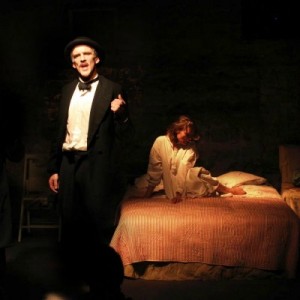
Patrick Fitzgerald and Cara Seymour

Patrick Fitzgerald and Cara Seymour

On the one hand, there is James Joyce’s classic novel Ulysses, a book that has been described as a “complex masterpiece,” with its manifold overlapping themes, rich symbolism and a vast and colorful cast of characters.

On the other hand, there is Patrick Fitgerald’s play Gibraltar: An Adaptation after James Joyce’s Ulysses, to be presented Saturday at 5 p.m. at Plays and Players, which does something both brave and fascinating. Gibraltar plunges deeply and directly into what Fitzpatrick believes is the novel’s heart: the complex, bittersweet love story of protagonist Leopold Bloom and his wife Molly.

The play takes its name from the birthplace of Molly Bloom, played by Cara Seymour. Seymour actually plays several other roles, including the muse, her husband’s deceased Hungarian father Rudolf Virág, Gerty MacDowell (a young girl Bloom encounters on the beach), and, at one or two points, the Blooms’ cat.) Fitzgerald portrays Leopold Bloom. The play premiered in New York in 2010.

Artist Rob Berry and the crew of Throwaway Horse LLC, creators of the online comic Ulysses Seen , were instrumental in bringing the play to Plays and Players. (Read the blog post.)

I’ve previously owned up to my ignorance of Ulysses. And so I have to admit, I was looking to Gibraltar as a gentle, accessible introduction to Joyce’s Dublin and Leopold Bloom’s travels about the city on that single day, June 16.

And so, in some ways, it was just that. It’s not hard to get a grasp on the broad outlines and themes, although at times it can be hard to focus in on specifics because the lines, derived from the language of the novel, come fast and furious. Consequently, some of what transpires onstage is hard to follow.

Still, hang in there, Ulysses newbs, and you’ll catch snatches of Joyce’s language and you’ll gain precious insight into what makes at least these two characters tick—or as much as they themselves have been able to figure out.

It’s hard for me to imagine a more challenging acting assignment, but Fitzgerald and Seymour are more than equal to the task. Fitzgerald’s passion and energy shine through. He makes the stage, with its meager props—a bed, a set of stairs, some dishes and a tea kettle, a hatstand and a Victrola—seem much larger than it really is. We cease to see props; instead, we begin to see Leopold Bloom, his life and his world through the actor’s eyes.

Seymour is a revelation, particularly as she delivers Molly’s soliloquy. It’s from the final chapter of Ulysses, and it takes up most of the second half. The lines are delivered from a squeaky bed at the far right side of the stage—the bed Molly shares with Leopold. Seymour opens the window wide onto Molly’s fundamental humanity as the character takes stock of her life and her relationship with Leopold—reminiscences tinged with longing and regret. As the monologue continued, you could sense that so-called “fourth wall” actors talk about becoming ever more permeable and, finally, dissolving into thin air.

I would never suggest that Gibraltar is easy going. The Sound of Music, it is not. Still, as the week in which Bloomsday is celebrated comes to a close, take the opportunity to see what two very talented actors can do with Joyce’s challenging masterwork.

Ticket information.

Location:

Plays & Players
1714 Delancey Pl
Philadelphia, PA 19103

Arts

“Ulysses ‘Seen'” … A Comic Odyssey

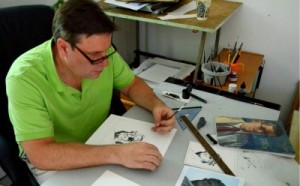
Rob Berry at work.

Rob Berry at work.

As we walk from our meeting place at the Starbucks in the Fairmount section of Philadelphia to Rob Berry’s studio, just a few blocks away, Berry asks the question I’d been both anticipating and dreading: “Have you read ‘Ulysses?’” At which point, I came clean and admitted I hadn’t.

(Although, in my clearly woeful preparation for the interview, I had read the Sparks Notes.)

My ignorance of Irish poet and novelist James Joyce in general and his 1922 masterwork, in particular, apparently didn’t put Berry off. He seemed happy that I hadn’t tried to bluff my way through. He’s asked others the same question, and they’ve, well, lied. Berry himself admits he attempted to read the labyrinthine 265,000-word novel five times before he could make it all the way through.

Still, the fifth time was the charm. Berry got it—and he was hooked.

But perhaps even Berry could not have predicted where his Joycean passion someday might lead. Berry—with graphic and web designer Josh Levitas, Joyce scholar Mike Barsanti and several other equally talented colleagues—is in the early stages of publishing a Web- and iPad-based comic adaptation of “Ulysses.” Two chapters, complete with hypertext-linked reader’s guide, have been published on the Web site “Ulysses ‘Seen’.”

If you’re looking for a way to get a handle on this classic of modernist literature, with its allusions to Homer’s “Odyssey,” its rich symbolism and subtle nuances, “Ulysses ‘Seen’” might be just your ticket.
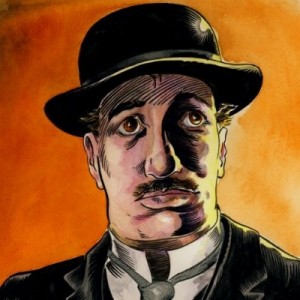
Leopold Bloom, as imagined by artist Rob Berry

Leopold Bloom, as imagined by artist Rob Berry

The project was hatched in June 2004, appropriately enough, in an Irish bar—The Bards at 20th and Walnut—during the Bloomsday Centennial. Bloomsday is the worldwide celebration of Ulysses, held every June 16, which takes its name from Leopold Bloom, who serves as Joyce’s Everyman. All of the events of “Ulysses” occur on that single day in Dublin.

“I was at a Bloomsday reading with a friend of mine who was a cartoonist,” Berry recalls, and talk turned to how “Ulysses” might be portrayed in film. “We were talking about how difficult it is to translate Joyce into other mediums. I was the one to say comics were ideally suited. Joyce uses the weight of visual symbols and he also uses a plasticity of time that you can’t put on film. What you are able to do with comics is to set a rhythm to it (the story) that’s visual, that allows people to know where they are.”

Some who listened to that argument weren’t so sure, and one of his fellow bar patrons bet Berry it couldn’t be done. “I wound up story-boarding 20 pages of ‘Ulysses’,” he says. “I won.”

The idea languished for a few years. in August 2007, at Berry’s wife’s urging, he submitted a snippet from Ulysses to the Philadelphia City Paper for its Comics Issue.

For help in scanning and translating his hand-inked cartoon into a Web-friendly graphic format, he turned to Replica, a high-end print and design shop, which is where Levitas worked. “That’s how I met Josh,” Berry says. “It turned out he actually lives on my block.”

From there, an idea that started out as a barroom bet began to take on a lot more substance. As he continued his wanderings among the “Joyce heads,” Berry met (at a Bloomsday festival) Mike Barsanti, a senior program specialist at the Pew Center for Arts & Heritage and former associate director of the Rosenbach Museum & Library in Philadelphia. He pitched the idea to Barsanti. Barsanti’s reaction was, perhaps, predictable. “At first, he thought it was the craziest idea he’d ever heard,” says Berry, “And Joyce scholars know ‘crazy’.” But the more they talked—over beers, and maybe the brews paradoxically helped lift the fog—the more intrigued Barsanti became, and in time he was on board.

Another partner, copyright attorney Chad Rutkowski—the one who bet that a comic version of Ulysses couldn’t be done—joined the project in 2008 following an encounter at The Bards. Rutkowski became the counsel and business manager for a new company called Throwaway Horse LLC. (Throwaway was the 20-to-1 winner of the Gold Cup race featured in “Ulysses.”)

In time, another passionate Joyce enthusiast joined the project: Janine Utell, former facilitator of the Ulysses Reading Group and Bloomsday coordinator at the Rosenbach, who teaches 20th century British literature at Widener University.

Like a lot of start-up companies, this one is mostly virtual. (Company meetings, Berry says, take place at the Black Sheep near Rittenhouse Square.) If Throwaway Horse can be said to have an “office,” it’s the Callowhill Street studio Berry shared with Levitas.

To reach it, you climb two flights of well-worn gray steps bounded by mustard-colored walls. The studio is a bright, cozy and somewhat cluttered cube, with scuffed white walls and, along one side, exposed brick. At the far end of the studio sits two desks, positioned so they face each other—one of them, covered by illustrations in progress, belonging to Berry; the other, dominated by a large flat-screen monitor, hard drives, a tangle of cables and a pen-and-touch tablet, where Levitas helps translate Berry’s work into an electronic format.

The wall closest to the door is dominated by a cluster of paintings featuring Captain America re-imagined in a wide assortment of characters—black, white, bearded, bespectacled, double-chinned, and one with dark purple lipstick. An equal opportunity Captain America. The theme continues on the wall up above Berry’s left shoulder, where a plastic Captain America costume mask hangs. And here and there, black-and-white comic panels on large sheets of sketchpad paper are tacked into the wallboard.

On the bookshelves, reference works like “Atlas of Human Anatomy for the Artist” and “The Book of a Hundred Hands” share space with ”The Complete Tales of Winnie the Pooh” and the Winston Graham crime novel “Marnie.”

Berry’s musical tastes are eclectic, too. The iPod is set on shuffle, and all the tunes reflect the artist’s diverse interests. It wouldn’t be unusual, Berry laughs, to hear Bach’s “Goldberg Variations” followed by Iggy Pop.

Before moving to Philadelphia in 2000, Berry had an enjoyed a successful career as an artist in Detroit, his easel paintings appearing in many galleries and shows. He says his paintings always followed a narrative style, in effect, telling a story. When he moved to Philadelphia, he says, “I didn’t want to do easel painting any more. The stories were becoming more important to me than the paintings themselves. I started to move away from paint to watercolor and ink drawing. It’s a faster medium to work in and better for print.”

For a time, he considered working in the world of mainstream superhero comics—not surprising, perhaps, for an artist who counts among his earliest creative influences the great comic artists Hal Foster (Prince Valiant), Burne Hogarth (Tarzan) and the immortal Jack Kirby (Captain America, Fantastic Four, X-Men and probably dozens of other comic creations).

Ultimately, though, the idea of creating longer-form stories was more appealing.

And then, in 2007, Steve Jobs and Apple introduced the iPhone. Berry knew things would never be the same, and he began to see creative possibilities on the Web, and—with the dawning of the iPhone—beyond. That’s when Berry’s thoughts about creating a comic version of “Ulysses,” which he had put on a back burner, popped back into his head again. “It all came back when I started to think about the digital page,” he says. “At that point I barely knew how to type. I knew that if I was going to reinvent, I was going to have to reinvent everything.

“I started to look at what had been done with CD-ROMs and hypertext. Hypertext (the presentation of intertwining text, graphics and other info on the Web) was a really exciting approach. With hypertext, you can go behind the page and go right to the reader’s guide. You can join a discussion from there.”

In 2009, Berry and his colleagues launched “Ulysses ‘Seen’” with the publication of the first chapter, “Telemachus.” In 2010, Apple introduced the iPad. In the same year—after a brief media-fueled dust-up resulting in changes to Apple’s prohibition against depictions of nudity and lots more attention to the project—”Ulysses ‘Seen’” became one of the first creative applications for the iPad. “We were geared to the idea that the iPad would come out,” Berry says, “and we would be ready.”

Interestingly, although “Ulysses ‘Seen’” appears in an electronic format, Berry creates the world of “Ulysses” by hand, his panels later scanned by Levitas. “I still use a brush. I still use water colors. It works for me.”

Overall, the process of creating “Ulysses ‘Seen’” is hugely time-consuming. Drawing on the 1922 version of “Ulysses,” which is in the public domain, the team plots out scenes and chapters, with multiple layers of review and re-review. It’s a comic, yes, but there’s an almost academic level of integrity to what the Throwaway Horse team is trying to do.

So, yes, it takes a long time, but the results are stunning. Berry’s renderings of characters like the unhappy Stephen Dedalus, for example, are almost three-dimensional and meticulously detailed. Dedalus fairly pops off the page, in all his unwashed misery, living out the nightmare from which he is trying to awake.

In at least one way, “Ulysses ‘Seen’” is following in the footsteps of the original, which was serialized. The electronic comic version, though, has a much longer timeline. “We’re expecting to be able to do two chapters a year,” he says.

Judging by the critical acclaim with which the first two chapters have been received, it’s well worth the wait.

You can share the Throwaway team’s enthusiasm for Ulysses this week as the Rosenbach hosts the annual all-day outdoor reading of “Ulysses” at its Delancey Place location on Thursday, June 16, from 12 noon to 7 p.m. Berry and Levitas are scheduled to read from 12:55 to 1.

Berry and company are also promoting “Gibraltar: An Adaptation After James Joyce’s Ulysses,” at Plays & Players, 1714 Delancey Place. Showtimes are:

  • Wed, June 15 at 7pm ($15)
  • Thursday, June 16 at 11am and 3pm ($15)
  • Saturday, June 18 at 5pm ($25)

Visit the Web site for more information.

People

Tom Keenan’s Kodak Moment

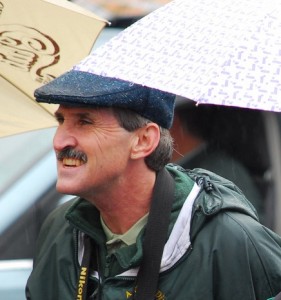
Tom Keenan, in the rain, at a recent Philadelphia St. Patrick's Day parade.

Tom Keenan, in the rain, at a recent Philadelphia St. Patrick's Day parade.

Dress in a leprechaun suit or win a tiara, dance a jig or sing “Danny Boy,” march in the Patrick’s Day parade or hoist a pint anywhere in the Philadelphia area, and chances are pretty good that Tom Keenan will be there with his camera to record the occasion for posterity. Or the Irish Edition. Either one.

Keenan has been documenting virtually every aspect of Irish life in the Delaware Valley since the mid-’90s. He’s zoomed in on everyone from Irish presidents to Kensington publicans. He knows everybody, and they know him. He’s the slim, average-looking guy with the graying brown hair and the brushy moustache who quietly slips into the ballroom or onto the ball field, settles into the background and quietly, dutifully records all those Celtic Kodak moments.

The Irish Edition’s longtime shooter clearly loves being on the viewfinder side of the camera. It’s a passion he developed early in life, never realizing that his hobby might someday become a profession. He’s grateful for that, and he’s happy to continue playing the role of invisible man.

That’s why, he confesses, he’s a little embarrassed to be on the receiving end of an award recognizing his service, to be presented Sunday afternoon at the Penn’s Landing Irish Festival. “That’s why I’m on the other side of the camera,” he says. “I take pictures of other people doing good stuff.”

To Michael Bradley, Philadelphia St. Patrick’s Day parade director and emcee of the Penn’s Landing festival, Keenan’s “aw, shucks” attitude just proves that he richly deserves the attention.

“When you hear a remark like that, you know that’s the right person to honor,” says Bradley. “There are always so many people behind the the scenes who don’t get recognition. Tommy’s at everything. I’ve never seen him honored. He’s gotta be there for 20-30 years and never any recognition. I don’t see a lot of people saying ‘thank you.’ I thought he was a great choice.”

That Keenan would ever become such an integral part of the fabric of Philadelphia’s Irish community is as much a surprise to him as it is to anybody. He’s been part of the community for his entire life. His grandparents are from Ireland, and his uncle Mike Ruan headed up Irish Northern Aid in Delaware County. “When I was a kid,” he recalls, “my parents used to take me and my brothers to the Irish Center. That was our playground.”

As an adult, he became active in the Ancient Order of Hibernians. Still, he didn’t set out to be the Philadelphia Irish community’s unofficial documentarian.

Tom Keenan first started taking photos as a leisure-time pursuit back in the ‘70s when he served in the Navy. “I always took pictures wherever I went,” he says. “I entered some contests and won some amateur contests. People liked what I did.”

After his discharge, Keenan didn’t completely sever his ties to the Navy. He settled into a job at the Philadelphia Naval Shipyard, installing missile systems. Then, in the early ‘90s, work at the shipyard started to slow down—and on September 30, 1995, the facility closed, costing Keenan his job.

“When they closed the shipyard, I had to find a new career,” Keenan says. “They offered to send us back to school for something, so I decided to go to Antonelli Institute (in Erdenheim, Montgomery County) for photography.”

Round about the same time, he noticed that the Irish Edition office was in Wyndmoor, just around the corner from school. He’d spent a lifetime in the Philadelphia Irish community and he thought shooting photos for the paper might be a good fit.

“I looked for a niche,” he says. “Jane Duffin (the editor) is a very nice lady, and she started to send me out on projects. Over the years, I’ve developed a pretty good clientele from it.”

Keenan is quick to point out that photographing Irish people and events is only a part of his business these days. “There’s nothing I can’t shoot,” he says.

Maybe there is one thing Tom Keenan can’t shoot. That moment will come on Sunday afternoon, when he steps onto the main stage overlooking Penn’s Landing’s Great Plaza and accepts his award. For someone who’s happiest becoming part of the scenery, it’s an uncomfortable position to be in.

Well, we’ve known and admired our fellow photographer for several years. In fact, it’s very likely that we’ll be there to record his special moment. So here’s to you, Tom, and let us offer this advice: Just smile and say “Cheese.”

Dance, Music, News

Hot Fun in the Summertime

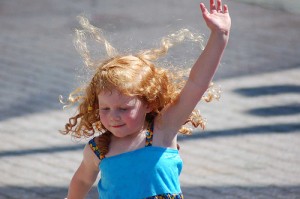
Not all the dancers belong to a dance school.

Not all the dancers belong to a dance school.

Memorial Day is seen as the official start of summer. But for those of us following a slightly different calendar, summer doesn’t truly begin until the annual Penn’s Landing Irish Festival.

This year’s festival kicks off Sunday at 12 noon, going all the way to 8 p.m., at the Great Plaza at Penn’s landing, Columbus Boulevard at Market Street.

If you’ve never been, here’s why you should go…

Music (and lots of it, all day long), with Blackthorn, Jamison and the Hooligans headlining on the main stage.

Dance, with so many of the Philadelphia area’s schools of Irish dance prancing all over the place that we can’t list them all.

Food and drink, including traditional Irish noshies like shepherd’s pie, along with water ice, ice cream, and appropriately seasonal liquid refreshment.

Vendors galore, so you can pick up all of the T-shirts, hats, mugs, home decor, jewelry and other goods necessary to confirm in the eyes of all the world that you are, yes indeed, Irish.

Kiddie stuff, including face-painting, of course.

Atmosphere. Yes, Penn’s Landing lacks shade and technically, kids aren’t supposed to wade in the fountains (but they do anyway), and it can get a little hot out there along the river. But, hey, you’re along the river, which you can bet will be dotted with pleasure boats, some of which stop dead in the water to take in the music emanating from the main stage.

OK, so we’ve told you. But if you still need convincing, let us show you. Check out our photos from past years.

News, People

Honoring the Inspirational Irish Women of 2011

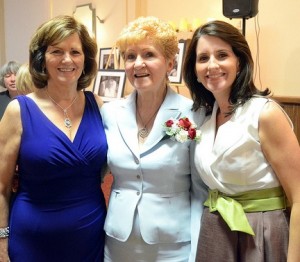
Honorees Carmel Boyce, Anne McDade Keyser Hill and Karen Boyce McCollum

Honorees Carmel Boyce, Anne McDade Keyser Hill and Karen Boyce McCollum

It’s not for nothing that they’ve earned the description, “inspirational.”

The 12 recipients of the 2011 Inspirational Irish Women awards are really quite remarkable, accomplished people, coming from all walks of life—the judiciary, law enforcement, music, religious orders, fire and rescue, nursing, business, broadcasting and more.

The honorees were:

  • Sister Christine McCann
  • Margaret Reyes
  • The Honorable Pamela Pryor Dembe
  • Kathy Fanning
  • Anne McDade Keyser Hill
  • Mary Ann McGinley, Ph.D., R.N.
  • Kathy O’Connell
  • Carmel Boyce
  • Karen Boyce McCollum
  • Christine M. Coulter
  • Liz Crehan Anderson
  • Sister Peg Hynes, S.S.J.

(To read more about them, click here.)

For all their accomplishments, they remain quite humble—and more, as they accepted their awards in a special ceremony Sunday afternoon at the Philadelphia Irish Center, all credited the key people in their lives who helped guide them along the paths they ultimately followed.

Speaking of her parents Barney and 2011 honoree Carmel Boyce, communications executive and singer Karen Boyce McCollum thanked her parents for “bringing us up in a household where growing up Irish was a blessing and the greatest gift they could give.”

Businesswoman Anne McDade Keyser Hill, her voice quavering just a bit, thanked her husband Joe for his loving support. (And he blew a kiss back at her.) But she also recalled the strong influence of her father in her life: “My dad, when I was 14 or 15 years old, took me aside and he said, ‘Sis’—he called me ‘Sis’—don’t let anyone ever tell you that you can’t do what you want in your life because you’re a girl.”

The highly regarded nurse leader Mary Ann McGinley spoke lovingly of her own parents and credited them for setting a good example: “My dad clearly inherited the Irish talent of telling stories. My mom was a ‘Type E’ personality—everything for everybody each and every day.”

And, finally, WXPN Kids Corner host Kathy O’Connell recalled one exceptional woman in her life: “I want to dedicate this award to my grandmother, who became a widow 10 seconds before the Depression hit.”

Attending the event were more than 400 family members, friends and co-workers who attended the ceremony, who cheered and applauded as each woman (and representatives of two women who were honored posthumously, social activist Sister Peg Hynes and musician Liz Crehan Anderson) accepted her award. They also had a chance to admire the striking black-and-white portraits of the honorees, created by photographer Brian Mengini and commissioned by the Inspirational Irish Women committee.

In addition to honoring women of high achievement, the awards program benefited the Philadelphia Irish Center.

We’ve assembled an extensive photo essay from the day. We also present video highlights.

Sports

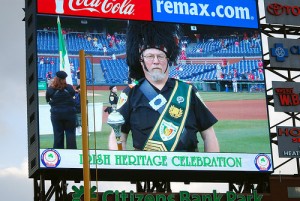
Play Ball! Irish Heritage Night at the Phillies 2011

Brian Boru's drum major on the largest Jumbotron in the National League.

Brian Boru's drum major on the largest Jumbotron in the National League.

It had to have been a thrill to be on the field at Citizens Bank Park. But what a kick it must have been to see Phillies third baseman Placido Polanco trot out onto the field to hang out with the Brian Boru pipe band, which had been playing in center field. (Polanco neglected to wear a kilt.)

All around the stadium, Phillies fans were treated to Irish music, from 5 Quid just outside the park to the Bogside Rogues and the Hooligans inside the park.

Just before the game, dancers from many of the area’s Irish dance schools lined up along the first and third base lines and out on the warning track to get jiggy. (And many proud dance parents got to see their kids displayed on the park’s super-size Jumbotron.)

But by far the biggest thrill of the night had to belong to John and Michael Boyce, the brothers of Blackthorn, who were tapped to sing the National Anthem.

Oh, yes, let’s not forget: Roy Halladay on the mound. Final score: Phillies 3, Rangers 2.

News

Phoenixville Celtic Street Fair 2011

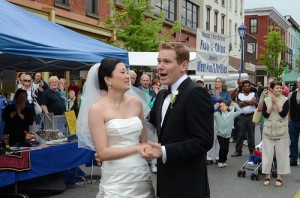
This year's fair featured an impromptu visit by a passing bride and groom.

This year's fair featured an impromptu visit by a passing bride and groom.

It drizzled, it rained, it poured.

A lot like the weather in Scotland and Ireland, come to think about it. But a bit of moisture from the skies did little to dampen the enthusiasm of festival-goers along Phoenixville’s main drag on Saturday.

It pretty much had everything.

There was great music, to start… Barleyjuice, Oliver McElhone, Charlie Zahm, The Brigade, Ted the Fiddler Band.

Irish Thunder Pipes & Drums performed throughout the day, as did the Pride of Erin dancers.

Vendors sold everything from Celtic jewelry to Guinness baseball caps to fish and chips.

One last thing … props to the bride and groom who stopped their limo and jumped out to share a quick dance in front of the stage. Every marriage should get off to such a good start.

News, People, Sports

Walking Softly, Carrying a Big Stick

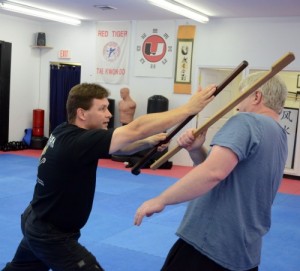
Jeff Cavanaugh demonstrates Irish stick fighting with partner John W. Hurley.

Jeff Cavanaugh demonstrates Irish stick fighting with partner John W. Hurley.

Sure, it’s not the same old shillelagh your father brought from Ireland.

Commonly crafted from blackthorn or oak, the shillelagh (from the Irish “sail éille” and pronounced: shuh-LEY-lee) is best known as a simple walking stick, about four feet long, with a large fist-sized knob at the top.

Well, take another look at that blackened, gnarly cane and picture it in the hands of a hard-nosed Irish peasant tasked with defending a moonshine still, or taking offense at a few poorly chosen words at a wake. You can see the potential for some highly creative violence.

Welcome to the world of “bataireacht,” also known as Irish stick fighting—or, more lyrically, whiskey stick dancing. It’s Ireland’s own martial art, hundreds of years old, the lethally balletic techniques passed down from father to son.

Nobody is whacking anyone else over the head with blackthorn sticks any more, but the tradition—in a milder form—lives on here in the Delaware Valley.

Jeff Cavanaugh of Upper Southampton, Bucks County—a multiple black-belt holder and longtime practitioner of the more commonly known martial arts—stumbled upon bataireacht (pronounced “BAHT-air-ahct” three years ago while surfing on the Internet for news and information about martial arts in general. He found a link to the Web site of Glen Doyle, a Milton, Ontario, martial arts instructor. What caught his attention was a reference to Irish stick fighting. It was the first he’d ever heard of it, and right away, he was hooked.

“I contacted Glen and he put me in touch with one of his students, a guy up in Boston named Rob Masson,” Cavanaugh recalls. “I drove up there for a four-hour class, and then back home again. it was Thanksgiving weekend, but the effort was worth it.”

His interest piqued, Cavanaugh asked Masson to come down to Philadelphia to teach a two-day total-immersion seminar for local martial arts aficionados. And after that, he traveled up to Ontario for a weekend workshop with the Celtic sensei himself, Glen Doyle.

Doyle teaches a two-handed style of stick fighting practiced only by his family, going back generations from one Doyle to the next. Until the Doyles came along, most stick fighting was one-handed, the shillelagh wielded like a sword. That style would have been popular among military men. But the Doyles had a different perspective.

“The first Doyles who originated this system were boxers, not people who were experts with swords,” Cavanaugh says. “Their style was developed to fight the single-hand stick fighter. They (the Doyles) just took stick fighting in a different direction.”

The two-handed system, using a shorter three-foot stick held horizontally across the body, allowed for some creative new defensive moves, but it also gave practitioners the flexibility to thrust the stick outward with one hand when needed, like throwing a punch—boxer-style.

Once developed, the Doyle approach became a closely guarded family secret. “It always stayed within the family,” Cavanaugh says. The techniques of Doyle stick fighting made their way to Canada in the 1800s when one of Glen Doyle’s ancestors, Eddy Doyle, migrated to Newfoundland. Over the years, the Doyles continued to maintain the ancient tradition—and their secrets.

That is, until Glen Doyle decided to share his knowledge with any and all interested newcomers.

Cavanaugh continued his relationship with Doyle after that first weekend of teaching and learning. He traveled up to Doyle’s training school several times.

“I was able to pick it up fairly quickly,” Cavanaugh says. “Stick fighting is fairly straightforward. It doesn’t require a lot of strength or flexibility. You have a three-foot stick in your hand, and that’s what makes it so powerful. You’re taking a very heavy stick, and moving it very fast.”

Eventually, Doyle judged Cavanaugh skilled enough to teach. (Cavanaugh, a longtime woodworker, also learned how to create his own fighting sticks.)

And so began Cead Bua Philadelphia, Cavanaugh’s school for Irish stick fighting housed at United Martial Arts in Oreland, Montgomery County. (Cead Bua means “100 victories.”)

For Cavanaugh, who continues to practice the martial arts he grew up with. Irish stick fighting has a very different appeal.

“Having spent years studying martial arts from other cultures, it was great to find something where I could understand the history,” Cavanaugh says. Also when compared to Eastern martial arts, Irish stick fighting was less flashy, more pragmatic.

“Stick fighting is 100 percent useful,” says Cavanaugh. “Stick fighters had a job to do. Anything that didn’t work, they threw away. It was serious business, something that could save your life. You have to accept it on your own terms. There are no high kicks or flashy moves to share with your friends.”

This distinctly Irish martial art does have one thing in common with its ancient Eastern cousins, says Cavanaugh—mental discipline. Also like judo, aikido, tae kwon do and all the rest, the goal of learning it is to never to have to use it. Odds are, no one is going to walk softly through the streets of Philadelphia carrying a big stick, anyway. “The whole idea of getting into an actual stick fight,” Cavanaugh readily concedes with a laugh, “ is pretty far out there.”

Interested in learning more? Cavanaugh is sponsoring an introductory class on Sunday from 1 to 2 p.m., at United Martial Arts, 109 Allison Road (nearest cross street: Bruce Road) in Oreland. Click here for details.