All Posts By

Jeff Meade

People

A Blessing for a Peacemaker

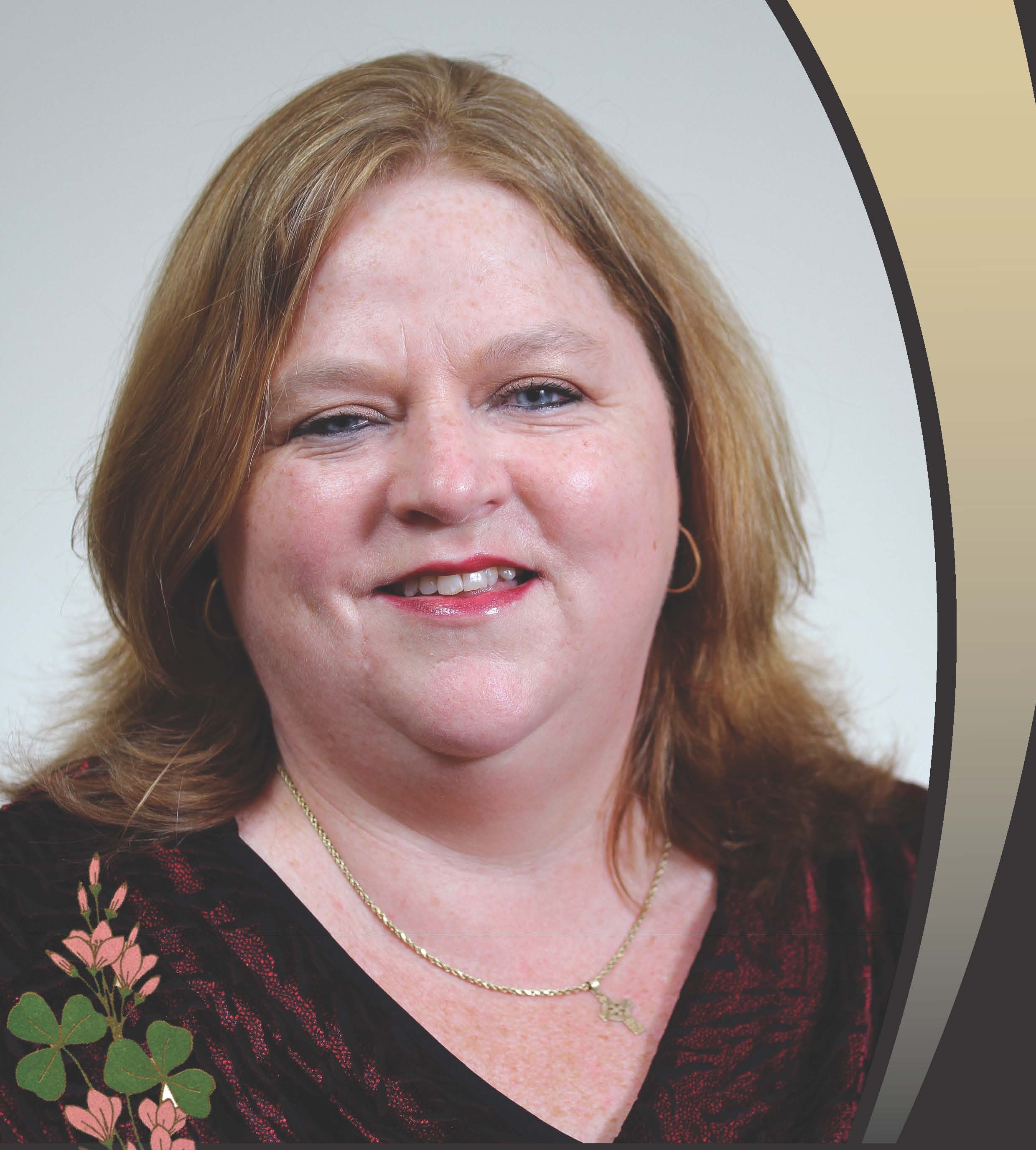
Marie Hempsey

Marie Hempsey

Every summer, “marching season” comes to Northern Ireland. For several weeks, members of the Protestant unionist Orange Order parade through towns and cities, often through politically sensitive Catholic and nationalist neighborhoods. This contentious time of year culminates in a torrent of parades on July 12, celebrating Protestant King William of Orange’s bloody victory over the Catholic King James II at the Battle of the Boyne in 1690.

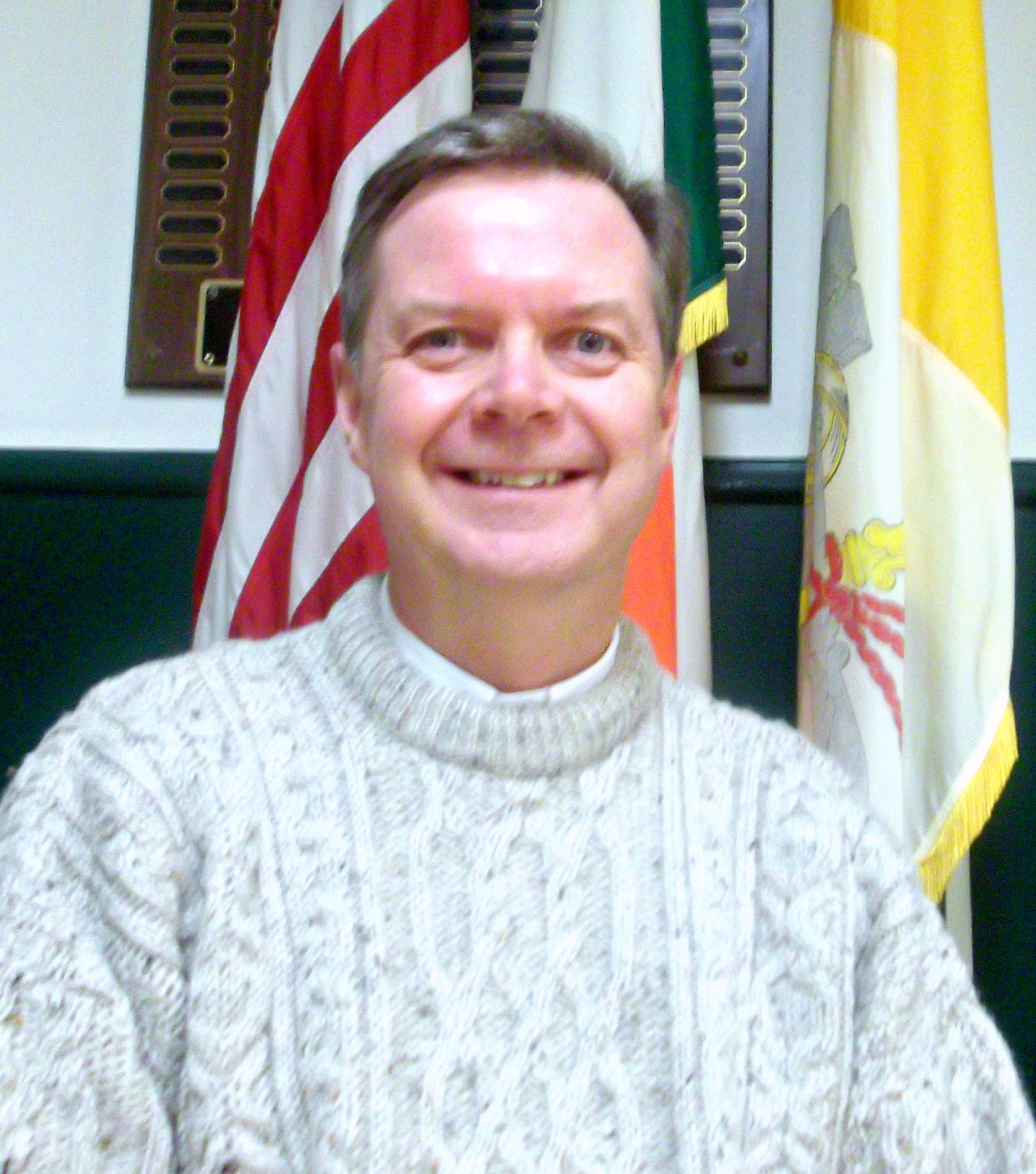
All of this drama plays out an ocean away, but for the 2012 Burlington County St. Patrick’s Day grand marshal, Marie Brady Hempsey of West Deptford, N.J., this divisive tradition strikes close to home, and for two reasons. First, because she’s the child of a Catholic father and a Protestant mother, both first-generation Irish; and second, because she is the mid-Atlantic coordinator for Project Children, which every summer transports more than 20 kids out of Northern Ireland to the Delaware Valley for a different kind of season—a season of peace.

(Note to readers: The Burlington County parade, originally scheduled for March 3, has been postponed to March 31, due to the threat of heavy rains and thunder.)

Hempsey, a Realtor and the mother of five, comes by her deep understanding of Northern Ireland divisions as a result of early childhood experience. Her father James Brady of Philadelphia’s Fairmount section and mother Florence (née McKnight) from Southwest Philadelphia met in October 1961 and eloped in January 1962. The Bradys embraced Florence, but the union didn’t go down well among the McKnights.

“It upset my mother’s parents more, to be honest with you,” says Hempsey. “My dad’s parents were deceased, but his family were much more accepting of her. Ultimately, the families did not get along. My grandmother (Mary McKnight, from Bushmills, County Antrim) was very hard-nosed against my father. It kind of destroyed my family, I didn’t get to know my cousins. I’m getting to know them now, and I know what wonderful people they are, but it took a while.”

Religious divisions were nowhere evident within her immediate family. In fact, Hempsey was brought up with no religious preference; she was left to decide for herself.

Decide she did in 1990, when her third child Kelly was very ill with a rare autoimmune disease that affected her lungs and her crippled her ability to breathe. “They had to put her on a vent, and people said she needed to be baptized,” Hempsey recalled. “I had a wonderful family and husband (Phi), but I knew something was missing. Father (James) Curran came to the house, and I asked him what I could do. He said, ‘Picture Jesus holding her,’ and I did. “That was my epiphany. I just knew I was meant to be a Catholic.”

Kelly’s survived the ordeal, by the way.

One life-changing experience would be enough for most people, but one more awaited Hempsey. It came in 1995, when she and her family were attending an Irish festival in Gloucester City. A nun by the name of Sister Frances Kirk, then the local coordinator for Project Children, was handing out fliers when she suddenly dropped them. Hempsey, her husband and the kids chased them all down and returned them to their rightful owner.

Before Hempsey knew it, she found herself pumping Sister Frances for information about Project Children. “I asked her about it, and when she told me, I said, ‘I want to do that!’ She said, ‘Send me an application and we’ll see what we can do.’”

A few years went by before the Hempseys were approved to host kids from Northern Ireland for the summer. Hempsey suspects Sister Frances held back because she knew there were five kids in the house already. “It probably looked to her like I already had my hands full.”

The Hempseys became a host family in 2000, taking in up to four kids every summer since, most of them multiple times, 11 kids in all. This summer, they’ll take in three kids, making for one packed household. Hempsey takes it in stride. “We’re a little crazy … fun crazy.”

Right from the start, Hempsey knew she was doing the right thing.

“For some reason, we always get the kids who are the ‘real deal.’ They have parents in prison, or had grandparents who were martyred. They send us a lot of kids from Belfast and Derry and Armagh.

“A lot of the kids’ parents we talk to say they can’t afford to take them away somewhere over the summer. If you’re a kid living in live in Ardoyne during marching season, you don’t get much of a summer. You know the parades are coming.”

Hosting fulfilled a need for Hempsey, a way to restore a bit of sanity to the lives of deserving kids. She wanted to do more.

From the start, Hempsey was an enthusiastic supporter of Project Children, and that enthusiasm evidently impressed Sister Frances. In 2004, Sister handed off the coordinator role to Hempsey.

“She said she prayed and prayed for someone to have the passion and drive to do this, and ‘God sent her me.’ That’s the best compliment I could have received.”

Given a lifetime of accomplishment and dedication to Irish causes—Hempsey is also historian and chairperson of immigration and legislation for the Ladies Ancient Order of Hibernians Camden County Division 1—it perhaps should not be very surprising that she was selected as this year’s Burlington County grand marshal. And the first woman grand marshal in the parade’s seven-year history, at that.

Really, only one person was surprised: Hempsey herself.

Now that it’s all sunk in, Hempsey plans to just enjoy and treasure the moment.

“I was absolutely shocked,” she says. “When I was told I was the grand marshal, I just laughed. I said, ‘What, are you kidding me?’ I’m honored. I really am.”

———

You can help support Project Children by attending the group’s annual benefit April 21 at the Richard T. Rossiter Memorial Hall in National Park. Tickets are $30. Call Hempsey at 609-330-4484 for details.
News

Second Streeters Get the Party Started

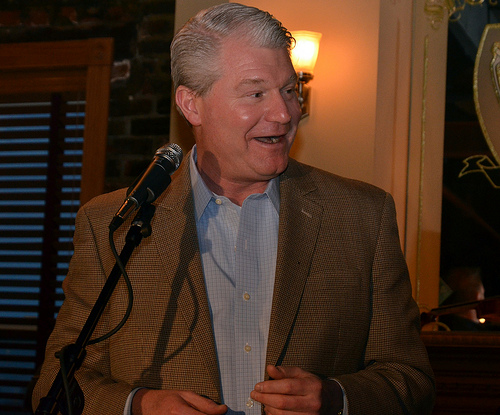
Johnny Doc, enjoying the day.

Johnny Doc, enjoying the day.

The Philadelphia St. Patrick’s Day doesn’t march up the Benjamin Franklin Parkway until Sunday, March 11, but anybody familiar with the parade knows the fun all starts a lot earlier.

So it was on Sunday, when the Second Street Irish Society hosted a big fund-raiser for the parade at their headquarters down in the Pennsport section of Philadelphia.

Party-goers made their way up the steep wooden stairs to the Society’s cozy third floor, there to catch up with their friends—both the friends they see all the time and the friends they hang out with once a year for a few short but busy weeks in February and March. There was music, too, the band Clancy’s Pistols stirring things up with rebel tunes like “The Broad Black Brimmer of the IRA.”

The Society’s dancers took to the hardwood floor for a preview of the style they’ll show in the parade, followed by the Society’s pipes and drums band, whose drones probably shook a few bricks loose.

Grand Marshal John “Johnny Doc” Dougherty and parade officials showed up toward the end of the celebration, there to thank the Second Streeters for their generosity and hospitality.

Dougherty spoke few words, but managed to convey the spirit of the season: “Being Irish is more than St. Patrick’s Day, having a beer in an Irish pub or getting an Irish tattoo on your 16th birthday.” He urged the assembled guests to take pride in their heritage every day of the year.

We’re guessing you don’t need any further reminder.

We captured a bunch of photos from the fund-raiser. In the days and weeks leading up to March 11, look for more such celebrations.

Music

Ivan Goff and Eamon O’Leary in Concert

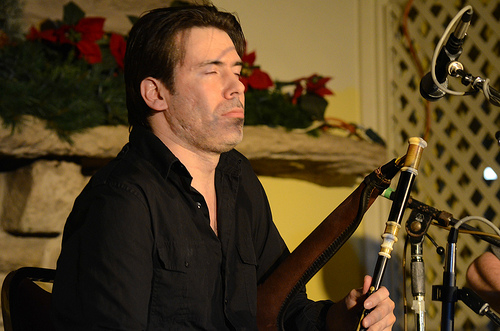
Ivan Goff

Ivan Goff

Piper Ivan Goff and singer/guitarist Eamon O'Leary are a couple of Dublin lads, transplanted to New York City, who nonetheless have a pretty good sense of how tunes are played in Ireland's West.

On Saturday in the Fireside Room at the Philadelphia Irish Center, as part of the Philadelphia Ceili Group's series highlighting the music of the West, Goff and O'Leary played a good many tunes evocative of Ireland's wil

d places. If you closed your eyes, you could imagine yourself in McDermott's Pub in Doolin, the tang of stout mingling with the heady aroma of peat smoke.

It's a concert that almost didn't come off. The Irish Center lost power in the late afternoon, and the juice didn't come back on until just before the show. And during the show, there were times when the Irish Center's clanging heating pipes competed for attention with Goff's uilleann pipes, but he and O'Leary made light of the fact and quickly moved on. There's no question whose pipes won that battle.

We captured the excitement of this concert in video (above) and pictures.

Check out the photos.

zp8497586rq
Music

Ivan Goff and Eamon O'Leary in Concert

Ivan Goff

Ivan Goff

Piper Ivan Goff and singer/guitarist Eamon O'Leary are a couple of Dublin lads, transplanted to New York City, who nonetheless have a pretty good sense of how tunes are played in Ireland's West.

On Saturday in the Fireside Room at the Philadelphia Irish Center, as part of the Philadelphia Ceili Group's series highlighting the music of the West, Goff and O'Leary played a good many tunes evocative of Ireland's wil

d places. If you closed your eyes, you could imagine yourself in McDermott's Pub in Doolin, the tang of stout mingling with the heady aroma of peat smoke.

It's a concert that almost didn't come off. The Irish Center lost power in the late afternoon, and the juice didn't come back on until just before the show. And during the show, there were times when the Irish Center's clanging heating pipes competed for attention with Goff's uilleann pipes, but he and O'Leary made light of the fact and quickly moved on. There's no question whose pipes won that battle.

We captured the excitement of this concert in video (above) and pictures.

Check out the photos.

zp8497586rq
People

A Generous Heart at the Heart of The Montco Parade

2012 Montgomery County Grand Marshal Jim Flood

2012 Montgomery County Grand Marshal Jim Flood

In its early years, the Ancient Order of Hibernians’ Notre Dame Division got to know the inside of firehouses pretty well. Launched in 1989, the Montgomery County division had no home of its own, so meetings were typically held within shouting distance of pumpers and ladder trucks.

Attorney Jim Flood joined the division in 1993, a couple of years after moving from Bucks to Montgomery County. Very active from the start, even as a relative newbie, he took an interest in the division’s continuing state of homelessness.

“We had always had a building fund, but it was raising very little money. So a group of us went out on a limb and hired the Wolfe Tones for a benefit concert. If that had failed, it would have been a huge disaster for us. Luckily, we raised $15,000.”

That large infusion of cash helped turn the dream of a home into a reality. The division bought the former Marine Corps League hall on Jefferson Street in Swedesburg, Upper Merion Township, in 1996. Spurred on by Flood, who was by then on the board of directors, together with other members, the division paid off the mortgage six years later.

That’s just one example of Jim Flood’s level of commitment. His fellow Hibernians can think of plenty more.

Flood spearheaded the division’s Catholic high school scholarship. He runs the golf outing. Outside of the division, he created a “Coats for Kids” drive that benefits poor children. He helps the needy by donating time to the Montgomery County Legal Aid Society and representing children through the Montgomery County Child Advocacy Project. Flood and his wife Helen have also raised funds to support their parish school (St. Helena’s), the CYO and the church construction.

Flood has a well-deserved reputation for being a “go-to” guy, and in recognition of his hard work and devotion, the division is going to him again: this time to ask him to serve as grand marshal of the 2012 Montgomery County St. Patrick’s Day Parade.

His selection came as a shock.

“I didn’t even know I’d been nominated. The division held a membership appreciation day on December 16, and my wife are I were there; that’s when I found out. During a break in the music, the chairman of the parade committee said ‘I’d like to announce the grand marshal for the 2012 parade.’ The he announced it was me. I was floored.”

Perhaps it was because Flood tends not to draw attention to his efforts that he was so surprised. His AOH brothers know that when it comes to good works, Flood is the kind of guy who takes to heart one of the key lessons of the Gospel, courtesy of Matthew 6:3: When you give to the needy, do not let your left hand know what your right hand is doing. And maybe it’s because Flood appears not to think twice about helping his friends and those who are less fortunate than he; it’s just what you do. It’s not something you think about.

The coat drive is a good example of Flood’s charitable mindset. “We started ‘Coats for Kids’ when my son Will, who is now a junior in high school, had a fifth grade service project,” Flood recalls. “I tried to teach him that a lot of kids don’t just wear coats during the day to keep them warm; they also wear them to bed.”

With permission granted by the principal, Flood and his son installed bins in the school to collect coats. The drive turned out to be a success. The following year, Will asked to do it again. Flood incorporated “Coats for Kids” and made him on the president. “Coats for Kids” continues on at St. Joe’s Prep, where Will now attends, and at St. Helena’s. Flood’s daughter Kyra is also involved.

When asked where he gets his sense of social responsibility, he doesn’t have to look far for inspiration: his parents William and Jacqueline.

“I guess it was instilled in me as a child—you do for others,” he says. “It’s the old ‘time, talent and treasure’ idea. Not everybody can give all three, but most people can give at least one or two.”

As he heads down Fayette Street in Conshohocken on March 10 wearing his grand marshal sash, Flood plans to just enjoy himself in the company of his friends, family and fellow Hibernians. And he’ll remember his parents, who were such an inspiration and so proud of their Irish heritage: “I just wish my mother and father could have been there to see me.”

Arts

Drawing Inspiration

Susan Kelly Von Medicus

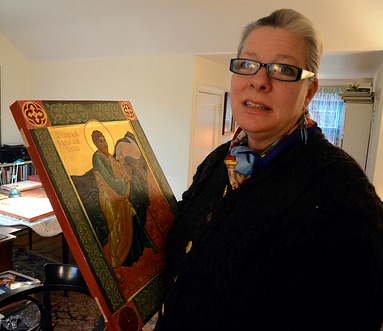
Susan Kelly Von Medicus, with an icon of St. Patrick she created for Ireland's Taoiseach Enda Kenny.

The morning is overcast, so available light is hard to come by. The only light in Susan Kelly Von Medicus’s studio comes from a few small table lamps that surround her studio workspace.

Well, maybe not the only light.

Compelling, Byzantine-style paintings of Jesus and the saints are everywhere you look, hanging on walls and lying flat on top of a couple of tables. Many are finished; others are works in progress. Finished or not, they are remarkable for the evident level of detail that goes into their making. Design elements such as saints’ flowing robes, bishops’ mitres, flowers and rolling waves, shine with deeply pigmented color. Precisely circular halos gleam with 22 karate gilding. Each image seems to cast its own heavenly light.

And that’s precisely the point, says Von Medicus, who has created hundreds of these sacred works. The painting of icons draws its inspiration from the stories of Jesus and the events of his time on earth, and from the lives of the saints. Icons are no mere paintings; the act of creation is a form of religious meditation and devotion dating back to the earliest days of the church.

“It’s just an entirely different practice from the Western tradition,” she says. “There are decorative aspects, but it (the painting of icons) is heavily rooted in church canon. Icons are meant to provide a window or a gateway allowing access to a connection point with the divine realm.”

This creative act of faith goes back a long time. Icons are copied from patterns or inspired by other, older graphic depictions. Originality isn’t the point. Neither is ego; in fact, icons are are left unsigned. What counts is a faithful replication of what has come before, following established conventions, says Von Medicus. “It’s like the medieval monks copying the gospels, with no artistic intent—like being a really slow Xerox machine.”

Everything about an icon has meaning. Icons are created on one side of a plain wooden plank. A base of clay is laid upon the wood, and paints overlay the clay base. The paints are mixed from all-natural materials such as marble dust, plant materials, and metals like lead and mercury. And there’s the gold, of course, a final touch overlaying the clay that gives the paintings their distinctive appearance, says Von Medicus. “Gold represents heavenly light. Gold comes from the explosion of supernovas,” Von Medicus points out. “It is indeed light from heaven.”

This symbolic ascension from the earthly to the divine is the hallmark of the tradition. Says Von medicus, “It’s a symbol of the unity of earth and light in the form of the divine Christ.”

For Von Medicus, one of six children of former Philadelphia councilman and Olympic medal winner Jack Kelly, the painstaking creation of icons is perhaps the most obvious manifestation of her lifelong love of art. Parenthood interrupted her artistic pursuits for a time, but circumstances changed when the kids were older. “I heard of an opportunity to study with Vladislav Andrejev (in 1991), founder of the Prosopon School of Iconology. He was in Philadelphia, doing a workshop” she says. “It seemed to combine my interest in art and faith in one endeavor.”

Lately, iconography has re-opened ties between her art and her family’s Irish roots—County Mayo, in particular.

In April 2011, she accompanied her cousin Prince Albert of Monaco on an official visit to Ireland, which included time in Mayo. While there, she struck up a relationship with Mary Gibbons of Newgrange Tours. Gibbons was extremely pleased that a Mayo man, Enda Kenny, had recently became Ireland’s Taoiseach (prime minister). Gibbons introduced Von Medicus to Kenny, and she commissioned a an icon to honor him.

What resulted is a lovingly crafted portrayal of St. Patrick approaching Croagh Patrick, Mayo’s legendary sacred mountain. Like any good iconographer, Von Medicus looked for prototypes from which to draw inspiration; she found many, and elements of those works have found their way into her rendering. Religious symbols are incorporated into the painting. For example, waves in the background represent Patrick’s arrival from foreign shores. The mountain, she says, signifies Patrick’s spiritual ascension. “I am trying to depict an active Patrick, striding across the land.”

One other significant Irish connection: From January to April 2013, Von Medicus will serve as artist in residency at the Burren School of Art on Ireland’s rugged West coast.

Even though she now teaches iconography herself and her work is displayed internationally and treasured by collectors, she still takes instruction from Andrejev. And she continues to find inspiration in her work. “It’s a wonderful way of learning complex theological stuff when you work it out on an icon.”

If you want to learn more about iconography—learn by doing, that is—Von Medicus is hosting workshops at St. Thomas Church, Whitemarsh. Workshop dates are Sundays, February 12, 19, 26 and March 4, 11, 18, 2012. To learn more, call the church at 215-233-3970.

Visit Von Medicus’s website at http://www.susanvonmedicus.com

History

Monaco’s Search for Missing Brothers

Grace Kelly

Grace Kelly

The scholars who preside over Monaco’s audiovisual archives are looking for a few good men.

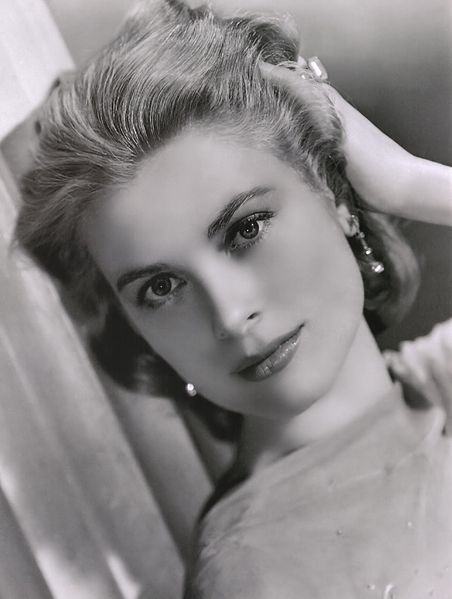
Local Irish will get the Monaco-Philly connection instantly, of course: the gifted actress and East Falls native Grace Patricia Kelly became princess of the diminutive principality upon her marriage to Prince Rainier in April 1956.

In particular, the Archives Audiovisuelles de la Principauté de Monaco is interested in photographs of the brothers of Grace’s parents John Brendan Kelly, Sr., and Margaret (nee Majer). The Kelly men include Patrick, Walter, Charles and Georges; and on the Majer side, Bruno and Carl, Jr.

The Archives “collect, restore, preserve and archive the audiovisual patrimony of Monaco, private and public,” according to spokesperson Sylvie Primard.

“We have in our collection documents from the early 30s, concerning Princess Grace’s childhood. Our present task is to index and archive these items, which means that we should try to describe these images as well as we can for future generations.”

The early childhood photos remain private and are not available for public view.

Missing from the Archives collection are photos of the Kelly and Majer siblings. Archivists touched base with irishphiladelphia.com this week in the hope that one or more of our readers might be able to help.

Should you know the whereabouts of any of these photos—hey, maybe your great-grandad went to St. Bridget’s on Midvale Avenue as a boy and left you with a stack of black-and-whites—let us know, and we’ll put you in touch.

News

Remembering Bloody Sunday

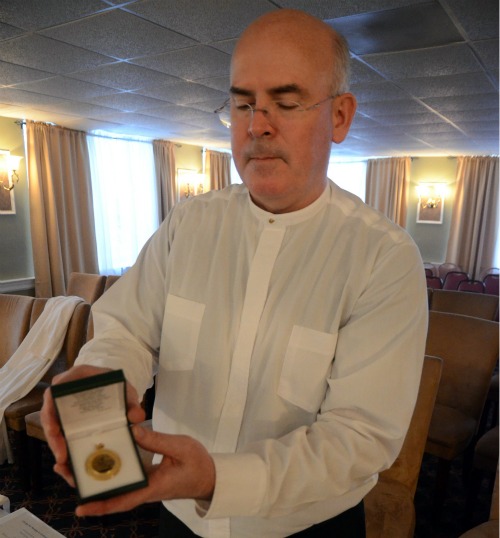
Father Ed Brady displays the H-Block memorial medal.

Father Ed Brady displays the H-Block memorial medal.

“Some bonds can never be broken.”

Those words were etched into a small gold-colored medal struck for a 2011 reunion of former prisoners of the notorious H block of Belfast’s Long Kesh Prison—site of the 1981 hunger strike in which 10 Irish prisoners died. The commemorative medal came into the hands of Father Ed Brady through the good graces of a friend, and he chose a particularly meaningful occasion on which to share it.

Father Brady celebrated Mass at the Philadelphia Irish Center last weekend in observance of the 40th anniversary of the Bloody Sunday massacre in which 13 unarmed protesters—mostly teenagers—were killed by elements of the British army in the Bogside district of Derry, Northern Ireland.

Plain white poster-board crosses hung from light fixtures throughout the Irish Center’s dining room, where the Mass took place. Each cross bore the name, etched in indelible ink, of one who died. Close to 60 Irish and Irish-American worshippers filled the room. The Mass was sponsored by the Sons and Daughters of the Derry Society.

Just before Mass began, Father Brady spoke of the Bloody Sunday dead, but he also recalled the sacrifices of the hunger strikers. He opened the little box in which the medal was held and he passed it around then room. Their shared sacrifice, he suggested, “is what’s it’s all about.” Later on, in his homily, he returned to the theme, recalling that the Bloody Sunday victims used non-violence in pursuit of their goals. “The easiest thing to do is to take up arms,” he said, “but the peaceful way is what triumphs in the long run.”

After the Mass, the Derry Society’s Bill Donahue said it’s only natural to remember the Bloody Sunday victims, even after all this time. “They made the ultimate sacrifice, not only for Derry but for the aid of Irish freedom. You always remember that.”