All Posts By

Jeff Meade

News

Party Time in Springfield

No doubt about it

No doubt about it

A lot of events lead up to the Philadelphia St. Patrick’s Day Parade. One of the biggest is the annual fun-raiser at Springfield Country.

This year’s “do” was no exception, bringing in scores of party-goers who just couldn’t wait to get started on their St. Patrick’s celebrations. Parade Grand Marshal John Dougherty led the list of VIPs.

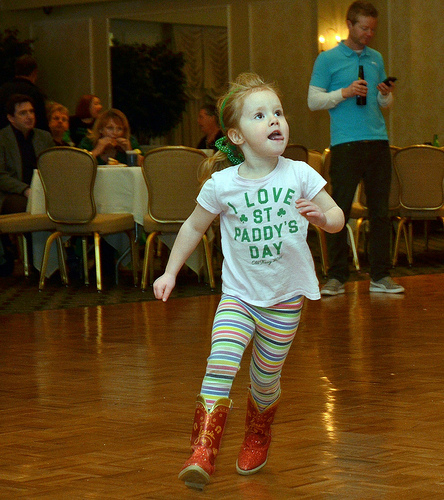
This year, the Hooligans and the Vince Gallagher Band took center stage, and had guests up and dancing all afternoon. (Especially the wee ones.)

We have the pics!

Check them out.

Music

A Lifetime Achievement Award for the Chieftains

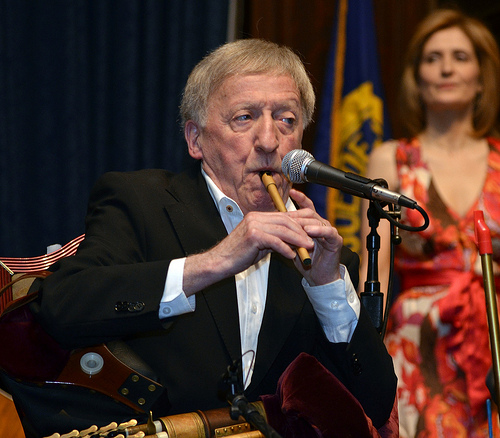
Paddy Moloney

Paddy Moloney

Fifty years. Count ‘em.

That’s how long the Chieftains have been banging out Irish traditional music—along with dozens of inventive musical collaborations, from the Rolling Stones to Tom Jones to Emmylou Harris.

The band was in Philadelphia for their annual St. Patrick’s Day pilgrimage to Philadelphia, and as luck would have it, the timing was perfect for a truly special event: the presentation of the first-ever lifetime achievement award to the Chieftains by the Irish National Concert Hall.

The event, held at the Union League, was hosted by the American Ireland Fund, a philanthropic network supporting worthy causes in Ireland and worldwide.

Simon Taylor, chief executive officer of the National Concert Hall, explained why the Chieftains—and Paddy Moloney in particular, who was a board member for a time—were chosen for this honor.

“It would be hard to think of anyone more deserving. We have a number of awards we give to young musicians. We thought it was about time we gave one to, I won’t say old musicians (laughs), but to musicians for their services to music. It’s something that hopefully over the years will become the must-have award for Irish musicians.”

For his part, Paddy Moloney had only a few words to say, but he and his bandmates found a marvelous way to express their gratitude.

“Thank you so much to the National Concert Hall,” Moloney said. I’ve been watching all the great work for you’ve been doing for Ireland, and please continue to do so. I won’t be sayin’ any more, though. I’m gonna grab me old pipes and whistle, get the lads out, and let’s have a bit of fun.”

And that’s just what they did for nearly an hour, delighting the audience and filling the hall with some of the best Irish traditional music on the planet.

We were there, and have the pictures to prove it.

Check them out.

Food & Drink, People

Five Questions for Tullamore Tim

Tullamore Tim

Tullamore Tim

Tell us you don’t want Tim Herlihy’s job.

As the United States ambassador for Tullamore Dew, the second-largest Irish whiskey in the world, he has to travel from city to city sharing his knowledge about one of favorite spirits.

He’ll be in town Wednesday night, a guest of Irish Network-Philly at The Bards on Walnut Street, for a whiskey tasting and dinner. He’ll lead whiskey lovers through a tasting of three entries from the Tullamore line—10-year-old reserve, 12-year-old special reserve, and 10-year-old single malt. He’ll also talk about Irish whiskey, once second fiddle to other alcoholic beverages, has become one of the hottest-selling Irish exports.

We asked Herlihy to give us a sneak preview of his presentation. Here’s what he had to say.

Q. There are a lot of whiskeys in the world. How and why are Irish whiskeys different?
A. Irish whiskey is known for being a friendly spirit, smooth, sweet and approachable.

Q. When people taste an Irish whiskey, what should they be looking for? What should their mouths and noses be picking up? Maybe you could tell us what your far more experienced nose and mouth are picking up.
A. Most Irish whiskey is triple distilled, giving it an approachable and smooth taste profile, compared to Scotch, which tend to be more robust. With Tullamore Dew, it’s a triple distilled, triple-blend whiskey, giving it a smooth character, but it’s a whiskey made up of grain whiskey, which gives it a sweetness, malted barley which gives it great citrus fruit flavours, and pot still whiskey which creates a buttery, oily, melt-in-your-mouth texture.

Q. What’s the audience for Irish whiskeys these days? IN-Philly seems to be a younger crowd (though certainly not exclusively), and I’m wondering if younger folks are part of a trend? That is to say, perhaps they go through their college and young adult years, and then they start to crave something more adult in character. Is any of the above true?
A. The new wave of whiskey drinker is enjoying Irish whiskey because of its taste profile, but also because Scotch (by comparison) is seen as a very serious drink. With Irish whiskey, there are no rules; it can be sipped neat, on the rocks, or mixed. The only rule with Irish whiskey is to drink it with friends! Scotch, on the other hand, is a more reflective drink to be had on your own by the fire, plotting the downfall of your enemies.

Q. Tell me about Irish whiskey as a category, Tullamore being the second largest distiller. How has its popularity grown, and how do you account for that?
A. Right now, Irish whiskey is the fastest-growing spirit in the world. Historically at the beginning of the 20th century, Irish whiskey accounted for 60 percent of all world whiskey sales, before suffering a tragic decline due to Prohibition, a trade embargo with the United Kingdom and other factors, which led to Scotch replacing it as the No. 1 whiskey. Today, Irish whiskey is entering a new renaissance with drinkers falling in love with its taste profile, and it’s sociable nature.

5. Tullamore is promoting “Irish True,” a campaign that urges Americans to forget shamrocks and leprechaun costumes, and to focus on the true meaning of St. Patrick’s Day. (irishphiladelphia.com is a shamrock-free zone, so we appreciate the sentiment.) How are you and the folks at Tullamore suggesting we celebrate the occasion, and how is it different from how we typically do, awash in green beer?
A. There’s much more to being Irish than leprechauns, Lucky Charms and pots of gold. Here’s a couple of St.Patrick’s Day tips:

  • Kick off the day with a hearty, traditional Irish breakfast; it’s going to be a long day and you’ll need sustenance—my favorites include bacon rashers (real back bacon, if you can get it), both white and black pudding, fried eggs and a strong cup of Irish breakfast tea.
  • Take in a local St. Patrick’s Day parade; in Ireland, a parade can be found in a big city, complete with massive floats, right down to a simple tractor parade in a small village. Every city, town and village has its own parade on St. Patrick’s Day. In America it’s no different—go out there and show your support!
  • Catch some Irish entertainment; pull up a chair at your favorite pub and listen to a traditional session band.
  • Go out and find an Irish True bar or pub; forget the green beer and shamrocks on the wall; an Irish True establishment has its own character and way of doing things; there’s sense of community and camaraderie and, above all, friendship.
  • Have a St. Patrick’s Day toast at the ready; toasting is a big part of Irish culture; it should speak from the heart and is meant to be shared with those most important to you.
Dance, News

Dancing for God

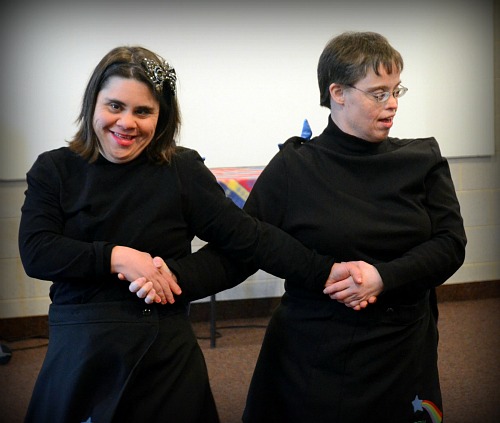
A happy moment during rehearsal

A happy moment during rehearsal

In a school auditorium in Springfield, Delaware County, nine women in simple black Irish dance outfits clasp hands together as their slipper-clad feet lightly skip across the floor. You can see the intense concentration in their faces as they rehearse traditional dances like “Shoe the Donkey” and “Bridge of Athlone.” Led by their instructor Kathleen Madigan, they count aloud:

1-2-3-4-5-6-7

1-2-3

1-2-3

Learning traditional Irish dance can be a test for anybody. For Madigan’s “ladies,” as she fondly calls them, developing all the fancy footwork and consigning it to muscle memory is an especially daunting task. They’re the Rainbow Irish Step Dancers, an enthusiastic troupe of developmentally challenged women from Divine Providence Village, a cottage-style community operated by Catholic Social Services. This Sunday will mark their debut in the Philadelphia St. Patrick’s Day Parade. You’ll recognize them by the pretty rainbow sash they proudly wear across their backs.

The idea for the Rainbow Dancers began over a year ago at a Christmas show at Divine Providence, which Madigan, a former nutritionist at the facility and a student at the Irish Stars Parker School of Irish Dance in Hellertown, attended. When the chorus began to sing “Jingle Bell

Rock,” Madigan recalls, “all the ladies got up and started dancing like crazy. Well, when you think about it, ‘Jingle Bell Rock’ actually fits a light jig. It was then that I realized: They could do this.”

Starting last February, Madigan started running an every-other-Saturday Irish dance class, and every resident of the village who wants to can come and dance. And that’s all it was ever going to be—an opportunity for a couple dozen residents to socialize and have fun. But after a month or two, Madigan realized that there was a core group who could, with coaching, perform publicly.

“These ladies really stood out. They were just so happy when they danced, I thought we could teach them, and they could help each other learn steps. A little over a year later, and we’re still going strong.”

Madigan herself has only been dancing for four years, having started at age 50, so coaching the Divine Providence dancers is a way to bolster her own skills. But more than that, seeing her dancers’ excitement and knowing how hard they have to work, gives her joy.

“Kathy in our group is almost totally blind,” she says. “Eleanor holds her hand so she can dance. Diane is in a brace. There are a lot of physical and mental obstacles to overcome so they can do this, but it gives them a sense of belonging to a team. They know they are the Irish dancers. They just feel special.”

Unlike other dancers, Madigan adds, the Rainbow ladies dance simply for the love it. And it shows. They possess a childlike purity of purpose. “They don’t face competition,” Madigan says. “They don’t have to come in first. They’re just there for each other. And they’ll readily tell you that they dance for God.”

zp8497586rq
News, People

Good Weather for Philly’s St. Patrick’s Day Parade?

They partied hearty Thursday night at the CBS3 studios in Philadelphia. St. Patrick’s Day Observance Committee President Kathy McGee Burns and Parade Director Michael Bradley presented the parade’s Grand Marshal, labor leader John Dougherty, and the Ring of Honor

who will march in the annual St. Patrick’s Day parade on Sunday, March 11.

The parade is broadcast on CBS3 and sister station, CW Philly, so the Channel 3 Eyewitness New team that also serves as its parade team joined invited party-goers at a buffet dinner with music (by most of the Celtic rock group, Blackthorn). On hand were anchors Susan Barnett and Chris May, meteorologist Kathy Orr along with 3’s newest weather reporter, Katie Bilo, traffic reporter Bob Kelly, consumer reporter Jim Donovan, and General Manager John Hightower.

We got our invites, attended the party, and captured at least some of the fun at this annual event that kicks off St. Patrick’s Month. Check out our photos.

zp8497586rq
Music

A Chieftains Blast From the Past

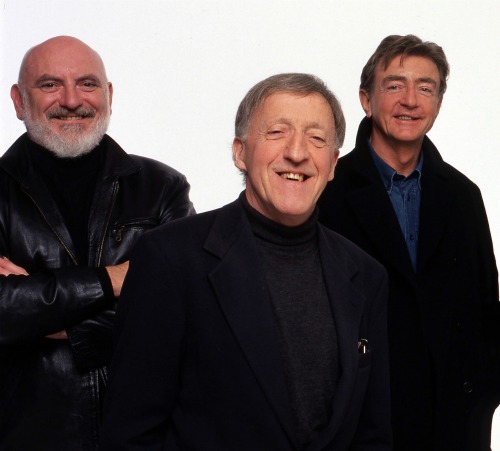
Matt Molloy, Paddy Moloney and Kevin Conneff

Matt Molloy, Paddy Moloney and Kevin Conneff

The Chieftains, one of the most revered of all Irish traditional music groups, will be in town for a concert at the Kimmel Center on Friday, March 9.

It seemed like a good excuse to resurrect two interviews with members of the band.

We chatted with band leader and uilleann piper Paddy Moloney just before the band's 2008 Kimmel show. (The Chieftains Go Caledonian.) That year, the band was highlighting the music of Scotland, and Moloney talked a good deal about that. He was the first non-Scot inducted into the Scots Traditional Musi

c Hall of Fame. But Moloney also talked about how he rose to prominence as an Irish musician—and how the Chieftains became the Chieftains.

A year later, Kevin Conneff took time to share his own story. (A Chat With the Chieftains' Kevin Conneff.) Conneff, who sings and plays bodhran for the band, joined the already well-known Chieftains in 1976. He planned on playing with the band for a year or two and then returning to work in a print shop. He'll be on stage on Friday, so you can see for yourself how that plan worked out.

We also want to remind you that Friday (March 2) is the last day of our Chieftains ticket contest. We have a pair of Kimmel show tickets to give away. All you have to do is:

Subscribe to our Mickmail weekly e-newsletter. (The signup box is in the right column.)

Or

If you already are a subscriber, forward Mickmail to a friend.

We'll pick the winner Saturday, March 3.

Click on the links below to read the interviews!

zp8497586rq
Dance, Music, People

Tommy Moffit’s Last Gift

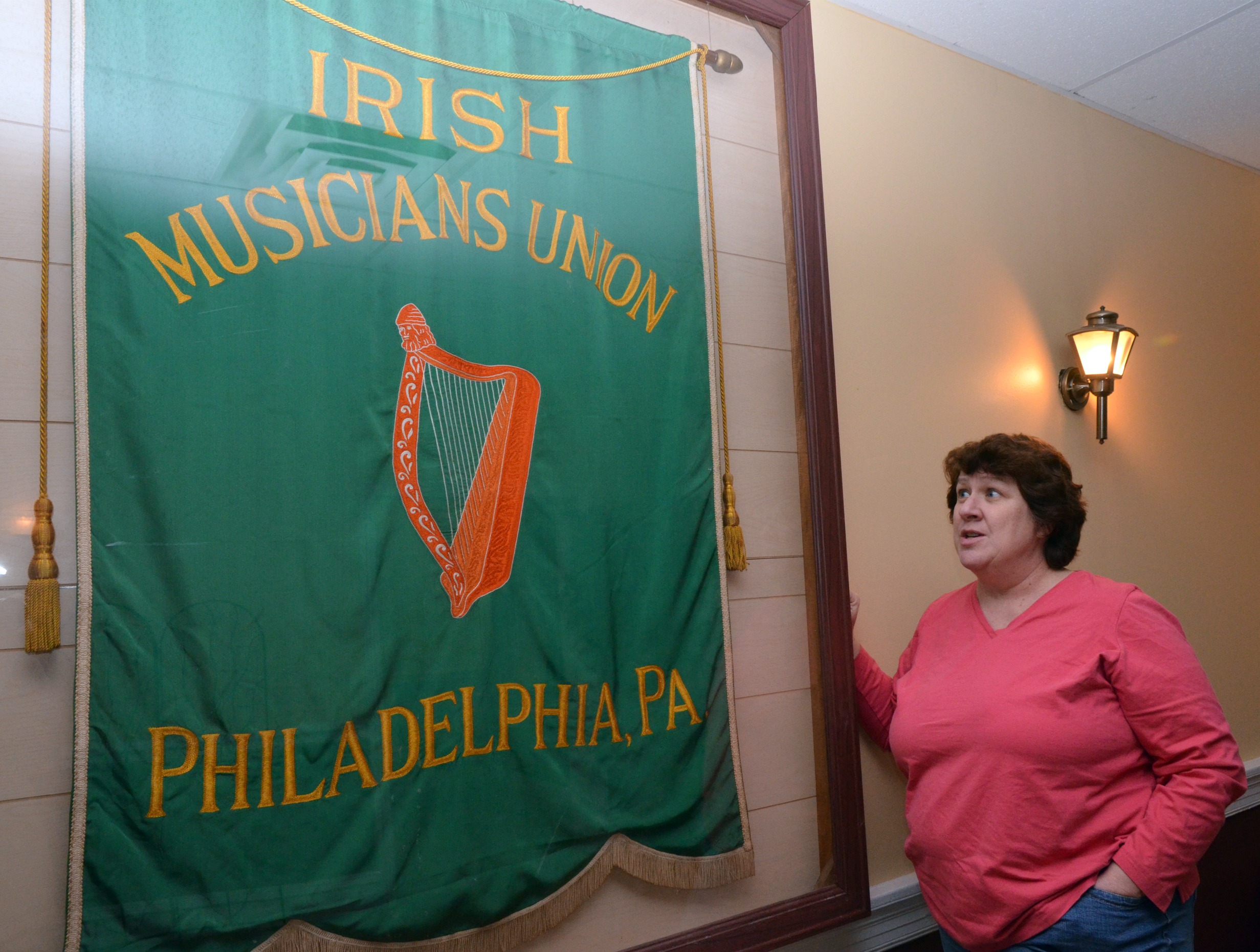
Mary Lou McGurk with the Irish Musicians Union banner.

Mary Lou McGurk with the Irish Musicians Union banner.

Mary Lou McGurk’s memories of beloved Philadelphia Irish musician and radio host Tommy Moffit go back to when she was a little girl, dancing to his music at the Philadelphia Irish Center with the McDade School.

Later on in life, she got to know him better when he turned out to be good friends with her in-laws.

But probably the way McGurk knew Moffit best was in his role as one of the founders of the Philadelphia Ceili Group, the highly regarded organization dedicated to Irish traditional music and dance. McGurk, now president of the Ceili Group, has served as the stage manager for the group’s annual festival since 1980. Back then, and for many years almost until his death in 2010, the soft-spoken man from Roscommon was the festival’s amiable emcee. “We’d sit backstage between acts, and talk,” she says. “I knew him for a long time.”

Like many who knew Moffit, McGurk misses her old backstage pal. Happily, Moffit left behind something to remember him by.

Something really big.

It’s a green, gold-fringed banner with an ornate orange Celtic harp in the center—the standard of the old Irish Musicians Union of Philadelphia. Moffit was the last official president of the group, which held sway in the Irish musical community in the first half of the 20th Century. Moffit presented the banner to the Ceili Group about five years before his death.

“He just came to our board at that time, and he said, ‘I found this banner. Would you like to have it?’ We jumped at it.”

The banner, about three feet by five, would have been carried by members of the union in the Philadelphia St. Patrick’s Day Parade, McGur

k says. In those days, she adds, “everybody needed to be in the union—they wanted to be, of course. Ed Reavy, Tommy Caulfield, Ed Cahill … all of the old greats were in it.”

Because Moffit was the last president, McGurk says, he wound up with the banner.

The thin, delicate artifact is preserved in a large, weighty case, handmade by Ceili Group members Brian and Lorraine Quinn, McGurk says. The problem? Where to put it. “It’s just very large. It’s a wonderful gift but we didn’t know where to put it.”

Until relatively recently, the Ceili Group stored the banner in one of the cramped, dusty rooms next to the ballroom stage, where tables and chairs are stacked and stored. “It was in its case, but it was just leaning against the chairs,” she says.

And so it sat for several years, concealed from public view, McGurk says. “We kept saying, ‘What are we doing about it?’”

A couple of years ago, when the Irish Center refurbished its second floor, the Ceili Group was invited to hang the banner there. But that was no good, either, McGurk says. “We were angling for a spot, but it’s just too heavy for the walls upstairs, too.”

Opportunity came knocking about a year ago, when the Irish Center received a grant to install a new elevator leading from ground level on Emlen Street up to the second floor entrance to the ballroom. Along with the new elevator, the Irish Center refurbished the sitting room just off the elevator vestibule. Visitors who take the elevator have to pass through the sitting room to get to the ballroom. And there, front and center in the sitting room, hangs the delicate banner. It’s the first thing you see when you enter the room.

That spot, McGurk, seems “perfect.” Folklorist Mick Moloney was one of the first to see the banner when he was in town in November for a concert and lecture. McGurk recalls, “He looked at it and said, ‘This is an amazing piece of history. You’re lucky to have it.’”

History aside, the banner also serves as a reminder of the man who gave it. Whenever McGurk sees it, she thinks of him. “He was,” she says, “a wonderful, wonderful man.”

zp8497586rq
Dance, Music, People

Tommy Moffit's Last Gift

Mary Lou McGurk with the Irish Musicians Union banner.

Mary Lou McGurk with the Irish Musicians Union banner.

Mary Lou McGurk’s memories of beloved Philadelphia Irish musician and radio host Tommy Moffit go back to when she was a little girl, dancing to his music at the Philadelphia Irish Center with the McDade School.

Later on in life, she got to know him better when he turned out to be good friends with her in-laws.

But probably the way McGurk knew Moffit best was in his role as one of the founders of the Philadelphia Ceili Group, the highly regarded organization dedicated to Irish traditional music and dance. McGurk, now president of the Ceili Group, has served as the stage manager for the group’s annual festival since 1980. Back then, and for many years almost until his death in 2010, the soft-spoken man from Roscommon was the festival’s amiable emcee. “We’d sit backstage between acts, and talk,” she says. “I knew him for a long time.”

Like many who knew Moffit, McGurk misses her old backstage pal. Happily, Moffit left behind something to remember him by.

Something really big.

It’s a green, gold-fringed banner with an ornate orange Celtic harp in the center—the standard of the old Irish Musicians Union of Philadelphia. Moffit was the last official president of the group, which held sway in the Irish musical community in the first half of the 20th Century. Moffit presented the banner to the Ceili Group about five years before his death.

“He just came to our board at that time, and he said, ‘I found this banner. Would you like to have it?’ We jumped at it.”

The banner, about three feet by five, would have been carried by members of the union in the Philadelphia St. Patrick’s Day Parade, McGur

k says. In those days, she adds, “everybody needed to be in the union—they wanted to be, of course. Ed Reavy, Tommy Caulfield, Ed Cahill … all of the old greats were in it.”

Because Moffit was the last president, McGurk says, he wound up with the banner.

The thin, delicate artifact is preserved in a large, weighty case, handmade by Ceili Group members Brian and Lorraine Quinn, McGurk says. The problem? Where to put it. “It’s just very large. It’s a wonderful gift but we didn’t know where to put it.”

Until relatively recently, the Ceili Group stored the banner in one of the cramped, dusty rooms next to the ballroom stage, where tables and chairs are stacked and stored. “It was in its case, but it was just leaning against the chairs,” she says.

And so it sat for several years, concealed from public view, McGurk says. “We kept saying, ‘What are we doing about it?’”

A couple of years ago, when the Irish Center refurbished its second floor, the Ceili Group was invited to hang the banner there. But that was no good, either, McGurk says. “We were angling for a spot, but it’s just too heavy for the walls upstairs, too.”

Opportunity came knocking about a year ago, when the Irish Center received a grant to install a new elevator leading from ground level on Emlen Street up to the second floor entrance to the ballroom. Along with the new elevator, the Irish Center refurbished the sitting room just off the elevator vestibule. Visitors who take the elevator have to pass through the sitting room to get to the ballroom. And there, front and center in the sitting room, hangs the delicate banner. It’s the first thing you see when you enter the room.

That spot, McGurk, seems “perfect.” Folklorist Mick Moloney was one of the first to see the banner when he was in town in November for a concert and lecture. McGurk recalls, “He looked at it and said, ‘This is an amazing piece of history. You’re lucky to have it.’”

History aside, the banner also serves as a reminder of the man who gave it. Whenever McGurk sees it, she thinks of him. “He was,” she says, “a wonderful, wonderful man.”

zp8497586rq