Monthly Archives:

March 2008

News

Partying at Finnigan’s Wake

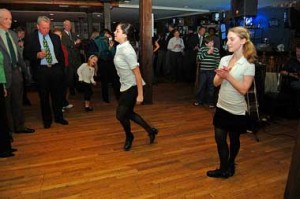
Campbell School dancers Stephanie Miller and Alison Silverman step lively.

Campbell School dancers Stephanie Miller and Alison Silverman step lively.

Local supporters of Hillary Clinton were gathering downstairs at Finnigan’s Wake to await the outcome of the primaries. They probably had a happy night.

Meanwhile, local Irish were up on the third floor with the primary purpose of celebrating their own special month. And was there ever really any question that they would have a great night?

The Philadelphia St. Patrick’s Day Parade Observance Association, under the leadership of director Michael Bradley, gathered with their partners from CBS3, for one last big blowout. (There’ll be a luncheon later, too, of course.)

There was, as always, some fabulous Irish music and some great dancing. (The food and the drink were pretty good, too.)

Music

The Chieftains Go Caledonian

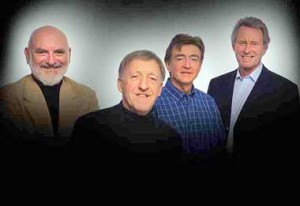
The Chieftains, from left: Matt Molloy, Paddy Moloney, Kevin Conneff and Sean Keane.

The Chieftains, from left: Matt Molloy, Paddy Moloney, Kevin Conneff and Sean Keane.

For all of you who have had to make the painful choice between the Philadelphia St. Patrick’s Day Parade and the Chieftains concert at the Kimmel—they seem always to happen on the same day—this year there’s no pain at all. The parade has been pushed back to Sunday, March 9, to avoid a conflict with Palm Sunday, and the Chieftains are in town on Saturday, March 15.

Paddy Moloney, leader of Ireland’s pioneering Irish traditional band, couldn’t be more delighted. For one, Philadelphia is a hotbed of Irish traditional music. For another, the Kimmel is just a great place to perform.

“It’s very warm. You look up [from the stage], and the hall is shaped like an egg. It’s almost like the people are with you in your parlor back home—a very expensive parlor, let me tell you.”

Moloney, who is on the board of directors for a new national concert hall auditorium in Dublin, says he hopes that performance venue will take a few lessons from the Kimmel, where the sound is phenomenal, yet the space seems so intimate. “I’ve shown them photographs,” he says.

Moloney and the Chieftains are always mining other genres for concert and recording material—a fact that drives some hard-core traditionalists a little crazy and bothers Moloney not at all. But this time, the Chieftains are not straying too far from Ireland.

“I’m going down the Scottish route,” he says. “I call it the Chieftains Scottish-Celtic connection.”

It’s a logical choice for Moloney, who in 2005 was inducted into the Scots Traditional Music Hall of Fame. He was the first non-Scot so honored.

Joining the Chieftains—Moloney (tin whistle, uilleann pipes), Sean Keane (fiddle), Matt Molloy (flute), Kevin Conneff (bodhran and vocals)—will be Alyth McCormack, from the small Scottish island of Lewis in the Outer Hebrides. “Her singing is just fantastic,” he says. “She’ll come on in the last section of the second half, blending our Irish with her Scottish style.”

Also on stage will be the brilliant Irish harper Triona Marshall. “She’ll do a version of Carolan’s concerto,” says Moloney. “It’s the best I’ve ever heard.” Marshall fills a gap in the Chieftains’ legendary sound left by the death of Derek Bell in October 2002.

Carmel Conway, a superb singer from Limerick with both classical and contemporary influences, will also join the show, as will Cuban-born Philadelphia percussionist Juan Castellanos, also known simply as “Cuco.” Look for the longtime Chieftains players, dancer Cara Butler and those crazy-legs Pilatske brothers, Jon and Nathan, from Canada’s Ottawa Valley, who were such a hit at the Kane Sisters’ Irish Center concert in July. Singer-dancer Maureen Fahey also rounds out the ensemble. (Look for an appearance by some local pipers, too.)

Quite the international cast—but that, too, is just fine with Moloney, who confesses, “I find the world now a very small place.”

It was quite another world when, back in 1963, the one-time accountant laid the groundwork for what would become the Chieftains.

It was a journey that began in 1938 in the northside Dublin suburb of Donnycarney, where Moloney was born and raised—and before then, really. Like so many traditional Irish musicians, Moloney was born into the music. House parties were common. Indeed, he says, “Music was the main source of entertainment in the family.” Moloney’s grandfather played the flute, and an uncle played in the Ballyfin Pipe Band. “He was a great pipe player,” says Moloney. “I grew up with this madness in me head.”

At age 6, his mother presented him with a whistle, purchased for a shilling and ninepence. He began to pick it up right away.

The uilleann pipes soon followed. “Every Saturday night [the world-famous piper] Leo Rowsome used to have a show on the radio. I listened to it all the time,” Moloney says. “When I was 8 or 9 I met his son in my school. The first time I saw them [the pipes] in reality, I was just blown away.”

Moloney implored his mother to secure a set of pipes for him. “Those pipes cost my mother a week’s wages,” he recalls. “She stuck it out and saved the money for them. Fortunately, I had the God-given gift.”

You bet he did. Not long after he started taking lessons from Rowsome (who also built his pipes), Moloney scored a first in the Dublin Feis. Next, came All-Ireland championships.

It was quite the time. “I was very lucky in Donnycarney,” he recalls. “There were five pipers there, including Leo, Danny O’Dowd, and myself. We went to one anothers houses. There was also lots of open-air music playing and ceili dancing, and various traditional concerts. There were a few good music clubs.”

Through it all, he was sustained and inspired by the more experienced pipers in the crowd. “I got tremendous help from the older people,” he says. “They saw in me the continuation of good piping.”

You can see for yourself why the old ones were so encouraging when the Chieftains return to the Kimmel March 15 at 3 p.m. A dinner with the Chieftains follows the concert.

Columns, How to Be Irish in Philly

How to Be Irish in Philly This Week

There’s a parade this weekend in Philly. There’ll be music, dancing girls, and more green than they see at the Mint in a year. And the best part of all—everybody there is your friend.

Philly’s St. Patrick’s Day Parade is a lot like those hometown events where the bands and floats are interspersed with kids riding bikes with streamers on them. Okay, there are no kids on bikes (there will be a women’s rollerblade team and they dress pretty funky), but it has a small town feel even when you see it marching from Broad Street to the Parkway. People are laughing, cheering, singing and dancing and—hold on to your hats—actually chatting with complete strangers. Last year, I talked to two guys who were sharing a beer together outside Tir na Nog. When I asked them how long they’d known each other, they looked at one another. “Oh,” said one, “I think about 20 minutes.” It kinda goes like that.

The shenanigans start on Friday night, March 7:

  • Celtic beer tasting at the Washington House restaurant in Sellersville
  • The Hothouse Flowers at World Café Live
  • Phil Coulter and the Irish Pops Orchestra at the Keswick in Glenside
  • The Chieftains at Princeton’s McCarter Theater
  • Derek Warfield and the Young Wolfetones at the Irish Center
  • Irish Beef and Beer Night with Celtic Spirit at The Arts Scene in West Chester

Then, on Saturday:

The Erin Express leaves the station. Eight busses will be available to take revelers from one Irish pub to another. No driving, no cost, no need for the family to see a bail bondsman to spring you from jail after your drunk driving arrest. If you do drink too much, stay in town. That’s what credit cards are for. Here are the participating saloons:

  • Mill Creek Tavern, 42nd & Chester
  • Smokey Joe’s, 40th & Walnut
  • The Blarney Stone , 3929 Sansom Street
  • O’Hara’s Fish House, 39th & Chestnut
  • Cavanuagh’s, 39th & Sansom
  • Bridgewater Pub, 30th Street Station
  • Mace’s Crossing, 17th & Benjamin Franklin Parkway
  • Green Room,1940 Green Street
  • Kelliann’s, 16th & Spring Garden
  • Parkway Bar & Grille, 22nd & Spring Garden
  • Westy’s, 1440 Callowhill Street
  • T.A. Flannery’s, 11 South 21st Street
  • Bonner’s Irish Pub, 23rd & Sansom
  • Callahan’s Grille, 26th & South
  • Tom Hagan’s Tavern, 20th & Arch

Teetotaller? Here’s some fun events on Saturday for you too:

  • Grainne Hambly and William Jackson, masters of the Celtic Harp, at the Cultural Center of Chester County
  • Mick Moloney at the Appel Farm Arts and Music Center in Elmer, NJ
  • Jamison at the Dover Elks Lodge in Dover, DE

And on Sunday? The parade! It starts at 11AM (and we don’t mean 11 Irish time) at Broad and Washington Streets and heads down to the reviewing stands on the Parkway, near the Irish flag. And afterwards, you could just go home and look at your digital pictures, or you could go to one of the post parade parties (at Slainte, New Deck Tavern, the Irish Center, or the Kensington String Band HQ, where they’ll have the tireless Jamison and a group of Irish dancers).

But that’s not all. If you have the energy, you can see:

  • The Irish Rovers at the Grand Opera House in Dover, DE
  • Grainne Hambly and William Jackson at the Perkins Center for the Arts in Moorestown, NJ
  • Tommy Fleming at Penn
  • Dervish at the Sellersville theater

And it won’t even be St. Patrick’s Day yet!

One event next week to put on your calendar: The Ancient Order of Hibernians Div. 1 of Swedesburg is holding its third annual Irish Coffee contest on Thursday, March 13. Come for a free taste. Or two. Or three. Definitely worth coming out for on a school night.

As always, check our soon-to-be-canonized calendar for all the whiskey-laced details.

People

For 10 Years, the Hope of the Irish Immigrant Community in Philadelphia

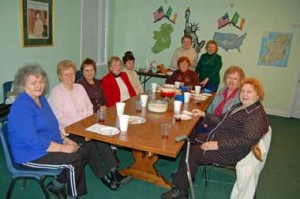
The Wednesday lunch bunch at the Irish Immigration and Pastoral Center.

The Wednesday lunch bunch at the Irish Immigration and Pastoral Center.

When Tom Conaghan came to the United States from Doorin, County Donegal, in 1972, the path to the coveted Green Card—the legal document that permits immigrants lawful permanent residence in the U.S.—was amazingly short. “I arrived in July,” he says, “and I had my Green Card by October.”

Today, he says, the same process can be arduously long—12 years or longer, and with nothing like a guarantee of a Green Card at the end.

Conaghan is executive director of the Irish Immigration and Pastoral Center, a small but vibrant organization headquartered in a welcoming, home-like property at 7 South Cedar Lane in Upper Darby, just off West Chester Pike. Since 1998, the center has provided counseling—and often a shoulder to lean or cry on—to immigrants who want nothing more than to set down roots in the Delaware Valley and make an honest living.

The center is also a central gathering place for the Irish who’ve been in the Delaware Valley for years. On the day I dropped by, a gaggle of local ladies had assembled for their weekly luncheon. Close your eyes, listen to all the accents, and you could be in Donegal or Antrim.

The sideboard threatens to collapse under the weight of all the cakes and sweets, some of them store-bought, but others deliciously homemade. There’s also a large bowl of trifle—and a little bottle of something the ladies refer to as “altar wine” is making the rounds. They offer some in a paper cup. It would be impolite to refuse.

One of the ladies—Annabelle Manly, with curly red hair—is from a town called Dunamanagh, in County Tyrone. It sounds like she just got off the boat, but she has actually been in the Delaware Valley since 1950. Her story is typical of so many who came to the United States.

“I came here in 1950, December 6, through Ellis Island before it closed, on the S.S. America,” she says. “My name is on that wall (at Ellis Island). I’m a very historic person.”

Like so many Irish newcomers, Manly’s transition into American society was eased by the presence of a large and welcoming Irish community, a good many of them from the North. She roomed with other Irish girls in a place at 48th & Baltimore. She met the man who would become her husband, William, at the Horn & Hardart’s where she worked. “He had just come out of the Air Force,” she recalls. “He had dropped by to meet his buddy, who was the manager. He was in his uniform.”

They were married in 1953 at St. Francis de Sales Church at 46th and Springfield. In due course, Manly became a citizen. “Back then,” she says, “you had to wait three years to become one.”

Today, that sounds like an immigrant’s dream come true. But that was a different time—and a different America.

The mission of the Immigration Center began with the passage of the Illegal Immigration Reform and Immigrant Responsibility Act of 1996. From Conaghan’s perspective, “the Illegal Immigration Act literally took away every bridge and road the Irish had once crossed into legal residence in the United States.”

Conaghan and colleagues were also deeply motivated by the May 18, 1998, raid by agents of the Immigration and Naturalization Service on the Irish Coffee Shop on West Chester Pike in Upper Darby. News reports at the time (Irish Voice, June 2, 1998) suggest that INS agents rounded up two, and possibly three, undocumented Irish citizens.

Conaghan’s recollection is different. The entire event had been shrouded in secrecy, but the Federation of Irish American Societies learned through overseas sources that the agents had actually picked up, jailed and deported five Irish young people—including one young woman from his home town.

“Those five young people were deported and were missing and the established Irish community in Philadelphia didn’t even know what had happened, except for a few people who were directly involved, like the guy who owned the coffee shop,” Conaghan says. “He suffered fines, as well.

“The young girl, who was 17, from my home town, was deported two and half weeks later in the same clothes she was wearing when she was arrested. She was terrified and still suffers anxiety.”

Years later, Conaghan and the employees and 40 volunteers of the Immigration and Pastoral Center continue to draw inspiration from this incident. To them, the question is not whether undocumented immigrants overstay their welcome (up to six years on a work visa). They don’t dispute that many Irish citizens have, in effect, broken the rules. However, they argue that the undocumented are victims of a system that has grown to be so muddled, complicated and expensive as to make the path to legal residence nearly impossible for all but the most determined.

Immigrants often are victims of a double whammy, he adds. That is, their work visas, which allow them temporary residence in the U.S., expire long before their applications for a Green Card are approved. (Nearly half of all those the INS regards as illegal are what are called “visa overstays,” according to the Washington-based Pew Hispanic Center.) “And maybe, in the meantime, that person has started a family and there are children involved,” Conaghan says. “It’s a condition created by a bureaucracy, and it shouldn’t happen.”

Many Irish caught up in this bind exist in a kind of shadow world—often gainfully employed, even paying federal income taxes, but always living in fear of being picked up and deported. And there’s worse—they’re trapped here, unable to return to Ireland even to attend the funeral of a loved one, for fear of betraying their status and being barred re-entry to the United States.

“I know of one woman whose father died,” Conaghan says. “She was the only sister of the family, with seven brothers. She didn’t go home for her father’s funeral. Four years later, she walked in here one day, and she told me her mother was sick. She started to cry, and I cried with her. Her mother died, and she couldn’t go back.

“That woman has teen-age children now. Her husband is also undocumented. Unless there’s an immigration bill passed or some kind of comprehensive reform, the only hope that she has is that her oldest child, when he becomes 21, can sponsor her—but that’s three years away. In the meantime, she and her husband could be picked up and deported.”

The shame of it all, he says, is that so many young Irish citizens want to come to the United States. In his day, he says, leaving Ireland was a decision borne of necessity. Now it’s a matter of choice. So the Irish people who want to take up legal residence here are well-educated, potential assets to the United States. But they won’t come, he says, “because they’re afraid they’re going to be arrested.”

This, he says, is tragic on many levels, but especially because the Irish community in the United States, which has contributed so substantially to the life of this country, could be endangered. “Given our historic contribution to this country, the number of Irish who are let in here is a disgrace.”

To address these issues, the Immigration and Pastoral Center offers a wide range of services, including assisting those who are eligible for Green Cards, as well as rendering aid and comfort to those who live in the shadows. There are many other ancillary services. For example, Center staffers and volunteers visit prisoners. They run workshops. They assist with work authorization renewals and they provide a wide range of social services. (On a lighter note, the center also sponsors the local Rose of Tralee festival.)

Although mostly Irish immigrants avail themselves of the center’s services, Conaghan says the Immigration and Pastoral Center maintains good relations with other immigrant groups, including a local Spanish mission. Additionally, the center provides its services to any immigrant who needs it, regardless of national origin. (On the day I visited, one staff member took a phone call from an Indian woman who had just moved from New York City to Philadelphia.)

Those services are provided, he says, courtesy of donations from the Delaware Valley Irish community and from the Irish government. The center accepts no government support. That level of independence is important, Conaghan says. “Money is not our God. We do have a God, but the God that we believe in is the God that will deliver the freedom our people deserve in the desert,” Conaghan says. “We’ve been wandering in the desert for too long.”

Over the years, the Irish Immigration and Pastoral Center has helped thousands of Irish immigrants. The center has also become a cozy gathering place for those long established in the Delaware Valley.

On Sunday, March 16, the center will celebrate its 10th anniversary of service to the Irish community with an Immigrant Reunion at the Philadelphia Irish Center, Carpenter and Emlen Streets, in the Mount Airy section of Philadelphia. Magician and balloon artist John Cassidy will be on hand to entertain the kids. Music will be provided by Mary Beth Ryan and Friends and D.J. Seamus McGroary. Food will be available from Mickey Kavanaugh Caters.

The fee is $25 for adults; there is no charge for kids. For details, contact the center at (610) 789-6355.

News

Mount Holly Celebrates St. Patrick’s Day

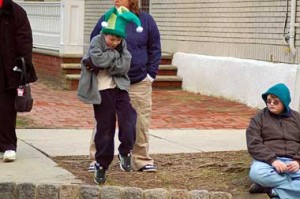
He can't stop dancin'.

He can't stop dancin'.

The folks who run the Burlington County St. Patrick’s Parade can breathe a sigh of relief: The 2008 parade is history, and it went off without a hitch.

Was it fun? It always is. But this is the first year I can recall running into Ian, a kid who just can’t stay still when there’s a tune playing.

Saturday afternoon in Mount Holly, there was almost always music as pipe bands seemed to march by about every five minutes. Local shamrock ‘n roll groups on floats played from one end of High Street to the other.

Consequently, Ian was almost always in motion, his feet a blur. If he’s any indication, the Mount Holly parade was a roaring success.

Check out our photos (lots of ‘em) and video—including crazy legs Ian.

Genealogy

The Lazy Person’s Guide to Genealogy

I like to say that I compiled my family tree without ever leaving my chair. Not quite true, but close. I’ve been extraordinarily lucky using the Web to find my ancestors, and not because I’ve become some genealogical e-virtuoso.

As my Aunt Mary used to say about catching a husband, “You have to put yourself out there.” I put myself out there and was rewarded richly: Using clues I found on the Web, I connected to a cousin I didn’t know I had, and her research led me to relatives in Ireland. Then, after several years of relentless posting on site after site, I heard from an in-law of a distant cousin who had already done what I was trying to do: traced my Foley ancestors back to the early 1800s in Newfoundland, Canada.

When I first hooked up to the Internet back in the mid-90s, one of the first things I did was start posting as much information as I had on both sides of my family on every genealogical site I could find. I decided to focus on the Hearys, my mother’s Philadelphia family, because I knew more about them and thought the unusual name might attract attention. I was right.

One day, shortly after my first round of posting, I got an e-mail from a woman in North Jersey who wondered if the Cornelius Heary mentioned in a 1955 note to her grandmother from her grandmother’s uncle, John McDevitt, might be one of my Hearys. I was shaking with excitement as I typed my reply, “That’s my grandfather!”

As it turned out, our great-grandparents were siblings. Her great-grandfather was William McDevitt, and my great-grandmother was his sister, Mary McDevitt Heary. Fortunately for me, her family was more sentimental than mine—they actually kept things like photos and family documents—so she had her great-grandfather’s baptismal certificate that listed the place where he was baptized (Culdaff, County Donegal) and his parents’ names, Cornelius and Grace McDaid (the alternate spelling of McDevitt).

Another Internet find—a woman who sent me photos of all the McDaid graves in a churchyard near the town—suggested that there were family members still living in the Culdaff area. One picture showed fresh flowers on the grave of Edward McDaid, another of my great-grandmother’s siblings.

I knew the rest of the story wasn’t going to come to me over the Internet. In 2000, to celebrate a big birthday (mine), my husband, 13-year-old son, and I went to Culdaff, on the Inishowen Peninsula. It didn’t take a lot of legwork—just asking some questions at the local post office the night we arrived—and I located my great-grandmother’s niece, Grace McDaid Doherty, who was living in the same house where my great-great grandparents raised their nine children.

Though it sounds effortless, my family search took many years and some creative Googling. And it hasn’t always been fruitful. I still haven’t been able to trace my Heary ancestors back to Ireland—though, thanks to a directory I found on Ancestry.com, I know my great-grandfather Matthew operated a bakery on Haines Street in Germantown in the 1890s. And while my Canadian cousin’s wonderful sister-in-law traced the Foleys back to the early 1800s, I don’t know where in Ireland they came from either. But thanks to some persistent Canadian transcribers who have been posting birth, marriage, and death records online for years, I do know that my great-great grandfather Michael died a centenarian (a really big birthday!) I’ve even been offered a house to stay in if I ever get back to Newfoundland—by a total stranger from the Midwest who bought the house from one of my cousins. I met him … on the internet.

The Web is a great place to take your second step towards uncovering your roots. (Your first is to pry every last bit of information out of your family members). Though there will always be legwork, if you’re as lucky as I was, you might connect to a long-lost cousin in a far-off place who is waaaay ahead of you.

Best Web Resources

www.corkancestors.com

Pop on Over to This Cork Resource

Here’s a real find if your people are from Cork: city directories from the 1700s, names and photos of Corkmen in World War I and at Gallipoli, a list of surnames from the Presbyterian Meeting House, and transcriptions as well as actual clips from local newspapers, all lovingly preserved by the generous Jean Prendergast. Made me wish that Pearce Foley, ostrich and fancy feather maker, on Fish-Shamble-Lane, was one of mine. If your family is from Cork, this is a must-see. There are some wonderful etchings reproduced on the site that give you a flavor of the past and a gripping account—from the actual newspaper—of the Fenian uprising in Cork in 1866-67. With names!

www.ulsterancestry.com

Is Your Family From Ulster?

They are if they come from the counties of Antrim, Armagh, Cavan, Donegal, Down, Fermanagh, Londonderry, Monaghan, or Tyrone (six of those in Northern Ireland, three part of the Republic). And, unless your family emigrated from Cavan and Monaghan, you might find some great information at this site—everything from a list of 18th century “vagabonds” to passenger lists of ships headed for Philadelphia and elsewhere in the US. Some of the records are quite old—from the early 1600s, God bless those transcribers. If you find anything pertinent that old you surely have the luck of the Irish because most records stop somewhere mid-19th century.

One must-see: the Irish surnames lists where you can learn, for example, that the name “Bunyan,” as in Paul, comes from Bunnon, which in turn derives from a word meaning “lump of dough.” Generally that referred to an occupation (in this case, baker), not a person’s general temperament or appearance. If you’re a Bell—a common name in Tyrone—you can feel proud that you were part of “an uruly clan” driven out of its Scottish border home by James I. There’s also a great list of Irish family names from the 1600s which includes non-Ulster names as well. Click on “Old Irish Names History” and translate your name into old Irish. Foley, for example, is either O’Fodhladha or O’Fuala. I’ve heard it pronounced “Fow-loo.”

Other freebies worth grabbing: Ulster maps and Irish e-cards. There’s also a free newsletter, genealogy forum, and a great piece on Ulster-Scots who emigrated to Pennsylvania. For a fee (from about $52 to $315), Ulster Ancestry will search the records for your family and produce a report. You can also buy certain records, such as marriage, birth, and death certificates, and the usual tithe and valuations books. But you need accurate information: They won’t do “wild card” searches.

Death, Where Is Thy Record?

If you’re just starting to track down your ancestors, as one of your first stops you’ll want to visit the Social Security Death Index. One of the better search engines is on Rootsweb. You’ll be poking through more than 75 million records, and that’s just for people who died since 1962. It’s a good place to find birth and death dates, maiden names, where your ancestor lived when he got his Social Security card, where he lived when he died (both of these residences are listed by zipcode), and where his lump sum benefit (for burial) was sent. If you find something, it’s a great site. But it can be frustrating: Not everyone is listed, even those who had Social Security numbers and died after 1962. Rootsweb has a great tutorial for newbies. Check it out before you check out the index.

Roots.Net Cousin Calculator

First Cousin, Twice Removed … from Where?

Possibly the most confusing thing about ancestor-hunting is figuring out how you’re related to your great-great grandmother’s granddaughter. (I mean, if she’s not your grandmother.) Most cousin charts are too much like the math portion of the SATs for me. But I found one I like (and can understand). You can actually download it so you can use it when you need to know how you and your great grand-uncle Eddie’s daughter are related. You just type in your common ancestor, list the daughter’s relationship to the ancestor, and then your relationship: Et voilà! Discover that she’s your first cousin, twice removed—a blood relative, but not so close you could give her a kidney if she needed it.

U.S. Railroad Retirement Board

Got the Disappearing Railroad Worker Blues?

If your ancestor worked for the railroad after 1936 and covered under the Railroad Retirement Act, you may be able to find out more about them from the U.S. Railroad Retirement Board. It helps if you know your ancestor’s Social Security number, but it’s not necessary. You should have the full name, including middle name or initial, and complete dates of birth and death. For a nonrefundable fee of $27, the RBR will search its records.

www.familysearch.org/

The Church of Jesus Christ of Latter Day Saints—you know them as the Mormons—have what may be the largest collection of free records available in the US today. They operate hundreds of Family History Centers throughout the country where you can look at records, most of them on microfilm. Their interest in ancestor hunting is, well, a kind of post-mortem proselytizing (they explain it on the site), but even if you don’t want your great-great-grandmother to be a Mormon, you can benefit from their work. Type in your ancestor’s name on the home page form and it will take you to all sorts of records. Confused? The little lady at the bottom of the site home page asks you to click on her link—she’s your research assistant who will guide you through the search.

You can find your local FHS here, talk to other ancestor hunters, and download free geneaology software. Their geneaology primers are first rate. They even have Canadian records. I’ve used the Philadelphia FHS for research and found the volunteers extremely helpful and knowledgeable. If they don’t have the records you want in the office, they’ll get them for you. And there are always other, more savvy amateur genealogists there to help you out if you’re a newbie.The Philly office is located at 2076 Red Lion Road. Phone: (215) 673-2770. It’s not a 9-to-5 kind of place. At this writing, hours are Wednesday, 9 a.m. to 3 p.m.; Thursday 6 p.m. to 9 p.m., and Saturday, 9 a.m. to 2 pm. Call first to make sure the hours haven’t changed.

Genuki

Contains a “virtual reference library” of information to help you get started digging up your Irish family roots. You probably won’t find your ancestors anywhere on this site, but you’ll get most of the information you need to start making connections.

Rootsweb and Rootsweb Mailing Lists

Rootsweb is an invaluable resource in your search. Many a match has been made on Rootsweb mailing lists (click on the second URL). Trust me, you could find a cousin. I did. The lists are both general and unbelievably specific. For example, if your ancestor was a coal miner, as was my husband’s, you can find a mailing list for miners’ descendants. There’s a list for cemetery groupies (actually very helpful, since many of them transcribe headstones and share their information), convicts, specific Irish counties and cities, and American locales, including Philadelphia. Rootsweb also has surname mailing lists, so you can connect to all the enquiring Rooneys or McDevitts out there. And don’t forget to post, post, post. Rootsweb has message boards for surnames, states, counties, and countries.

Cyndi’s List

A few years ago, Cyndi Howell started building a Web page of genealogy resources and today there are more than a quarter million links on what may be the largest one-stop shopping site for amateur genealogists on the Web. The Ireland section is vast, with 1,869 links. Through this portal, I found what may be my great-great-great grandfather listed in a tithe applotment (a kind of tax on farmland) book for Culdaff, County Donegal, in 1829, eliminating my need to visit the National Archives in Dublin for the information.

US GenWeb

Maintained by a great group of volunteers dedicated to keeping genealogy free on the Web (frequently it isn’t), this site provides free sites for every county and state in the U.S. This is where you go when you want to find, say, your great-Aunt Agnes’s obituary from Carbon County.

Access Genealogy

While I couldn’t find anything about my family here, largely because of the eclectic nature of the information, you can download free genealogy and family tree charts, a research log, a family group chart so you can organize the information you find here or, more likely, elsewhere.

Ancestry

For serious chair-bound genealogy buffs only: It costs anywhere from $14.95 to $34.95 a month to access most of the databases on this site, which also owns the freebie site, rootsweb.com. It’s worth it if you root around in your very spare, spare time and can’t do the legwork—check the archives, go to the Family History Center, spend a few days in the library—you need to get the kind of information you want. I found access to city directories helpful, though they’re located at the Philadelphia City Archives.

Ellis Island Foundation

If your family arrived via ship at Ellis Island in 1892 or thereafter, you may be able to find a record at this site. The first passenger registered through the immigration station when it opened January 1, 1892, was a 14-year-old Irish girl, Annie Moore, who had traveled from Queenstown, County Cork, with her two brothers, to reunite with their parents who were already living in New York. I found my great-great Uncle John on this site—the record gave me his age and his occupation (laborer) when he arrived in 1897. For a fee, you can also order a copy of the ship’s log where your ancestor appears.

Philadelphia City Archives

Do yourself a favor. Check out this guide to the Philadelphia archives before you get into your car to drive downtown. Depending on where and when your ancestor was born, married, bought or sold a house, was naturalized, lived in Philadelphia, and died, the records may be at the Archives at 3101 Market Street (Suite 150) or available in another office or by mail from the state. This site will help you figure that out.

Pennsylvania State Archives

A number of military records are searchable online (if you’re looking for the elusive Spanish-American war vet or World War I medal winner). So far the state has posted about 1.5 million records and there are more to come. This is also where to find out how to get state records (not to mention what records the state holds). It’s important to explore this site when looking for your Pennsy ancestors. Some records, such as birth and death certificates, are held in different places, depending on dates. For example, if your ancestor was born or died between 1893 and 1906, those records are at their county courthouse (a hot link on the site will take you to addresses and phone numbers for every county courthouse in the state). Records from 1906 and afterwards are available from the state’s division of vital records (you’ll learn how to contact them on the site).

National Archives, Regional

The Web site of the Philadelphia regional branch of the National Archives will provide you with information on periodic workshops, including some on Irish genealogy, that are available for free (though a donation is a nice idea). The site isn’t searchable, but will tell you what federal records are available (such as censuses, ship passenger lists, naturalizations, military information etc) and how to access them. To view some records, you need to register as a NARA researcher, which isn’t a big deal. Read the FAQs on the site and check the hours before you head down there.

19th Century Immigrant Roots: Record for Wilmington, DE, USA, and Vicinity

A real find for those whose ancestors lived in Delaware or nearby. More than 30 volunteer transcribers have posted Catholic sacramental records, city directories, census reports, gravestone inscriptions, passenger lists for ships arriving from Londonderry into New Castle in the years 1831-1841—and much, much more. You’ll also find ship passenger lists from 1846-1851 from Galway to New York, the Griffiths Valuation of Tenements in Ireland 1855-185, and the 1901 Census of Ireland returns. And they’re still transcribing! The Catholic Diocese of Wilmington (and its archivist Donn Devine) worked with the Wilmington Irish group to provide such genealogical bounty.

Delaware Public Archives

You can search probate records and a limited number of naturalizations online (they’re listed alphabetically), as well as use the search engine to find out what records are available and, best of all, how and where to get them.

Under “Services,” click on “Public/Finding Aids” and go to it. DAP also holds workshops to help you find your way through the confusing world of ancestor tracing. Check the events calendar frequently and read the FAQs.

The Genealogical Society of New Jersey

Call them the Tombstone Raiders. This group was started in the 1920s as a regular “tombstone hunt” among Jersey’s graveyards. Nothing ghoulish—just genealogy. It’s still an active group, but now they’ve put their focus on education. There are two lecture series coming up. “Exploring Your New Jersey Roots III,” co-sponsored with the New Jersey State Archives, will run every Wednesday from April 26 to May 24, 2006. The all-day 2006 Spring Genealogical Program, also co-sponsored with the New Jersey State Archives, is on Saturday, June 3, 2006, at New Jersey State Museum Auditorium, 225 West State Street, Trenton, NJ. The Web site contains a list of the substantial number of records the society holds. They are being housed at the Alexander Library, 169 College Avenue, Rutgers University, New Brunswick, N.J. You can also find a professional genealogist on the site.

The New Jersey State Archives

Like most archive Web sites, this one will tell you what state records are available—and how to get them. It’s about to go searchable with marriages (1848-1867), Civil War payment vouchers (1861-1866); East Jersey Proprietors Loose Surveys (1786-1951) and name-change judgments (1876-1947). Stay tuned! In the meantime, for a fee, you can have a state employee do a search for you from certain records.

National Archives of Ireland

This is your Web portal to Ireland’s National Archives. While it’s not searchable, it’s vital to read before you travel to Ireland to do your digging. You can find out, for instance, what Tithe Applotment books are and why they’re so important to you. (Hint: because of the dearth of old records in Ireland, they may be the only place you’ll find your pre-1840s ancestors.)

Directory of Irish Genealogy

An online Directory of Irish Genealogy is a valuable tool for family history newbies, full of basic information you need to know before you start your search.

Newfoundland’s Grand Banks Genealogy Site

This is the extraordinary Newfoundland’s Grand Banks Genealogy Site which has some of the most elaborate free records available on the Web, from cemetery headstones (with pictures) to voters’ lists. If your Irish ancestors came to Philly via Newfoundland, as mine did, you’re sure to find some record of them here.

Donegal Genealogical Resources

These pages on Rootsweb are the work of New Zealander Lindel Buckley who is a tireless and remarkably generous amateur genealogist who has transcribed and posted dozens and dozens of records from around this county, where many Philadelphians can trace their roots. There is no better resource on Donegal than this one.

County Mayo Genealogy

Another Irish county that donated many of its able-bodied to Philadelphia, Mayo is covered from A to Z on this free Web site which contains a surname registry as well as church, land, civil and census records. It is updated monthly.

Sports

Nurturing the Future of Gaelic Football

By Paul Schneider

Whether he’s running his thriving landscaping business or playing Gaelic football, Dan Clark knows a thing or two about planting seeds, nurturing them and watching them grow into something special.

Clark, the Player of the Year on the Kevin Barrys team that captured the Intermediate title at the North American Gaelic Athletic Association Championships in Chicago last year, is getting ready for another season of helping things to take root. 

In customers’ yards, there are trees that will be planted, lawns that will be revived and paths that will be built.  In East Falls, where the Kevin Barrys work out indoors before moving to the Roxborough High field in the spring, things aren’t much different.  It’s in East Falls that the Barrys’ side is planting the seeds for their upcoming title defense, and where people like Clark are nurturing the future of Gaelic football in the United States. 

“I don’t know where to start,” he said earlier this winter.  “I was about 20 or 21 years old when I started watching the game.  There was something about it that was special.  I loved the way all the Irish guys take the game so seriously.  It kind of caught on and I just kept going with it.”

The game has been a perfect addition to Clark’s sports resume, which reads like the menu at an athletic all-you-can-eat buffet.  Played soccer until he was 15.  Junior high and ninth grade football at Hatboro-Horsham High.   Baseball for a year at East Stroudsburg University, after which he focused increasingly on academics.

In retrospect, graduating with a degree in Criminal Justice was the easy part.  Finding a job was far tougher.  Clark took “hundreds” of test for law enforcement-related positions.  “There were hundreds of people taking every test,” he notes.  “And they were only hiring one guy.”

With a loan from girlfriend Caroline Heedles’ father, Clark founded Clark’s Precision Landscaping in Horsham.  He bought some equipment, and 15 customers from another contractor.  Today he has more equipment.  And more than 100 customers.

Somewhere along the way, Clark has time to play as a receiver in rough touch American football leagues in the Eastern Montgomery County area, and periodically shows up on the field in soccer matches in Pennypack Park at the request of Barrys goaltender Benny Landers.  Gaelic football, he says, is something that keeps him “busy in the summer.”  Go figure.

“I like the competitive nature of it,” the 26-year-old Clark says.  “Every year I go out just to have a good time and see how things go.  I think it’s something I’ll be doing until I stop having fun, or my legs hurt too badly to play anymore.”