Columns, How to Be Irish in Philly

How to Be Irish in Philly This Week

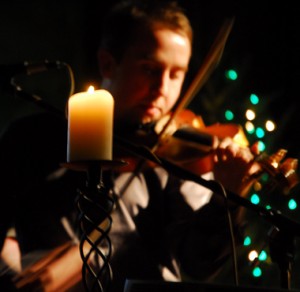
Oisin Mac Diarmada of Teada at last year's "Irish Christmas in America" show at the Irish Center.

Oisin Mac Diarmada of Teada at last year's "Irish Christmas in America" show at the Irish Center.

Snow or no snow, we’re knee deep in Christmas season. This is how we know:

Teada, Matt and Shannon Heaton, and tenor Michael Londra are bringing their Christmas shows to the area in the next few days.

Teada’s “Irish Christmas in America” with Seamus Begley and dancer Brian Cunningham (and local musician Sean Earnest on guitar!) will be at Penn on Friday night. We hear through the grapevine that they might be on the prowl for a session afterwards so if someone wants to direct them to the appropriate pub. . . .

Two wonderful singer-musicians from the Boston area, Shannon and Matt Heaton, will perform at Godfrey Daniels in Bethlehem on Friday night and at Trinity Church in Swarthmore on Saturday.

Michael Londra, who makes the angels sound like a neighborhood choir, will be at Sellersville Theatre on Tuesday, surrounded by Irish musicians and dancers.

On Sunday evening, St. Thomas Church in Whitemarsh will hold a Celtic worship service.

On Sunday afternoon, the Mayo and Donegal Associations are holding their Christmas parties at the Irish Center with arts and crafts and face painting and a visit from Santa for the kids and some vendors for the grownups. A special holiday mass will be said at 4 PM, prepared by Sister James Ann and celebrated by Father Ed Brady of Quakertown. Dinner will be available for purchase. The Mayo Association is collecting donations for Project Rainbow, for homeless and abused women and their families.

Also on Sunday, The Irish Club of Delaware County has its monthly meeting scheduled. Good Deed Doer alert: This club is conducting a gift drive this holiday season to benefit an Irish family in need. They’re accepting any unwrapped gifts, gift cards, toys, or clothing gift cards. They’ve roped Santa into helping them deliver the gifts—after all, he has the experience.

You can drop off your donations at two places:

The Irish Immigration Center
7 South Cedar Lane
Upper Darby, Pa

Knights of Columbus
18 Baltimore Pike
Springfield, PA

Looking for a good Christmas gift for a first-year Irish language student? On Sunday, Penn Professor Rosalyn Blyn-LaDrew will be autographing her new text, “Colloquial Irish,” at Catherine Rooney’s in Wilmington, DE.

Don’t forget to patronize your local Irish gift shop, pub, restaurant, and event. Shop Irish!

Music

Michael Londra: Late Bloomer, Rising Star

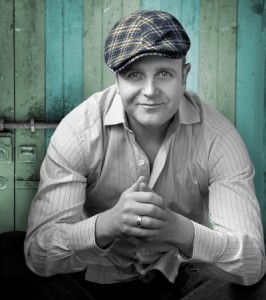
Michael Londra

Michael Londra

Michael Londra never really had a chance. He grew up in Wexford, home of the Wexford Opera Festival and the Wexford Opera House. Singing was going to be his life whether he liked it or not.

“I kind of grew up singing,” says the tenor, who is bringing his Christmas show, “Celtic Yuletide,” along with his new holiday CD, “Beyond the Star,” to the Sellersville Theatre on December 15. “Wexford is such a big opera town that there’s now a culture of singing and I come from one of the singing families. I always sang, whether I wanted to or not. It was forced upon me.”

But he didn’t become a professional singer until he was 31, “after my friends staged an intervention,” he jokes, as we chat on the phone. “I never believed I could earn a living as a singer. Irish people tend not to believe in themselves so I needed the encouragement.”

His first career: a behavioral therapist, working with teens in trouble. He concedes that it might have been good training for show business. “Though you’re dealing with different types of behavior, equally socially unacceptable.”

Once you’ve heard him sing, you’ll wonder, as his friends likely did, why he was hiding that particular light; it shines so bright. One reviewer called him “one of the top Irish singers of our time.” Another, referring to counter-tenor Londra’s ability to hit notes so high he’d leave some mezzo-sopranos in the dust, wrote: “When he hits the high notes on ‘The Wexford Carol,’ make sure your good holiday champagne glasses don’t shatter, as he puts castrati to further shame.”

When “Riverdance” composer Bill Whelan heard Londra in a musical about John F. Kennedy (he played RFK and claims to do a more than passing “full-on posh” Boston accent), he offered him the lead role in the Broadway production of the “Riverdance,” the high-profile play that turned Irish music and dance into a modern-day phenomenon.

In 2005, Londra recorded his first CD, “Celt,” a five-star favorite on www.amazon.com. The first track—“Danny Boy”—was another of those things he had to be talked into. “I really didn’t want to record it,” he says. “It’s been done to death, murdered by bad cabaret singers all over the world. But it came out very nice.”

So nice that the Irish Emigrant newspaper called it “one of the best recordings of Danny Boy in history,” and two million people have listened to it on YouTube.

Like “Celt,” Londra’s Christmas recording combines old and traditional tunes with more contemporary and some original songs, like the eponymous “Beyond the Star.” It wasn’t something that had to be forced on him. “I love singing the old Christmas songs, though I recorded it in New York over the summer. You can’t imaging what it’s like singing Christmas carols in 100 degree weather in July,” he says laughing.

His producer is Steve Skinner, who co-produced the Grammy-nominated soundtrack for “Rent,” and works with Celine Dion and Bette Midler. “I’ve been very blessed to be able to work with him,” Londra says. “In 2001, I knocked on his door and said, ‘I’d like to work with you,’ and he laughed at me and told me to get in line. But I was persistent. He heard me sing and finally said, ‘OK.’ I sang at his wedding so I’m a part of the family whether he likes it or not.”

When you get Michael Londra you also get what he calls “the core of my being,” the Irish charity “Concern Worldwide.” Part of the proceeds from his Christmas album will go to helping the people of La Gonave, a small island off the coast of Haiti and an hour and a half away from Miami, where there is little vegetation, no electricity or clean water, and 100,000 people living in abject poverty. He’s been there five times and with the Christmas CD, there’s a DVD of one of his visits.

“I’m not Bono. I’m not going to raise millions,” he says. “But I have to do something. This is our next door neighbor, and it makes me so angry.”

When he says “our,” he’s referring to the US, where he now lives (in Chicago “which I absolutely love—when I’m there.”) It’s rare, he says, for Wexford people to emigrate. “I’m the only one of my family and school friends who has,” he notes. “I was talking to Larry Kirwan of Black 47 [a New York-based Irish hard rock band] who is also from Wexford and we decided we were the only two people from Wexford living in the States.”

Though they’re friendly, don’t expect Londra to be performing with Black 47 any time soon. You can imagine his blue eyes twinkling as he observes that it would be like “AC/DC and Clay Aiken singing together.”

You’d be better off catching Londra with the group of Irish musicians and dancers he’s bringing to the state in Sellersville on Tuesday, December 15. The show starts at 8 PM and tickets are $35 which you can order by calling 215-257-5808 or on the theater website.

And if you sign up for our weekly newsletter, Mick Mail, or pass your latest issue on to someone else, you’ll be entered in a contest to win two free tickets to Michael’s show.

You next chance to hear him is on Christmas Day on Fox 29–he’s heading down there on Monday to appear on a show called “Christmas Glee.”

News, People

A Worship Service With Celtic Atmosphere

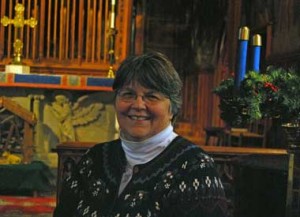
Cynthia DeDakis, minister of music at St. Thomas.

Cynthia DeDakis, minister of music at St. Thomas.

Scratch the surface of any one of us Celts, and underneath you might find a pagan.

Many of those who are card-carrying Christians now are descended from an ancient people who looked for the sacred in the natural world. They plumbed the depths of mysticism. Fire was their friend.

Of course, we’ve come a long way since then. Our beliefs have matured. But for those of us whose people came from Ireland, Scotland, Wales and Brittany, the old beliefs—or more likely, the trappings of the old beliefs—still hold some appeal.

If Celtic spirituality speaks to your inner Celt, you might find a comfortable home at St. Thomas’s Church in Whitemarsh, where Celtic worship services are held monthly through March.

Cynthia DeDakis, minister of music at the elegant old Episcopal church at Bethlehem Pike and Church Road, isn’t surprised that Celtic spirituality continues to appeal to many of us.

“The earliest flowering of Christianity in the Celtic countries was very much adapted,” she notes. “The Christians who came in to evangelize where there had been pagan religions before used a lot of the forms and sensibilities of the pagan religions. There’s a close connection with nature and seeing all nature as sacred. I think it appeals to people for a number of reasons, and that’s one. I think Celtic culture is attuned to feeling more connected to the earth. We do try to emphasize that to a certain amount.”

In all the liturgically important respects, the service is Christian. There’s an opening prayer, a reading from Scripture, a homily and a Eucharist. Where does the “Celtic” come in? Many of the prayers come from Celtic sources, some of them ancient, but it’s really more in the atmosphere.

First, there’s the music—near and dear to this classically trained musician, who also plays hammer dulcimer. “Last year, and the first two services this year, we’ve been using harp,” DeDakis says. “I try the best I can to use legitimate Celtic music in the services. People really appreciate and enjoy that style of music. I’ve been working on adapting it somewhat and trying to make it more truly Celtic. It’s a work in progress.”

There’s candlelight. And there are long stretches of silence and reflection. It’s an earthier, less structured occasion of prayer. That’s what the folks at St. Thomas are going for. They’ve been at it since 2005.

“There’s a kind of spirituality that moves into the mystic when you bring in the candles, silence and simple, quiet music,” DeDakis says. “It’s not as demanding in terms of participation. People tend to spread out. We are hoping to build the service and draw people who don’t come to St. Thomas on a regular basis but who are looking to find something like this that feeds them spiritually.”

There’s a Celtic worship service at St. Thomas this Sunday at 5:30—look for it to have a special Christmas theme—and once each month through March. (Consult our calendar.) And if you’d like to go beyond merely attending, DeDakis is on the lookout for traditional musicians who might want to help set the tone. Contact DeDakis by e-mail at cdedakis@stthomaswhitemarsh.org.

Music

Musical Forecast: A Wintry Mix to Start the Holiday Season

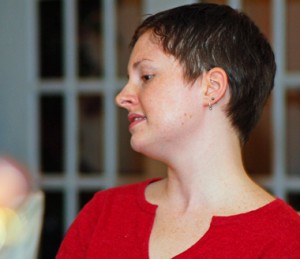
Marian Makins, singing at the monthly Singer's Circle at the Irish Center.

Marian Makins, singing at the monthly Singer's Circle at the Irish Center.

The first time I heard Marian Makins sing was at singer’s night at the Philadelphia Ceili Group’s annual Irish music festival. This slim young woman with a cap of close-cropped dark hair came up from the audience, took the stage, and launched into one of those great, deedle-sum Celtic songs that make you tap your feet and deedle-dum a little yourself about midway through the tune.

She has a voice that seems to have been predestined to sing Gaelic songs. (One listener described it as “a voice that could melt packed ice.”) But Makins, who will be performing with guitarist Gabriel Donohue and Caitlin Warbelow on Sunday at the Irish Center in a show called “Once Upon a Winter’s Night,” didn’t come by it naturally.

She’s only tangentially Irish: Her Scottish ancestors spent several generations in County Donegal and she’s English and Welsh as well. She didn’t grow up hearing Gaelic—either the Scottish or Irish variety—and her background is in the classics, not jigs and reels.

But she’s always been a singer. The DC-born Makins, currently a grad student in classical studies at Penn, sang in the chorus in high school ( hello, “Glee”!) and as part of a small concert chorale group whose director had perfect pitch. “Imagine singing for him. Anyone is even slightly off and he’s in pain. But he was so good and so demanding that I learned so much,” she says. She was also a member of the Columbia University Glee Club and did a little recording while in college (background vocals for a fake group with a real album called Kill Lizzy, a Christian hip-hop album that was never released, and a demo for an Applebee’s commercial).

“That all happened because I was dating a music producer,” she confesses with a laugh. “but he is really talented and is now working with Dionne Warwick.”

The Celtic music happened because a friend dragged her to three sessions in New York—all in one night—culminating in the Tony DeMarco jam at the 11th Street Bar. DeMarco’s fractional Irishness (both sides of his family are Irish-Italian) translates into stylish and authentic Sligo fiddle playing and he’s considered one of the finest folk fiddlers in the country.

“That’s where I met Gabriel Donohue,” says Makins. “We walked into the 11th Street Bar and Tony introduced me to this guitar player and he said, ‘I hear you’re a great singer, what do you sing?’”

She named one of the handful of tunes she sings in Gaelic (she does songs in both Irish and Scot’s Gaelic, though she doesn’t speak “this beautiful, strange language”). “And he says, ‘Oh, this one, and starts playing and I had to start singing. I didn’t even have my coat off. When the song was over, Tony said, ‘Gabe, let her get her coat off and get her a drink.’ We became friends and decided to work together.”

Donohue, who is Irish-born but now lives in North Jersey, has played both guitar and piano for the likes of Eileen Ivers, Cherish the Ladies, and the Chieftans, including six gigs at Carnegie Hall and one at the Clinton White House, celebrating the Good Friday Peace Accord. He introduced Makins to his friend, Caitlin Warbelow, who comes from Fairbanks, Alaska, and is a champion blue grass fiddler who is a regular at all the New York sessions.

“They invited me to sit in with them in some gigs during Irish Weekend in Wildwood this year,” Makins says, and the trio was born.

“I love how musically omnivorous they are,” she says. “They can both play in so many different styles. They’re very dynamic. They can both turn on a dime and it’s fun to see where they take things.”

Their concert this Sunday at the Irish Center will be, she promises, “a wintry mix,” a combination of winter-themed Irish traditional tunes, Christmas carols, Irish Christmas carols (get ready all you “Miss Fogarty’s Christmas Cake” fans) and then just some tunes they feel like singing. There’s a session afterwards, so musicians should bring their instruments and sit in.

Since the weather forecasters are also predicting a little “wintry mix” this weekend—possibly the first seasonal weather we’ve had for months—it sounds like a romantic and traditional way to start off the Celtic Christmas season.

Doors open at 4 PM and the concert starts at 5 PM. Tickets are $15 for adults, $5 for children.

Columns, How to Be Irish in Philly

How to Be Irish in Philly this Week

I’m about to get all Scrooge on you. This is the kind of week I hate. There are so many fabulous events and many of them are scheduled at the same time so you’re going to have to make some tough choices. Let’s coordinate, people!

Not a tough choice: Saturday, the third annual Peter J. Hanlon Memorial Jingle Bell Run in Philadelphia—it’s an Ancient Order of Hibernians fundraiser. As a rule, I don’t find road races all that exciting. And if you stand too close as the runners pass, you can sometimes get drenched in sweat yourself—and it’s not your own. But in this race, many of the competitors dress up as their favorite Christmas character, which means that occasionally someone dressed like Rudolph really wins by a nose.

But Sunday is a different story. Here’s what’s up:

Noon to 8 PM: The Mid-Winter Irish Festival thrown annually by Finnigan’s Wake in Philly, featuring Paddy’s Well, the Broken Shillelaghs (they’re getting so much work, you’d think they’d have themselves fixed) the Bare Knuckle Boxers (they play rather than fight), Irish dancers, food, and vendors, all for only $10 admission. Though technically this is the Late Autumn Irish Festival (winter doesn’t even start for a couple of weeks), we quibble. It’s important to remember that your attendance will indirectly support the Philly St. Patrick’s Day Parade, for which Finnigans and owner Mike Driscoll are major sponsors.

2 PM. The Philadelphia Rose of Tralee Santa’s Workshop and Christmas Celebration takes place at the lovely Willows Mansion in Villanova. This kid-centric event features music, refreshments, arts and crafts, face painting and a visit from the bearded guy himself (no, not ZZ Top, you fool!). Bring nonperishable food items to share with the needy. And, like Finnigan’s Wake, the organizers of the Philadelphia Rose of Tralee Pageant (Sarah Conaghan and Karen Conaghan Race) are tireless supporters of various causes in the Irish community, so while this event is fun, it’s a fundraiser too and counts as a good deed for those of you counting.

2 PM. See? Over in Cherry Hill, the wonderful and melodious Andy Cooney will be bringing his “Classic Irish Christmas” to the stage at St. Mary’s Parish Hall. Fundraiser? You bet. And Cooney is a treat.

4 PM. “Once Upon a Winter’s Night,” will usher the Celtic Christmas season in with traditional Irish and American Christmas songs and a session at the Irish Center.

Okay now, days pass, you do some Christmas shopping, trim the tree, start baking cookies, fill out the Irish Community Survey, and suddenly it’s Friday and you have some choosin’ to do.

If you’re heading north to Bethlehem (which would be appropriate, as it is the Christmas City and no one does it better), you can enjoy a “Fine Winter’s Night” at the Godfrey Daniels Coffee Shop with husband-and-wife duo Matt and Shannon Heaton. They’re wonderful. If you have to miss them, though, they’re playing in Swarthmore the next night.

If you’re staying closer to home, Teada along with Seamus Begley and the amazing sean nos dancer Brian Cunningham are returning with their “Irish Christmas in America” show which will play for one night (Friday) at The Annenberg Center for the Performing Arts in Philadelphia. They brought the show to the Irish Center last year and it still makes me smile.

Remember to shop Irish this year and don’t forget those in need. Share with your favorite charity, or just toss a buck into the Salvation Army bucket. This year, it’s the rare person who doesn’t know someone who is struggling.

News, People

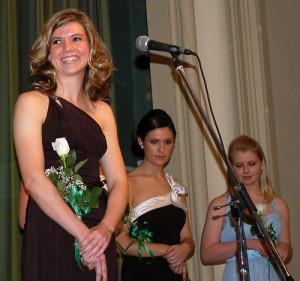
Donegal Association Chooses Its Mary from Dungloe for 2010

Kiera McDonagh

Kiera McDonagh

The newest Mary from Dungloe is a LaSalle University graduate working in the real estate field who loves sports and adventure travel.

On Sunday, November 28, Keira McDonagh of Philadelphia, an Archbishop Wood alum, was chosen from a field of 13 young women and crowned at the 121st Donegal Ball, which was held at the the Irish Center in Mt. Airy. Although the story of young woman for whom the pageant is named, celebrated in a 1936 song by stonemason Pádraig Mac Cumhaill, is one of tragic love, the pageant is sweet and tends to promote new friendships among the young women who participate. Witness: The following day, the former competitors were all friending each other on Facebook.

McDonagh will represent the Philadelphia Donegal Association at all major events over the coming year, including the St. Patrick’s Day Parade. This summer she’ll travel to Dungoe, County Donegal, to compete in the International Mary from Dungloe pageant. The reigning Mary is from County Derry and Philadelphia’s retiring Mary–a spitfire who is anything but retiring–is Emily Weideman.

When you’ve been throwing a ball for more than a century, you tend to do it right, and this one was no exception. Almost 500 people attended the more than six-hour event. There were dancers on the floor for hours, twirling to the tunes of the Sean Wilson Band and DJ John McDaid. Grand Marshal was Eileen McAleer and Ball Chairman, John Gallagher. There were even distinguished visitors from the Dublin Donegal Association.

But don’t just take our word for it.

Check out the photos.

Music

Five Questions for Seamus Begley

Perhaps the first thing you should know about Kerry accordion player Seamus Begley, featured performer in the Irish Christmas in America show coming to Penn’s Annenberg Center, is that he was never a truck driver in Chicago. It’s all a load of bull, he says. He’s not sure where the false factoid got its start, but it is often repeated and reprinted, and it’s always wrong.

Yes, he was in Chicago in 1976, but he played music with the likes of Liz Carroll and never once got behind the wheel of a semi.

Many other things about Begley are true. He’s one of the most acclaimed box players on the planet, he’s a well-known story teller, he grew up in West Kerry. He’s been a frequent musical collaborator with the likes of Aussie guitarist Stephen Cooney and West Cork guitarist Jim Murray.

His latest collaboration is with the lads of the great Irish traditional group Teada, currently touring the United States with the Christmas show. (Karan Casey and Muireann Nic Amhlaoibh previously were featured performers in memorable shows at the Philadelphia Irish Center.)

This year, Irish Christmas in America touches down at Annenberg Friday, December 11, at 8 p.m. (Click here for tickets.) With Begley at center stage, you’re bound to get your Christmas season off to a merry start. We caught up with Begley a few days ago, for a few minutes of rushed conversation over a terrible connection (like someone crunching corn flakes next to your ear) before the show was about to open in Las Cruces, New Mexico. Here’s what he had to say.

Q. Is this your first tour with Teada?

A. It’s my first tour with this gang, yeah. I never played a serious gig like this before.

Q. You’ve done a lot of collaborating. Is it something you like to do, or is it the nature of the beast that a single instrumentalist must seek out collaborators?

A. I like doing different things, playing with different talent. It’s different from playing the good old Kerry slide, you know. I like learning new songs and new ways to do things.

Q. Did you need to add to your repertoire much for this show? Christmas tunes?

A. Most of the things I already knew. We’ll be playing reels, jigs, slides, all of them, all these tunes we know. A lot of them are Christmas titles.

Q. Why did you take up accordion? With your father a player, it seems like you perhaps had no choice, or that it was somehow preordained.

A. Everyone in the house had to learn accordion and play for the ceilis. We loved it anyway, there was nothing else to do. It was probably pissing down rain outside.

Q. You’re from Dingle, West Kerry. How does being from there influence the way you play? More polkas and slides? How else?

A. I learned to play for dancers. Most of my music would be for dancing. It’s a bit odd for me to be playing for people who are sitting down. It’s easier for me to play for dancers. It’s simple music played by simple people.

Editor’s happy little note: We have two pairs of tickets to give away. Want to try to win them? Do one of two things by midnight on Friday: Sign up to receive Irish Philly Mickmail or forward Mickmail to a friend. Good luck!

Music

Guitar Hero

It’s been said that John Doyle is the busiest man in Irish music. Given that he’s just come off a tour with Joan Baez, we’ll have to amend that description and just say he might be the busiest man in music of any kind—period.

Watch Doyle when he’s playing his guitar—even when he’s sitting down—and what you see is a man incapable of inertia, his head and shoulders rocking like a metronome needle.

Doyle rocketed to fame as one of the founders of the super group Solas, and his driving rhythms and helped give the band its signature sound.

Since Solas, Doyle has formed many artistic alliances, including his brilliant pairing with Liz Carroll. He’s much in demand as producer as well, his influence felt on Heidi Talbot’s “Distant Future,” Michael Black’s brilliant eponymous debut recording and many others. (He also produced his father Sean Doyle’s CD, “The Light and the Half Light.”) He’s become everybody’s first string.

That very busy and talented man is about to visit the Philadelphia area, performing in a special Christmas show with headliner Mick Moloney and fiddler Athena Tergis at the Shanachie Pub, 111 E. Butler Ave. in Ambler, Thursday, December 4. The show starts at 9 p.m.

When I caught up with him—or maybe he caught up with me—he was on his cell phone in an airport bookstore somewhere in America, with minutes to go before boarding. I was in my car in Center City and running late for the curly wig-a-thon that is the Mid-Atlantic Oireachtas. I pulled over on Spring Garden Street, yanked out the laptop and discovered that I had just 22 minutes left on the battery. We’d been playing phone and e-mail tag for a few days. It was now or never. With traffic whizzing by me and John occasionally stopping to chat with the bookstore clerk, we squeezed in a few questions.

Q. Tell us first about the performance. I believe it’s being recorded. How did this particular gig, and the three of you, come together?

A. Mick and I have been playing together since ‘91 or ‘92. He’s been a force [in Irish music] for years. Mick and Athena have played together for four or five years. We wanted to do a kind of small gig for a different kind of a kind of feel. These actual particular gigs are Christmas gigs—we’re doing a whole weekend of them in New York and one in Philly. Of course, well be doing some Christmas stuff, like “The Wexford Carol” and “The Holly and The Ivy.” I’ve got a few tunes I wrote. We’ll do [John McCutcheon ‘s] “Christmas in the Trenches” and “The Bushes of Jerusalem” by Tommy Sands.

But it’ll be a mix between Christmas, my songs and Mick’s—a bunch of Mick’s songs from an earlier tradition, when he was still in London—and Athena’s. It’ll include some tunes that he and I and Athena have written over the last couple of years.

Q. Why is this one being recorded?
A.
We’re going to try and make a CD out of this. Were just doing it to see how it works.

Q. You’ve played with both before, including “Absolutely Irish.” On the CD, it seemed like that booming bass line was on every track. Not everyone played nearly as much. Why was that?

A. Every person on that concert and I had played with together. I knew everyone’s material. [Laughs.] So it was kind of a no-brainer at the time.

Q. Talk to me about your playing style. You seem to have found that sweet spot between the rhythmic and the melodic. How did it develop?

A. You can’t learn in a vacuum. [I was influenced by] Arty McGlynn, Daithi Sproule, Paul Brady and others. All of these great players affected me. They have a kind of half-melody half-rhythmic feel to their songs. But the rhythm is the most important thing at the end of the day.

Q. A lot of kids, if you gave them a guitar, would have wanted to be Eric Clapton. You went with Irish, Why?

A. All my family on one side or the other were involved in traditional music, it just seems like the thing to do I was drawn in that direction, my father and grandfather played accordion.

Q. I like what [the Philadelphia bass player] Chico Huff as said about you, that you never play the same thing twice through. I’m just curious as to why that is.

A. You have to make it interesting, not only for other people, but for yourself. If you don’t challenge yourself all the time, you’re going to get in a rut. [Also,] there’s a tone and a mood in tunes. If you’re playing the tunes, you want to do variations in them. And if someone does a variation, you should do a variation with them. You should emphasize emotions rather than just going with the flow.”

Q. You went the route of super groups for several years with Solas. Now, aside from your gig with Liz Carroll, it seems like you’ve accompanied everyone. What do you get out of that that you don’t being in a big group like Solas?

A. Well, I love playing with the bands and it’s really fun. I miss that sometimes. [But, when playing with others] you can be more interesting, and you can do more variations, you don’t have to be hooked up to a particular arrangement. It’s also easier to travel with.

With Liz, she’s one of the best players and writers in the world so it’s really easy to come up with stuff.

Q. And you’ve produced a lot as well. What does that do for you?

A. A lot of it is to give back to people your experience over the years; how you would do things. As a person in a band you can get bogged down in your own stuff. You need someone to weed out what’s unnecessary and to get to the core of the stuff. It’s all of that stuff together. I love it.