Music, People

Halfway to Spring: The Midwinter Festival Arrives!

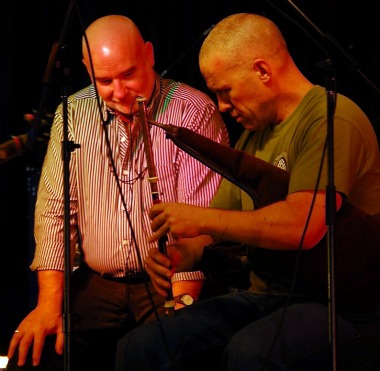
Festival organizer Bill Reid gets a bagpipe lesson from Rathkeltair's Neil Anderson.

When I caught up with Bill Reid on his cellphone early Monday morning, he admitted he was “in panic mode.”

By next Friday, the first of thousands of people would be coming to the Valley Forge Convention Center for the opening concert of the Mid-Winter Scottish-Irish Festival Reid and his wife, Karen, have been organizing for 19 years. This year, he bagged his mailing list because he thought it was too old and used the list compiled by the organizers of Irish weekend in Wildwood. Some of his regulars didn’t get their usual postcards and they were calling. “Aren’t you having the festival this year?”

Yes he is. And it’s bigger than ever. And I have to say, for a guy in panic mode, Reid is really funny. I may call him every Monday morning to get the week off to laughing start.

The best part of this year’s festival: “There’s nothing downstairs,” says Reid, who is of Scottish ancestry. That means no pet lovers, computer geeks or swingers competing for parking spaces in the convention center lot or stools at the local bar. There’s only one convention in the building and it’s Celtic.

That sent Reid off on a trip down memory lane. The Pet Expo was a mess, he says. Really. And you know what he means. But the swingers’ group provided an even more embarrassing moment for Reid.

“I came in to the pre-convention meeting and was sitting with everybody and I innocently asked, ‘Where’s the swing group’s band?’ They all looked at me and someone finally said, ‘Billllll.’ Not those kind of swingers. On the bright side, at night after the festival is over we usually go over to the bar and there was plenty of room. They were off doing what they do.”

Then there was the gay and lesbian group who held a pajama party one night on the floor of the convention center. “If anybody else had walked around the corridors the way they were dressed—or not dressed. . . .” He laughs.

He’s had to handle plenty at his own festival too. “One year we had the Daughters of the British Empire take a table and we put them next to an AOH group. The first thing the ladies did was put up a picture of the Queen and a Union Jack. The AOH guys came to me and said, ‘Hey Bill, we thought there was no politics here.’ So I went over to the ladies and said, ‘do you know where you are?’ They were nice about it. They said, ‘Maybe we can take the flag down.’ What I about the Queen? I asked. The guys said, “Oh no, she can stay.’ By the end of the weekend the ladies were feeding them biscuits and the guys were helping them take down their display.”

At this point I’m thinking that maybe they should have tapped this Scotsman who traces his roots back to Paisley, near Glasgow, Scotland, to hammer out a peace accord in Northern Ireland. He accomplished in three days at Valley Forge what it took decades there. He even handles the division of labor among the vendors. “I like to be on the floor at 6:30 AM to make sure that the husbands who are there to help their wives set up help their neighbor instead. The woman there won’t yell at the guy and he won’t yell at her. It’s all peaceful then.”

That may be the only time during the three-day festival that’s it’s peaceful. Reid keeps the music cranking all day and all night long, with headliners such as the Kansas City-based group, The Elders, who describe themselves as “arse kicking Celtic Music from the heartland;” The Young Dubliners, who hail from L.A.; Seven Nations, a Florida-based Celtic/punk/metal band with longevity (around since 1993, the year the Reids launched their festival); and Albannach, whose warlike tribal music (heavy on the drums) every year draws the kilted goth crowd wearing the traditional t-shirt that reads “Outlawed tunes on outlawed pipes.”

Albannach almost got Reid into trouble with his 90-year-old mom. “She’s learned to do the Internet, email and all this. One day she went online and put in our company name, East of the Hebrides. The next thing you know my sister gets a call. ‘What is your brother doing with those tattooed men?’”

One festival regular, Brother, an exciting band with an unusual sound, is especially near and dear to Reid’s heart. Formed by a group of Australian brothers, it combines tribal drums, bagpipes and didgeridoo, a wind instrument invented more than 1,000 years ago by aboriginal people in Northern Australia. Brother’s didgeridoo player is not Australian however. He’s a local native known widely “DidgeriDrew”—and he’s the Reids’ son, Drew.

“He’s the only American,” says Reid proudly. “We were once on a plane with Solas and they wanted to know, ‘how come you never hire us?’ I said, ‘Because you’re too expensive.’ We were on our way to Denver to an Irish festival to see our son and we told them he plays with a band called Brother. Winnie, their fiddler, looks at us with surprise. ‘Your son is DidgeriDrew!’ We ran into Joanie Madden of Cherish the Ladies and she said the same thing. Turns out Drew had backed up Cherish the Ladies. That’s when I realized that I was no longer important.” He laughs.

Also on the bill this year are rockers Rathkeltair of Florida and Hadrian’s Wall from Ontario; the McLeod Fiddlers (an amazing group of young musicians from Canada); the Paul McKenna Band from Scotland; Scottish folkies, the Tannahill Weavers and Annalivia, a fiddle band drawing on musical traditions from Appalachia, Cape Breton, Scotland, Ireland and England; and local talent Seamus Kennedy, Charlie Zahm, Jamison Celtic Rock, and the Hooligans.  There are also plenty of workshops , including dance classes with Rosemarie Timoney on the Irish side and Linette Fitch Brash on the Scottish end; fencing lessons; Irish lessons; a didgeridoo-making class, and a session with Hadrian’s Wall (bring your own instrument). There’s even a workshop called “What the heck is a bagpipe?” for those inquiring minds who’ve always wanted to know and, as always, Scottish and Irish whiskey tastings. And, of course, vendors—about 40 of them, hawking everything from fine Celtic jewelry to rude t-shirts.

You’ll also see Bill Reid running around, putting out fires and occasionally starting some. He’s sharing emcee duties next weekend with Dennis Carr of the Brigadoons of Canada.

And he assures us that most of the “snowbergs” are gone from the parking lot so there are plenty of spaces. Planning a festival whose first name is “midwinter” can be fraught with anxiety. “I got an email today from someone who asked me if I was worried about the weather,” says Reid. “I said, ‘Did you have to bring up that word?’”

The 19th Annual Mid-Winter Scottish-Irish Festival kicks off on Friday, February 18, with an evening concert with Albannach, the Young Dubliners, the Hooligans and Jamison, and runs through Sunday at the Valley Forge Convention Center at Gulph Road and First Avenue in King of Prussia, just off the Valley Forge exit of the Pennsylvania turnpike. Check out our calendar for details or go to the East of the Hebrides website.

Check out some of the action from past festivals.
Columns, How to Be Irish in Philly

How to Be Irish In Philly This Week

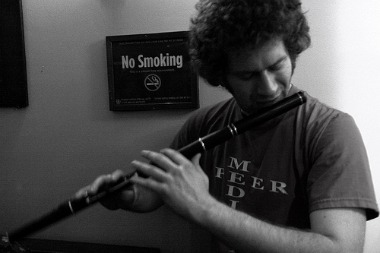
Double proof that you don’t have to be Irish to be an Irish musician: Isaac Alderson and Jonas Fromseier.

Isaac Alderson was 11 or 12 when he discovered Irish music. A friend of his mother’s gave him a set of practice pipes and he was hooked. By the time he was 17, he was being paid to anchor Irish sessions in his native Chicago. At the 2002 Fleadh Cheoil in Ireland—the Superbowl of traditional musicians—Alderson was named the All-Ireland Senior Champion in three instruments, uilleann pipes, flute and whistle, becoming the first American ever to perform that particular hat trick.

Alderson will be on stage at the Irish Center this Saturday, bringing with him Fromseier, the Danish-born bouzouki and banjo player who, with a grant from the Danish government, wound up in Galway studying Irish music after a stint with a Danish Irish trad group called “The Trad Lads.” (The Danes, while not Celtic, do have an Irish connection: They conquered the little island long ago when they were members of the well known group, the Vikings.)

Before the Vikings land here, check out “Cherish the Ladies,” Joanie Madden’s fabulous girl group, performing at the Sellersville Theatre on Friday night. Band members change, but the quality of these amazing musicians never dims. Plus, Madden is a hoot.

Another unusual sighting this week: Belfast-born indie musician Henry Cluney from the group Stiff Little Fingers will be performing at Kung Fu Necktie in Philadelphia on Sunday.

Sunday is also the second in a series of fundraisers for the Philadelphia St. Patrick’s Day Parade, this one at AOH 39 on Tulip Street in Philly. On board for this one: Winners of the “best Irish band” in the US battle of the bands sponsored by Strangford Lough Brewing Company in Northern Ireland, Jamison Celtic Rock.

For Valentine’s Day, the Irish Immigration Center is hosting a luncheon and party at the Irish Center, 6815 Emlen Street, in Philadelphia on Monday at noonish. Great food, music, dancing—and love, they promise, will be in the air.

This week, two great Irish plays debut as part of the Philadelphia Irish Theater Festival. The Abbey Theatre of Dublin’s “Terminus,” a playing serial killers, avenging angels, and love-sick demons (of course, you’ll laugh), is at the Zellerbach Theatre. On February 16 and 17, Father David Cregan, OSA, PhD, associate professor of theatre and English, will host a post-show question and answer session with the cast. On February 17, catch the opening of The Lieutenant of Inishmore, one of the Martin McDonagh’s wildly dark and comic plays about a soldier who returns home to find that his only friend. Wee Thomas, the cat, has been assassinated. Bad things ensue. This one is at Plays and Players Theatre on Delancey Street in Philadelphia.

On Friday, Boston’s Matt and Shannon Heaton (with new baby, Nigel!) will be performing at Trinity Episcopal Church in Swarthmore. Shannon, whose newest CD is “The Blue Dress,” was named Live Ireland’s Female Musician of the year two years running (2010 and 2011).

Friday night is also the kick-off concert for the Mid-Winter Scottish-Irish Festival in Valley Forge, now in its 19th year of making winter bearable for fans of Celtic everything. There’s music, drink, food, dancing, and Irish tchotchkes for sale. Always fun.

People

A Compelling Story, a Great Honor

Liz and Pearse Kerr

Liz and Pearse Kerr

As a Catholic and a nationalist living in the Cliftonville neighborhood of North Belfast in the late 1970s, young Pearse Kerr was accustomed to being treated with suspicion and contempt—and often brutality. Orangemen forced his family out of their first home, threatening to burn it down. Out on the streets, British soldiers frequently stopped, questioned and searched him, even though they knew him by name and had stopped and questioned him many times before. Once, on his first day of high school, a soldier struck him with a rifle butt, knocking him over a wall.

He wasn’t even surprised when, in the early morning hours of August 18, 1977, British soldiers smashed the door of his house at 233 Cliftonville Road, rousted him out of bed and hustled him off to Castlerea Interrogation Center. Nor was he surprised by his treatment once he got there. “It might sound bad, and it was,” he says. “”They broke my wrist, dislocated my neck, fractured a rib, choked me unconscious, and generally pushed me around… It was nothing out of the ordinary at the time. They beat me pretty good … but they didn’t kill me. It was well-known what was going on. It wasn’t shocking or anything. It was just part of life over there.”

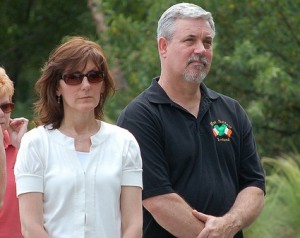
Kerr spent three months in custody.  He was in Castlerea Interrogation Center for seven days, then transferred to Crumlin Road Prison.  All told, he was incarcerated from August 18 to November 26. Unlike many prisoners of the time, Pearse Kerr—named after the Irish nationalist and leader of the 1916 Easter Rising Pádraig Pearse—was an American. His parents Brendan and Betty Kerr, originally from the Falls Road in Belfast, had moved to Philadelphia in 1957. Pearse was born not long thereafter at Temple University Hospital. Given his status as a U.S. citizen, Kerr’s imprisonment triggered a huge backlash in the Philadelphia Irish community, and he was released thanks to the intervention of Daily News columnist Jack McKinney and Northeast Philadelphia Congressman Joshua Eilberg.

Kerr’s harrowing story, together with his continued activism here after his return to the States, rarely fails to move people who come to know him. Evidently, Kerr’s experience caught the attention of the committee organizing the 2011 Burlington County St. Patrick’s Day Parade. They recently named him their grand marshal.

Arguably, given that St. Patrick’s Day represents all things Irish, it was a good choice. Few local people could better symbolize Irish pride.

In Kerr’s household, that pride always came first. While living in the States, his father was one of the founding members of Irish Northern Aid and was active in Clan na Gael, another Irish republican organization.

“I was brought up with an Irish nationalist mindset, he says. “There’s no taking that away.” He also knew well that his first name stood for something. (It certainly meant something to the British in Belfast, he says. “When that’s your name, spelled like that, they know exactly who you are.”)

For Kerr, his time in prison left no lingering scars, but it did affect the way he looked at life: “It was maybe a solidification of what I was always taught.”

He also knows how lucky he was. Many prisoners were not nearly so fortunate. Even at the time of his release, he was uncertain what fate had in store for him. His jailers entered his cell, tossed a bag at him and ordered him to pack his clothes.

“Nobody said to me, you’re getting released,” he recalls. I thought I was being sent to Long Kesh (site of the 1981 Hunger Strike). They took me to a court in the city center. When I got to the courtroom, I was standing in the dock and, out in the foyer, I could see my father. And I knew I was going to be released.

“We got a taxi and we went to my grandmother’s house. The following day I flew to Philadelphia for a “Free Pearse Kerr” rally … which I had the pleasure to attend.”

Even though he has been in the States for years, the experience still resonates, and his Irish pride continues to make itself known through his many local activities, including Ancient Order of Hibernians Division 25.

That’s why the Burlington County honor means so much to him.

“I had no idea. I didn’t know I was in the running,” he says. “I was shocked, I really was. It’s such an honor to be chosen. I love Ireland and I love the AOH and I love the Irish republican movement. To be able to represent all that means the world to me.”

News, People, Sports

Help Some Kids Get On Base

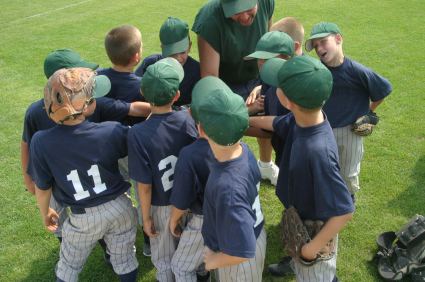
Help get a team ready for spring season.

Brian McCollum wants to get his mitts on your mitts. And if you have a baseball to go with them, all the better.

For the second year in a  row, McCollum is collecting new and gently used baseball and softball equipment for use by kids who might not have the money to buy their own. This year’s beneficiary of the “Mitts for Kids” drive is the Hunting Park Indians Youth Baseball Program.

“When Hunting Park is open for play this spring, we want to make sure that every child who wants to play baseball has a glove,” said McCollum, owner of McCollum Insurance in Manayunk. “If you have unusued baseball equipment lying around your house, this is the perfect opportunity to give it a new life and help a child.”

McCollum, an avid sports fan and community volunteer, started the “Mitts for Kids”program so that less fortunate kids would have the same opportunity he had as a child to play Little League baseball. Last year’s drive netted over 150 mitts that were sent to youth ball players around the world. McCollum was also named one of Erie Insurance’s 2010 Giving Network Agencies of the Year for his community service work with “Pitch in for Baseball” and his decade-long commitment to the annual MMA Research Ceili for Kayleigh fundraising event.

You can bring your equipment to McCollum Insurance Agency l at 4109 Main Street in Manayunk until March 15, To make arrangements to have your equipment picked up, please call the agency at (215) 508-9000 or visit them online at www.mccolluminsuranceagency.com.

History, News, People

Remembering “Those Persecuted for Righteousness”

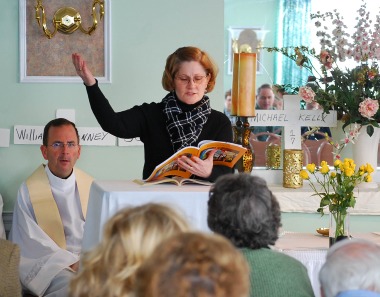
Liz Hagerty Leitner leads the group in a response.

Msgr. Joseph McLoone had to look no further than the latest CNN report on unrest in Egypt to find an analogy for his sermon on “Bloody Sunday,” the incident that occurred on January 30, 1972, when British soldiers opened fire on protesters in Derry’s Bogside neighborhood, killing 13 and touching off decades of fighting in Northern Ireland.

“We see what’s happening in Egypt, we see people standing up for their rights, for democracy,” he told the 60 people who gathered in the Irish Center dining room for a Mass of remembrance on Sunday, January 30. “We see what happens when people are in power for so long that they forget the human person.”

The men who died on Bloody Sunday are unlikely to be forgotten. Although there will no longer be marches on January 30 in Derry, Bill Donohue, president of the Philadelphia-based Sons and Daughters of Derry (called “the Derry Society”), said that this annual religious ceremony in Philadelphia will continue “in perpetuity.”

One of Philadelphia’s last large waves of Irish immigrants come from Northern Ireland, many fleeing the violence and religious bigotry that dominated the landscape in places like Derry, Belfast, and Tyrone.

Just last year, the British government, after 40 years, released the Saville Report in which they admitted that the shootings that day in Derry were, as British Prime Minister David Cameron put it, “unjustified and unjustifiable.”

Most of the people killed and wounded were teenagers. On Sunday, their names and ages were written on white crosses placed around the wall of the Irish Center dining room.

“Let us remember,” said Msgr. McLoone, referring to the eight beatitudes of Christ, “that those who are persecuted for the sake of righteousness will be received in heaven.”

See photos from the Mass here.

Columns, How to Be Irish in Philly

How To Be Irish In Philly This Week

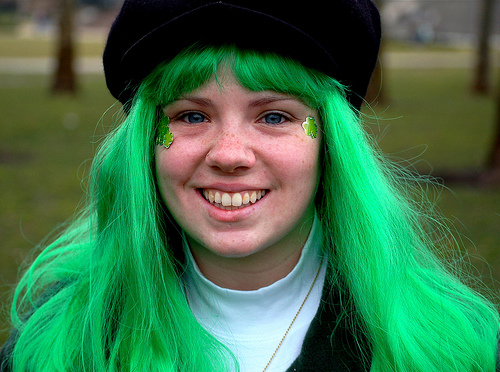
She's ready for the St. Patrick's Day parade! First fundraiser this weekend!

Had enough snow? Too bad—more is on the way. But you’re so experienced at navigating streets that look like the South Pole that it probably won’t stop you from heading out this week for a hit of Irish.

Like tomorrow. The first of several fundraisers for the Philadelphia’s St. Patrick’s Day Parade is happening at Paddy Whack’s on the Roosevelt Boulevard, sponsored by AOH Division 25. Slainte will be providing the music and AOH 25 President Pearse Kerr will be celebrity bartender (and a real celebrity he is—Kerr, who grew up in Belfast, is grand marshal of the Burlington County St. Patrick’s Day Parade in New Jersey).

Also on the agenda for Saturday is the installation of the statue of Our Lady of Knock at the Irish Center by the Mayo Association. The group will place the statue, sculpted in Knock, County Mayo, in the Irish Center dining room. There will be a party afterwards.

If you’re in Bethlehem or heading to the Christmas city, Tony McAuley, author of “The Paperboy,” set in 1970s Belfast, will be speaking at Granny McCarthy’s Restaurant and Tea Room at a breakfast event.

Interested in your family history? Head on down to the Irish Immigration Center on Thursday, February 10, and genealogy expert John McDevitt will help you unearth your ancestors (on paper, that is—no shovels required).

And get your tickets now for next Saturday’s big concert at the Irish Center. Danish banjo and bouzouki player Jonas Fromseier and American piper and flute player Isaac Alderson will be joining forces on the stage as part of their two-week US tour. Don’t let those names fool you. This is a Philadelphia Ceili Group concert so the music will be Irish.

Looking ahead: The Abbey Theatre of Dublin’s production of the play, “Terminus,” is coming on February 16 to the Zellerbach Theater in Philadelphia as part of the Philadelphia Irish Theater Festival. Remember, you can get 20 percent off ticket prices by getting tickets to two or more plays through the Theatre Alliancec of Greater Philadelphia. So while you’re at it, buy tickets for Martin McDonagh’s “The Lieutenant of Inishmore” at the Plays and Players Theater (Theatre Exile) which debuts February 17. Order tickets here.

Music, People

Blackthorn’s Lead Guitarist Says Farewell

Seamus is going solo.

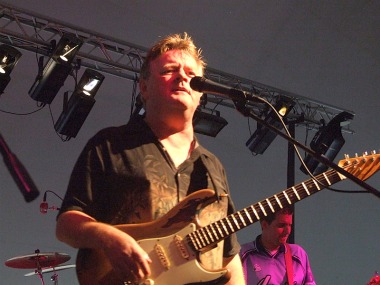
After 15 years, Seamus Kelleher, the lead guitarist for the ultra-popular Celtic rock band Blackthorn—their name in Irish means “sold out”—played his last gig with the guys he calls “my best friends.” It was last Saturday night at an Archbishop Ryan benefit (that was sold out, of course).

That doesn’t mean he’s not going to sit in occasionally. But after a near-death experience and launching his first solo CD a couple of years ago—two events that were nearly simultaneous—the Galway native says he wants to take a shot at “getting my own music heard by a wider audience.”

Kelleher is in his late 50s, a time when every birthday party reminds you that you’re closer to “last call.” But a few years ago, he got up close and personal with his own mortality. After a show, Kelleher tumbled down a steep staircase at the Kildare’s Pub in King of Prussia, fracturing his skull and suffering a traumatic brain injury. He was taken by helicopter to the University of Pennsylvania Trauma Center in critical condition. Miraculously, he came through with no residual effects though, he jokes, “that depends on who you talk to—some say yes, some say no.”

He’s also the father of four young children, ranging in age from 7 to 13; vice president of Philadelphia firm for which he travels; and in addition to his Blackthorn gigs he’s been soloing both here and in Ireland, playing his own brand of Celtic blues.

“I cherish my time with Blackthorn,” Kelleher told us this week. “I’m going to miss the guys so much, all the camaraderie and all the Blackthorn fans, but I feel an obligation to myself to make time to do this. I can only serve so many masters and I want to be 100 percent focused on what I’m doing. With all that going on, I didn’t have much left for the family. I believe that unless you have balance in your life you’re not going to be happy.”

After his debut album, “Four Cups of Coffee,” he began doing solo shows in Ireland (Monroe’s Live and The Crane in Galway, and Portmarnock Country Club  in Dublin as well as Ulysses, a folk club in New York City, Puck in Doylestown, and lately, the Moose Lodge in Doylestown). He plays his own compositions and salts the evening’s playlist with covers of Jimi Hendrix, Jethro Tull, and Dylan. And comedy. There will always be funny stories and jokes.

“People come to my shows expecting me to be serious while immersed in my solos, but I can’t do that,” he says. “I’m too screwed up an individual to do that. I see the humor in things.”

Then he tells the story of when the paramedics were trying to take a history from him after he woke up in the chopper, post-staircase acrobatics. “I see lights flashing all around me and I thought to myself, is this me going to the other end?” he laughs.

They wanted to know if he had a family history of heart disease (both parents), and about his smoking (“only when I drink”), drinking (“five to six days a week, and on the weekends it could be 7-8 drinks looking at each other”), and whether he had high cholesterol (“Yep!”). “And I know they’re thinking, this guy’s dead. Then they asked me what I did. I told them, ‘I’m a musician.’ They looked at each other and started laughing. I know they were thinking, with that history, I should have been dead 10 years before I had that accident.

“Well there’s no better defense than humor,” says Kelleher, who cleaned up his act after that. “You can disarm the most miserable bastard in the world with a sense of humor and protect yourself from the bad times.”

That’s something he can share with his CD producer Pete Huttlinger. Kelleher has been in Nashville with Huttlinger, a renowned guitarist, recording some tracks for a new CD. Not long ago, Huttlinger, who is only in his 40s, suffered a stroke, leaving him paralyzed and speechless. “But he’s playing now with Darryl Hall and it will be a while but he’ll be back,” Kelleher says.

The new CD, he says, won’t be as eclectic as the first one, which reflected Kelleher’s many interests, from traditional Celtic music, to Southern blues, to the music by famed Irish rocker Rory Gallagher. “That first album had everything but the kitchen sink,” he laughs. “The new one will have a singer-songwriter feel to it. I’m putting together 10-11 songs that have a common thread. There will be a lot more continuity.” He expects it to debut in the spring.

Until then you can see and hear him again at Puck in Doylestown and on Friday, March 11, at the Moose Lodge  in Doylestown. And maybe, occasionally, with the boys of Blackthorn. He’s not planning to stop the music any time soon.

“I’ve been been very blessed,” he says. “I’ve been in music 42 years professionally. Most musicians my age have long stopped doing it. I’m doing it more than ever and enjoying it more than ever. In last five years my playing has progressed much further than I ever imagined it would. And as long as I can see improvement, I’ll continue to play. Once that stops, it won’t be as interesting.”

See photos by Patti Byrd of Kelleher’s swan song with Blackthorn.

People

Kathy McGee Burns: Blazing Her Own Parade Route

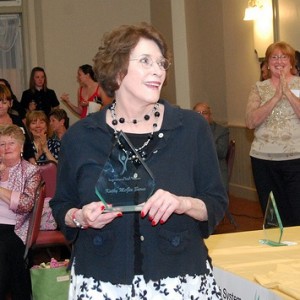
Kathy McGee Burns, receiving the Inspirational Irish Women award.

Kathy McGee Burns, receiving the Inspirational Irish Women award.

On Sunday, March 13, when Kathy McGee Burns officially presides over the Philadelphia St. Patrick’s Day Parade, as only the second female president since its 1771 debut, she is going to have some very special guests marching with her.

The little girl who grew up in the Philly suburbs with no knowledge of her Irish roots is now the woman leading the parade. And joining her will be her McGee cousins from Donegal.

That moment has been a lifetime in the making. Because the same father who instilled in McGee Burns the belief that she could be anything she wanted, do anything she put her mind to, was the equal to anyone … was the same father who, like so many of his generation, denied his own Irish-ness.

“It’s incredible to me,” McGee Burns marveled. “I see my whole life as a journey. I don’t know how I got here, but I did.

“I always had this draw to being Irish …. Wondering, where was I from, where could I claim as my heritage? But my father, Timothy McGee, never talked about his family.

“He grew up very poor. His father, Hugh McGee, was the black sheep of the family. He was an alcoholic who left the family. My grandmother, Mary Jo Callahan, raised my father and his brother with the help of her mother and sisters. She cleaned houses to put food on the table.

“My father was a very well-known high school athlete, but he couldn’t pursue any of the offers he got along those lines. He had to take care of his mother and her sisters. So, he started as a clerk in the Acme. He prided himself that you could come to his counter, and he would add up all the prices in his head–this was before there were machines to do it.

“He started making bouquets of flowers to sell in the store. And from that, he built up a business as a wholesaler florist. He became a successful businessman, and created a life for his own family that was far different from the one he grew up with. He had a house at the shore, was a member of country clubs. We were very comfortable.

But he wouldn’t talk about his Irish roots.

It wasn’t until he was on his deathbed that McGee Burns was able to get a tiny clue from him about how to go about finding her family. He told her that all the relatives lived in Bridgeport: “Kathleen, every McGee in Bridgeport is related to you.”

By this time, McGee Burns was married and raising nine children of her own. And her nagging desire to acknowledge and embrace her own Irish-ness had been heightened during the dark days of the 1981 hunger strikes.

“There I was, watching Bobby Sands starve to death while my own son, Tony, who was the same age, was going to college in Chicago. I kept thinking about Mrs. Sands, how heartbroken she must have been…and how my own son was just starting his life.”

“My country, the country of my ancestors, still wasn’t free.”

McGee Burns began her journey. And her first step was to get out the phonebook and look up every McGee in Bridgeport. She sent a letter to each one of them. And she got the response she was looking for.

“Once I had enough information to trace my roots back to Donegal, I decided to join the Donegal Society. The first time I went to a meeting, I literally walked in as a stranger. They asked me who my sponsor was,” McGee Burns laughed. “I didn’t even know I needed a sponsor!”

But from that inauspicious beginning, she went on to become the first female president of the Donegal Society. And she continued on her path to discover exactly where she came from.

On a trip to Donegal about 10 or 12 years ago, a friend had a surprise for her. He told her, “I found someone who can help you find your roots. We have an appointment with him at Gallagher’s Hotel in Letterkenny at 1:00.”

Kathy won’t forget that moment: “A man came walking towards me. He looked just like my brother. He said, ‘Hi, my name is Hughie McGee. Does that name sound familiar to you?’ Well, my brother, my uncle, my nephew, my grandfather and my great-grandfather were all Hughie McGees. We sat down and did a study of our families. We both had a great-great grandfather named Cornelius McGee. His Cornelius McGee married a Kate Cannon; mine married a Kate Brogan. We had all these similarities, but couldn’t pinpoint where our families intersected.”

It wasn’t until this past summer that DNA was able to accomplish what a paper trail had failed to do: prove beyond a doubt that these two McGee families are closely related. The McGees from Gweedore, County Donegal, donated their DNA for comparison with McGee Burns’ own brother Hughie, and with the results, a once lost heritage was reclaimed.

The circle will be made complete on March 13, when Hughie McGee, his brother Paul McGee and wife Noreen, and nephew Paul McCool and wife Roisin join Kathy McGee Burns and her family, including her brother Hughie, in the St. Patrick’s Day Parade.

“Someone has been directing this from somewhere–either from up above, or down below,” McGee Burns laughed. “But the feeling I will have as I march up that aisle to address the congregation at St. Patrick’s Church for the parade Mass will be for every McGee and every Callahan that came before me.

“I represent a culmination of all their dreams, hopes and wishes. We are all going to be in that Church together. And I’ll be saying ‘thank you’ to all my Donegal ancestors.”