News, People

Mary O’Connor Award Winners Announced

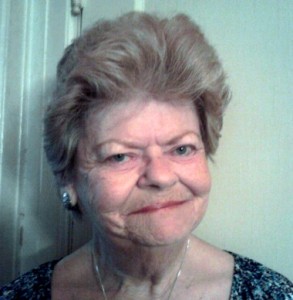
Mary O'Connor Awardee Serena White

This Saturday, the 2011 Philadelphia Rose of Tralee will be chosen at a gala event at the Springfield Country Club. The Philadelphia Rose of Tralee was established in 2002 as an official center of the International Rose of Tralee Festival, one of Ireland’s longest running regional festivals that has as its central focus the selection of the International Rose of Tralee, a young woman of Irish descent who is chosen, according to the International Rose of Tralee website, by the “indefinable quality that captures ‘the truth in her eyes,’” a reference to the song on which the Rose festival is based.

The original Rose of Tralee was a woman named Mary O’Connor, a woman of humble beginnings who fell in love with the wealthy son of her employer. She, wisely sensing that their union could never be because of their class difference, refused William Mulchinock’s offers of marriage. But it was a flase accusation of murder against her lover that tore them apart. He fled to India where he worked a a war correspondant. When he finally returned, it was on the day of Mary’s funeral. Though William Mulchinock married and had a family and emigrated to American during the famine years, he returned to Ireland to live again in Tralee and was buried next to Mary in Clogherbrien, County Kerry.

Three years ago, the Philadelphia Rose of Tralee Centre established a separate award given the night of the Rose Gala to a woman who embodies the proud spirit of Mary O’Connor. This year, the Mary O’Connor Spirit Award is being given to three women who have worked tirelessly for a variety of causes in the Irish community: Pat Bonner, Frances Duffy, and Serena White.

Sarah Conaghan, co-chair of the Philadelphia Rose of Tralee, provided these brief bios of this year’s winners:
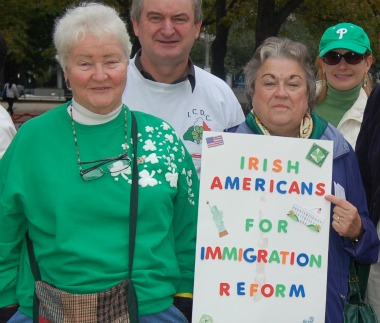
 

Pat Bonner and Frances Duffy: Still activists!

Patricia (Pat) Noone Bonner, was born the 5th oldest of seven children (5 girls and 2 boys) and was raised in Philadelphia where she still lives today.  Her later school years were spent in the old Good Shepherd Parish and graduated in 1958 from West Catholic High School for Girls.

Pat’s first trip to Ireland was three months long.  She and her father sailed to Ireland aboard the USS America in 1959.   Her family roots are in County Mayo, specifically Ballina.

In 1964, Pat married Knute (Phillip, Sr.) Bonner and are the proud parents of eight children: Patrick, Mary Beth (she and her band provide the entertainment for the Philadelphia Rose Gala), Phillip, Jr., Sean, Seamus, Erin, Brigid and Deidre.  Currently, they have seven grandchildren and one more on the way!

Pat is still very active with groups that promote the reunification of Ireland such as Clan na Gael, Irish Northern Aid and the Federation of Irish American Societies.  Like many strong women through out history, it’s not the big dramatic things that have made a difference in people’s lives but the small and steady efforts of their tireless abundant devotion; this would sum up  Pat.  With her father, Martin Noone, who was a proud soldier of the East Mayo Brigade, Republicanism and the rights of Irish Soldiers has been instilled in her from an early age.   She doesn’t just talk the talk but walks the walk.  Not only would you see Pat and her husband Knute attending almost every Irish function in the area for over the past 40 years or more, they would have been volunteering.  A number of years ago Pat started the Philadelphia area branch of the Irish Political Prisoners Children’s Holiday program when she learned that children of political prisoners were not given the opportunity to enjoy a holiday in the United States.  Through her long standing friendship of over thirty years with the family of Tom Conaghan, founder of the Irish Immigration and Pastoral Center in Upper Darby, Pat began volunteering in 2001. As she would say “I’m only doing my father’s business!”

Frances O’Donnell Duffy was born on September 20 and raised in the Germantown section of Philadelphia by Irish immigrant parents, James and Bridget O’Donnell from Letterkenny and Creeslough, County Donegal, who instilled a great love for her Irish ancestry.  Living in a very Irish neighborhood she had many friends with the same family background, and she and her friends enjoyed going to dances all over the city.  It was at one of these functions that she met Daniel Duffy from Derry City, County Derry.

On August 2, 1958, Dan and Frances married and settled in Collingdale, PA. With moves to Germantown and West Philadelphia, they eventually settled in Upper Darby where they raised their four children, Mary Frances, Theresa, Danny and Maureen, instilling the same value and love of Irish ancestry in their own children.

Along with her husband, she became a member of the Derry Society in 1970 holding several offices including recording and financial secretary as well as treasurer.  While a member of the Derry Society she worked on committees that brought several youth groups from Derry with the focus on arranging events and housing with families in the Philadelphia area, housing many in the Duffy household.  The Duffy house saw many visitors from individuals such as Northern Irish political leader John Hume to the Doire Colmcille Minor Football Team.  You never knew who you would find at the dinner table or sleeping on the living room floor. It didn’t matter –Frances always made them feel welcome.  Over the years the Derry Society disbanded, but in 2009 Frances played an integral part in bringing it back to life. On May 1, the Derry Society will hold its second annual Derry Society Social at the Irish Center in Philadelphia.

Frances and her husband were involved with many of the Irish societies and were members of the Irish Center and the Federation of Irish American Societies where Frances held the office of recording secretary and is currently the treasurer.

They were members of Irish Northern Aid from its formation in the early ‘70s working toward a united Ireland.  Frances is still a member of Irish Northern Aid.

On December 23,, 1975, Daniel Duffy was indicted by a federal Grand Jury which charged him with conspiracy to ship weapons to Ireland in the fight for Irish freedom from British rule.  Frances showed great strength as she stood by her husband during this time.  As a result she returned to the work force to help support her family.  From May until July of 1976 she attended the trial in the afternoons while working in the mornings.  When the trial was over and her husband was acquitted,  she enjoyed being back in the work force and she remained in her position at Merrill Lynch for 28 years.  She started as a PBX operator and worked her way up to become assistant to administrative manager and ended her career at Merrill as the main administrative support person for one of the firm’s most productive management teams.

In 2004, she retired and continued in supporting the Irish community by volunteering at the Irish Immigration and Pastoral Center in Upper Darby where she assisted by fielding phone calls and walk-ins for such things as Irish citizenship for Irish Americans, helping individuals with the forms to renew their passport, green card applications and filling out of forms for American citizenship.  One of her most successful and rewarding accomplishments at the Center was the formation of the “Senior Luncheon Group”.  Along with Mary and Sarah Conaghan, she worked to contact a group of senior Irish Immigrants and those of Irish American descent to gather at the Immigration Center on Wednesday for lunch and an afternoon of social interaction.   After 8 ½ years, she left the Immigration Center.

She is still an active member of the Derry Society, Clan na Gael, and LAOH Trinity division where she holds the post of “Freedom for Ireland” representative.

Serena White arrived into the High (maiden name) family as Alicia Serena just after the start of World War II.  Her family moved to Drexel Hill in 1953.  Except for a year away, she has lived in the same home for more than 57 years.  Serena’s mother, a Bolger, Kinsella, Reilly, is her Irish connection and their roots go back to counties Carlow and Cavan in Ireland.

Serena attended Archbishop Prendergast High School and was a proud member Prendie’s first graduating class.  After high school, she taught third grade at St. Joseph’s in Collingdale, while attending Immaculata College.  Then she went to work for Bell Telephone Company of Pennsylvania (now Verizon).  During her 33 plus years at “Ma Bell”, Serena was part of the external affairs department. During her last eighteen months there, she worked in Harrisburg where she managed the special services group.  When Serena retired in 1994, she was working and interacting with 38 independent telephone companies in Pennsylvania.

In 1976, Serena married and became a Mom to her 20-month-old stepson on the same day.  Since her son had special needs, she joined a parent advocacy group that negotiated with schools and health professionals to get children the services they needed.  Also part of Serena’s work was representing parents’ views at the vounty level and with the Pennsylvania Department of Education in Harrisburg, where she was the first parent Representative for the statewide Student Assistance Program.

In 2000, Serena met Father Gerry Burns.  He asked her to do him a favor and the rest is history!  Serena spent ten years with Tom Conaghan, Fran and Pat helping the Irish and Irish Americans at The Irish Immigration and Pastoral Center.  Currently she devotes time to LAOH, Trinity division 4, where she has been a charter member since 1998.  Serena also serves as 2nd Vice-President for the Federation of Irish American Societies, (including the Commodore John Barry USN Association), and is the National Secretary of Tar Anall America – a program that supports former Irish political prisoners and their families.

Serena has two beautiful and loving grandchildren who live with her.  Her grand­daughter Alicia is a 16-year-old veteran Rose Petal in the Rose of Tralee pageant, and grandson Paul is a 13-year-old first time escort.


How to Be Irish in Philly

How To Be Irish in Philly This Week

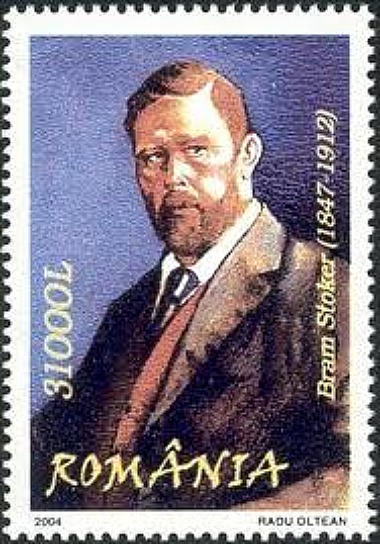
Dubliner Bram Stoker on a Romanian stamp.

There is absolutely nothing Irish going on this week.

Wait for it.

April Fool!

Okay, now that we’ve gotten that out of the way, here’s what’s really going on, starting this weekend.

Rose of Tralee! The 10th annual Philadelphia Rose of Tralee Selection night is Saturday, April 2, at the Springfield Country Club. A new Rose will be chosen and last year’s winner, Mairead Conley, will give up her crown. The chosen one will compete this August at the annual Rose of Tralee Festival in Tralee, County Kerry. This year’s Mary O’Connor Spirit Award, given by the Philadelphia Rose of Tralee Centre, will be shared by three local women, Pat Bonner, Frances Duffy, and Serena White.

Sebastian Barry’s play, “The Pride of Parnell Street,” continues at Act II Playhouse in Ambler.

Also on a run are the paintings of Irish artist T.C. Murphy at Colm Rowan Fine Art on South 10th Street in Philadelphia. This is Murphy’s second show in the US of his modern works that combine spirals, circles, pyramids, coils and waves on a palette of primary colors. The show starts on Sunday and runs through the end of April.

On Sunday, the Rosenbach Museum and Library has a special program called “James Joyce and Irish Authors” which will feature readings from Joyce’s “Ulysses” and Bram Stoker’s “Dracula,” and other Irish writers. (You didn’t know Abraham “Bram” Stoker was Irish, did you? He was a Dubliner and his day job was acting as personal assistant to then famous actor Henry Irving and business manager of the Lyceum Theatre in London which Irving owned. Apparently, that wasn’t enough work for Stoker—he began writing short stories and novels of which “Dracula” is his most famous.  He was in essence the Stephen King of his day; most of his stories and novels fall into the horror genre. Stoker had a newspaper background. He was also a theater critic for the Dublin Evening Mail, which is how he met Irving who hired him away. Oddly enough, Stoker the Dubliner has a Pennsylvania connection—the original manuscript of Dracula, thought to be lost, was found in the early 1980s in a  barn in northwestern Pennsylvania.)

Bonus: The Rosenbach has an original manuscript of “Ulysses” written in Joyce’s hand and Bram Stoker’s notes and outlines for “Dracula” as well as other Irish manuscripts that will be available for viewing. It’s like being in the presence of greatness. Just don’t touch.

The Rosenbach is the center of all things Joyce in the Philadelphia area. Every year on June 16, the Rosenbach hosts a day-long Bloomsday celebration to commemorate the day Leopold Bloom, Joyce’s “Ulysses” protaganist, spent wandering the streets of Dublin. Local actors and politicians – pardon us if that sounds redundant—read passages from the book from morning till night.

If you’re at the Rosenbach, check out its latest Joyce exhibition—“Exile Among Expats: James Joyce in Paris.” It’s a multi-media exhibition that includes pages from Joyce’s Ulysses, artist Man Ray’s portrait of Joyce, selection from fellow ex-pat and poet Ezra Pound’s “Island of Paris” report in “The Dial,” a literary magazine, and a first edition of “Ulysses” smuggled out of Paris into the US in 1922. (After it was serialized in the US magazine “The Little Review,” the book was banned in the US as obscene, hence the need to smuggle it in.)

On Tuesday, Celtic Woman’s Orla Fallon, now a solo act, will be appearing at the World Café Live on Tuesday night. A singer and harper from Knockananna, Ireland, she, like her Celtic Woman colleagues, is a major attraction on PBS.

We’re filling up the calendar for April and there’s some fun stuff on the way. Check it out.

News

School Days, Irish Style


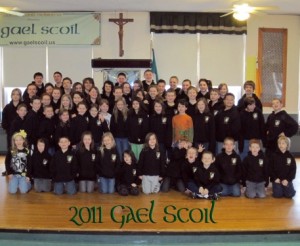
The kids of Gael Scoil 2011.

The kids of Gael Scoil 2011.

By Tom Slattery

Not only did Mercer County’s AOH Division 10’s 4th annual Gael Scoil attract a record number of students, but it also added new cultural sessions, some high-profile teachers and an Irish breakfast. As the student count kept rising, the committee had to scramble to keep up, but like any good show, the audience was unaware of the backstage maneuvers.

At the last minute we had to go to a three-track program; however, this was almost seamless because we had put in place a formal monitoring system, with a supervisor moving the monitors as necessary. Yes, you have to have at least a male and a female monitor in each session to accompany the kids for nature calls and to report quickly on any student or facility problem. You also have to have a registered nurse on duty for emergencies which are going to occur when you have 64 7- to17-year-olds moving around, including an hour session outside learning Irish football and hurling.

But it was the infusion of qualified (actually, overqualified) faculty that marked the success of our 2011 offering. Dr. Christine Kinealy, author of seven books on the Great Hunger, gave two classes for the older children (12-17). Of course, she presented An Gorta Mor, along with a session on Irish Women. Carol Russell, author, art critic and Northern Ireland activist gave a class on Irish Literature, again for the older kids. Mary Kay Mann, an outstanding musician who also teaches, ran two classes on the tin whistle, each class with close to 30 students. The only way to prevent pure mayhem was to have three monitors in the room holding onto the whistles until Mary Kay had a chance to introduce the topic and was ready for the kids to sound off. Realizing the number of younger kids, we added a second storyteller, Dave Emerson, who has already been invited back for 2012.

Pat McCabe, a Dubliner and brother of Mick, who started the program, once again came over from Dublin to help the GAA run their sessions; however, as a chef by trade he indicated he would like to cook up something for the kids. As a result, with the generosity of Breffni Foods of Hamilton, owned by Division 10 member Frank Connell, and a contribution by Gerry Maguire, another Division 10 member, the 64 kids and some of their parents were served a great Irish breakfast of sausage, bacon, eggs and scone. Michael Snowden, a horseman who has taken two horseback riding vacations in Ireland and who was attending as a driver, ran two showings of National Geographic’s video “The Irish Horse,” and showed pictures he took in Ireland—including riding the horses into the Atlantic Ocean. These were run for the younger kids. We also showed “The Secret of Kells,” a great documentary making full use of today’s graphics, in the cafeteria during lunch. Lunch (pizza, juice and cookies) was included in the program.

Other sessions included Irish Language once again run by Daltai na Gaeilge, this time just for the younger students; two musical instrument sessions taught by Mark and Tim Carroll; a bagpipe demo and talk by Marty and Ian Ferrick; an Irish Song session led by Tom Glover; a step dance exhibition by the DeNogla Dancers; Irish Geography by Jim MacFarland; a session on Irish Heroes and one on the Wee People by Tom Slattery.

Saturday afternoon we handed out the “hoodies,” which always seems to create the sense of a school and camaraderie. On Sunday, like every Sunday before, all students wore their hoodie.

Sunday’s lunch time has become a beehive of activities, with the entire school moving around the spacious cafeteria, which is decorated not only with the Irish flag but also with the 32-County and Four-Province flags. One group is eating, while another is baking (scone), and still a third is making Brigid’s Crosses. Those who finish ahead of their classmates are able to view the copy of the Book of Kells, check out the GS library of 40-plus Irish youth books, or just relax and listen to the traditional Irish music in the background.

Sunday’s last half-hour was a great wrap-up. The kids all got called up to get their Certificate of Completion. This year they also received a scroll tied together with a green ribbon. The scroll contained the Irish Declaration of Independence. In their binders they got handouts from some teachers, a tri-fold on the Book of Kells; and info on the Irish Way Program presented by the Irish American Cultural Institute, who also loaned us a copy of the Book of Kells.

Of course, all of the above does not just happen. Starting in late September, the committee starts biweekly meetings. Within a month we move to weekly meetings. The committee, which has been intact since the first Scoil, includes GS founder Mick McCabe, Division 10 members Don Carroll, Gerry Maguire, Gerry O’Rahilly (Division President), John Walsh (Division Past President), as well as Trenton Division 1 member Jim MacFarland and Montgomery County (PA) member Tom Slattery. This year we added June Balaz, Division 10 LAOH, to oversee the Monitor program.

Key to keeping the cost low ($100 for first child in family, $75 for each additional) is the generosity of Notre Dame High School in Lawrenceville, N.J., which permits us the use of their fantastic facility, along with major sponsors McCabe Concrete, CCC Celt, and Niall Brady. Thanks to those who sponsored students; AOH Philadelphia Division 88, NJ AOH State Board, and Bob McNally.
Thanks to LAOH 10 for supplying the scone baking assistance; and to James “Trader Jim” Walsh who made the tin whistles available for every child. Thanks to Daltai who made the language support pins available to the children.

Planning for 2012 is already under way. We look forward to creating a fourth-track for the young’uns (6- and 7-year-olds) that will pave the way for future entry into the 8- to 17-year-old main program.

You can follow the Gael Scoil history on www.gaelscoil.us . At their March 10 banquet, the Friendly Sons & Daughters of St. Patrick of Mercer County presented their annual Community Service Award to the Gael Scoil.

 Photos by Gerard O’Rahilly


Arts, Music, People

RUNA: “Stretched On Your Grave”

RUNA Launches Their New CD, "Stretched on Your Grave"

I first heard RUNA perform live almost two years ago, shortly after they had recorded their debut CD, “Jealousy.”  I fell in love with that album, and I fell in love with the band that has pioneered their own innovative style of taking traditional Irish songs and “Celting them up” in a way that is uniquely their own.

With the release of their second CD, “Stretched On Your Grave,” they have only managed to surpass themselves.

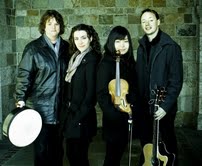
RUNA is Philadelphia-based: singer Shannon Lambert-Ryan is a home-girl who grew up at The Irish Center in Mt. Airy, first as a step-dancer with the O’Donnell School of Irish Dance, and later dancing at the Friday-night ceilis with her mom, Julie Lambert.  Percussionist Cheryl Prashker may have been born in Canada, but she was adopted by the folk scene here years when she joined up with the band Full Frontal Folk.  And Dublin-born guitarist, Fionán de Barra, had no choice; he became a full-fledged Philadelphian when he showed his brilliant taste by marrying Lambert-Ryan.

This is an album whose release I have long been awaiting, if only because I knew it would contain the song that I have come to think of as RUNA’s signature piece, “The House Carpenter/Jolene.” “The House Carpenter,” a traditional ballad that is also known as “The Daemon Lover” and “James Harris,” is a well-known work that tells the story of a young wife and mother who is lured away from her home by a former lover who promises her the world. Shortly into their voyage, she regrets her decision and is drowned, never to see the face of her young child again. 

Lambert-Ryan and de Barra were playing around with the tune one day, working with the verses: “There are many versions of the song…we wanted to craft the song to fit our style without changing it,” Lambert-Ryan explained. At the same time, they were listening to Dolly Parton’s classic song “Jolene,” and they realized that they could both be sung in the same key. Adding Prashker’s percussion underneath, the two songs blend perfectly, and create a brilliant and addictive take on an old ballad.

This is what comes through on the cd, the band’s love of “haunting melodies and universal themes.” Lambert-Ryan’s pure vocals shine on “I Wish My Love was a Red, Red Rose/Hector the Hero,” accompanied only by de Barra’s guitar playing. Simple, quiet and affecting, Lambert-Ryan preserves the original grace of the song while imbuing it with the passion that she imprints on everything she sings.

The title song, “I Am Stretched On Your Grave,” opens with Lambert-Ryan singing sean-nos, and then builds on the raw emotion of the tune as de Barra comes in with guitar, and fiddler Tomoko Omura draws the energy of the song to its conclusion. It’s an artistic fusion that creates a captivating and satisfying arrangement to the 17th century Irish poem originally titled “Táim sínte ar do thuama”.

Lambert-Ryan also sings several songs in their original Irish, “Cailín deas Crúite na mbó” and “Siúbhán Ní Dhuibhir.” The lovely ballad “Cailín deas Crúite na mbó” is performed with an effortless straightforwardness that captures the tale of “The Pretty Girl Milking a Cow,” while “Siúbhán Ní Dhuibhir” is infused with energy and percussion and the peerless flute playing of Isaac Alderson.

de Barra displays his own vocals on “Fionnghuala,” a tour de force of what has been described as Gaelic scat. The Scottish song was made famous by The Bothy Band, but de Barra’s version is a joyful gem that deserves its own place in the annals of Celtic music.

Throw in the instrumental “The Star of Munster,” which showcases Prashker’s percussion, de Barra’s guitar, and Alderson’s flute, and you have an album overflowing with stunning tunes and songs.

“Stretched On Your Grave” is an inspired album from a group that has found its voice, and its place, in the world of Irish music. With songs like “The Newry Highwayman” and “Lowlands of Holland,” played to traditional perfection with RUNA’s Celtic twist, it’s a CD that will get frequent play when you add it to the music shelf.

And those of you fortunate enough to live within traveling distance to Philadelphia can see them play live at their launch concert this Saturday, March 26th at The Irish Center in Mt. Airy.

For more information, check out their website: http://www.runamusic.com/

Music

Gaelic Storm Blows Into Town

Gaelic Storm: That's Steve Twigger second from the left.

Like Leonardo DiCaprio’s character in the blockbuster movie, Titanic, Gaelic Storm went down with the ship. However, it worked out well for this Celtic group, that started out playing gigs at a friend’s Irish pub in  a Santa Monica, California. Their screen time in the film—they’re the Irish band that gets DiCaprio and co-star Kate Winslet dancing on the tables in steerage—garnered them so large a following that since then they’ve spent as much as 200 days of the year on the road.

They appeared on March 24 at The Colonial Theater in Phoenxiville and writer/photographer Brian Mengini caught up with them. Here, his interview with Steve Twigger, GS’s Coventry, England-born guitarist and singer.

Your music definitely has a down home southern kinda feel to it.  Where does the inspiration come from?

Over the last 10 years or so much has changed.  I live in Austin, Texas now; I’ve been listening to a lot of the southern bands.  Ya know there is a lot of connection with the blue grass players as well. Irish music has an influence in a lot of bluegrass music.  So I think perhaps that connection exists.

You guys just raised over $16,000 for St Baldricks Foundation which is for children’s cancer research.  As a result, Pete and Patrick shaved their heads bald.  How did GS get involved with this foundation and how did you raise the $16,000?

Some time ago, we connected with some friends in Green Bay, St Brendan’s Inn.  Larry Fitzgerald who runs the place is an Irish fella who got involved himself with the St. Baldrick Foundation. Whenever we’re in town there, we stay at their hotel.  They run a great little hotel there with an Irish bar.  We actually play a couple of gigs right there at the bar.  It’s the only bar we play in America.  They wanted us to participate in this and they explained it to us.  We’ve seen the operation around the country but this was a chance to get involved and Patrick jumped straight on board.  I think it’s been three years now, three straight years that Patrick’s shaved his head and Peter Purvis joined in this year.  We sort of took it out on the road and every night just asked for donations which all literally just went into a bucket.  We counted up the money to the penny every night.  We’re finishing it on St Patrick’s Day and I think we’ll be up to about $17,000.  People have come up to us after shows and explained how that foundation has helped them also when his 4-year-old son was diagnosed with leukemia and he lost his job, the foundation funded him and kept him afloat for six months.

The song “Green Eyes, Red Hair” is that inspired by a true story?

Ya know, I think, there’s many true stories in there.  We’ve been on the road now for 15, 16 years and we’ve certainly met our fair share of fiery red heads.

What is the music scene like over in England versus here in the States?

Ya know, we’ve been out here so long.  When I was playing way back when in England, it was a completely different world.  So we really don’t know.  We’ve travel more in France and we were in Spain last year, more then we have in England or Ireland.  There’s a vibrant Celtic scene in the north of Spain and also in the northwest of France.  We’re hoping to get out to France and Spain again this year to play.  It is different.  It’s a lot more traditional, I would say.  I think they are starting to enjoy the sort of crossover now and the more contemporary feel that bands like ourselves bring to what they consider to be their music.

What is your favorite GS song to play live?

Strangely enough, we’ve been doing an old children’s song from Belfast that we’ve been doing since the first time we started playing together called “Tell Me Ma.” I mean it’s a very popular song in the Irish community–every Irish band plays it.  No matter what happens, we tend to throw it in at the end of every night, especially when there’s a really rowdy crowd.  It just seems to close the night up perfectly.

Speaking of rowdy, what’s the rowdy’s place or show you’ve done?

We get up to northern Minnesota, up in Minneapolis.  Up there in the winter, ya know, their winters are severe. I think people get a bit of cabin fever.  We were up there just a few weeks ago and the crowd’s  crazy up there.  But like I say, I think it’s a bit of this cabin fever.

GS has a really wonderful outreach program with Pub of the Month, Storm Chasers, etc, which I think is great!  People love feeling like they are a part of something – that sense of family or more intimate communal circle!  How do you come up with the ideas for these initiatives?

I come from an advertising background.  I have an art degree and was an art director in advertising for about 12-13 years, doing advertising in Los Angeles and London.  Everybody throws in their ideas and we just do them, ya know.  We don’t think too hard about it.  As far as the pub of the month goes, we pretty much try and get out and meet our fans at the pubs at most places.  We just sort of put a name to it.  Storm Chasers is our version of our fan club.  It’s not that unusual, we just put a name to it.

How long are you generally on the road for?

We all have wives or significant others.  We try not to be out for more than three weeks or so.  This tour is about three months long and in that three months, I think we’ve been home for about ten days.   So it’s a sort of grueling tour.

What makes Cabbage different then previous albums?

We don’t sort of set out to make anything a bit different.  We don’t have a preconceived notion of reinventing the wheel.  We let our influences take over and then don’t hold back.  I think if there was an effort, it would be to get closer and closer to the feel of our lives shows.

How long did it take you to make it?

It’s all studio time.  6-8 weeks.  There are all kinds of writing sessions and pre studio sessions.  When you are coming down to it I guess about two months.

For someone who hasn’t been to a Gaelic Storm show, what can they expect?

Ya know, it’s a question I get asked a lot.  We’re known for our live shows.  It’s a lot of energy, a lot of participation from the audience.  We’ll put together a set list that brings famous songs from all of our CD’s.  We have 7 studio CD’s.  We’ll involve the audience and get them out of their seats!

What advice do you have for a band wanting to progress from a local band to a national or festival band?

It’s a hard transition to make because it’s an expensive proposition to head out.  It does require funding.  It’s easy to perhaps get gigs on Friday and Saturday nights but to then stay out on the road of course you have to be working Sunday, Monday, Tuesday.  You end up making your money on the weekend then losing it during the week.  So most bands start out just doing short runs until they build up a reputation then they can push their Friday and Saturday night shows back in the week when they get popular.  Just in general to any band, make sure you have a story, make sure you have something that is of interest to people.


Columns

The Wild Geese

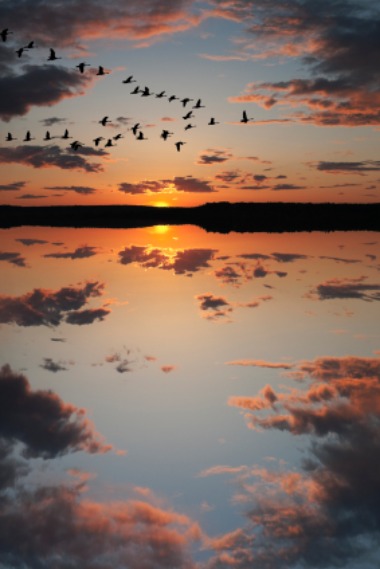
Wild geese. Photo from iStockphoto

By Tom Finnigan

On a business trip to Savannah in Georgia, I showed some pictures of Malin Town to my American supplier.

“That’s a real pretty place ya have there,” Dozier Cook said. “D’yall have ya own mayor and sheriff?”

I pondered this driving over Malin Bridge on my way home from Dublin Airport. Slowing down for horse riders near Rose Cotage, I imagined John Henry McLaughlin, the chairman of our Tidy Town committee, raising a posse to chase the boy-racers of Carndonagh. Star glinting in his lapel, I saw him on a white stallion leaping ditches of red fuchsia to head off a souped-up Toyota that roared along the Lagg Road.

Back home in Goorey, looking into Trawbreaga, I watched a cormorant patrol the bay dam-buster style, wings flicking the water. I heard curlews cry and smelt salt. I was home from a distant place. Not like those Earls – The O’Donnell and The O’Neill – whose flight from Rathmullan ended in exile four hundred years ago. More like the wild geese that come and go with the seasons.

In Manchester, my parents belonged to The Wild Geese club. We were a family of emigrants who celebrated a romantic Ireland that existed only as a myth to expunge the bitter memories of Mayo poverty. As my father’s business grew, we explored Kerry and Sligo, even came to Donegal. Aer Lingus offered a car-carrying service and once we flew with a car from Speke to Dublin.

Today everyone travels. If O’Neill and O’Donnell were still here, they could fly to Spain or Italy in a couple of hours with Ryanair, instead of waiting for wind off Fanad Head.

A week later on a visit to my sick father, I arrive in Manchester four hours after passing Slieve Snacht. “It took us three days to get to England,” he recalls. “And now they fly from Knock to do their Christmas shopping in New York…”

Stomach cancer makes it hard for him to eat. His flight is ending, wheels are down, seat-belt fastened. “I’m as week as a traneen,” he whispers over breakfast, mouth smeared with porridge. “D’ye know what a traneen is?” I shake my head. “It’s a small bladeen o’ grass – and not a very good one at that…”

When I return to Malin, white water jumps in Trawbreaga. Smoke drifts on the Isle of Doagh, and a breeze carries the smell of burning turf. I carry sods in a basket – the same fuel they carried to keep O’Neill warm on his last night in Rathmullan, the same sods my father dug in the bog below Killinaugher.

They sold Guinness in the Kevin Barry Pub in Savannah. There was bacon and cabbage on the menu and someone sang ‘Danny Boy’. The place reeked of tobacco and sweat. In a corner by a rocking chair, I noticed a basket of turf.

“Do they burn it?” I asked my friend Dozier Cook.

“Whatever for?” he replied.

The geese have returned to Inishowen for winter. On their evening passage from feeding by the Swilly, they honk and swoop in an arc towards Glashedy. I watch them swing towards a blood-red sun.

O’Donnell and O’Neill never returned to Ireland. Nor will my father.

I raise a glass of iced gin to toast all who pass from one place to another. Slainte!

“We are like grass which springs up in the morning,” the psalmist sings. “In the morning it springs up and flowers: by evening it withers and fades.”

Like a traneen.


How to Be Irish in Philly

How To Be Irish in Philly This Week

Matt Cranitch and Jacky Daly. Photo by Con Kelleher

We’re winding down St. Patrick’s Month—as it’s known in Philadelphia—but this is such an Irish region, there’s still plenty to do if you haven’t Irished yourself out.

This weekend, one of my favorite Celtic groups, RUNA, debuts its new CD, “Stretched in Your Grave” and its newest band member, Tomoko Omura, a native of Japan, a graduate of Berklee College of Music in Boston, and a jazz violinist in New York. Omura a perfect addition to a band that is one of the more successful at creating a fusion of Irish trad and any other style their little hearts desire. The CD release party is Saturday at Philadelphia’s Irish Center, 6815 Emlen Street, in the Mt. Airy section of the city. The band recently won nine awards at the Montgomery-Bucks Music Awards. Members—Shannon Lambert-Ryan, Fionan de Barra, and Cheryl Prashker–have variously played with some of the best–Solas, Clannad, Moya Brennan, Eileen Ivers, and our own local Full Frontal Folk.

At ACT II Playhouse in Ambler, catch the The Pride of Parnall Street by Sebastian Barry, the latest entry in the Philadelphia Irish Theater Festival.

At St. Paul’s Church in Chestnut Hill, father and son musicians Mark and Tim Carroll will play Irish and Scots music in a benefit for peace activist Roy Bourgeois on Saturday night..

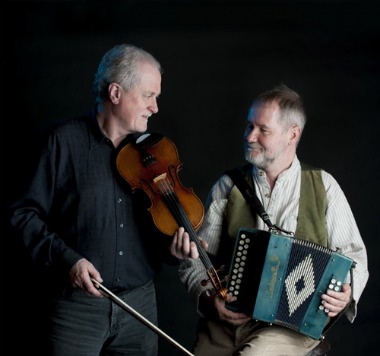
And a real treat—button accordian player Jackie Daly and fiddler Matt Cranitch will take you back to old Ireland at the Coatseville Cultural Society on Sunday night. Daly was born in the Sliabh Luachra region between Cork and Kerry. The area is known for its lively—some say wild—musical style filled with polkas and jigs that will wear your legs off. Expect some aching thighs after the concert. He’s joined by Cranitch, a multiple all-Ireland fiddler whose doctoral thesis at the University of Cork was about the Sliabh Luachra fiddle tradition.

Speaking of treats, one of Ireland’s other premier fiddlers, Kevin Burke, along with multi-instrumentalist Cal Scott, will be at West Chester University twice this week. On Wednesday, they’re conducting workshops as a lead-in to their Thursday concert at the Madeline Wing Adler Theatre on the West Chester campus.

If you’re a trad music fan, this is what is known as an embarrassment of riches.

We welcome April on Friday with singer-songwriter Seamus Kelleher (late of Blackthorn) at the School of Rock in Doylestown, part of its Guest Professor Program.

And next Saturday, head to the Springfield Country Club for the 10th annual Philadelphia Rose of Tralee Selection Night Gala where judges will pick the 2011 Philadelphia Rose. I was a judge last year and it’s always a lovely event.

As always, check the calendar for details on these events. And keep checking back. Procrastinators are always adding more.


Sports

“Donnybrook” Says It All

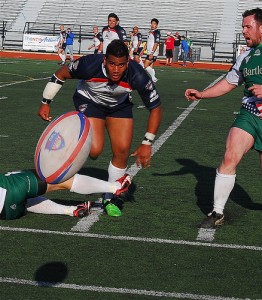
Our photographer got a little too close to the action.

Our photographer got a little too close to the action.

24-8.

That was the final score of the Donnybrook Cup in Northeast Phildelphia on Saturday, with the Irish Wolfhounds decisively winning over the USA Tomahawks.

For those new to rugby, this game was a real eye-opener. We thought hurling was nuts, but then we saw this bruising, fast-moving game—which is like American football, but without the helmets and pads, and absent all those long, dreary pauses that coincidentally take as long as a beer commercial.

The lads of the USA fought back valiantly, but in the end the Wolfhounds simply dominated and came away with the trophy.

We’re still not sure we could explain the rules, but these pictures will give you a sense of things.