How to Be Irish in Philly

How To Be Irish In Philly This Week

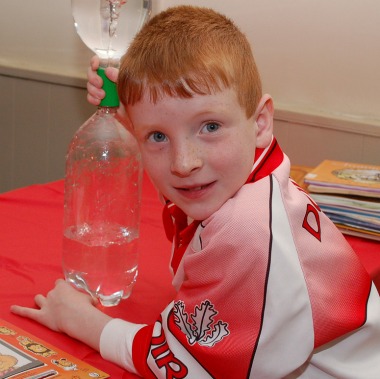
Jack Wink is dressed for the Derry Spring Social.

I don’t know about you, but that Royal Wedding tired me out. I stayed up all night making my hat. I donated it to Habitat for Humanity and a family of four is living in it now.

But I’m not too tired to be heading into Philadelphia tomorrow night to see “Dublin by Lamplight,” the latest play in the Philadelphia Irish Theater Festival, produced by the Inis Nua Theatre Company. The play, a tragi-comedy (which is to say it’s Irish) will be at the Broad Street Ministries until May 14. Read more about it here.

There’s plenty going on this week to keep everyone happy. You dancers! The AOH Notre Dame Division 1 in Swedesburg is holding a ceili on Saturday night at 7 PM featuring the musical stylings of Kevin, Jimmy and Judy—that’s two McGillians and a Brennan—family names synonymous with ceili music in the Philadelphia area. It doesn’t get any better.

On Saturday, AOH Div. 87 is holding a beef and beer at their hall on Wakeling Street in Philadelphia to raise money for the families of Irish prisoners of war. Raymond Coleman and Pat Close and the Brigade are providing the music.

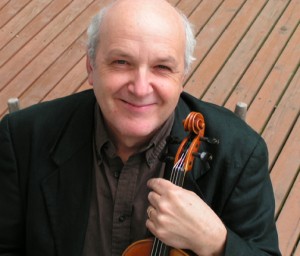
Remarkable fiddler Randal Bays and guitarist Davey Mathias will be performing at the Coatesville Cultural Center—another blockbuster concert from Frank Dalton.

On Sunday, bring the kids and yourself to the Irish Center as the Derry Society holds its second annual (we hope) Derry Social with three bands, great food, and lots of games for the kids. We went last year and had a ball.

The AOH is busy this weekend. The Gloucester County AOH is holding a memorial event on the 30th anniversary of the Irish political prisoners’ hunger strike of 1981 during which 10 young men, including Bobby Sands, died.

On May 5, Irish Network-Philly is going to mix some ethnic metaphors. They’re holding a Cinco de Mayo Happy Hour at Tir na Nog on Arch Street in Philly. Actually, it’s a celebration of the first anniversary of this organization founded to bring together disparate parts of the region’s Irish community. Happy Birthday, IN-Philly!

Speaking of anniversaries—the Galway Society is celebrating its 102nd (gosh, you don’t look a day over 100) on Saturday, May 7, by throwing a dinner-dance at the Irish Center, starting with an open bar at 6 PM, followed by dinner and dancing to music by the Vince Gallagher Band and Friends. Happy Anniversary to our friends from Galway!

As always, check our calendar for all the details. And check back during the week, since we’re always adding more.
 

History

Remembering the Patriots of 1916

Local Irish organizations, including Clan na Gael, Irish Northern Aid and the Ancient Order of Hibernians, gathered Sunday at Holy Cross Cemetery to commemorate the 95th anniversary of the 1916 Easter Rising.

Gathering at the gravesite of Joseph McGarrity, who coordinated and provided financial support for those who sought to drive the British out of Ireland, they recalled the names of many patriots for whom Holy Cross is also their final resting place. There’s a fair number: Martin Noone, Danny Catalan, John Ryan, Danny Duffy, Luke Dillon, John Devoy, Tom Mylott. And it’s probably not all.

Ireland is an ocean away and 1916 is a long time ago, but in Philadelphia, they’re not forgetting.

Music

Randal Bays’ Musical Journey

Randall Bays

Randall Bays

OK, granted, Randal Bays already was a serious musician before he took up Irish fiddle. He started on trumpet when he was 8, and went on to make his mark as a classical guitarist.

All the same, Randal Bays’ subsequent accomplishments as a fiddler, universally hailed as one of the most expressive and creative of his generation, is all the more remarkable in light of these facts: a.) He stumbled into the Irish musical tradition completely by accident, and b.) He is self-taught.

Among Irish musicians, the story of Bays’ introduction to traditional music has passed into legend. The story goes like this: One night in 1978, while accompanying a couple of friends to the Medieval Inn in his Portland, Oregon, stomping grounds, Bays witnessed the glorious spontaneity of a traditional Irish music session for the very first time.

He recalls that fateful evening.

“It was raining hard,” he says. “I had some friends who were involved in Irish music. I didn’t know anything about it, really. I’d heard some Chieftain albums. These friends, I thought they were really pretentious, going around wearing their caps and drinking Guinness. But they took me to hear this music, and that’s what did it. This was the first time I’d heard really great traditional music played in a session atmosphere and it really got to me.”

Bays remembers being impressed by both the music itself and the camaraderie of the musicians. In short, the same things most Irish musicians love about a session.

“There’s this combination of the potency of the music coupled with the intensity of good feeling that goes on in a good session,” Bays says. “If not unique to Irish music, it’s something that I love. Another thing that really thrilled me was the discovery of a whole room full of people focused on melody. We are all melody, all the time.”

That he gravitated to fiddle of all instruments, he says, is not surprising, given the makeup of sessions in Portland in the 1970s. Sessions back then were 80 percent fiddle, if not more, he says.

Too, Portland had no shortage of truly fine fiddlers to learn from and emulate, such as the virtuoso Kevin Burke.

As an already gifted musician, Bays wasn’t all that daunted by the prospect of self-instruction, and he set about learning by listening. Only later did he realize that, in teaching himself, he picked up many good techniques—but also a few that did not serve him as well.

“There were people around who were very good players,” he says. “I spent a lot of time with Kevin. With the fiddle, I learned, it’s all in the bowing. Someone at some point has to show you how the bow might work. It’s not intuitive. But basically for me, I was into it several years, and I realized I wasn’t going to progress unless I took it apart and started all over again.”

Did he ever. Not only has he become one of most the creative and expressive Irish fiddlers in America, reknowned for the delicacy and precision of his bow work, but he has also become a much sought-after teacher, sharing what he knows at the prestigious Willie Clancy Summer School and Festival, Catskills Irish Arts Week in New York, the Swannanoa Gathering, among many others. Of course, Bays would also include the Friday Harbor Irish Music Camp in Roche Harbor, Washington, which he co-founded with with Dan Paulson. Bays is equally well-known as a fingerstyle guitarist who has accompanied many of the finest Irish musicians in the world.

He long ago moved up to a fiddle worthy of his mettle, as well. The fiddle he now plays was custom crafted for him by Andranik Gaybaryan, now living and plying his trade in Amherst, Massachusetts. The award-winning Morgan Andersen of Rosalia, Washington, made the bow.

“I love this fiddle. Gaybaryan trained in Russia and he is also a great player. He is one of a handful in people in North America who understand the sound production of these instruments,” Bays says. “The trouble with the fiddle and the bow now is, I can never blame my equipment. If there’s anything wrong, it’s all my fault.”

See if you can catch him in a mistake (good luck) when he appears in concert with guitarist Davey Mathias at the Coatesville Traditional Irish Music Series, 143 East Lincoln Highway, on Saturday, April 30 at 8 p.m. For details, visit: http://www.ctims.info/

People

The New “Rose” Talks About Her “Pet” Project

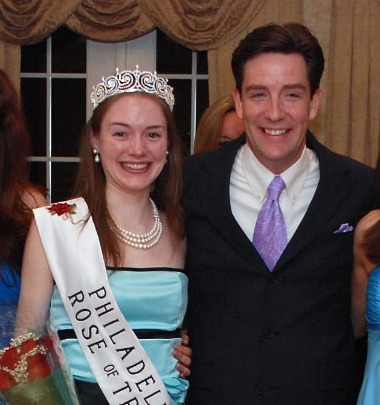
2011 Philadelphia Rose of Tralee Beth Keeley with CBS3 reporter and host for the Rose event, Jim Donovan.

By Beth Keeley

2011 Philadelphia Rose of Tralee

I grew up in a typical Irish-American household. I knew my family came from Ireland and I took pride in being Irish, but I didn’t have much more information beyond that. I didn’t know what counties my family came from or even which generation it was that came over. My Irish pride spanned the likes of taking Irish step dancing classes, eating ham and cabbage for dinner on St. Patrick’s Day and crying whenever “Danny Boy” played on the radio. My family, like many Irish-American families, is more culturally Irish by choice, rather than having a history passed down.

In the past few years, though, I’ve started to take a more serious interest in my Irish roots. I recently hired a genealogist to trace my father’s families – the Keeleys and the McKeevers. It turns out that they are from County Donegal and County Mayo. More shockingly, I discovered that I am fourth generation. For not knowing a thing about my family tree to learning that I am fourth generation was a pretty big and exciting shock.

Since then I have started to seek out ways to become more in touch with my Irish heritage. I entered the Rose of Tralee contest on a last minute whim. A week before the contest I decided to give it a try just to see what would happen. I wanted to become more involved with the Irish community and the Philadelphia Rose of Tralee Centre focuses heavily on charity work, which was a huge draw for me.

The Philadelphia Rose of Tralee selection night was a big success. There was live music, great food and – most importantly – the friendliest and most welcoming people I have come across in a long time. All of the Rose contestants embraced and encouraged each other. We all joked and danced together and had the best intentions for each other while each girl stood in front of the audience to answer questions. The Rose motto, “camaraderie, not competition” proved to ring very true.

The families and friends of other Rose contestants were just as welcoming. Even though the night started out as a room full of strangers to me, I quickly felt at home. People I had never met before were wishing me well and I could tell that they genuinely meant it. I felt the true Irish welcoming spirit.

As the end of the night neared, the Rose contestants knew a winner would soon be announced. As much as we all wanted it for ourselves, we all wanted it just as much for one another. When I was named the winner at midnight, I just stood there frozen. I didn’t believe it. I was handed flowers, a sash and a crown, but it still didn’t seem real. So I did the only thing I could do, the one thing the Irish do when they are happy: I cried.

Once the reality of winning settled in, I decided that the charity I would fundraise for would be the non-profit organization PAWS, The Philadelphia Animal Welfare Society, the only no-kill animal shelter in Philadelphia. A few months prior to entering the Rose, I adopted a cat from PAWS. I never was much of a cat person before, but Ronan has become a part of my family. The Philadelphia Animal Welfare Society treats their shelter animals properly and has proven to be a shelter that deserves additional recognition and support.

Although my trip to Ireland for the Rose of Tralee Regionals is fast approaching (the first week of June!), I have already begun to organize fundraising events for PAWS. On July 24 from 2-6pm at the Willows Mansion in Radnor, the Rose Centre will be hosting a “Dog Days of Summer” BBQ family social. Adoptable pets will be present and all proceeds from the event will go to PAWS.

The Rose of Tralee started out as a last minute decision, but has quickly exploded into a valuable and rewarding aspect of my life. I am honored to be the 2011 Philadelphia Rose of Tralee. The never-ending opportunities for charity work and socializing are irreplaceable experiences. Beyond that, though, the Rose of Tralee has brought me closer to my own Irish heritage, which is something that I could never be thankful enough for.

Editor’s note: The Philadelphia Rose of Tralee Centre will also be participating in the Susan B. Komen Race for the Cure to raise money for breast cancer research. The race is held in Philadelphia on Mother’s Day, Sunday May 8. To donate to the Rose team, visit the donation page online.


How to Be Irish in Philly

How To Be Irish in Philly This Week

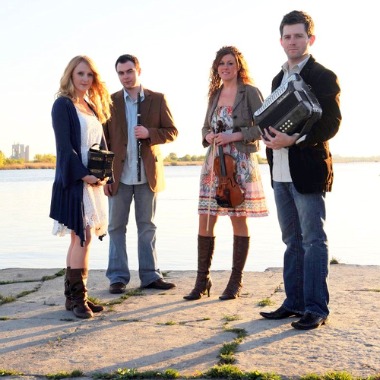
NicGaviskey: a group from both sides of the Atlantic will perform Saturday at the Irish Center.

The Easter Bunny isn’t the only visitor showing up this weekend.

On Saturday at The Irish Center in Philadelphia,  the Philadelphia Ceili Group is hosting NicGaviskey, a lively and authentic Irish traditional band from both sides of the ocean that includes flute player Sean Gavin, fiddler Bernadette Nic Gabhann, concertina player Caitlin Nic Gabhann and accordianist Sean McComiskey. Think of it as the girls from County Meath meeting the boys from Counties Detroit and Baltimore. And actually, that’s what happened. They all ran into one another at the Catskills Irish Arts week in upstate New York in 2009 at an early morning session and the rest, they say, is history.

Caitlin NicGabhann is a three-time All-Ireland concertina champ and a regular on National Irish Radio as well as an accomplished Irish dancer who has toured with “Riverdance.” Her sister Bernadette has performed with Michael Flatley’ “Lord of the Dance” and done solo gigs and tours throughout the world.

Sean Gavin’s from Detroit but this flute player is the son of Clare-born, Mick Gavin, a fiddler. Sean McComiskey of Baltimore is the son of celebrated accordian player Billy McComiskey.

It promises to be an amazing evening.

It’s always an amazing evening with RUNA, the award-winning local Irish band that combines some interesting musical sensibilities—a little jazz, a little country—with some solid Irish traditional style. They’re at Godfrey Daniels in Bethlehem on Saturday night.

You can also catch the Broken Shillelaghs at McMichael’s Pub and Grill in Gloucester City (fabulous place!) and The Shantys at Daly’s Irish Pub in Philadelphia on Saturday night.

Just a note on Molly Maguire’s in Phoenixville: They’ve instituted “Supper and a Session” on Sunday at the pub and kids eat for $1! They’re hoping that plenty of young Irish dancers will come for dinner and a jig, not necessarily in that order.

On Monday, join the Gloucester County AOH at the Richard Rossiter Memorial Hall in National Park, NJ (right over the bridge from Philly) for its Easter Monday flag raising. The event is followed by a Mass and lunch and is open to all.

The Inis Nua Theatre Company’s ambitious production of “Dublin by Lamplight” opens for preview on Tuesday at Broad Street Ministries in Philadelphia, across from the Kimmel Center. It opens the following day for a two-week run. Read more about it here.

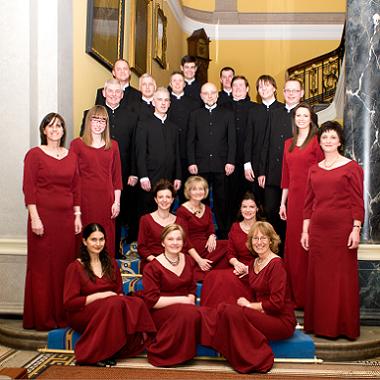
Later in the week, a post-Easter treat. Cappella Caeciliana, Northern Ireland’s foremost liturgical choir, will be performing two free concerts, the first at St. Thomas Church on the Villanova University campus on Wednesday and the second at St. Malachy’s Church in North Philadelphia on Thursday. Read our story on this remarkable choir.

On Friday, The Reading Phillies are holding Irish night as they go up against the Portland Sea Dogs at First Energy Stadium in Reading. If you’ve never been, the Reading Phils play ball like it should be played—in a stadium where you’re close to the action and food doesn’t cost an arm and a leg. It’s a great family evening.

Check our calendar for all the details, and Happy Easter!


Music, News

Belfast Choir Coming to Philadelphia

Cappella Caeciliana

I have heard the Heavenly Host and it is 20 people from Belfast.

In their real lives, they’re bankers, priests, music teachers, insurance brokers and telecommunications workers. But when they sing, Cappella Caeciliana, Northern Ireland’s premier liturgical choir, will literally make you feel like you died and went to heaven.

They’re coming to the Philadelphia area the last week in April for two concerts, one at Villanova and the other at St. Malachy’s Church in Philadelphia, bringing 18 singers, a playlist of religious and Irish music, and a brand new composition by Neil Martin, who, as a musician, has played alongside Sinead O’Connor, Phil Coulter, Altan, and the Dubliners and records on Universal with his own West Ocean String Quartet.

Founded in Belfast in 1995 on the feast of St. Cecilia, the patron saint of musicians, Cappella Caeciliana specializes in liturgical music that’s largely gone from weekly worship. When was the last time you heard your church choir sing “Tantum Ergo?” Or “Ave Maria” in Latin? Or “Jesu Joy of Man’s Desiring?” Many younger Catholics will have to say, “Never.”

Choir member Phillip O’Rawe, who works for British Telecom, says the choir was started to “prevent that tradition from dying out.

“A lot of what we sing would rarely be heard at Mass because it’s a lot of Latin stuff from the 16th century and requires a reasonable advanced choir to sing it,” he says. “Although we do a wide range of music, including Irish music, from the 16th century till today. We just don’t sing secular music, except for the Irish stuff which we do for tours and concerts.”

When the choir was formed it was largely all Catholic. “It was started by three priests and a couple of other guys who roped in their friends,” O’Rawe says.

And those three priests? They’re “The Priests,” the break-out group made up of Fathers Eugene O’Hagan, Martin O’Hagan (they’re brothers), and David Delargy who have three CDs on Sony (one spent 13 weeks on the UK classical album charts) and can fill a concert hall the way many priests these days wish they could fill their pews.

Cappella Caeciliana is no slouch in the CD department either. They also have three, including Cantate Domino (2001), Sing for the Morning’s Joy (2005) and O Quam Gloriosum (2008), all available at CDBaby.com, where you can listen to excerpts of their music. The priests are on the CDs, but as  part of the choir. “If we had known [The Priests] were going to be famous we would have had them do some things as a trio and we could make a lot of money,” jokes O’Rawe, laughing. (The poverty, chastity, and obedience vows are still in place: the priests are hardly rock stars since they continue their parish work and fit their musical careers around daily Mass, baptisms, weddings and funerals.)

The choir members are not all Catholics anymore. “Over time we changed and spread the net wider to keep bringing new blood in,” says O’Rawe. “But everyone in the choir has a feeling for the music. A lot of the members have have grown up with the music and have sung in other choirs. It’s very much their own ethos and the underlying religious significance is important to them. I think if people believe what they’re singing, they’ll give a better expression of it.

“Not that we’re a bunch of holy Joes going around all day in prayer,” he adds quickly, laughing. “Still, we try not to have our pictures taken in pubs because it might get used in the wrong way!”

Having Protestants in the choir will likely be helpful when the choir sings choral evensong at the National Cathedral in Washington, DC, on April 29. “It’s Anglican and we’re used to Anglicans and the way they do psalms,” says O’Rawe. “They’re very much into chanting, which is more English style, while ours is a much more Italian style of singing.”

And being from Northern Ireland has had its perks. The concerts are free because the choir was able to get funding from both the Arts Council of Northern Ireland (via the UK National Lottery) and Culture Ireland, the Irish republic’s international arts program. The National Lottery made it possible for the choir to commission a new work from Neil Martin, “Exsultet,” a traditional Easter song of praise, to be premiered in Northern Ireland and on the US tour.

The only thing required to join Cappella Caecilia is the voice of an angel. When O’Rawe joined the choir at its inception, there were no auditions as there are now. Having an exceptional voice is vital: Except for the occasional organ accomaniement, the choir, as it name suggests, sing a cappella. “And there’s no hiding place in a choir of 20,” he points out.

Cappella Caecilia will perform at 7:30 PM on April 27 at Villanova University’s St. Thomas Church on the Villanova Church and at 7 PM on April 28 at St. Malachy’s Church, 1429 North 11th Street in Philadelphia. Both concerts are free.


Arts

The Roar of the Greasepaint

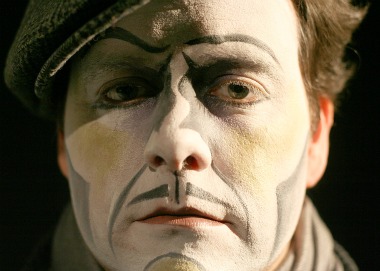
Actor Jared Michael Delaney, in character. Photo by Katie Reing.

Can six actors play 40 characters while wearing painted-on masks?

We’re about to find out. The Inis Nua Theatre Company’s production of the ground-breaking play, “Dublin by Lamplight,” opens on April 27 at Broad Street Ministry on the Avenue of the Arts in Philadelphia.

The play is set in 1904 when the King of England is paying a visit to Dublin where Republican sentiment is high and the atmosphere volatile. At the same time, a group of actors in the “Irish National Theatre of Ireland” are trying to put on a play called “The Wooing of Emer.” While the company producer is doing a little wooing himself—of a local rich woman who is leading protests against the British and whom he hopes will fund the play—his brother is gathering explosives to protest in his own way.

Inis Nua Artistic Director Tom Reing has been waiting a long time to bring the play to the US. He first saw it in 2004 when he was training at England’s Corn Exchange Theatre Company. Written by Michael West, whose “A Play on Two Chairs” was Inis Nua’s debut play, “Dublin by Lamplight” was directed at the Corn Exchange by Chicago-born Annie Ryan, who is also West’s wife. It wasn’t until Reing was able to get funding (and not by wooing any local rich women) that he was able to afford to produce a play with six actors. (And he’s not saving money by making them play 40 parts—it’s in the play.)

“It’s a dream come true for me,” Reing says. “This is the play that inspired me to start Inis Nua and we’re finally doing it.”

There’s more than a hint of Commedia dell’arte about “Dublin by Lamplight.” In the Italian style, the actors’ faces are painted to look like masks, so their characters and emotions are revealed instead by their voices, facial contortions and physical movements. It’s also true to Corn Exchange Theatre Company’s mantra, says Reing: “dancing on the razor’s edge between the grotesque, the heartfelt, and anything for a cheap gag.”

Funding for the play, which came from the Pew Center for Arts and Heritage through the Philadelphia Theatre Initiative, the Wyncote Foundation, the Charlotte Cushman Foundation and the Independence Foundation, also allowed Reing to bring in musician and composer John Lionarons to provide an original score.

“The music underscores the entire piece. It makes it feel like a silent move soundtrack but obviously we have dialogue,” Reing says.

Though Inis Nua’s season of Irish, English, Scottish and Welsh plays are usually staged at the Adrienne Theatre on Sansom Street, “Dublin by Lamplight” will unfold in the Sunday school room of the Broad Street Ministry which now occupies the Chambers Wylie Presbyterian Church, a Gothic Revival Church built in 1901, right across from the Kimmel Center. The setting couldn’t be more apt.

“There are six archways on two floors where all the classrooms were and the center of the room where they used to have choir practice is what we’re using for the performance,” says Reing. “Since the play takes place in 1904, we’re getting a lot of mileage out of the setting. We knew we couldn’t use the Adrienne because the style needed depth and height. We use only one chair, our only set piece, with a backdrop. The physicality transforms the stage. There’s a lot of ambiance.”

And, like many Irish plays, it is “riotously funny,” Reing says, “and then at the very end. . .well, I’m not going to tell you.”

You won’t have to wait for it for too long. Preview night is April 26, and the play officially opens April 27 and runs till May 14. Tickets are $20, $25 and $30 and can be ordered online or by emailing the box office at boxoffice@inisnuatheatre.org.

The play stars Jared Michael Delaney, Mike Dees, Kevin Meehan, Charles Delmarcelle, Megan Belwar, and Sarah Van Auken. Makeup by Maggie Baker.

See more of makeup artist Maggie Baker’s magic here. Photos by Katie Reing. And go behind the scenes at Inis Nua’s blog.

Music

Review: “800 Voices,” by Danny Ellis

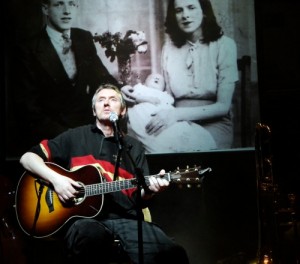
Danny Ellis in concert.

Danny Ellis in concert.

I apologize in advance for just now getting this. Danny Ellis’s “800 Voices” arrived in my mailbox a couple of months ago, and then St. Patrick’s Day and all the mayhem surrounding that day landed on me, and I just put it off.

In any case, I don’t want to let my slowness off the mark signify in any way my feelings about “800 Voices.” It’s a brilliant, if haunting piece of work.

Danny Ellis is a survivor of the notorious Artane Industrial School, in Dublin’s Northside, operated with wanton cruelty and unrestrained brutality by the equally notorious Christian Brothers. Clearly, their mission—to care for young children, many of them orphans, some of them categorized as delinquents—was wholly uninspired by Jesus Christ.

Ellis was committed to the school by his ailing mother, who was unable to care for her five children. Two of his brothers went to a school in Rathdrum, and two sisters wound up in an institution for girls in Booterstown. Young Danny Ellis entered Artane in 1955. He remained there for eight years, released when he turned 16. Artane, opened in 1870, was the largest of Ireland’s industrial scholols. According to the Commission to Inquire into Child Abuse, which investigated such schools, the Christian Brothers’ use of corporal punishment was “systemic and pervasive.” Allegations of sexual abuse and neglect also surfaced.

In light of that ugly history, you might suspect that Ellis’s cathartic musical recollection of his sad days at Artane could be a bit hard to take. And make no mistake, Ellis is unflinching in his depiction of his struggle at Artane—the fear, hunger, brutality, anger and lingering resentments.

Take, for example, these searing lyrics from Ellis’s “Innocence Back”:

They shattered our bodies
and they scattered our minds,
they broke us and beat us
’til we were twisted in time.
Then they cut us all loose
like rats in a sack,
now there’s no amount of money
gonna give us our innocence back.

And yet, for all the harrowing memories, “800 Voices” ultimately lands in a very hopeful place. The trauma of life in Artane clearly continued to color Ellis’s worldview for many of his adult years, but ultimately “800 Voices” makes you believe in redemption.

One reason Ellis is able to give voice to the poignant and painful memories that many others have kept submerged is that, after years of suffering what he refers to a “vague discontent,” he was able to connect with his feelings and find peace through meditation.

But way before that, when he was still a child navigating life at Artane, Ellis’s soul remained open to even the faintest possibility of joy. He found comfort in small things—the singing at Mass of another student, Tommy Bonner, and the arrival of summer signified by the Brothers’ issuance of soft red leather sandals to replace the usual stiff hobnail boots. And speaking of that rugged footwear, there’s a cute little song, “Who Trew Da Boot,” about the loud bang produced by an ancient loaf of bread on the dormitory floor after lights out. McCarthy, the ridiculous nightwatchman investigated, and assumed that the loud noise (the bread now safely hidden) was the result of a student tossing one of those heavy boots. “When 150 kids share a joke that the adult is not privy to,” Ellis writes in his liner notes, “suppressed laughter doesn’t remain suppressed for very long.”

But ultimately, Ellis found a sanctuary within Artane’s walls—a “friend,” as he puts it in another song—in music. Early on, he was recruited for the Artane Boys Band. He played trombone, blowing his lungs out. As he sums up his feelings in “The Artane Boys Band:”

There was nothing in this wide world as glorious or grand as the blast of freedom’s yearning from the Artane Boys band.

When he left Artane, Ellis carved out a musical career for himself, playing trombone in a string of Irish show bands, writing tunes for a time, and working as a session singer at London’s Abbey Road studios. (You’ll hear his trombone on the jazzy “Innocence Back.” He hasn’t lost his touch.)

For most of the CD, of course, Ellis accompanies himself on guitar and piano, but he also surrounds himself with some outstanding musicians: Duncan Wickel on fiddle, whistle and and uilleann pipes; River Guerguerian on hand and frame drums; and the mighty John Doyle on guitar bouzouki, mandolin and banjo.

It’s going to be some time before Ireland recovers from the bleak legacy of the industrial schools. Still, Danny Ellis offers ample evidence of the strength and power of the human spirit to overcome even the most tortured past.