Music

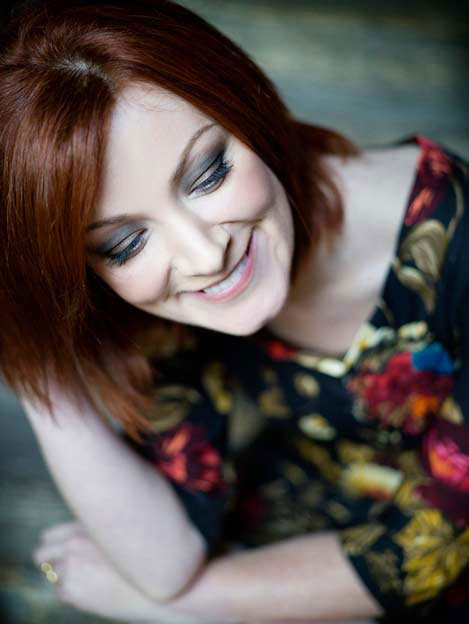
Órla Fallon: Living the American Dream

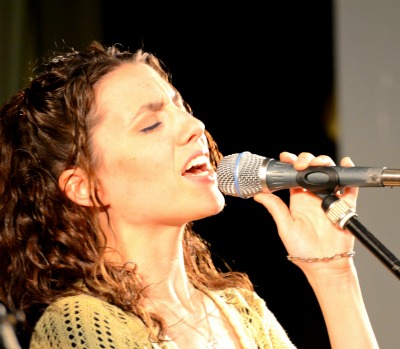
Órla Fallon

Órla Fallon

Órla Fallon can’t remember a time when she didn’t sing.

You’ll remember Fallon as one of the original members of Celtic Woman—she’s the one with the harp and the glorious voice. Like so many exceptional Irish musicians, Fallon grew up surrounded by the tradition.

“I’ve been singing since I was a very small child. I was singing before I could talk,” she says. “My love of music and singing was encouraged from a young age. My mother (Eileen) comes from Kerry, and her parents gave her a deep love of Irish language and folklore. When we were little, we would spend a good deal of time down in Kerry. Many of the songs I sing I learned from my grandmother (Bridget Clifford). I think of singing songs with her in the kitchen then, and singing the same songs now in America. I’ve never known anybody who has such a passion for the old traditional songs. I think she gave me the passion.”

You can hear that passion ringing through in Fallon’s stage shows (she’ll be at Bethlehem Musikfest on Thursday, October 6), her televised concerts, and on her albums, including the most recent, “My Land.”

Maybe Fallon was always going to be a talented singer. For that, she can thank her parents and grandparents. As a player of Celtic harp, she’s doubly gifted. And for that, she can thank the Sisters of St. Joseph of Cluny.

“I was a teenager, 13, when I started,” Fallon says. “I was really lucky. I went to a boarding school in Phoenix Park, Dublin, called Mount Sackville. It has a brilliant harping tradition. My mother was really excited when she heard about it. When I heard (one of) the nuns playing the tunes and found out she was friends with Derek Bell of the Chieftains, I just fell in love with it. If I had not gone there, my life would have been so different.”

With so much talent, it was clear from an early age that Fallon was never going to remain just a farmer’s daughter from Knockananna, County Wicklow.

Early on, she distinguished herself by winning the International Feis Ceoil in Dublin and the International Pan Celtic Competition for singing with harp accompaniment. And in 1996, she performed with the well-known Irish choral group Anuna.

She is, of course, best known as one of the original members of the definitive Irish “girl group,” Celtic Woman, with whom she performed from 2005 through 2008.

Fallon says she could still be with Celtic Woman, but, in that final year, after all the flash, it was time for something new.

“It was great to be part of something as successful as Celtic Woman, but I wanted to be in control of my own destiny,” she says. “It (Celtic Woman) is a big lavish production; I prefer a smaller, earthier production. I don’t believe you need a big massive production to reach out to people. And I can tell stories. I like telling stories. Then it’s really ‘me’ on stage.”

Fallon’s more intimate show these days is an engaging mix of Irish traditional music, mixed in with traditions from other places–including America.

“I like trying American songs. The band I have on tour with me are a very bluegrass-y band. I always call our show ‘a little melting pot.’ There’s a nice variety of songs. It’s nice, because it keeps it fresh. Music is a living thing.”

That she has become so popular in the United States is, for Fallon, the fulfillment of a dream she has entertained from an early age. “Someone once said to me, ‘There’s a big stage waiting for you in America.’ I always dreamed of coming to America and playing songs. I know it sounds cheesy, but I really am living the dream.”

And if you want to see Órla Fallon for free, have we got a contest for you. All you have to do is subscribe to our weekly e-alert known as Mickmail. (Alternatively, if you already subscribe, you can enter by forwarding Mickmail to a friend.) There are two pairs of tickets available, as well as a pretty nice consolation prize: four “My Land” CDs.

We pick the winners on Monday, September 26. So you gotta be quick.

How to Be Irish in Philly

How to Be Irish in Philly This Week

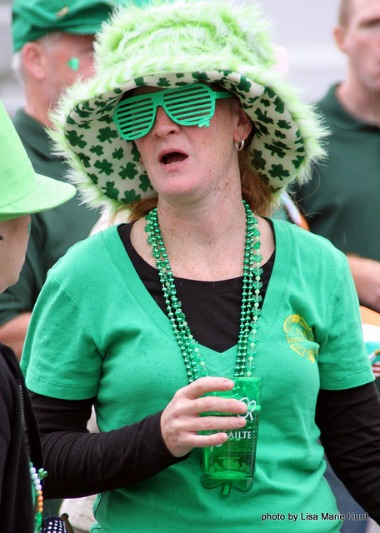
Correct attire for this weekend. Photo by Lisa Marie Hunt.

Hello!

Hello?

Hello? Is anybody out there?

Well, I guess just about everyone is either in North Wildwood for Irish Fest or Blackthorn’s Irish Weekend or in Bethlehem for Celtic Classic (where Solas is appearing on Saturday night). This is one of the best weeks of the year to be Irish because if you’re in one of those two places, you can’t be anything but. We’ve been to both and had a great time, even though we drank in moderation. (Seriously, folks, after a point, beer doesn’t make it better.)

Check our calendar for details on both festivals and remember to party responsibly.

We did have a couple of additions this week. Raymond Coleman is appearing tonight (Friday) at Westy’s in North Wildwood. If you’re down there, check him out. Raymond is a talented musician and singer. We’re big fans of this man from Tyrone.

If you’re going for a more medieval weekend, the Pennsylvania Renaissance Faire (the extra “E” lets you know it’s authentic) is happening in Manheim, PA.

If you’re staying at home (oh hi, I didn’t see you there), there’s a more serious event going on at the World Affairs Council in Philadelphia: a meeting of so-called “banished babies,” people who were born in Ireland but adopted in the US, a common practice in the ‘50s and ‘60s. RTE is filming the meeting, organized by Mari Steed, an Irish adoptee from Levittown, for an upcoming episode of the Irish TV program, Prime Time.

Also on Saturday, but in New York, Glucksman Ireland House is hosting a day of talks about Irish crime fiction with some of the leading lights, including John Connolly, Declan Hughes, Declan Hunt, Stuart Neville, and Arlene Hunt, among others. American writers Pete Hamill and Peter Quinn will also be on hand.

Closer to home, Celtic Thunder is on stage at the Tower Theater. Those are the homies of that cutie, Damian McGinty, who won a spot on the popular TV show about the unpopular, “Glee,” this season. We hear he’ll play an Irish exchange student (now there’s a stretch) who is living with the family of the childlike Britney who apparently believes he’s a leprechaun. (Really, “Glee” people? A leprechaun? Could ya get any more clichéd?)

In King of Prussia, Scythian, the wild Celtic-Balkan group from DC, is playing a concert under the stars—hopefully not under the raindrops.

Paul Brady will be at the Sellersville Theatre on Tuesday night. He’s one of Ireland’s most prolific songwriters and highly regarded singer. Never heard of him? You have if you like country music (like most of the Irish people I know). He’s written for Trisha Yearwood, Brooks & Dunn, and John Prine, as well as Cher, Tina Turner, Joe Cocker, Bonnie Raitt and Santana. Now that’s eclectic.

Looking ahead: October starts next Saturday and with it Hungerstock, featuring Patty Smyth and a host of other acts, including the Irish community’s own John Byrne Band. Best of all, this nearly all-day event raises money for the Food Bank of South Jersey. If you’ve been paying attention at all, you know that food banks all across the region—and the country—are seeing more and more people hit hard by the economic downturn. So think about putting this fun event on your calendar next weekend.

Arts, Dance, Music

A Festival of Videos

Dan Isaacson

Dan Isaacson in concert with his band Simple System.

A lot can happen in three days and nights.

And let’s be honest, we couldn’t be everywhere, my partner Lori Lander Murphy and I.

Or could we …

Looking at the videos we collected at the 2011 Philadelphia Ceili Group Festival, it certainly seems like we must have violated some of the fundamental laws of space and time.

You are traveling through another dimension—a dimension not only of sight and sound but of mind. A journey into a wondrous land whose boundaries are that of imagination. That’s a signpost up ahead… Your next stop: The Twilight Zone!

OK, so maybe it wasn’t as far out as all that.

But we think it was still cool.

You decide:

Here ‘s this year’s video playlist.

Dance, Music

The 2011 Philadelphia Ceili Group Festival in Pictures

Shannon Lambert-Ryan

Shannon Lambert-Ryan of Runa, the opening band at the Saturday night concert.

Anna Ryan was up to her elbows in thin reeds, patiently twisting and turning the slender stems into something delicate and uniquely Irish in its symmetry: St. Brigid’s crosses. Now and again, kids would make their way over to the table in the Philadelphia Irish Center’s Barry Room, gracelessly grab reeds like hands full of pickup sticks and, with patient instruction from Ryan, begin to learn how to craft something sacred from nothing more than spaghetti-like strands of dried grass.

Ryan looks forward to the Philadelphia Ceili Group Festival, which celebrates Irish culture through music and dance, of course, but also through the arts, history, genealogy and more.

Ryan has been a fixture at the event for years. “I don’t know how many years it’s been,” she says,” when asked about her ties to the festival. “It’s been over 10 years, anyway.”

For many of the organizers and participants, it’s been at least that long—and often longer.

And yet, it never gets tired. You see a lot of the same faces year after year, but the thing about the Ceili Group festival is this: It’s feels like a kind of Celtic renewal. Fluters and dancers, harpers and artisans flock to the Irish Center every September in the way Monarch butterflies return to Mariposa. Or maybe it’s like a Philadelphia Irish version of Burning Man—except with banjos and hard shoes instead of naked people who paint themselves silver.

Whatever.

We captured the spirit of the thing in photos.

Here ya go.

Music

In Memory of Mike Rafferty

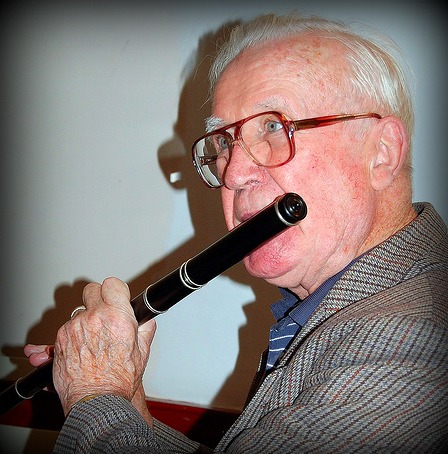
Mike Rafferty, playing at the Philadelphia Irish Center in 2006.

Mike Rafferty, playing at the Philadelphia Irish Center in 2006.

When Mike Rafferty played flute, it was with the unmistakable lilt and lift of his native East Galway. Named a National Heritage Fellow in 2010 by the National Endowment for the Arts, he was a bona fide national treasure.  Through his teaching, recording and performing, he passed along the tradition to new generations.

Mike Rafferty, who was certainly no stranger to Philadelphia-area Irish musicians and fans of Irish music, died last week at the age of 84. Local flute players likely will not soon forget what a rare honor it was to sit by his side and soak of knowledge from a master, as they did at the Tom Standeven-Liz Crehan Anderson Tional at the Philadelphia Irish Center in 2006.

Rafferty’s passing struck a sad note with many, many musicians who knew him well, including singer-songwriter Gabriel Donohue (himself no stranger to Philadelphia).

Here is Donohue’s remembrance:

A lovely man was Mike Rafferty.

I met Mike Rafferty on what I believe was my first weekend in New York. ( I met Joe Madden one block over on the same night.) I had gotten a room above Christy O’Connor’s apartment off of Mosholu Parkway and every night would have to pass Kingsbridge Road to get home. Unless of course I wanted to take the short cut that bypassed Durty Nellie’s, The Archway and the Old Brogue, which was earlier called the Bunratty. Andy McGann and Johnny Cronin would hold court there and it was a magnet for people who loved the pure drop, surrounded by tenements, bodegas and across from the armory. The Irish still held out in these neighborhoods where cheap rent was the main attraction and, secondly, the pub scene which anesthetized them from the despair brought about by having traded the bucolia of Galway and Mayo for the tar and cement of New York.

“Raff” showed up there on occasion and would play till the wee hours, his wife Terry documenting everything on her tape recorder. Her personal archives are a virtual repository of all the sessions he played over the years, I’m quite sure. She adored the man and obviously his music. No wonder his daughter Mary has accomplished so much as a fine exponent of East Galway music on the accordion. Mary also could not help exhibiting her adoration for the father who carefully and gently passed on his riches of music to his little girl. Her husband Donal also made his affection for his Da-in-law clear when he joined them both on many concerts and a couple of the later albums.

I made a few records with them in the mid-’90s, The first was the “Dangerous Reel.” I think the second was “The Road to Ballinakill.” It was great having them in my studio, to be getting the stories that went with every tune. And there were stories. Mike Rafferty was never just stringing notes together. He was weaving a tapestry with love, pure love. For the people who gave him the tunes, and the people who came play with him to learn or just listen. Some were new, as was “The Caucus of Secaucus,” written by Canadian Jean Duval; many were old and gotten from his dad Barrel Rafferty. Barrell lost his eyesight in mid-life, and Mike’s mother thought it might be because of the flute playing. That always got a good laugh. One thing for sure he had that barrel D sound prized by lovers of flute music.

Mike Rafferty was never just stringing notes together. He was weaving a tapestry with love, pure love.

I recall Mike Rafferty played a silver flute in those days and later he told me it was “mean strength and ignorance” that kept him playing it. He returned to the wooden flute eventually and it was then I believe his sound came into its own. This may be just my prejudice as I adore that instrument. Joanie Madden has found a way, through embouchure manipulation to mimic its sound on her lovely Miyuzowa instrument—and of course the ability to travel in all keys makes it more ideal for an all-rounder such as she. But the gentle East Galway music benefits I believe from that lovely dark timbre imbued by the, well, dark timber.

Speaking of the Maddens… I think of Mike’s love for Joe and his inability to talk about music without mentioning his best friend. They were cut from the same East Galway cloth and were visibly connected on so many levels through a sub-genre whose depth perhaps can not even be understood by younger players who never heard a curlew crying over the woodlands of Portumna, Woodford or Ballinakill. Or experienced this music before technology came into their homes and the carefully cultured boredom of long winter nights were usurped by TV and computer screens. It’s easy to find the tunes online these days, but you cannot recreate the feeling between the notes without the life experience which made the relevant to the older generation. Whether by their connection to the parish dances or to “The Old Fireside,” as Mike would say. Of course they do have their own relevance in modernity but it’s just different from what it represented to the people in those small rural communities.

Many times when I would run into Mike around New York he would quote the poem below which mentioned my little parish Kilconoiron/Clostoken, famous for very little but for “rough hurlers” (Father Charlie Coen would say) and being the birthplace of piper Patsy Touhy. It is no crude sporting tome, especially where it rhymes my parish with the esteemed poet Lord GG Byron. I hope Terry has a recording of him reciting it as I would cherish it as I do memories of this lovely, softhearted, gentle man, who had so many tunes going around in his head. A lifetime was hardly enough for him to play them.

The last time I saw Mike was in his backyard in Hasbouck Heights. We had a session in his garage. It was a farewell party for Mary and Donal and the kids on leaving for a new life in Ireland. Joanie and Helen Madden were there. Father Charlie, Mattie Connolly. Don Meade, Deirdre Connoly, Felix Dolan and Martin Mulhaire. He was in great form and really looked like he’d be around for a long time.

He’ll be sadly missed. Thanks to Mary and Terry who supported him in recording many albums, he left us lots of tunes.

Woodford Hurling team 1914

By Michael Power (Powerscross)

From Woodford town of old renown, went our sturdy team one day,

From the hillside brown the streams rushed down, Barkhill beside the bay.

We’re proud of you, brave hurlers true, we’re proud our parish bore you,

Throughout the soil of Erin’s Isle, you have beaten all before you.

Could I lines unfold like Moore of old, were I Thackeray or Byron,

I would sing for you the praises due, for twice beating Kilconoiron!

On the Loughrea train, one day again, we went with pride and joy,

To view our fifteen hurling men, in the town of Athenry.

We reached the station midst animation, of both the East and West,

From Woodford Bay to Claregalway, we were known to be the best.

But to decide it on the field we tried it, ‘neath Summer’s scorching sun,

In weather glorious we were victorious, now we’ve the County honours won.

The whistle sounded, the ball was grounded, Stanley found it and sent it high,

While opponents feared him, all men cheered him, on the Gaelic fields of Athenry.

He is straight and tall and admired by all, you could compare him to no other.

You could Ireland pick to rival Dick, our gallant captain’s brother.

With the Coens in back we fear no attack, from German, Greek or Turk,

Submarine or bomb, let Zepplins come, they’ll be manned by Conroy and Burke.

The Fahys three and Jack Grady, are worthy of our attention,

With Kelly and Page on the fullforward stage, the Gormans here we’ll mention.

Now we have named our team that was famed, in North, South, East and West,

On that bright June day, when all Galway did say, Woodford are again the country’s best.

If on those lines you muse, I pray you’ll excuse, if the composer has been unruly,

For in haste did he stitch these lines on the ditch, and as ever he remains yours truly.

How to Be Irish in Philly

How To Be Irish In Philly This Week

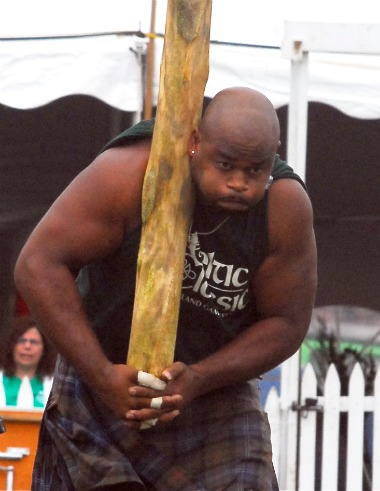
Caber tossing at Celtic Classic in Bethlehem.

This is another jam-packed week because, of course, it’s halfway to St. Paddy’s Day.

There are other reasons. We’re heading into the two biggest Irish festivals in the region: the three-day Celtic Classic in Bethlehem and the four-day AOH Irish Fall Festival in North Wildwood. And there’s another, smaller festival this weekend in the very Irish Gloucester City, NJ (where you presumably can practice up).

The Irish Festival kicks off on Thursday with a golf tournament and the annual match up of amateur boxers from the Harrowgate Boxing Club in Philadelphia and the Holy Family Boxing Club from Belfast, Northern Ireland. Then the musical lineup is almost too long to mention: The Paul Moore Band, Belfast Connection, Sean Fleming Band, the Bogside Rogues, the Barley Boys, Secret Service, Derek Warfield and the Young Wolfetones, Bare Knuckle Boxers, Timmy Kelly, the Broken Shillelaghs and more will be performing in the Music Tent and the outdoor festival stage.

Also in town, Blackthorn at the Angelsea Pub and the Windrift Resort hotel; Jamison at Slainte at Keenan’s in North Wildwood and Casey’s in North Wildwood and the Broken Shillelaghs at Tucker’s Pub in Wildwood and Coconut Grove in North Wildwood. If you’re in the Wildwood area, you pretty much can’t escape Irish music; don’t try.

Solas will be making it happen on Sunday, September 24, at Foy Hall in Bethlehem, with McPeake opening. Other musical performers at Celtic Classic include Blackwater (and you thought they were just a security firm); the Paul McKenna Band, the Glengarry Bhoys, the Screaming Orphans (from Donegal), the Makem and Spain Brothers, and Timlin and Kane, among others. Making a different kind of music—highland athletes (they make Conan look like a wimpy barbarian), sheep dogs, and haggis-eating contests. Including the Scots makes everything more interesting.

But let’s back up a minute—or, a few days. Before the big festivals happen, there’s other stuff going on, including:

“Carthaginians: A Philly Fringe Festival Performance” in the unlikeliest of venues—Laurel Hill Cemetery in East Falls. The New York-based REV Theatre Company is presenting this Frank McGuinness play in a cemetery because it’s set in a cemetery. That’s one way to save on set decorating costs. Performances are Friday and Saturday.

On Saturday, hear Secret Service, the Broken Shillelaghs, Green Spell and Misty Dew’rs on the riverfront in Gloucester City, NJ, where they’re headlining the Gloucester City Shamrock Festival. You’ll also find a beer garden (wonder what they grow there), vendors, and kids’ activities including inflatables.

The Bogside Rogues will be performing at the Irish Festival in Sea Girt on Saturday afternoon and at the Dublin Square Irish Pub in Cherry Hill in the evening.

In nearby Haddon Township, hop on the “Halfway to St. Pattys Pub Crawl” at Cork Genuine Food and Drink, Brewers, and Irish Mile. Or, if you’re in Pennsylvania, join the crawlers at Marty Magee’s in Prospect Park. Both on Saturday.

Jamison is on stage at Kildare’s in West Chester on Saturday too, while The Broken Shillelaghs (fresh from Shamrock Fest) are on tap at the Dublin Square Pub in Sewell, NJ, on Saturday evening.

Timlin and Kane are performing at the Shanachie in Ambler on Saturday night, and Sunday is their big “Family Day” at the pub (reservations recommended).

The Dropkick Murphys are bringing their Shamrock-N-Roll Festival to the Electric Factory on Sunday night, featuring Street Dogs, The Mahones, and the Parkington Sisters.

On Monday, the annual Ciara Kelly Higgins Benefit for Cerebral Palsy, featuring golf tournament and fundraising dinner, will take place at Plymouth Country Club in Norristown. Read about this remarkable little girl.

Check out our calendar for all the details.

People, Sports

The Fighter Still Remains

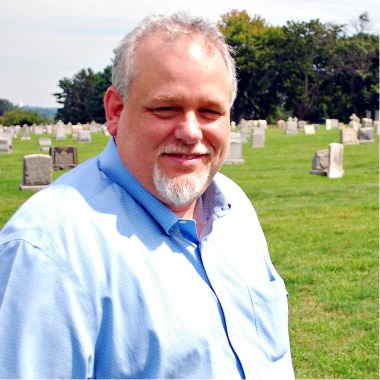
John DiSanto at Holy Sepulchre Cemetery in Cheltenham, where boxer Eddie Cool is buried.


“I am just a poor boy though my story’s seldom told. . . .”

The Boxer, Simon & Garfunkel

When he was “right,” one of his admirers once said, Eddie Cool, “the pride of Tacony,” was “the greatest boxer ever to come out of Philadelphia.”

But this Irish-American fighter, born in 1912, wasn’t “right” very much. He was an alcoholic who hated training and loved the ladies who, because of his matinee idol good looks, loved him back. All his life, Cool was shadowed by the death of his father who was killed in a grisly accident when Eddie was 15. He used to say “My old man died a drunk at a young age and I guess I will die the same way.”

And he did. Washed out of the ring at 27, Eddie Cool was dead at 35. The number one contender for the lightweight championship in 1936 and a counter-punching master with 95 wins and 29 losses, died from alcohol-related causes and was buried in an unmarked grave in Holy Sepulchre Cemetery in Cheltenham.

Today, only hardcore Philly boxing fans—and only those with a penchant for history—remember ‘the Tacony flash.” One of them is John DiSanto of Mantua, NJ, a man so passionate about boxing he has spent the last few years—and his own money—chasing down the ghosts of Philly boxing and giving them a taste of immortality on his website www.phillyboxinghistory.com. There, you can read about South Philly’s own Thomas Patrick “Tommy” Loughran, the “Phantom of Philly,” pride of St. Monica’s parish and light heavyweight champion of the world who lost the heavyweight crown to Primo Carnera by a decision in 1934. And Tommy O’Toole, “the Pride of Port Richmond,” who, after failing in his title bid in 1909, became a popular Vaudeville dancer. And Jack O’Brien, “Philadelphia Jack”,” another South Philly light heavyweight champion who changed his name from Hagen, probably because McBrien sounded more Irish.

“Different eras produced boxers from different ethnic groups,” explains DiSanto. During McBrien’s era—the late 1890s and early 20th century—many boxers were Irish. “Some people said that whoever was the most oppressed found success in boxing,” says Di Santo, who is a sliver Irish himself (there’s a Mahiggins on his mother’s side). “So there were a lot of Irish and a lot of Italian boxers of that era in Philly. You could say ethnicity was part of their marketing plan.”

But DiSanto found himself unsatisfied with providing the city’s generations of forgotten yet superlative boxers with a virtual memorial. As he researched their lives, he found that, like Cool, many were in unmarked graves. That’s when the Philly Boxing Gravestone Program was born—out of a fight fan’s determination to make sure that no boxer would ever pass entirely out of memory.

“About five years ago I was doing research on a young Philly fighter named Tyrone Everett,” explains DiSanto, as we sit in his car at Holy Sepulchre where he is finalizing plans for Eddie Cool’s gravestone, a flat marker that will be installed this fall in the Archdiocesan cemetery. Everett, who lost a world title in what’s widely considered one of the worst decisions in boxing history, died at 24—shot to death by a jealous girlfriend.

“I went out to Eden Cemetery in Collingdale, PA, to find his grave and couldn’t find a stone,” says DiSanto. “Wow, I said to myself, maybe there’s something I could do. He was a hero of mine, someone I really admired as a fighter.”

That’s when DiSanto learned that you can’t just plunk a headstone on an unmarked grave, no matter how heartfelt a gesture it is. Only a family member can do that. So DiSanto had to track down Everett’s family—and the families of Gypsy Joe Harris, Garnet “Sugar” Hart, and Eddie Cool, the first four boxers the program has memorialized.

The first three weren’t too tough. Family members still lived in the Philly area. He found the siblings of Gypsy Joe Harris in Camden. Harris, who was banned from fighting because it was discovered he was blind in one eye, died of heart failure—or, some might say, heartbreak—at 44 after a life marked by drug addiction. “They took away his license between they wanted to protect him but he probably would have had a fuller, safer life if he’d stayed in the ring,” says DiSanto. “He kicked his addiction at the end, but it was just too late.”

Sugar Hart’s brother was still alive as was Tyrone Everett’s mother. The response from the families was the same: Do it.

“They one thing I learned from this is that the family is extremely appreciative,” says DiSanto. “They like that their loved one is still remembered. I try to be an advocate for these fighters.”

Some families help raise money for the headstones. “One reason many of them are in unmarked graves is that the family couldn’t afford headstones,” DiSanto explains. “Money was short and precious and they had other needs for that money.”
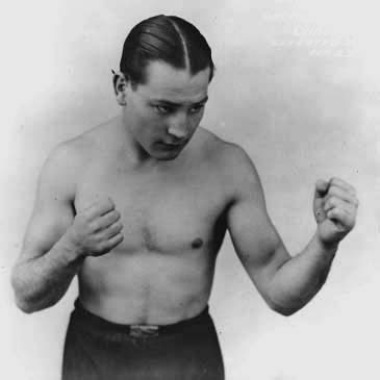
Irish Catholic boxer Eddie Cool, the "Pride of Tacony."

In Eddie Cool’s case, there may have been something else, maybe some resentment that he’d thrown his life away, DiSanto says. “I don’t really know. He left a wife and daughter but I wasn’t able to find them.” After months of looking, he contacted a distant cousin of Cool’s who gave him permission to erect the flat memorial for Eddie and his brother, Jimmy, also a fighter who died young, who is buried next to him, in what is now just a grassy spot between Andreoli and Flaherty.

DiSanto is aware that what he’s doing may sound odd. People do understand the reason for, say, erecting a statue to Philadelphia’s greatest middleweight boxer, Joey Giardello, something DiSanto did this year with the help of the Veteran Boxers Association-Ring One, and the Harrowgate Boxing Club and hundreds of donations. He presided over the unveiling of the monument in May, near the site of the late lamented Passyunk Gym on Passyunk Avenue in South Philadelphia.

Statues honoring the great are easy to understand. Gravestones for the forgotten?

It all comes down to how you define the word “great.”

For DiSanto, there’s not a lot of difference between Eddie Cool, who died an alcoholic and whose name has faded from history, and Giardello, middleweight champion of the world from 1963 to 1965, who was invited to attend the inauguration of President John F. Kennedy and distinguished himself as a businessman and humanitarian under his real name, Carmine Tilelli. It’s all about what went on in the ring.

“I’m a boxing fan,” says DiSanto. “My Dad is a fight fan. I grew up in South Jersey and went to all the fights in Philly and got hooked. I watched fights on TV and then I read about them. I got into the history. When I hit 40 or so, I found myself becoming extremely sentimental about the Philadelphia fight scene. I thought about writing a history of it as a book, but decided to do a website . I could work on it while still doing my day job (marketing) and do a little at a time, keep adding to it. . .I can go to a fight, take pictures, write about it, and have it on the website that night.”

Since he started the Gravestone Program and launched the Giardelli statue project, DiSanto has gotten some media attention, which sometimes leaves him feeling a little uncomfortable. (When I asked him to pose for a photo pointing to Eddie Cool’s grave, he laughed. “This is how I’m usually photographed,” he quipped, “hovering over a gravestone like the Angel of Death.”)

But he’s not going to stop.

“At the end of the day I know what I’m doing doesn’t really change anything,” he says. “These guys have been dead a long time and a lot of the families are surprised that there’s anyone out there who even remembers them. But I like to think this gives me a personal bond with the fighter. In many cases I’ve become like extended family to their survivors and vice versa. . .And these fighters deserve to be remembered. Guys like Eddie Cool are worthy of remembrance. They’re an important chapter in the history of Philadelphia boxing.”

And DiSanto will make sure that it’s written. In stone.

*************************************************************

Along with his website, DiSanto every year presents the “Briscoe Awards”—named for Philly fighter Bennie Briscoe—to the “Philly Fighter of the Year” and to the participants—winner and loser—of the “Philly Fight of the Year.” This year’s Briscoe Awards will be given to IBF cruiserweight champion Steve Cunningham (his second win) and to Derek Ennis and Gabriel Rosada for their USBA junior middleweight title fight at Asylum Arena in South Philadelphia. The event will be held October 10 at the Veteran Boxers Association Club, 2733 Clearfield Street in the Port Richmond section of Philadelphia. For more information, contact John DiSanto at 609-377-6413.

If you’re also a fight fan, head down to North Wildwood on Thursday, September 24, for the annual match-up between the Harrowgate Boxing Club of Philadelphia and the Holy Family Boxing Club of Belfast, Ireland, at the Music Tent at Olde New Jersey and Spruce Avenues, a traditional kick-off to the AOH Irish Fall Festival. There are 10 bouts scheduled and the first fight starts at 7 PM. Cost: $25.

People

Singin’ in the Rain: The Philadelphia Ceili Group’s Festival Kicks Off

Singers Night 2011

Singers Night 2011

Epic rain, wide-spread flooding, rockslides on the Schuylkill Expressway…none of these things could keep the Irish community away from the opening night of the PCG’s 37th Annual Irish Music and Dance Festival.

Dedicated to the late Frank Malley, who was a long-time driving force behind the Festival, the evening showcased some of the talented local Irish singers that call the Philadelphia area home. From the Sean-nós stylings of Terry Kane, Matt Ward, Rosaleen McGill and Marian Makins to the rousing up-tempo songs of Vince Gallagher and his band, it was several hours of pure entertainment for the good-sized crowd that made their way to the Irish Center in Mt. Airy.

There were a few performers who couldn’t make it due to weather-related emergencies, including the scheduled emcee, Gerry Timlin, whose pub The Shanachie in Ambler experienced flooding. Terry Kane stepped in and took over the role beautifully.

[We are happy to report that The Shanachie is recovered from the flood waters, and were actually able to open at 5PM on Thursday for dinner. “We’ve fared better than some of the other places in Ambler,” bartender Meg Herrmann told me when I stopped in today. “The water came in under the front door. We all worked together yesterday and got it cleaned up.”]

The Festival continues Friday night and Saturday all day and evening with music, dancing, workshops, food and fun for the entire family. This year’s event also marks the kick-off to a year-long series of concerts funded by a grant provided by The Pew Center for Arts & Heritage. Titled “Irish Traditional Music: Influences from the West of Ireland,” the series is bringing some of the most highly regarded Irish musicians to Philadelphia beginning in October with Kevin Burke and Cal Scott, followed by Mick Moloney & Friends in November, Grainne Hambly & William Jackson in February, 2012, Niamh Parsons & Graham Dunne in June, 2012 and concluding with a performance by the legendary De Danann at the 2012 Festival. Tickets to all the concerts are being raffled off through Saturday, along with CDs and books from all of the artists, as well as other items.

Check out our videos in case you missed last night’s songfest, or if you were there and want to see it again: http://www.youtube.com/playlist?list=PL73E8269571E5A7FD&feature=viewall

Further information on the rest of this weekend’s festivities can be found at the PCG website: http://www.philadelphiaceiligroup.org/philadelphia_ceili_group/2011-annual-irish-traditional-music-and-dance-festival-information-.html