News, People

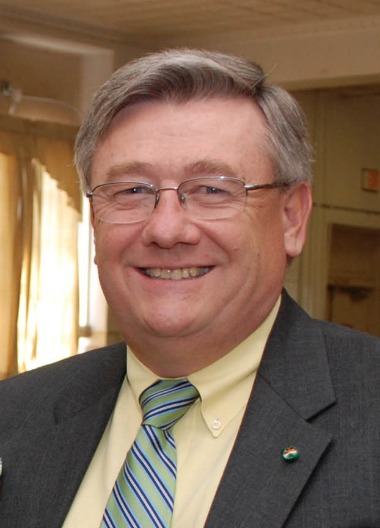
John Donovan: 2011 Delaware Valley Irish Hall of Fame Inductee

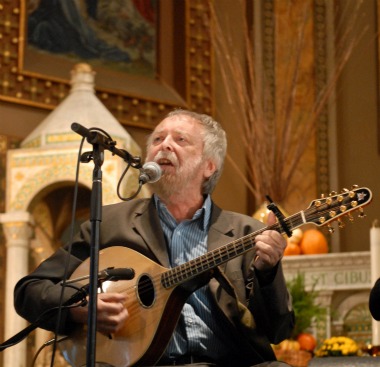
John Donovan

By Kathy McGee Burns

“Enthusiasm is: a quiet spiritual strength; an inner glow; and faith in action.”

If you know John Donovan, as I do, you’ll see him immediately in this quote. These are the qualities this Mayfair native lives by.

John was born in St. Matthew Parish, one of the eight children of Jean (Dunn) and John Donovan. His parents were typical inner city, Irish-American, Catholic parents.

Jean, whose roots were Dublin and Mayo, was a stay-at-home mom; John (Cork and Sligo) worked two jobs to keep his family going. The Donovans later made that inevitable move to the suburbs—in their case, to Havertown (St. Dennis Parish). They managed to squeeze all eight kids—and a granddad—into a three- bedroom twin home: One room for the parents; one room for the two girls; and one room for the six boys and their grandfather.

And only one bathroom and, says John, “there were no locks on any door.”
Each year the kids would ask where they were going for vacation and their father would say, “Yardsville” referring to the backyard. As an occasional treat, they would go to Longport at the Jersey Shore for the day, changing in the car and off to visit Lucy the Elephant, in Margate. John tells these stories with such a twinkle in his eye.

His were loving but firm parents who expected the children to pay their own school tuitions and clothes themselves….and they all did. John went to Archbishop Carroll High School. and in order to earn tuition, he worked at General Mills from 3 to 6 PM in the mail room and 6 to 9 PM cleaning offices. While at Carroll, he became a National Honor Student and a Mathlete (an active participant in mathematical competition).

John went on to St. Joseph’s University as an accounting major and shared a room there with Jay Coyne. Jay had a very pretty sister, Elizabeth, who always turned up at their parties. There was an immediate attraction. After John graduated in May, he got his first job in August and married Elizabeth Coyne in September.

I asked John what first got him interested in his Irish heritage. Surprisingly, he said it was through the Coyne family. Their house was full of Irish music and John’s new in-laws, Jim and Ginny Coyne, were in touch with their roots. There was an awareness of Irish history and culture which very much appealed to John.

Today, Jim and John are very close. Jim Coyne told me that when Elizabeth first brought John home to the family, he was put off by his shoulder-length hair. Elizabeth said, “Daddy, he is really a nice person”. This was a monumental understatement, Jim says. “John is one of the finest men I’ve ever had the pleasure of knowing,” says Jim.

Under Jim Coyne’s tutelage, John joined the Friendly Sons of St. Patrick in 1977. He has been the secretary, vice president, president and now, director emeritus. Now theirs is a Friendly Sons family dynasty. Most of the Donovan and Coyne men have joined.

Through the Friendly Sons came one of John’s finest achievements. It was his father-in-law who led the charge to establish The Irish Memorial at Penns Landing, a tribute to the courage and sacrifice of Irish immigrants who fled An gorta mor—the great hunger—to start new lives in America. But it was John Donovan who saw to all the minute details: construction, bookkeeping, government grants, auditors–he handled all the nuts and bolts.

Bob Hurst, past president of The Irish Memorial, says of John: “John Donovan is a rock solid man who places great importance on routine, where actions have consequences.” John, he says, is the epitome of trustworthiness, honesty, quiet strength, dependability and character.

The light of John’s life is his family. His inner glow shines when he talked about his seven brothers and sisters: Mary ( Marty Roddy) , Kathy (Michael Dolan), Joe and Anne, Father Bill, Ed and Ellen, Tom and Mary, Jim and Dana. Of course, there are his own kids and grandkids; Stephen and Michelle (Bree), Michael and Lori (Gabriella, Emma, Madeline and Jack), Beth, newly married to Brendan Egan, Brian and Susan (John). John and Elizabeth have been married for 35 years and he is an Executive at Compas, Inc which specializes in pharmaceutical marketing.

As for faith in action, the Donovans are loyal members of Our Lady of the Sacred Heart parish located near their hometown of Perkasie, Bucks County.

John Donovan is being honored by the Delaware Valley Irish Hall of Fame this Sunday, November 13, at The Irish Center, along with Kathleen Murtagh and Tom Farrelly. For information or tickets, contact President Kathy McGee Burns at 215-872-1305.
People

“Welcome Winter” Fundraiser at Finnigan’s Wake

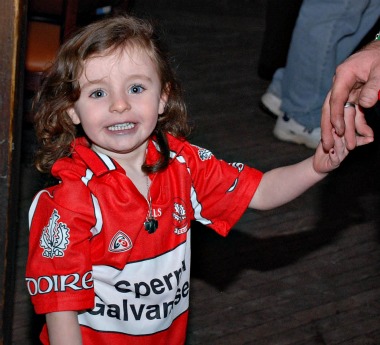
Rita McCloskey takes a moment from dancing to smile for the camera.

The Bogside Rogues rocked the cavernous upstairs room at Finnigan’s Wake on Sunday as the Irish Immigration Center of Philadelphia welcomed in winter–and raised a few dollars to support its new senior outreach program. The center has hired a social worker from Ireland to help identify and work with at-risk seniors in the Irish community. Read about the program here.

We were there, had a great time, and took pictures, as we always do. Best of all, we share them with you. Here they are.

How to Be Irish in Philly

How to Be Irish in Philly This Week

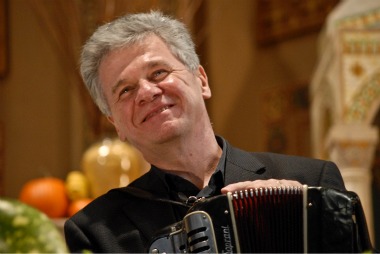
Accordion master Billy McComiskey will be appearing on Saturday at the Irish Center.

If you missed Mick Moloney’s concert at St. Malachy Church last week (make a vow now to never miss it again—it’s one of the best), you have a chance to hear him again on Saturday, November 12, at the Irish Center.

Moloney, with accordian player Billy McComiskey and violinist Athena Tergis, will be presenting a program that brings to life the various musical styles of western Ireland. It’s part of a series sponsored by the Philadelphia Ceili Group called “Irish Traditional Music: Influences from the West of Ireland” that will run through September 2012.

The concerts starts at 8, but Moloney, who has a PhD in folklore from Penn, will give a talk on the West of Ireland starting at 3 PM at the Irish Center. If your family came from Clare, Galway, Sligo, Mayo, Kerry, or anywhere along that stunning coastline, or if you just love music and history, you’ll want to hear this.

There’s a bucketload of other Celtic events happening this week. Let’s take them day by day, shall we?

Saturday

The Port Richmond AOH/LAOH Div. 87 has been holding an annual ball for as long—if not longer—than many of the county societies, and their 113th is on Saturday night at Romano Caterers in Philadelphia. That’s the night they honor their Hibernian man of the year (Pat Dever) and LAOH Woman of the Year (Debbie Scott). Also being feted: Patty Pat Kozlowski (Slainte Award), Steve Nolan (Putso Award), and Betty Sands (Granuaile Award).

Jamison Celtic Rock is Celtic rocking at Brittingham’s Irish Pub in Lafayette Hill; the John Byrne Band will be taking the stage at Sketch Club Players in Woodbury, NJ; and “Woman and Scarecrow,” the Marina Carr play, continues at Villanova University (through Nov. 20).

Sunday

Three stalwarts of the Irish community—Kathleen Murtagh, Tom Farrelly, and John Donovan—will be installed in the Delaware Valley Irish Hall of Fame at a dinner at The Irish Center, 6815 Emlen Street, Philadelphia.

Paul Byrom, formerly of the supergroup Celtic Thunder, will be appearing at 8 PM at World Café Live in Philadelphia.

Villanova University is screening the Irish film, “Hunger,” the story of Bobby Sands who led a hunger strike at a Northern Irish prison in the 1980s.

Thursday

The Irish American Genealogical Society can help you track down your Irish ancestors, and they provide this help regularly at the Irish Immigration Center. A genealogist is on duty from 11 AM to 12:30 PM.

The Irish Anti-Defamation Federation holds its regular meeting at the Irish Center at 7:30 PM.

Coming soon: On Thanksgiving weekend: The Mid-Atlantic Oireachtas (Irish dance competition) at the Philadelphia Downtown Marriot and The Donegal Ball and the Mary from Dungloe Pageant.

Check out our calendar for other events, too. You know there’s an Irish music session every day or night in the Philadelphia area. You can hear some fine Irish music with no cover charge, though it’s likely the venue makes that up in the beer you’ll drink. It’s a lovely, relaxed time that will remind you of being in Ireland (and if you’ve never been to Ireland, this is what it’s like, minus the scenic vistas and sheep).

Music, People

Rockin’ The Pews

Mick Moloney At St. Malachy Church

On Sunday, for the 24th year in a row, musician and folklorist Mick Moloney, PhD, brought his most musical friends to the soaring, gilded sanctuary of St. Malachy Church, a parish founded by Irish immigrants and the Sisters of Mercy more than 150 years ago, in North Philadelphia. As usual, “Mick Moloney and Friends”  played to a standing-room-only audience.

The annual “Irish Concert” raises money for the church and particularly the school, which is not financially supported by the Archdiocese of Philadelphia. Instead, as an independent parish school,  St. Malachy relies on donations, much from the Irish community, to help the families of its mainly African-American and Hispanic students afford tuition. There aren’t a lot of dropouts–or even no-shows–at St. Malachy’s School. More than 90 percent of its kindergarteners test 10 percent above grade level in reading and 83 percent test at “mastery.” Most students go on to independent, parochial, charter, or magnet high schools after graduation.

Moloney brought with him a stellar group of performers, including some local lights. Dana Lyn, a native of Los Angeles, who often accompanies Moloney, is a classically trained violinist of Chinese extraction who took up Irish traditional music after graduating from Oberlin Conservatory. She has toured with Moloney’s “Green Fields of Ireland”–a collection of some of the finest Irish traditional players in the world–and has accompanied traditional singer, Susan McKeown. Robbie O’Connell, a nephew of the Clancy Brothers, is a musician and singer-songwriter from Tipperary who also tours with Green Fields of America and has appeared before with Moloney at St. Malachy. Button accordanist Billy McComiskey was at St. Malachy last year. A Brooklyn native, he is a master of the East Galway accordian style, gleaned from his teacher, the legendary Sean McGlynn. New to the Moloney coterie of friends is Joey Abarta, a California native who has won national and international championships in both uilleann pipe and bodhran.

Also on the bill, Paraic Keane, son of The Chieftain’s fiddler Sean Keane and nephew of noted button box player James Keane, who is a fiddler of note himself. Now living in Philadelphia, he plays with many different groups in the region, including the Paul Moore band.  Joining the group again this year was Moloney’s friend, Saul Brody, a folklorist, singer, and blues harmonica player who offered a song, he said, he “learned from Lead Belly,” the legendary American folk and blues musician from Louisiana.

The concert was dedicated to the memory of the late Robert F. Mcgovern, professor emeritus of the University of the Arts, sculptor, and long-time supporter of St. Malachy church. His carved wooden statue of Nazi-era martyr Franz Jagerstatter sits just outside St. Malachy’s sanctuary.

View our photos of the event.


Arts

A Director’s View of “Woman and Scarecrow”

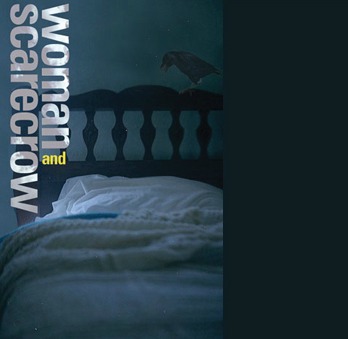
woman and scarecrowA woman lies on her deathbed, time ticking away, the end imminent. As she comes face to face with her mortality, she nurses regrets, mourns missed opportunities and contemplates the nature of her complicated marriage to a unfaithful husband. She is accompanied on her final journey by a friend, unseen to others, who is both comforter and critic.

Like most quick summaries of a complex piece of art, this bit of shorthand doesn’t do justice to Irish playwright Marina Carr’s ultimately redemptive “Woman and Scarecrow,” on tap for Villanova University’s Vasey Theatre November 8 through 20. “Woman and Scarecrow” has been described by reviewers as “spirited,” “biting,” “poetic” and “fierce and funny.”

(Hey, it’s Irish. It’s about death. Of course there are laughs.)

The play is not the first visible evidence of a unique new educational exchange program between Villanova’s well-known Irish Studies department and the Abbey Theatre, the national theatre of Ireland, but it might boast the highest profile. Described as “an historic intellectual/artistic partnership,” the new exchange program will expose Villanova students and outside audiences to renowned Irish actors, directors and writers; at the same time, Villanova students will travel to Dublin to study and work with the Abbey Theatre.

Directing “Woman and Scarecrow” is actor-friar Father David Cregan, O.S.A., associate professor and chair of the theatre department.

We talked to him about the play and the new relationship with the Abbey Theatre.

Question: Tell me about this play. What is it about to you and why do you like it?

Answer: “Woman and Scarecrow” has all the best qualities of an Irish play. It has a powerful story, it’s written with a kind of poetic prose that is indicative of the Irish dramatic tradition, and it also balances the comic and the tragic elements of the human existence in quite an epic way. That makes it a shining example of Irish theatre. The ability to both laugh and cry and to celebrate and mourn simultaneously—that’s part of the Irish aesthetic in general.

The play was attractive to me because of the epic way in which it deals with the really important questions of life and death. It allows the audience to enjoy a powerful story that simultaneously has a prophetic message about how to live life to its fullest, how to value oneself and how to live in the right relationship with the world. It tells the story through a series of tragedies and triumphs, through a series of failures and accomplishments in the life of Woman. But the play also has a sort of transnational quality in the way that it speaks to the human condition. It’s not only the Irish condition. It allows us to witness the last moments of this woman’s life as she tries to reconcile herself with her choices and deals with the repercussions of her mistakes.

Question: You’re an actor-director, but you’re also a priest. How do you look upon this play from the priest’s perspective?

Answer: It confirms something that both religion and theater share in common. If you’re familiar with the Roman Catholic creed, the line in the creed that really calls out to me is this one: “We believe in the seen and the unseen.” This play, while it tells a very specific story, has a kind of global outreach in the sense that it articulates both the seen and unseen qualities of what it means to be a human being, and it really connects the spiritual and the material in the way that it builds the relationship between Woman and the Scarecrow. The question in the play is, who or what is Scarecrow? Scarecrow appears on the stage for the entire production, and is physically and metaphysically connected with Woman, but she’s another element of her. The other characters in the play, when they come into the room, don’t see or acknowledge that Scarecrow is there. It’s kind of an embodiment of the spiritual component of the human condition. Scarecrow is not just her conscience, not editing or condemning her for a licentious lifestyle, but is pointing out to her that the mistake she made was in not valuing her life in the way that she should have; that her mistakes were that she didn’t treat herself well. [In this way, Scarecrow] helps woman cross from the world of the living into death. Those are the kinds of things they talk about the whole play. The play has an acknowledgement of the ethereal—or as I would describe it, of the spiritual—that definitely connects with my larger worldview of spiritual responsibility.

Question: Did Villanova’s theatre department choose this play, or was it a more collaborative decision with Abbey Theatre? And what role did the Irish Studies department play?

Answer: When the relationship with the Abbey Theatre began to materialize, we started to think of ways of making a connection. “Woman and Scarecrow” was a natural fit for me because my research and my writing is all in the area of contemporary Irish drama. I was interested in the potential and the power of the play. So many of the themes in the play are important Irish themes about returning home, and in particular returning to the West of Ireland and its curative and humane qualities. They speak of homecoming. Homecoming is not just about the connection to place or earth; it’s also a kind of spiritual reckoning.

Question: Marina Carr was a Heimbold professor at Villanova in 2003. Did that have anything to do with the choice of this play?

Answer: We’ve been connected with her work; we’ve produced it before. She was a friend of the department. This particular piece of work in my opinion is a triumph in her writing, a high point in her career, even though it’s a relatively small play.

Question: You’re an Irish fella. What’s appealing to you about doing Irish Theatre.

Answer: What I love about the Irish theatre is its courage, the exploration of deep emotion, and its interest in the journey of the soul and of the mind. This play contains all of that. It’s an actor’s dream come true because of the breadth of its emotional expression, and it’s a director’s dream come true because the script is so beautifully and poetically written. It really exhibits a kind of emotional complexity that is part of Irish artistic expression, a kind of courage to look at the harder, darker things. That’s one of the things I love about Irish plays—it’s the deep feeling at the center of it all.

  • irishphiladelphia.com readers get a 50 percent discount on tickets. Click on the Direct Ticketing Link or call the ticket office at 610-519-7474 and use the code IRISHPHILLY.
How to Be Irish in Philly

How To Be Irish in Philadelphia This Week

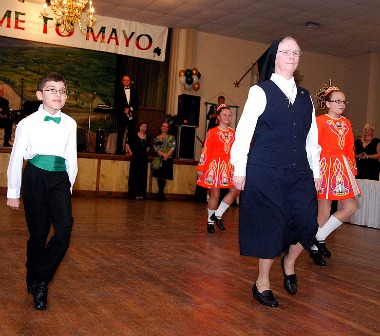
Sister James Anne Feerick tears up the dance floor at the 2010 Mayo Ball.

Pop some extra vitamins today. You’ll need them for this week which is jam-packed with Irish events, so many in fact that if you attended them all, you’d have to hit the kids’ college funds. And it’s going to be hard to choose wisely—they’re all good.

Friday:

You’ve got Enter the Haggis and Scythian at Union Transfer, Philly’s newest music venue. Last time there was that much energy in one building the atom was smashed.

Crossroads School of Irish Dance is holding its fundraiser at McFadden’s 3rd Street so they can afford to look great at the Mid-Atlantic Oireachtas, the annual Irish dance competition, that comes to Philadelphia on Thanksgiving weekend.

And in Trenton, trad performer Derm Farrell will be at Tir na Nog where you can listen to some fine music as well as hear Farrell’s stories about his grandfather, Richard McKilkenny, one of the famed Birmingham Six, men who were arrested and sentenced to life imprisonment for the alleged IRA bombing of a pub in Birmingham, England, in 1974. The men’s convictions were overturned in 1991.

Timlin and Kane – that’s Gerry and Tom—will be performing at St. James Gate Pub at the Sands Casino in Bethlehem.

Jamison Celtic Rock will be taking the stage at Brownies 23 East in Ardmore.

Saturday:

Tune in at 11 AM to WNJC 1360AM to hear the new installment of the Vince Gallagher Irish Hour. Vince also has a show on Sunday at 11. That’s two times the Irish music and twice the Vince.

Irish-American comedian Joe Conklin is headlining at the Sellersville Theatre, with two other jokesters, Pat Barker and Dennis Horan. (I’ve heard Dennis Horan perform and he’s a scream.)

Speaking of comedy, that’s what it’s all about at the Richard Rossiter AOH Hall in National Park, NJ. This night of comedy is a fundraiser for AOH charities in Gloucester County.

The 106th Mayo Ball and the crowning of Miss Mayo is Saturday night at The Irish Center, 6815 Emlen Street, in Philadelphia. The county balls are an Irish tradition with staying power. Mayo is one of the oldest.

The Church of the Holy Family in Sewell, NJ, is holding an Irish-themed indoor festival for the Feast of All Saints with entertainment by Celtic Cross.

Head over to Paddy Whacks Irish Sports Pub on Comly Road in Philadelphia for the annual beef-and-beer benefit for the Sgt. Patrick McDonald Scholarship. Jamison and Mike LeCompt are providing the music, and there are raffles, silent auctions, and discounted beers. Sgt. McDonald of the Philadelphia Police Department was shot and killed in the line of duty on September 23, 2008.

Bob McQullien and Old New England—purveyors of New England dance music that has its roots in the UK, France and beyond—will give a house concert in Lansdale. By their nature, house concerts have limited seating, so go to our calendar and email the host to see if there’s still room.

Sunday:

The secret word for Sunday is “holy moly.” That’s because there’s just so much going on.

Mick Moloney and Friends are set to do their 23rd annual Concert for St. Malachy’s at St. Malachy’s Church in North Philadelphia. Always topnotch entertainment, this concert raises money for St. Malachy’s School, which is not financially supported by the Archdiocese. It’s usually a standing room only event. Moloney is the founder of Cherish the Ladies and several other powerhouse musical groups, a folklorist, musician, radio and TV personality, and advisor to dozens of Celtic music festivals and concerts internationally.

The Irish Immigration Center is celebrating winter (it dropped in last week, remember?) with the Bogside Rogues at Finnigan’s Wake in Philadelphia. The $40 event, which features open bar and buffet, will raise money to pay for a social worker to provide outreach to the region’s elderly Irish.

And at Molly Maguire’s Pub in Phoenixville, a host of performers will help raise money for the “Come West Along the Road” radio show, which airs on Sundays at noon on WTMR 800AM. Host Marianne MacDonald has assembled much of the local talent–The Jameson Sisters, Paraic Keane (fiddle), Fintan Malone & Co., The King Brothers, Kane & Beatty, Matt Ward, Mary Malone & Den Vykopal (fiddle & pipes), and Galway Guild, among others—and some fabulous raffle prizes, including hand knit Irish sweaters and concert tickets. This is always a good time.

Blackthorn’s former guitarist Seamus Kelleher is releasing his second album and he’s throwing a part at Puck in Doylestown. He’ll be pouring Irish coffees for the first 50 fans and there’s a CD signing at 6 PM.

Monday:

Poet Peter Fallon, winner of the O’Shaughnessy Poetry Award from the Irish American Cultural Institute and the inaugural Heimbold Professor if Irish Studies at Villanova, will be reading from his work at Immaculata University, starting at 7:30 PM.

Tuesday:

Irish playwright Marina Carr’s “Woman and Scarecrow,” a mesmerizing play about a feisty woman who intends to die as she lived, debuts at Villanova University. It runs through November 20.

“Endgame,” by Samuel Beckett, tells the story of an aged and blind man and his servant who live with the elderly man’s legless parents. This “Theater of the Absurd” work as interpreted by Dublin’s Gate Theatre comes to the Harold Prince Theater of the Annenberg Center for the Performing arts for four performances, ending November 13.

Thursday:

Enjoy Frankie Gavin and De Dannan at the Sellersville Theatre. In its various permutations, De Dannan has included such singing greats as Mary Black, Dolores Keane and Maura O’Connell. Gavin, who founded the group 40 years ago, is a Guinness World Record holder—“fastest fiddle player in the world.”

Friday:

This is the famous 11-11-11 day. Magical things are sure to happen.

You can catch Blackthorn at the Media Theatre in Media, starting at 7:30.

You can also catch—for free—a performance of “Hunger,” a play by Eamon Grennan, poet and former Heimbold Chair of Irish Studies at Villanova, at the Vasey Theater at Villanova at 4 PM.

“Watt,” another Gate Theatre of Dublin production of a Samuel Beckett play, starts a three-performance run at the Harold Prince Theater at the Annenberg Center for the Performing Arts. It stars Barry McGovern as Watt, an itinerant worker who finds employment at the remote country home of one Mr. Knott. If you know Beckett, absurdity ensues, along with much laughter.

Celtic Thunder’s Paul Byrom is making a stop in Philadelphia at the World Café Live with his “This is the Moment” tour.

The John Byrne Band is all set to play at The Shanachie in Ambler, starting at 9 PM.

Some week, eh? We’re kind of inclined to offer a special prize to the person who went to the most Irish events this week. Now, you’ll have to prove it. We’re not going to take your word for it. We want to see ticket stubs and receipts. But if you really knocked yourself out, I bet we have tickets to another event we can offer for the most over-achieving Irish person in the Philadelphia area. Email me at denise.foley@comcast.net and I’ll tell you where to send them.

News, People

No Longer Alone

Every Wednesday, a platter of sandwiches is delivered to the Irish Immigration Center in Upper Darby for the weekly seniors lunch. Then, the regulars arrive, many of them men and women who emigrated to the United States in the ‘50s, ‘60s, and ‘70s, spending most of their lives separated by a vast sea from family and old friends. They’ve raised new families here and they’ve become old friends, but the weekly lunches are an opportunity to hear Irish voices again, to share memories, and make new ones.

When lunch is over, some of the seniors wrap up the leftovers and, on their way home, visit other seniors, those who are isolated by illness, disability, or lack of transportation.

And it’s those people–the ones who don’t come–that motivated the center’s board to approve the hiring of an Irish social worker who’ll be able to regularly visit homebound immigrants to offer them support and the familiar lilt of home.

“The people we see all the time are the healthiest and in the best shape,” says Immigration Center Executive Director Siobhan Lyons. “We would love to do more for the seniors who come here—but, of more importance—the ones who can’t come here.”

At the end of November, Leslie Alcock, a native of Carlow with a master of social science from University College of Dublin, will join the staff at the immigration center. Her first job, says Lyons—assess the needs of the community’s seniors. Alcock, who has wide experience with various communities, from prisoners to families, will be providing services to all ages, but the impetus for bringing her on is to make sure that Philadelphia’s elderly Irish immigrants don’t experience the same fate as others around the world.

“One of our regular lunch people, Attracta O’Malley, sent me a news story about an old Irish immigrant in New Zealand who died and whose body wasn’t found for a year,” says Lyons. “Just a couple of years ago there was a famous case in New York that served as the inspiration for a survey of Irish senior citizens in New York.”

In 2009, the headlines in New York newspapers blared, “He died alone.” He was 72-year-old Tony Gallagher, a retired carpenter from Mayo whose wife, who has Alzheimer’s, was in a nursing home. The two had no children. Gallagher was found dead in his Queens apartment about a week after he died of natural causes.

Ireland’s unique Immigrant Support Programme, which funds immigration centers around the world, was created in reaction to stories of increasingly isolated immigrants, mainly in England, who hadn’t become educated, married, saved, or assimilated into the culture—essentially becoming ghettoized.

“The inspiration for a lot of these senior programs are the experiences of the London Irish, who emigrated in the ‘50s, sent money home, didn’t assimilate into the English culture, didn’t get married or have families, and by the time they were in their ‘60s they didn’t have a support system,” says Lyons. “Our seniors are better adjusted and assimilated and certainly wealthier than the London Irish, but when a spouse dies they get isolated. Some of them are living in a neighborhood that used to be Irish but is now not a neighborhood they necessarily feel part of. Some have less confidence in their physical abilities and are wary of going out.”

Kathleen Murtagh, one of the center’s Wednesday “lunch ladies,” knows some of those people. A widow and mother of six, she regularly takes them leftovers, visits the homebound, and calls those she hasn’t seen in a while. “We try to keep track of people we know,” she says. “We’re always looking out and reaching out. If there’s someone you normally see and you don’t see them, you check on them. But there are people we don’t know and I think having a social worker who could find them, call or knock on their door, would really help.”

The inspiration for hiring a social worker from Ireland came from Chicago, says Lyons, where an organization called Wellspring Personal Care joined forces with the Chicago Irish Immigrant Support Center to bring Irish social work students to the US as interns to serve the elderly Irish population. Alcock is a graduate of that program.

“I’m familiar with what they’re doing in Chicago and they’re a few years ahead of us in their program, but they’re the model for what we’re doing,” says Lyons.

The Irish government is impressed too. It has funded “The Chicago Irish Project” and encouraged other immigration centers to replicate the design, which also gives field training to Irish social workers whom it hopes will bring their knowledge of senior care back to Ireland.

“I love the idea that we could set up an exchange program between schools in Ireland and schools with great social work programs here, like Bryn Mawr and Temple with Trinity maybe,” says Lyons. “That’s our long-term strategic plan, but right now the first step is for Leslie to sit down the seniors here and start making a list of all the seniors we’re not reaching and for her to go out and see what their needs are. That way we can build up a database of who is out there who needs help and what they need.”

Eventually, says Lyons, she’d like to establish a volunteer program of younger people who would do home visits, run errands, and do small chores like lawn mowing and snow shoveling that the elderly now have to pay for—a financial hardship when you’re on a fixed income. “It will be nice to see the next generation of the Irish community helping our seniors,” says Lyons. “We want people to know they’re cared about.”

You can help Philadelphia’s “Irish Project” by attending a fundraiser on Sunday, November 6, from 3-6 PM at Finnigan’s Wake, 3rd and Spring Garden Streets in Philadelphia. The $40 per person ticket covers a buffet and open bar and live music with the popular Bogside Rogues. For more information, contact Siobhan Lyons, 610-789-6355.

News, Sports

May They Have This Dance?

You don’t have to be a D-list celeb. You won’t be dressing up like the Bride of Chucky. And you don’t have to worry about the judges referring to you as a cute and cuddly Ewok. Probably.

But if you’d like to learn to dance, lose more weight than Kirstie Alley, or already dance better than the stars and want to support a great cause, you may want to sign up for the Delaware County Gaels’ “Dancing Like a Star” fundraiser which will be held at the Springfield Country Club on February 24.

That’s next year, so why are we telling you about it now? There’s only room for eight couples on the dance floor, and you’re going to have to practice, practice, practice, says Anna Bonner, who is handling public relations for the event.

And you need to raise your hand fast. More than 100 people were nominated as contestants and they have until November 9 to sign up, which gives you non-nominated folks a chance to throw your dancing shoes in the ring.

“This is something that has become really popular with the Irish GAA where it’s modeled on a show called ‘Strictly Dancing,’” say Bonner. “GAAs in San Francisco and New York have already done it and it was very successful.”

The Delco Gaels—a Gaelic Athletic Association club with more than 250 registered members—are hoping that the dance competition will help them raise enough money to send players to the Continental Youth Athletic Games championships in Chicago next year. More than 100 players from the Philadelphia-are club competed in the games when they were held in Boston last year, and the under-14 footballers brought home a trophy.

“With the economy the way it is, parents who would never have missed a CYC are concerned about the costs,” says Bonner.

The Gaels have also traveled to Ireland for the Feilie Na nGael, a competition for boys and girls under 14, sponsored by the GAA.

The club will be providing dance competitors with instructors and requiring a minimum of three hours a week of free instruction and practice. “It is a commitment,” says Bonner. “And if they want extra training, instructors will be available.”

Each couple will perform two dances. “They’ll all learn a waltz and either jive or swing,” Bonner says. “The third dance will be taught by an instructor from New York who specializes in ballroom dancing. But only the finalists will have to do that third dance.”

Don’t worry about clothes shopping. Each dancer will be given a costume, and hair and makeup are also provided.

“There’ll be a dress rehearsal a week prior to the event,” says Bonner. “We don’t want them to panic that night. It’s one thing to do it in a room with two people, another thing to do it in front of 300 people.”

If that doesn’t scare you off, contact the Delco Gaels at delcogaels@verizon.net and tell them you can dance, you can dance, everything’s out of control. Or something like that. See below:

http://www.youtube.com/watch?v=7movKfyTBII