Music

Return of the Voice You Can’t Forget

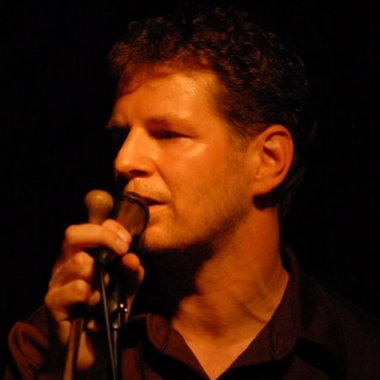
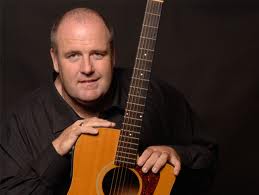
Singer-songwriter Don Stiffe

In 2010, we wrote about a then up-and-coming singer-songwriter from Galway. His, we wrote in a headline, is “a new voice you won’t forget.”

Since that time, Don Stiffe has become an arrived singer-songwriter from Galway and hundreds of thousands of people have not been able to forget his gift-from-God voice, thanks to his 2011 appearance on RTE’s “The All Ireland Talent Show,” one of Ireland’s most watched TV shows a la “America’s Got Talent,” on which he was a finalist.

Fresh off the Joannie Madden (Cherish the Ladies) “Folk’n’Irish” Cruise, with a new CD in hand (“Life’s Journey”), and a tour with the Kilfenora Ceili Band on the resume, Stiffe is heading to Philadelphia for a return engagement at the Irish Center on Sunday, Feb. 17. The show is produced by Marianne MacDonald, host of the “Come West Along the Road” radio show on WTMR 800AM every Sunday at noon.

MacDonald forged a relationship with Stiffe after, one day, deciding to blow the dust off a CD someone had given her to hear this new guy’s version of a song she loves, “Shanagolden.” She had the same reaction most people do when they hear Don Stiffe sing. “Wow,” she said.

“So I did what you usually do these days when you want to reach someone—I found him on Facebook!” she says, laughing. They chatted and she lured him to his first Philly gig, introducing him to fellow Galway native and musician, Gabriel Donohue, who served as his one-man-band accompanist.

Stiffe entered “The All-Ireland Talent Show” on the urging of his wife Elaine and three children. He didn’t win, but as it goes in many of these star-making series, even the runners up reap the rewards.

“You get the publicity out of it and it’s fantastic,” Stiffe told me a couple of weeks ago from Miami, where he was about to board the Joanie Madden cruise ship. “People take a bit more notice of you. In fact, when I was coming through Shannon, on of the immigration officers said to me, ‘Are you that person who was on that talent show one time?’ God almighty,” Stiffe says, laughing, “when an immigration officers pulls you up and starts talking about the bloody thing. . .I thought people would be thinking I was on some murder list or something! And she just would not let me go. She knew about the three kids, the family. . . .”

The real reward isn’t recognition though, says Stiffe. “It’s the work. Getting the work is a great thing. I didn’t think things would happen so fast. I got a nice bit of work at home, in different parts of the country.” He toured with Cherish the Ladies last year (they made a stop at Philadelphia’s Annenberg Theater to soldout crowds) and is with them again right now in Texas. And he hooked up with the Kilfenora Ceili Band, the oldest and possibly most famous ceili band in Ireland, which regularly sells out the Irish National Concert Hall in Dublin.
“Touring with the Kilfenora Ceili Band was fantastic. We played all the big auditoriums in Ireland and people did recognize who I was. To get to a wider audience, to get steady work, that’s the name of the game. I’m not too concerned about the fame,” he says, laughing again. “It’s the work.”

But getting noticed is what’s bringing the work and Stiffe’s talent is drawing attention in many ways. In 2010, his version of Richard Thompson’s “Dimming of the Day” from his debut album, “Start of a Dream,” earned him the “Vocal Cut of the Year” award from the Live Ireland awards. This year, one of his songs, “Somebody Special,” performed by his friend and fellow Galway native Matt Keane, was named Live Ireland’s pick for “Song of the Year.”

But, perhaps more important, this touching (and to Stiffe, very personal) love song has become the song of the year—and possibly, for years to come—of young Irish couples. “A lot of people are singing it at weddings,” says Stiffe. “That must mean something, hmm?”

Listen to Matt Keane’s version and you’ll understand why.

Even better, come to the Irish Center on Sunday night at 7 PM and ask Don to sing it himself. Guaranteed, you’ll never forget it.
History, News, People

Irish History’s the Star of Local Book Signing

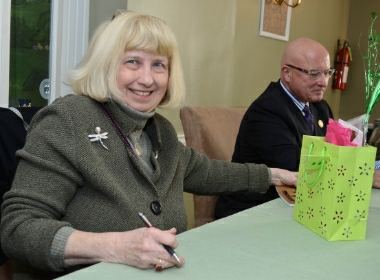
Signing books: Marita Krivda Poxon and PA Supreme Court Justice Seamus McCaffrey.


Sister Polly McShain’s father, John, became a part of American history thanks to the business he inherited from his father, John McShane, an Irish immigrant from Og Hill, County Derry.

John McShain became known as “the man who built Washington.” He was, she told a crowd last Sunday at the Irish Center in Philadelphia, “the low bidder” on various projects in the nation’s capital: The Pentagon, the Jefferson Memorial, the John F. Kennedy Center for the Performing Arts, the Library of Congress annex, Washington National Airport and, in 190-51, the reconstruction of the White House. Just a few of the nation’s most iconic buildings. Later, McShain purchased Killarney House in Killarney, Ireland, where he spent a great deal of time. In 1979, he turned over the house and property to the Irish government and it has since been merged into Killarney National Park, a popular tourist attraction on Ireland’s west coat.

“All Irish should be proud of that story,” said Marita Krivda Poxon, the author of “Irish Philadelphia,” a new book about the rich history of Philadelphia’s Celtic sons and daughters, who stepped up to the microphone after Sister Polly. “It’s the story of America.”

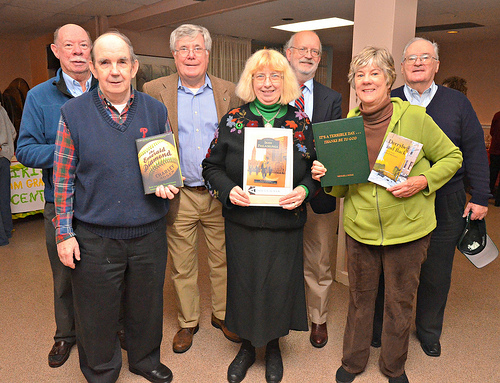
Poxon—there are Finnegans in her line—was the guest of honor at this gathering at the Irish Center. Along with Pennsylvania Supreme Court Justice Seamus McCaffrey, a Belfast native who wrote the forward to her book, and Irish Edition photographer Tom Keenan, who supplied many of the photos, she was signing books for the hundreds of people who stood patiently in line to meet her. With their autographed books in hand, they filtered into the Fireside Room for a dance demonstration by the Cummins School dancers and live music from Luke Jardel of the Hooligans and singer Rosaleen McGill and other local performers.

Peter Ryan, deputy Irish consul, traveled from New York for the event. “I feel very much at home here,” he told the crowd, clutching his autographed copy of the book. “You’re really blessed in Philadelphia to have the community you have.” Perusing the book, he said, he was surprised that so many Irish leaders and notables had visited the city, including Charles Stewart Parnell, an Irish Protestant landlord and member of parliament who championed the cause of Irish home rule; Countess Markiewicz, Sinn Fein and Fianna Fail politician and revolutionary, and Maud Gonne, an English-born Irish revolutionary and beloved of William Butler Yeats.

“Irish Philadelphia,” from Arcadia Publishing, is available in book stores, Irish shops and on amazon.com


How to Be Irish in Philly

How to Be Irish in Philly This Week

That’s the lovely Angus from the popular group, Brother, in Valley Forge on Friday.

It’s the quiet before the storm. Just a few new things going on this week, but all Irish is going to break loose very soon (we know, because we’ve just updated our calendar and we’re not finished yet!) in preparation for OUR month.

If the snow doesn’t stop you, catch the Broken Shillellaghs at Lazy Lanigan’s Publick House on Saturday night (oh, it will all be plowed to the side by then) in Sewell, NJ.

AOH Div. 1 in Bridgeport is holding a ceili on Sunday at 2 PM (calling all dancers!).

On Tuesday, learn about the Irish Census of 1901 and 1911 with John McDevitt at the regular meeting of the Irish American Genealogy Society at the Irish Immigration Center in Upper Darby (starts at 11 AM).

Then, Friday marks the beginning of the incredible festivities at the Philadelphia Mid-Winter Scottish and Irish Music Festival in Valley Forge. The opening concert features the Paul Moore Band, Angus and Digeridrew from Brother, Albannach (the remarkable percussion band from Scotland) and Barleyjuice, homegrown Celtic rockers.

Also on the bill for this weekend extravaganza: the MacLeod Fiddlers from Canada, The John Whelan Band, Seven Nations, Brother, Hadrian’s Wall, the Screaming Orphans, the Rovers, Searson, Killen Clark Cantrip, Jamey Kelly, Olive McElhone, The Washington Memorial Pipers, the Campbell Highland and Fitzpatrick Irish Dancers, and Paddy Kelly and friends. You can sign up for a whiskey tasting, learn a few words in Scottish or Irish Gaelic, pick up a few steps of ceili or Scottish step dancing, or do a little fencing. It’s total Celtic immersion.

Check our calendar regularly for any late-breaking events and find out more about what’s going on this week.

Food & Drink, People

McGillin’s Checks in as Philly’s Best Bar

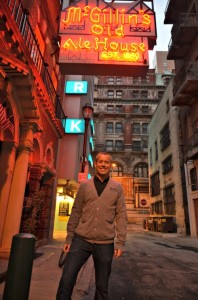
Chris Mullins, Jr.

Chris Mullins, Jr.

The city’s oldest continuously operating bar is now officially the best, according to the location-based social networking site Foursquare. Not that this is the first time McGillin’s has been singled out for honors from local and national media—far from it—but it is the first time the GPS-based social networking site chose the 150-year-old-plus Drury Street tavern to top the “best bars” list, as determined by the site’s registered users.

The longtime Irish watering hole ranked 9.6 out of 10 points, based on “check-ins” by users.

Media praise never gets old, says owner Chris Mullins, Jr. On the contrary, he laughs, it just reaffirms his career choice. “Running a bar is an exhausting but thrilling profession to be in. You can’t do it unless you love it. It’s in my blood. I’m thrilled by it every day.”

Watch our interview with Chris, above.

Fado Irish Pub, 1500 Locust Street, scored a 9.0 for best beer. Fado also scored a 9.0 under “best pub.” O’Neal’s, 611 South Third, tapped in with an 8.9 score; The Bards, 2013 Walnut Street, pulled an 8.8.

Music

Review: “Shamrock City”

Solas

Solas

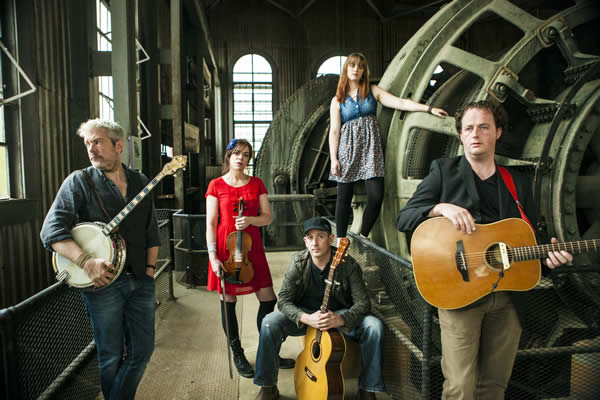
About a year ago, fiddler Winifred Horan and accordion player Mick McAuley—bandmates in the Philadelphia-based Irish supergroup Solas—played an intimate house party in Ambler. About midway through the performance McAuley sang a new song he and Solas front man Seamus Egan had written about early 20th century Irish immigrant Michael Conway, who ventured to Butte, Montana, to join droves of other Irish emigres who found work in the lucrative local copper mines.

Within six years, Conway lay dead in the streets. Many Butte miners died young, but Conway’s death came at the hands of local lawmen, who beat him viciously as punishment for stubbornly refusing to throw a bare-knuckled boxing match.

Horan, visibly moved, wiped tears from her eyes as the song came to a close. Hers were not the only misty eyes in the room.

McAuley’s performance was a sneak preview of a then relatively new musical and visual Solas project called “Shamrock City.” Conway was the great uncle of Seamus Egan’s father, so Egan family lore inspired the project. Several of the tunes were available on an EP sold at concerts and in other venues, and the band previewed them in concert over the past year, including an appearance at World Cafe Live. The full-length CD has just been released, and no doubt you’ll hear much more about it—and much more music—when Solas returns to the World Cafe for two shows on the evening of Saturday, February 9. (Learn more here.)

“Shamrock City” is easily on a par with anything that has been written, played or sung about the hope and heartbreak at the nexus of most Irish diaspora tales. It might even be better in that it stands not as one song or two, but as a unified whole, a complete and compelling story.

Solas has more than a little help bringing “Shamrock City” to life. The cast of contributing musicians is like a who’s who of contemporary folk, roots and Celtic music, including Natalie Haas on cello; Lunasa bassist Trevor Hutchinson; Dirk Powell on five-string banjo; singer and fiddler Rhiannon Giddens of the Carolina Chocolate Drops; Philadelphia dobro virtuoso Mike “Slo-Mo” Brenner; Scottish singer Dick Gaughan; Aoife O’Donovan, lead singer of the bluegrass band Crooked Still; and the British-style Allegheny Brass Band.

Longtime Solas associates bassist Chico Huff and percussionist John Anthony (who also recorded and mixed the CD) also appear.

The album opens with “Far Amerikay,” another ballad written by McAuley, who shares writing credits with Seamus Egan on this and several other tunes. It’s about what you would expect—a tale of leaving—but with some particularly lovely lyrics like this poignant mother’s lament: “God knows it’s not for glory, son, we just have to make some room. / My heart will surely break for you, sweet treasure of my womb.” Solas lead singer Niamh Varian Barry takes the lead on this one, with deep, droning backing chords by Natalie Haas. It’s a finely drawn piece of work, and it sets the stage for the story that follows.

There’s no escaping the sadness of life far from home, and that sadness gets an airing again later in the CD, with Varian-Barry’s heartfelt rendering of the traditional “Am I Born to Die.” But it’s not all gloom and doom—far from it.

Take, for example, Seamus Egan’s whimsical instrumental “Girls On the Line.” You can probably guess what kind of girls they are. And Rhiannon Giddens takes a turn as a kind of taproom chanteuse in the old-timey “Lay Your Money Down,” another McAuley-Egan collaboration. (“Drinks are on the house now, sonny, the sweetest deal in town / You can’t take it with you, honey, so lay your money down.”)

Some lively clogging dancing starts out “High, Wide and Handsome,” with Winnie Horan taking the lead. You can practically feel her fiddle bow disintegrating. Horan also takes the spotlight in one of her own compositions, the wistful waltz, “Welcome the Unknown,” with Egan on low whistle.

Probably the one tune destined for “RPT” play on my CD player is the rebellious “Tell God and the Devil,” leading off with percussive banjo picking by Egan, lead vocals by Varian-Barry, with tight backup vocals by McAuley and the talented longtime Solas guitarist and keyboard player Eamon McElholm, who consistently provides some of the best harmony in the business. Little more than indentured servants they might be, the song seems to say, but these miners are tough, resilient SOBs.

The final tune, “No Forgotten Man,” strikes a note of hard-won triumph against incredible odds, and leaves the listener with a feeling of hope. It’s a fitting and satisfying end.

This album stands out because there’s no slushy sentimentality on display anywhere; just a gritty but life-affirming authenticity. The homesickness, the harrowing risks, the cheapness of human life, the irresistible need to find pleasure in a pint of beer or in the arms of a goodtime girl—all the shared experiences of Irish immigrants in the town that became known as “the richest hill on earth”—all are encapsulated completely into the story of one bold young man from Cork, and the town that became his home, if for only a little while.

Like Michael Conway himself, with “Shamrock City,” Solas pulls no punches.

How to Be Irish in Philly

How To Be Irish in Philly This Week

John Byrne and his band will be appearing with Lily Anel this weekend in Newtown Square

If you or your peeps came from Philly, you’re going to want to get yourself a copy of “Irish Philadelphia,” a new book by local author Marita Krivda Poxon which chronicles in words and pictures the history of the Irish in the city since before the Revolutionary War. You can meet Poxon and Pennsylvania Supreme Court Justice Seamus McCaffrey, who wrote the forward to the book, on Saturday afternoon at the Irish Center in Philadelphia.

Saturday is also very musical: Slainte is at Paddy Whacks Pub on Roosevelt Boulevard in the afternoon and at Maggie’s on Delaware Avenue at night. Busy day for this offshoot of Jamison Celtic Rock.

You can also hear the John Byrne Band with local singer-songwriter Lily Anel at Burlap and Bean Coffee in Newtown Square on Saturday night.

Start your day off right, though, by catching some 6 Nations Rugby. Watch Ireland Vs. Wales and English Vs. Scotland on the big screens at The Plough and the Stars in Philadelphia on Saturday starting at 8:30 AM.

Get information on these events and others—and keep checking back for late breaking news—on our calendar.

News, People

St. Patrick’s Day Parade Ring of Honor Chosen

WMMR’s Preston and Steve collect tons of food for the hungry at their annual Campout for Hunger program.

When the St. Patrick’s Day Parade Ring of Honor marches down the Benjamin Franklin Parkway on Sunday, March 10, you’ll see a custodian who came to the attention of Parade Association President Bob Gessler when he was running a drive to collect coats for the needy in Delaware County.

You’ll see the co-founder and special projects coordinator of an organization that has been credited with helping thousands of people break the cycle of homelessness and poverty in the Philadelphia area.

You may recognize a couple of local DJs who hold a “Campout for Hunger” every year that raises hundreds of tons of food for the needy. That’s right—hundreds of tons. Every year.

And by their side will be the volunteer coordinator for St. John’s Hospice at 12th and Race Streets that was founded in the 1960s by the Little Brothers of the Good Shepherd to minister to the homeless.

And the executive director of the Metropolitan Area Neighborhood Nutrition Alliance (MANNA), a nonprofit that delivers nutritious meals to people and families living with life-threatening illnesses.

And the owner of a food company that not only supplies food for holiday baskets for the poor, but has his workers help load them, alongside volunteers from the Ancient Order of Hibernians, and always throws in a few extras. Okay, a lot of extras.

And a board member of an Ancient Order of Hibernians project that collects and prepares thousands of meals for shut-ins every year.

Are you picking up a theme?

Gessler hopes you do. This year’s parade theme is “The Philadelphia Irish Memorial: A Decade of Remembrance.” It honors the tenth anniversary of the memorial, a 12-foot high and 30-foot long bronze sculpture by Glenna Goodacre, at Front and Chestnut Streets that is dedicated to the memory of the more than 1 million people who died in Ireland between 1845 and 1850. Those who don’t know their history call it “The Great Famine.” Those who do call it “The Great Hunger:” An Gorta Mor.There was no famine; the Irish starved to death while food grown on their soil was exported to Great Britain.

Gessler was part of group that raised $2 million to build the memorial and in the middle of it all, he had an attack of guilt. “I kept thinking, how can we, as an organization justify spending all the money on a memorial about the famine and not do something for people who are hungry today,” he told us back in 2008. With the help of his brothers and sisters in AOH/LAOH Div. 87, Gessler founded the Hibernian Hunger Project, which is now an official national AOH program that provides food for the needy.

As the new president of the Philadelphia St. Patrick’s Day Observance Association, Gessler gets to pick a parade “Ring of Honor.” And this year, he stuck with his favorite theme—doing good. The honorees:

Dan Harrell, former custodian at the Palestra at Penn, who went from coat drives to bringing students from St. Malachy’s College in Belfast, a Catholic grammar school for boys dating back to 1833, to the US every year to play basketball—and music. St. Malachy’s Orchestra has marched in the parade for several years.

Sister Mary Scullion, co-founder with Joan McConnon, of Project H.O.M.E., the provides housing, employment, education, and health care to chronically homeless and low-income people to break the cycle of homelessness.

Will O’Brien, special projects coordinator or Project H.O.M.E. who also coordinates The Alternative Seminary, a grassroots program of biblical and theological study.

Sue Daugherty, executive director of MANNA.

Gerry Huot, volunteer coordinator of St. John’s Hospice.

Jim Tanghe, president of Shamrock Food Distributors.

Ed Dougherty, a member of the Ancient Order of Hibernians National Board Chairing for the Hibernian Hunger Project who serves the same role with the Pennsylvania State Boards and Philadelphia County Board.

Preston and Steve (Preston Elliot and Steve Morrison), popular morning DJs at WMMR and founders of Campout for Hunger.

And Timmy Kelly, a young singer, now 18, who has been performing at Phillies games, Eagles games, the Irish Festival in Wildwood, and opening the ceremonies at the parade since he was only 10 years old. Born prematurely, he has cerebral palsy and is blind, but his powerful voice has made him an Irish community favorite (he also sang for presidents and opened for the Jonas Brothers in Philadelphia). “I wanted him to know that the Irish community appreciates him—a lot,” says Gessler.

The 2013 Ring of Honor will receive their sashes at a dinner on March 7 at the Doubletree Hotel on Broad Street in Philadelphia, following a ceremony in the late afternoon at City Hall with Mayor Nutter. Also being honored: 2013 Grand Marshal, Harry Marnie, a retired police officer who is president of the Emerald Society, an organization of police and fire personnel of Irish descent.

Arts

A New History of Irish Philadelphia

Marita Krivda Poxon, center, at a recent gathering of Philly Irish authors.

Marita Krivda Poxon, center, at a recent gathering of Philly Irish authors.

Retired research librarian Marita Krivda Poxon had just finished co-writing her 2011 book about the Oak Lane, Olney and Logan neighborhoods of Philadelphia when she started thinking about her next book.

The question: What to write about? Poxon’s editor at Arcadia Publishing, which produced “Oak Lane, Olney and Logan (Images of America),” wasn’t over the moon about any of her ideas for a follow-up, so she found herself casting about, trying to figure out what the editor would be interested in.

Then, Poxon noticed that Arcadia had a pretty successful line of books about ethnic groups: titles like, “African Americans in Amarillo” and “Thais in Los Angeles.”

“I wondered if anyone had done a book on the Irish in Philadelphia, and there was nothing in the Images of America a series,” Poxon recalls. “I couldn’t believe it.”

Poxon called the editor, pitched the idea, and this time found her more receptive.

“She asked what would I call it, and I said ‘Irish Philadelphia.’ And she said, ‘That’s a possibility. We don’t have that, and ethnic books sell.’ They have a book, ‘Italians of Philadelphia,’ that has never been out of print since they first published it 10 years ago. They’ve reprinted it six or seven times.”

Arcadia gave the OK, and now the finished product―crammed with 200 photos and illustrations describing the history of the Irish in Philadelphia since the 17th century―is set to go on sale January 28. (Order it here.) A big book signing party is scheduled for Saturday, February 2, at the Philadelphia Irish Center. (Details here.)

For Poxon, retired after a long and successful career in medical libraries, researching and writing a book was right up her alley in more ways than one. To begin with, her degree in library science from Drexel and years of experience taught her how to sniff out information.

“When I retired, I thought, ‘I can do anything I like.’ That’s how I started writing that regional history book (Oak Lane, Olney and Logan). It was an easy book to write. This kind of book is very defined. It has strict rules: how many pictures, how you format them, how it’s all laid out. It’s rule-bound. As a librarian, I am used to that. Once I got that book under my belt, I thought, ‘Now I can try to do another’.”

But when it came to the Irish Philadelphia book idea, Poxon had another power motivator: her deep familiarity with Irish history and culture. Although Poxon’s father was a Hungarian, born in Budapest, her mother was a Finnegan—Margaret Mary, to be precise—born to a father from County Sligo. Her well-loved uncle Tom Finnegan was very well known around the Philadelphia Irish Center.

Poxon’s Irish roots are deep in yet another way. Back in the late 1960s-early 1970s, she came to love Irish literature while studying English at Temple University. She then moved on to do graduate work at Trinity College in Dublin. She never quite finished her doctorate there. Money was running short, and she had no scholarship funds, so she returned home.

Back in the States, Poxon taught English for a while at the State University of New York. She didn’t like it. So she went through a brief period of self-examination and decided that what she really liked was research and scholarship. That’s what led to the master’s degree from Drexel. Armed with that degree, she began her career at the University of Massachusetts Medical School. Her last job before retirement, after 30 years as a medical librarian, was in the library at Chestnut Hill Hospital. Still, even though she had spent three decades in libraries, she never forgot the early years she devoted to the study of Irish literature and culture.

It was when she started to research her Irish Philadelphia book that Poxon ran into a name that wasn’t familiar to her. It was that of Dennis Clark, author of the seminal book, “The Irish in Philadelphia: Ten Generations of Urban Experience.” It turned out that Clark had been on the faculty at Temple at the same time she was pursuing her studies. “I was in the English department, and he was in city planning or something, so I never ran into him,” Poxon says.

Once introduced to Clark’s incredibly detailed knowledge of the Irish experience in Philadelphia , Poxon was inspired. In fact, Clark’s scholarship served as a useful starting point for much of her work on “Irish Philadelphia,” although Clark’s books and Poxon’s really aren’t at all the same.

“Dennis Clark was an amazing writer, but I bought six of his books, and there wasn’t one picture in any of them,” Poxon says. “He was not a photographic person; he didn’t have a sense of the visual. He saw history happening while it was happening. He was a smart man that way. He was an astute observer of people, but he didn’t like photos.”

The Arcadia series, on the other hand, is a very different kind of book. Poxon followed the trail blazed by Clark, but she did it in a more visual way. She found that approach right up her alley, and she believes it will have a strong appeal for anyone who identifies as Irish in Philadelphia.

“I used a lot of Clark’s ideas, and made them more palatable,” Poxon explains. “These books are like children’s history books, but for adults, and the pictures tell the story.”