Sports

Philly’s Ready for the Continental Youth Championships

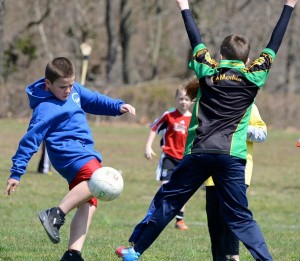
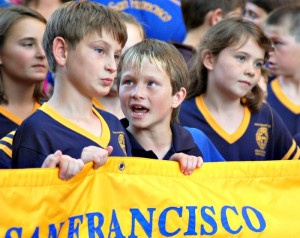
Kids getting their kicks.

Kids getting their kicks.

Philadelphia will be hosting the Gaelic Athletic Association’s Continental Youth Championships in Malvern from July 25 through 28. For such a massive undertaking—Gaelic football and hurling players from throughout the United States are taking partthere’s a national committee, of course. But when all those kids, their families and supporters start arriving this weekand certainly when play begins at the Greater Chester Valley Soccer Association fieldsthey’ll all be the guests of the Philadelphia GAA. And the Philly folks have had plenty to do to get ready.

To learn more, we checked in with local chairperson Louie Bradley.

How are things coming along?

Everything’s going pretty good. They’re delivering the goals tomorrow. We can’t put them up until Monday because the grass is getting cut again and they’re relining the fields. Tents are getting delivered Tuesday and Wednesday, the parade (down Gay Street in West Chester) is set for Wednesday night. People from the GAA in Ireland are arriving on Monday and Tuesday. All the teams start arriving on Wednesday.

It’ll be all hands on deck locally. We have a great group. The people who are involved are really dedicated.

It sounds like this is a big  job for the local GAA. How big?

It’s a lot of work when you’re trying to do your daytime job. It’s definitely a massive undertaking to get sponsors lined up, get the equipment, getting goals made up, having T-shirts made … all that. Scheduling games has been the hardest. We’re still finalizing the numbers.

What does this mean for the Philadelphia GAA? Seems like it would be a nice feather in your cap.

The first one was done really well. (The championships were last played in Philly in 2008.) That one was big. This one will be bigger. Everyone here is on the same page. There’s 2,000 kids and parents coming. Put it is way: If it goes wrong it’ll reflect on us. Were working hard to make sure that doesn’t happen.

Do you still need help?

Every day we need 84 volunteers on the fields. (There are 12 fields.) At 8 o’clock every morning of the tournament, we need officials, like field marshals, linesmen and umpires. People who want to volunteer should go to our website.

Do you think an event like this raises public awareness of the role of young people in the GAA? It seems like, if you want Gaelic games to survive and thrive in the United States, you have to invest in young people.

It’s tough. In this country you have a lot of competition, with football, baseball, lacrosse, track, soccer and numerous other sports. Gaelic football is more of a cultural sport. It’s a coordination sport that helps you with other sports. I think it help my kids with their soccer, and it helps them with their aggressiveness as well. Obviously I’m biased, but it’s a great sport.

More details here.

How to Be Irish in Philly

How to Be Irish in Philly This Week

The Glengarry Bhoys: at Graeme Park and Sellersville Theater this weekend.
Big Irish weekend in Horsham. It’s the annual Graeme Park Celtic Weekend featuring the Glengarry Bhoys, Seamus Kennedy, Blackwater and a host of other musical acts. Plus there’s border collies! Yay border collies! They’re supposed to be the smartest dogs in the entire canine world. Count on them to stay in the shade. It’s gonna be a hot one.

You can catch the Glengarry Bhoys again on Sunday at the Sellersville Theatre where they’re pairing with Barleyjuice to raise money for the Celtic Cultural Alliance, the nonprofit that runs Celtic Fest in Bethlehem every year.

A couple of thousand kids from all over the country who play Gaelic sports will descend on the area this week for the Continental Youth Championships, being held at the Greater Chester Valley Soccer Association fields in Malvern. This is the largest tournament of Gaelic sports outside of Ireland.

On Wednesday afternoon, before the games begin, the Irish American Business Chamber and Network, along with the Irish Consulate General, the Gaelic Athletic Association, Irish Network Philadelphia, and the Friendly Sons of St. Patrick is sponsoring a business and networking forum at the Chester County Historical Society in West Chester. The topic: The business of sport. ESPN’s Joe Lunardi will moderate a panel consisting of Liam O’Neill, president of the Gaelic Athletic Association; John Nash, general manager of the National Basketball Association, and Michael Hickey, former GAA player and senior vice president of Delta Point, Inc. of Malvern. The event is free, but reservations are required. Contact alanna@iabcn.org.

Do you play the bodhran? If you have to ask what that is, you don’t. But if you do play or would like to, bodhran maker and player Albert Alfonso will be at the Water Gallery in Lansdale on Wednesday night where he’ll give complimentary mini lessons and will have an assortment of tippers and drums for sale.

If you’re used to seeing John O’Callaghan with his group, Jamison Celtic Rock, you can catch him alone—when gigging, it’s known as solo—at AOH Div. 61 Clubhouse at Rhawn and Frankford in Philadelphia from 7-10 PM on Wednesday.

Derry Brigade will be playing on Thursday event at the North Penn VFW on Jenkintown Road in Glenside.

And on Friday, a real treat: Danny Quinn, Gabriel Donohue, and Gerry TImlin will be playing at Catherine Rooney’s in Wilmington. That’s a lot of Irish talent on one stage.

Next Saturday, there’s an Irish Music Weekend Camp scheduled in West Chester. It’s the second year in a row for the camp, open to all players. Alex Boatright, an All Ireland Harp Champion who has medaled in the North American Fleadhanna in concertina and fiddle, and her husband, Duncan, a percussionist and award-winning composer and steel pan player, will be the instructors. The weekend will end with a session at Molly Maguire’s in Phoenixville. For more information, email kballweir@gmail.com.

There are only a few spots left for an August 7 house concert featuring Liam O’Maonlai of the Hothouse Flowers in Philadelphia that was posted on our Facebook page this week. Email barnstarconcerts@gmail.com. And check out our Facebook page, which is the latest incarnation of Ballyphilly, our late lamented Irish Philly social network site. There’s a lot going on there.

Also, if you sign up for our weekly e-letter, Mickmail, by July 26, you’re entered into a contest to win tickets to see Carlos Nunez, the bagpiper who plays with The Chieftains, at World Café Live in Philadelphia on July 30. You’ll also get a free copy of our homemade CD, Ceili Drive, which features the musicians of Irish Philadelphia, as well as a t-shirt and pint glass. You can sign up right here. And fear not!
Your address is safe with us. We don’t sell or share and Mickmail comes only once a week so we won’t be clogging up your inbox.

Music, News

Bringing Philly Irish Music to the World

Joe Kirschen

Joe Kirschen

The Hooligans’ talented guitarist and mandolin player Joe Kirschen had just wrapped up production of the band’s new CD, “The Ferryman.” He’d spent 16 great years rocking out with lead singer Luke Jardel and the gang, but the exciting business of helping to bring the CD together and posting it to iTunes lit yet another creative fire in him.

“It was a group production,” Kirschen explains, “but it was primarily recorded here in my home studio. It was the first time I’d gotten involved in that aspect of the music. After the CD was finished, I wanted to continue recording and producing. I decided, well, I learned a lot about pushing music through iTunes, and I figured: Why not try to work with other bands, and network with other musicians in Philadelphia, and get them involved in creating new things? And find a way to promote that music to an untapped audience, which is the world, really?”

Kristen’s brainstorm: Create a website featuring Irish music podcasts and live video recordings predominantly, but not exclusively, featuring Philly artists.

It’s called “The Session: Irish Celtic Music Show,” and it launched in late April with a 46-minute podcast, featuring a performance by the Bogside Rogues and an interview with lead singer Bob Hurst, together with tunes from the John Byrne Band, Scott McClatchy, The Fair Trade, The Birmingham Six, Barleyjuice and … oh, yes, The Hooligans. Since then, Kirschen has produced two more audio podcasts, and three live concert videos featuring the Bogside Rogues, the John Byrne Band, and the McGillians and friends. You can log on here.

When it comes to finding and showcasing local talent, Kirschen’s longstanding relationships with Philly-area bands and musicians gives him a leg up.

John McGillian (button accordion player) has been on just about every Hooligans record,” Kirschen says. “I’ve worked with Jamison, and with The Fair Trade—they were here just last night. We do the whole thing in my living room. We call it The Love Lounge. It’s got great sound.”

So far, he says, the site is attracting attention from listeners not just in the Delaware Valley, but throughout the United States and abroad. “It’s going really well so far. I’ve been getting a lot of reaction from bands in Ireland and elsewhere in this country, like Denver and Illinois.”

For his full-time gig, Kirschen is a media strategist and ad salesperson for a human resources trade magazine in Horsham. His first job out of Temple was as a reporter for the Times Chronicle in Jenkintown. He then moved on to other jobs in communications, including his own highly regarded start-up publications, “Philly Rock Guide,” “Magnet,” and “Rockpile.”

Working in communications, Kirschen explains, also proved an advantage as he began work on the Irish Celtic Music Show.

“I’ve always been involved in communications and doing my own thing,” Kirschen says, “and that’s another reason why I love this podcasting thing. Its a low-cost way to disseminate great content. Hopefully I can build it to the point where I can sell ads or sponsorships.”

For now, though, Kirschen is dedicated to his website’s core, if unpaid, mission. “I’m doing a lot of good in the music community,” he says. “It’s a win all the way around.”

Dance

Jive Talkin’

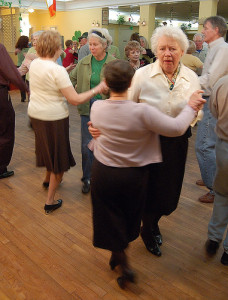
Taking to the floor at the Irish Center.

Taking to the floor at the Irish Center.

Colette Glynn recalls one of the first times someone asked her onto the floor as an Irish jive dance partner, when she was 14 or 15 years old.

It wasn’t good.

“He said, ‘You’re useless,’ and he left me,” Glynn laughs. “I swore at that moment that no one would ever call me ‘useless’ again, and I would learn how to jive.”

If you haven’t heard of Irish jive, don’t think Riverdance. Think more like—but not exactly— Texas two-step.

“It’s a two-person dance,” Glynn explains, “and it’s kind of like swing dancing, but your feet never leave the ground. It’s pretty fast. There’s a lot of turning, and you’re pretty much moving all the time. Essentially it’s a man and a woman, or sometimes two women, and there is always a leader. That one is the one who is making the woman do all the turning and the fancy parts. The leader is kind of telling the woman what to do, and it’s the woman doing all the work.”

This Friday (July 19) Glynn is going to prove to anyone who cares to know that she long ago ditched the “useless” reputation. She’ll be teaching Irish jive in a workshop at the Philadelphia Irish Center/Commodore Barry Club in Mount Airy. Class starts at 7:30, and the cost is just $15.

Glynn, of Pompton Plains, N.J., came to Irish jive with a traditional Irish dance background, and with her parents’ encouragement, she went to had been going to Irish jiving socials, but she obviously didn’t take to it right away. After that less than flattering assessment of her jiving skills, Glenn embarked upon an unorthodox course of self-teaching.

“I tied a rope to a door handle, and I practiced turning to the beat. I did this on and off for about four months.” She had more to learn, of course—a living, breathing partner being a more complete experience than anything you might gain with a rope and a door handle. But there was no question she had improved greatly, as that previous partner conceded, with some degree of astonishment, the next time he and she took to the floor.

“He said, ‘Whoa, what happened?’ I’m now one of the only jiving teachers out there. I’ve been jiving for 30 years. Any time I see him now, he says, ‘I hope I get recognition for this.'”

So what kind of music lends itself to Irish jive? Surprisingly, perhaps, American country music works very well. Glynn’s brother decided he wanted Irish jive as the first dance at his wedding reception. Glynn taught the members of the wedding party. “You can use some traditional Irish music, but jive is about songs and words, not tunes. For the wedding, we chose Randy Travis’s ‘I’m Going to Love You Forever and Ever.'”

Though it might sound like a relatively new twist on Irish music and dance, jive has actually been around for a while. “It came from the old days in Ireland,” Glynn says.

Older jive dancers would recall strutting their stiff to tunes like “Four Country Roads,” performed by a band called Big Tom and the Travelers.

“You mention Big Tom to the older generation, like my parents and grandparents, and their eyes light up, because they know who he is.”

You can learn some of the basic steps, and maybe your eyes will light up, too.

If you’re going to the workshop, Glynn says, wear shoes with leather soles. “You need to be able to glide. Sneakers don’t have any ‘give’.”

Lessons will take place in the ballroom. There’s an Irish music concert in the front of the building the same night, so use the ballroom entrance. For more information contact John Shields at johngshields@comcast.net.

How to Be Irish in Philly

How to Be Irish in Philly This Week

Storyteller and musician, Mairtin de Cogain

Storyteller and musician, Mairtin de Cogain

Even if you’re not all that crazy about Irish traditional music, you’re going to like Mairtin de Cogain who is appearing on Friday, July 19, at The Irish Center in Mt. Airy.

That’s because in addition to singing, dancing, and playing the bodhran, de Cogain, a Cork native who lives in Minnesota, is a storyteller. In fact, he’s a two-time All Ireland Storytelling Champion. It’s a genetic gift from his father, who, he told us in 2011, “is a great storyteller himself. I really love telling stories when you hit the mark. I do try to have a story or two wherever we go that’s suitable. I was never amazing at school, but my short term memory is amazing. If I hear a story, and retell it the next day, I’ll remember it. I’m kind of like a mockingbird that way.”

Who doesn’t love a good story? Especially if it makes you laugh. And we’ve seen Mairtin de Cogain before. Trust us, you’ll laugh. (Check out our 2011 interview with Mairtin and the videos of his performance at The Irish Center, with fellow Corkman Jimmy Crowley, in 2009.)

What’s history but stories, passed down from generation to generation? You have two more opportunities this week to hear some. First, on Sunday, July 14, local author Marita Krivda Poxon will be talking about the Irish in Philadelphia, the subject of her latest book, “Irish Philadelphia,” at St. Joseph Villa in Flourtown.

Then, on Wednesday, July 17, Irish Network Philadelphia is sponsoring Kenneth Gavin, a Philadelphia-based Civil War expert, at The Union League of Philadelphia. Gavin will be talking about the role of the Irish in the Battle of Gettysburg, which occurred 150 years ago this year. If you’ve been to Gettysburg, you know that there are several statues honoring the Irish who served in the Union Army, most notably a Celtic cross with an Irish wolfhound at its feet, commemorating the sacrifice of the famous Irish Brigade of New York, Massachusetts, and Pennsylvania. Many of them immigrants, the men of the Irish Brigade, though outnumbered by the Confederate platoons on the fields of Gettysburg, nevertheless charged into battle and just kept coming, sustaining horrific losses. By the end of the Civil War, there was only one unit left of what’s been called “the greatest brigade.”

And there’s plenty more on tap this week:

On Sunday, catch the Broken Shillelaghs for an afternoon of music at the Gloucester County AOH hall in National Park, NJ.

On Tuesday, July 16, learn to clog—an Appalachian dance style—at the Irish Center.

And on Friday, in addition to Mairtin de Cogain, there’s an Irish jive workshop and dance in the ballroom at The Irish Center.

At Chestnut Hill College, Father Helmut Schuller, founder of the Austrian Priests Initiiative, will be speaking about serious issues facing today’s church. Schuller is one of the leading rebels in the Austrian church and, with 400 others, issued an “appeal to disobedience” in 2011, which called for greater participation of the laity in liturgy and decision-making. It should be a very provocative evening to say the least. Published reports say Archbishop Charles Chaput has told leadership at the Catholic college, which is not affiliated with the Archdiocese of Philadelphia, that he’s not happy they’re allowing Fr. Schuller to speak, but the show will go on.

On the lighter side, the Paul McKenna Band will be performing at the Sands Casino in Bethlehem on Friday night.

And don’t forget Graeme Park’s Celtic Weekend on July 20 and 21, featuring the Glenngarry Bhoys, Seamus Kennedy, Blackwater, the Celtic Martins, highland athletics. There will be border collie demonstrations and Irish dancing too. The event takes place at the historic Keith House on County Line Road in Horsham.

Look for all the details of these events–and more–on our calendar.


Arts, Dance, Music

Hammerstep’s Got Talent

Hammerstep, photo by Kristine Helliesen

Hammerstep, photo by Kristine Helliesen

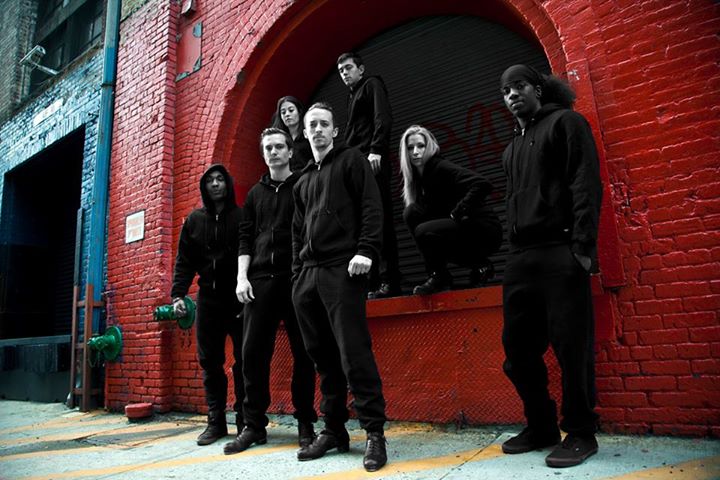
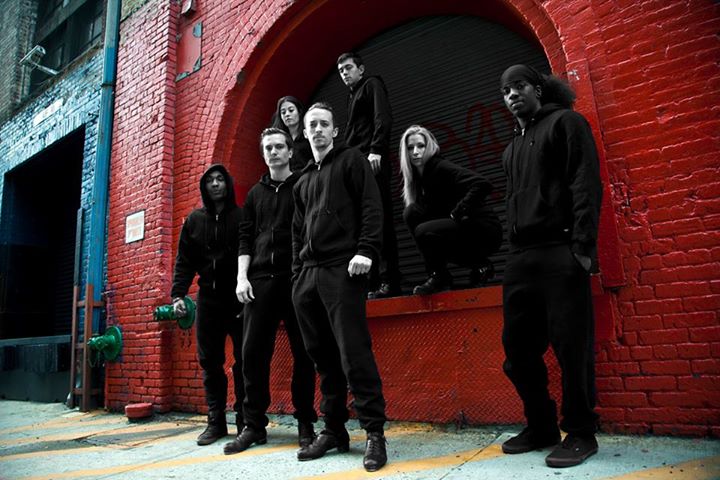
It’s not every day that an Irish-Hip Hop dance troupe makes it through the auditions of “America’s Got Talent,” especially with these words of blessing from judge Howard Stern: “Your skill level is so high that you’re are too talented to ignore.” But that’s exactly how it happened on the June 25th episode of the NBC series, when Hammerstep got put through to Las Vegas.

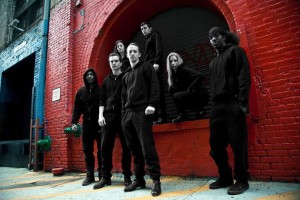
Performing their routine garbed all in black and wearing gas masks, the group danced to “Exodus,” an original composition co-produced by Hammerstep and Pat and Sean Mangan. Riverdance, it’s not— although the two co-founders of Hammerstep, Garrett Coleman and Jason Oremus, are both Riverdance alums.

“We started conceptualizing Hammerstep back in 2009. Jason and I had met touring with Riverdance, and we were actually off tour at that point. We were both working 9 to 5 jobs—not dead-end, but not really fulfilling work. We were pretty miserable, and realized we had similar visions for putting together a large-scale touring production. We found we had a lot of similarities and parallels in how we viewed the world and what we wanted to do with Irish dance,” Garrett Coleman explained.

What both dancers had in mind involved taking Irish dance beyond the mainstream, at the same time incorporating other genres that had been born out of oppressive cultures.

“It kind of started out as an experiment in melding these dance forms; a lot of people wonder why we chose the dance forms we chose to integrate. We’re both trained in traditional Irish dance, so that was our base. But we noticed that the art form had remained pretty stagnant since Riverdance launched; the same choreography, nothing really changed. And that was great in its own right—obviously we wouldn’t be here today if it wasn’t for people like Michael Flatley. But it was due for an infusion of something more socially relevant, something that would resonate with a younger audience.

“We saw the parallels from where the many dance forms come from as being a really strong thematic thread through all of them…Jason and I both come from similar backgrounds and upbringings in urban environments [Garrett is from Pittsburgh, PA, and Jason hails from Sydney, Australia]; we’re both huge fans of hip hop and urban culture. So, we took our social interests and tried to bring that into our dance and artistic and creative interests. We drew from tap and hip hop, and African stepping and body percussion. And the reason for choosing some of those is not just for the fact that they rhythmically work really well together, but also for the fact they’re all born out of previously oppressive social circumstances. Like Irish dancing arose as part of an Irish cultural resurgence in response to oppression by the British. And hip hop obviously was a huge unifier for impoverished communities in the Bronx and the other five boroughs of New York. It was a statement for the youth to come together around culture rather than being divided along gang lines and poverty.

“We have a heck of a lot of people from different backgrounds all coming together behind this project, and that was the basis for the piece with the gas masks—having a sense of anonymity throughout that piece, and then taking the masks off at the end of the piece and revealing people from different racial backgrounds, different genders, different dance styles. And then having that solidarity once we put the masks on, symbolizing a unification of cultures.”

The fusion that has taken root in their dance routines, and their ever expanding choreography, is only the tip of the iceberg for the larger mission of Hammerstep. They want to tell their stories, and the stories of the people they’ve surrounded themselves with, as part of a project with a much more socially significant message.

“The Hammerstep initiative,” Garrett defined, “is kind of like the umbrella organization that we’d like to launch a variety of things through. We have a Hammerstep Headquarters here in Brooklyn; it’s part living, part office, part dance studio—a massive dance studio that actually converts from a living room into a rehearsal space. The crew comes over here for the majority of our dance rehearsals, and we’re just getting into holding some community events here. We’re going to be launching a Hammerstep radio broadcast from here as well. Through the website, we’ll have a podcast/live stream of things that are happening here, like video footage of rehearsals. It’s a very creative space where there’s a lot of collaboration.”

Ultimately, they’d like to have a production company where they’d produce their own shows. The dancers work closely with musicians who like the idea of collaborating to make Hammerstep into a larger social movement, one that would include a Hammerstep foundation from which they’d launch outreach projects and dance workshops internationally.

“We know what dance has done for our own lives and what it can do for other people who don’t necessarily have access to it or who haven’t been introduced to it,” Garrett added.

It’s the continuing cross-cultural partnerships engaged in by the group that breathe new dimensions into their Irish dance base; while presenting workshops in Soweto, South Africa, recently, they learned as much as they taught.

“Whether it’s in Soweto, or Dayton, Ohio, wherever we do these residencies, the kids that we work with teach us a lot of their own cultural understandings of the world. We try to incorporate that into the choreography and into Hammerstep as a whole as we move forward. So, for instance, in Soweto, the African gumboot dance is very similar to what you’d see in the African American tradition of stepping here in the U.S. It was a response to the oppressive circumstances in the mining industry over in Soweto; it was used as a form of communication for people working in the mines. And they taught us this dance. It’s kind of a simple dance form but rhythmically, it grabs a hold of people and it fits very nicely with the Irish style as well. The language barrier was pretty significant, but that universal language of rhythm that everyone always talks about, it’s very true how powerful that is.”

With so much going on, the group is in the middle of seeing the hard work of the past 4 years take them into the next phase of Hammerstep.

“The ‘America’s Got Talent’ thing is the most exciting thing on the horizon. We’ve had to turn down some work to participate in that. And we’re working on a music video style production with some cutting edge choreography and concepts. It’s an exciting time.”

That excitement was on full display on “America’s Got Talent.” Among the dancers who are performing with the group for the television show is Jonathon Srour, who we here at Irish Philadelphia consider a home-town talent (he’s from York County). Jonathon is part of the musical Srour family who perform as Irish Blessing, along with Cushla, Josh and Jim. When Jonathon made the move to Brooklyn, he joined up with the Hammerstep crew, and they started training him in. The other members of the troupe behind the gas masks—in addition to Garrett, Jason and Jonathon—are Scott “Swag” Pilgrim, Ronald “Shadow” Simmons, Nicole Zepcevski and Meghan Lucey. And Garrett’s younger brother Conor Coleman, on summer break from his studies at LaSalle University, is also training to join the troupe.

If you haven’t caught the clip from their appearance on “America’s Got Talent,” you can watch it on YouTube.

And, to keep up with everything Hammerstep, Like them on Facebook. They have a website that is still under construction; you can check it out at this link.

Sports

GAA Kids From Around the Nation are Headed Here

2008 in West Chester

2008 in West Chester

The biggest Gaelic Athletic Association (GAA) competition outside of Ireland is coming to our own back yard.

From July 25 through 28, roughly 2,000 young Gaelic football and hurling players from as far way as the West Coast will converge on the Greater Chester Valley Soccer Association fields in Malvern for the Continental Youth Championships (CYC).

Now celebrating its 10th anniversary, the tournament has exceeded its organizers’ wildest expectations, according to Simon Gillespie, CYC recording secretary.

“We started in 2004,” Gillespie says. “They (organizers) didn’t think it was going to survive. It started out just as a trial, with 50 teams. Now we’re at nearly 200 teams. We’re the only competition for kids 3 to 18. It really is a highlight of the year for underage GAA sports. We estimate more than 10,000 spectators will come in over the four days.”

The only GAA youth competition that compares, Gillespie notes, is the Féile Peile na nÓg, Ireland’s national festival of football for boys and girls under 14. The CYC is is unique in that it features both football and hurling.

The CYC rotates through a different host city every year. The Philadelphia Gaelic Athletic Association is hosting this year’s competition. It’s a really big deal.

“Last year, it (the championships) was at Gaelic Park in Chicago,” says Gillespie. “Next year, it’ll be in New York. Each area gets it every so often. It’s as big a commitment for the host committee as it is for the national committee.”

Learn more about the championship. And take a gander at our photo essay from 2008, the last time the locals hosted the CYC.

How to Be Irish in Philly

How To Be Irish in Philly This Week

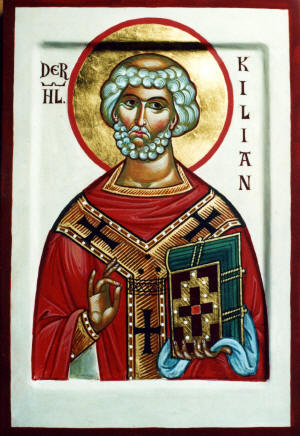
St. Killian, the Irish-born apostle of Bavaria.

St. Killian, the Irish-born apostle of Bavaria.

Irish Network Philadelphia and the German American Chamber of Commerce will be raising a pint—and a stein—to their common saint, Killian, the Irish missionary who became the apostle of Franconia, which is now the northern part of Bavaria in Germany this week. Appropriately, they will be meeting at Brauhaus Schmitz on South Street in Philadelphia on Tuesday night, where there will be a cash bar, complimentary hors d’oeuvres and a chance to network with our German cousins. (Did you know that in Pennsylvania, the most common ethnic mix is Irish-German?)

Also on Tuesday, you can sign up for clogging class (it’s an Appalachian Scots-Irish thing that will remind you of Irish dancing) that will run every Tuesday through August 12 at the Irish Center in Mt. Airy at a cost of $10 per class. You’ll need hard leather shoes. For info, call Beverly at 267-357-1722 or email brolfsmeyer@juno.com.

On Thursday, a real musical treat: The Coleman brothers (Mickey and Raymond) from County Tyrone (and New York and Philadelphia) will be performing at the Plough and the Stars in Philadelphia along with Plunkett McGartland, another Tyrone musician who has performed with Phil Coulter. And the Coleman brothers? Singly, they’re remarkable; together, they’re beyond fabulous.

Looking ahead, triple threat singer, storyteller, and bodhran player Mairtin de Cogain (he’s also a dancer, playwright and actor, making him a sextuple threat) will be performing on Friday, July 19, at The Irish Center, a Philadelphia Ceili Group production. It should be one entertaining night.