How to Be Irish in Philly

How to Be Irish In Philly This Week

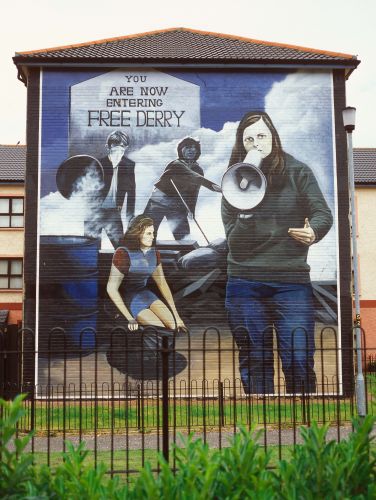
Bernadette Devlin as interpreted by the Bogside Artists in Derry.

Bernadette Devlin as interpreted by the Bogside Artists in Derry.

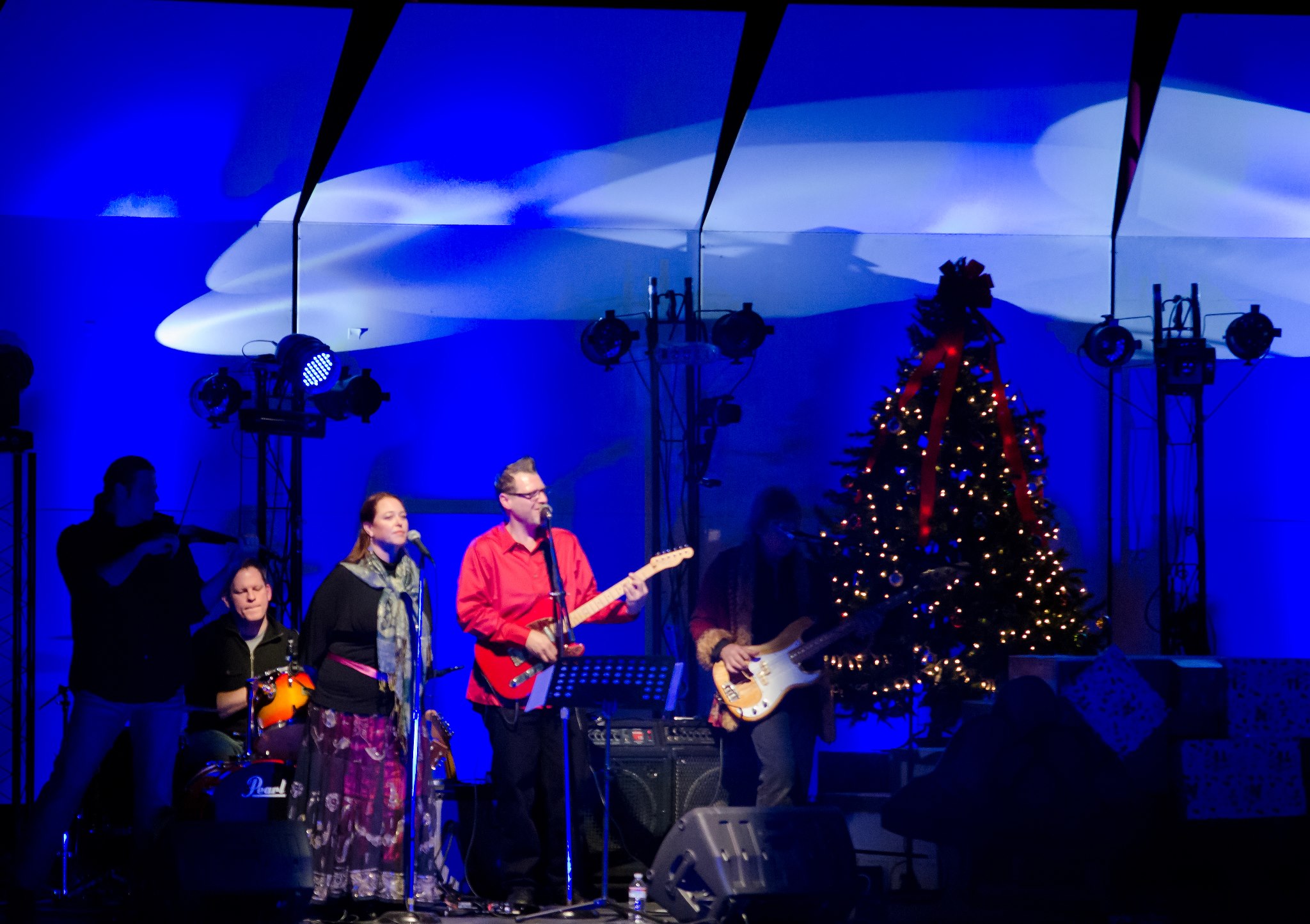
Another embarrassment of riches this weekend as Solas comes to the World Café Live in Philadelphia and American Celtic Christmas featuring Jamison and John Byrne and the Celtic Flame Dancers, among others, happens in Bensalem.

Then, on Sunday, Irish Network Philadelphia holds its annual Christmas fundraiser at Tir na Nog in Philadelphia, featuring food, drink, live music and a visit from Santa. Proceeds will benefit the Kevin Neary Trust, to help the young Delaware County man who was shot and paralyzed in an apparent robbery attempt.

Also on Sunday, George Donaldson of Celtic Thunder will do his solo show at The Plough and the Stars in Philadelphia.

Please note that due to unforeseen circumstances, the Philadelphia Rose of Tralee Center’s Christmas party slated for this weekend has moved to December 14 at Maggie O’Neill’s in Drexel Hill. Lots of activities for the kiddies, plus a visit from Santa. The Center is collecting nonperishable foods for local food pantries.

On Wednesday., the Garden Theater in Princeton, NJ, will be screening an award-winning documentary on Bernadette Devlin, the Irish civil rights activist, which contains footage of the firebrand during the Troubles as well as rare interviews with her today. “Bernadette: Notes on a Political Journey” starts at 4:30 PM.

On Thursday, the Irish American Business Chamber and Network will be holding its annual 12th Night Before Christmas party at The Stotesbury Mansion (also known as the Philopatrian Club) at 1923 Walnut Street. Enjoy a pint and appetizers in front of the fire in this elegant mansion off Rittenhouse Square.

And to round out the week, the Broken Shillelaghs and the Culchies will be performing at the Gloucester County AOH on Friday night, and Jamison will be at Building 24—is that anything like Area 51?—in Wyomissing, PA.

People

Villanova to Display “The Children of Sandy Hook”

Chuck Connelly

Chuck Connelly

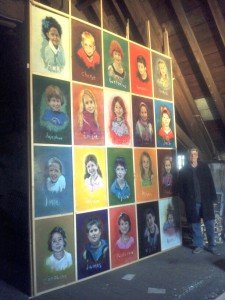
The last time we spoke with the world-renowned East Oak Lane artist Chuck Connelly, back in April, he had recently completed a poignant collection of portraits depicting 20 small children, all of the canvases bound together in an imposing 10- by 12-foot wooden frame. They were the children of Sandy Hook Elementary School in Newtown, Conn., whose lives were cut all too short last December at the hands of a disturbed young man armed with a Bushmaster XM15 semi-automatic rifle.

Connelly was frustrated by his inability to move the massive display out of the old barn where the imposing work was stored, and into a far more fitting public space. Preferably in Newtown—but failing that, anywhere people could stand in front of this ambitious, larger-than-life undertaking, and literally come face to face with the victims as seen from an artist’s unique perspective. Each portrait springs from the depth of Connelly’s own sorrow and anger, a modern-day wailing wall.

At the time, in spite of repeated efforts by neighbor, friend and author Marita Krivda Poxon, there were no takers. Connelly was disheartened but undaunted. “I’m not done until I get this someplace and people stand in front of it,” Connelly said at the time. “That is my goal. It needs to be somewhere.”

Now, as the solemn one-year anniversary of the school shooting approaches—it’s December 14th—Connelly is about to get his wish. His “Children of Sandy Hook” will be on display from December 9 to 16 in the Villanova University Art Gallery, located at the university’s Connelly Center. On the 14th, Connelly will be the guest of honor at a gallery reception.

Stuart Tate, the carpenter who put the frame together, took it all apart again, gingerly moved the portraits out of the barn, and dropped them off at Connelly’s rambling house earlier this week. On Saturday morning at 10, Connelly and Tate will load of the portraits into a truck and deliver them to the Connelly Center for final assembly. “He (Tate) is gonna put it together. I’m gonna help, and the guy who runs the gallery, he knows woodworking, and he’ll be able to help.”

For now, the portraits are scattered throughout Connelly’s cluttered house, virtually every room of which is stacked with canvases of various shapes and sizes, all leaning against the walls like decks of cards. One glance, and you know right away that Chuck Connelly doesn’t ascribe to any particular school. Forget realism. Forget abstraction. Connelly belongs to only one school, and its all his own—that’s one of the reasons his work is so famous and highly regarded. He paints whatever suits his mood. He has no plan. Whatever comes off the brush is just what it is.

In one room, you might stumble upon a huge canvas bedecked with loosely nonrepresentational geometric patterns. In another room, you could find a portrait of a woman who sells pies. Or perhaps one of countless renderings of his rotund, obviously spoiled calico cat, Fluffy. Fluffy is clearly one of Connelly’s favorite subjects. The fact that such an original thinker keeps a cat with such a commonplace name is just one more visible symbol of his incongruity. Don’t even think about trying to pin him down.

In many respects, his kitchen is a lot like the rest of the house. Above the dark wood wainscoting hang more paintings. A clown. A flower. A bird. Strings of miniature lights hang across one window. There are neat little stacks of cat food on the counter next to the sink. A bottle of ibuprofen. And another bottle, multivitamins.

Next to the wall, there’s a well-worn utilitarian wooden table, surrounded by mismatched chairs. On the table, an overripe banana in a bowl. A bag of nacho chips. Potatoes in a plastic mesh bag. A box of store-brand turkey stuffing. Saltines.

And a carton of Timeless Time cigarettes, a cheap Korean brand.

One of those cheap cigarettes is almost always dangling from his lips. His undisciplined mop of graying hair is perpetually enwreathed in a halo of blue-gray smoke.

We’re in the kitchen with Poxon, talking about the upcoming exhibition. It’s the immediate cause of Connelly’s almost palpable anxiety. He’s guardedly optimistic, but things could still go wrong. He’s been disappointed before. You could take him for a cynic, but that’s too simple. George Carlin once said, “Scratch any cynic and you will find a disappointed idealist.” That’s probably a more accurate assessment of Chuck Connelly, a man consumed by his passion for truth and beauty, in a world to often devoid of both. But for now, just for a moment, he appreciates the opportunity to have at least this ambition fulfilled.

“I’m grateful,” he says, “but I’m not done yet. I’ll really be grateful when it’s all done and up there. I’ll worry until it’s up on the wall, and there you go.”

How the cause of “Children of Sandy Hook” came to be taken up by Villanova is a bit complicated. Unbeknownst to each other, Connelly and Poxon were working along parallel paths. Connelly met a guy at a party, who knew another guy in a position of authority on campus. At the same time, Poxon had made connections through the Irish Studies department that ultimately led to the president of the university, Father Peter M. Donohue, who is also an artist. And the head of the gallery, Father Richard G. Cannuli, is a painter of icons. Between Connelly and Poxon, they scored a long elusive triumph.

“This president is Irish, and I think he liked the whole thing,” says Poxon. He could see that it’s a sacred time, it’s Christmas, and it would get the students to think about this. And there are some students from Newtown, and they’ll be there.”

Connelly, for one, hopes they’ll be there. He hopes a lot of people will be there, and he hopes they will come to understand that his memorial to 20 lost children is very different from anything he’s ever done. It came from a different place. And for a brief moment his mood shifts to one of optimism.

“This, I dreamed up out of my head. It was created by this tragic incident,” Connelly says. “Now, it’s become real. Now, people are involved. That’s the miracle.”

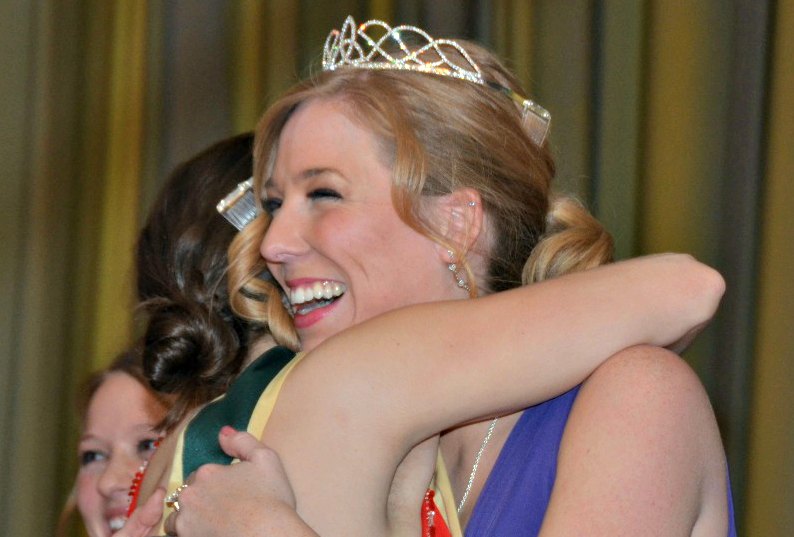
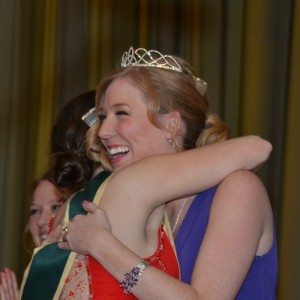
2014 Mary from Dungloe Kelly Devine accepts hugs from friend and 2013 Mary, Moira Cahill.
News

Big Crowd, Big Night for the Donegal Association

[flickr_set id=”72157638395075193″]

Perhaps the most striking thing about the Philadelphia Donegal Association’s Mary from Dungloe pageant is that the winner always seems genuinely astonished and surprised. No one goes on the stage expecting to win. The contestants seem to enjoy each other’s company, even cheer for each other. In this, the “Marys” have a lot in common with the winners of the local Rose of Tralee and the Miss Mayo contests.
In short, in addition to their undeniable accomplishments and talents, the winners happen to be nice.

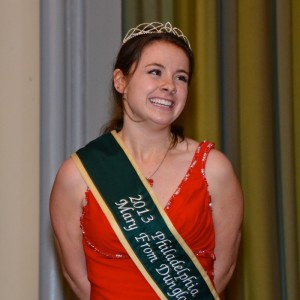
Judging by the expression on Kelly Devine’s face when she became this year’s Mary from Dungloe Saturday night at the 125th Donegal Ball, she was, well … genuinely astonished and surprised.

And in a quick interview after an exhausting round of picture taking with friends, relatives, outgoing Mary from Dungloe Moira Cahill, and all the other contestants—and a serenade by the Philadelphia Irish Center’s Vince Gallagher—the 2014 Mary proved to be just what you’d expect her to be: Nice.

“I was a little shocked,” said Devine, former marketing major at St. Joseph’s University and currently a junior account executive at Brownstone PR. “I just wanted to come to the ball and have fun, to have a good time. And it was very easy to talk to the other girls here. It was like hanging out with my girlfriends. This is just the icing on the cake.”

Like Cahill, Devine is a longtime competitive Irish dancer, trained at the Coyle School of Irish Dance. She started at age 7. A back injury sidelined her at age 20, but she helps teach other dancers at the Coyle School. She credits Cahill for pushing her to compete. “Moira talked me into it. She’s been very supportive. She is a very good representative for the Donegal Association. I’m trying to live up to her.”

The pageant is typically one of the most dramatic moments at the Donegal Ball, but there were many other high points—including the selection of Carmel Boyce for the first Irene Durning Award, named for a beloved longtime member of the association. The award recognizes local people of Irish descent—they don’t have to be members of the Donegal Association—for their kindness and generosity in the Irish community, and for being a devoted supporter of the Mary from Dungloe contest. The standards are pretty high, and if you know anything at all about the Philadelphia Irish community, a lot of people meet or exceed those standards. Carmel Boyce, a leading figure in the community, sets a pretty high bar herself.

All in all, a great night for the Donegal Association, probably one of the best attended balls in recent memory. So many people crowded into the Irish Center ballroom, they had to bring in extra tables and chairs.

We have many, many photos from that night. Check them out.

News, People

Big Crowd, Big Night for the Donegal Association

2014 Mary from Dungloe Kelly Devine accepts hugs from friend and 2013 Mary, Moira Cahill.

2014 Mary from Dungloe Kelly Devine accepts hugs from friend and 2013 Mary, Moira Cahill.

Perhaps the most striking thing about the Philadelphia Donegal Association’s Mary from Dungloe pageant is that the winner always seems genuinely astonished and surprised. No one goes on the stage expecting to win. The contestants seem to enjoy each other’s company, even cheer for each other. In this, the “Marys” have a lot in common with the winners of the local Rose of Tralee and the Miss Mayo contests.

In short, in addition to their undeniable accomplishments and talents, the winners happen to be nice.

Judging by the expression on Kelly Devine’s face when she became this year’s Mary from Dungloe Saturday night at the 125th Donegal Ball, she was, well … genuinely astonished and surprised.

And in a quick interview after an exhausting round of picture taking with friends, relatives, outgoing Mary from Dungloe Moira Cahill, and all the other contestants—and a serenade by the Philadelphia Irish Center’s Vince Gallagher—the 2014 Mary proved to be just what you’d expect her to be: Nice.

“I was a little shocked,” said Devine, former marketing major at St. Joseph’s University and currently a junior account executive at Brownstone PR. “I just wanted to come to the ball and have fun, to have a good time. And it was very easy to talk to the other girls here. It was like hanging out with my girlfriends. This is just the icing on the cake.”

Like Cahill, Devine is a longtime competitive Irish dancer, trained at the Coyle School of Irish Dance. She started at age 7. A back injury sidelined her at age 20, but she helps teach other dancers at the Coyle School. She credits Cahill for pushing her to compete. “Moira talked me into it. She’s been very supportive. She is a very good representative for the Donegal Association. I’m trying to live up to her.”

The pageant is typically one of the most dramatic moments at the Donegal Ball, but there were many other high points—including the selection of Carmel Boyce for the first Irene Durning Award, named for a beloved longtime member of the association. The award recognizes local people of Irish descent—they don’t have to be members of the Donegal Association—for their kindness and generosity in the Irish community, and for being a devoted supporter of the Mary from Dungloe contest. The standards are pretty high, and if you know anything at all about the Philadelphia Irish community, a lot of people meet or exceed those standards. Carmel Boyce, a leading figure in the community, sets a pretty high bar herself.

All in all, a great night for the Donegal Association, probably one of the best attended balls in recent memory. So many people crowded into the Irish Center ballroom, they had to bring in extra tables and chairs.

We have many, many photos from that night. Check them out.

Dance, People

“Quite a Weekend” for Móira Cahill

Moira Cahill

Moira Cahill

On Saturday night at the Donegal Ball, Móira Cahill ended her one-year reign as the Philadelphia Donegal Association’s Mary from Dungloe, with grace and poise—and an infectious grin that never seemed to leave her face all evening. At the end of the night, when Kelly Devine, her good friend from the Coyle School of Irish Dance, became the 2014 Mary, there was cause for even more joy.

Still, a lot of people didn’t know—at least, not before the Donegal Ball—that Cahill had won the Ladies Under 20 competition Friday at the 2013 Mid-Atlantic Oireachtas. The Oireachtas (ERR-uhk-tuhss) is a major Irish dance championship, held each year over the Thanksgiving holiday in Center City.

“I danced hornpipes and reels, and if you’re recalled, you do a contemporary set dance. I performed ’The Blackthorn Stick’,” Cahill recalled as the evening’s festivities at the Philadelphia Irish Center wound down. “I danced hard shoe and soft shoe. My whole competition was on Friday.”

Cahill, 20, has been dancing for 15 years, and competing for 14. She has always been a very good dancer, as evidenced by her 4th place finish at the Oireachtas two years ago, and her second place last year. But none of her success has come easily. It has required seriously hard work and dedication.

“It takes a lot of practice. I was going to practice four to five times a week,” Cahill said, tiara and heels off, kicking back in a lounge off the Irish Center ballroom—finally taking a well-earned break. “It also takes a lot of mental preparation.”

As a result of her first-place finish, Cahill is qualified to compete at the 2014 North American Irish Dance Championships in Montréal in July, which she said she is likely to attend.

For now, though, it’s a time to briefly sit back and take it all in. And it’s a lot to take in, Cahill said, again with the smile. “It’s been quite a weekend.”

News

Saving “Big Green”

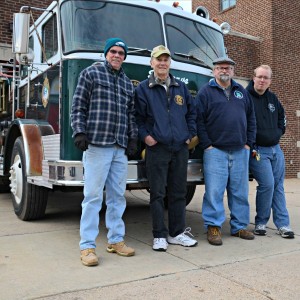
biggreenhomeIt’s an overcast Saturday morning in Lester, Delaware County. A kelly green pumper truck sits on a broad concrete apron out in front of what used to be an active fire station. The truck’s diesel engine is chugging away, with a vaguely asthmatic whine, and the exhaust fumes not so much fill the air as threaten to displace it. Stand close enough, and you can hear the whirr of the rotating dome light atop the cab, and the faint strobe-like clicks from the flashing strobes near the grille.

Stand even closer, and you can see that the once gleaming chrome instrument panels along the side of the truck are severely corroded, the stainless steel diamond plate along the rear bumper is badly dented and crumpled, and all of the truck’s wooden parts, from the ladders to the hose bed, are chipped, peeling and rotting in places.

This is “Big Green,” a 1975 Seagrave pumper that once raced to fires with the Garrettford-Drexel Hill Volunteer Fire Company, as a first-in piece for 21 years and as a reserve engine for nine years after that. Since 2005, Big Green has served a highly visible publicity vehicle—literally and figuratively—for Philadelphia’s Ancient Order of Hibernians 22 John J. Redmond Division—home to firefighters and their supporters. It was presented as a gift from Garrettford-Drexel Hill.

If you’ve been one of the thousands who throng to the Philadelphia St. Patrick’s Day Parade, you’ve probably seen the engine as it accompanies the division’s members marching up the Benjamin Franklin Parkway.

The truck hasn’t been in good enough mechanical condition to make it the past two years, but if division President Hubert Gantz has anything to say about it, Big Green will be back in the line of march in 2014.

“Maintenance was done recently,” says Gantz. “It got an oil change, new filters, new batteries, and a new starter. It kicked right over this morning. It’s all cosmetic now. A lot of the chrome plating has been taken off. One of our members in New Jersey is getting the corrosion off it.”

A t-shirt campaign recently raised nearly $1,200 to offset the cost of those desperately needed repairs. “When you have a fire truck, it’s the same as having a boat,” Gantz says with a laugh. “Whatever you need to buy for it, you have to double the price.”

For all the wear and tear, some of the truck’s original firefighting equipment still does its job. “The pump still works,” says Gantz, who rode the truck for 25 years as a member of the Garrettford-Drexel Hill company. “Believe it or not, the deluge gun still works.”

Still, with a truck as old as Big Green, any repair is not just costly, but extremely difficult. Many critical parts aren’t easily available. Not too long ago, the truck needed a rear axle. Without it, Big Green was going nowhere. The division launched a search to find an axle that could be salvaged from another old truck. The search lasted a year and a half. “Seagraves had an axle, but it was the wrong number,” said division treasurer and paramedic Bob Haley. “We needed an axle with another number. Once we got that, then it moved.”

No one expects to restore the truck to showroom condition, but with enough cash, the division can get it into pretty good shape. In fact, members are hoping to install benches in the hose bed and run a beer dispenser through the intake and discharge pipes so they can rent the truck out for private parties. To get to that point will cost even more money—somewhere in the neighborhood of $5,000, says publicity chairman Jeff Jackson.

When the division acquired the engine, Derkas Auto Body in Kensington gave it its distinctive green paint job, and performed cosmetic repairs. Tom Meehan, the division’s first president, negotiated the deal. The doors were decorated with the division’s Maltese cross logo, and “Faugh a Ballagh” was emblazoned across the front. (It’s an ancient Irish battle cry, meaning “clear the way.”)

Initially, Big Green was parked behind Philadelphia Engine 55 / Tower 22 in Northeast Philly. Then it was moved from one place to another, and spent the most recent two years in a Port Richmond junkyard. “It was supposed to go into a garage—but it didn’t go into a garage,” says Haley. “You wouldn’t believe what two years outside did to this truck.”

Even the truck’s current shelter, a red brick edifice that once was home to the former Lester Fire Company, is living on borrowed time. A new runway will run through it, if plans for the nearby Philadelphia International Airport expansion proceed as planned. Jets regularly roar overhead.

For now, members of the division are focused on the near-term goal: making it to the parade. Gantz is confident. “The worst has already been taken care of,” he says. “It’ll be ready.”

How to Be Irish in Philly

How To Be Irish in Philly This Week

Frank

Still recovering from turkey day? One of the best ways to work off all those extra calories is to attend the Donegal Ball on Saturday night. You can dance them away to the songs and tunes of The John Byrne Band. If you know John Byrne and his band, you know they do both Celtic and original songs, but we hear Byrne has an alter ego, a la David Bowie’s Ziggy Stardust, so technically you’ll be dancing to the songs and tunes of Johnny Shamrock. The guy’s from Dublin—he knows his jigs and reels and dance tunes.

You have other musical options on Saturday. The Broken Shillelaghs will be at Lazy Lanigan’s Publick House in Sewell, NJ; Jamison will be at Curran’s in Tacony; and the Shanty’s will be at the Red Rooster Inn in Philly..

This of course is Mid-Atlantic Regional Oireachtas weekend at the Downtown Marriott in Philadelphia—hundreds of Irish dancers competing through Sunday.

On Sunday morning at 11 AM, the St. Anne’s Historical Committee will be honoring the Irish Civil War soldiers buried in the church cemetery on Lehigh Street in Philadelphia.

In the afternoon, head to Westville, NJ, for the Shanagolden Sunday Set event. Bring your dancing shoes.

On Tuesday, the Sellersville Theater is holding a free event—yes, free! Singer Bill Monaghan will perform and there will be free cookies and hot chocolate.

On Wednesday, Albert Eintein Medical Center is holding doing free Tay-Sachs testing for people of Irish descent. This degenerative and fatal genetic disease of infants is more prevalent among certain ethnic groups, including Eastern European Jews, Cajuns, and the Irish.

On Wednesday night, celebrate “Christmas with the Celts,” featuring Irish and Scottish Christmas carols dating back to the 12th century combined with modern drums and pop vocals at the Sellersville Theater.

And on Friday, the amazing Moya Brennan of Clannad will be performing her Christmas show with her band at Sellersville Theater.

And to complete the Celtic Christmas mood, there will be two shows of An American Celtic Christmas at Bensalem High School on Saturday, December 7, featuring Jamison Celtic Rock, John Byrne, Kimberly Killen, DJ Dan Cronin, Celtic Flame Dancers and dancers from the Bucks County Dance Center.

The Philadelphia Rose of Tralee Center is holding its annual Christmas party with Santa on Saturday, December 7, at Maggie O’Neill’s in Drexel Hill. It’s kid-friendly with arts and crafts, face painting, music, and a visit from Santa. Bring non-perishable foods which will be donated to local food pantries.

Dance

Irish Dance Fever at Villanova

Villanova Irish dancer Rory Beglane

Villanova Irish dancer Rory Beglane

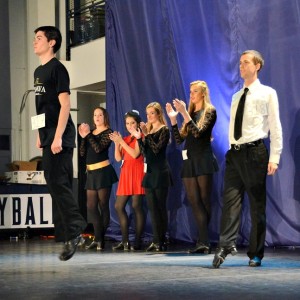
They came from all over, 16 college and university Irish dance teams, to compete in the first Intercollegiate Irish Dance Festival last Saturday at Villanova’s Jake Nevin Fieldhouse. It wasn’t exactly a Wildcats basketball game, but if you could have bottled up all the excitement of the dancers, parents and grandparents, university students and just plain Irish dance fans, it would have come pretty close.

Compared to the Mid-Atlantic Region Oireachtas—something like a marathon of Irish dance, drawing hundreds of dancers from throughout the region to Philadelphia over the Thanksgiving holidays—the Villanova event was relatively modest. And while the Oireachtas dancers will wear glitzy and expensive costumes, with flowing curly wigs, the dancers from Catholic University of America, the University of Dayton, Boston College and all the other schools wore outfits that probably didn’t cost their parents a month’s salary. Here and there, yes, dashes of sparkles and glitter, but otherwise subdued by comparison. No tiaras. No wigs.

The Villanova dance team was perhaps the best example of the lean and clean approach. They wore plain black slacks with black T-shirts, the team’s logo splashed across the front.

Like other Irish dance competitions, this one featured many of the traditional categories, such as four-hand dance, eight-hand dance and treble reel. But the highlight was the exhibition piece competition, in which each team showed off its unique routine, the innovative dance sets they’d typically perform during university athletic events. Some teams stuck to tried-and-true traditional. One team drew whoops and cheers when they combined Irish dance steps with C&C Music Factory’s “Everybody Dance Now.”

The team from the University of Dayton won that event, with Villanova coming in second, trailed by Boston College at number 3.

We have dozens and dozens of photos from the day. With luck, there will be another distinctly ‘Nova Irish dance competition next year. And every year thereafter.