Browsing Category

News

News, People

2008 Irish Hall of Fame Honorees Announced

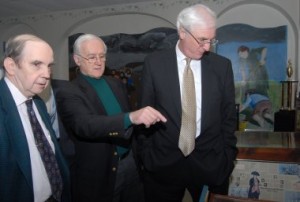
Billy Brennan, left, is one of the 2008 Hall of Famers. Here, with fellow historian Sean McMenamin, center, he shows off the Irish Center library to Irish Ambassador Michael Collins.

Billy Brennan, left, is one of the 2008 Hall of Famers. Here, with fellow historian Sean McMenamin, center, he shows off the Irish Center library to Irish Ambassador Michael Collins.

A poet-priest who devoted his life to the poor, an Irish historian and genealogist, and a tireless worker for many Irish organizations who died last year are the three 2008 honorees who will be inducted into the Delaware Valley Irish Hall of Fame for 2008. Kathy McGee Burns, president of the organization, made the announcement this week.

The honorees are:

Father John P. McNamee
Father MacNamee–known as Father Mac–was, until his recent retirement, the pastor of St. Malachy’s Church and School in North Philadelphia. During his long tenure, he ministered not only to the poor of his parish but the poor of his community. With help from parishioners, former parishioners, and many Irish musicians (like Mick Moloney, who holds a benefit concert each year for St. Malachy’s), Father Mac was able to make St. Malachy’s financially self-sufficient. He is also a published poet. His most recent book is Donegal Suite, the result of two summers he spent in the Gaeltacht area of Ireland. His life was portrayed on screen in the movie “Diary of a City Priest,” based on his memoir.

Billy Brennan
This amateur Irish historian and genealogist who was one of the guiding forces behind the Commodore Barry Library, housed upstairs in the Irish Center in Mt. Airy. The library is a hidden treasure, filled with books, posters, and documents that trace Irish history both here and in Ireland. In a story that appeared this year on www.irishphiladelphia, Brennan explains why he devoted so much time to the library. “Maybe it’s my calling,” he told us. “I always figured the Irish didn’t get the credit they deserve.” In fact, it’s Brennan’s conviction that the Irish need to be recognized for their contributions to the city, the state, and the nation, that keeps him at his volunteer job.

Anne McFadden Donofry
Anne Donofry, who died on Sept. 17, 2007, was the backbone of many of the Irish Center organizations, including the Commodore Barry Club, the Philadelphia Ceili Group, the Donegal Society and the Delaware Valley Hall of Fame. “Anne knew how to do everything and tirelessly shared her talents with all who asked,” says Kathy McGee Burns, who worked with Donofry in many of those groups. “She left us too early but her heart still beats in our community.”

The three will be inducted at a ceremony on November 16 at the Irish Center in Philadelphia. The evening will start with a cocktail hour at 5 PM, dinner at 6 PM, with dancing to the Vince Gallagher Band. Tickets cost $50 and are limited. To get your tickets, contact Kathy McGee Burns at 215-619-0509, Sean McMenamin, 215-663-2328, Bob Hurst, 610-832-0380, or Bill Donohue, 215-886-3669.

News, People

A Philadelphia AOH Leader Moves into the National Organization’s Top Spot

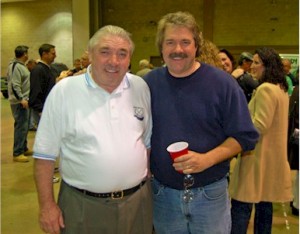
Seamus Boyle with local AOHer Will Hill at the Ancient Order of Hibernians' Project St. Nicholas in the Northeast in December.

Seamus Boyle with local AOHer Will Hill at the Ancient Order of Hibernians' Project St. Nicholas in the Northeast in December.

Seamus Boyle has always been a prominent player in the Ancient Order of Hibernians locally, and active in Irish and Irish-American issues.

Over the years, he has continued to make his mark as a leader within the national AOH.

Now, following the AOH’s election in New Orleans in July, Boyle is the organization’s newest president. He’s not the first Philly guy to hold the top post, but he is the first Quaker City-based national AOH president since Michael Donohue, who held the office from 1923 to 1927. (Before that, according to Gerry Ennis, secretary of the state board, Joseph McLaughlin held the post from 1912 through 1919. And before that, Maurice Wilhere was president from 1886 to 1893.

It’s been a long, long time, then, since a Philadelphian claimed the top spot.

We asked the new president to tell us about his plans—and a bit about himself.  Turns out there’s more than a bit to say. Seamus Boyle has led an amazingly active life.

Here’s what he had to say:

Q. The AOH has been identified with a lot of issues over the years—protecting Catholic churches from the Nativists and supporting the Molly Maguires in the early going, all the way to more recent concerns about Northern Ireland and immigration. During your tenure as president, is the AOH likely to try to have an impact in any particular areas of politics of public policy? On what issue or issues would you like to make your mark?

A. I think the issue of immigration and the undocumented is probably one of the most important issues facing us as Irish-Americans today. It seems that those who are not eligible to receive a green card because they overstayed a visa or some other minor infraction are treated the same as a terrorist who wants to destroy the United States.

The Irish immigrant is for the most part young, works hard, pays taxes, stays out of trouble and wants to stay here and raise a family. The only difference between them and the millions of immigrants who came before them is the bureaucracy and the lack of common sense that will not let them stay.

Many of our ex-political prisoners like Pol Brennan are treated like a criminal or worse. Malachy McAllister, Matt Morrison, and many more have been harassed and badgered by every agency in our government; it is time it stopped and we are the only ones that can do it.

We need to stand up for our people, we need to band together no matter what organization we belong to and pressure our politicians to do the right and just thing. Politicians hear us when we have a loud voice because they know what we can do if we were organized. We only have a few months left to make the politicians listen to us and, make no mistake about it, when they know the voting power we have they will listen or suffer the consequences. After November we have no leverage; once they are elected all we will get is lip service. We need to do it now. Remember, if they don’t help us, then we don’t help them. It’s a very simple formula.  

Q. Is Northern Ireland a non-issue for the AOH, now that we have had our kumbaya moment with Martin McGuinness and Ian Paisley? What has to happen next on that issue, from the AOH perspective?

A. Northern Ireland is at peace now, or so we are told, but they cannot be at a true and lasting peace until they are One United Nation. I have heard on so many occasions that the war is well and truly over and our help is no longer needed. Ask the people of Belfast or Derry, Tyrone or Armagh whether we are needed or not, and I know you will get a different answer. Our ex-prisoners who need to be trained for jobs, the many organizations that help the prisoners and their families, the families who were affected by the collusion of the British security forces and the Loyalist death squads need our help.

The reason we need to be involved in bringing a closure to all the open cases is because the world listens to America. We need to pressure the British government through our politicians to bring our Island together as one and we can accomplish that end if we organize, put our petty differences aside, unite and pressure our politicians here in America. If we do this, we can accomplish anything.

Q. You’ve been closely identified with immigration reform. What’s your approach to the issue? What would you regard as the best income for Irish immigrants?

A. Years ago it was much easier for people to immigrate but because of many reasons including 9/11 and the situation in Iraq and Afghanistan it has made it almost impossible to get permanent status here. Family does not count any more, and corporations no longer want to put advertisements in newspapers for workers as they once did to attract our Irish qualified workforce because they were getting sued for discrimination. All our visa programs have dried up, and our green card quota has been drastically reduced.

Q. Some have said that one possible result of immigration restrictions is that Irish communities like those in Delaware County might become much smaller or dry up altogether. Why is that an issue?

A. I think we need to find a fair quota for our people and work with other groups to find this solution. If we have few or no immigration policy it affects all the communities as it hinders our heritage and eventually our children will know nothing about our history, which is so precious to us. Our language and sports here have already suffered and we cannot afford to let it decline any further.

Q. Do you feel like the Irish need to work with other immigrant groups to achieve reform? I mean, fundamentally, this is not an Irish issue so much as an immigrant issue, is it? Can we really achieve any progress on Irish immigration without finding common cause with, say, Latin American or Asian groups?

A. I think that the Irish have more to offer than some of the other groups and I do not mean to degrade any nationality. The Irish have a head start on other groups because the have a tremendous work ethic, great education and speak English, and that is an advantage for employers. We as Irish are not looking for anything except to be treated fairly.

Q. I understand you are a native of Armagh. When did you move to Philly? Tell us about yourself and your family.

A. I was born in the townland of Faughiletra, Jonesboro, County Armagh on July 5, 1942, to Terence and Katie (McArdle) Boyle. My father came to Philadelphia in 1953, where my aunt Mary lived and he stayed with her until we arrived in May of 1954. My father was a carpenter who was offered a job in Philadelphia with Matthew McCloskey, one of the biggest contractors in the Northeast and later became ambassador to Ireland.

My father bought a new house, which was being built at the time in Mayfair, St Matthews’s parish. I finished 8th grade in St Matthew’s and went to Father Judge, graduating in 1961. I had an older sister, Noulagh, who passed away in October of 2004, another sister Carmel, brother Michael who passed away in September of 2005 and a brother Thomas. I was the second oldest of 5.

I married Bernadette (maiden name also Boyle) in Ireland in August 1970, and have three children, Michael, Tara and Bronagh, and six grandchildren: Kieran, Colin, Megan, Sheila, Brady and Finnegan.

I became an apprentice carpenter in Carpenters Local 122, graduating in 1966. I went to work traveling for (BACM) British American Construction Company, returning to Ireland meeting Berna and building a house in South Armagh in Killeavy.

I returned to Philadelphia in 1971 and became very involves in Irish Northern Aid and the AOH. I became involved in the Carpenters Union as an officer and worked up to get elected as business agent for the Philadelphia Council of Carpenters and got elected every election until I retired in 1997.

I had always been involved in the AOH Division 39 from 1972 and became an officer shortly after joining and have been an officer ever since on a division, county, state or national level. I wanted to do more for my community and for the people of the North of Ireland, where I was born, and the AOH was very involved in both of these issues.

News, People

Local Hibernian Leader Wins AOH’s Top National Award

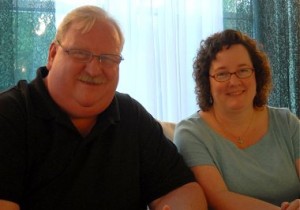
Bob and Kathy Gessler at a recent meeting at the Irish Center.

Bob and Kathy Gessler at a recent meeting at the Irish Center.

When he saw the list of previous winners of the John F. Kennedy Medal, the highest honor conferred by the national Ancient Order of Hibernians, this year’s honoree Bob Gessler had what anyone who knows him would call a predictable response.

“I felt like one of those characters on Sesame Street—you know, ‘Which of these things is not like the other?’” confesses Gessler, the founder of the Hibernian Hunger Project, a charity that grew from a tiny project of AOH Division 87 in Port Richmond to a statewide and now a nationwide AOH program to provide food for the needy.

He was referring to some of the well known recipients of the JFK Medal: Gemini and Apollo astronaut James McDivitt; actor Pat O’Brien; Archbishop of New York John Cardinal O’Connor; Boston Mayor Raymond L. Flynn; Nobel Prize winner John Hume, member of the European Parliament and leader of Ireland’s Social Democratic and Labour Party; and Gerry Adams, president of Sinn Fein.

And this year, a guy who started a project in 1999 that has since fed hundreds of thousands of people across the country. Gessler, a Temple grad from Kensington who runs his own commercial real estate appraisal business, was president of AOH Div. 87 when the idea occurred to him. “I was in the middle of raising money for the Irish Memorial in Philadelphia, a $1.2 million project that became a $2 million project and I kept thinking, how can we as an organization justify spending all the money on a memorial about the famine and not do something for the people who are hungry today.”

He spoke to some of his AOH members. “I was blessed with a core of about 25 people who first said, ‘Are you out of your damned mind? What is wrong with you?’” Gessler laughs. “Then they said, ‘You’re serious,’ and they all sat down and said, ‘how can we get it all done?’”

If you know Bob Gessler at all (and in the interest of full disclosure, I serve on a board with him), you know that’s either his family motto or his mantra. Or maybe both. He’s the proverbial “irresistible force” you’ve always heard about, a guy who’s never met a worthwhile project he isn’t willing to push, pull, cajole, yank, or ram to fruition, with the occasional flash of Irish temper, but mainly with dogged persistence and a ready sense of humor that he’s always poised to turn on himself.

Ask how he gets so much done and he jokes that it’s his heritage. Not his County Mayo heritage (his mother was a Walsh), but his father’s side of the family. “We’re from County Munich,” he deadpans. “Do you know the story of William Tell? Gessler was the name of the evil burgermeister who forced William Tell’s father to shoot the apple off his head.”

But, when he’s not joking, he also believes it’s his heritage—and his upbringing. “I think the Irish people have a special affinity for people who are hungry. Our people lived through that,” he says. “I think it’s important to help others. My Dad was for the most part disabled when I was growing up in Kensington. We didn’t have a whole lot of money. Back then it was a rough neighborhood, rougher now. When I was growing up houses were nicer and the cars were worse; now cars are incredible but the houses are really bad.” He laughs. But he’s made his point. When you’ve been through adversity, you have two choices: Become angry and bitter, or develop some empathy for others. He’s chosen the latter. His experience in the Irish community has convinced him that the Irish have too.

Under his leadership of AOH Div. 87, founded in 1898, membership grew from 90 to 700, a junior division was launched at North Catholic, and the AOH became an even greater force for good in the community. “I really thought that community involvement was the way to go,” says Gessler. “At our meetings, we did things. It wasn’t just ‘come out on a Tuesday night for a meeting and then have a beer. ‘ We did a lot of that, but we really take pride in ourselves because of our service.”

The Hibernian Hunger Project gets its biggest fundraising push in March in part because Gessler wanted to shift the focus that month from “green beer, stupid hats, and getting plastered on St. Patrick’s Day” to something that didn’t feed the Irish stereotype he hates so much.

“There’s nothing wrong with having a good time,” he says. “But that can’t be the be-all and end-all of the Irish experience in March.”

The culmination of the fundraising is the Irish equivalent of an Amish barn-raising. Hundreds of people come out every year to help prepare meals for Aid For Friends—a charity that provides meals to the elderly and to shut-ins. The first year, it was 1,500 meals. This year, 160 people prepared, wrapped, and froze more than 6,000, all meals made from food the Hibernians collected over the year . Right beside the AOHers are the Ladies AOHers.

“When I picked up my award [in New Orleans on July 26] they told me I had three minutes to speak but I went over,” he says. “I decided I had to be true to myself and I told the national group that AOH and LAOH are equal partners. Nothing would get done if it were otherwise. Hibernians are bound by our motto, ‘Friendship, unity and Christian charity.’ My feeling is, if you follow those precepts, you’re a Hibernian.”

And right beside Bob Gessler is his wife, Kathy. When she was a student at Holy Family University, she volunteered for Aid For Friends and suggested the charity as the logical recipient for the AOH largesse. She was also by his side when, in the Hunger Project’s first year, he and a few other hardy souls braved the bitter cold to collect canned goods from bins scattered around the St. Patrick’s Day Parade route. ”We got a few canned goods and whole lot of half-eaten Whoppers,” laughs Gessler. “We never did that again.”

The two met when they were teenagers and have been married for more than 18 years. “It sounds cliché, but I am so lucky to have someone who supports me all along the way,” he says. “It’s not easy. Never once did I ever hear, ‘When are you going to stop?’ I do occasionally hear, ‘Can we go out with anybody but Irish people tonight please?’”

And when you hear what else Gessler does, you know it’s not easy to be Mrs. Gessler, which is why she’s often at his side at meetings. Though they work together, she might not see him much after hours. Gessler also founded and chaired the Hibernian Community Development Corporation, a nonprofit corporation which renovated homes for first time buyers and new families. He has also started scholarship funds for local high school students, hosted the 2004 AOH/LAOH National Convention in Philadelphia, is a former board member for the Welcoming Center for New Pennsylvanians and served on the Quality of Life and Travel and Tourism subcommittees for Mayor John Street’s Transition Team.

He currently serves on the board of the St. Patrick’s Day Observance Association and is part of a committee developing plans for an Irish Film Festival in Philadelphia.

And what does Gessler do to relax? On any given weekend, he and Kathy might pack a bag, throw it in the car, and go wandering. “We like to wander,” he laughs. On their way to New Orleans to pick up his award, they decided to drive the long way, meandering along the Gulf Coast, which had been devastated by Hurricane Katrina. In one little town in the process of rebuilding, they came across a small Catholic school. . . .And yes, the Gesslers’ “do unto others” genes kicked in, even though they were on vacation. They’ve since been in touch with school officials to find out if there’s anything they could do.

“Hey,” he says, “one of the things I’ve learned is that it helps everybody if you help people. And the big surprise for most people is that it helps you too. No matter what happens, you can feel really good about yourself.”

News

Session Surprise: A Visit from Angelina Carberry and Martin Quinn

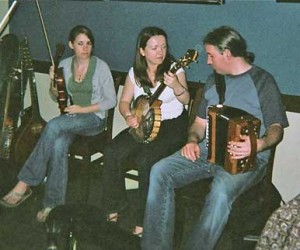
Angelina Carberry and Martin Quinn settle in next to local fiddler Caitlin Finley.

Angelina Carberry and Martin Quinn settle in next to local fiddler Caitlin Finley.

Banjo whiz Angelina Carberry and her husband, the great box player Martin Quinn, were in town over the weekend for a concert at the Coatesville Traditional Irish Music Series. I missed it, and I was feeling bad about that.

Of course, one way to make yourself feel better when you know you’ve missed out on some choice traditional Irish music is to find yourself a good traditional Irish music session. So I headed off to Shanachie Pub in Ambler on Tuesday night, bodhran in hand, planning to console myself with a couple of pints of Smithwick’s and the odd reel or jIg. (If you’ve ever heard me play bodhran, you know what I mean by odd.)

The place was already jammed with musicians when I got there, including—estimating conservatively—327.5 bodhran players. My partner Denise showed up, with her husband and son in tow. With so many drummers, I sat things out for a while with Denise, Ed and Pat.

Then I looked up to see Dennis Gormley and Kathy DeAngelo, who ride herd over the Three Beans session in Haddonfield, walk in the door. And right behind them … Carberry and Quinn. Kathy manages the two.

I headed back to my seat and waited for an opportunity to jump in on a tune or two. I got the opportunity at last … a blistering set of reels. My right hand fell off at the end. And it was good.

Carberry and Quinn, based in County Longford, play with laser-like precision, and yet they somehow—magic, I’m thinking—sound spontaneous and fresh.

The unexpected appearance caused no end of upset for Denise and me. We’re rarely sans camera. Shanachie co-owner Ed Egan went off in search of a disposable camera (thanks, Ed!), and Denise squeezed off a few shots. Not the quality we’re used to, but workable. Oh, thank heaven for 7-11.

Thanks, too, to Ed for risking life and limb by standing on a chair to capture an aerial view of the proceedings.

Aside from an accidental encounter—and what are the odds of that?—your last chance to see Carberry and Quinn in this neck of the woods is Saturday, August 2, at the Hunting Shanty in Tuckerton Seaport, 120 West Main Street. The show starts at 7:30 p.m. Tickets are $15.

News

Irish Radio Pledge Drive Brings in $11,000

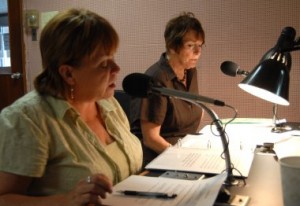
Marianne MacDonald, left, assisted at the mike by Hall of Fame President Kathy McGee Burns.

Marianne MacDonald, left, assisted at the mike by Hall of Fame President Kathy McGee Burns.

Who listens to Irish radio on Sunday morning? People like the Philadelphia businessman who called in a pledge last week when I was helping to man the phones for WTMR radio personalities Vince Gallagher and Marianne MacDonald, whose shows are in financial peril.

A widower, he chatted about his Irish-born wife whom he met many years ago at a dance in the city. The music, he said, reminded him of good times.

And then there was Bridget, whose granddaughter called in a pledge for her. “My grandmother is from Newfoundland. She lives in Juniata now and she loves the music,” she said.

And the Italian woman who’s been to Ireland 11 times because she adores the place, the culture, and, of course, the music, even though she’s only a little Irish, “maybe, way back.”

They’re only three of hundreds of people who have called in during the current pledge drive to raise money for the two WTMR Irish radio shows that air on Sunday. Since June 29, more than $11,000 in checks have been mailed in to the station, says Marianne MacDonald, whose “Come West Along the Road” show, featuring Irish traditional music, airs at noon, following the Vince Gallagher Radio Hour. Volunteers from Irish organizations throughout the Delaware Valley, from the Shantys band to the Delaware Valley Irish Hall of Fame, have been taking the pledged donations over the phone. Several local businesses, including The Shanachie Pub and Restaurant in Ambler and Brittingham’s Irish Pub and Restaurant in Lafayette Hill, have donated gift certificates.

“I have been very surprised and gratified, and so has Vince,” says MacDonald, who took over her hour from Irish musician Tommy Moffitt, when he retired (though Moffitt was back at the mike a few weeks ago, filling in for Marianne when she was in Ireland). “It’s really amazing to see that people really do care about the shows and are willing to show that they care.”

MacDonald estimates that airtime alone for the two shows costs about $35,000 a year. The largely religious broadcasting station, located in Camden, doesn’t pay the hosts nor does it sell ads for the Irish shows. Gallagher and MacDonald are expected to bring in their own advertising, which has always been an iffy proposition that isn’t helped by today’s sagging economy. Several long-time advertisers have dropped out, at least two without paying their bills. It’s been up to Gallagher and MacDonald to front the money and they have. Both have spent at least $10,000 of their own cash keeping the shows afloat.

“I’ve done some cold-calling to get ads,” says MacDonald, “and that’s really hard. What’s worse, you hardly every get anything out of it.”

The public-radio-style pledge drive will continue through August 17. In the works for August 24 is a musical benefit to be held at the Irish Center in Mt. Airy. Caterer Mickey Kavanaugh has donated a buffet meal and a number of local Celtic rock bands and traditional musicians have agreed to perform gratis. MacDonald is looking for volunteers to work that day and door prizes. You can contact her at rinceseit@msn.com.

Mail your donation to WTMR Radio, C/O Sunday Irish Radio Shows, 2775 Mt. Ephraim Avenue, Camden, NJ 08104.

News

A Message from Michael Bradley

By Michael Bradley

The 10th Annual Philadelphia Irish Festival @ Penn’s Landing was held on Sunday June 22nd. We had huge crowds in attendance as we attempted to revive this sleeping giant of an event. We had great weather, great crowds, and quite a bit of fun, dancing, singing, and plenty of music. And of course, Penn’s Landing is such a great venues to hold an event like this.

The music was headlined by Blackthorn. Others performing were:

Paddy’s Well, Round Tower Band, and new this year, Traditional Music by the musicians from the Irish Center.

The singing was ably performed by my old buddy Timmy Kelly.

The Irish Dance groups who performed were:

Celtic Flame, Cara, Coyle, Cummins, Rince Ri, Timoney, McDade, and McHugh School’s of Irish Dance.

A few nights after the festival I had the great opportunity and pleasure of going out to dinner with the Grand Lady of Irish Dance, Rose Marie Timoney. I spent the entire evening picking Rose Marie’s brain to learn everything I can about the Dance schools from an instructors perspective. I can tell you from my meeting with her, I know I can do a better job not only with the Festival and Phillies Irish Night, but most importantly with the Philadelphia St. Patrick’s Day Parade. It is always critical to get expert advice from someone when you are not too familiar with all their problems and expectations, and to get advice from the very best, is invaluable to me. Thanks Rose Marie !!

Sponsors were Penn’s Landing, Blue Cross, PECO, and for the first time this year Tom Breinich from Guinness. John Dougherty and Local 98 sponsored the kid’s zone which was non-stop action. How can we ever thank Marty Farrell of Muller Beverage and Miller Lite for their unwavering support of Irish Events in Philadelphia?

I was honored to present awards for Man and Woman of the year to 2 individuals who have done outstanding volunteer work in the Irish Community: Seamus Boyle currently running for National AOH President, and CBS3 Anchor, Susan Barnett.

I had the opportunity to chat quite a while with PA Attorney General Tom Corbett about the Parade and the needs of the Irish Community and was quite happy with the results of our conversation. Tom told me that although he is from the wrong end of the State in Pittsburgh, he was born here in Philadelphia and originally from Overbrook and Lady of Lourdes Parish. I introduced Tom to the crowd and he said how happy he was that he stopped by and pledged support to our community if re-elected in November.

I’d like to thank Mike Driscoll for his guidance and advice. Also Susan Canavan from Finnigan’s Wake did a fantastic job with all the venders. I’d also like to thank the wonderful people of Penn’s Landing Corporation for all their help. They are an absolute pleasure to work with.

I hope we can all pull together next year to make this the best Irish festival ever!

Thanks again for the support, enjoy your summer!

News, People

The Little Society That Could

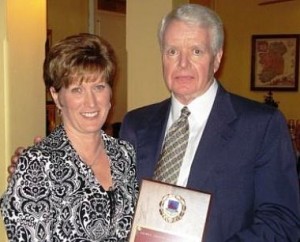
Virginia Coyne Brett, president of the Philadelphia Galway Society, presents the 2008 Person of the Year Award to Drew Monaghan.

Virginia Coyne Brett, president of the Philadelphia Galway Society, presents the 2008 Person of the Year Award to Drew Monaghan.

By Kathy McGee Burns

The Galway Society Dinner Dance was held on a Saturday evening, May 10. I have been to many of these events but this night there was something different. This night had a magical feel to it, so much so that I wanted to capture that feeling and put it to words.

I’ve been to County Galway many times. It is one of my favorite places in Ireland. Each county has its own flavor, but I think Galway has a little of all the flavors of Ireland. I think that’s why it’s known as Ireland’s cultural heart. It’s the home of Kylemore Abbey, The Twelve Bens, and Connemara. It is Joyce country and through it runs the Corrib, the largest lake in the republic. When Galwegians (as people from Galway are known) immigrated to America, most of them went to Boston, but Philadelphia was lucky enough to get some of the special ones.

The Galway Society, in the Philadelphia area, was started 99 years ago. It welcomed the newly arrived and helped to ease the pain of leaving home. The members reached out to aid in employment and it became a social center, a place not unlike home.

My story starts with John Egan. He was from Head Ford, the youngest of seven children, unmarried and with nothing happening at home. He arrived in Philadelphia in 1955. His brother, Pat, immediately introduced him to the Galway Society and the Irish Center. He joined a month later. The Society was never very large, not like Donegal or Mayo. There was a core group, “the glue that kept it together:” the Egans, Jack Gilmore, Billy Brennan, and Dan Raftery. In the last fifty years, membership dwindled, kept alive by very few families.

Now, suddenly, it has had a resurgence. It has become a force with a new direction. The ingredient added was the Coyne Family. Jim and Ginny entered the Galway Society with determination, loyalty, and resources. Those resources were friends, and family…lots of family. The dye was now cast.

One of those friends was Drew Monaghan. Drew and his wife, Mary Lynn, had been attending the dinner dances with the Coynes for quite a while and Jim was able to twist Drew’s arm into following him as President. Drew became that shot of youth and new vision.

Drew said they encouraged their small membership to talk up the Society. They first went to their families and when they showed interest, they approached their friends. He said that at first, the younger people were taken aback by “all that gray hair”. Drew, in his wisdom, decided to let the young people make some decisions. His advice was, “If you don’t like it, make it in your own image….but you can’t chase the elders away”

Under Drew’s tutelage there was been a resurgence of young members. They turn ran the dinner dance, dressed up the Society window, and produced a lovely dance booklet. Drew Monaghan was named “Person of the Year, 2008,” an honor bestowed on him for service to the Society.

Drew passed the baton to Virginia Brett (Jim Coyne’s daughter) who is the new president and I believe only the second woman ever to hold that title. Virginia, a four-year member, also attended those dances, mainly as an obligation to Mom and Dad, but later really enjoying them.

She’s now “dragging” her kids. Brendan Brett, age 21, is the newest and youngest member who has taken to all things Irish. Drew Monaghan said that Virginia represents a real visible change in the Galway Society.

Virginia’s goal is to look for meaningful activities for the Society to pursue, things that will help their own members in difficult times and always make things fun.
So, what are some of these innovated changes?

The officers of the Society are spread over generations. There’s a 50-year span of ages among the board of directors. Two young women, Eileen Brett and Kathleen Sweeney, will be Co- Chair of Galway’s 100th Annual Dinner Dance.

And speaking of Eileen Brett, she’s one of the newer links in those 100 years. She is an upbeat young woman with a clear vision. She also was involved with this year’s dance. She was very nervous the morning of the affair. She had set the bar high and wanted to show them (the elders) what the young set could do and that they could have faith for the future. Eileen also says that none of them could have done it without John Egan who sold the most tickets and ads. Therein lies the success of that generational span. The glue is still intact. Eileen Brett is still basking in the glow of that special night.

That’s what I felt! All the energy, devotion, respect and aspirations of the Galway people came together that night in May. The struggle to fill the hall was abated. The room was packed. The young and the old mingled. We all felt that special magic. I just know there will be another 100 years for the Galway Society.

News, Sports

A Little Bit of Ireland at Philadelphia Park

By Kyle Kroszner

Joanne McDaid heard a familiar accent in the Cathal Lynch stable on the backside of the Philadelphia Park’s Racetrack. It was Peter Meehan. Joanne from Donegal and Peter from Derry grew up fifteen minutes from each other, and they both think they might have brushed elbows at a local bar. Now Joanne is a jockey splitting time between Philadelphia Park and Penn National in Harrisburg, and Pete is a racing official, outrider, and competes in some amateur races as a jockey.

Joanne grew up watching horse races on TV, but didn’t actually hop on her first horse until her late teens. “Female jockeys are not very popular in Ireland,” McDaid said. But that did not discourage her from getting into this grueling sport. In 2006, she was given the Leading Apprentice Award, of which she is very proud. She enjoys being a jockey for many reasons—it keeps her fit, every race gives her an adrenaline rush during a race, and the most important “you’re not sitting in an office, right?” she laughs.

On the other hand, Peter will spend a couple days in the office as a racing official. He admits he didn’t get into horse racing until his cousin James Graham (another Irish-born jockey) convinced him to get on a horse. “Basically the only sport in Ireland is soccer,” said Meehan, who likes it enough to catch some games at Fadó in Center City. Even though his first love was soccer, his ambition now is to be a steward, which is essentially a referee for horse racing. Peter has also recently joined the AOH in Bristol.

There are some significant differences between horse racing in Ireland and the U.S. Ireland’s horses are bred to run on turf and not dirt tracks. Consequently, many Americans buy thoroughbreds from Ireland to be used on the turf tracks here in America. “In Ireland horse racing is a sport, but in America it’s for money,” says Peter. “In Ireland you can have a horse that loses, but you will keep racing because it’s ‘your’ horse.”

Both Joanne and Peter have a healthy respect for the dangers of racing. They both admit that when they mount up, it’s never without making the sign of the cross and uttering a little prayer. Joanne says she’s also grateful for the opportunity she has to ride. “Even in the winter it can get tough out there, but I’m not complaining,” she says with a smile. And when asked if she could name a horse herself, right away she said, “Dhún na nGall! In Irish, you know?” [It’s Irish for Donegal.]

Although the Triple Crown races have passed, and Big Brown might have came up short, there are still many opportunities to enjoy watching the ponies run. As for Ireland, the Irish Derby and the Oaks are the major races, which usually take place in late June and early July. And of course, if you want to cheer for Joanne McDaid, she rides at Philadelphia Park year round.