All Posts By

Denise Foley

Music, People

Goodbye to the Gentle Man from Roscommon

Tommy Moffit

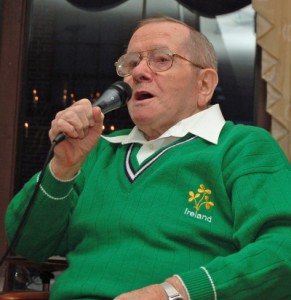
Tommy Moffit

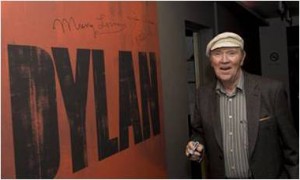
Tommy Moffit, native of County Roscommon, self-taught accordion player and band leader whose name is synonymous with Irish radio in Philadelphia, died on Tuesday, May 11 of chronic obstructive pulmonary disease. He was 79.

Until he retired three years ago, Moffit spent 30 years playing three or four nights a week with his Tommy Moffit Band at various locations throughout the area.

“He was a bartender who did music on the side but you would have thought music was his fulltime job,” says his daughter, Catherine Moffit. “He played at the Irish Center, at Emmett’s Place in Oxford Circle, at all the ceilis, in basements. There was a time when if you were Irish, you had Tommy Moffit in your basement one Friday night.”

Moffit first picked up the button accordion when he arrived in the Philadelphia area after the deaths of his parents within three months of one another. He and his sister stayed with their accordion-playing uncle, Tom McDonough, who owned the Erin Pub in Atlantic City. “He learned to play by ear,” says his daughter. “He also taught himself to play a little tin whistle.”

Moffit worked for a time at the Penn Fruit Company, then bought his own bar, Moffit’s Café, at Fifth and Cortland streets in Philadelphia. After he sold that, he worked as a bartender at Bud’s on Rhawn Street. “He was an excellent bartender,” says his friend and former band mate, Vince Gallagher, president of the Irish Center. “That’s where his people skills came out. You could confide in him. If you had something you didn’t want anyone to know about, Tommy Moffit would be the man to talk to because it never went any further. He was a real gentleman. He wouldn’t do anything to hurt anyone. And he helped a lot of people, but he wouldn’t talk about it. He was a private man, but he was also very outgoing. Even after his retirement Tommy was everywhere. The whole world knew him.”

His daughter agrees, though she admits there was a time when being the child of the famous Tommy Moffit wasn’t advantageous. “There was no way any of us could sneak around because everyone knew Tommy Moffit—everybody knew my Dad,” she said, laughing.

It would have been hard not to. He played for “19 years straight” at the Irish Center ceilis, from the time it was the only place to get a drink on a Sunday night. “If you fainted you wouldn’t fall over, it was packed to the gills,” recalls Gallagher. “Tommy used to play till one or two in the morning and people would dance like hell all night long. Then everyone would hang out at the bar and sing for two more hours.”

Moffit was a fixture at Emmett’s, which continued to draw dancers out on weekends as the neighborhood became less and less Irish. At a party celebrating Moffit’s retirement from his Sunday radio show on WTMR 800AM four years ago, some of his regulars included Jewish couples from the nearby adult center. “We’re not Irish but we love Irish music,” said Anita Auerbach at the time. “And Tommy lets us get up and sing.” The Tommy Moffit Band came out of retirement in 2008 when Emmett’s hosted its last ceili; owner Emmett Ruane retired and shuttered this little piece of Irish history in a Northeast Philadelphia strip mall.

From 1974 to 2006, when he wasn’t playing Irish traditional music himself, Moffit was playing tracks from Irish music CDs on his Sunday morning radio show which he passed it on to old friend and chosen heir, Marianne MacDonald. “He was digging into his own pocket to keep it going; a lot of people didn’t know about that,” says Gallagher, whose Vince Gallagher’s Irish Radio Hour aired right before Moffit’s. “He loved that radio station and he didn’t want to leave, but it was financially impossible to keep it going.” Today, Gallagher and MacDonald can only continue the tradition by running PBS-style radiothons twice a year. “That show was one of the loves of his life.”

Those who knew him well or slightly all said the same thing about the man from Roscommon: he was a gentleman, a gentle man, with a wry sense of humor, who always made them feel important.

“He had an ability to make everyone he was talking to feel like his closest friend, like you were the only person in the room, ” says Michael Bradley, who became friends with Moffit as the two worked together on the St. Patrick’s Day parade. Bradley is the parade director; Moffit did color commentary in the CBS3 booth on parade day.

Moffit’s ubiquity on the Irish scene almost worked against him when it came to being honored, says Bradley. “In 2006 we were talking about who should be grand marshal and Tommy’s name came up. He’d been around so much, everyone thought he’d already been grand marshal and he hadn’t. He’d sit there year after year as one person after the other was chosen and he didn’t say anything. Of course, when we realized, he was the unanimous choice.”

Bradley, who frequently referred to Moffit as his “godfather,’ says the nickname actually came from his teenaged son, Mickey. “I invited Tommy to my son’s high school graduation party. He couldn’t make it down the stairs, so he stayed up in the living room and one by one people lined up just to talk to him. One of my son’s friends asked him who the guy was everyone was lining up to see. Mickey said, ‘Oh, he’s like the Irish ‘Godfather’—everyone comes to see him. He’s old, but he’s the coolest guy you’ve ever met.’”

Moffit, whose wife, Peggy Harrington, preceded him in death, was a Korean War veteran, father of three–son, Thomas; daughters Catherine and Mary Matraszek—grandfather of five and great-grandfather of two. He was a co-founder of the Comhaltas Ceoltóirí Éireann of the Delaware Valley and was inducted into the Comhaltas Ceoltóirí Éireann Mid-Atlantic Hall of Fame.

Though he lived in the US most of his life, he “missed his home really bad,” says his daughter. Catherine. “He went home every year until about three years ago. He wanted to go back one last time and we were actually supposed to leave on Sunday for Ireland. That didn’t turn out but. . .you know what, he’s there now, looking down on Roscommon and smiling.”

A viewing will be held Friday night from 6-9 PM at St. Joseph’s Church, 7631 Waters Road, Cheltenham, and after 8:30 AM on Saturday, May 15, at Presentation of the Blessed Virgin Mary Church, 100 Old Soliders Road, Cheltenham, where a funeral mass will follow at 10 AM. Burial will be at Holy Sepulchre Cemetery in Cheltenham.

Mass cards can be sent to the Moffit family in care of Cathy Moffit.
3672 Whitehall Lane, Philadelphia, PA 19114.

Donations in Tommy’s name may be made to:

The Little Sisters of the Poor
Holy Family Home
3800 Chester Avenue
Philadelphia, PA 19143
Music, People

Tributes to Tommy

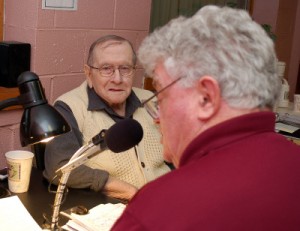
Tommy Moffit and Vince Gallagher

Tommy Moffit, left, with his longtime friend Vince Gallagher.

Some of Tommy’s friends shared their memories of him with us. Feel free to share yours in the comments section.

(Reported by Denise Foley, Lori Lander Murphy, and Marianne MacDonald.)

Marianne MacDonald, longtime friend, host of “Come West Along the Road,” on WTMR 800 AM

Mentor, inspiration, friend, kindred spirit… Tommy was all of these and more to me. I met Tommy over 20 years ago when I started to go to Emmett’s Place in the Northeast. Tommy played there all of the time, and my favorite time to go was always the night before Thanksgiving. The bar would be packed, there would be dozens of people trying to dance in an area barely big enough to swing a cat. Tommy would be playing away at the front of the room, telling us to keep moving, keep up with the music!

Throughout the years, Tommy and I became good friends. We worked together in different organizations and the thing that I am most glad I was able to do for Tommy was when I nominated him to (and he won) the Mid-Atlantic Comhaltas Ceoltóirí Éireann Hall of Fame. I was determined that Tommy’s work in promoting and preserving the Irish culture and music scene here in Philadelphia be recognized by as many people as possible. But Tommy never sought the limelight or needed recognition to be appreciated.

His love of traditional Irish music knew no limits. He was always willing to share a CD of an artist that I heard on his Sunday morning radio show. I used to time my Sundays so that I could listen to his entire show as I drove to Toms River to visit my parents. When Tommy would ask who the mystery singer was, I would call in as I drove and Tommy would laugh that I could talk and drive at the same time. That was always my special time to listen to Tommy and have no distractions to take me away from his voice and his music.

Tommy was always there to help out. If there was a fundraiser or an event at which he could play, he always volunteered. As he grew older and the fingers stiffened up a bit, he moved into the role of emcee. From the Wren Parties of old, to the Ceili Group festivals to benefits for friends who had fallen ill, Tommy was there to share stories, jokes and memories.

When Tommy decided it was time to retire from his radio show, I was deeply honored and touched when he asked me to take the reins. I had sat in with him several times previously, loved the easy way he bantered with his audience and the incredible knowledge of the music he played and loved. How could I possibly fill his chair? When I finally went solo, Tommy called me during each show and told me what a good job I was doing and how much he looked forward to listening each week. He very generously offered me the opportunity to come to his apartment and go through his CDs and borrow anything that interested me. That was Tommy to the core, generous and giving always.

In 2006, I ran a tour to Ireland and was able to offer Tommy the chance to come along. He was thrilled to be touring with a group of musicians and dancers and we had a great night at the White House Hotel in Ballinlough, Co. Roscommon, when Tommy’s family came out, along with many of the locals, to pay tribute to Tommy as he performed for the ceili that evening. I remember seeing how adored Tommy was that evening as we said our farewells to the Roscommon folks as we returned to Galway.

Tommy’s tired body has gone home but his gentle spirit, kind words and twinkling wit live on here in my heart and I’m sure in the hearts of all who knew him. God bless you, Tommy Moffit. Rest in peace.

Gerry Buckley, co-founder, Comhaltas Ceoltóirí Éireann of the Delaware Valley

Tommy was a great character and one who tirelessly promoted Irish culture and pride throughout the Delaware Valley in so many different venues and was a great supporter for so many different Irish organisations. Tommy did so much to promote the cause of CCE-DV for many years as a board member and always supported and attended our events when he could. Inducted into the CCE hall of Fame in 2002 Tommy’s contributions to all the Irish groups and societies will be fondly remembered and much talked about I am sure over the next coming days and weeks. There is many the quiet reflection going on all over Philadelphia, Delaware and NJ of the many many ceilis and occasions where Tommy played his heart our and looked down at the dancers with that big wide smile. From the South Jersey Irish Society in Palmyra to Trenton to Sr Pegs Ceilis, to DE ceilis, to the Timoney ceilis, PCG events, Irish Center, down the shore, Bucks County to the local Irish pub session or gathering one person could be relied to be there when he could and that was Tommy. And how he graced the airwaves for so many years with his choice of great Irish traditional music. He knew the true Irish traditional style of music—he knew how much it meant to some many people and I am sure, he knew how much he was appreciated and loved by all the Irish (be they traditionalists or not). Ar dheis De go raibh a anam usuail – God rest his noble soul.

John O’Callaghan, front man for the band, Jamison

Editor’s Note: O’Callaghan wrote this about Tommy Moffit when he retired and shared it with us this week.

I just wanted to take a minute of your time to tell you about a remarkable musician, Irish radio show host, and overall individual. His name is Tommy Moffit. For the past 30 years of my life, I experienced Tommy in many facets in the Irish community. When I was a child, I can remember the many Friday and Saturday nights when my parents, aunts, uncles and most of all my grandmother would try to find a baby-sitter so they could go to Emmett’s Place to hear Tommy play and Irish dance straight into the night. At times a baby-sitter couldn’t be found and I had to go with them. To be honest, at first I was not too enthusiastic about going to a bar to hear “that Irish Stuff” at 8-9 years old, but at least I got to eat one of Emmett’s famous cheesesteaks and wash it down with an unlimited supply of soda. After a few times at Emmett’s and hearing Tommy’s band play, I was hooked. As the years went by and my family stopped going to Emmett’s, I would always look for Irish music, especially music with an accordion. I attempted (and failed horribly) to learn the accordion and settled with learning to play the guitar and sing. When I was in college, I had a job washing cars at a funeral home. Pretty easy job, and just as long as you don’t mind what goes on at a funeral home, it was good pay for kid trying to work his way through college. I remember every Wednesday afternoon, I would put on the radio just to hear the Tommy Moffit Irish Hour. My boss and co-workers thought it was uncanny and sometimes weird to have a 20-year-old college student listening to the “sweetest sound this side of Roscommon.” but hey, Tommy would give free plugs to the funeral home when I called to make a request, so they didn’t mind one bit.

As I moved into the Irish scene as a musician myself, Tommy motivated me like no other person ever had or ever will. I can remember at the 1995 Penn’s Landing Irish Festival, Tommy’s band just finished playing and my group, Shades of Green, were up next. We were very nervous and instead of enjoying the time on stage, we just blew by our hour set. After we finished, I remember Tommy pulling me aside, sitting me down and critiquing our set. With a pointed finger, and raised Roscommon voice, he told me “Never turn your back to the crowd” and “always know what you’ll play next,” after which he shook my hand and congratulated us on a job well done, being that it was our first time on the main stage.

One final story to tell you… Tommy was over in Roscommon at the same time Shades of Green were on a three-week tour in Ireland. Tommy and his brother drove from his hometown in Roscommon to Ballyhaunis, County Mayo to see us play. To me, that was the apex of our tour in Ireland. To have a man that I looked up to since I was a boy come and see us play, goes to show what kind of person he really is. With these experiences, I can honestly tell you Tommy can be your most fierce critic but also a truly dedicated fan.

When I was told that Tommy has retired as the host of his Irish radio show, it struck me in a sad way, and compelled me to write this article. Tommy, I just want to thank you for all the years that you have given to the Irish community through your radio show. As for me and my family, I want to thank you for the many years of music you have provided for us, as well as the guidance that you had given me as well as every Irish musician in the city of Philadelphia to strive to be at least as half as good as you are, not only as a musician, but a great person that I am happy to call my friend.

Joe O’Callaghan, friend

I’ve known Tommy for 40, 45 years. I used to love to go out Irish dancing, and I remember when he was playing with the Four Provinces Orchestra years ago. Yes, that was a long time ago! My father used to take me to see him, down at Broad and Erie.

My mother was from Ballyhaunis in County Mayo, near from where Tommy was from, and he knew a lot of my mother’s relatives. So, I’d see Tommy at a lot of my relatives’ playing. And of course, he played at Emmett’s, he played at the Irish festivals. He played at my wedding. At my wedding, when we had the reception, dinner was late getting started, and they closed the bar down. Now, I’m a non-drinker, so it didn’t worry me, but I was worried for all the guests. You’ve got 300 Irish Americans here, the dinner’s late, and the bar is closed. Tommy said to me, “Don’t worry. We’ll play some music and get them dancing.” And they did. They had everyone Irish dancing all night—more Irish dancing than any other kind. And at the end of the night, Tommy said, “We’re having such a good time, we want to play a little bit longer for you.”

He reminded me of my father, very old stock Irish… not too firm, but people always listen to ‘em. He was very generous. He was always trying to get me to sing…”You’ve got a good voice, you should sing,” he’d say. “Hey, Joey, you want to sing?” And I’d say, “Oh, no, Tommy, I‘ll leave the singing to my son.” He was very instrumental in my son John playing Irish music, which just thrilled me. I thanked him for helping John to get into the Irish music field.

He was very charitable. If anybody needed any help, he would help them. He would really go out of his way for people. And he never turned me down when I asked him to play a reel. He was very knowledgable about music. Boy, he could play some music, though. I always liked to do a good set with him.

I liked Tommy very much. I always used to enjoy when he talked about Ireland to me. He was a top gun as far as I’m concerned. He was a good gentleman, a good Christian, a good musician and a good friend. Mainly a good friend first. I think a lot of people are gonna miss him.

Emmett Ruane, former owner of Emmett’s Place in Oxford Circle, where the Tommy Moffit Band played for many years

We were together a long time. I think I met him in the late 1960’s. My wife’s family knew Tommy when he went into the bar business. We really got to know each other in 1972, that’s when he started playing at Emmett’s. He played there from ‘72 to about ‘82. Then he left… he wanted to do something else for awhile. He came back in ‘92.

He was more American than some of the Americans born here. He served in the Korean War, and he never forgot what it meant. At the holidays, we’d have an indoor picnic at Emmett’s and Tommy would be playing; he’d always wind up the dancing with “The Star Spangled Banner” and “God Bless America.” It upset him when they played the national anthem and people didn’t stand up. Sometimes he told them, too. One night at the bar when he wasn’t playing, the national anthem started playing. There were two men who had just gotten out of the Marine Corps, they still had the short haircuts, and they didn’t stand up. Tommy yelled at them, and they jumped out of their seats like two rabbits! When it was over, they came back and apologized to him. They said they hadn’t known what to do, they’d never heard it played in a bar before. Tommy reminded them—no matter where you are, you always stand. He was the most patriotic person I knew.

Columns, How to Be Irish in Philly

How to Be Irish in Philly This Week

Kathy Kinney

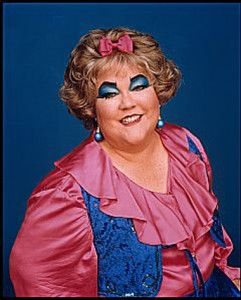
Irish-American actress Kathy Kinney doesn't really look like her Mimi Bobek character from The Drew Carey Show... see for yourself when she signs her new book in the Philly area this week.

This weekend you can help the Hibernians help a veteran in need, see the flashing hard shoes of Michael Flatley’s “Lord of the Dance,” dance your own feet off at AOH Notre Dame Division 1’s annual ceili, and see Burning Bridget Cleary burn up the stage at the Dutch Country Playhouse in Telford.

All in all, not a bad weekend to be Irish.

On Friday, Saturday, and Sunday, AOH Division 51 is holding its fourth annual “Fill the cart-help a vet in need” project at the Thriftway at Aramingo and York in Philadelphia. Food donations will help homeless vets served by the Philadelphia Veterans Multi-Service and Education Center.

On stage at the Merriam Theater through Monday is the touring company of “Lord of the Dance,” a classic good vs. evil story told in Irish dance. We talked to the evil Dark Lord himself, dancer Adam McSharry, last week. It’s his eighth year as the embodiment of evil and he loves it.

Burning Bridget Cleary is a hot—really—local group that’s destined for big things. This is your chance to see them locally in concert on Saturday night in Telford.

In a dancing mood? Head over to Swedesburg and move your feet to the music of Tom McHugh and Kevin and Jimmy McGillian.

On Sunday night, Bill and Karen Reid are hosting a house party featuring Brother, a Celtic rock group. There’s limited seating so call now.

On Thursday, the Irish Network-Philadelphia group (we call them IN-Philly because we know them, but you can too) will hold its second happy hour at Maggie O’Neill’s Pub in Drexel Hill. Look for monthly get-togethers, including some tag rugby (we’ll be taking a pass on that) down the line and a trip to one of the Irish Center’s popular Rambling House events.

You probably remember Irish-American actress Kathy Kinney as the make-up-impaired Mimi Bobeck on The Drew Carey Show. She and friend, Cindy Ratzlaff, have just written a book called “Queen of Your Own Life,” which encourages women to claim their happiness—and even wear a crown once in a while. She’ll be at the Barnes and Noble Store in Cherry Hill on Thursday night signing books (sans Mimi makeup, but perhaps wearing a crown). It’s a well-written, funny book (you expected something less?) that’s as wise as it is wise-ass.

Country music singer-songwriter Craig Bickhardt is making his every third Thursday appearance this week at The Shanachie in Ambler. He’s played with and recorded with the best, including Martina McBride, B.B. King, Vince Gill, The Judds and Ray Charles.
Next weekend is a killer: So much to choose from, so little time. The Philadelphia Ceili Group is holding a fundraiser on Saturday, May 22, to help finance its annual traditional music festival in September. They’re pulling from the city’s bountiful local talent, including fiddler Paraic Keane, guitarist John Brennan, and whistle and flute maven Paddy O’Neill to create a brilliant, home-grown concert. Requested donation is $15, but give more—it’s tax deductible.

On Sunday afternoon, one of Time magazine’s 100 Most Influential People—Philadelphia nun and activist for the homeless, Sister Mary Scullion—will be among 11 Delaware Valley Irish and Irish-American women honored at the Irish Center in its first Inspirational Irish Women awards event. The cocktail reception and awards program kicks off an art exhibit of portraits by Pat Gallagher, formerly of the Main Line and the son of Irish immigrants. Go to the Web site to order tickets.

Next weekend Burning Bridget Cleary (remember what we told you about them) is also doing a workshop for the Philadelphia Folksong Society; tenor Daniel O’Donnell will be performing at the Academy of Music, and the Coatesille Irish Music Series is bringing legendary duo Kevin Burke and Cal Scott to the stage at the Coatesville.
Check the calendar for all the details.

Dance, People

Meet the Dark Lord of the Dance

Adam McSharry

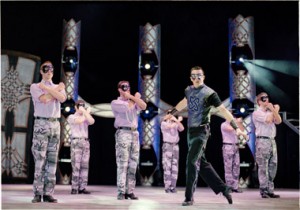
That's Adam McSharry at right, looking dark and evil.

If you’re going to see Michael Flatley’s “Lord of the Dance” at the Merriam next weekend, you’ll know Adam McSharry when you see him. He’s the bad one. The total loser.

Not a bad dancer, not a real loser, but The Dark Lord, “Don Dorcha,” who, no matter how well he dances, can never defeat The Lord of the Dance in this classic story of good and evil set to syncopated hard shoes.

“I never win,” admits McSharry, a native of Birmingham, England who’s played the villain on several continents. “But when I get out there in character during the battle between the two armies on stage, when I’m doing the final duel with the Lord of the Dance, we go to it on the stage and our duel brings each of us to our best. I’m completely focused. Even though I know I’m not going to win, I’m trying to convince audience members that I am going to win.”

A year ago, he considered leaving the troupe and putting Don Dorcha behind him. “I had job interviews ready but then. . . .” He joined Flatley’s other traveling show, “Feet of Flame,” which drew 80,000 people when it played in England and 20,000-30,000 for each of its eight shows in Taiwan. That changed his mind. “I said, ‘What am I thinking? I’m really happy here. This is the job for me.’”

So he took up his evil ways again. “I love it. I’ve been playing this role for eight years. I think it’s another side of me,” he says with a laugh.

Like many Irish dancers, McSharry started very young. At three, his mother had him in lessons and at four he was on stage at his first feis. “It came naturally,” he says. “My mother danced, my uncle danced. My father, when he moved over from Ireland (Leitrim) and was dating my mother (Downpatrick), he was picking her up at dancing class and one guy on the team that was going to the world championships had to drop out so they taught my father to dance, they went to the Worlds and came in second. My sister, Grace, is a great, great dancer. It’s in our blood.”

But he never thought of dancing as a profession until, ironically, he caught a performance by Michael Flatley on TV at the Eurovision Song Contest. “I must have been 14 or 15 and I thought, wow, would you look at that. But I just carried on in competition for a while, doing well [top three in every major competition in Britain, Ireland, the US, and the World Championships; in 2003, he performed for President and Mrs. George Bush] when I got a phone call an they said, ‘There’s a place in Lord of the Dance for you if you like it.’”

He was stunned. So, at the age of 18, he headed to Wembley, England, got fitted for a costume, learned the steps and went on stage. That year, “Lord of the Dance” entered the Guinness Book of World Records for most sold-out performances—19. Nothing like starting at the top.

He even danced opposite Flatley himself in the Taiwan production of “Feet of Fire.” He admits he was in awe.

“The whole cast agrees, he’s always going to be the one you look up to. If he says do it like this, or this will help you get the best out of your character, you listen. He gave me good tips on how to make the best of my bad guy routine. Being on stage with him is different from anything I’ve ever done before. The energy rush is incredible.”

When McSharry isn’t dancing, he’s doing whatever it takes to support his dancing. He and a few members of the troupe play soccer when they have time off. “It really keeps you fit.” And when he’s home. . . he works construction.

A stage star, a championship dancer, doing construction? Really? “Really,” he says. “It’s a good workout. It keeps you active all day, it helps build upper body and leg strength and you’re killing two birds with one stone. I could sit at home and go to the gym, but this way I’m getting paid and getting a workout.”

He may be a professional bad guy, but stupid he’s not.

“Lord of the Dance” will be at the Merriam Theater, 250 South Broad Street, Philadelphia, for six performances May 14-16.

Columns, How to Be Irish in Philly

How to Be Irish in Philly This Week

Ellen Hughes Cromwick

Ford Motor Company chief economist Ellen Hughes-Cromwick will speak at the Irish-American Business Chamber this week.

When the recession looked like it was going to kick the American auto industry to the curb, the Ford Motor Company emerged as the only one of the big three in a position to survive. Not only did it survive, it’s thriving. In April, Ford reported a net profit of $2.2 billion or 50 cents a share—its largest pretax profit in six years, and all due to higher sales, not a bailout.

You have a unique opportunity to find out how Ford did it on Wednesday when Ellen Hughes-Cromwick, the company’s chief economist and global director of strategy, speaks to the Irish American Business Chamber and Network at a lunch meeting at the Union League in Philadelphia. The event is open to non-members, but you’ll have to act fast to save a seat. Contact Alanna Barry McCloskey at abarry@iabcn.org.

This weekend will give you ample opportunity to flex your Irish. On Saturday, Bill and Karen Reid will roll out their fourth annual Phoenixille Celtic Street Fair. Those wonderful folks who bring you the Mid-Winter Scottish-Irish Festival and the new Brittingham’s summer Scottish-Irish Festival and more are stocking the 200 block of Bridge Street with the best in local Irish entertainment, including the always good Bogside Rogues, Charlie Zahm, Olier McElhone, Na’Bodach, Irish Thunder, and the New York Celtic Dancers. As always, there will be dozens of vendors and lots to eat and drink. Even without the festival, Phoenixville has a lot to offer, but with it, wow.

If you stay in Phoenixville for dinner, head over to Molly Maguire’s to hear the remarkable local group, Burning Bridget Cleary, performing starting at 6 p.m.

If your Irish ancestors came to America to work as servants in the homes of the wealthy, you will enjoy a talk by Margaret Lynch-Brennan, author of “The Irish Bridget,” the story of Irish immigrant servants from 1840 to 1930, at the Ebenezer Maxwell Mansion in Philadelphia on Saturday afternoon.

On Saturday night, The Galway Society is holding its annual dinner dance at the Irish Center, with music provided by the Vince Gallagher Band.

On Thursday, Villanova University librarians Darren Poley and Michael Foight will speak at the Independence Seaport Museum about the digitization of the Commodore Barry papers, a joint project that brings together materials owned by Independence Seaport Museum and other family-related papers. Included are items that feature nautical related themes with content from Commodore John Barry (1745-1803), a Wexford native who lived and is buried in Philadelphia. The event includes a tour of the museum and its archives by Matt Herbison, director of the J. Welles Henderson Archives and Library, Independence Seaport Museum. Light refreshments will be served.

And for all you Saw Doctors fans, your guys will be performing at The Note, an intimate venue in West Chester on Thursday night.

Friday is “choose your own Celtic treat” day. Here’s what’s going on:

AOH Division 3 is holding its annual golf outing and dinner at the Pine Crest Country Club in Lansdale, a fundraiser for AOH charities.

Two of our favorites, Matt and Shannon Heaton, are performing at Immanuel Episcopal Church in Wilmington, DE. (They’re heading back our way on May 26 for a special show at the Shanachie Pub and Restaurant.)

Michael Flately’s “Lord of the Dance” extravaganza starts its weekend run at the Merriam Theater on South Broad Street in Philadelphia. (We talked to one of the leads, Adam McSharry, who plays Don Dorcha, the dark lord.)

Seven Nations, the Celtic heavy metal rockers, will be playing at Brittingham’s in Lafayette Hill (kilts, bagpipes, and nonstop guitar riffs—trust me, it works).

Coming up: On May 22, there will be a musical benefit at the Irish Center to raise money for the Philadelphia Ceili Group’s annual traditional music festival (that happens in September), featuring Paddy O’Neill with traditional Northern Ireland tunes on wooden flute, traditional and original music by John Brennan on fiddle and guitar; John McGillian on accordian; Caitlyn Finley playing fiddle tunes from the late Andy McGann and others; and Paraic Keane uses his fiddle to show how musical virtuosity is genetic (his father, Sean, is with the Chieftains, and uncle, James Keane, is such an accomplished button accordian player he has an instrument named after him). An open session will follow the concert, so bring your instruments. Tickets are only $15.

On May 23, the Irish Center and the Irish Immigration Center of Greater Philadelphia will honor 11 “Inspirational Irish Women” at a cocktail reception which will also open an exhibit of portraits done by Pat Gallagher, the son of Irish immigrants who grew up on Philadelphia’s Main Line. Tickets to the event are $35 and include hot and cold hors d’oeuvres, wine and beer. You can order tickets online or by calling 215-884-1936 or 215-779-1466. Proceeds from the event benefit the Irish Center and Project H.O.M.E., a charity founded by one of the honorees, Sister Mary Scullion.

The other honorees are Princess Grace of Monaco; Emily Riley, executive vice president of the Connelly Foundation; Sister Kathleen Marie Keenan, senior vice president of Mercy Health; Rosemarie Timoney, founder of the Timoney School of Irish Dance; Kathy Orr, CBS3 meterologist; Denise Sullivan Morrison, president of a major division of the Campbell’s Soup Company; Liz Kerr of LAOH Brigid McCrory Division 25; Siobhan Reardon, first woman president of the Free Library of Philadelphia; Rosabelle Gifford, first recipient of the Rose of Tralee Mary O’Connor Spirit Award for her courageous spirit; and Kathy McGee Burns, first woman president of the Donegal Association, president of the Delaware Valley Hall of Fame, and first vice president of the Philadelphia St. Patrick’s Day Observance Association.

People

Derry is Back!

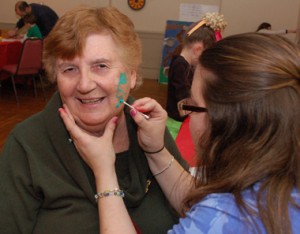
"Irish" Joan Reed gets into the spirit with a cheek shamrock.

"Irish" Joan Reed gets into the spirit with a cheek shamrock.

It’s been almost a decade since the Derry Society held a social, and if Sunday’s event at the Irish Center was any indication, they were sorely missed.

The family “party,” which featured the Shantys and Bare-Knuckle Boxers, face-painting and kids’ games, Irish dancers, and a buffet, was packed. “There ought to be more of these,” said Tim Murphy of the Bogside Rogues, who was just enjoying the music instead of playing it. “This is just plain fun.”

You can see how much fun everyone was having in our photos.

Columns, How to Be Irish in Philly

How to Be Irish in Philly This Week

This is your week to pick up some interesting tidbits of Irish history.

On Sunday, Celtic scholar Sister Sheila Holly SSJ, will present a talk on “The Ancient Celts who They Were” at the Ancient Order of HiberniansHall in Bristol Borough.

Genealogist and blogger Deborah Large Fox’s Irish genealogy group meets on Thursday morning at the Family History Center in Cherry Hill, where you can learn about tracing your own Irish history.

And on the following Saturday,writer Margaret Lynch-Brennan will talk about her book, “The Irish Bridget,”about Irish immigrant in domestic service from 1840 to 1930, at the historic Ebenezer Maxwell Mansion in Germantown.

On Friday, May 7, the Philadelphia Ceili Group is sponsoring the only Philadelphia screening of the life and times of the late Liam Clancy of the Clancy Brothers and Tommy Makem at the Irish Center. Tickets will not be sold at the door so order yours now (they’re only $10).

Synchronize your calendars: Next Saturday is the fourth annual Irish Street Festival in Phoenixville, a free event filled with music, dancing, vendors, food, and general conviviality in a town that’s vying for “most Irish community” in Pennsylvania (take that as a challenge, Upper Darby).

And on May 23, honor 11 remarkable Irish women and help support the Philadelphia Irish Center at a cocktail party and awards program at the Irish Center, which opens an art exhibit. The fabulous contemporary Irish group, Runa, and members of the musical Boyce family (including Michael and John of Blackthorn and their sister, Karen, who sang with Causeway) will perform. Tickets are only $35 and include hot and cold hors d’oeuvres, wine and beer, and a chance to mingle with some of the most amazing women you’ll ever meet.

Music

Liam Clancy: The Life and Times of a “Sociable Loner”

Liam Clancy

The late Liam Clancy

As Liam Clancy was dying last fall, the documentary of his life, “The Yellow Bittern,” was about to come out on DVD. The film’s producer, Anna Rodgers, who’d spent five years plumbing the life of the youngest and last surviving member of the iconic group, The Clancy Brothers and Tommy Makem, recalls one of her last conversations with him. “He said ‘I’m going to boost sales for you.’ He was a terrible man for making those dark jokes. We’d say, ‘Liam, stop it,’ but he thought it was hilarious. I have to say, I did laugh to myself afterwards.”

“The Yellow Bittern, The Life and Times of Liam Clancy,” called an “small scale epic” by one critic, will have its only Philadelphia showing on Friday, May 7, at the Philadelphia Irish Center, 6815 Emlen Street, an event sponsored by The Philadelphia Ceili Group.

I spoke to Anna Rodgers by phone this week from her office at Crossing the Line Films in County Wicklow where she was putting the finishing touches on the RTE series, “Growing Up Gay.” A film she directed, “Today Is Better Than Two Tomorrows”–the story of two Laotian 11-year-olds, one in school, the other in Buddhist monastery—was recently screened at The Full Frame Documentary Film Festival in Durham, NC, and she’s also filming a documentary on the Faddenmore Psalter, an eighth century manuscript found in a bog.

You spent the last five years of Liam Clancy’s life with him. What was he like?

Really it’s very hard to say. He was a hard man to get to know in lots of ways. Even though he would be very gregarious, very friendly to people when he met them and he was a great conversationalist, it took time for him to let you in. He was a very deep thinker, very philosophical. You never had an ordinary conversation with Liam. As he was approaching the end of his life, he had an awareness of that, and he had philosophical ideas about what it’s all about, about his own life. He was a great storyteller, and he would tell the same stories over and over but I loved to hear them again and again because I loved the sound of his voice. That’s one of the things I miss the most. It was great fun to go out with him and have a meal. He would have a chat with everone. He was a sociable loner. Alan [Gilsenan, the film’s director] talks about “the capless interviews,” the ones we did in his home when he took his cap off and wasn’t the performer anymore. Then you got more of an insight.

Will we learn anything new and surprising in the documentary?

It’s not that kind of film. There are no big revelations in it. It’s not going to tell you something, if you’re a fan, that you didn’t know about before. It’s the way he tells a story, about his life and the period of time in cultural and political history in which the band existed [the ‘60s in the US]. One of the things in the film that is unique is the unseen archives, including home movies of Liam’s he found in his attic. And these were movies he’d never seen—including film of his own wedding! We also found some footage of his [1964] performance at the Newport Folk Festival filmed by his friend, [film director] Murray Lerner, but it took a couple of years to find that because the images had become separated from the sound.

How did Liam feel about having a film made about his life?

He once came across a grave of someone who had his name 100 years ago and he wondered what his life had been like. He wanted to put down his life story for posterity, to leave something behind for his children and grandchildren. He was very much into that, that a man should tell his story.

Was he able to see the film?

The film came out on Liam’s birthday and he came to opening night in Dublin, actually in a wheelchair. He was very weak. But he still partied all night. He went into the hospital and never came home, but we talked on the phone. We filmed to the very end. We even filmed his funeral. We knew he would have wanted us to. It was beautiful. Not a big show business funeral. Though there were a lot of people there, it felt like a very personal funeral. It was an absolutely beautiful day. It had been raining and there was a rainbow.

Why did you decide to call the film, The Yellow Bittern? Was it for the bird, which is shy and solitary, or the poem/song which is a mournful elegy by a drunken narrator of a marsh bird that has died of thirst?

It was Alan’s idea. We were trying to come up with a title for the film that would separate it from so many of the records, tribute albums and the other documentaries that had been done, including the previous documentary we ourselves had made [“The Legend of Liam Clancy”]. Liam loved that poem. It seemed poetic and lyrical and enigmatic, which hinted at the enigmatic performer who hides behind the mask. Liam recited it for us a number of times and had sung it. In fact, the last thing you hear on the film is actually Liam reading “The Yellow Bittern.” He was on oxygen and his voice was going and he had aged a lot, but you could tell how much he identified with some of the lyrics.

Here you can read a translation of the poem, from the Irish, by Seamus Heaney.