All Posts By

Denise Foley

History, News, People

The Rise and Fall of the Celtic Tiger

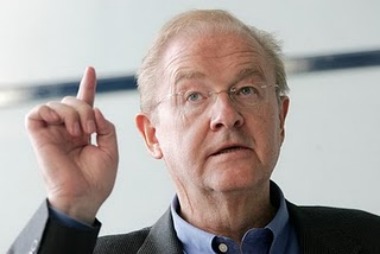
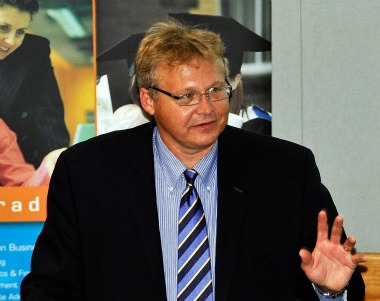
Dr. Sean Kay

Ireland is famous for its writers and storytellers, but these days, numbers, rather than words, are what tell the Irish story. Numbers like these:

• Between 2006 and 2010, the average family income in Ireland was cut in half.

• The average per capita debt is 37,000 euro ($51,544).

• Ireland lost 20,000 jobs between the years 2000 and 2006.

• The country’s debt now stands at 876 billion euro ($1.2 trillion).

Sean Kay, PhD, has been a regular visitor to Ireland since 1987. He traces his roots there and his wife is an Irish citizen. But until recently, his private and professional lives hadn’t meshed the way they do now. As Gershon professor of politics and government and chair of international studies at Ohio Wesleyan University, Kay had written about, in his words, “the big wars, global security stuff, and big international security issues,” the kind of thing that got him noticed by Barack Obama during the 2008 presidential campaign.

“I was asked to be part of a team advising Obama on issues related to Europe and Afghanistan, and because I had contacts in Ireland, I asked if I could also advise on Irish issues,” Kay explains. “I’m not a political person, but I was interested in getting involved and it was a good experience that I would never do again. But it got me thinking that there was a story to tell about Ireland and I wanted to tell it.”

That story is Kay’s latest book, “Celtic Revival? The Rise, Fall, and Renewal of Global Ireland “ (Rowman & Littlefield Publishers, 2011). He’ll be speaking about Ireland’s boom and bust, along with Irish Consul General Noel Kilkenny, on Friday, November 4, at Temple University Center City. The program is sponsored by Irish Network-Philadelphia. For more information, see our calendar.

We talked to Dr. Kay this week about the collapse of the “Celtic Tiger” and what the future holds for Ireland.

In your book, there are a couple of lines that really struck me. “For a young generation that had never experienced bad times, a wealthy and comfortable Ireland was the new norm—and the expected future. Thus the desperate condition Ireland found itself in by 2008 came as a horrific shock to a country that had never previously experienced boom and bust.” Ireland is one of the “young” countries in Europe—that’s at least a quarter of their population and they’ve never known anything but prosperity until now. Where does this leave them?

By about 2001 an entire society for first time in history had disposable income, purchasing ability, all built on loose credit. It was a mirage. It wasn’t real. When it burst, you had an interesting set of layers going on. The first one is that this was brand new wealth. People got rich pretty fast and that was just gone. The second layer is that people under 35 who didn’t cause any of that are going to be feeling the effects for the rest of their lives probably, between emigration and having to pay back somebody else’s broken promises on debt.

What went wrong?

There were really good foundations for the original Celtic Tiger of the late 1980s and mid-1990s. [In the book, Dr. Kay writes that Ireland benefited from its well-educated population and low business taxes which attracted significant foreign investment largely by pharmaceutical, technology, and healthcare companies.] Then the politicians got so obsessed with the electoral rewards and manifestations of the idea of large growth. Instead of slowing economic growth to about three percent and going for strong, gradual growth, they wanted eight, nine, 11 percent annual growth. But the export market flattened as had the impact the foreign direct investment. Ireland had lost its competitiveness, which was the premise of the Celtic Tiger. The way they sustained it was by artificially inflating the economy by allowing de-regulation of the mortgage market. Then you got a microcosm of what happened here: people leveraging a mortgage to pay for two or three other mortgages and then there was less revenue for the budget. [In his book, Dr. Kay quotes Irish economist Morgan Kelly who captured the housing bubble fiasco succinctly: “We have spent the last five years learning to believe that exports and competitiveness don’t matter, and that we can get rich by selling houses to each other.”] But what has shocked me the most is how steep the decline Ireland’s education system has been. It’s off the cliff. It went from being one of the best education systems in Europe and now ranks at the bottom in how much the government spends for education.

One of the things I learned from your book was that U2, whose lead singer Bono is linked to African causes including hunger and AIDS, actually took its publishing arm out of the country when the tax laws for artists changed and they were going to be taxed on anything above a quarter million euro. I found that hypocritical and disappointing.

To be fair, they didn’t do anything illegitimate or illegal. They’re not tax dodgers. They still live there and pay taxes as individuals. They were taking advantage of a tax loophole that the government tried to rein in. In Ireland, artists lived tax exempt. Of course, the idea was to help struggling artists, not massive bazillionaires. It was to give them a leg up as they got started. When it changed, U2 packed up and left. That represented a loss of 40 million euro a year to the Irish people. There is a point to be made that keeping the tax rate friendly to business is a good thing. The problem is that U2 posture themselves as a moral business, their own countrymen are hurting and they’ve taken their money out. But lots of wealthy Irish people moved to Monaco and Cyprus, and that money has yet to come back.

You talk in the book about how the cultural lack of self-esteem and avoidance of talking about serious problems has kept Ireland from asking for help and for getting back on track in ways both economic and social. What exactly did you mean by that, and has it changed?

You know, when I mention that to people, everyone knows exactly what I’m talking about. Look at the church for example. For years, people never talked openly about the Catholic Church and the scandals they knew were in it. I spent some time talking to [singer] Sinead O’Connor about her ripping up the photo of the Pope on Saturday Night Live [in 1992], something that was offensive to me and to many other people at the time. I asked her why she didn’t tell people why she was doing it. Americans didn’t understand, but people in Ireland knew what she was trying to say and they didn’t want to grapple with it. Now, with the child abuse scandal in the church and the economic crisis, all these things that couldn’t be talked about before are forced on people. Debt is not something anyone wanted to talk about, but now the whole country is in debt and it’s affecting everyone at the kitchen table level. We’ve picked that up in America too. The president didn’t even mention the oil spill in the Gulf in his state of the union speech this year and it was one of the biggest things we should be talking about—our dependence on oil. This is one place where the Irish are leading the world.

You’re sounding a little hopeful. Do you think things are going to get better in Ireland?

I see a ray of hope, but it’s different from what people might expect. It’s not going to one of getting back to where things were by any means. But there are
five key reasons there’s good reason to be optimistic about Ireland’s future. The first point has to do with fact that the Irish are being brutally frank now, demanding an accounting from their leaders and their banks and demanding transparency because of harsh lessons they’ve been through. Now they’re talking about it and even having some basic discussions of what it means to be responsible citizen in a democracy. Because of the church issues, you also see a real desire for justice and equality. You have [Taoiseach] Enda Kenny giving a speech where he says “this is not Rome, this is the republic of Ireland 2011.” And you see a major social transformation going on involving the face of Ireland. Walk around Dublin today and it’s not all white Irish-looking people you see. It’s multicultural, multi-religious, and much more progressive than most people realize. Ireland has much more progressive national legislation on civil partnerships, for example. Seventy-two percent of the population say they support gay marriage, so it’s not really the conservative country many people think it is.

What does that have to do with getting Ireland back on its feet?

This kind of thing sends a message to the world and to business that Ireland is open and welcoming. That’s really important because businesses want a good environment. I also think that they’re sending a message of peace out of Northern Ireland though I still think that needs a lot of work. That brings me to the fifth reason I’m optimistic about Ireland’s future. The country’s foreign policy has been very innovative and sends a signal of goodwill to the rest of the world. Ireland does peacekeeping, provides food aid in Africa and other Third World countries, and the Irish were the architects of the nuclear proliferation treaty. Those things provide a basic foundation on which a new economy and political and social life can be built. Their economy is not going to save them. It’s going to be these other things that make Ireland a role model for how to think about priorities. There’s much the Irish can do to teach the world. What’s going to get Ireland through ultimately is its classic sense of home, family, and community.
Music

An “In Your House” Concert

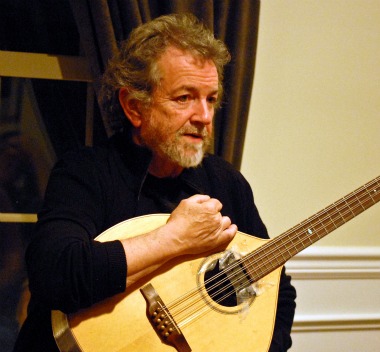
The legendary Andy Irvine in Philadelphia.

We had an embarrassment of musical riches this week in Irish Philadelphia. Teada’s Oisin MacDiarmada was in Coatesville, Winifred Horan and Mick McAuley of Solas with friend and occasional bandmate, Colm O’Caoimh, played a house concert in Ambler, and the legendary Andy Irvine of Planxty and Patrick Street, helped christen the new Philadelphia home of musicians Gabriel Donohue and Marian Makins.

And we were there. We brought back a few photos but, more important for you, loads of videos so you can have a “in our own house” concert. It’s not as much fun as actually being there, but it will have to do.

Click on the links below which will take you to YouTube where you can enjoy the shows! Photos by Denise Foley and Lori Lander Murphy; video by Lori Lander Murphy.

Mick, Winnie and Colm in Ambler:

Mick, Winnie and Colm
Another
And yet another

Oisin Mac Diarmada in Coatesville:

Oisin Mac Diarmada

Another

And yet another


Andy Irvine in Philadelphia

Andy Irvine

Another

Another

And another


 Check out our photos from all three concerts. 


How to Be Irish in Philly

How To Be Irish in Philly This Week

The Hooligans, acting up at Penns Landing.


The annual Molly Maguires’ street fair in Lansdale—known as Molly O’Ween– s on Saturday and the music will be wild, to say the least. You can hear the heart-throbbing percussion stylings of Albannach, those kilted purveyors of barbarian rock from Scotland. And the only thing that might be wilder than that is Luke Jardel who is bringing his Hooligans to the party. All fabulous musicians. It’s free, there’s a costume contest with prizes, and loads of activities for the kids. You can’t go wrong.

Blackthorn also has two gigs this week—on Friday night, October 21, at the Blarney Stone in West Chester and on Saturday, at JD McGillicudy’s newest spot in Roxborough. Get there early—there’s always a crowd. These guys can fill a room and then some.

AOH Div. 61 is having it’s Crab Night and Derby at St. Dominic’s Hall in Frankford. For $30 you get all the crabs you can eat plus hot roast beef, wine, and beer. Wish they’d let us know what the Derby part of the event is. We have images of crab races, but that’s probably not right. Go and find out and report back to us.

The John Byrne Band will be rocking Cherubini Yachts in Delran on Saturday night too, part of the Circle of Friends house concert series. Go, listen, pick out a boat.

Feeling goodly? The Irish Memorial Garden at Front and Chestnut needs some work and you can help. They’re looking for volunteers for clean-up, planting, mulching, and getting the garden ready for winter. Pauline Hurley-Kurtz, an landscape architect from Temple, will be giving and overview of the garden and its plants at 11 AM. And you don’t need to bring tools or snacks—they’ll be provided by the Pennsylvania Horticultural Society. Work details start at 9 AM.

Next Friday, October 28, Julie Fowlis—Gaelic singer of the year in 2007 and 2008—will be at Bryn Mawr College. This talent from Scotland has performed with a wide variety of musicians including James Taylor, Martha Wainwright, Ronan Browne, Liam O’Maonlai of the Hothouse Flowers, Mariead Ni Mhaonaigh of Altan, and Karen Matheson of Capercaille.

And on Saturday, another treat—Kevin Burke and Cal Scott in concert, a Philadelphia Ceili Group production at the Irish Center in Philadelphia. Burke is a master of Sligo style fiddling (just try to keep your feet from tapping—not possible). He’s often teamed with Scott who pretty much plays everything—and does it all well.

Coming up: Mick Moloney’s annual concert at St. Malachy’s Church in Philadelphia is on tap for November 6. Moloney will be back in Philadelphia on November 12, along with New York’s Billy McComiskey, master of the East Galway accordian style, and violin virtuoso, Athena Tergis. Billy and Athena will also be giving workshops and Moloney, a folklorist, will provide an illustrated talk on “Into the West.” This is part of the Philadelphia Ceili Group’s year long series, “Irish Traditional Music: Influences from the West of Ireland.”

Also on November 6: The Irish Immigration Center of Philadelphia will be holding a fundraiser at Finnigan’s Wake in Philadelphia and there’s also a fundraiser the same day for the “Come West Along the Road” radio show with Marianne MacDonald at Molly Maguire’s in Lansdale.

Some great theater happening in November too—but more about that later (unless you want to sneak a peek at the calendar now, always a good thing).

News, People

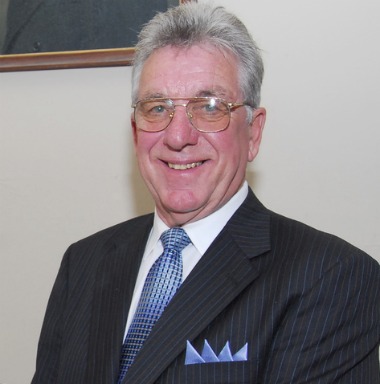
2011 Delaware Valley Irish Hall of Fame Inductee: Tom Farrelly

Tom Farrelly

By Kathy McGee Burns

You’d never know by his accent, but Tom Farrelly is from Virginia. That’s the Virginia in County Cavan, Ireland, a small farming town of 4,000 people halfway between Belfast and Dublin.

It’s not without its celebrity. Jonathan Swift wrote “Gulliver Travels” while visiting there. But it’s also where the Farrellys, James and Margaret (nee Lynch), raised their 10 children. Fourth from the top was Tom, a successful businessman who will be honored this year at the 11th Annual Delaware Valley Irish Hall of Fame for his longtime work in the region’s Irish community where he serves on the Irish Center board and has been elected president of the Cavan Society five times.

Thomas Edison once said that “genius is 1% inspiration and 99% perspiration.” This describes Tom Farrelly—hard-working his whole life and successful at all he does. While at school, he worked on the family farm and at the Park Hotel, a 100-acre estate on Lough Ramor, as a “Jack of all trades:” growing flowers and vegetables, and working as a handyman, waiter, bartender, even a maitre’d.

Between school and his job, he walked miles every day. His boss, Mrs. McDonald, took pity on him and lent him a bicycle. He was then known as the “king of the students”– the only kid with a bike.

There is no telling how many miles you will have to run while chasing a dream.
Tom, who left school early, worked for a time at various bars in Dublin and, like every young man at the time, longed to go to America where his sister, Sarah, lived. At the age of 19, Tom left Ireland for Overbrook, Delaware County, where his sister lived. He recalled being shocked to see grass growing. All the postcards he’d seen at home showed only high-rise city buildings.

He took an astounding array of jobs: bookkeeper at Provident National Bank, landscaping with the Travers Brothers, night shift at the Acme, dairyman in Ardmore, after which he opened his own business, Shamrock Farm, a landscaping concern also known as Farrelly Brothers.

Tom met other Irish immigrants at the many dances that were so much a part of Philadelphia many years ago. (He told me a cute story about his car, a Crown Vic which he called Victoria. Someone once asked him why he never brought a girl to the local dances. He said he didn’t have a girl. The man said. “Well then, who’s Victoria?”)

It was at one of those dances that he met a pretty, petite blonde named Christine Scanlon, from County Galway. And it all unfolded like the song:

“So I took her hand and I gave her a twirl
And I lost my heart to a Galway girl.”

He and Chrissy have been married or more than 40 years. (A story they tell proves that it was meant to be: After they met, Chrissy agreed to let him pick her up from her job at Stouffers Restaurant. He sat in his car, out front and waited and waited and waited. She stood out back and waited and waited and waited! Fortunately, they finally figured it out.) They’re the parents of two children, a son, Tom, Jr., a daughter, Irene, and granddaughter, Kaitlyn Marie.

When I asked Tom who he admired most, he didn’t even stop to think. “My parents,” he said. “They had nothing for themselves but yet the children wanted for nothing! They might have been poor but they thought they had everything in the world.”

Tom’s story is the epitome of every immigrant’s dream—to  create a good life in the land of opportunity. His business is thriving. His friend, fellow landscaping contractor and Irish Center President Vince Gallagher, says Tom has “built up an amazing business” and includes high profile clients such as Villanova University.

But even more, he says, “Tom has helping hands He would never turn anyone down. Whenever there is a benefit, Tom is the first to show up.”

He’s also a Gaelic Athletic Association supporter (for 35 years) and its honorary president in 1988; a longtime supporter of the McDade School of Irish Dance, president of the Old Timers group at the Irish Center and president of the Cavan Bowling League.

Tom is also emcee of everything—a job he earned by his quick wit. There’s only one problem. He’s been the emcee of the Delaware Valley Irish Hall of Fame awards dinner every year. This year, as an honoree, he’ll have to be replaced. But we’re looking forward to a very funny acceptance speech.

Tom Farrelly will be honored, along with Kathleen Murtagh (profiled last week) and John Donovan, at an awards presentation dinner on November 13 at the Irish Center, 6815 Emlen Street, Philadelphia.

How to Be Irish in Philly

How To Be Irish in Philly This Week

Father Sean McManus of the Irish National Caucus

Father Sean McManus will be reading from his new autobiography, “My American Struggle for Justice in Northern Ireland” and signing books on Saturday, October 15, at 2 PM at the AOH Div. 87 Hall, 2171 Wakeling Street, in Philadelphia.

Father McManus is president of the Irish National Caucus, a Capitol Hill-based organization which in 1984 initiated and launched the MacBride Principles – a code of conduct for companies doing business in Northern Ireland and. Those principles, which, among other things, call for fair employment practices, have also been passed into law by the US Congress as the standard for economic aid and investment. All recipients of the International Fund for Ireland—to which the US contributes almost $20 million a year—must be in compliance with the principles.

Father McManus was born in County Fermanagh, Northern Ireland, in a parish that was divided by the North-South border (part is in County Cavan). “England not only divided my country, but my parish as well, for Heaven’s sake, you don’t have to be a political genius to figure out why I have such an abhorrence for the injustice and absurdity of partition,” he told the Irish Echo in 2009.

He lost his brother, Patrick, in 1958 when the IRA bomb he was transporting exploded. Father McManus was arrested during an anti-internment demonstration in 1971. A Redemptorist, he served a parish in Boston before moving to Washington, DC. He started the Irish National Caucus in 1974 to lobby for peace and justice in Northern Ireland.

Admission to the book signing is free and copies will be on sale.

Also on Saturday, enjoy an evening of Irish music and dance at Bucks County Community College in Newtown, featuring the Martin Family Band.

On Sunday, the inimitable Timlin and Kane will be appearing at The Shanachie, Timlin’s pub in Ambler.

And in Coatesville, the equally inimitable Oisin MacDiarmada will be flying solo with his fiddle—he’s usually part of the remarkable group, Teada, which has appeared many times in the Philadelphia area, always to large crowds.

Monday is theater night. At Villanova, one of Ireland’s leading theatre directors, Patrick Mason, will talk about new Irish theater. And Philly’s own Inis Nua Theatre Company—which brings that new Irish (and UK) theater to the US—is staging a reading from British playwright Joe Penhall’s play, “Landscape with Weapon,” at Inis Nua’s new digs at the First Baptist Church at 17th and Sansom Streets in Philadelphia.

There are also two house concerts this week of note: On Tuesday night, Winnie Horan and Mick McAuley—two-fifths of the super group, Solas—will be in Ambler and Andy Irvine will be in Philly. It looks like both are sold out, but Irish Philadelphia will be there so we’ll share some pix and maybe even a video with you next week.

House concerts are a great way to hear a performer. So are concerts in businesses, a new thing to us. Next one up is the John Byrne Band at Cherubini Yachts in Delran, NJ on October 22. It’s part of the ongoing Circle of Friends concert series. Tickets are $15, BYOB.

News

Remembering the Hunger Strikers

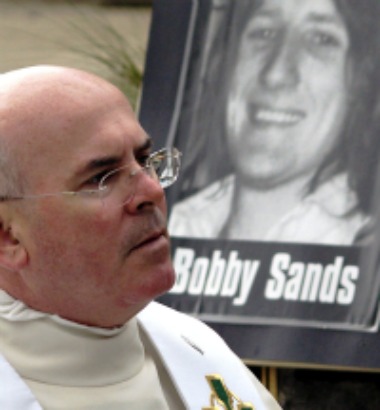
Celebrant Father Ed Brady in front of a poster of Hunger Striker Bobby Sands.

On Sunday, October 2, dozens of people gathered for a Mass, celebrated by Father Ed Brady, at the Irish Memorial in Philadelphia to honor the 30th anniversary of the Irish Hunger Strikers. In 1981, 10 men died of starvation in H block of Belfast’s Long Kesh Prison, protesting the British government’s decision to hold them as criminals instead of political prisoners.

Mass was followed by a buffet-style Irish breakfast at The Plough and the Stars at 2nd and Chestnut Streets, where a raffle was held to win a bodhran made by prisoners currently held in Ireland. The inner rim was signed by each man who contributed to its creation.

View our photo essay of the event. Photographs by Gwyneth MacArthur.

How to Be Irish in Philly

How to Be Irish in Philly This Week

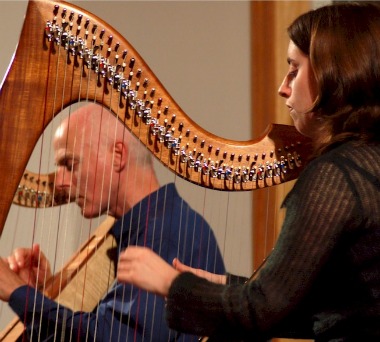
William Jackson and Grainne Hambly

What happens when one of the best Celtic music harpers in the world meets up with one of the best Celtic music harpers in the world? You can find out on Saturday night when Grainne Hambly and William Jackson perform at the Gates Family Recital Hall at West Chester University.

They don’t just bring harp to their performances either. You can hear these two musical masters play a variety of instruments, including the exotic bouzouki, the concertina and tin whistle.

Jackson is from Glasgow, a composer and a founding member of Ossian, one of Scotland’s best-loved traditional bands. (If you’re a History Channel aficianado, you may have heard his work on “The Battle of the Clans,” or on the soundtrack of the movie, “A Shot at Glory, starring Robert Duval and Michael Keaton.)

Hambly, of Mayo, is a senior All-Ireland winner for harp and concertina, and garnered many other awards for her playing. She tours most of the year, bringing her “danceable” harp playing to all the major Celtic music and harp festivals in the US and Europe.

The two are also holding workshops on Sunday at the Swope Music Building at the university in West Chester.

Looking for a respite from nonstop sports watching? Rosin up your bow (or what have you) and head over to the AOH Notre Dame Div. 1 hall in Swedesburg on Sunday at 4 PM for a session.

The Echoes of Erin 2011 North American tour stops in Middletown, NJ, at the Middletown Arts Center on Wednesday, October 12. Sponsored by the Comhaltas Coeltoiri Eireann (also known as Coal-tus), an international organization dedicated to the preservation of Irish music and dance, the show brings All-Ireland champions in singing, dancing, and playing from Ireland. This is the only show in the tri-state area this year.

On Thursday, let genealogy expert John McDevitt help you find your Irish roots at the Irish Immigration Center in Upper Darby. This week he’ll be talking about the Tithe Applotment Survey of the 1820s. Since it’s hard to find other Irish records going back that far, this should be enlightening.

Special heads up: Next Saturday, October 15, Father Sean McKay, founder of the Irish National Caucus, will be in Philadelphia at the AOH Div. 87 Hall to sign copies of his book, “My American Struggle for Justice in Northern Ireland.”

As you probably know, all the details on these events are on our handy-dandy calendar. Check it out now. And we mean it.

News, People

2011 Delaware Valley Irish Hall of Fame Inductee: Kathleen Murtagh

Kathleen Murtagh

This is the first of three profiles of the 2011 inductees into the Delaware Valley Irish Hall of Fame, written by Kathy McGee Burns, president of the organization, that we’ll be running over the next few weeks. First up is the Mayo Association’s Kathleen Murtagh. All three inductees, including Tom Farrelly of the Cavan Society, and John Donovan who serves on the board of the Philadelphia Irish Memorial, will be honored at a dinner at the Irish Center on November 13.

As I was interviewing Kathleen Murtaugh, I became mesmerized by her golden red hair, radiant blue-green eyes and the way, as she told me the story of her life—happy moments and sad—she was expressive, even bubbly, and joyous. It struck me that this was the lovely aura that draws so many people to this generous, warm-hearted woman.

Kathleen was born in Carracastle, a Roman Catholic parish which envelops parts of Mayo and Roscommon, and borders on Sligo. It is known for its 20 ringed forts. She was the fourth child (one son and four daughters) of Ellen Attracta Cawley (Aclare, Sligo) and Bernard Gavin (Swinford, Mayo).

Her parents had both left Ireland, at different times, to go to America. By a quirk of fate they met each other in Germantown. It seems that Ellen’s sister, Margaret, was married to Bernard’s brother, Patrick. They fell in love and wedding bells rang out on Easter Monday, 1928, at St. Francis Church. They settled in Germantown. The Gavins’ stay was shortened by Bernard’s health issues so the family with toddler, Brian, went back to Ireland. They went on to have four more wee ones, all girls, Margaret Mary, Helene, Kathleen and Linda.

When we talked about the homes in which the Gavins lived, Katheen, with an impish grin, told me several of them were haunted. One, in particular, Palmfield House, had been the family stead of Sir Anthony McDonnell (1840’s). He went on to be the first Catholic to ever serve as Under Secretary of Ireland. It was said that McDonnell’s father had hung himself and still roamed the halls.

Fortunately, Kathleen’s family settled on a farm, 38 acres, in Swinford, where they grew everything, from vegetables and fruit to hay. The land sustained them with their cows, pigs, turkeys, geese, ducks, and one horse. They all worked the farm.

Kathleen confessed that she had a childhood nickname: Jamjars. As a 10-year-old, she would go from cottage to cottage to collect jam jars and then resell them for 2 cents. Her sisters, laughingly, accused her of being the first recycler in Ireland. She was educated at the Cloongullane National School and the Convent of Mercy.

At age 18, her brother, Brian, an American citizen since he was born in the US, decided he wanted to move back. Their father, she said, saw what the future held for the family and decided that if one went, they’d all go. He didn’t want the heartache so many Irish experience, seeing their children leave one by one. So the Gavins sold every thing, said goodbye to their friends and sailed to America on the famous ocean liner, the Mauretania. They all stood on deck to wave hello to the Statue of Liberty. (Later, having sailed into the harbor, Kathleen’s first impression while driving through the Holland Tunnel, under all that water, was sheer terror.)

The young woman didn’t take long to set off on her new American adventure. She took a two-year business course, at $5 a week, at Immaculate Conception School and went on to work at many jobs. But it was at a Sunday night dance that she met her future husband, She met her husband, John (Jack) Murtaugh at a Sunday night dance. Sound familiar? They married in 1955 and had six children; Jack, Brian, Kevin, Maureen, Helene, and Kathleen. Jack, who owned a plumbing and heating business where Kathleen worked as his secretary, was an accomplished musician who played with some of the best, including local favorites Tommy Moffit and Pat Campbell.

Then tragedy struck. Jack Murtagh was accidentally killed in 1971, leaving Kathleen alone to raise their children, who ranged in age from four to 14, something, she said, she managed to do “with the help of God.” Even with all of that responsibility, she saved every Sunday for her aging parents. She spent the day at their home, lovingly cooking, cleaning and entertaining them until their deaths in 1985 and 1986.

In 1985, Kathleen met Charles McCartin, who remained her best friend until his death. He introduced her to the Mayo Society (she’s been a loyal, favorite member ever since) and they enjoyed Irish dancing and socializing at the Commodore Barry Club.

Along with her involvement with the Mayo Society, Kathleen is president of the St. Bernadette’s Senior Citizens Club, active with the Irish Immigration Center of Philadelphia, a volunteer for the St. Patrick Fathers and Holy Rosary Sister. She also stays busy at home—just keeping pace with her 18 grandchildren and nine great grandchildren for whom she is a positive role model with her philosophy: “Help who I can.”