All Posts By

Denise Foley

Arts

A Salute to the Flag

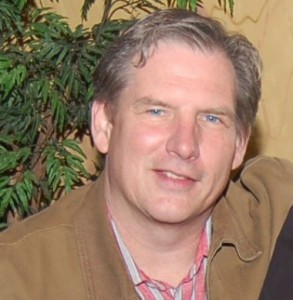
Filmmaker John Foley of Wayne.

Filmmaker John Foley of Wayne.

A few weeks after 9/11, you couldn’t buy an American flag in this country. They were sold out, flying from flag poles, porch roofs, even car antennas from sea to shining sea. Seven years later, where are they?

Wayne filmmaker John Foley asked himself that same question not long ago.

“I was listening to some people who’d gone on a holiday in Europe and they were joking about how they told everyone they were Canadian. I thought to myself, why? What are you ashamed of? And it dawned on me that what the flag represented had changed since it was hoisted over Iwo Jima in World War II or even over Ground Zero. It had gotten lost. To many people, it had been co-opted or hijacked by the religious right or the Republicans, and all the sacrifices people had made along the way faded into the past and it became a symbol of what’s wrong with this country.”

At the time, Foley was in the midst of filming what would later become “The Color Bearers,” a film examining the history of patriotism as embodied by the symbol of the flag, from the Revolutionary War to the present day, which he also produced with childhood friend Steve Newbert. He’d begun the documentary as a personal tribute to a distant relative, James Seitzinger, a 17-year-old from Schuylkill County who lied about his age to join the 116th Pennsylvania Infantry during the Civil War. On the first day of the battle at Cold Harbor, VA, in June of 1864, the unit’s color bearer—the soldier who carried the flag into battle in front of the troops—was shot down. The young farm boy rushed forward to seize the flag and raise it, dropping his rifle to do so. For his bravery, Seitzinger received the Congressional Medal of Honor.

“When I started looking into it,” says Foley, “I found that of the 3,500 soliders in the entire history of the Medal of Honor, most of those who received the award had something to do with the flag during the Civil War—they were either color bearers or had captured the enemy’s flag. I started asking the experts, what’s the big deal about the flag capture? What it comes down to is that carrying the flag was a dangerous job. It required an inordinate amount of bravery and courage heading into battle, holding just a flag. You’re stepping into battle six feet ahead of your troops, the battlefield is filled with smoke, and there’s the flag popping out of the smoke. There were no radios or telegraphs on the battlefield. The only way to communicate what you wanted your troops to do was, as an officer, position yourself behind the flag and tell the color bearer what you wanted the troops to do, go left, right, forward, or back, and they just followed the flag. You became a bullet magnet. The life expectancy of the average color bearer in battle was six months. They had to drop their rifles to pick up the flag, and that’s what Seitzinger did.”

Foley found three other color bearers from the Civil War and not only told their stories, but found living descendants who talked about how their courageous ancestors affected their lives today. For example, the descendants of Union color bearer Ben Crippen—who include a police chief and Desert Storm vet from Guyton, GA—ritually return to the battlefield at Gettysburg to take a family photo under the statue of Crippen, a member of the 143rd Pennsylvanians, who was killed while his regiment was attempting to keep the Confederate army from entering the town. Crippen lagged behind his troops, which were engaged in a rear guard action, and would periodically turn to face the Rebels, only a few feet away, and shake his fist at them. Crippen was gunned down, but it was his act of defiance that rallied his troops, who kept the Confederates at bay.

But Foley felt the focus on war heroes made the film “too dusty, too History Channel,” so he also talked to other people for whom the flag has held great significance beyond the battlefield, including singer Lauren Hart, who performs the Star Spangled Banner at Philadelphia Flyers home games and never fails to think of her father, announcer Gene Hart, the legendary “voice of the Flyers;” Tim and Brian O’Connor, owners of Humphreys Flags, located across from the Betsy Ross House, which has been making flags since 1805 and created an American flag so large it didn’t fit on a football field; and Scott LoBaido, a New Yorker who painted flags on 50 buildings in 50 states as a tribute to America’s soldiers. Former Eagles star Vince Papale narrates the one-hour film.

Foley, who grew up in St. Dominic’s Parish in Northeast Philadelphia and graduated from Father Judge High School, took a long, circuitous route back to one of his earliest passions, TV and filmmaking. When he entered Temple University in 1974, he was a physics major, but switched to the radio-television-film . Unfortunately, for financial and other reasons, he had to drop out. He never graduated from college, but wound up in the telecommunications business, eventually as the CEO of a company.

But a few years ago, when the telecom industry started to implode, Foley made what seemed to be a good business decision. “One thing that hasn’t imploded, but has actually exploded, is content,” he explains. “Content is on the rise. So about five years ago, I said to myself, ‘Do I want to be scraping by well into retirement in the telecom industry until it’s dead, or do I cut my losses now and chase my dream?’”

The dream won. Today, he’s director of business development for PMTV (Producers Management TeleVision) in King of Prussia, a 20-year-old company that provides mobile facilities and production services for clients as varied as Home Depot and ESPN. He had a brief stopover as the world’s oldest intern too—working gratis for another Philadelphia production company, Teamwork Productions, writing and producing documentaries and TV pilots with an African-American theme.

Life has changed dramatically—in many ways. “I had a little money for a little while, but it’s been scary,” Foley admits. “Right now I’m earning half of what I earned as a CEO. It’s hard. I had a lot of nice rewards rising to the top of the telecom industry, but I’ve shed them now, the boats, the cars. . . .But I have a nice condo in Wayne and where I didn’t see a future in the telecom industry, I see a future now. And did I mention that I’m having fun?”

“Color Bearers” became his resume piece, allowing him to convince his new boss that he should hire a guy for TV production who had no real experience. “If it hadn’t been for this film, I wouldn’t have gotten this job,” he says.

The film, which premiered on June 14 (Flag Day) at the Independence History Museum on Third Street, has also opened his eyes about the ambivalent relationship Americans have with the symbol of their nation, he says.

Some of that began to surface while he was filming. One of the questions he asked each of his interviewees was “What is patriotism?”

“Tim O’Conner of Humphreys Flag, when I asked him that question, Tim went off on this riff on how we were creatures in the trees in Africa, and when we came out of the trees, we got together and basically protected one another. A patriot was someone who gave up his life for his tribe,” recalls Foley. “Well that particular day, I shot the segment on my lunch hour and was dressed in a suit and a tie, and Tim assumed that I was a staunch member of the religious right making a film about the flag. He was convinced that what he said would never make it to the film and he was laughing to himself. Of course, it’s in there.”

Foley laughs, but then suddenly becomes serious. “The fact is, you’re prejudged if you have a flag out. To many people, you’re automatically a hawk, and that is one of the very things we’re trying to combat with this film. Republicans and the religious right don’t own the flag. Americans own the flag. It’s lazy to jump to assumptions about people because of the fact that they’re proud to be an American.”

He wanted “Color Bearers” to restore the flag to its historical significance as a symbol of freedom for people who longed for it where they came from, but never found it until they arrived here.

“I wanted people to make the connection, through the story of the color bearers, that the flag wasn’t something to be ashamed of, to remember what had gone into giving us the freedoms we have,” he says. “You can burn a flag in this country without going to jail. If you want freedom of speech, you have to accept people who don’t believe what you do.”

The film has had a profound effect on those who’ve seen it. At a Temple University “teach-in” conducted by history professor Ralph Young last month, a screening before an audience of students, professors, and non-students, provoked a spirited discussion that went on for 90 minutes. “It was very interesting,” notes Foley, who attended the screening. “The students responded very positively, but people in their 50s and older took us to task for doing anything that glorified America and the flag. They were upset with me that we didn’t show more of the Vietnam era antiwar movement with people burning flags in protest. But we wanted it to be a positive film, and frankly, we only had an hour.”

Foley admits he made a conscious decision not to show flag-draped coffins in the film. “I found a lot of those images on military websites of funerals at Arlington Cemetery, but I felt like I was intruding on people in their deepest pain ever in life To put that into the film and sort of exploit the image felt wrong, and I just decided I wasn’t going to do it.”

What you will see in the film are photos of Foley’s son, Sean, now a Philadelphia police officer, who was deployed to Iraq in 2003-2004. Sean (“now there’s an Irish name for you,” laughs Foley) joined the National Guard prior to the Iraq war, like many young men and women, to make some money for college. “Now, I firmly believe that we were sold a bill of goods by Bush who didn’t do enough work to determine if there were in fact weapons of mass destruction over there, didn’t have the support of our allies, and didn’t really have a good plan. But when I was standing with his sisters and his mother at Fort Dix as he was leaving, I didn’t want to say anything negative to him that might cause him to hesitate at a crucial moment, a hesitation that could cost him his life. You can hate the war and love the soldier—I hope that was the lesson we learned from Vietnam.”

Instead, Foley removed a Claddagh ring he bought in Dublin “that really means a lot to me,” and handed it to his son. “I said, son, you bring this home to me. A year later, he pulled me aside, took the ring off, and handed it to me and said, ‘I told you I’d give it back, Pop.’ I get choked up now as I say this. I will never take this ring off.”

Then Foley, the historian, brought it all back to the flag. Just as he gave his son the ring, historically, soldiers were often given flags sewn by the women of their towns so they could take a little “home” with them to war and they were admonished to “bring it home proudly,” says Foley. “I gave my son the ring for the same reason, to let him know I was with him.”

Carolyn Blashek, founder of Operation Gratitude, the nonprofit group that sends care packages to service people deployed overseas, wants to carry on the tradition in a more modern way. “She called me up and said she had just finished watching the film and couldn’t stop sobbing,” says Foley. “Operation Gratitude has already sent more than 350,000 packages to troops in harm’s way, and they are going to do doing another drive for the holidays and they start packing this month to send packages addressed to 70,000 individual soldiers nominated by people on their website. She wants to get as many copies of ‘The Color Bearers’ to stick into the packages. So far we’ve raised enough corporate and individual sponsorships to send 600 copies.”

Foley says he’d like to donate 70,000 copies, but doesn’t have the money to create that many duplicates. You can help. If you go to the “Color Bearers” website, you’ll find information on how you can donate a pack of 10 DVDs for just $25 (one copy normally costs $24.95). That small donation will help remind a solider that he or she is also a color bearer, a living symbol of the land of the free, the home of the brave.
Arts

“Touch the Blind Man” and Other Poetry from Finbar Furey

Touch the Blind Man

Take my fiddle, take my bow
Use the gift to play them so;
Music spirit guard my son
Born of shadows—blind to some.
This fairy child, this fiddler boy
This music man of my gypsy kind.
God of trad protect his flame
And those who fall beneath his fame.

Beware gold bigots, pissy thorns
Rogues of nothing who cover all.
Distant peace hails in time
Future waiting, cradling mine.
Gifted nomad touching worlds,
This special man wrapped in curls
Sell your credits, lost your soul.

Touch the blind man
He’ll take you home.
Take my fiddle, take my bow
Use the gift to play them so.
Twist the keys and free my soul
And dark Rosaleen to wash us all.

—Finbar Furey, February 2008

Another Time

Slow days have passed us by
Foolish hearts how cruel to watch love die
Was it lies or just some stupid pride
When you were another woman
And I was another man
When life with so much love
Once filled another time

Staring out to empty space
Growing colder as the years increase
Getting old enough just not to cry
When you were another woman
And I was another man
Before the curtain closed
Forever on another time

The good times now rest in peace
With all the conversations one believed
It seems so long ago since we laughed or cried
When you were another woman
And I was another man
With all the dreams love promised
In our time.

—Finbar Furey

Columns, How to Be Irish in Philly

How To Be Irish in Philly This Week

Another big week for the Irish, with a great mix of events.

If I weren’t still laid up with a broken ankle, I might spend some of my weekend over at the Waterford Wedgwood Company Store in Limerick, where they’re having a pre-holiday warehouse sale. Since it’s a company-owned retail store, there’s already a 30% markdown, and store manager Andrea Vandervoort tells us some pieces are reduced an additional 50%. I’d go, but I’m in a wheelchair and the financial risk of “you break it you bought it” is too great. But you able-bodied people ought to take advantage. Christmas is coming, and if your investment account looks like you’re back down to the Holy Communion money, you can’t afford to turn down this kind of bargain.

This is also the weekend of some important good-deed doing. On Saturday morning, you can head over to Valley Green, part of Fairmount Park in Chestnut Hill, for the sixth annual Fighting Irish 5K and 1 Mile Walk. There’s a raffle prize of a free round-trip to Ireland (which can cost up to $1000 or more these days) and proceeds benefit St. Malachy’s School in North Philadelphia. Also on Saturday morning, you can help earn a place in heaven by helping the region’s Ancient Order of Hibernians assembled meals for shut-ins at Aid For Friends in Northeast Philadelphia. The AOHers collect the food and prepare it as part of the Hibernian Hunger Project, a local charity that has gone nationwide.

On Monday, all you McDuffers should be out at the Paxon Hollow Golf Club in Broomall for the Masters of the Green Golf Tournament. Proceeds from this charity even benefit the Philadelphia St. Patrick’s Day Parade. (Hey, all that green stuff costs green stuff.)

On Tuesday, British-but-Irish guitarist Ged Foley (Patrick Street) will be performing at The Blue Ball Barn in Alapocas Run State Park in Wilmington.

On Thursday, you can meet Irish crime novelist Declan Burke at Fergie’s Pub in Center City where he’s debuting his latest novel, “The Big O,” to the American public. We’re reading it now, and if you love Elmore Leonard, you’ll enjoy this Irish version of the marriage of humor and murder. Appearing with Burke is Canadian crime writer John McFetridge, author of “Everybody Knows This Is Nowhere” and “Dirty Sweet.”

On Friday, the Cavan Society holds its 101st Ball at the Springfield Country Club. Music will be provided by the Vince Gallagher Band.

All this week, you can also catch Eugene O’Neill’s “Long Day’s Journey Into Night,” at Villanova.

And a little bit of website business: You know you can add your own event to our calendar, right? Just click on the calendar on the home page, then click on the hotlink that says “Notify us about your Irish event” and it will take you to a page with a form you can fill out and some detailed instructions. And if you haven’t figured it out yet, we use the calendar to write “How to Be Irish in Philly This Week,” which covers the week from Saturday to Friday. Why? Because we usually write it early Friday morning (we do have day jobs). So if you have an event that’s going to occur on, say, Friday, you need to get it on the calendar or to us by the previous Friday at the latest. Thursday is even better. How To Be Irish In Philly is our best-read article every week, so it gets your event before more eyes.

It’s so popular, in fact, that the world’s best event calendar is a little jealous. So head on over there to make it feel better.

Music

An Irish Music Legend Coming to Ambler

The way Finbar Furey tells the story, the accident last April in Portugal could have been a career-ender, a sad coda for Irish musical legend. And the way Finbar Furey tells the story—as he did to me a week ago, via phone from Ireland—it can also make you laugh.

“Well,” he says, “we were coming back from a gig and there were a lot of goats on the road and, of course, Finbar wasn’t strapped in so he went flyin’.”

No one in the van was seriously hurt, but Furey’s shoulder took the brunt of the impact. When he next played the uillean pipes—his signature instrument since he began performing in bars with his father and brothers as a child in Dublin—even friends noticed he was in pain. “I was in total agony,” he admits. “I kept playing, but I don’t even know where the music came from.” He consulted an orthopedic expert—“the one who does all the operations on players in the GAA [Gaelic Athletic Association],” he says—and underwent surgery to repair the mess the accident had made of his shoulder. Surgery that was followed by eight weeks of physical therapy during which he couldn’t pick up a musical instrument, let alone play it. It was like a jail sentence to the man trad icon Willie Clancy once called “the prince of pipes.”

“I was goin’ out of me tiny mind,” Furey confesses. “Then as a gift our children sent us to Cairo, Egypt. I thought it would be like any other sort of town. You go out at night to the pubs and listen to music, but there’s no such thing. I nearly died! I’m looking out at the desert, at the pyramids, and I’m thinking, ‘No wonder they built those things, they were bored out of their minds.’”

And he’ll be getting even with his children. “I’m sending them to Iceland,” he vows, laughing. “In the winter.”

Fortunately, Furey picked up the pipes a few weeks ago and played, to his relief, pain-free. . .and well. “I’ve been able to play music, and I can’t even remember learning it, since I was a tiny tot,” he says. “I can leave the pipes alone for a year and just pick them up, close me eyes, and it just is there. I can play the same tune six different ways. I throw it into the air, and out comes this tune. I just gather it within me heart and let it flow.”

He’ll be letting it flow on Monday night, October 13, at The Shanachie Irish Pub and Restaurant in Ambler, as part of a US tour to promote his new album, “No Farewells, No Goodbyes,” an eclectic mix of traditional music like “She Moves Through the Fair,” Furey’s own tunes, and even an unusual rendition of “Smile.” Furey performs the old standard as though it was being sung by a gypsy busker, which is not a stretch for the 62-year-old performer: His parents, Ted and Nora, were traveling people (called tinkers in Ireland, or Pave among themselves) who settled in the Ballyfermot section of Dublin’s inner city when Finbar was only four. Ted Furey, a professional musician, played the fiddle and pipes; his wife was a singer and storyteller who also played the banjo and melodeon (button accordian). One of Furey’s earliest memories is listening to his father singing in the empty rooms of their first real home.

He included “Smile” on the CD, which took him two years to make, to honor the late actor Charlie Chaplin, father of Furey’s close friends, Josephine and Geraldine Chaplin, the actress (“Dr. Zhivago”). Charlie Chaplin composed the melody for his movie, “Modern Times.” (The Fureys once did an album of Chaplin’s songs.)

“Charlie Chaplin made me laugh so many times in movies, even when we were struggling at home and maybe hadn’t had much to eat,” Furey recalls. “I wanted to do it like a busker on the street, someone who is starving, like Charlie was. He never had anything as The Tramp, but he was still proud.”

When he was barely in his teens, Furey started appearing with this brother, Eddie, and their father at the now famous O’Donoghue’s Bar in Dublin, with Ronnie Drew who later went on to found The Dubliners. Finbar and Eddie eventually began touring folk clubs and other venues throughout Ireland, the UK, and Europe, audiences growing larger and larger until they numbered in the thousands. The Furey brothers were instrumental in establishing the first Irish folk festival tour in Germany, where there’s still a great love for traditional music today. Soon, they were joined by younger brothers Paul and George, headlining concerts and selling them out in Europe, Australia, New Zealand, and America. Some of their recordings, such as “When You Were Sweet 16,” “Leaving Nancy” and “I Will Love You Every Time When We Are One,” became not only hits, but standards. Along with the Dubliners, the Fureys are credited with establishing Irish folk music as a genre at a time when Irish music was limited to “tooralooraloora” tunes usually sung by Bing Crosby.

In 1993, Finbar left The Fureys to go out on his own, and his life has taken some interesting turns. If you saw the Martin Scorcese film, “Gangs of New York,” starring Daniel Day-Lewis and Leonardo DiCaprio, you might have seen and heard Finbar singing, “New York Girls.” “This was my first introduction to film—with Martin Scorsese,” he says. “When I finished my part, which took 10 days, I left a message that I was leaving, catching a flight the next morning. When I was walking to my limo, Martin Scorsese came running out and asked me, ‘Did you ever think of taking up acting? You’re a deadringer for Anthony Quinn and you have a marvelous voice.’”

Furey laughs. It’s always been the music so, even with the encouragement from one of the world’s most acclaimed film directors, he didn’t pursue a second act in the movie business until it came calling on him. Cork-born screenwriter and director Mark Mahon contacted him after seeing his face on a poster for a Legends tour Furey was doing with Liam Clancy of the Clancy Brothers (little known fact: Finbar and Eddie Furey were “Clancy Brothers” for a time after Tommy Makem left the group) and Paddy Reilly of The Dubliners, now owner of the eponymous New York pub where Furey will be playing October 15.

Mark Mahon asked Furey to do a screen test for his new movie, “Strength and Honor,” a modern-day fight movie set in Cork. “I told him I didn’t have the time,” Furey says. “He said, ‘Look, come in a read a couple of lines,” so I did.”

Mahon hired him, and in the film, which stars American tough-guy actor Michael Madsen (“Reservoir Dogs,” “Kill Bill”) and won top honors at the Boston Film Festival, Furey plays a fight referee, a part that turned out to be grueling, and not a little dangerous. “In the last fight, we must have shot it 20 or 30 times, and I was absolutely nackered,” he recalls, chuckling. “I had bruises on me body because I couldn’t get out of the way. I said, ‘If this is acting, I don’t want any more of it!’ So I got the two fighters together (Madsen and his British counterpart Vinnie Jones) and I says, ‘Now lads, I’ll only warn you once. If you touch one hair of this head, I’ll find out where you live and I’ll burn your houses down.”

He roars with laughter.

When the movie wrapped for Furey, it was literally the pipes that called him. “I was in the middle of making my latest album when the movie came along and I had been on tour with the Legends. I finally got around to finishing the album—geeze, it took me the best part of the year to put it together. I picked musicians I love working with, like Francie Conway (Furey has been part of The Works, the incredible collection of musicians who work with Conway, a singer-songwriter and guitarist) and Jimmy Faulkner, who died this year. Jimmy was one of the greatest guitar players. On the track, ‘The Piper Sleeps,’ he plays his Les Paul with the pipes at the end and it’s absolutely incredible. And he would have been very ill at the time.”

You can hear clips from the album here. But before you listen to the music, read some of the lyrics. They reveal not simply a gifted lyricist, but a poet. For instance, Furey’s song, “Connemara,” which is as spare and evocative as Japanese haiku:

“Dancing streams woo Connemara, tranquil Burren, unquiet, still
Mystic shapes, inventing moments, loughs enhancing flowering hills
Connemara

“Luring landscape rising forward, infill rain clouds masking dawn
Ghostly shadows chasing moonlight, softly breezes whisper morn
Connemara”

In fact, Furey does write poetry, some of which he read to me in his rich, raw baritone voice, making the spoken word sound like music. It was mesmerizing. I didn’t want him to stop. (He shares some of his poems with us here.) While in the United States, he’ll be talking with publishers about a book of poetry, and a three-volume memoir of The Fureys, starting with their hardscrabble boyhood in Dublin (where they were friends and neighbors with another famous gypsy piper, Paddy Keenan) and ending with the breakup of the band in 1993.

There are more Fureys carrying on the music tradition. Furey’s son, Martin, performs with the High Kings of Dublin, who recently appeared in Philadelphia. His daughter, Aine, is also a singer who is putting the finishing touches on a new album.

Furey is looking forward to his American tour, which will take him to Washington, New York, and Massachusetts, along with his Shanachie gig. “Oh, I love going to the States. It’s just a bigger Ireland, Ireland stretched,” he says, with characteristic wryness. “I can’t understand why you didn’t make us your 51st state. We’re closer to you than Hawaii.”

Arts, People

Local Filmmaker Revisits a ’50s Music Scandal

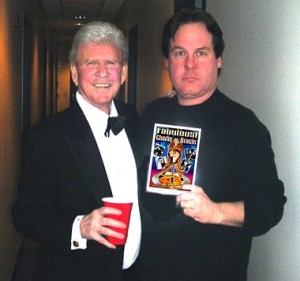
Shawn Swords with singer Bobby Rydell holding Swords' last release, Charlie Gracie: Fabulous.

Shawn Swords with singer Bobby Rydell holding Swords' last release, Charlie Gracie: Fabulous.

A couple of years ago, a young Irish-American filmmaker named Shawn Swords from Glenolden trailed a popular Irish-American band around and produced a critically acclaimed documentary called, “Blackthorn, It’s an Irish Thing,” which appeared on UPN.

Last year, Swords completed a documentary of Philly rock and roll pioneer Charlie Gracie, whose “Butterfly” knocked Elvis from the top of the charts in 1957 and sold more than 3 million copies worldwide—without benefit of the internet. “Fabulous” was picked up for World Wide Distribution by Oldies/Gotham/Alpha distribution and was a huge hit two summers ago during a PBS fundraiser.

This month, Swords, who went to film school at 32 and now steers Character Driven Productions (Conrad Zimmer, Blake Wilcox, Paul Russo), debuts a brand new documentary, this one on the American Bandstand Philly years with Dick Clark, on September 27 at the Wildwood By the Sea Film Festival at the Wildwood Convention Center.

But if you think “Wages of Spin” is a feel-good trip down memory lane with Bobbie Rydell, Chubby Checker, Frankie Avalon, Jerry Blavat, Justine, Eddie, Arlene and the other and all the other Bandstand dance regulars, you’re in for a shock. The same one I got when I caught Swords’ trailer on YouTube.

It opens with a black screen, like a chalkboard, on which is scrawled the word, “Payola,” with a definition for those who have no memory of the ‘50s music scandal, the origin of the term “pay to play”: “A secret or private payment in return for the promotion of a product, service etc, through the abuse of one’s position, influence or facilities.” Then you hear the voice of Artie Singer, who wrote the popular Danny and the Juniors’ hit, “At the Hop.”

“Where do you think Dick Clark made all his money? Initially where do you think he made it? From guys like me.”

Singer is looking at the off-screen interviewer. He raises his arms in the classic “but wait” move. “Granted,” he continues, “I can’t say anything derogatory. I can’t say anything bad because I owe my success in the record phase of it to Dick Clark.”

He had to “love the guy,” Singer tells the off-camera Swords, because without him, “there would have been No ‘At the Hop,’ no Danny and the Juniors.”

And by “without him,” Singer says, he means without Clark taking 50% of the publishing rights to the song. If the record producer hadn’t given it to Clark (as a gift, he later said, because they were friends) there’s a good chance that “At the Hop” would have gotten no play on what was the most popular teen program in the ‘50s.

Oh, say it ain’t so! America’s oldest teenager, the fresh-faced host who squeezed between two Philly teens every day from 3 to 4:30 PM to introduce the latest hit record or musical heartthrob, the guy who’s been counting that ball down on Times Square every New Year’s Eve? Dick Clark? Making hay to play?

To hear Swords tell it—and he’s talked to the players and read the transcripts—it was big time. He first came across the story when his friend, Paul Moore (formerly of Blackthorn, now of Paddy’s Well) asked if he was familiar with the story of Charlie Gracie. “Charlie was a talented musician, but he wound up being blacklisted back in the ‘50s, says Swords. “Charlie has a number one hit, at 19 years old, went on tour for a year, appeared on he Ed Sullivan Show, with [teen rock show DeeJay] Allan Freed, Dick Clark, then comes back home to Philadelphia and he’s not getting royalties. The record sold 3 million worldwide.”

Gracie discovered that Dick Clark owned 25% of “Butterfly.” Gracie sued the record producer and got $50,000, but that was the end of his career. Though he signed with a new label, he couldn’t get airplay. “He knocked Elvis off the charts and he couldn’t get airplay,” Swords says.

Digging deeper, Swords discovered that according to Congress, Clark was given somewhere in the neighborhood of 160 copyrights with the implied guarantee that those songs would air on Bandstand. But during the payola hearings before congress in 1960, Clark denied taking payola to play songs. In a New York Times article written at the time, Clark is quoted as telling the House Special Subcommittee on Legislative Oversight, “I have not done anything that I think I should be ashamed of or that is illegal or immoral, and I hope to eventually convince you of this. I believe in my heart that I have never taken payola.”

And in fact, says Swords, even if songwriters or producers never handed a fistful of cash over to Clark, he got paid. Instead, as was the case with “At The Hop,” he was given copyrights to songs, which meant that he benefited financially from their rise to the top of the charts. The New York Times report said that the Committee produced figures showing that over a three-year period, Clark had received $167,750 in salary and $409,020 in increased stock values, on investments of $53,773. That led one legislator to remark that if Clark hadn’t gotten payola, he’d certainly gotten plenty of “royola,” referring to royalties.

But by the time of he hearings, Swords says, Clark had divested himself of many of his holdings, including as many as 30 various businesses related to the record industry (as documented by Congress), so that the committee gave him nothing more than a slap on the wrist. Other DeeJays weren’t so lucky. Allan Freed lost his job and though he received only a small fine, his career was over; he died penniless at 43.

“Clark took the money from the divestiture and started Dick Clark Productions which became one of the most profitable independent TV production companies of all time,” says Swords.

While it took the filmmaker some time to uncover this chapter of the history of rock and roll, it really wasn’t hidden all that well. In fact, one of the producers of the film is John A. Jackson, author of the book that laid out many of the details, “American Bandstand: Dick Clark and the Making of a Rock ‘n Roll Empire.”

“John wrote a fantastic book, one of my favorite books, but it barely showed up on the radar,” says Swords. “Why isn’t more of this public knowledge?” One reason, he suspects, is that it’s hard to get corroborating evidence from some of the singing stars of the era, with whom Clark still has dealings. “Some of them are still getting checks from him for appearing in Branson [the Missouri musical destination where yesteryear’s idols play to packed houses of nostalgic audiences],” says Swords. Nevertheless, Swords has at least 7 interviews on tape, like Singer’s, detailing what went on, but that’s out of about five dozen interviews. “They would tell me what happened, but a lot of them just stopped talking when the camera was rolling,” he says.

While Swords admits he likes digging into “abuses of power,” he doesn’t want to be typecast as a muckraking filmmaker. As a boy, he attended Girard College where he watched “the epic films” on old projectors “because they could get better rates on the old films,” he recalls. “We wouldn’t see the first-run films like the karate movies everybody loved back then. But I loved those old films, great English pictures on Cromwell and Henry the Eight, the David Lean movies, like ‘Bridge Over the River Kwai,’ ‘Lawrence of Arabia,’ and ‘Dr. Zhivago.’”

“I like the art films too, and have a real affinity for John Ford films, which are very melodic and emotionally impacting. I love the great action films and the film noirs, where there’s a great story.”

It was those kind of narrative films Swords planned to make when he went to the New York at 32, after getting out of the Navy, working two jobs to put himself though New York Film Institute. In fact, he’s working on a new screenplay now. “I worked most of it out during the two hour walks I take every day,” he says. “The whole plot, twists and everything. If I could sit and write all the time I’d be pretty good. I can really kick them out. Right now I’m tightening up one of my better screenplays and working on a couple of pilots, including one that’s a black comedy.”

He has six finished screenplays that he’s going to shop in LA by the end of the year. “I’ have had two offers for talent representation,” he says.

And when we talked a few weeks ago, Swords was still putting the finishing touches on “Wages of Spin,” which meant weeks of “being nocturnal,” while readying the documentary for The Wildwood By the Sea Film Festival, which he co-founded with his executive producer Paul Russo. “I have black circles under my eyes,” he admitted.

Don’t let it be for naught. Check out “Wages of Spin,” Saturday, September 27, at the Wildwood by the Sea Film Festival. If you can’t make it to the shore, there will be four screenings of “The Wages of Spin” at The Elaine C. Levitt Auditorium, 401 S. Broad Street (Avenue of The Arts) at: Noon, 2 PM, 4 PM and 6 PM. on Saturday, October 11. Admission is $10 at the soor. Artists featured in the documentary will be present at screenings.

“The Wages of Spin” will run continuously from 5 P.M until closing on several screens at Rembrandt’s Bar and Restaurant, 741 N. 23rd Street in Center City, on October 18 with several music and entertainment industry notables in attendance.?Tickets are $30 and are available at the door.

Columns, How to Be Irish in Philly

How to Be Irish in Philly This Week

Thinking about heading up to Bethlehem for the annual Celtic Classic this weekend? Want a lift? The University of Pennsylvania Irish Club is offering a ride on Saturday morning, September 27, from 37th and Spruce on the Penn campus. The rented school bus leaves at 10, so get there around 9:45 AM. Anticipated return time is 6 PM. Cost is only $15.

It’s worth it. The beautiful city of Bethlehem hosts this convention of Celts of every stripe each fall, with a plethora of pipe bands, sheep dogs, Gaelic athletes, food, and traditional and rock music to keep you entertained for days.

If that doesn’t float your boat, there are plenty of other things that will. Villanova University has started a three-week run of Eugene O’Neill’s “Long Day’s Journey into Night,” about the dissolution of an Irish-American family and you can see starting this weekend.

On Saturday and Sunday, the Bucks County Visitors Center is hosting its second annual Ancestry Fair where you can learn about everything from searching your family history, old photo restoration, and scrapbooking. And it’s free.

On Saturday night, the band that the Fleadh built is coming to the Irish Center in Mount Airy. Beoga (the name is Irish for lively) is a five-piece band from County Antrim that met at a session at the All-Ireland Fleadh (music competition) in August 2002. In 2005, Beoga was nominated by Irish Music Magazine for the best traditional newcomers’ award. This promises to be one exciting evening of music. Prepare to clap and tap.

Also on Saturday, local Irish-American filmmaker Shawn Swords debuts his documentary on the Philadelphia music scene of the ‘50s, revolving around American Bandstand and the payola scandal, at the Wildwood By the Sea Film Fest. See our story for details.

On Sunday, you can go a little British with Rachel Unthank & The Winterset with Devon Sproule at the World Café Live. This wonderful all-girl group “with Geordie accents,” had their album, The Bairns, described thus in The Observer: “a bewitching, dream-like, down-to-earth masterpiece.” We’re sold. We’d go just for the Geordie accents.

Physicist-turned-poet (or is it the other way around?) Iggy McGovern will be reading his work at Villanova on Monday, September 30, at the St. Augustine Center at 4:30. Mcgovern is associate professor of physics at Trinity College in Dublin. His poetry relies on both humor and rhyme and he was, among other honors, the winner of the 2004 RTE Rattlebag Poetry Slam.

On Wednesday October 1, starting at 7:30 PM, you can see and hear Kevin Burke and Cal Scott (the stunning blend of Sligo fiddle and guitar) at the Moorestown Community Center in Moorestown, NJ. Burke is a graduate of the much acclaimed Bothy Band and Scott is a multiple-threat instrumentalist, composer, and arranger. They’ve played this area many times and to packed houses.

And we would be remiss if we didn’t mention Octoberfest at McGillins that starts this week. Yes, lots of German brews and food at the oldest Irish pub in the city, on Drury Street. You might find yourself rubbing shoulders with lots of tourists who read Gourmet Magazine’s list of 14 Coolest Bars in the US. Gourmet editors called McGillins one of their favorites, noting it “has plenty of old-time character.” It should. It was founded in 1860 and its current owners have operated it for the last 50 years. Congrats to our friends at McGillins, who have been generous with their recipes, sharing them with us for the last nearly four years.

Our calendar, which has been busy trying to figure out how it can qualify for government bailout money, has all the inside information on these events and more. Check it out.

Columns, How to Be Irish in Philly

How to Be Irish In Philly This Week

You could be having this much fun. From last year's Wildwood weekend.

You could be having this much fun. From last year's Wildwood weekend.

I hope very few people are reading this because they’re making their annual trek to North Wildwood for the Cape May AOH’s annual Irish Fall Festival, with Paddy’s Well, Searson, Derek Warfield and the Wolfetones, the Bogside Rogues, the Sean Fleming Band and many other terrific bands rocking the Music Tent by the sea.

I hope you’re pub-hopping, practicing for the Tink Haldeman 5K Run/Walk on Saturday morning (sign up at the AOH Tent between 1st and 2nd Streets on Olde New Jersey Avenue to benefit Shriners’ Hospital for Children), or spending what little money you have left after this week’s momentous financial crisis on some funny t-shirts or bumper stickers available from the hundreds of vendors (because you just gotta laugh, it’s the Irish way). Proceeds from this annual festival go to AOH charities, which number many.

Two bits of bad news for long-time festival-goers: No Blackthorn this year, and no Keenan’s Pub.

We spoke to several members of the popular Irish rock group that has been holding its Irish weekend at the shore as long as the festival has been around. They told us that the band had some gigs lined up for the summer, including Irish Weekend, at a venue in North Wildwood, but decided not to play when a bit of a political “quandry” seemed to be shaping up after word got about over their potential return to that end of the Cape May Peninsula. For the past few years, Blackthorn has operated from the Borgata in Wildwood. No word on whether the tradition will pick up again next year, but we hope so.

And Keenan’s, the block-long North Wildwood pub where you could always wet your whistle and attend Mass (though not at the same time), was closed for 55 days for underage drinking violations, according to the Philadelphia Daily News, though it sounds like the family-owned bar got snookered by some legit-looking fake IDs.

If you’re sticking closer to home, you still have lots of choices. The incredible group, Solas, is appearing Sunday at the World Café Live. They’re one of our favorites.

If you want to get some great tips on tracing your family history (where did those Murphys come from anyhow?), the Genealogical Society of Pennsylvania and the Church of Jesus Christ of Latter-day Saints is sponsoring a day-long conference called, “Genealogy: The Basics and Beyond.” There are more than 20 sessions to chose from and more than a dozen exhibitors to visit. There’s a $10 fee and it includes a boxed lunch! It’s happening on Saturday, September 20, at the Valley Forge Family History Center in Broomall.

On Tuesday, you can meet Ireland’s Consul General Niall Burgess up close and personal at the September networking happy hour sponsored by the Irish American Business Chamber and Network, held on The Moshulu (sailing ship turned restaurant) on Penns Landing. You need to RSVP, so check the calendar for details.

After rubbing elbows with the Irish consul, head over to Villanova University’s Vasey Theatre for the opening performance of Eugene O’Neill’s “Long Day’s Journey Into Night,” the Pultizer Prize-winning play that chronicles the unraveling of a tight-knit Irish-American family. A laugh riot it is not (though there is some humor!), but it’s truly an unforgettable story. My favorite quote from the play: “There is no present or future, only the past, happening over and over again, now.” Sadly, true. It’s always been my contention that it’s important to not make the same mistakes over and over again when there are so many new mistakes to be made.

That same evening (lots going on for a Tuesday), you can hear Julie Fowlis singing Gaelic songs of Scotland’s Hebrides at The Grand in Wilmington, or, if you’re in the Quakertown area, attend the CD release party for the Canadian all-girl Irish band, Searson, fresh from their gig in North Wildwood.

On Thursday, it’s Tool Time at McGillin’s Olde Ale House in Center City: TV host and writer Joe L’Erario, host of TV’s Furniture on the Mend, Furniture to Go, and Men in Toolbelts, will be signing his new book, Wood Finishing. You can see more of his work upstairs at McGillin’s too—L’Erario refinished a 20-foot antique oak bar for the bar’s newly refurbished second floor.

Still reeling from this week’s Wall Street meltdown, our calendar, which will never be able to retire, has all the answers, except for the big philosophical ones, like, “What is the meaning of life?” Pay it a visit.

Columns, How to Be Irish in Philly

How To Be Irish in Philly This Week

You may not realize it, but September is the biggest Irish month in the Philly region after March. You could call it Irish Festival Month.

For example, you can immerse yourself in traditional Irish music this weekend as the 34th annual Philadelphia Ceili Group festival concludes on Saturday night or you can  head up to Gloucester, NJ, for the yearly Shamrock Festival (Black 47 is on the bill—this New York-based band has a huge fan base here too). Closer to home: The BoothandLowe~Stock Festival will be held at the Knights of Columbus De La Salle division in Springfield, Delaware County, to raise money for MusicWorks, an organization that provides music therapy sessions for children and young adults with autism and special needs. Among the groups on hand: the King Brothers (they’re great, even though they’re not really brothers),  Scanlin and O’Leary, and John Lee. The Festival runs from noon till 6:30, then an hour later, Blackthorn takes the stage for another MusicWorks fundraiser.

Or maybe you’d rather watch some athletic women bend it like Beckham. The US National Women’s Soccer Team is taking on the Irish women’s team Saturday night at the Linc, home of the Eagles.

Wow – way too many choices. Lucky for me I have a broken leg. I can’t go to anything. There’s something to be said for having no choice.

On Monday, September 15, you can do a good deed while getting in a round of golf. That’s the date of the third annual Ciara Kelly Higgins for CP Golf, Dinner and Auction at the Plymouth Country Club in Norristown. Five-year-old Ciara was born prematurely at 26 weeks and has Cerebral Palsy (CP) with Spastic Displasia in both legs, requiring years of physical therapy and medical treatment.
This annual fundraiser will help her parents defray some of their costs. There are a couple of tee times and a dinner later, even for nongolfers, and the local group, Paddy’s Well, will play. There will also be both as silent and live auction.

That evening, the High Kings of Dublin are peforming at the Perelman Theater in Philadelphia. You may have seen them on one of their PBS specials: four good-looking Irishmen who play instruments and have fantastic singing voices. As a bit of a music snob, I didn’t want to like them but I did.

Then you’ll need to get ready for the Cape May AOH’s Irish Weekend in North Wildwood, starting on September 18, where you can sample every variation of Irish music known to man, including Paddy’s Well (check out their new CD, First Friday), Canada’s Searson, crowd-pleasers Derek Warfield and the Wolfetones, as well perennial favorites, The Bogside Rogues, The Sean Fleming Band, The Glensiders, The Broken Shillelaghs, and The Highland Rovers. The weekend kicks off with some Irish boxing on Thursday night, then there’s nonstop music, killer food, vendors hawking everything from clever t-shirts and silly shamrock deely bobbers to pretty jewelry and crafts.

If you’re in Philly on Thursday, you can catch Gaelic Storm at World Cafe Live. It’s been 10 years since they played for our poor doomed people in steerage in that great scene from the movie, “Titantic.”They can still make a bad time seem good.

A week later, head up to Bethlehem for the 2008 Celtic Classic where you can listen to even more music, from pipe bands to Celtic rock, or you can watch grown men toss telephone polls (a Celtic sport known as the caber toss) or beautiful dogs that are too smart for their own good herd sheep.