All Posts By

Jeff Meade

News

Help the Hibernians Brighten Up the Holiday for People in Need

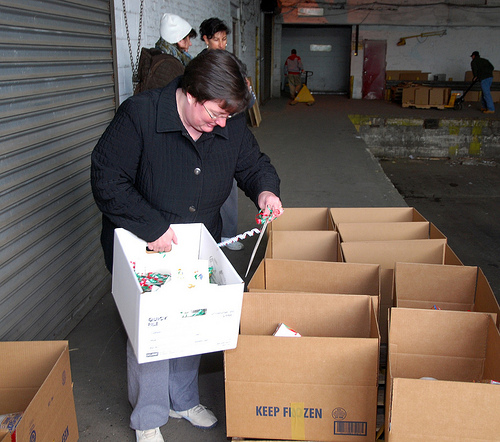
Packing the boxes last year.

Packing the boxes last year.

The good people of the Hibernian Hunger Project don’t know when you’re sleeping. They don’t know if you’re awake. The only thing they know for sure is that many of you are struggling to make it in a depressed economy. And while they can’t turn the economy around, the one thing they can do is help you have a merrier Christmas.

Early in the morning of Saturday, December 17, organizer Bob Gessler will gather with volunteers at Shamrock Food Distributors on Fraley Street in Frankford to put the finishing touches on large boxes containing the fixings for a generous Christmas dinner—turkey, stuffing, veggies, bread, pie and even some cheery decorations. After that, they’ll load the boxes into cars and vans, and fan out throughout the city to deliver the boxes to dozens of needy families.

Last year, the Hibernians brightened up the holiday for about 70 families; this year, organizer Bob Gessler hopes to at least double last year’s total.

“That’s the number we anticipate, but quite frankly, if we wind up with 200 names, we’ll try to get that done,” he said.

As bad as the local economy was last year, it’s not much improved this year—it could even be a bit worse. Gessler knows people are hurting, although he and others who are working on this project often don’t have a line on exactly who needs help. Just based on personal experience, Gessler knows that many in the Irish and Irish-American community are reluctant to make their need known, so the folks behind the project have cast a wide net, looking for information on anyone who needs a bit of help come Christmas day.

“If you know a family in need, please let us know,” Gessler said. “A lot of families slip through the cracks of other programs. We’re looking to help everybody, regardless of race, color, creed … none of that matters. We just want to help people in need.”

Want to help? There are three ways:

  • First, help pack the boxes.
  • Second, drive boxes to the homes of the needy
  • Third, let the Hibernian Christmas crew know of families in need.

Communicate directly with Bob Gessler at gesslervs@comcast.net.

Joining the Hibernian Christmas effort will make many Christmases bright—including yours.

News

Conshy Parade is Looking for Next Grand Marshal

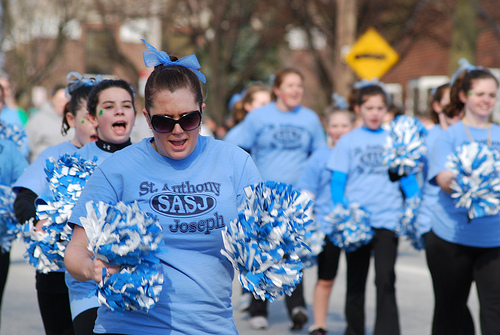
Spreading good cheer down Fayette Street.

Spreading good cheer down Fayette Street.

Yes, St. Patrick’s Day 2012 is still months away. If you’re like the rest of us, you’ve only just begun to think about Christmas.

The same cannot be said for the organizers of the local St. Patrick’s Day parades, who are already thinking well ahead … including the members of the Ancient Order of Hibernians Division 1 who stage the big Montgomery County parade in Conshohocken, set for March 10.

Based in Swedesburg, the division is already searching for someone special to lead the parade. What’s more, if you know someone who’d make a great grand marshal, better let the division know soon. The deadline for nominations is December 9.

Here are the rules, according to parade committee spokesman Pete Hand. The nominee must:

  • Live in Montgomery County
  • Have contributed to the local Irish community, or the broader community
  • Be of Irish descent

“We’re looking for someone who’s really involved in the community, and in local organizations like the Ancient Order of Hibernians, CYO, the church, the fire company, somebody who actively promotes Irish culture … someone outgoing like that,” says Hand.

Whoever wins will have big shoes to fill. Two past grand marshals, former Conshohocken police chief Jim Dougherty and Verne T. Leedom, former drum major of Irish Thunder Pipes & Drums, passed away this past year. They pretty much set the standard.

So far, the division has received a few nominees, says Hand (himself a former grand marshal). He can’t say whose hats are in the ring. “I don’t know who they are … the nominations come in sealed envelopes.”

If you want to nominate someone, send a letter to:

St. Patrick’s Parade Committee
“Attention Grand Marshal”
342 Jefferson St.
Swedesburg, Pa 19405

The next grand marshal will be named on December 17, the division’s Member Appreciation Day. The Grand Marshal’s Ball will be held March 3 at the Jeffersonville Golf Club Banquet Hall.

Music

A Visit From an Old Friend

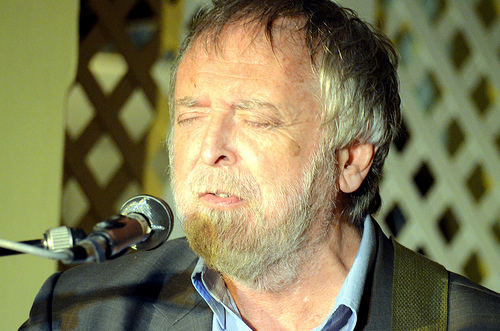
Mick Moloney holds forth.

Mick Moloney holds forth.

A visit from an old friend brought out Irish traditional music fans from all over the place Saturday night.

Mick Moloney, joined by the energetic fiddler Athena Tergis and the superb box player Billy McComiskey, played to a huge crowd in the Philadelphia Irish Center’s Fireside Room. They were the guests of the Philadelphia Ceili Group.

Mick himself had spent a good part of the afternoon holding forth on the Music of the West, a major theme for the Ceili Group this year and into the next. The concert was just a continuation of that theme.

We’ve a few photos from that night, and a neat little video.

Arts

A Director’s View of “Woman and Scarecrow”

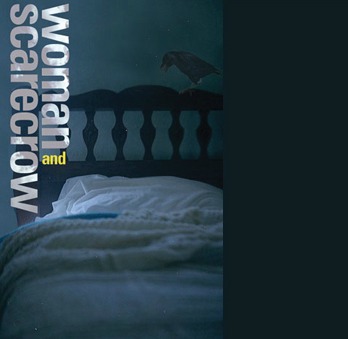
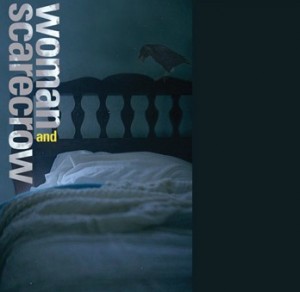
woman and scarecrowA woman lies on her deathbed, time ticking away, the end imminent. As she comes face to face with her mortality, she nurses regrets, mourns missed opportunities and contemplates the nature of her complicated marriage to a unfaithful husband. She is accompanied on her final journey by a friend, unseen to others, who is both comforter and critic.

Like most quick summaries of a complex piece of art, this bit of shorthand doesn’t do justice to Irish playwright Marina Carr’s ultimately redemptive “Woman and Scarecrow,” on tap for Villanova University’s Vasey Theatre November 8 through 20. “Woman and Scarecrow” has been described by reviewers as “spirited,” “biting,” “poetic” and “fierce and funny.”

(Hey, it’s Irish. It’s about death. Of course there are laughs.)

The play is not the first visible evidence of a unique new educational exchange program between Villanova’s well-known Irish Studies department and the Abbey Theatre, the national theatre of Ireland, but it might boast the highest profile. Described as “an historic intellectual/artistic partnership,” the new exchange program will expose Villanova students and outside audiences to renowned Irish actors, directors and writers; at the same time, Villanova students will travel to Dublin to study and work with the Abbey Theatre.

Directing “Woman and Scarecrow” is actor-friar Father David Cregan, O.S.A., associate professor and chair of the theatre department.

We talked to him about the play and the new relationship with the Abbey Theatre.

Question: Tell me about this play. What is it about to you and why do you like it?

Answer: “Woman and Scarecrow” has all the best qualities of an Irish play. It has a powerful story, it’s written with a kind of poetic prose that is indicative of the Irish dramatic tradition, and it also balances the comic and the tragic elements of the human existence in quite an epic way. That makes it a shining example of Irish theatre. The ability to both laugh and cry and to celebrate and mourn simultaneously—that’s part of the Irish aesthetic in general.

The play was attractive to me because of the epic way in which it deals with the really important questions of life and death. It allows the audience to enjoy a powerful story that simultaneously has a prophetic message about how to live life to its fullest, how to value oneself and how to live in the right relationship with the world. It tells the story through a series of tragedies and triumphs, through a series of failures and accomplishments in the life of Woman. But the play also has a sort of transnational quality in the way that it speaks to the human condition. It’s not only the Irish condition. It allows us to witness the last moments of this woman’s life as she tries to reconcile herself with her choices and deals with the repercussions of her mistakes.

Question: You’re an actor-director, but you’re also a priest. How do you look upon this play from the priest’s perspective?

Answer: It confirms something that both religion and theater share in common. If you’re familiar with the Roman Catholic creed, the line in the creed that really calls out to me is this one: “We believe in the seen and the unseen.” This play, while it tells a very specific story, has a kind of global outreach in the sense that it articulates both the seen and unseen qualities of what it means to be a human being, and it really connects the spiritual and the material in the way that it builds the relationship between Woman and the Scarecrow. The question in the play is, who or what is Scarecrow? Scarecrow appears on the stage for the entire production, and is physically and metaphysically connected with Woman, but she’s another element of her. The other characters in the play, when they come into the room, don’t see or acknowledge that Scarecrow is there. It’s kind of an embodiment of the spiritual component of the human condition. Scarecrow is not just her conscience, not editing or condemning her for a licentious lifestyle, but is pointing out to her that the mistake she made was in not valuing her life in the way that she should have; that her mistakes were that she didn’t treat herself well. [In this way, Scarecrow] helps woman cross from the world of the living into death. Those are the kinds of things they talk about the whole play. The play has an acknowledgement of the ethereal—or as I would describe it, of the spiritual—that definitely connects with my larger worldview of spiritual responsibility.

Question: Did Villanova’s theatre department choose this play, or was it a more collaborative decision with Abbey Theatre? And what role did the Irish Studies department play?

Answer: When the relationship with the Abbey Theatre began to materialize, we started to think of ways of making a connection. “Woman and Scarecrow” was a natural fit for me because my research and my writing is all in the area of contemporary Irish drama. I was interested in the potential and the power of the play. So many of the themes in the play are important Irish themes about returning home, and in particular returning to the West of Ireland and its curative and humane qualities. They speak of homecoming. Homecoming is not just about the connection to place or earth; it’s also a kind of spiritual reckoning.

Question: Marina Carr was a Heimbold professor at Villanova in 2003. Did that have anything to do with the choice of this play?

Answer: We’ve been connected with her work; we’ve produced it before. She was a friend of the department. This particular piece of work in my opinion is a triumph in her writing, a high point in her career, even though it’s a relatively small play.

Question: You’re an Irish fella. What’s appealing to you about doing Irish Theatre.

Answer: What I love about the Irish theatre is its courage, the exploration of deep emotion, and its interest in the journey of the soul and of the mind. This play contains all of that. It’s an actor’s dream come true because of the breadth of its emotional expression, and it’s a director’s dream come true because the script is so beautifully and poetically written. It really exhibits a kind of emotional complexity that is part of Irish artistic expression, a kind of courage to look at the harder, darker things. That’s one of the things I love about Irish plays—it’s the deep feeling at the center of it all.

  • irishphiladelphia.com readers get a 50 percent discount on tickets. Click on the Direct Ticketing Link or call the ticket office at 610-519-7474 and use the code IRISHPHILLY.
Music

Five Questions for Andy Irvine

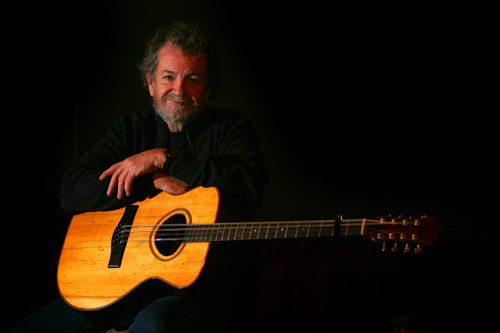
Andy Irvine

Andy Irvine (Photo © Brian Hartigan)

For 45 years, Andy Irvine has been entrancing audiences with his superb voice and deep musicality.

Irvine has managed to take traditional music and turn it into something uniquely his own, while still paying homage to the art form’s origins. He has been in on the ground floor of some memorable ensembles, including Sweeney’s Men, Planxty,  Patrick Street and the sensational Andy Irvine & Dónal Lunny’s Mozaik.

There are still some tickets left to hear him in an intimate house concert October 18 in Center City Philadelphia. If you’re interested, e-mail the Barn Star Concert Series at barnstarconcerts@gmail.com.

As a tune-up to the concert, we asked him five questions about his career, his take on the evolution of Irish music … and what he’d love to try next.

Q. What do you think about the evolution in traditional Irish music? You can still find many, many musicians and bands who hold fast to tradition. You get the sense that, whatever tune the flute player is playing in the session down at the pub, it might not be all that different from how the tune was played in the 18th century. But clearly, for some time there have been non-traditional instruments in the mixI’ve heard trombonesand many ways to express the music that obviously owe a large debt to tradition, but then go off in some completely new and different direction.

A. Well… I guess I’m someone who went “off in a completely new and different direction!” When I started accompanying Irish Traditional song on bouzouki & mandola, the road ahead was pretty open. My feelings, generally, are that immersion in the tradition should lead to playing with good taste. If you trust your sense of taste, you will satisfy yourselfwhich is the primary aimand hopefully others as well.

Crossing “Reuben’s Train” with Romanian riffs underlined for me that people’s music, in Europe anyway, all comes from the same wellhead.

Q. Some people reject that kind of cultural cross-pollination: “An Irish band shouldn’t play a Bruce Springsteen song.” You obviously have an appreciation of other genres. Certainly no one can question your Irish music credentials–you’ve been called a “legend”and yet right from the start you’ve been experimental. Do you regard yourself simply as a musician, and to heck with the labels? Is music just music for you in the end?

A. I have always enjoyed attempting cross pollinationor cross-pollution, as Donal Lunny called the music of Mozaik! Mozaik was my favourite band ever. Crossing “Reuben’s Train” with Romanian riffs underlined for me that people’s music, in Europe anyway, all comes from the same wellhead.

Q. I’ve chatted with other musicians—Eileen Ivers comes to mindwho insist they’d be bored if they always and only played the music the way Michael Coleman played it. Does that describe you? Would you be bored if you always played and sang the same things?

A. I’d be pretty sure that Eileen didn’t phrase it quite like that! (Editor’s note: she didn’t.) There was only one Michael Coleman! On a long tour sometimes a song becomes a chore but after a day off it comes back renewed. Having said that, it’s always a great feeling when you introduce something new.

Q. Can you go too far? Can you tinker too much with traditional Irish music? Have you heard tunes or bands and thought to yourself: That was a bit much? (I’m not asking you to name names.)

A. Yes, I have. Quite often. There’s an awful lot of dreadful music available…!

Q. What haven’t you tried yet musically that you’re still dying to to try?

A. I’d like to get Mozaik back together again. A new album would be a serious challenge! Bruce Molsky is rarely available and I took the step a few months ago of asking Annbjørg Lien if she would play with us when Bruce wasn’t available. Both were receptive to the idea but nothing has happened yet. There are so many musicians I’d like to have in that band! Jackie Molard, Theodosii Spassov, George Galliatsos from Apodomi Compania to name but three.

Music

Órla Fallon: Living the American Dream

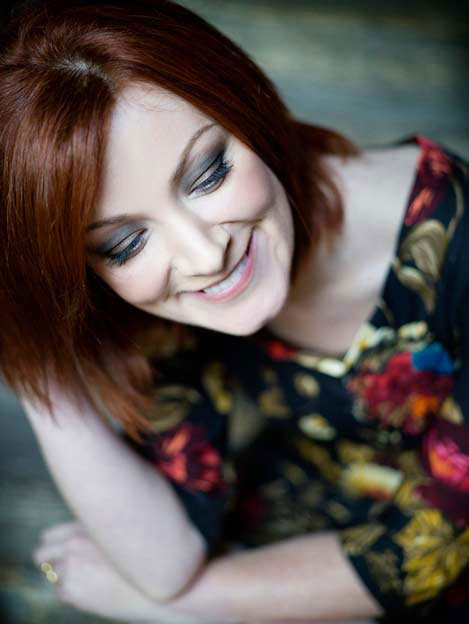
Órla Fallon

Órla Fallon

Órla Fallon can’t remember a time when she didn’t sing.

You’ll remember Fallon as one of the original members of Celtic Woman—she’s the one with the harp and the glorious voice. Like so many exceptional Irish musicians, Fallon grew up surrounded by the tradition.

“I’ve been singing since I was a very small child. I was singing before I could talk,” she says. “My love of music and singing was encouraged from a young age. My mother (Eileen) comes from Kerry, and her parents gave her a deep love of Irish language and folklore. When we were little, we would spend a good deal of time down in Kerry. Many of the songs I sing I learned from my grandmother (Bridget Clifford). I think of singing songs with her in the kitchen then, and singing the same songs now in America. I’ve never known anybody who has such a passion for the old traditional songs. I think she gave me the passion.”

You can hear that passion ringing through in Fallon’s stage shows (she’ll be at Bethlehem Musikfest on Thursday, October 6), her televised concerts, and on her albums, including the most recent, “My Land.”

Maybe Fallon was always going to be a talented singer. For that, she can thank her parents and grandparents. As a player of Celtic harp, she’s doubly gifted. And for that, she can thank the Sisters of St. Joseph of Cluny.

“I was a teenager, 13, when I started,” Fallon says. “I was really lucky. I went to a boarding school in Phoenix Park, Dublin, called Mount Sackville. It has a brilliant harping tradition. My mother was really excited when she heard about it. When I heard (one of) the nuns playing the tunes and found out she was friends with Derek Bell of the Chieftains, I just fell in love with it. If I had not gone there, my life would have been so different.”

With so much talent, it was clear from an early age that Fallon was never going to remain just a farmer’s daughter from Knockananna, County Wicklow.

Early on, she distinguished herself by winning the International Feis Ceoil in Dublin and the International Pan Celtic Competition for singing with harp accompaniment. And in 1996, she performed with the well-known Irish choral group Anuna.

She is, of course, best known as one of the original members of the definitive Irish “girl group,” Celtic Woman, with whom she performed from 2005 through 2008.

Fallon says she could still be with Celtic Woman, but, in that final year, after all the flash, it was time for something new.

“It was great to be part of something as successful as Celtic Woman, but I wanted to be in control of my own destiny,” she says. “It (Celtic Woman) is a big lavish production; I prefer a smaller, earthier production. I don’t believe you need a big massive production to reach out to people. And I can tell stories. I like telling stories. Then it’s really ‘me’ on stage.”

Fallon’s more intimate show these days is an engaging mix of Irish traditional music, mixed in with traditions from other places–including America.

“I like trying American songs. The band I have on tour with me are a very bluegrass-y band. I always call our show ‘a little melting pot.’ There’s a nice variety of songs. It’s nice, because it keeps it fresh. Music is a living thing.”

That she has become so popular in the United States is, for Fallon, the fulfillment of a dream she has entertained from an early age. “Someone once said to me, ‘There’s a big stage waiting for you in America.’ I always dreamed of coming to America and playing songs. I know it sounds cheesy, but I really am living the dream.”

And if you want to see Órla Fallon for free, have we got a contest for you. All you have to do is subscribe to our weekly e-alert known as Mickmail. (Alternatively, if you already subscribe, you can enter by forwarding Mickmail to a friend.) There are two pairs of tickets available, as well as a pretty nice consolation prize: four “My Land” CDs.

We pick the winners on Monday, September 26. So you gotta be quick.

Arts, Dance, Music

A Festival of Videos

Dan Isaacson

Dan Isaacson in concert with his band Simple System.

A lot can happen in three days and nights.

And let’s be honest, we couldn’t be everywhere, my partner Lori Lander Murphy and I.

Or could we …

Looking at the videos we collected at the 2011 Philadelphia Ceili Group Festival, it certainly seems like we must have violated some of the fundamental laws of space and time.

You are traveling through another dimension—a dimension not only of sight and sound but of mind. A journey into a wondrous land whose boundaries are that of imagination. That’s a signpost up ahead… Your next stop: The Twilight Zone!

OK, so maybe it wasn’t as far out as all that.

But we think it was still cool.

You decide:

Here ‘s this year’s video playlist.

Dance, Music

The 2011 Philadelphia Ceili Group Festival in Pictures

Shannon Lambert-Ryan

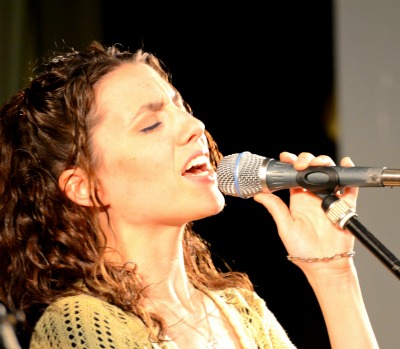
Shannon Lambert-Ryan of Runa, the opening band at the Saturday night concert.

Anna Ryan was up to her elbows in thin reeds, patiently twisting and turning the slender stems into something delicate and uniquely Irish in its symmetry: St. Brigid’s crosses. Now and again, kids would make their way over to the table in the Philadelphia Irish Center’s Barry Room, gracelessly grab reeds like hands full of pickup sticks and, with patient instruction from Ryan, begin to learn how to craft something sacred from nothing more than spaghetti-like strands of dried grass.

Ryan looks forward to the Philadelphia Ceili Group Festival, which celebrates Irish culture through music and dance, of course, but also through the arts, history, genealogy and more.

Ryan has been a fixture at the event for years. “I don’t know how many years it’s been,” she says,” when asked about her ties to the festival. “It’s been over 10 years, anyway.”

For many of the organizers and participants, it’s been at least that long—and often longer.

And yet, it never gets tired. You see a lot of the same faces year after year, but the thing about the Ceili Group festival is this: It’s feels like a kind of Celtic renewal. Fluters and dancers, harpers and artisans flock to the Irish Center every September in the way Monarch butterflies return to Mariposa. Or maybe it’s like a Philadelphia Irish version of Burning Man—except with banjos and hard shoes instead of naked people who paint themselves silver.

Whatever.

We captured the spirit of the thing in photos.

Here ya go.