All Posts By

Jeff Meade

Arts

Definitely Not the Whole Truth

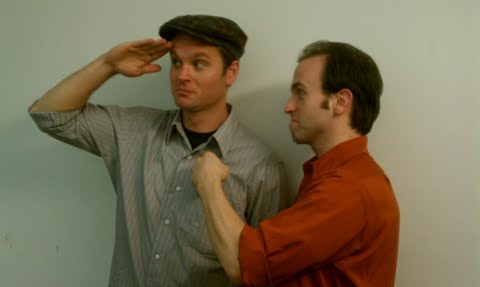
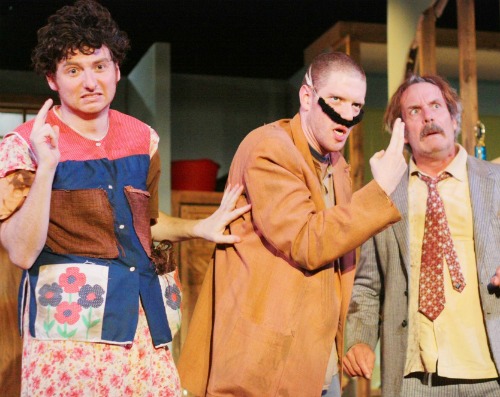
A scene from "The Walworth Farce."

A scene from "The Walworth Farce."

Tom Reing, artistic director of the Inis Nua Theatre Company, recalls the moment when the curtain came down on one of the earliest performances of Enda Walsh’s dark comedy, “The Walworth Farce.” He looked at his four actors and thought to himself, “it looked like they had just run a marathon.”

“The Walworth Farce” is a study in complexity. It is a play within a play in which an Irish father and his two sons, who left Cork for a dismal life in a London council flat, daily re-enact the stories behind that flight … stories that are not all true. This bizarre performance is interrupted by the arrival of a supermarket employee toting a bag of groceries one of the sons left behind at checkout.

To hear Reing tell it, it’s easy to understand why this play exacts such a toll on the actors. Bill Van Horn plays Dinny, the father; the sons are played by Harry Smith as Blake and Jake Blouch as Sean. Hayley is played by Leslie Nevon Holden.

“‘Farce’ is very quick. If it’s slow, the comedy doesn’t work. And you have these eruptions in the play within the play. There’s very high emotion, and very high-tension themes. The actors are running around and moving from room to room to do different scenes. One of the actors (Harry Smith) has to play all three women, and he has conversations with himself.”

Even the set is complex, he says.

“It takes a lot of work to make their flat look decrepit. These guys don’t clean… it’s three men. The set has a working sink and a working refrigerator. It has a tape recorder that they use on stage. There is a wireless signal in it, and it’s connected to the computer that is connected to our light board and sound.”

There are plenty of props, too, courtesy of Reing and a March trip to Dublin. While there, he packed a bag with Tesco (a supermarket chain) bags, spreadable cheddar, Mr. Sheen (a floor and furniture polish), and Pink Wafer biscuits.

Reing regards “Walworth” as a natural for Inis Nua, which presents contemporary works from Ireland, England, Scotland and Wales. The company previously presented Walsh’s harrowing “Bedbound.”

“Enda Walsh is really hot right now,” says Reing. This play seemed like another great example of his work. It happened serendipitously. He (Walsh) was just nominated for a Tony for his stage adaptation of ‘Once.’”

Reing finds the theme of “Walworth” fascinating. We all tell ourselves stories about our lives, but those stories don’t necessarily reflect the whole picture. “You embellish,” he says. “You tell the story so it’s favorable to yourself.”

So maybe it isn’t the truth, the whole truth, and nothing but the truth. The complete, unvarnished truth about ourselves might just be too hard to live with. One line from the play sums it up best for Reing:

“‘It’s my truth, and that’s all that matters; it’s what you do to keep going on.”

The play runs through May 27 at First Baptist Church, 1636 Sansom St., in Philadelphia.

Tickets here:
http://inisnuatheatre.ticketleap.com/walworth-farce/#view=calendar
Dance

The Last Dance

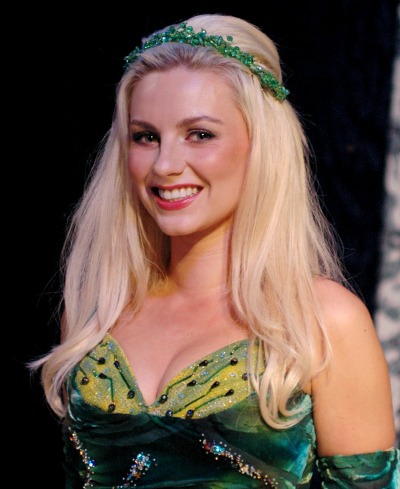
Caterina Coyne

Caterina Coyne

Can it really be so? Will the toe-tapping spectacle that is Riverdance never again play in a Philadelphia theatre?

True. And Philadelphia isn’t alone. When the lights go out at the Wolftrap Center outside Washington, D.C., the North American show’s last stop, on June 17, Riverdance will never again tour the United States.

For Caterina Coyne, the female lead dancer of the show’s Shannon company which will perform Friday through Sunday at the Merriam Theatre, curtain call on that final Wolftrap show is likely to be a bittersweet moment.

“I’ve been doing Riverdance for eight years, five of them in North America,” says the London-born Coyne, who moved with her family to Galway when she was a small child. “I suppose I spend so much time over here, I see North America as being as much my home as Ireland. It’ll be very sad not to be touring here anymore. United States audiences are probably the best anywhere. They love the show, and they are really vocal about it. You can see how much they enjoy it. Throughout the rest of the world, they are more reserved.”

This final North American tour began in Dallas in February. The troupe sets a grueling pace, performing eight shows a week, on average. (They get Mondays off.)

Coyne, 29, has been dancing since age 4, dancing competitively and racking up prizes as she went along. When Riverdance first made a big splash, back in February of 1995, she was still in high school. Coyne loved Irish dance as it was, but Riverdance was another thing entirely.

“I suppose you can say that before Riverdance, the pinnacle of Irish dancing was to be world champion, or top 10 in the world. But then Riverdance came about, and the show gave Irish dancers an opportunity to become professionals. It’s done a lot for Irish dancing.

“I loved dancing. It’s my first love, really. I remember watching it (the show), and seeing the line of dancers. I just wanted to be in that show, and thats all I wanted to do.”

After Coyne left school, she had an opportunity to audition for the show. It wasn’t long before she got the news: she was in. “I waited for a position to open for me, and then, I got the call. I was over the moon. I’ve been touring ever since.”

You can see Riverdance as it passed through Philly for the last time. For details, visit the box office website.

Music, People

Five Questions For WRTI’s Maureen Malloy

Maureen Malloy

Maureen Malloy (Photo copyright 2011 David Hinton Photography)

When Maureen Malloy was a kid growing up in East Falls and attending Central, WPEN was on all the time, which meant countless airings of “Fridays With Frank” and “Sundays With Sinatra,” along with the music of the big bands, and standards of the 1940s, ‘50s and ‘60s. So you might say she had a head start on what would ultimately become her job and her passion: jazz program director and on-air personality at WRTI, Temple’s hybrid classical-jazz station.

Malloy (family roots: Mayo) started hosting jazz shows at the station in 1999, when she was still a student, and she was hooked from the start. She found that she was already well-versed in the Great American Songbook, so it really wasn’t a stretch at all.

We caught up with Malloy this week, in the depths of a pledge drive. Every time we tuned in, it seemed like she was on the air, so we’re grateful for her time.

Here’s what she had to say about her life, her career on radio, and her love of jazz.

Q. Who were your mentors? I assume the great Bob Perkins is one of them. How did they take to you? What did they teach you?

A. Of course B.P. is my mentor! He always would invite the students at WRTI to sit in during his air shifts. Bob is so easy to learn from, because he was able to meet and host for so many of the jazz greats. He just tells me stories about them, and they are good stories, so they stick. He is also a genuine person. When you meet him, it dispels the misconception that jazz deejays always try to act “cool.” Being knowledgeable is cool.

I also must mention Tony Harris and Andre Gardner from WMGK. I worked there a few years back, and those guys taught me so much about the radio industry. Their knowledge of music is borderline ridiculous.

Q. There are so many different jazz genres. Do you have a favorite, and if so, why?

A. When it comes to jazz, it is so hard for me to pick a favorite anything! Being a programmer, I am always more concerned with what the listeners want to hear. If I listed my favorite piece/artist from every genre, you would run of space on this page. I can tell you that my favorite standard is “It’s Only A Paper Moon.” I’m not sure why … I just always like it. I am also a huge sucker for big bands. It doesn’t matter what they are playing. Whatever it is, I’ll listen.

Q. You’ve done many different things in broadcast, but let’s talk about WRTI. What’s special about ‘RTI to you? What do you love about going into the studio?

A. Every so often I will pull a vintage recording out of the library that I know has not been played in a long while. Halfway through the piece of music, the phone will ring, and it might be a listener who is extremely excited because they haven’t heard that tune in 20-plus years. You must understand, a large percentage of our audience are true jazz-heads, so a call like that means that I am doing my job well.

Now, take that same piece of music, but this time the phone call is a listener telling you about an important moment of their life for which that song was the soundtrack. We are very connected with our listeners at WRTI because there aren’t too many of us around with such a huge passion for this art form.

Q. And as a follow-up … if you had a desert island disk, what’s the one tune that would have to be on it, the one you just couldn’t live without? Or maybe it would be easier for you to answer: which record?

A. The one tune I would need to have on that island disc (other than the one I have already named) is Coltrane’s “Equinox.”

Q. Are you a musician? Do you have a musical background?

A. I played piano as a kid. Like many kids, I decided to quit once I entered the teenage years. I wanted to play basketball with my friends. Then, I topped out a 5 foot 6 inches, so the basketball career went right down the drain. I should’ve stuck with the piano!

Arts

Philadelphia, Here They Come

Leaving Ireland, with regrets.

Leaving Ireland, with regrets.

Philadelphia is already blessed with one theatre company, Inis Nua, dedicated to presenting Irish and Celtic works. Perhaps as proof that you can never have too much of a good thing, we now have another: Irish Heritage Theatre, which presents its first play, Brian Friel’s well-traveled (but well-loved) “Philadelphia, Here I Come!,” May 5-May 20 in Walnut Street Theatre’s cozy Studio 5.

Of course, some people may ask: Do we really need two companies? The answer, from actress and Irish Heritage Theatre spokesperson Kirsten Quinn, is an unequivocal “yes.” The reason? Each company takes a different approach to Irish theatre.

“Inis Nua does contemporary pieces, but we try to stick to the classics,” Quinn explains. “We’re interested in presenting classical Irish plays. This play we’re doing now is as recent as we will get. It was written it the 1960s. We probably won’t go further forward.”

Quinn also points out that Tom Reing, artistic director of Inis Nua Theatre, is an honorary IHT board member.

The Irish Heritage Theatre has been a long time coming. Founding member and artistic director John Gallagher came up with the idea for the company about a year and a half ago, Quinn says. Other Philly theatre people quickly came on board.

“John had worked for the Irish Repertory Company here in Philadelphia. (The Rep ceased operations in 2006.) John really felt like he wanted to continue that (the Rep’s work), but to bring the focus on looking at Irish heritage, and what that means. We want to introduce younger audience members to these plays, and reintroduce older audience members to plays they haven’t seen them for a while. Since there is no other company in the vicinity doing this, we really felt that there was a gap to be filled.”

After Gallagher came up with the idea, planning began, and non-profit status was secured. One of the biggest challenges, Quinn says, was finding a theatre space IHT could afford. Walnut Street Theatre’s Studio 5 proved to be ideal.

“There’re very few spaces in Philadelphia for theatre, believe it or not. The Walnut is subsidized, so they don’t have to worry as much about the overhead, and they can rent the space out to companies for less than other buildings in the city, which is great. They’re really supporting small local theater doing that.”

Evidently not content merely to launch a new company, IHT decided to debut with “Philadelphia, Here I Come!,” a particularly ambitious work, featuring 14 actors.

Friel’s landmark tragicomedy was first performed in Dublin’s Gaiety Theatre in 1964, and it’s been a popular offering ever since. “Philadelphia, Here I Come!” follows the last moments of protagonist Gareth (Gar) O’Donnell in Ireland—specifically the fictional village of Ballybeg in Donegal—before he departs for America. Much of the action focuses on the relationship between Gar and his father, who evidently have spent a lifetime together without connecting emotionally—even though it’s clear they love each other. What we’ve got here is a failure to communicate.

Quinn plays the part of Gar’s one-time girlfriend Kate Doogan.

“The play is a lot of fun,” Quinn says. “The are comic moments to it, but also sad ones. It has very rich characters. There are so many characters, and yet they’re still very well constructed.”

“Philadelphia, Here I Come!” is the first of what the company hopes will be two plays produced this year. Two seems like a nice round number for future years, as well, says Quinn. From this point forward, expect to see productions drawing on the works of Yeats, Casey, Synge, and more of the classical Irish or Irish-American dramatists.

For now, though, Quinn relishes the launch of a grand new theatre company and the debut of its first play.

“For me, it’s huge. We’ve been in the works for such a long time, so it’s exciting to get ready to move into the space, and watch all these actors work, and see this thing coming to life. We’ve certainly undergone a lot of changes, and we’ve hit road blocks, but we just kept moving. It is incredibly gratifying, it really is.”

Sports

A Knockout Fund-Raiser for the Young Irelands

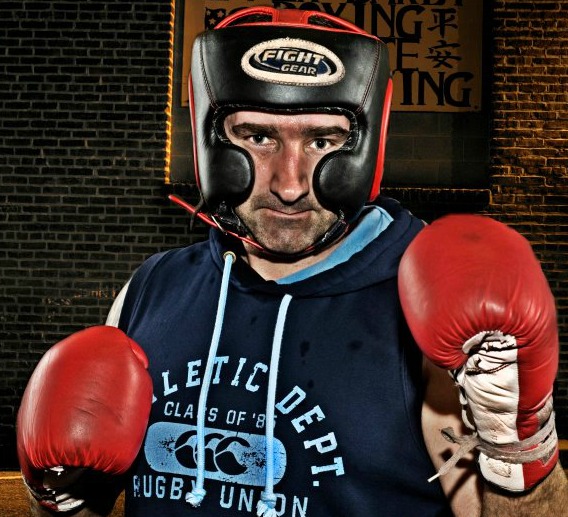
One of the contenders: Martin “Slieveboy Savage” McKernan

One of the contenders: Martin “Slieveboy Savage” McKernan

The gentlemen of the Young Irelands Gaelic Football Club were looking for a new kind of fund-raiser, not just another beef and beer or night at the races. They decided to think outside the box. They wound up in the ring.

“Fight Night” at the Philadelphia Irish Center is the result of their brainstorming and, if recent ticket sales are any indication, it’s going to be a knockout.

Twelve fights are on the card for the event, which takes place Saturday, April 28, starting at 7 p.m.

Each one should be a bruising affair, says the Young Irelands’ Declan Gormley, but local boxing aficionados are looking with particular interest at two matchups: Chris Flanagan against Dennis Friel, and Paul Welsh versus Paudraig McCaffery.

There’s been “a lot of buzz and talk around town about it (fight night),” says Gormley. “We are hoping for a great night. Fight nights being so popular as a fund-raiser in Ireland at the moment, we thought it would be a perfect opportunity to have one here.”

Though the fights are sponsored by a local Irish organization, Gormley expects the fights to appeal to a broader audience. “We will most definitely be drawing a good crowd outside the Irish community, with some popular American bartenders on the cards.”

Here’s the entire rundown:

1. Sean O’Neil vs. Gary McDonald
2. Pat Petit vs. Kevin Trainor
3. Ramie Conlan vs. Eddie Davenport
4. Mike Kavanagh vs. Martin Curran (kickboxing)
5. Adrian Mark vs. Martin McKernan
6. Mixed martial arts or women’s boxing
7. Dean Farrell vs. Raymond Coleman
8. Seamus Sweeney vs. Barry Hassan
9. Damien Butler vs. Chuck Cawley
10. Brian Mullen vs. Dan Schaffer
11. Chris Flanagan vs. Dennis Friel
12. Paul Welsh vs. Paudraig McCaffery

As of  Thursday, the club has sold more than 300 tickets. This week, as the fights get closer, Gormley is confident they’ll sell “a good few more.” Tickets cost $40. The price includes transportation from Upper Darby and Center City to the event and back, as well as admission and food. For details, email: deckygormley@gmail.c​om or x2express@hotmail.com.

Food & Drink, People

Smells Like Victory

Deborah Streeter-DavittInside the Paoli Presbyterian Church kitchen, the air is heavy with the sweet scent of vanilla, orange and chocolate. Easy listening music blares from a boom box in one corner of the room, and in another corner, the industrial-sized twin Blodgett convection ovens emit a low roar.

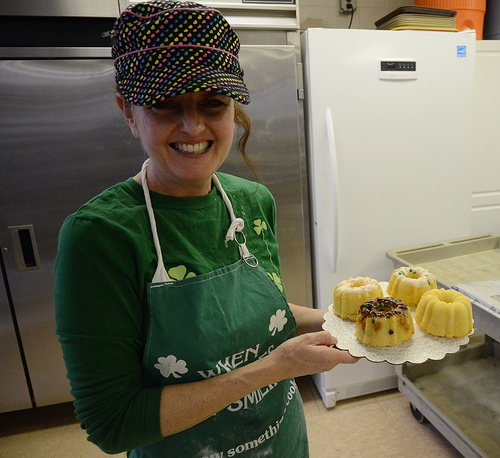
Perched on cooling racks near an open screen door rest close to two dozen four-inch bundt cakes, a big 10-inch granddaddy bundt, and a coffee table-sized sheet cake. These tantalizing golden-brown confections are the result of a couple of hours’ labor by the exceptionally well organized Deborah Streeter-Davitt, the self-described “head caketress” behind MacDougall’s Irish Victory Cakes. She has help from her father, the Rev. Richard Streeter. (A former pastor of the church, he describes his role in the enterprise as “chief orange squeezer.”)

You might have seen, and tasted, Streeter-Davitt’s handiwork at a local Celtic festival. Her cakes are also available in more than a dozen small markets and farmers’ markets throughout the Delaware Valley. They’re also available online.

The success of MacDougall’s Irish Victory Cakes marks a kind of victory for Streeter-Davitt, who pursued a dream and became a baker following a layoff about three years ago from her longtime job in the financial services industry.

“Necessity breeds creativity,” laughs Streeter-Davitt, who seems not to break a sweat in the 80 degree-plus commercial kitchen, which she rents on Tuesdays and Thursdays from the church. (A local biscotti maker also leases the space.) Her green apron bears the imprint of floury hands. and she tucks her dark, wavy hair into a little heart-decorated painter’s cap, from which an uncooperative loose tendril escapes. Whisking flour and sugar into eggs, melting and stirring chocolate, scooping yellowy batter into heavyweight Nordic Ware pans, manhandling sheet cake pans into the oven, Streeter-Davitt seems the very picture of contentment.

The work consumes many more hours than she was used to devoting to her previous profession, but for Streeter-Davitt, it’s all worthwhile.

The layoff coincided with another imminent turning point in her life. “I was turning 50 in a few years, and I thought … hmmmmmmm. That was two and a half years ago. Up to that point, there was always something missing. Salary and travel all over the United States couldn’t fill that hole. I didn’t realize how fulfilling this would be. Now, I feel like I’m doing something I’m meant to be doing.”

Streeter-Davitt has been baking since the ‘80s. She says that’s when she came into possession of a recipe for a simple but rich, dense, buttery cake. The recipe belonged to her great-grandfather James MacDowell (of the MacDougall Clan) from Belfast. Before World War I, MacDowell had gained no small measure of fame for his delicious, lavishly decorated cakes. He baked for kings and queens. Just after the war, he left his fame behind and moved to the Syracuse, N.Y. area, where he toiled away in a tiny, neighborhood bakery. MacDowell decorated cakes for all the local wealthy households—all so his grandkids would have the opportunity for an education.

MacDowell’s story is the “victory” in the victory cake, says Streeter-Davitt. “It was his victory to bring the family here to the United States. He was a famous champion baker back home, but he gave it all up for his children and grandchildren.”

Streeter-Davitt, for her part, has taken some liberties with the basic butter cake recipe. She adapted the base recipe to create several distinctive, and distinctively named, flavors, from Dassie’s Traditional (with Wilbur chocolate and butterscotch chips) to Skeeter’s Grand Slam (chocolate, butterscotch, peanut butter and marshmallow) to Albie’s Loopy Leprechaun (chocolate, butterscotch and “two cheers of whiskey”). Many of the ingredients are local, and all cakes include at least a kiss of whiskey.

When the local appetite for Victory Cakes is at its greatest, it’s all hands on deck—mostly meaning “relatives, and friends of relatives.” It’s a huge amount of work, baking cakes in large quantities. For a batch, think in terms of two dozen eggs, a pound of butter, a pound of sour cream, five pounds of flour, and six cups of sugar. (And there are a few secret ingredients in the mix that make the cake deliciously different.)

St. Patrick’s Day, of course, is a major undertaking. “We probably made close to 800 minis (the four-inch individual cakes), 150 petites (the two-pound cake), and 20 mighties (the five-pounder),” Streeter-Davitt says.

Baking, she adds, is only half of the job. There’s frosting and decorating, wrapping and labeling, transporting, marketing and more. Yeoman’s labor, but all infinitely worthwhile to MacDougall’s energetic head caketress, both on a professional and a personal level.

“What’s fun about this job is that I get to work with my dad, and carry on his granddad’s legacy. You can’t put a price tag on that.”

More info:

610-608-6889
macdougallscakes@aol.com
www.macdougallscakes.com
PO Box 563 Malvern, PA 19355

People

Father Joseph Kelley is the People’s Choice

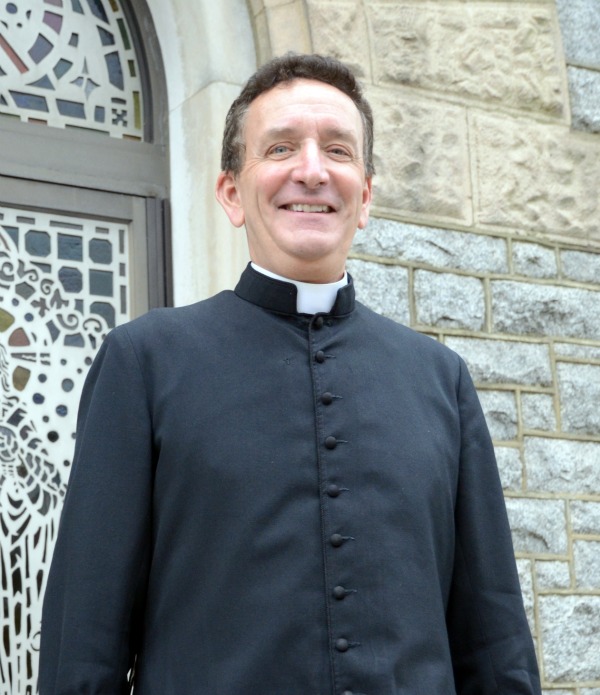
Father Joseph Kelley

Father Joseph Kelley

Among the South Philly Review’s 2012 Readers’ Choice award winners:

Termini Brothers for cannolis, John’s on East Snyder Avenue for roast pork sandwiches, the South Philadelphia Tap Room for the best selection of craft beers, and Father Joseph J. Kelley of St. Monica’s at 17th and Ritner for top priest or minister.

Kelley’s name bubbled to the surface in the section of the Readers’ Choice award balloting devoted to the neighborhood’s favorite people, a short list that included the likes of civic leader Barbara Capozzi and local DJ Johnny Looch.

Kelley confesses he’s flattered, but he kiddingly suggests that with so many relatives scattered throughout South Philadelphia, he had an unfair advantage.

“I grew up with these people,” he laughs. “My life is an open book. There can’t be any surprises there.”

Kelley’s boyhood home was at 933 Pierce Street, on the other side of Broad Street from St. Monica’s, in St. Nicholas of Tolentine parish. The neighborhood is a well-known blend of nationalities, with Italians and Irish figuring prominently. Kelley’s family tree sprouts off in both directions. His father’s name was John, and the Kelley family roots go back to County Monaghan; his mother, Phillomena, was a Coppola. Consequently, Kelley grew up with both traditions.

Kelley’s parish likewise is a marriage of two great European Catholic communities. For most of its early history, St. Monica’s was stoutly Irish, with pastors named McManus, Timmins, Walsh and Farrell. Their portraits hang in the hallway of St. Monica’s rectory. Relics of the parish’s Irish past aren’t hard to find. There’s a monument in memory of Monsignor Aloysius F.X. Farrell along the 17th Street side of the church. Farrell led a hugely ambitious rebuilding project following a catastrophic fire in the 1970s. Just a few steps away stands a blue historical marker honoring light-heavyweight boxing champ Tommy Loughran, the “Philly Phantom,” who grew up nearby.

The parish is mostly Italian now, though there are still plenty of Irish in the mix.

Kelley, resplendent in his flowing cassock, is tall, with dark, curly hair. His features seem to favor the Coppola side of the family. On the day we meet, he’s looking forward to an annual get-together with siblings, nieces and nephews in which they will spend hours baking Easter ham pies, some of which will be shipped overnight to South Philly exiles now living in Florida.

Kelley has been a priest for nearly 25 years, and for 21 of those years he has been posted in Philadelphia. “That’s very uncommon,” he says. Early assignments included Sacred Heart at 3rd and Reed, and St. Edmonds at 21st and Snyder. In 1999, he was named principal of Archbishop Wood High School in Warminster.

He was thrilled when, in 2003, Cardinal Bevilaqua assigned him to be pastor of St. Monica’s. “It was just after Ash Wednesday, and I got a call that the cardinal wanted to see me,” he says. Kelley surmised that a new assignment was in the offing, but he had no inkling what was to come next. A friend and fellow priest guessed Kelley was going to be sent to St. Monica’s, but he didn’t believe it. Then, when the cardinal offered him the pastorship of this vibrant South Philadelphia faith community, he recalls, “My jaw hit the floor; I was absolutely stunned.”

Although Kelley enjoyed his time in the Bucks county ‘burbs, he’s grateful to be back in his old stomping grounds.

“I’m a city kid,” he says. “I’m green. I never use a car. I take the subway, or I walk.”

It’s not hard to see how Kelley was the people’s choice. He seems to know everyone. As he stands on the stone steps in front of the church, he sees a young man walking down Ritner from 17th. “Hey, how’s your mom?” Kelley calls out. “You’re coming for Palm Sunday, aren’t you?” A warm and friendly conversation ensues.

The Readers’ Choice award took Kelley completely by surprise, he says, and left him with a feeling of deep gratitude.

“I grew up with these people. I’m related to these people. When you love a place so much, and you love a people so much, it’s good to know you’re loved back.”

People

Five Questions With Martin Hayes

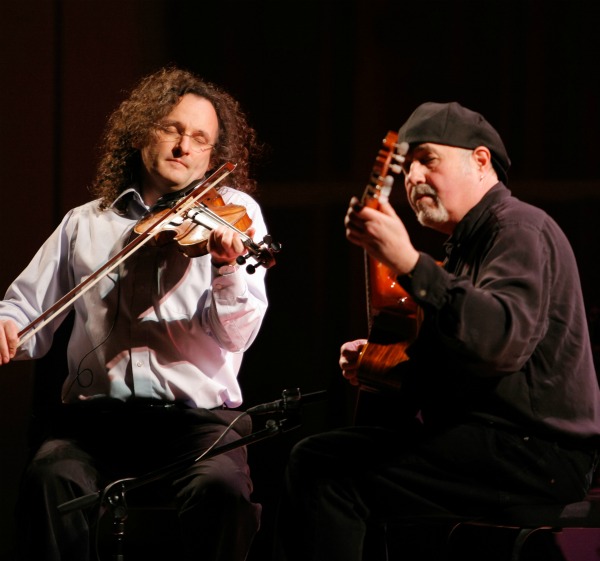
Martin Hayes and Dennis Cahill

Martin Hayes and Dennis Cahill

There’s Irish music with trombones, Irish music with Bruce Springsteen lyrics, and then there’s Irish music played on traditional instruments and not all that different from what you might have heard by the fireside anywhere in County Clare a hundred years ago.

The old stuff is as pure as the wind rustling across the Burren, as raw as peat smoke. Fiddler Martin Hayes, himself from Maghera, East Clare, knows this territory all too well. He easily and lightly treads the well-worn path. He’s equally familiar with some of the more experimental applications of the tradition, to be sure. With his frequent collaborator guitarist Dennis Cahill, he formed the band Midnight Court in the 1980s, a melding of rock and jazz. But it’s the pure drop, as the old-style music is sometimes called, that Martin Hayes plans to celebrate as he, together with six talented colleagues, appear April 15 at the Annenberg Center in the “Masters of Tradition” concert.

If you’re going, you’ll hear some of the finest musicians Ireland has to offer. In addition to Hayes: David Power on uilleann pipes; singer Iarla Ó Lionáird; Cathal Hayden, fiddle; accordionist Máirtín O’Connor; and Seamie O’Dowd and Dennis Cahill on guitar.

The “Masters of Tradition” concept has its roots in a long-running annual festival of traditional Irish music in Bantry, County Cork, in conjunction with West Cork Music, a classical music organization. Hayes is the artistic director of the Masters program. In 2009, Hayes was invited to bring the “masters” to Australia for concerts in the iconic Sydney Opera House. Still, the concept has never had an airing in the United States—until this year.

We interviewed Hayes by phone recently. He took the call in a parking lot in Galway; you could hear the breeze blowing. Here’s what he had to say about the concert tour and the music he loves so well.

Q. Tell me about the Masters of Tradition Festival, the one that happens in Bantry in late June-early July. I know it began in 2003. How did it get started, and what was your role?

A. It started in West Cork. In Bantry, each year there is this highly regarded chamber music festival. We were invited to play in the festival. They had been talking about doing something with traditional Irish music. It was an opportunity to play traditional music in an almost chamber music-like environment, in Bantry House. It’s one of Ireland’s big, old aristocratic gentry homes, a very, very large home, with wonderful acoustics and great warmth. A lot of the concerts take place there. We also play in the Church of Ireland in Bantry.

There’s a tradition of Irish music being played in the big old homes of Ireland, in the gentry houses, but in recent years we had never played in that context. The idea was to present the music in Bantry House with a lot of attention to detail, and nuanced.

Q. It seems to me that when you use the word “tradition,” you mean something very specific. First of all, how do you define that, and second, why is sticking to the tradition so important to you?

A. To define is not so easy. As somebody said, nobody can tell you what good traditional music is; they can only tell you what isn’t. I’m not looking for the rock and roll fusion, but I’m not opposed. There are few things I haven’t tried myself. Sometimes, with a musical form like this, you can experiment and experiment and experiment. But every once in a while, it’s good to retrench, to re-examine what you have, and start the cycle all over again.

Q. Is there room for everyone in the Irish music tent? What do you think when musicians take liberties?

A. I kind of don’t care, and one reason I don’t care is that, in the late ‘80s, there was I. I was trying to fuse Dixie Dregs into Irish music. I was playing with a fusion drummer at that time. Everybody ought to have the freedom to try everything they want.

Q. How and why did you decide to take the show on tour?

A. It was accidental. A number of years ago, when I was in Australia, I mentioned the festival to my agent. I didn’t say I wanted to do anything, but he mentioned the Sydney festival and the Sydney Opera House. They (the organizers) said, “Why don’t they come out and play at the festival?” I said “OK.” This opportunity doesn’t often come up. We ended up doing two nights, and it was a great success. Everybody said, “I want to do more of this.” So here we are doing a little more of it.

Q. What do you hope that audiences will get out of the Masters tour that they might not get from other Irish music performances or concerts? What would make you feel like you’d accomplished what you set out to do?

A. It’s kind of like an invitation back to the music again. It’s pressing the “reset” button, and we’ll go back and re-introduce you to the music. It’s not an intellectual exercise, but one in which you can experience the richness of the music in the raw form in which it has come. You get a very wide and comprehensive sense of what the music is all about.