All Posts By

Jeff Meade

People

“He Still Has Us Laughing:” Knute Bonner Remembered

Knute, remembered

Knute, remembered

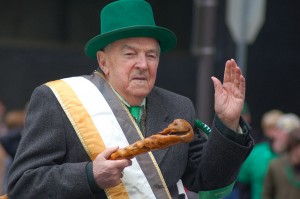
When Knute Bonner died last week at the age of 87, Philadelphia’s Irish and Irish-American community lost one of its most colorful, kind and puckish characters. On Sunday, March 10, when the Philadelphia St. Patrick’s Day Parade passes along the Benjamin Franklin Parkway, it will be without its 2001 grand marshal. For those who knew Knute Bonner, it’s a moment of sadness, but also—as is the case with any Irish wake—it’s a moment to share stories.

Not surprisingly, there are a lot of them. We asked a few of his friends to share their thoughts.

Michael Bradley, Philadelphia St. Patrick’s Day Parade Director

“The Knute I Knew.” That would be a great title of a book written about him.  He would jump from how he didn’t feel good, to showing me the wound on his leg, to telling you one of his jokes, to singing a song and possibly back to how we miss so-and-so who just passed—all in the same five minutes. Knute had a great outlook on life. He was always positive, and always ended with a chuckle—like he knew something you didn’t.

He was an entertainer, and when the red light and spotlight came on, he came on, the crowd came on, and the crowd loved him, and he loved them!

He thought the Irish were the greatest race on earth, but he didn’t really talk to me about being Irish, it was more about St. Patrick’s Day. That day meant the world to him. I still get chills down the back of my neck when I think of him singing “It’s a great day for the Irish.”

He also started the Southwest St Patrick’s Club in 1950, before I was even born, and to see those men and women still march with their third-generation marchers is a real tribute to Knute, since most of them have moved out of Southwest Philly. He was also very proud of all the Irish in SW Philly and West Catholic.

My best best story about Knute is not an Irish one.  My son Colin was in fourth grade at St Pius X in Broomall. This was awhile ago since he now is a sophomore at Penn State with Knute’s grandson Shane. The teacher asked if any of the students knew anyone from World War II to share some stories. I told him, you have to bring Knute in—no one can tell better stories than Knute.

Well, it was a day I wasn’t going to miss. Knute started out by not seeing the chain in the schoolyard that separates the kids from the parking lot, and he drove right through it—starting the day off with a bang. He then tells me—kind of loud—when we get into class that “they sure didn’t make teachers who looked like this when I was in school”!
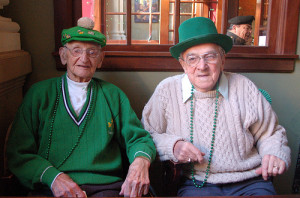
Paul Phillips and Knute Bonner

And for the next hour and a half—he was supposed to talk for 15 minutes or so—he had the teacher, myself and every kid in the class mesmerized!  He started out telling them about his best friend from Bartram High School who was killed right in front of him. He talked about how their helmets were protection against bullets, but how they also shaved in them, and ate beans they cooked out of them—sometimes, all in the same day! He mixed in so many funny, sad, memorable, and patriotic stories in one big run-on story, he held my attention—jumping from story to story to story without missing a beat!

He was almost 80 years old and there wasn’t a veteran in America who could hold a candle to Knute that day. He tried to pass around a huge German sword, which the teacher rightfully took off the first kid, but that never deterred Knute; he never missed a beat. He just kept on going.

At the end, he asked if he could sing the “Star Spangled Banner,” and he told all the kids how they should always stand up straight, look at the flag, and remember all the people who gave their lives for this country. He had tears flowing down his checks—me, too—but he switched gears in classic Knute style and told them if they ever saw ANYONE who was sitting at a game when our National Anthem was being played or sung, that is was OK to go up and kick them right in the ass, as the tears turn again in mid-story to that laugh of his. The teacher looked at me and said it was not alright to go kick anyone, but Knute said to listen to him!

Knute’s visit was in the month of January. Kids don’t remember what you taught them yesterday, but on the last week of school, the kids voted on the best day of school and there were 34 votes for Knute Bonner Day, and 0 for any other day of school.

Knute was on the parade board since the early ‘60s, so there wasn’t much he hadn’t seen, and I always respected that. At his last meeting he attended in January, an issue came up about us inviting all the veterans, and I suggested that they all march together with the 82nd Airborne, but I wanted to get Knute’s opinion. So I asked him to address the audience and he did so eloquently, and thoughtfully and told us how his group, the Battle of the Bulge, had too few members to march. His last public comments were that of a man who was 87 years old, but we hung on every word in deep respect for what that man did for our parade and our country.
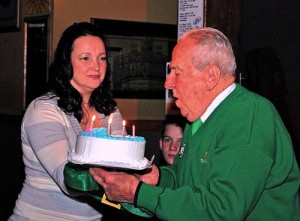
Happy 84th Birthday

Bob Gessler, President of the Philadelphia St. Patrick’s Day Observance Association

He was simply an omnipresent figure. From the very first time I became involved, there was Knute.

He served on the parade board for over 50 years, and was, if the not the longest-serving member, very near the longest. He was on the board longer than I’ve been around. Just imagine the love you must have for your heritage, your faith and your city to serve that long.

He was a person who always cared about every person in the parade. He thought about how we can eliminate delays, how we can make the parade better and more enjoyable for everyone.

He obviously lived his life caring and striving to make it better for everyone. He made it known to all that he served in the Battle of the Bulge, and it never was a “me” thing; rather a tribute to all those who served with him.

He was truly a remarkable, many-faceted man and one hell of an Irishman.

Mary Frances Fogg, St. Patrick’s Day Parade Board Member

Knute Bonner was always joking, and always good for a laugh. For years at the parade meetings Knute has been asking the board to purchase walkie-talkies, so we can talk to each other and to the marshals during the parade. So after years of Knute asking, a few weeks ago I purchased walkie-talkies, and I was going to present them to him at the Grand Marshal Annual Dinner this year. I knew he would get a kick out of it, and finally put this discussion to rest.

So after hearing of Knute’s passing, I thought about the walkie-talkies, and I sent a few members of the board an email telling them about the purchase. Kathy McGee Burns suggested that we put one of the walkie-talkies in the coffin. I quickly responded that she would have to take possession of the other one just in case he calls! And knowing Knute, he will!

God Bless Knute, and his wonderful sense of humor. He still has us laughing. He will be greatly missed.

Bridie McCafferty, St. Patrick’s Day Parade Board Member

Knute Bonner was a sweetheart. He made you feel like you were the most important person in the world when he saw you.
He was not a politician or a celebrity, but you wouldn’t believe the crowds that came to pay tribute to him at his viewing and funeral Mass. This shows how he touched so many people.

Knute was the life of the party, made lifelong friends quickly, and was always up for a bit of fun. When he motioned you to come near him with that twinkle in his eye, and he changed his voice to a whisper, you knew you were going to hear a joke or funny story.

But it was his quiet and humble way of doing charitable work for those less fortunate that I will also remember. For many years, Knute put on Irish Cabaret shows for the elderly at local nursing homes. The joy he brought to his audiences was, as they say, priceless. His life was one of loving service to his family, the church, the Irish community, and veteran causes. You couldn’t meet anyone more generous than Knute.

Knute’s love of God created a joy of life which he richly shared with others, and a sense of service and duty to others that extended to risking his own life in WWII.

We are all the better for knowing Knute.

And I can only imagine what March 17th will be like in heaven this year, with Knute singing ‘When Irish Eyes are Smiling’ with St. Patrick himself.

God bless you Knute, and God bless your wonderful family.

Kathy McGee Burns, Philadelphia St. Patrick’s Day Parade Board Member

I can never remember a funeral as big and beautiful as Knute’s. It was a tribute to a great man. In his death, he was remembered as he lived—not in a maudlin way, but in a happy way.

Knute was buried dressed in his emerald green high-top sneakers, with a shillelagh, his WWII cap, his service decorations,a grand marshal’s sash, a walkie-talkie,an Irish shamrock tie, a book titled “Irish Philadelphia,” a rose in his pocket , a CD playing songs from his string band days, and his Green Top Hat.

I watched the people lean over and kiss him, or rub his hand. I bet there were 1,000 people who came to say goodbye to Knute. The eulogy by a family friend, John Delaney, was nothing short of a vaudeville show, filled with Knute jokes. Pat (Bonner) told me that they closed I-95 for the procession of a “Fallen Hero”as they went to the cemetery.What a farewell party!
Music, News

Gearing Up for the Mount Holly Parade

A scene from a recent Mount Holly parade.

A scene from a recent Mount Holly parade.

The area’s first St. Patrick’s Day Parade steps off on Saturday, March 2, at 1 p.m. in downtown Mount Holly.

With Grand Marshal Dr. Frank X. McAneny, Ed.D., leading the way down High Street, this parade features so many bagpipe bands, dance troupes, scout packs, Ancient Order of Hibernian divisions, paddy rock bands, and police and fire units, you’ll probably start to lose count.

Never fear, though: Parade organizer Jim Logue has matters well in hand. We snagged him for an interview at the recent Mid-Winter Scottish and Irish Festival.

Music, News

2013 Scottish Irish Festival in Valley Forge

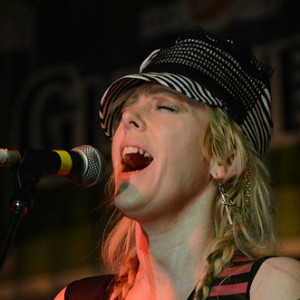
Gráinne Diver of The Screaming Orphans

Gráinne Diver of The Screaming Orphans

Upstairs at the Valley Forge Casino Resort, guests tried to beat the odds at slots and table games… and good luck with that.

Downstairs in the convention hall, the Mid-Winter Scottish and Irish Festival was a sure winner.

The 2013 edition of the annual Celtic get-together looked to be one of the best attended we’ve seen. There was much to attract visitors, with non-stop music from the likes of the Screaming Orphans (fabulous), the tribal pipe-and-drum craziness that is Albannach, Timlin and Kane, and Brother. The vendors did brisk business in jewelry, Highland attire, and canned Haggis. And the Highland Creamery ice cream stand had long lines of hungry festival-goers lining up for a dish of Bailey’s and brown bread ice cream.

We have tons of photos from the weekend. Check out our slideshow, above.

… and also one cute little video featuring our own Haley Richardson sitting in with the John Whelan Band.

People

Farewell to Knute Bonner

Knute Bonner

Knute Bonner

Philip E. “Knute” Bonner, retired Philadelphia city police officer, 2001 Philadelphia St. Patrick’s Day grand marshal, and one of the Irish community’s most colorful and beloved characters, passed away Friday, February 15. He was 87.

We’ll have more to say about this kind, gentle and funny man in days to come. But for now, we’d like to remember him, both in pictures (view them here) and a video that shows him in fine voice.

Ar dheis Dé go raibh a anam.

Food & Drink, People

McGillin’s Checks in as Philly’s Best Bar

Chris Mullins, Jr.

Chris Mullins, Jr.

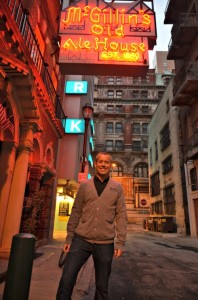
The city’s oldest continuously operating bar is now officially the best, according to the location-based social networking site Foursquare. Not that this is the first time McGillin’s has been singled out for honors from local and national media—far from it—but it is the first time the GPS-based social networking site chose the 150-year-old-plus Drury Street tavern to top the “best bars” list, as determined by the site’s registered users.

The longtime Irish watering hole ranked 9.6 out of 10 points, based on “check-ins” by users.

Media praise never gets old, says owner Chris Mullins, Jr. On the contrary, he laughs, it just reaffirms his career choice. “Running a bar is an exhausting but thrilling profession to be in. You can’t do it unless you love it. It’s in my blood. I’m thrilled by it every day.”

Watch our interview with Chris, above.

Fado Irish Pub, 1500 Locust Street, scored a 9.0 for best beer. Fado also scored a 9.0 under “best pub.” O’Neal’s, 611 South Third, tapped in with an 8.9 score; The Bards, 2013 Walnut Street, pulled an 8.8.

Music

Review: “Shamrock City”

Solas

Solas

About a year ago, fiddler Winifred Horan and accordion player Mick McAuley—bandmates in the Philadelphia-based Irish supergroup Solas—played an intimate house party in Ambler. About midway through the performance McAuley sang a new song he and Solas front man Seamus Egan had written about early 20th century Irish immigrant Michael Conway, who ventured to Butte, Montana, to join droves of other Irish emigres who found work in the lucrative local copper mines.

Within six years, Conway lay dead in the streets. Many Butte miners died young, but Conway’s death came at the hands of local lawmen, who beat him viciously as punishment for stubbornly refusing to throw a bare-knuckled boxing match.

Horan, visibly moved, wiped tears from her eyes as the song came to a close. Hers were not the only misty eyes in the room.

McAuley’s performance was a sneak preview of a then relatively new musical and visual Solas project called “Shamrock City.” Conway was the great uncle of Seamus Egan’s father, so Egan family lore inspired the project. Several of the tunes were available on an EP sold at concerts and in other venues, and the band previewed them in concert over the past year, including an appearance at World Cafe Live. The full-length CD has just been released, and no doubt you’ll hear much more about it—and much more music—when Solas returns to the World Cafe for two shows on the evening of Saturday, February 9. (Learn more here.)

“Shamrock City” is easily on a par with anything that has been written, played or sung about the hope and heartbreak at the nexus of most Irish diaspora tales. It might even be better in that it stands not as one song or two, but as a unified whole, a complete and compelling story.

Solas has more than a little help bringing “Shamrock City” to life. The cast of contributing musicians is like a who’s who of contemporary folk, roots and Celtic music, including Natalie Haas on cello; Lunasa bassist Trevor Hutchinson; Dirk Powell on five-string banjo; singer and fiddler Rhiannon Giddens of the Carolina Chocolate Drops; Philadelphia dobro virtuoso Mike “Slo-Mo” Brenner; Scottish singer Dick Gaughan; Aoife O’Donovan, lead singer of the bluegrass band Crooked Still; and the British-style Allegheny Brass Band.

Longtime Solas associates bassist Chico Huff and percussionist John Anthony (who also recorded and mixed the CD) also appear.

The album opens with “Far Amerikay,” another ballad written by McAuley, who shares writing credits with Seamus Egan on this and several other tunes. It’s about what you would expect—a tale of leaving—but with some particularly lovely lyrics like this poignant mother’s lament: “God knows it’s not for glory, son, we just have to make some room. / My heart will surely break for you, sweet treasure of my womb.” Solas lead singer Niamh Varian Barry takes the lead on this one, with deep, droning backing chords by Natalie Haas. It’s a finely drawn piece of work, and it sets the stage for the story that follows.

There’s no escaping the sadness of life far from home, and that sadness gets an airing again later in the CD, with Varian-Barry’s heartfelt rendering of the traditional “Am I Born to Die.” But it’s not all gloom and doom—far from it.

Take, for example, Seamus Egan’s whimsical instrumental “Girls On the Line.” You can probably guess what kind of girls they are. And Rhiannon Giddens takes a turn as a kind of taproom chanteuse in the old-timey “Lay Your Money Down,” another McAuley-Egan collaboration. (“Drinks are on the house now, sonny, the sweetest deal in town / You can’t take it with you, honey, so lay your money down.”)

Some lively clogging dancing starts out “High, Wide and Handsome,” with Winnie Horan taking the lead. You can practically feel her fiddle bow disintegrating. Horan also takes the spotlight in one of her own compositions, the wistful waltz, “Welcome the Unknown,” with Egan on low whistle.

Probably the one tune destined for “RPT” play on my CD player is the rebellious “Tell God and the Devil,” leading off with percussive banjo picking by Egan, lead vocals by Varian-Barry, with tight backup vocals by McAuley and the talented longtime Solas guitarist and keyboard player Eamon McElholm, who consistently provides some of the best harmony in the business. Little more than indentured servants they might be, the song seems to say, but these miners are tough, resilient SOBs.

The final tune, “No Forgotten Man,” strikes a note of hard-won triumph against incredible odds, and leaves the listener with a feeling of hope. It’s a fitting and satisfying end.

This album stands out because there’s no slushy sentimentality on display anywhere; just a gritty but life-affirming authenticity. The homesickness, the harrowing risks, the cheapness of human life, the irresistible need to find pleasure in a pint of beer or in the arms of a goodtime girl—all the shared experiences of Irish immigrants in the town that became known as “the richest hill on earth”—all are encapsulated completely into the story of one bold young man from Cork, and the town that became his home, if for only a little while.

Like Michael Conway himself, with “Shamrock City,” Solas pulls no punches.

Arts

A New History of Irish Philadelphia

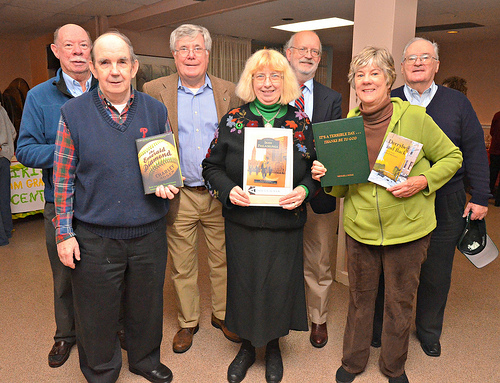
Marita Krivda Poxon, center, at a recent gathering of Philly Irish authors.

Marita Krivda Poxon, center, at a recent gathering of Philly Irish authors.

Retired research librarian Marita Krivda Poxon had just finished co-writing her 2011 book about the Oak Lane, Olney and Logan neighborhoods of Philadelphia when she started thinking about her next book.

The question: What to write about? Poxon’s editor at Arcadia Publishing, which produced “Oak Lane, Olney and Logan (Images of America),” wasn’t over the moon about any of her ideas for a follow-up, so she found herself casting about, trying to figure out what the editor would be interested in.

Then, Poxon noticed that Arcadia had a pretty successful line of books about ethnic groups: titles like, “African Americans in Amarillo” and “Thais in Los Angeles.”

“I wondered if anyone had done a book on the Irish in Philadelphia, and there was nothing in the Images of America a series,” Poxon recalls. “I couldn’t believe it.”

Poxon called the editor, pitched the idea, and this time found her more receptive.

“She asked what would I call it, and I said ‘Irish Philadelphia.’ And she said, ‘That’s a possibility. We don’t have that, and ethnic books sell.’ They have a book, ‘Italians of Philadelphia,’ that has never been out of print since they first published it 10 years ago. They’ve reprinted it six or seven times.”

Arcadia gave the OK, and now the finished product―crammed with 200 photos and illustrations describing the history of the Irish in Philadelphia since the 17th century―is set to go on sale January 28. (Order it here.) A big book signing party is scheduled for Saturday, February 2, at the Philadelphia Irish Center. (Details here.)

For Poxon, retired after a long and successful career in medical libraries, researching and writing a book was right up her alley in more ways than one. To begin with, her degree in library science from Drexel and years of experience taught her how to sniff out information.

“When I retired, I thought, ‘I can do anything I like.’ That’s how I started writing that regional history book (Oak Lane, Olney and Logan). It was an easy book to write. This kind of book is very defined. It has strict rules: how many pictures, how you format them, how it’s all laid out. It’s rule-bound. As a librarian, I am used to that. Once I got that book under my belt, I thought, ‘Now I can try to do another’.”

But when it came to the Irish Philadelphia book idea, Poxon had another power motivator: her deep familiarity with Irish history and culture. Although Poxon’s father was a Hungarian, born in Budapest, her mother was a Finnegan—Margaret Mary, to be precise—born to a father from County Sligo. Her well-loved uncle Tom Finnegan was very well known around the Philadelphia Irish Center.

Poxon’s Irish roots are deep in yet another way. Back in the late 1960s-early 1970s, she came to love Irish literature while studying English at Temple University. She then moved on to do graduate work at Trinity College in Dublin. She never quite finished her doctorate there. Money was running short, and she had no scholarship funds, so she returned home.

Back in the States, Poxon taught English for a while at the State University of New York. She didn’t like it. So she went through a brief period of self-examination and decided that what she really liked was research and scholarship. That’s what led to the master’s degree from Drexel. Armed with that degree, she began her career at the University of Massachusetts Medical School. Her last job before retirement, after 30 years as a medical librarian, was in the library at Chestnut Hill Hospital. Still, even though she had spent three decades in libraries, she never forgot the early years she devoted to the study of Irish literature and culture.

It was when she started to research her Irish Philadelphia book that Poxon ran into a name that wasn’t familiar to her. It was that of Dennis Clark, author of the seminal book, “The Irish in Philadelphia: Ten Generations of Urban Experience.” It turned out that Clark had been on the faculty at Temple at the same time she was pursuing her studies. “I was in the English department, and he was in city planning or something, so I never ran into him,” Poxon says.

Once introduced to Clark’s incredibly detailed knowledge of the Irish experience in Philadelphia , Poxon was inspired. In fact, Clark’s scholarship served as a useful starting point for much of her work on “Irish Philadelphia,” although Clark’s books and Poxon’s really aren’t at all the same.

“Dennis Clark was an amazing writer, but I bought six of his books, and there wasn’t one picture in any of them,” Poxon says. “He was not a photographic person; he didn’t have a sense of the visual. He saw history happening while it was happening. He was a smart man that way. He was an astute observer of people, but he didn’t like photos.”

The Arcadia series, on the other hand, is a very different kind of book. Poxon followed the trail blazed by Clark, but she did it in a more visual way. She found that approach right up her alley, and she believes it will have a strong appeal for anyone who identifies as Irish in Philadelphia.

“I used a lot of Clark’s ideas, and made them more palatable,” Poxon explains. “These books are like children’s history books, but for adults, and the pictures tell the story.”

Music

10 Years, and Still Going Strong

Fergus Carey, right, with Hollis Payer, Darin Kelly, and Brian Boyce

Fergus Carey, right, with Hollis Payer, Darin Kelly, and Brian Boyce

Saturday brought out a who’s who of Philly-area Irish traditional music at Fergie’s Pub on Sansom Street in Center City Philadelphia. For several hours, fiddlers, pipers, accordion players, flutists and more rotated in and out of the seats at two beer-laden tables in a dark corner of this venerable Irish bar and eatery.

They were all there to celebrate the 10th anniversary of the traditional Irish music session held at Fergie’s every Saturday.

Session anchor and guitarist Darin Kelly presided over this not-so-motley crew of musicians.

There were few breaks in the action, as they motored through one set of tunes after another, to enthusiastic applause of the civilians who found themselves at a stool at the bar, or a table in the back. Fergus Carey himself made an appearance as the sessioneers carried on, grinning like a proud papa.

The video up top ought to show you what you might have missed. And if you were there, here’s one for the time capsule.