All Posts By

Jeff Meade

Music

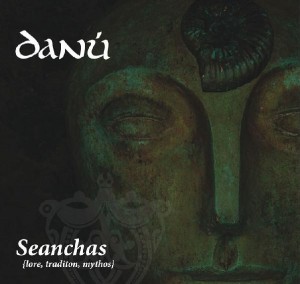
Review: “Seanchas” by Danú

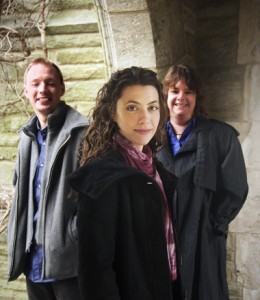
Danu Seanchas“When All is Said and Done,” the 2005 CD by the always thrilling Irish traditional group Danú, exploded out of the gate with a room-rocking set of reels. With the possible exception of lead singer Muireann Nic Amhlaoibh’s soulful rendition of “Cailin Deas ag Crúite na mBo,” the rest of the largely bright, uptempo recording followed suit.

The new, self-produced “Seanchas” (pronounced: “shan-ahas”) shows a more reflective but no less passionate side of the band. There are some foot-stompers in the mix, to be sure—a breathtaking set of polkas on the second track (“Glenn Cottage,” “John Brosnan’s” and “Peata an Mhaoir”) springs to mind. There’s also a pretty set of jigs (“Snug in the Blanket” and “Patsy Geary’s”) at track 4, and a playful pairing of “Murphy’s Hornpipe” and “Lord Gordon’s Reel” at track 6. But “Seanchas” in the Irish language refers to folklore and mythos, and this Celtic concept album is seriously, and at times soberly, rooted in the historical and the traditional. Maybe it’s just more balanced than the last CD.

Consider Nic Amhlaoibh’s interpretation of two standards, “Mollai na gCuach Ni Chuilleanain” and “The Boys of Barr na Sráide,” both of them often recorded. In Nic Amhlaoibh’s capable and caring hands, both are presented with a kind of aching tenderness.

For those who have followed Danú since 1995, there is a special treat. Tenor Ciarán O Gealbháin, who was the band’s lead singer back in the day, joins Nic Amhlaoibh on “Cailín na nUrla Donn” (The Girl of the Brown Locks), a tune typically sung in a mishmosh of Irish and English. (The literal translation includes this gem, “Your waist and bones are nicely situated,” which has to be one of the worst pickup lines of all time.) It’s a sensitive, restrained performance that showcases both singers’ evident talents.

On the instrumental front, of course, Danú has lost nothing, even as some members seem to come and go. (And come back again.) A particular favorite is a pair of tunes, “Clancy’s Farewell to Whiskey” (written by guitarist Dónal Clancy) and the Breton piece, “An Dro des Petitis Bateaux.” Clancy, a founding member of the band, sets the tone for both pieces and turns in a delicate, enchanting performance. It’s the guitar-playing equivalent of diamond cutting. (By the way, the CD is dedicated to the memory of his father, the legendary Liam Clancy.)

As I say, things do liven up with some frequency, especially on the instrumentals. Box player Benny McCarthy is his usual rock-solid wondrous—especially on the aforementioned set of reels, and again on a later jig-reel combination, “Fiona’s Arrival” (written and also played beautifully by fiddler Oisín McAuley) into yet another standard, “O’Connell’s Trip to Parliament.” On bouzouki, Eamon Doorley provides solid backing throughout.

Besides O Gealbháin, other Danú-ites show up on several tracks, including Donnchadh Gough on bodhrán (but, sadly, not on uilleann pipes), and Tom Doorley on flute. Martin O’Neill contributes piano for “The Boys of Barr na Sráide.”

All told, a lovely and memorable piece of work—and perhaps their most musically mature outing to date.
News

What Do You Think of Our Web Site?

A few weeks ago, we posted a survey on behalf of The Reynolds Journalism Institute at the Missouri School of Journalism. They’re doing some cool research (yes, research can be cool) on small community Web sites like irishphiladelphia.com.

They want to know: What does irishphiladelphia.com mean to you? Do you like us? Do you trust us? Do we help build the community?

They’ve gotten a few responses from you guys, but they’re looking for more. It would mean a lot to us if you could help them out. 

Here’s the survey. It’ll take you less than 10 minutes:

http://rjisurvey.irishphiladelphia.sgizmo.com/s3/

Sports

Last Summer of Kicks and Sticks at Cardinal Dougherty

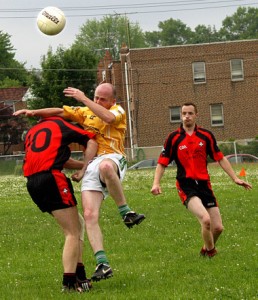
Irish football is clearly a full-contact sport. (Photo by Gwyneth MacArthur)

Irish football is clearly a full-contact sport. Click on the photo to see the full slideshow. (Photo by Gwyneth MacArthur)

It’s the last season of Philly Gaelic Athletic Association (GAA) football and hurling at Cardinal Dougherty High School, now that the venerable Olney institution is closing its doors.

(It was once the largest Catholic High School in the world, with more than 6,000 students, but has fallen victim to falling enrollments. The Archdiocese is shutting it down in June.)

Next summer, the hurling and Irish football are set to move to a new facility at Sanatoga and Longview Roads in the Upper Montco town of Limerick.

It’s a bittersweet moment for those who have played, coached or cheered along the sidelines at Dougherty over the last nine or 10 years. “They were pretty good facilities,” says Tom Higgins, a longtime Philly-area GAA player and coach, although he adds that Dougherty was somehow never as attractive to fans as the previous field at Leeds Junior High in Germantown were. “We had great crowds there,” he says. “That was just a super setup. The second we went to Dougherty, the crowd dropped off.”

The GAA has broken ground at the site in Limerick and is in the process of trying to raise $250,000—to be matched by the GAA in Ireland. “I believe it’s going to be ready for next year,” Higgins says.

For now, though, all of the adult games and a few of the youth games will play out the 2010 season on the field at Dougherty. “We had a talk with the priest there, and we knew our lease was good,” Higgins says—though the arrangements will be a little less convenient. “After the end of June, we won’t be able to use the dressing rooms. Through July and August, we won’t be able to use any dressing or shower facilities there.”

And so the season will end. But … there’s still a lot of hurling and football to be played. Games are scheduled every Sunday in June and July, and three Sundays in August.

If you’ve never taken in the fast-paced, full-contact sports of your forebears, you simply must head out to Dougherty. (You might rub shoulders with the Korean athletes who occasionally stop by to watch hurling or Irish football after their soccer game is over on an adjoining field. They clearly know a great sport when they see it.)

In fact, the games have already gotten off to a head start. We dispatched our intrepid photographer Gwyneth MacArthur to Cardinal Dougherty last Sunday to take in a cluster of games. She took more than 50 action-packed shots. Want to see what you’re missing? Click on the photo at upper right.

[googleMap width=”600″ height=”600″]6301 North 2nd Street, Philadelphia, PA 19120[/googleMap]

People

Get Ready to Be Inspired

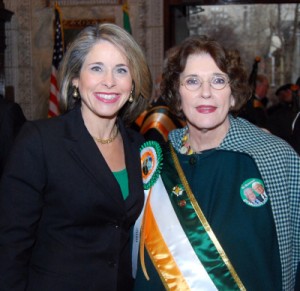
Kathy Orr and Kathy McGee Burns

Two honorees, Kathy Orr and Kathy McGee Burns.

They say it’s a man’s world.

They obviously do not know what they are talking about. Smart, strong, brave, loving, gifted, creative, compassionate women are at the heart of most of society’s institutions. And they’ve long been a driving force within the Irish community.

We know this, and we are inspired by their example. And on Sunday 11 of those wonderful, inspiring Irish women will be honored.

The Society of Commodore John Barry and the Irish Immigration Center of Greater Philadelphia commissioned artist Patrick Gallagher to create a series of portraits of inspirational Irish and Irish-American Women from the Delaware Valley. Their portraits will be unveiled at a reception at the Irish Center, 6815 Emlen Street, Philadelphia.

The Inspirational Irish Women reception begins at 4 p.m. and lasts until 7.

The portraits will remain on public exhibit in the Commodore Barry Room for several months.

CBS3 Anchor Susan Barnett will emcee the event. Part of the proceeds from this event will go directly to the general operating costs of the Commodore Barry Club (The Irish Center).

We’d like to share the stories of those inspiring women with you. Here they are:

Music, People

They’re Coming Home

RUNA

Shannon Lambert-Ryan with RUNA.

For Shannon Lambert-Ryan, each scuff on the dance floor at Philadelphia’s Irish Center represents a happy memory. A few of them might be hers.

“I took step dancing classes there for years,” says the young singer-actress with the group, Runa. “My mom, Julie Lambert, started to go to the ceilis over there when she was 16 and 17, and when I was born we went to the festivals and music events. I took a hiatus for a while then wound up going back to the ballroom for the swing dancing. It’s one of those places where, when you’re there once or twice a week, feels like your second home.”

Karen Boyce McCollum thought it was her second home. The youngest of the six children of Carmel and Barney Boyce of County Donegal, longtime members of the Irish Center Board, Karen is a former singer with the group Causeway. “One of my first memories is of going up there with my mom and dad to the Donegal meetings. They were on a Sunday and we would go to church then head up there. While they were in their meeting, we had the full run of the place, and we’d usually meet up with some of the other kids and get into some fun and a little bit of trouble.”

So it seemed fitting that Shannon and her group and Karen and brothers Michael and John (of Blackthorn) will provide the music at Sunday’s Inspirational Irish Women Awards. The event honors 11 Delaware Valley Irish and Irish-American women who embody the Irish spirit and is a fundraiser for the Center, which, like many organizations, has experienced some recent financial difficulties.

“I had to do it,” says Shannon. “It’s important to keep it afloat. The Irish Center allows for quite a lot to happen. Just to coordinate it elsewhere would take quite a bit of effort.”

Along with ceilis, dance lessons, and concerts, the Center houses most of the county associations and hosts most of the annual county balls. “We went to all the Balls—Donegal, Mayo, Cavan,” recalls Karen, who eventually wore two crowns: Miss Mayo and the 2006 Rose of Tralee. “When I was little I remembering wishing I didn’t have a dress on so I could really spin around on the dance floor.” She laughs.

Later, she began taking fiddle lessons at the Center. Her family held her bridal shower there; her sister Colleen’s reception was held at the Center, as was her brother, Brian’s. She sang and danced in the ballroom and on the Fireside Room stage, most recently with her brothers at the Center’s Rambling House entertainment events, produced by Irish radio host Marianne MacDonald.

Boyces

Karen Boyce McCollum and brothers Mike and John.

“As time went on I started to love it more,” says Karen. “I don’t think there’s a place that cozier than or more appealing on winter’s night than the Fireside Room with a fire going, having a beer. Some of the memories I have are of the people I met there—people who are gone now, like Tommy Moffit and Jim Kilgallen and a man who became like a grandfather to me, Tom Finnegan. He was a widower with no children and my parents met him through the Donegal Society. They would drive him here and there on weekends, and finally they said ‘Why don’t you stay here?’ So for 10 years, he stayed at our house Thursdays to Mondays. Every time I’m at the Irish Center I think of how Tom used to get up a dance. He had these moves he did.” She laughs. “One drink and he was kicking his feet up, cute as button.”

For Shannon, it was the dancers. “I think about Frank Malley, who just passed away about a year ago. He was somebody who my mom used to dance with at the ceili when she was much younger and they met later on. He became a friend of ours and his partner, Connie Koppe, is still a friend. He was always so gentle and warm. He would take you under his wing and my mom said he was one of the best dancers.”

She also remembers “waltzing with Eugene O’Donnell,” the legendary five-time All-Ireland step dancing champ and master fiddler from Derry who was a fixture at the Irish Center. “This is really where music became the love of my life forever,” she says.

For both singers, Sunday’s performances are a labor of love. “There are people who go to the Center and love it, and go back all the time. I think their spirits are there,” says Karen. “They say that the older a chair gets, the more comfortable is is. That’s the way I feel about the Irish Center. When the lights are low and there’s a good band playing, there’s nothing like it. It feels like home.”

Music, People

County Roscommon Remembers its Native Son

 
Tommy Moffit in Roscommon

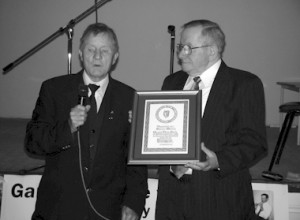
The late Tommy Moffit (right), receiving his Hall of Fame award from Midwest Radio's Seamus Ó Dubhtaigh at the 2004 Ganley/Rushe Traditional Weekend.

The following appeared in the Roscommon Herald. It is reprinted here with the Herald’s kind permission.

Late Mr Tommy Moffit, musician

The death occurred last week, in Philadelphia, of well-known traditional musician Tommy Moffit. Tommy, a native of Errisaune, Gorthaganny, was aged 79 and passed away after a short illness.

He was a gifted musician, starting on the tin whistle before learning to play the accordion, on which he excelled. Tommy emigrated to the USA in the year of the Big Snow, 1947, when he was just 16 years of age. He first lived in Atlantic City, before eventually settling in Philadelphia. There he played with several céilí bands before setting up his own, the Tommy Moffit Band. They were very popular in the local Irish community and were in great demand for festivals, parties, dances and weddings.

In 1982 he brought the band home to Ireland and they played at several venues in the west to packed houses. Tommy hosted a Sunday morning radio show on Philadelphia radio station WTMR, The Tommy Moffit Irish Show, for over 30 years. He was the recipient of several prestigious awards for his endeavours with Irish music and culture. In 1999, he received the Philadelphia Comhaltas Person of the Year award and, in 2000, was inducted into the Comhaltas Hall of Fame.

In 2004 he was honoured in his native place when the Ganley/Rushe Traditional Weekend in Gorthaganny presented him with another Hall of Fame award. He was particularly pleased with this, saying that he felt it was a special honour to have been remembered in the home he had left so long ago.

Tommy was predeceased by his wife, Peggy, née Harrington, Bushfield, Charlestown; his brother Eugene, Errisaune; sisters, Mary Ellen Mahon, Dromod, and Kathleen Haverty, Philadelphia.

He is survived by his daughters, Cathy and Mary, both Philadelphia, and son, Thomas, California, as well as many grandchildren, nieces and nephews. Following requiem mass in St Joseph’s Church, his burial took place in Philadelphia on Saturday, May 15th.

Music, People

A Look Back at Tommy Moffit in Pictures and Video

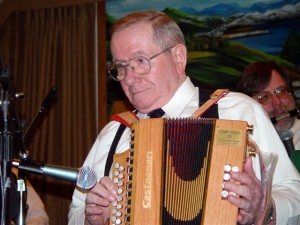
Tommy Moffit on the button accordion.

Tommy Moffit on the button accordion.

Go to a concert, and there was Tommy Moffit. Attend a St. Patrick’s Day Parade party … Tommy Moffit was there.

Ever since we launched irishphiladelphia.com in 2006, we’ve bumped into the Man from Roscommon countless times. In fact, Tommy was grand marshal of the very first Philadelphia St. Patrick’s Day Parade we covered (2006).

Always ready with a joke, a story or a word of encouragement, Tommy Moffit was there. Now that voice has been stilled. We thought we’d look back through our photos and videos and share our pictorial memories with you.

People

Amazing Grace

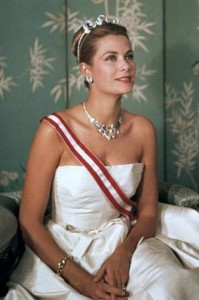
Princess Grace of Monaco

Princess Grace of Monaco

Not too bad for a kid from East Falls.

Admittedly, Grace Kelly was not just any kid from East Falls, but the daughter of John Brendan “Jack” Kelly—triple Olympic gold medalist in rowing, and the enormously successful millionaire owner of “Kelly for Brickwork.”

The Kellys were no ordinary East Falls family—and, although the young Grace Patricia Kelly was regarded as quiet and withdrawn, she knew one thing for sure at an early age: She wanted to become an actress.

When she was 12, Grace landed the lead role in “Don’t Feed the Animals,” a play produced by the East Falls Old Academy Players. Later, tthroughout her years at the Stevens School, she continued to act. And when it came time to leave the Stevens School, she moved to New York to pursue her dream in earnest.

She enrolled in the American Academy of Dramatic Arts and, by all accounts, devoted all her energies to her acting studies.

It didn’t take long for Grace Kelly to find her place in the footlights. She debuted on Broadway in Strindberg’s ”The Father,” which starred the formidable Raymond Massey. The then burgeoning arena of television drama soon beckoned. The hard-working Grace Kelly would go on to perform in nearly 60 live telecasts—an acting pursuit not for the meek or faint of heart.

Hollywood soon noticed what many people already knew well: This Grace Kelly was something special.

Her first film was “Fourteen Hours”—and not too many movie-goers noticed her. She continued to work in television and on stage—and then along came a role that everyone would notice. She was hand-picked for a co-starring role opposite the great Gary Cooper in the classic Western, “High Noon.”

The rest is Hollywood history. Fans will never forget her star turn in “Mogambo,” opposite the brooding Clark Gable, for which she earned her first Oscar nomination—for best supporting actress. In a career in which there were almost no missteps, Grace Kelly turned down the role in “On the Waterfront” that ultimately went to Eva Marie Saint. But it bears remembering that in the same year, she appeared in three of Hollywood’s best films—“Dial M for Murder,” “Rear Window” and “The Country Girl.” For her performance in “The Country Girl,” she earned the Academy Award fo best actress.

A string of movie successes followed, including “To Catch a Thief” and her last film, “High Society.”

But by the time of her last film, the girl from 3901 Henry Avenue was preparing for a new role in life. She had met Prince Rainier III of Monaco at Cannes in April 1955. A relationship blossomed. And in December of the same year Ranier traveled to the United States and proposed. On April 18, 1956, they wed in a simple civil ceremony in Monaco, followed the next day by a far more lavish religious ceremony. Grace Kelly’s movie days were over, but she seamlessly transitioned into her new role as Princess Consort of Monaco.

The world knew her from that point on simply as Princess Grace. As princess, she became renowned as a world-class humanitarian. She was the tirelessly devoted president of the nation’s Red Cross, and honorary president of AMADE-Monaco, a highly regarded non-profit child-advocacy organization.

No one in Philadelphia who knew of and loved Grace Kelly will forget September15, 1982—the day she died following a traffic accident. Her passing had a profound impact, not just in Monaco, but here in Philadelphia.

James Stewart delivered the eulogy at her funeral. He spoke for all of us when he said: “Grace brought into my life as she brought into yours, a soft, warm light every time I saw her, and every time I saw her was a holiday of its own. No question, I’ll miss her, we’ll all miss her.”

It would be easy to focus on her death. But far better to recall her astonishing and inspiring life.

Like we said: Not bad for a kid from the Falls.