Monthly Archives:

July 2015

Sports

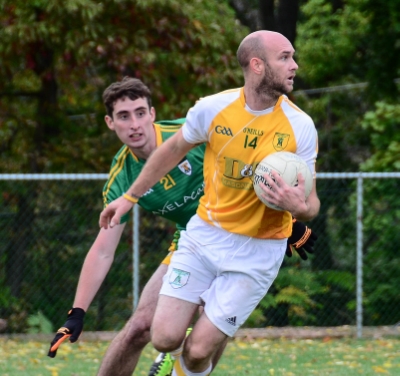
GAA Games This Weekend

Get ready for some football.

Get ready for some football.

The Philadelphia GAA is playing its first full season on the beautiful new fields in Limerick, PA
There are a slew of games this weekend. Set your GPS for 485 Longview Rd. and BYO sunscreen.

Saturday Football

3 PM Junior B Championship, Kevin Barry’s Vs. St. Patrick’s
4:30 PM Senior Championship, Pittsburgh Vs. Young Irelands
6 PM Senior Championship, Kevin Barrys vs. St. Patrick’s

Sunday Hurling
1 PM Hurling Championship, Allentown Hibernians Vs. Na Toraidhe

News, People, Photo Essays

Painting Wine Glasses: The Latest Fun-raiser

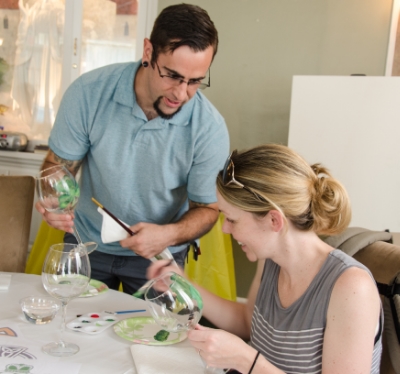
Instructor Collin Hennessey guides a fledgling painter.

Instructor Collin Hennessey guides a fledgling painter.

Turns out you don’t need artistic talent to enjoy a wine glass painting fundraiser. In fact, it helps if you don’t have any. The laughs are bigger.

The Philadelphia Irish Center held its first-ever painting party as part of this year’s fundraising campaign. The event was organized by Lisa Maloney who also included a kids-only craft party as part of the festivities. The kids didn’t paint wine glasses, but went home with canvas shoulder bags they decorated.

Entertainment was provided by the Cummins School of Irish Dance, which sent a dancer and instructor who taught the mother-daughter teams who attended the fundraiser how to do the Gay Gordon.

You can see all the fun in the photos below. Too bad you can’t hear the laughing.

[flickr_set id=”72157655417210050″]

How to Be Irish in Philly

How To Be Irish in Philly This Week

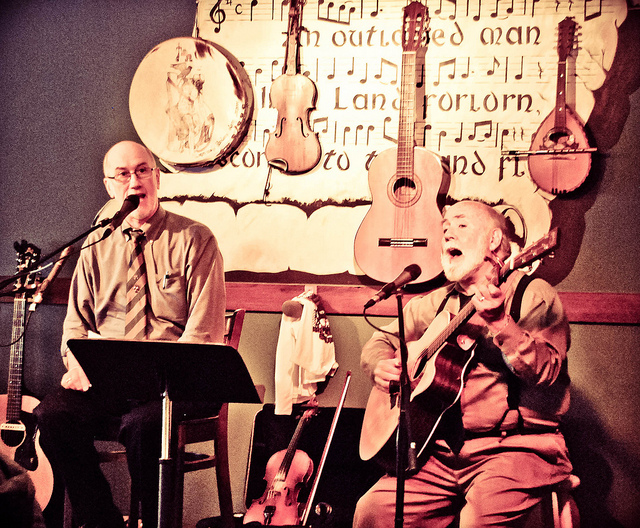
Timlin and Kane: in Gettysburg this weekend.

Timlin and Kane: in Gettysburg this weekend.

Combine an historical excursion with some Irish music on Saturday by heading to the Adams County Irish Festival near Gettysburg. Local duo, the popular Timlin and Kane, will be performing, along with the Kilmaine Saints, Irishtown Road, and Across the Pond. You can also see the 69th Pennsylvania Volunteers re-enactors and head to the battlefields where the original 69th fought like the wild Irish legends they were.

If you’re in Wildwood, and we know so many of you are, catch Blackthorn at Fox Park on Saturday night.

Next Friday, The Shantys will be at Tir na NOg in Trenton with special guest Diarmuid McSweeney on banjo.

If you’re a Celtic supporter—the Celtic football team from Glasgow—and even if you’re not, there’s a kickoff party for the season on Sunday, July 26, hosted by the 2nd Street Plough Boys at The Plough and the Stars in Philly. Tim Mac Mathuna will be performing (then there’s a session afterward) and you can meet Celtic FC Youth Academy coaches Mick McCahill, Ross Hester, Liam Murphy, and Dylan Johnston.

Sports

Really Physical Therapy

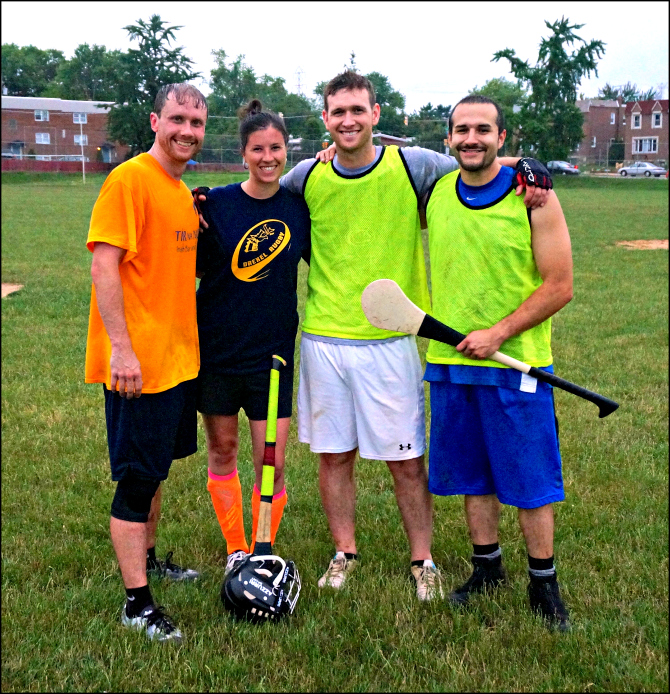
From left: Justin Budich, Kate Bartnik, Brian Sullivan, Mauricio Magaña

From left: Justin Budich, Kate Bartnik, Brian Sullivan, Mauricio Magaña

Twilight is closing in on a scrubby athletic field toward the rear of Philadelphia’s Northeast High School. Twenty or so young men—and two women—are racing back and forth, wielding what look like canoe paddles in one hand, and slapping a ball back and forth with it. Occasionally, one of those balls goes sailing over a high chain-link fence into traffic on Algon Avenue.

What you’re looking at is mayhem, with a fair amount of body contact—but still, there’s clearly a rhythm and structure to it.

This moderately anarchic activity is hurling, an ancient Gaelic game transported to the United States by Irish immigrants. By some accounts, Irishmen have been playing some version of hurling for more than 3,000 years. The sport is now drawing steadily increasing numbers of American players.

One of them is MossRehab physical therapist Brian Sullivan. A few other Moss physical therapists are out there on the field, too, persuaded by him that playing this obscure Gaelic sport would be a good idea.

It’s always seemed like a pretty good idea to Sullivan, a graduate of Slippery Rock University of Pennsylvania, who hails from Pittsburgh. He has been with MossRehab for two years. Sullivan’s first exposure to hurling came during a trip to Ireland in the spring of 2010, when he saw his first hurling match.  “That was how I found out that there even was a sport called hurling.”

He was even more surprised when he returned to the United States and, while attending a Pittsburgh-area Irish festival, saw the game being played on U.S. soil. He was incredulous. “I thought: Wait … this is actually happening in America?”

Sullivan had played organized baseball and soccer, and the sheer athleticism of hurling appealed to him, along with the fact that the game combined aspects of many other sports—field hockey, lacrosse, and even baseball—so he joined the local club in Pittsburgh. In spite of the game’s complexity—and perhaps because of it—Sullivan was hooked right from the start.

“It’s just a great game,” he says. “I just wanted to do it.”

So what is hurling? We’ve written about it many times before, but for the benefit of you Gaelic athletic newbies, hurling is said to be the fast-moving game on grass. No one who has ever watched it would dispute the point. It’s also one of the most physical. Hurling has been described as hockey mixed with murder. Maybe that’s a bit of Hibernian hyperbole, but neither is hurling croquet.

Here are the basics:

Hurling is played with a flat-bladed bat called a hurley, and a ball, roughly the size and weight of an American baseball, called a sliotar. (That’s a word from Irish Gaelic, pronounced “slitter.”)

The object of the game is for players to use the hurley to smack the sliotar either into a field hockey-like net for three points, or between two American football-style goalposts on either side of the net for one point.

There are a lot of ways players can move the sliotar down the field. They can hit it in the air, carry it briefly in their hand or toss it to one of their teammates, knock it about along the ground, or balance it on the blade of the hurley and run like the dickens toward the opponent’s goal. This last move, if you’ve ever seen it, seems to defy the laws of gravity.

Purists will tell you it’s all more nuanced than that, but those are the broad outlines.

Over time, for Sullivan hurling became not just a hobby, but a passion.

After graduation, when it came time to explore various cities in their quest for work and a nice place to live, Sullivan informed his wife Michelle that he had but one condition. “My one stipulation was that I’ll move wherever you want,” he recalls telling Michelle, “but they have to have a hurling team.”

Happily, Philadelphia has a hurling team—the Philadelphia Hurling Club—and it has MossRehab, part of the Einstein Healthcare Network, one of the nation’s premier rehabilitation facilities. So they moved to Philly.

Sullivan took to bringing his hurley and a ball along to work at his new job to practice out on the lawn at lunchtime near Moss’s facility on West Tabor Road in North Philadelphia. Co-workers soon became curious. “They’d ask, ‘What are you doing with this weird little stick?’” In time, he’d persuaded four other therapists to find out for themselves.

He says the hurley and ball also have uses for some of his patients, since they’re good for balance and eye-hand coordination. Balancing a sliotar on the end of the hurley, he laughs, “is like balancing an egg on a spoon.”

Sullivan’s involvement in Philadelphia hurling proved to have a side benefit, also relating to Einstein and to the Irish: specifically, helping to determine the carrier rate of Tay-Sachs disease among people of Irish descent. Dr. Adele Schneider, director of Clinical Genetics at Einstein Medical Center Philadelphia, has been managing the study.

Tay-Sachs is an inherited neurodegenerative disease that afflicts a very small percentage of infants. If both parents carry the gene, they can pass it along to their children. (The parents are unaffected by the disease.) Children with Tay-Sachs typically do not survive past their fifth birthday.

Most people, if they have heard of Tay-Sachs at all, probably associate the disease with people of eastern European Jewish descent—and indeed, this group is most affected. But other ethnic groups have a higher-than-average carrier rate—for example, French-Canadians, Cajuns and the Amish. Recent research by Dr. Schneider strongly suggests that people of Irish descent also might have a higher carrier rate.

Sullivan heard about the study, and assisted in raising its profile in the local Gaelic Athletic Association (GAA) community. A Tay-Sachs study banner hangs from the fence at the GAA’s new fields in Limerick, and representatives of the Genetics Division will be conducting tests this Sunday during the weekly games.

“He (Sullivan) came to our St. Patrick’s Day testing at Einstein and brought his hurley,” says Licensed Genetic Counselor Amybeth Weaver, MS, CGC. “He and Kerry O’Connor (Einstein senior communications manager), who was there, talked about it. Nothing happened for a month or two. Then Kerry forwarded an e-mail from Brian to us, saying they (the GAA) were looking for sponsors for their field.”

It seemed like a good idea, so the National Tay-Sachs & Allied Diseases Association of Delaware Valley, which funds the study, became a sponsor.

Weaver is looking forward to this weekend’s games in particular.

“There are three games scheduled,” she says. “ Brian thought this would be a good Irish draw, and maybe we’d get some folks who are eligible to participate in the study.” (Learn more here.)

Sullivan is grateful that he was able to connect his love of all things Irish to the study—and all because of one crazy game that, for him, is incredibly fulfilling on so many levels. “You get to represent your city,” he says. “It brings in your Irish heritage, which I’m very proud of. It brings in aspects of so many sports, and athletes can relate their sport to it. To me, hurling is the best sport out there.”

[flickr_set id=”72157651748682754″]

How to Be Irish in Philly

How To Be Irish in Philly This Week

This Tuesday, see a film about two brothers wrongfully hanged for a post-famine murder in Ireland--at the Irish Center.

This Tuesday, see a film about two brothers wrongfully hanged for a post-famine murder in Ireland–at the Irish Center.

The second of several fundraisers for the Irish Center is scheduled for Saturday—wine glass painting with the artists from dish & dabble in Havertown. It starts at 2 PM, but first contact Lisa Maloney to make sure there will be enough wine glasses. Contact her at at lisamaloney29@yahoo.com.

Also on Saturday, the golf outing that benefits the Charlie Dunlop Memorial Fund that was postponed last week takes place at Five Ponds Golf Club in Warminster.

On Saturday night, Slainte—that’s Jamison’s Frank Daly and CJ Mills—will be on stage at the Anglesea Pub in North Wildwood.

On Sunday, the John Byrne Band and the Birmingham Six are appearing at the 9th Street Italian Market in Philly. Yes, it’s Irish flavor day in the land of mozzarella and prosciutto.

On Monday, a special workshop on suicide awareness and prevention is being held at the Irish Immigration Center of Greater Philadelphia in Upper Darby.

On Tuesday, screenwriter and producer Alan Brown will be at the Philadelphia Irish Center to introduce his new short film, The Cormack Brothers, the true story of two Irish brothers wrongfully convicted and sentenced to death in 1858 for the murder of a local Protestant land agent in Loughmore, County Tipperary. Clearly, it is not a comedy.

On Wednesday, catch all of Jamison at the Ed Kelly Amphitheater in Pennypack Park, a very pretty location for an evening concert.

On Thursday, you downashore people can catch The Derry Brigade at the Anglesea Pub in North Wildwood.

Then on Friday, scoot over to Keenan’s (same great New Jersey town) to hear Jamison playing.

A heads up: Performer Frances Black of the famed Black family will be doing a house concert in Philadelphia with her two musical offspring on Saturday, August 1. Book early—there are only 49 seats available in the livingroom of Gabriel Donohue and Marian Makins in Center City. Contact barnstarconcerts@gmail.com to reserve your place. Admission is $20; everything goes to the artists.

Food & Drink, News

McKenna’s Kitchen and Market Opens

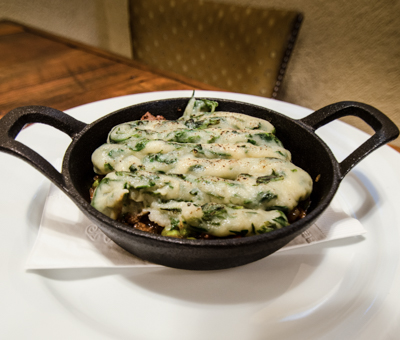
Mmmmm. . .shepherd's pie.

Mmmmm. . .shepherd’s pie.

If you’re a fan of the Food Network, you’re going to love McKenna’s Kitchen and Market, the new endeavor of Pat and Nancy Durnin in Havertown.

When you walk in, just pull up a stool at the counter, which is made from a piece of wood from an old Norfolk, VA, shipwreck that the designer found abandoned in a barn.

From there you can watch Chef Lee McCarron from Derry City piping mashed potatoes laced with spinach on top of a shepherd’s pie before sliding it into the oven to brown, plating bangers and mash with a drizzle of carmelized onion gravy, and arranging the Irish fry like a fine artist.

But the real reason you’re going to love McKenna’s is because of the food, not the show going on in the open kitchen where it’s prepared.

McCarron, who was the chef at the late, lamented St. Declan’s Well in Philadelphia, has taken some old familiar Irish recipes of the stick-to-your-ribs variety and added a delicate touch. The shepherd’s pie ($11), for example, is filled with ground lamb whose taste is enhanced rather than muffled by a rich oniony gravy. For those who prefer the Americanized version, there’s also a beef-based cottage pie ($10) on the McKenna’s menu.

And the Irish fry ($10), a plate loaded with rashers (Irish bacon), bangers (Irish sausage), eggs, baked beans, grilled tomato, black and white pudding (also sausages, one made with blood, the other without), hand-cut fries, and brown bread, isn’t just a breakfast meal. It’s all your daily requirements for calories, fat, and many vitamins and minerals all on one plate. You won’t eat again until the next day, even if you do have it for breakfast.

The extensive menu also has burgers, sandwiches (including Irish toasties, $7), salads, soups, appetizers and kids’ meals.

All the food, except for the Irish imports, is locally sourced, says co-owner Pat “”Squee” Durnin. “It’s all from within 200 miles of here. Lee says that fresh isn’t necessarily more expensive. It takes more work and more organizing, but sometimes it can save money.”

If the name McKenna’s sounds familiar, it’s because it’s a reflection of his mother-in-law’s decades old endeavor, McKenna’s Irish Shop, which he and Nancy operated in the same location on Darby Road until it closed late last year.

Nancy’s mother, Anne Gallagher McKenna, a Donegal immigrant (Ardara) started selling her knitted mittens, scarves, and sweaters out of her living room and eventually built it into a network of Irish artisans whose woolen goods she sold out of her store, which carried everything from gold and silver jewelry to Barry’s Tea to crates of turf. McKenna’s Irish Shop had a good 35-year run before a changing market made gold too expensive and a 12-piece set of Beleek china something your mother handed down to you, but you didn’t buy for yourself.

When McKenna’s Irish Shop wrapped up its last Claddagh necklace right after Christmas last year, plans were already in the works for the BYOB restaurant and market–where you can still get your Barry’s and more. It’s a joint venture of the Durnins and a local couple, Brian and Jennifer Cleary. Many other Irish hands played a part too.

“A lot of the people here tonight are local Irish trades people and craftsmen who worked on the building,” said Durnin last Friday night during the restaurant’s invitation-only soft opening. (It opened officially last Saturday for breakfast and lunch, then all-day starting on Monday.)

The Durnins and Clearys hired a designer from Virginia to turn the shop into an upscale restaurant space and many of the unusual touches—the handmade wooden tables, tin ceiling, and counter—came from the south. “The tables are handmade from tobacco wood,” explained Brian Cleary. “The tin ceiling date from 1863 and comes from a plantation in Virginia.”

The chairs, however, are local. “They were a find,” he says, clearly delighted. “They were from the Crystal Tearoom at Wanamaker’s in Philadelphia.”

A double door that looks out onto the glassed-in porch room harkens back to old Ireland, when they were designed to keep the animals out and the breezes drifting through the house, explains Durnin. A red “armoire” in the main dining area does provide cabinet space for dishes, glasses and cups, but some of the drawers are shallow because “it’s actually hiding a set of stairs” that leads to an upstairs apartment, Durnin reveals.

And Mrs. McKenna is there too. Reconstructing the shop involved freeing a fireplace that was once in the parlor of the building, which started life as someone’s home. Nancy Durnin had an old platter that had been handed down to her from her mother who got it from her mother. She wanted it to be in the restaurant, but couldn’t find a place for it.

“We were struggling over what to put up over the mantle of the fireplace,” explains Cleary, “then my wife said, “Let’s put it over the fireplace.’ It was like it belonged there.”

Just like McKenna’s Kitchen and Market itself.

McKenna’s is at 1901 Darby Road, Havertown. It’s open from 7 AM to 10 PM. Tea and coffee–the meals as well as the drinks–are served all day. Bread is made daily by a local Irish baker. There’s on-street parking and parking available at the school next door when school isn’t in session. For weekend reservations, call 610-853-2202. BYOB


[flickr_set id=”72157655686839552″]

News

Raising Funds for Victims of the Berkeley Balcony Collapse

berkeley home

It was early in the morning of June 16. Thirteen students attending a birthday party at an apartment building near the campus of the University of California Berkeley were standing out on a fourth-floor balcony when the balcony suddenly gave way, plunging to the ground. Six died, including five from Ireland. The fifth held joint U.S.-Irish citizenship. Seven were injured.

Many had traveled to the Berkeley area on J-1 visas, allowing them to work in the United States temporarily.

The incident hit Ireland hard, but had no less an effect on local residents who came here from Ireland, and Irish-Americans as well.

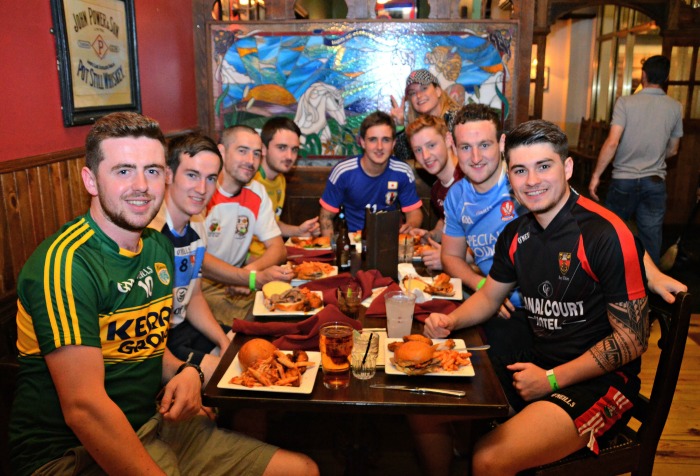
On Sunday, local Irish emigrants and Irish-Americans gathered at Tir na Nog in Center City for a fund-raiser to help out the families of the students involved, with food and drink donated by Tir na Nog.

“We just felt that it was something nice to do,” said Máirtín O’Brádaigh, one of the event organizers. Speaking of his own journey and those of other Irish citizens who came to America in recent decades, he said, “We were all in that position 20 years ago.”

As if to reinforce the connection between the Tir na Nog event and the Berkeley tragedy, most of those who attended were young people, many of them Gaelic Athletic Association players, decked out in team jerseys.

Proceeds from the event will also be made to the Kevin Bell Repatriation Trust, which raises money to help families in these tragic circumstances.

You can donate via a special gofundme.com site.

Here are some photos from the event.

[flickr_set id=”72157655001590520″]

How to Be Irish in Philly

How To Be Irish in Philly This Week

Opening this weekend!

Opening this weekend!

There’s really no such thing as a slow week in Irish Philadelphia—there are regular sessions all over the city and environs—but this is a slowish week for one-off events.

However, the new McKenna’s Kitchen and Market—the restaurant that is taking over the spot once occupied by McKenna’s Irish Shop on Eagle Road in Havertown—opens officially on July 5 and the early reports are that it’s going to become one of our favorite spots. We’re getting a chance to try it out tonight in advance of the opening, so we’ll keep you posted! And we’ll have photos of our food, because, well, that’s the way it goes these days.

Then on Friday, July 10, No Irish Need Apply will play at Danube Swabian Association, 1277 Southampton Road, in Philadelphia. This private club that fosters German culture in Philly (with special emphasis on soccer, which is hot this week) is sponsoring concerts all summer. Danke for including an Irish Band, DS!

Next weekend, the Charlie Dunlop Memorial Golf Outing, postponed last weekend because of rain, will be held at Warminster Township’s Five Ponds Golf Club on July 11.

Also on July 11, the second of several Irish Center Fundraisers that will go on through fall: a painting party (wine glasses!) at The Irish Center.

On Monday, July 13, the Irish Immigration Center, motivated by events here and in Ireland, is hosting a special workshop on suicide awareness and prevention, starting at 8:15 PM. For further information, contact Leslie Alcock at lelie@icphilad.org, phone 610-789-6355 or Ciaran Porter, Ciaran.porter.gda.philadelphia.usa@gaa.ie, phone 267-581-9394.

On Thursday, July 16, there will be a month’s mind Mass for the Irish victims of the Berkeley balcony collapse at St. Laurence Church, 8245 West Chester Pike, Upper Darby, starting at 7:30 PM.

Check our calendar for any late breaking items.