Monthly Archives:

May 2015

History, News, People

Second Duffy’s Cut Victim Returning Home

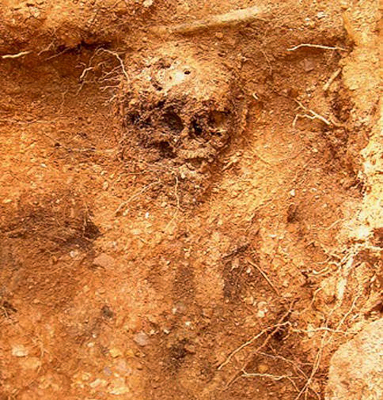
The skull of Catherine Burns as it was found in the archeological dig. Photo courtesy of Duffy's Cut.

The skull of Catherine Burns as it was found in the archeological dig. Photo courtesy of Duffy’s Cut.

Catherine Burns is going home in July. She will be buried under a Celtic cross in the cemetery of St. Patrick’s Parish of Clonoe, County Tyrone, Northern Ireland. She is the second of the victims of the Duffy’s Cut tragedy whose remains will be interred in the country they left behind in 1832 to find a better life, but who met death instead.

Hers was the seventh body they found—a handful of bone fragments really—in the pit of clay and shale at the Malvern archeological site called Duffy’s Cut, after the 19th century railroad contractor who recruited dozens of Irishmen to work on laying tracks for the Philadelphia and Columbia Railroad, now part of Amtrak’s northeast corridor. Fifty-seven of them died there, only six weeks after arriving on American soil on the ship John Stamp, which had sailed out of Derry on its two-month Atlantic voyage.

The body was known as SK007—a designation indicating only the order in which it was discovered. But one day, several years ago, as a team of students, led by Immaculata College history professor William Watson, his twin brother Frank, a Lutheran minister, and several colleagues, worked at the site, they received a phone call that helped them give those bones a name.

“We were finishing digging out the body we were calling ‘the tall man’ when we got a call from Janet Monge, our forensic anthropologist at Penn, who told us that it was a woman,” recalled the Rev. Frank Watson. “First and foremost, we almost fainted. We had found a pelvis and a skull and Janet told us that the palate was small and it was a woman’s pelvis. We knew from the ship’s records that there had been a young woman, Elizabeth Devine, who came with her brother who was a laborer. But Janet told us she was too young. This was another woman aged around 30, so that left a woman who had traveled from Tyrone on the John Stamp with her father-in-law, John Burns, at 70 the eldest of the immigrants. She was a widow and her name was Catherine. She was 29. And we found historically that she had disappeared with John, like the others.”

And, like the others, Catherine Burns’ remains showed signs of violence. “She had been treated just like the men. She died of blunt force trauma, just like the rest of the men except for the tall man under the tree who had a bullet in his skull. She was beaten to death,” said Watson. “There were no defensive wounds, so they were probably tied up before they were killed. It’s just horrible.”

Over the years, the Watson brothers and their colleagues pieced together what is now a well known story of Irish immigrants seeking a better life who were murdered by local vigilantes who feared the spread of a cholera epidemic that had overtaken the small encampment where the laborers lived, near a likely contaminated creek running by. Only a small group of nuns, the Daughters of Charity, were courageous enough to minister to the Irish workers, coming out from Philadelphia to do so.

It’s a story told even in Clonoe, a rural parish on the southwest corner of Lough Neagh, says Father Benny Fee, pastor of St. Patrick’s. “It is surprising to me how many [of my parishioners] are aware of Duffy’s Cut and the terrible things that happened there,” he wrote in an email this week.

A friend and former parishioner, Brian McCaul, now of Upper Darby, suggested that Catherine’s remains might find a home in the Clonoe Parish Cemetery. “We got involved because as far as I know Brian gave my name to some of the people involved in the Duffy’s cut Repatriation Project,” wrote Father Fee. “We feel very honored to do something for this child of God, Catherine Burns, a lady who I suspect was given very little dignity or value in life. The seventh corporal work of mercy is to bury the dead, so it is a privilege and an honor to be asked to be involved.”

On Sunday, July 19, after a Mass performed by Father Fee, Catherine Burns’ remains will be interred at the foot of “what we call the Tall Cross of Clonoe,” wrote Father Fee.

It’s “a modern cross erected in 2008 in honour of the 150th anniversary of the apparition of Our Lady at Lourdes.,” he wrote. “It is modeled on the Papal Cross that was raised above the Altar in Dublin’s Phoenix Park for the visit of Pope John Paul to Ireland in 1979. And remember at Shannon Airport he spoke of those countless men and women who left Ireland for the New World just as he was leaving Ireland to travel on to New York to address the United Nations. The Cross is lit up at night, based on the lighting of the Bridge of Peace at Drogheda, County Louth. The Cross for us, of course, as believers in Christ is the great bridge from this world to the world of the Presence of God.”

Catherine’s remains will be accompanied by the Watson brothers and their close colleague Earl Schandlemeier who will also revisit and place a marker on the grave of 19-year-old John Ruddy, a victim from Donegal, whose body was buried a year ago in a plot in Ardara, Donegal, donated by Irish Center President Vincent Gallagher. Gallagher may also attend the ceremony. Five other victims whose remains were discovered but who have never been identified are buried in a donated plot—under a Celtic cross—at West Laurel Hill Cemetery in Bala Cynwyd where, until recently, Catherine Burns’ remains were interred.

Several local organizations, including the Philadelphia Tyrone Society and the Friendly Sons of St. Patrick, as well as individuals have contributed to the cost of repatriating the bodies. “Kathy McGee Burns gave us a significant gift he night of her installation as grand marshal of the Philadelphia St. Patrick’s Day parade,” said Watson. McGee Burns, president of the Irish Memorial, also contributed to John Ruddy’s burial in Donegal.

Work will resume at the Duffy’s Cut site on June 8—core samples will be taken to determine if there are any bone fragments in a space under the tracks where screenings found another possible mass grave, possibly the other 50 missing workers, said Watson. “Ideally, if we find what we anticipate we’ll find, the dig will reconvene this year. We have no idea what the Amtrak derailment [on Tuesday night, May 12, in Philadelphia] will mean to this.”

What makes the Watsons and their colleagues press on is something both personal and spiritual. The story started for them one day in 2002 while going through files that belonged to their grandfather, who was executive assistant to the president of the Pennsylvania Railroad, Martin Clement. Clement had kept an extensive file on Duffy’s Cut and it had wound up in their grandfather’s papers.

“We inherited the story from our grandfather and we think it’s for a reason,” said Watson. “This didn’t come to us by accident. This is a story that needs to be told and we need to work for justice and right for these people who never got the chance in their lifetime.”

Photos of other remains below from the Duffy’s Cut team.

[flickr_set id=”72157649056415304″]
News, People

Local Swimmer Pursues Olympic Dreams in Ireland

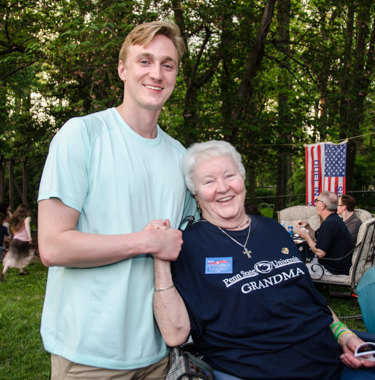
Shane Ryan and grandmother Pat Bonner.

Shane Ryan and grandmother Pat Bonner.

Havertown’s Shane Ryan, the 6’6” record-setting Penn State swimmer, headed to Ireland this week with his Irish-born dad, Tom, to begin the next leg of an athletic career that could lead him to the Olympics.

A member of the USA Swimming national team, Ryan, after many discussions and soul-searching with his Penn State and US national team coach Tim Murphy, decided his best shot at a berth on an Olympic team would be in Ireland, where, because of his father, a County Laois native, he’s eligible for citizenship.

Ryan is ranked fourth or fifth in the US and he would have to place in the top two in finals in the US—where there are many topnotch swimmers–to qualify to head to Rio in 2016 as part of the US Olympic team. His pace is certainly up to par. His 100-meter backstroke time is faster than the “A” standard for Olympic qualification and he’s close to it for the 100-meter freestyle. He broke the national record in the 100-meter backstroke.

It was a tough decision, said Ryan, who sat down with me during a going-away party last weekend, attended by family and friends in the spacious backyard of his family home. “I talked it over with my coach and we decided that it was my best chance to get to the Olympics and to get a medal,” explained the 21-year-old, a recreation, park, and tourism management major at Penn State’s main campus. “In the US, they only take the top two and if I come in third, there goes my shot. But I also saw it as an opportunity for me to help put Irish swimming on the map. “

According to an article in the Irish Times, Ryan will be considered “the hottest Olympic swimming prospect in the country.” By international swimming federation (FINA) rules, he has to live for a year in Ireland before he’s eligible for the Irish team, though he will be training with them.

It’s not unusual for athletes with dual citizenships to compete for teams outside their birth countries. In fact, 120 out of the 3,000 competitors at last year’s Sochi Winter Olympics were doing just that, found a Pew Research Center survey.

Yes, they often do it for personal gain. But some, like Ryan, also have an emotional connection to another country. Like many children of immigrants, Ryan grew up with a strong sense of his heritage, and not just because of his father, who himself emigrated to the US to play Gaelic football for the Gaelic Athletic Association. His mother, Mary Beth Bonner Ryan, a singer, aquatics coach and a former Miss Mayo, “also lived for a year in Ireland when she was my age,” he says.

His grandfather was the late Phillip “Knute” Bonner, a Philadelphia police officer, a long-time member of the Philadelphia St. Patrick’s Day Observance Association. (Ryan’s mother now sits on board of the organization that plans the city’s St. Patrick’s Day parade.)

His maternal grandmother, Patricia Noone Bonner, was, like her grandson, the child of immigrants. Her father, Martin Noone, was a dedicated Irish republican from County Mayo who bequeathed to her a strong passion to bring about a united Ireland. Pat Bonner has been involved in that cause through various organizations for more than 40 years.

“And I come from Havertown, which is known as the 33rd county of Ireland, because there are so many Irish here,” says Ryan. “Being Irish has always been a big part of my life.”

He’ll be missing his family—his parents, brother Brendan, college student, and 16-year-old sister Tara, and his grandmother. (See photos below.) But he won’t be wanting for kin. “My Dad is one of 10,” he says. He has dozens of cousins, some his own age, who will be a short trip away in Portlaoise, south west of Dublin where Ryan will be living.

He’ll be working while he’s in Ireland, but is taking a year’s hiatus from college. But he’ll head back to Penn State, where he has a full scholarship, for his degree once his Olympic dreams in Ireland are played out one way or the other. There are no guarantees.

“I need to do my job,” says Ryan. “It’s going to be a lot of hard work. You don’t get there just by being faster and having natural talent. I realize that this is a once-in-a-life time opportunity and I think if you have a chance to do something, you ought to take it.”

[flickr_set id=”72157652440393579″]


Music, News, People

Local Trad Performers Score Big at the Fleadh

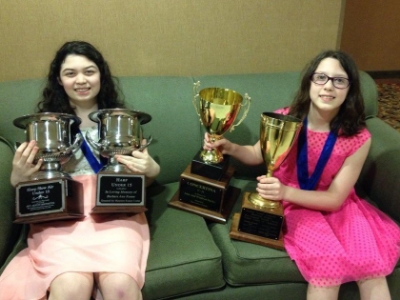
Emily and Livia Safko with some of their fleadh trophies.

Emily and Livia Safko with some of their fleadh trophies.

The Delaware Valley will be well represented this year at the Fleadh Cheoil na hEireann in Sligo, the annual “Olympics” of Irish traditional music sponsored by Comhaltas Ceoltoiri Eireann, the international organization dedicated to the preservation of Irish music and culture. A total of 10 local Irish traditional music performers, most of them under 18, qualified at the annual Fleadh (pronounced “flag:) in Parsippany, NJ, last weekend for what are known as the All-Irelands. Some of them have already competed—and won—there.

One competitor, fiddler and concertina player Livia Safko of Medford Lakes, NJ, made Comhaltas (pronounced coal-tas) history when she placed first in four competitions at the Fleadh, any one of which would qualify her to compete in Sligo, which is hosting its second All-Irelands competition.

Livia took first in the under 15 duets, which she won with her older sister, Emily, on harp. The other firsts: under 12 fiddle, under 12 fiddle slow airs, and concertina.

Emily Safko also took home firsts in under 15 harp and harp slow airs.

Other local musicians also brought home trophies—some almost as big as they are. Catherine Bouvier of Merchantsville, NJ, a student of local harper Kathy DeAngelo, took home first place in under 12 harp and her twin sister, Olivia, won second place.

The Converse Trio—fiddlers Haley Richardson of Elmer, NJ, and Alexander Weir of West Chester along with piper Keegan Loesel of Kennett Square—took home first place in under 18 trios. They earned a third place in trios in last year’s All-Ireland completion, also in Sligo. Richardson and Loesel also won second place in duets in Parsippany last weekend.

Richardson, a second place winner in slow airs in Sligo in 2014, won first in under 15 fiddle and second in fiddle slow airs. Loesel took firsts in under 18 whistle slow air and uillean pipes solos and slow airs. Weir, a third place winner in fiddle slow airs in Sligo, earned a first in under 18 fiddle slow airs in Parsippany.

Fiddler Patrick “Patch” Glennan of Mantua, NJ, won a silver medal in his first competition.

Another Jersey winner: Katherine Highet of Voorhees, a second place in over 18 harp.

Mary Kay Mann of Media also won first places in over 18 harp slow airs and flute.

One interesting thing many of these winners have in common: They are or were members of the Next Generation, a group of young performers who play together at the Irish Center in Philadelphia, led by husband-and-wife team Dennis Gormley and Kathy DeAngelo (Comhaltas Hall of Famers) and Chris Brennan Hagy. “This is how they met each other and started playing together,” says DeAngelo. “[This is a] point of pride for me and Dennis. Six of them are or were my students.”

The photos below were shared with us by Katherine Ball Weir, Amy Safko, and Kathy DeAngelo.

[flickr_set id=”72157650475021874”]

People

‘Philly Will Not Ever Again Be the Same Without Her Ever Humble and Gracious Presence’

Sister Cecile, St. Patrick's Day, 2011.

Sister Cecile, St. Patrick’s Day, 2011.

Marybeth Phillips thought twice about what she would wear to the funeral of Sister Cecile Reiley. Most people would say you’re supposed to wear dark clothes. Instead, after some thought, Phillips chose a floaty type of skirt with patterns of light purple, dark purple, and blue. She chose it to honor the memory of her friend, a passionate devotee of the arts.

“No matter what anybody else is thinking,” Phillips thought, “Cecile is going to love it because it looks like Van Gogh’s ‘Starry Night.’”

When Phillips arrived at St. Joseph’s Villa, she found the chapel awash in the most fuchsia, pink roses and other bright, colorful flowers—and Sister Cecile, in repose, in the most cheerful of hues, including a lavender linen jacket and a woven purple scarf.

“I thought, wow, she was more colorful than I was,” Phillips says. That wasn’t surprising, she adds. “She knew where she was going, and she was going to go with great spirit and joy.”

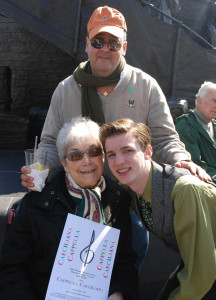
Sister Cecile Anne Reiley, SSJ, passed away April 24 at the age of 76. A tireless, lifelong advocate on behalf of the poor and the powerless and an ardent peace activist, she made her mark as parish services director at St. Malachy Church in North Philadelphia, where she seemed to take on any task that came her way, from pastoral counseling to organizing the annual benefit Irish music concert featuring Mick Moloney and friends.

A self described “coal cracker” born in Pottsville, Schuylkill County, Sister Cecile was diagnosed with rheumatoid arthritis—a chronic, painful and crippling disease, at a very early age. Friends knew she endured great suffering, but she just went on about her life, attacking it with gusto.

“She never complained,” says friend Kathy McGee Burns, who visited Sister Cecile in the hospital in her final days. “Little by little, I saw her body give way. It sure didn’t reduce her spirit, or her ability to get where she wanted to go. She got things done that were amazing that you never would have dreamed she would get done. People loved to do for her. If she called, you couldn’t say no. She never complained … and she still got the job done.”

Father John McNamee, St. Malachy’s pastor emeritus, saw that can-do quality in Sister Cecile right from the beginning of their relationship.

“I met her more than 20 years ago.” Father Mac says. “We were protesting against a nuclear facility near Drexel.”

The two struck up a conversation. What happened after that is lost in the mists of time. Somehow, Sister Cecile wound up working at St. Malachy’s. “I didn’t even remember that I invited her in. I must have. She had a desk, a computer, a phone, and her friends stopping by.”

Once she was there, Father McNamee was happy to let her work her magic. St. Malachy’s needed all the help it could get, and having someone with Sister Cecile’s indomitable energy was a decided plus. Father McNamee reflects, “It was Andy Warhol who said that half of life is showing up.” And that’s what Sister Cecile did.

Sister Cecile also lent her artistic talents to St. Malachy, including directing the decoration of the altar for holy days and for the Mick Moloney concert. Art remained a lifelong love.

“We had a lot of conversations about great artists … Renoir, Van Gogh,” recalls Marybeth Phillips. “She always said Renoir inspired her. Renoir said he was going to keep painting until he could no longer hold the brush. She said, I want to do that, not just with my art, but with everything I do. She was doing that until two weeks before she died.”

We would also like to share with you one very special remembrance from great friend and devoted colleague Mary Heron:

Sister Cecile Reiley brought joy and wisdom wherever she went. And she went many places over her lifetime. Unfortunately, I only knew her for the last 20 years as she served as parish services director for St. Malachy. In the early days of our friendship we enjoyed all kinds of entertainment from movies to Shakespeare to picnics to fireworks. She was always ready to go. As the years went by, it became harder for her to get around but her fold-up wheelchair fit in the trunk of my small car and we continued to go.

Meantime, she was organizing concerts for St. Malachy Church usually benefits for the school. Some of those concerts included the St. Malachy choir from Belfast, the Cappella Cecilia concert also from Ireland, and of course, the annual Mick Moloney & Friends concert which she loved. In recent years, an Irish Mass with Irish musicians was begun as an annual tradition, in early March.

When she could no longer go to shows, she brought the shows to St. Joseph’s Villa. She drafted Tony Braithwaite, professional comedian often performing at Ambler’s Act 2 Playhouse, to help launch a comedy and drafted the nuns as actors. It was a great success and was written up in the Irish Edition and the Chestnut Hill local. Several concerts were presented at the Villa through her direction and persuasion to bring the musicians to perform.

Sister Cecile never let her physical limitations hold her back. Her perseverance, patience and vitality were an inspiration to all who knew her. Herself an accomplished pianist and singer before being overtaken by rheumatoid arthritis, Sister Cecile followed in the footsteps of her namesake, the patroness of music. Her artistic talent stretched to painting and she presented her work in an exhibit at Chestnut Hill College in the 1990’s.

The community of St. Malachy feels a great loss at her passing. And I will miss her attentive listening, insight and guidance along with the joy we shared.

Father Mac also shared this remembrance from Mick Moloney, who was traveling in Asia:

Sister Cecile was one of the loveliest people I have ever met. A living saint, really. The most gentle of souls but with a calm inner strength that was extraordinary.

Every year for nearly three decades we were in contact regarding the big concert we have done at St. Malachy’s Church every fall for the past 28 years. Typically she had to hound me to confirm the date and then the names of the various musicians I would be performing with on the day. As the PR deadlines approached the hounding became more insistent but it was always graceful. And the job always got done even if it came down to the wire. It was always worth it and her big welcome to all of us arriving at the magical church every year was just unforgettable. Even as Cecile grew weaker physically over the past few years she continued to touch every musician who came by with her courage, her humility, her grace and her fortitude. I will miss her deeply. Coming back to Philly will not ever again be the same without her ever humble and gracious presence.

Dance, Music

We Were Wearing Our Movie Directors’ Hats, Too

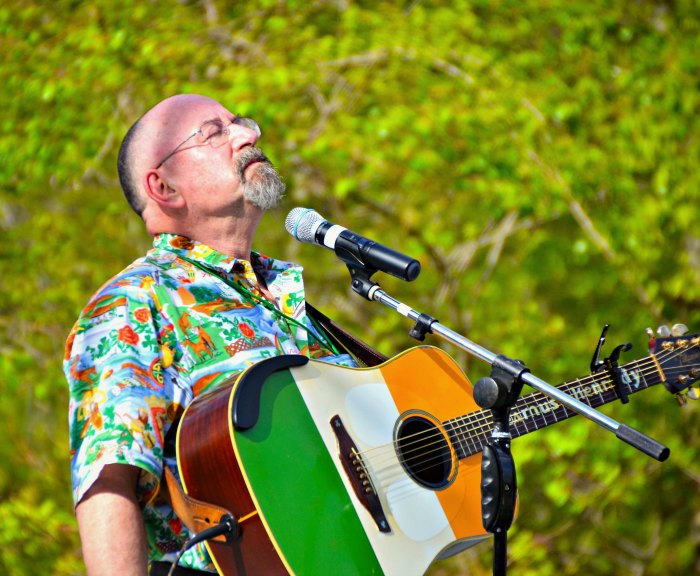
Seamus Kennedy in a reflective moment.

Seamus Kennedy in a reflective moment.

These days, when we go to many Philly Irish events, we’re occasionally doing double duty. You’ll sometimes see one of us with both a still camera and a video camera draped about the next. We’re often confused about what to do with which.

We got over our confusion the day of the Philly Fleadh down at the Cherokee Festival Grounds last weekend, enough so that you can see some of the dancing, hear some of the music, and generally take in all of the fun.

Dance, Music

Picture This: The 2015 Philadelphia Fleadh

Maggie Carr Wreski and John Byrne share a laugh.

Maggie Carr Wreski and John Byrne share a laugh.

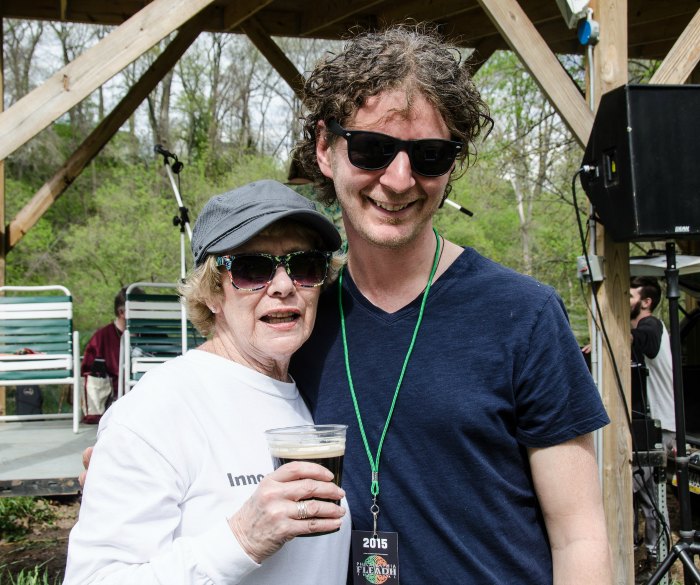
For one day, the Cherokee Festival Grounds was a microcosm of just about everything that is Irish in the Delaware Valley.

On Saturday, this broad tree-lined lawn played host to a fèis—an Irish dance competition sponsored by the Celtic Flame School of Dance—along with open-air concerts by Burning Bridget Cleary, Jamison Celtic Rock, Seamus Kennedy, Ray Coleman, the Mahones, the Bogside Rogues, and pretty much of the royalty of Irish music from Philly and beyond, traditional and otherwise. People lined up for chips on a stick—what genius invented them?—hot dogs, burgers, bite-sized Guinness cupcakes with swirls of Bailey’s frosting–and again we ask, what genius invented them?–and cold brews to wash it all down with. There were vendors all over the place. If you wanted to buy a Goth-y corset, the Philly Fleadh was just the place to get one.

Thank America Paddy’s Productions for pulling it all off smoothly. We ran into one of the aforementioned Paddys, Jamison front man Frank Daly, who seemed a whole lot more relaxed about things this year than last. And that, even after a last-minute switch from the original festival location, Pennypack Park. Everything worked out for the best—maybe better than the best.

We have a pile of pictures from the day.

Here ya go:

[flickr_set id=”72157652346004665″]


How to Be Irish in Philly

How to Be Irish in Philly This Week

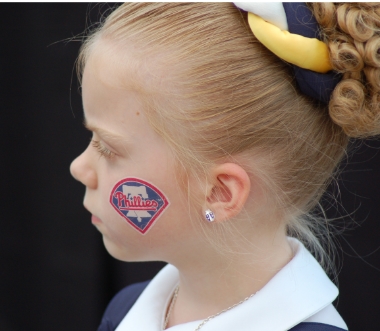
Wearing her team on her cheek.

Wearing her team on her cheek.

Irish music and real estate dominate this week’s events in Irish Philadelphia.

Dine and dance on Saturday night at the Irish Center with the Galway Society, holding it’s annual dinner dance featuring the music of the Vince Gallagher Band.

Also on Saturday, Timlin and Kane are performing at Catherine Rooney’s in Wilmington.

On Monday, learn why investing in Irish property is a good business move at a special workshop at The Union League in Philadelphia, sponsored by the Irish American Business Chamber and Network. Pretty sure they’re not going to be talking about thatched cottages, but you never know.

Get your reserves in asap for Irish harper Maire Ni Chathasaigh and English acoustic guitarist Chris Newman who will be doing a house concert on Wednesady in Center City at the home of musicians Gabriel Donohue and Marian Makins. It’s their livingroom, so seats are limited.

The Celtic Tenors will be in nearby Millville, NJ on Thursday at the Levoy Theater.

On Friday, take yourself out to the ballgame. It’s Irish Heritage Night at the Phillies, with lots of Irish musicians and dancers to enliven the evening.

Two local groups are debuting some new material from upcoming albums this week. On Friday, Burning Bridget Cleary will be performing at Steel City Coffee House, a cozy venue in Phoenixville. Then on Saturday, The John Byrne Band will be at another cozy venue, the Tin Angel on Second Street in Philadelphia, playing songs and tunes fresh from the recording studio. Expect a new CD from them come September.

On Sunday, May 18, join the Donegal Association at a fundraiser at the Irish Center to help St. Columba’s Church in Glenswilly, County Donegal, make some much needed repairs. It’s not seen quite as much these days, but it’s been traditional for Irish immigrants to maintain ties with their home parish and to help in fundraising efforts. This is your chance to experience that.

And to all you Irish mammies out there, Happy Mother’s Day!

Music

Celtic Thunder’s Emmet Cahill Coming to The Irish Center

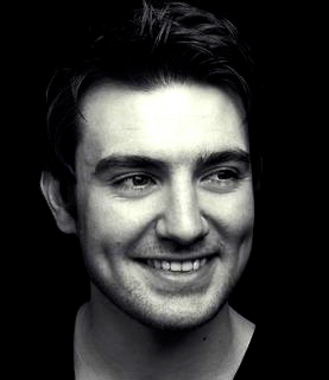
Emmet Cahill, going solo.

Emmet Cahill, going solo.

One of the things that happens when you join a popular music group already in progress is that you inherit their fans. In the case of Celtic Thunder, you inherit the “Thunderheads,” as they’re called, admirers so devoted they’ll travel to other countries and continents at great expense to see their “boys” perform.

That’s what happened to Emmet Cahill when he was chosen to join the theatrical Irish singing group in 2010 at the age of 20. The adulation was an eye-opener. “When I first walked on stage and heard the cheering I was looking around for who they were cheering for,” he admits.

How did he cope?

“Oh it was awful, absolutely terrible, I’m still recovering from the emotional scars,” laughs Cahill, now the ripe old age of 24 and launching his first American tour of his solo career which will bring him to Philadelphia’s Irish Center on Wednesday, May 27. “Of course, it was absolutely brilliant!”

He’s talking by phone from his family home in Mullingar, County Westmeath, where he’s preparing his set list for the tour. “There’s sheet music all over,” he says. “You caught me in mid-destruction, as my mam likes to call it.”

Celtic Thunder was started in 2007 by producer Sharon Browne and musical director Phil Coulter, an experiment to see if five different voices from men of different ages (from 14 to 44 at one point) would meld. They melded just fine. The group has released 11 albums, appeared on countless PBS specials, and was Billboard’s top world album artist for three years.

Over the years, members have come and gone. Paul Byrom, Damien McGinty, and George Donaldson are probably the best known of the former singing mates who’ve moved on to solo careers. Sadly, Donaldson, who performed frequently in Philadelphia, died suddenly last year of a heart attack at the age of 46. Cahill had left the group by the time of Donaldson’s death, but he rejoined them for a tribute tour to the man they called “Big George” in Australia last year and was on the group’s most recent fan cruise in November.

Cahill grew up in a musical family—his father is a music teacher and both parents sing. He started piano when he was four and his mother had him in voice training at the age of seven. “When I was 12 I was still a boy soprano and I won a music scholarship to high school,” he says. “I also took up guitar and violin as well. I was quite busy as you can imagine.”

He always had his sights set on a solo career in music. In 2010, he was at the Royal Irish Academy of Music studying opera and theater where he was awarded the John McCormack Bursary for the most promising young tenor, named the most promising young singer at the Academy, and was a multiple prize winner at the National Feis Ceoil singing competition.

Then to his own surprise he found himself auditioning for Celtic Thunder. “I knew nothing about Celtic Thunder and I didn’t even want to do it but my Dad pushed me into it,” says Cahill. He thinks the fact that he really didn’t know what he was getting into—and was reluctant to even do it—curbed any audition stress he might have felt that would have affected his performance. They grabbed him up. “I guess those are the ones you get, the ones you don’t care about,” he says, laughing. “It helps when you walk in and you’re easy going.”

Though someone as musically gifted as Cahill might be dreaming of the rock star life, the 24-year-old was classically trained and raised on old recordings of famed Irish tenor John McCormack, who was also from Westmeath, operatically trained and enormously popular in both Europe and the US in the early 20th century.

So there are plenty of McCormack songs among the sheet music Cahill is using to build his set list. “I like to think I’m following in his footsteps,” says Cahill. “He made a career in America singing Irish songs. He was so well-loved in the States. So I’m going to be singing some of the songs he made famous during my tour.”

Songs like “I Hear You Calling,” and “Macushla” – don’t worry if you don’t think you know them. You’ve probably heard them and can even download McCormack’s versions from iTunes to refresh your memory.

“I’ll be doing Irish favorites, like ‘I’ll Take You Home, Kathleen,’ and I’m known for singing the likes of ‘Danny Boy.’ In Celtic Thunder, it was my big solo song,” he says.

Expect some Rogers and Hammerstein, some gospel music (when he’s home he’s the cantor at Mullingar Cathedral) and, when he picks up the guitar, some old folk tunes. “I do modern songs as well,” he adds. “I want there to be something for everyone, from grandparents to kids.”

While he’s inherited a tight fan base from Celtic Thunder, his goal for his US tour is to introduce himself to Thunder fans and others who may not know that he’s also a good storyteller (“I have no trouble getting up telling embarrassing stories about myself and my childhood. Most of them are fresh in the memory,” he quips, giving himself a jab about his age.) and to create new fans—Emmet Cahill fans. He hopes the smaller venues for his US tour will let fans get to know him, up close and personal.

“I’m really looking forward meeting people and letting them get to see me up close. I know from my Celtic Thunder experience, especially from the cruises, that that’s something people are interested in. They ask me, ‘Emmet, what do you do when you’re off?’ They’re sometimes more interested in that than the songs I’m singing. When I’m up on stage, I want people to feel that they know me, that I’m a guy they could go have a beer with.”

And, he says, that’s not out of the question. “There’s no barrier. If you walk up to me in the street to have a chat and ask me how it’s going I’ll tell you if it’s good or going crap,” he laughs. “I think people see me as a young fella from Ireland singing songs and having a bit of craic.”

Which, of course, is what he is. And enjoying every second of it. “What other job gives you the opportunity to bring happiness to people?” he says. “I want to do that as long as possible.”

Catch Emmet Cahill at the Irish Center, 6815 Emlen Street, Philadelphia, PA 19119, on Wednesday, May 27, at 7;30 PM. Order tickets here.