Monthly Archives:

November 2014

News, People

Four Inducted Into Delaware Valley Irish Hall of Fame

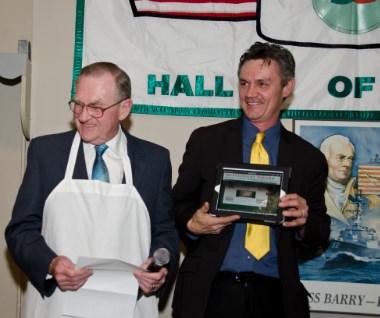
Musician Luke Jardel holds a photo of Emmett's Tavern while Emmett Ruane shows off his new white apron, a gift from Jardel.

Musician Luke Jardel holds a photo of Emmett’s Tavern while Emmett Ruane shows off his new white apron, a gift from Jardel.

Emmett Ruane, whose Emmett’s Place tavern in Philadelphia gave birth to the careers of countless Irish musicians and provided a dance floor for countless Irish dancers, was one of four people inducted into the Delaware Valley Irish Hall of Fame on Sunday night.

Joining Ruane at the head table at the Irish Center were Donegal-born Jim McGill, former president of the Philadelphia Ceili Group and the Donegal Association, whose daughter Rosaleen pointed out was her—and many other people’s—first introduction to the Irish heritage and culture he loves; and Frank and Bill Watson, twin brothers who persisted against all odds and donated hours of their time and thousands of dollars of their own money to keep the memory of 57 Irish immigrants who died violently at a railroad site called Duffy’s cut more than 130 years ago, victims of disease, fear, and intolerance.

The first Commodore John Barry Award was given posthumously to Barry himself, the Wexford-born Revolutionary War hero who is considered the father of the US Navy. He lived in Philadelphia and is buried in the graveyard of Old St. Mary’s Church, near Independence Hall and the large statue of Barry that sits behind. Accepting the award in Barry’s name was Barbara Jones, Irish Consul General in New York, who is from Wexford.

The award was first proposed by Frank Hollingsworth, a member of the Hall of Fame committee, who traces his ancestors back to Wexford.

More than 300 people attended the event, which is held annually at The Irish Center.
See our photos below.

[flickr_set id=”72157648877247280″]

News, People

Irish Immigration Center Seniors Star in Their Own Calendar

Declan Forde in the iconic scene from "Waking Ned Devine."

Declan Forde in the iconic scene from “Waking Ned Devine.”

Don’t order that Sierra Club calendar for 2015. The Irish Immigration Center of Greater Philadelphia has something better hitting the lucrative calendar market this year.

The Center’s full color 2015 calendar features photographs of more than 20 of the regulars at the weekly senior luncheon acting out iconic scenes from 12 popular Irish films of the last 60-some years, from “The Quiet Man” to “Once.”

The calendar idea was inspired by a similar calendar of classic films such as “Titanic” and “Breakfast at Tiffany’s” that were recreated by seniors at a German retirement center last year, says Siobhan Lyons, executive director of the Immigration Center, located in Upper Darby. “I thought it was an excellent idea and lots of fun. I thought it was something we could do, but with Irish films.”

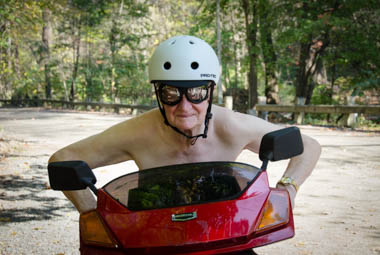
The first person she approached was Declan Forde,79, a self-described “Cork rebel” who now lives in Havertown. “I spoke to Declan, who plays the character on the motorbike in ‘Waking Ned Devine,’ and told him I needed him to get naked for the Immigration Center, he said, ‘Name the date,’” says Lyons, laughing.

You can see Forde half-naked—just shirtless—on a motorbike on the October 2015 calendar page. Husband-and-wife Jim and Kathleen McCaffery appear as actors Glen Hansard and Marketa Irglova from the sweet Irish romance “Once,” strolling down Grafton Street, which is played in the calendar by Elfreth’s Alley in Philadelphia. Tom McArdle was cast as the John Wayne character, Sean Thornton, and redheaded Kathleen Murtagh as Mary Kate Danaher, played by Maureen O’Hara, in the movie, “The Quiet Man.” The “cottage” was portrayed by the Fireside Room of the Irish Center in Mt. Airy. And Barney Boyce donned a brown wig to be Darby O’Gill joking around with the leprechaun, played by Jimmy Meehan in crown, green cape, and white knee socks, from “Darby O’Gill and the Little People”—a photo that required a little perspective trickery.

The Immigration Center partnered with www.irishphiladelphia.com to produce the calendar, which is on sale now online.

“What we think makes our calendar a standout is that we didn’t have a large budget, green screens, or bought costumes,” says Lyons. “We took the idea of the film and interpreted it the best we could with Philadelphia scenes. Where would this have happened in Philadelphia? So it really has a Philly flavor to it.”

Along with Elfreth’s Alley and the Irish Center, the latter which provided the back drop for “Darby O’Gill,” “The Quiet Man,” “The Field,” “My Left Foot,” and “The Commitments,” the photos were shot at McGillin’s Olde Ale House on Drury Lane in Center City (“Michael Collins”), Valley Green in Fairmount Park (“Waking Ned Devine”), the Italian Market (“Agnes Browne”), Harrowgate Gym in Kensington (“The Boxer”) and the Upper Darby Police Department (“The Guard”).

Many of the locations even have an Irish connection. “McGillin’s is the oldest Irish pub in the city,” says Lyons. “The Upper Darby police station—there are plenty of Irish there. If you look at the census, most of the original residents of Elfreth’s Alley were Irish people who worked as weavers and linen workers. And the Italian market? Well, a lot of our people married their people!”

The Irish community also helped. The seniors created their own costumes and props with the help of Leslie Alcock, the social worker from County Carlow who runs the senior programs at the center. (She’s listed as “key grip” in the calendar credits, but she was also prop girl, lighting director, and senior wrangler, among other things.)

AOH/LAOH Div 25’s Pearse and Liz Kerr connected the Center with Charlie Sgrillo of the Harrowgate Boxing Club to arrange to photograph Pete McEneany in his role of Daniel Day-Lewis in “The Boxer” at the club in Kensington which regularly hosts Irish boxers in the summer in AOH-sponsored bouts. Sgrillo even taped McEneany’s hands to make the photo look more authentic.

Gary O’Neill of Drexel Hill responded to an Irish Philadelphia Facebook request for a motor scooter for the “Waking Ned Devine” scene. One Saturday, he hitched his cherry red, nonfunctional Honda scooter to the bed of his truck and drove it to Valley Green where he, his daughter, Eve, and friend, Brian McCaul, unloaded it and set it up. “We were going to use Declan’s son’s motorcycle, but Declan has two artificial hips and he was not getting a leg over a motorbike,” explains Lyons. He had no trouble with the scooter, though taking his shirt off on a cool autumn day was a little daunting.

Besides making some money for the Center’s senior programs, Lyons hopes that the calendar will make people think a little differently about the elderly. “There’s a stereotype that older people are just sitting down in wooly slippers waiting to die,” she says. “Working at the Irish Immigration Center, I have another view. If they were devils at 15, they’re still devils when they’re 75 and heaven help us, they worse because they don’t care anymore what people think!”

The making of the calendar proved to be so much fun—“we laughed through the whole thing,” says Lyons– that now more of the seniors want to be in next year’s production, theme still undetermined. “We might have to be doing some large crowd scenes,” she laughs.

The Irish Immigration Center 2015 Calendar sells for $20 ($15 for seniors; $4.95 postage) with discounts available for bulk purchases. You can purchase yours from the Irish Immigration Center starting on Monday, or pre-order at the online store.

Check out our photos below–some are actual calendar photos, others, outtakes from the shoots.

[flickr_set id=”72157649270934851″]

Dance

A Bit of Extracurricular Irish Dancing

20141107nova14-home

Irish dancers from colleges and universities from several states got a chance to strut their stuff Saturday at Villanova University as Nova’s Irish dance team hosted its annual intercollegiate festival. The field house, more often host to basketball games and other athletic events—and, yes, I’ll admit, I saw Cozy Morley there once—instead echoed to the sound of clattering hard shoes as all the teams staked out a patch of gym floor to practice.

A competition it was, yes, but for these dancers it was really more of a chance to get together and have a good time with each other. That they all just happened to share an interest in Irish dance was icing on the cake. Each team that competed was treated to uproarious applause from dancers from all the other teams.

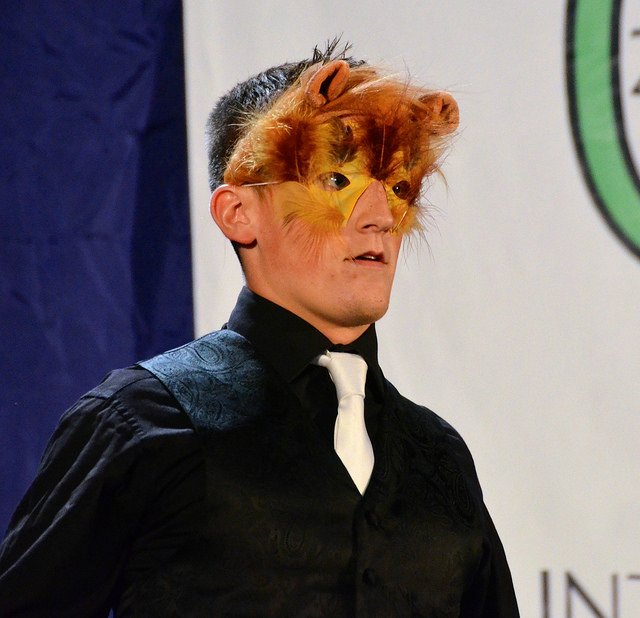
One particular hit was the Villanova dancers’ clever take on music from The Lion King, complete with animal masks. Some dance teams went more traditional, but one of the most interesting things about the intercollegiate competition is that anyone could dance to anything. I’m not sure klezmer has made an appearance yet, but I wouldn’t be surprised if it did someday.

If you couldn’t be there, well, sorry we missed you, but here are some photos to tide you over ’til next year.

[flickr_set id=”72157649119311426″]

Music

2014 St. Malachy Benefit With Mick Moloney & Friends

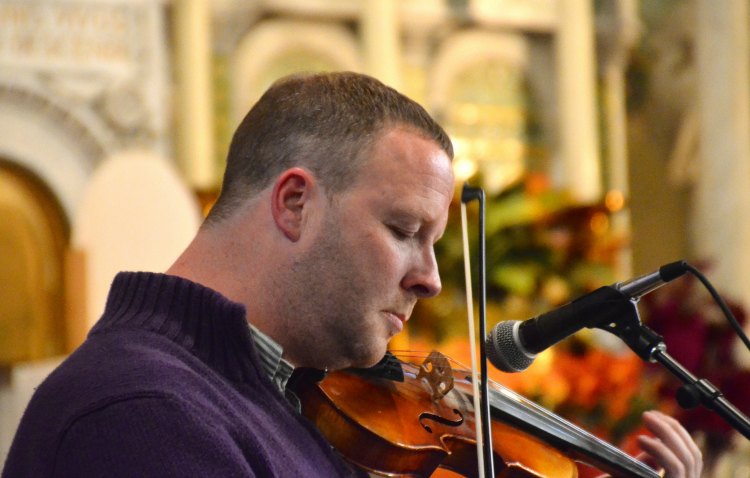
Paraic Keane

Paraic Keane

“When I first came here, I thought I would be coming for two years. It’s stretched out a bit.”

That was musician and folklorist Mick Moloney ruminating on the annual benefit concert that benefits St. Malachy’s Church School in North Philadelphia. Moloney, as always, was accompanied by some of the finest Irish musicians you’re ever going to hear, including accordion player Bill McComiskey, uillean piper Jerry O’Sullivan, and fiddlers Paraic Keane, Athena Tergis, Liz Hanley and local phenom, Haley Richardson. Though the lineup has varied over the more than 25 years of the concert, Moloney’s friends are always the cream of the crop.

You’d think that after all those years, the whole thing might be getting a bit tired. Not so.

“We’re very honored to be here again,” Moloney told the huge crowd of music lovers and school supporters who filled the church. “There’s nothing more that we like than playing these tunes together.”

And the tunes went on for well over an hour, closing with paster emeritus Father John McNamee’s favorite sing-along song, “Wild Mountain Thyme.”

We have scads of concert photos. Here they are!


[flickr_set id=”72157648700662417″]

News, People

Aon Sceal?

Unknown

A local theater company that specializes in contemporary plays from Ireland and the UK, an Irish radio host, a local attorney and a state legislator with Irish ties were in the news in the past two weeks–and it was all good.

The Inis Nua Theatre Company, which brings contemporary Irish and UK plays to the stage in Philadelphia, won five awards at the annual Barrymore Awards for Excellence in Theater this week. Four awards went to the company’s musical, Midsummer, which took home honors in outstanding musical direction, outstanding lead actress in a musical (Liz Filios), outstanding direction of a musical (Kate Galvin) and outstanding overall production of a musical .

Inis Nua also won the June and Steve Wolfson Award for an evolving theater company which carries with it a $10,000 prize.

Tom Reing is artistic director for the 11-year-old theater company.

Marianne MacDonald, host of the popular Sunday morning Irish radio show, Come West Along the Road (noon, 800 AM), was the recipient of the Mayo President’s Award at the recent Mayo Ball at the Irish Center in Philadelphia. She also operates dance and musical tours to Ireland, Cape Breton, and other locales

Theresa Flanagan Murtagh, counsel for Murtagh Brothers Inc. in Newtown Square, was named to the Irish Legal 100, a list of top people of Irish descent in the legal profession by the Irish Voice newspaper. Murtagh is a graduate of the Villanova University School of Law and a former assistant district attorney in Delaware County.

Brendan Boyle of Philadelphia becomes the only son of Irish immigrants to serve in the US Congress. A state legislator from District 170 whose family has ties to Donegal and Sligo, Boyle was elected to Congress this week from the 13th District, which includes parts of eastern Montgomery County and northeast Philadelphia.

How to Be Irish in Philly

How to Be Irish in Philly This Week

The Hall of Fame Dinner is on Sunday night.

The Hall of Fame Dinner is on Sunday night.

This is one jumping weekend, Irish-wise. And the week is shaping up too.

We have the Delaware Valley Hall of Fame dinner on Sunday, honoring Jim McGill, former president of and moving force behind the Philadelphia Ceili Group; popular tavern owner Emmett Ruane who gave many local Irish musicians their start and, till his Emmett’s Place pub closed a few years ago, provided a dance floor for local ceili fans; and Bill and Frank Watson, twin brothers who brough the tragedy of Duffy’s Cut to light. This marks the first time that the Commodore John Barry Award will be given—and, appropriately, the winner is Commodore Barry himself, the Wexford-born father of the US Navy, a Revolutionary War hero, and a Philadelphian.
Tickets are not being sold at the door.

And for the rest of the weekend, let’s start from the top:

On Saturday, 11 AM is tee time for the Philadelphia Irish Golf Charities, which raises money for families in need. It takes place at Cobbs Creek Golf Course.

At 3 PM, catch Slainte—that Jamison’s Frank Daly and C. J. Mills—at Paddywhacks on Welsh Road in Philly.

At 6 PM, a little Celtic with a French flair—a Fest Noz, a traditional dance from Brittany, one of the seven Celtic nations—is happening at Sts. Simon and Jude Parish in Bethlehem.

And at 7 PM, the Jameson Sisters—Ellen Tepper on harp, Teresa Kane on everything else—will be performing their annual “Concert at the Castle,” at Fonthill, the concrete castle in Doylestown. Great ambiance, fabulous music.

At 9 PM, Jamison will be rocking out at Tir Na Nog in Philly, while the Broken Shillelaghs will be at Nipper’s Pub in Westville, NJ.

On Sunday morning, the Coyle School will be holding its feis at Sportsplex of PA in Feasterville.

At 2 PM on Sunday, Sister Marie Hubert Kealy of Immaculata College will be speaking on Celtic spirituality at the Riverton Library in Riverton, NJ.

At 4 PM, local musicians, including Bob Hurst of the Bogside Rogues, John O’Callaghan of Jamison, Joe Mullan and Pat Tohery of Celtic Connection, and the groups One Shot Paddy and the Shantys will be jamming at Ashburner Inn at 8400 Torresdale Avenue in Philadelphia, all to raise money for the AOH Freedom for All Ireland Christmas appeal, which helps many groups and individuals in Northern Ireland.

Also at 4 PM, Blackthorn is on stage at Spring Hill Manor in Ivyland also raising money, this time for Shamrock Reins, an equine therapy center in Pipersville for military veterans, first responders and their families. Read our story about the center.

At 5 PM, the Montgomery County AOH/LAOH will have its annual memorial mass at Sacred Heart Church in Swedesburg.

Well, that’s about all I can do in one weekend. But, wait, there’s more—the whole rest of the week!

On Tuesday, Galway Guild (Joe Magee’s band) will be playing the Smithville Irish Fest in Smithvill, NJ.

Also on Tuesday, the Historical Society of Pennsylvania, 1300 Locust Street, in Philadelphia will offer a free program featuring many experts on 19th century Irish immigration. The focus will be on Philadelphia. My people came here in the 19th century—did yours?

More Tuesday doings: The Irish Pub is hosting a fundraiser to raise money for a statue of Babe Heffron—one of the Philadelphia vets who was part of the “band of brothers”—to be erected in the city. Appropriate for Veteran’s Day, a is he program at the AOH Notre Dame Div, 1 Hall in Swedesburg, featuring Montgomery County Sheriff Russell Bono and the Irish Thunder pipes and drums.

On Wednesday, the Battlefield Band will bring some Scottish folk music to the Sellersville Theater. You’ll be surprised—or maybe not—at how it sounds a lot like Irish folk music. Same people, different country.

On Thursday, this may be your last chance to catch Black 47 as they hit World Café Live in Philadelphia as part of their farewell tour.

On Friday, Dublin singer-songwriter Declan O’Rourke will be headlining at World Café with Robert Williams, a critically acclaimed writer and filmmaker who is also a musician and songwriter. And apparently an overachiever. I’ve heard lots of great things about Declan O’Rourke too. Since he’s in Philadelphia, he’s likely to perform his new song about Duffy’s Cut.

All-Ireland fiddler Dylan Foley will be joining fiddler Rose Conway Flanagan of Cherish the Ladies and flute-player Laura Byrne at a house concert on Saturday in Ambler. This was originally scheduled for the Irish Center. Check the Philadelphia Ceili Group’s website for more information.

As always, check out the calendar for all the details and any late-breaking events that are added during the week. We always try to update you on Facebook, so join our group there. There’s more than 4,500 of us!

News

Ireland’s New Minister for the Diaspora Visits Philadelphia

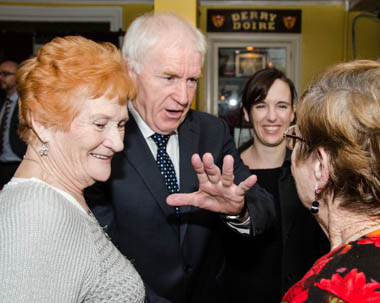
Irish Minister for the Diaspora, Jimmy Deenihan, talking to people at the Irish Center on Wednesday. Behind him: Immigration Center executive direct Siobhan Lyons.

Irish Minister for the Diaspora, Jimmy Deenihan, talking to people at the Irish Center on Wednesday. Behind him: Immigration Center executive direct Siobhan Lyons.

The latest donor to Philadelphia’s Irish Center fundraising campaign is the Irish government.

Minister for the Diaspora Jimmy Deenihan, an ex-Kerry footballer whose brand new cabinet post gives him responsibility over the some 70 million people of Irish descent living in every corner of the world, announced this week that the government was allocating $2.3 million to 37 Irish immigration centers across the US for their work in supporting vulnerable populations, including the elderly and the undocumented. That includes Philadelphia’s Irish Immigration Center, located in Upper Darby.

“But I was glad to see that there was a small grant in there of $12,000 for the Irish Center,” said the 62-year-old Fine Gael politician, who is a multiple All-Ireland Gaelic football winner, at a reception—like most Irish gatherings, with fresh baked scone and brown bread—in the center’s Fireside Room on Wednesday morning.

Later in the day, Deenihan met at Stotesbury Mansion near Rittenhouse Square in the city with leaders and members of many of the region’s Irish organizations, including the Irish American Business Chamber and Network, Irish Network-Philadelphia, and the Philadelphia Gaelic Athletic Association, which presented Deenihan with a Philly GAA jersey. He was accompanied by New York-based Irish Consul General Barbara Jones and Vice Consul Anna McGillicuddy.

Deenihan is doing a lap around the globe (he started in the United Arab Emirates, where some 10,000 Irish-born live) in advance of announcing a new “diaspora strategy,” a way to maintain a connection with those who trace all or part of their lineage back to the Emerald Isle. He said he expects to have an action plan in place by January.

If his remarks were any indication, at the top of the list will be immigration reform in the US, particularly as it relates to the estimated 50,000 undocumented Irish living and working in the US. Deenihan met with several local undocumented Irish immigrants in an upstairs room at Stotesbury on Wednesday afternoon, before visiting the Irish Memorial on Front Street.

“Now that the mid-term elections are over, I hope President Obama will look at the authority he has to bring about a fundamental change in immigration rules affecting the Irish,” said Deenihan, while speaking to the estimated 80 people at the Stotesbury event.

The 1965 Immigration and Nationality Act, which raised quotas for immigrants from countries such as Latin America and Asia who had been previously disadvantaged, followed the law of unintended consequences. The mission of Boston’s favorite Irish son, Senator Ted Kennedy, the new immigration policy reduced the number of legal immigrants from Ireland. Prior to 1965, about 70,000 were coming to the US; in the decade after, only about 10,000 were permitted to come.

Many countries rely on their diaspora for support—for money, for tourism, and in the case of Israel, said Deenihan, “their survival.” Ireland isn’t the first country to establish a minister for the diaspora, but he said, no other country has the strong connection Ireland has with the US.

“Nearly every family in Ireland has relatives here in America,” he said in his address at The Irish Center. “I have lots of relatives around here. I should have, I suppose, told them I was coming,” he added, to laughter.

“Our connection to you is so strong that though we’re part of Europe,” he said, “we look to support from here in the US.”

Later, I asked him privately about what specifically that connection meant to Ireland. “The diaspora has been very good to Ireland. The recent business investment in Ireland came because of our connection here,” Deenihan said. “But I’m not just looking at what the diaspora can do for us. I’m looking to give back to the diaspora.”

For one thing, he said, he wants to make it easier for Irish Americans to trace their roots. Fewer Americans than ever now identify as Irish, which can erode the link between the two countries and is something, he believes, that a little bit of family history searching could help mitigate. In recent years, the National Archives of Ireland has made both the 1901 and 1911 Census records for all 32 counties available online for free. “I’d like to make more records available,” he said.

As minister for culture, he presided over the development of the website, www.inspiring-ireland.ie, which gathers many of Ireland’s cultural assets under one virtual, searchable roof. For example, you can search by institution and see the portrait of famed playwright Lady Augusta Gregory that hangs in the National Gallery of Ireland or view a page from the transportation register of Cavan gaol (jail) that’s kept in the National Archives.

“I want to build on that site to make this kind of information readily and easily accessed,” he said. “If you give to people, they always give back.”

[flickr_set id=”72157649142557842″]

News, People

New Help for Vets: Horse Therapists

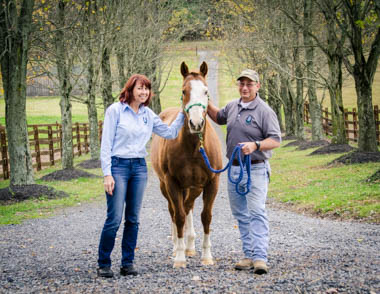
Janet Brennan, Max Resnick, and therapy horse, Windy.

Janet Brennan, Max Resnick, and therapy horse, Windy.

Janet Brennan had never been around horses, couldn’t ride and, she admits sheepishly, “didn’t even know how to handle them,” when the Furlong woman bought her first animal, a quarter horse mare she named Irish, in 1998.

It didn’t make a lot of sense—she traveled the world all but four days of every month as a clinical research nurse in the pharmaceutical industry. But Irish fulfilled a long-buried yearning she’d had since she was a child. “I’ve always loved and been drawn to horses,” she says.

It wasn’t long after that another longing emerged—one that totally mystified her. “I kept thinking I wanted to get involved in equine therapy and I wasn’t really sure what it was,” says Brennan, who also spent six years as an ER nurse.

Equine therapy, often called equine-assisted therapy, is an unusual but well-studied treatment that uses horses to help treat a variety of conditions, from helping autistic children learn to connect to improving muscle tone in people with cerebral palsy.

“I feel it’s a calling, that I was being pulled in this direction,” said Brennan who last month, opened Shamrock Reins, an equine therapy center for military vets, first responders, and their families, on 22 acres in Pipersville, Bucks County. (“Shamrock” stands for “Special Horses Assisting with Miracles and Recovery Offering Comfort and Kindness,” but it also reflects Brennan’s Irish roots, also evident in the horses’ names: Irish, Dublin, Clancy Donegal, Paddy, Emerald. . . .)

And she had confirmation that she was being led by unseen forces to her second career the day the certified therapeutic riding instructor she’d hired called at the last minute and told her she wasn’t going to take the job. “I had 15 minutes of pure panic. Then, in the middle of that,” she says, “the phone rang.”

It was a man named Max Resnick, a 23-year Navy veteran, who heard through the director of another equine therapy program that Brennan was looking for someone. Like Brennan, Resnick loved horses from the time he was young. Growing up in New York City, he was glued to the family’s tiny black-and-white TV every morning incongruously watching the farm reports while other kids his age were being hypnotized by Tom & Jerry cartoons.

“I got my first opportunity to ride right before I became a teenager,’ says Resnick, and he continued to ride even after joining the Navy. “They don’t allow horses on a ship,” he jokes, so he begged and borrowed rides in every port of call, from Scotland to Guam. Once he retired, he got his certification from PATH, the Professional Association of Horsemanship, International, one of the largest organizations of its kind in the world. He was determined to make his second career one that involved the horses he’d loved all his life.

“I am 100 percent certain that God sent him to me,” says Brennan, a trim, red-haired woman with the calm easy manner of someone used to being around both patients and horses. “There’s no one better than a veteran to understand the problems of other veterans.”

The daughter of a Vietnam veteran, Brennan was drawn to the plight of today’s combat veterans, nearly 300,000 of whom have suffered a traumatic brain injury and a quarter of whom have “invisible wounds,” often debilitating psychological problems such as post-traumatic stress disorder. “There’s estimated to be as many as 24 suicides a day among combat vets,” she says.

Horses are uniquely suited as therapy animals for people with emotional issues. They’re the original empathetic listeners. “Horse are a mirror of your mind and your behavior,” says Brennan. “They sense your energy, your emotional state. If you’re anxious, they’ll be anxious. If you’re relaxed, they’ll relax.”

They are, in fact, like all prey animals, says Resnick. “Their survival depends on their ability to be alert to whatever might be a danger to them.”

For a combat vet who might be keeping sharp-edged feelings sheathed, hidden even from himself, “the horse becomes the therapist,” Resnick says, reflecting back what it senses from the hand that grooms her or the rider on her back. “When the vets start talking about the horse, it doesn’t take them long to realize they’re talking about themselves,” he says.

There are other benefits to working with horses. For one thing, they’re forgiving—and forgetful—if they’re treated with affection and kindness. “You do something that’s not what you should be doing and you have three seconds to tell them it’s okay, you didn’t mean it, and they forget it. Three seconds. They teach us how to live in the moment,” Resnick says with a smile.

There’s also a sense of mastery in being able to control and animal that outweighs you by at least 900 pounds, sometimes more. Horses can be scary, even if you’ve been trained for war. “My son who is six-feet tall, 250 pounds, and is a hand-to-hand combat instructor went with his wife to a stable near Fort Benning,” says Resnick, grinning as he tells the story. “He was in the paddock when one of the horses snorted. Mr. Able-To-Leap-Tall-Buildings was suddenly outside the paddock, not even sure how he got there. He told the woman at the barn, ‘That horse hates me.’ She said, ‘The horse just sneezed.’ They’re big animals, and if you don’t know anything they can be frightening.” He laughed.

As an RN who worked in clinical research, Brennan was interested in the scientific evidence behind equine-assisted therapy, particularly for combat vets with PTSD and traumatic brain injury. It wasn’t hard to find. In fact, a study reported in a recent issue of The Journal of Rehabilitation Research and Development found that vets who started out deeply depressed and isolated—some hadn’t left their homes in a year or more–became more sociable as the result of working with horses and human equine therapists. Most of the vets told researchers they found the horse to be “intuitive,” “a good listener,” and “compassionate.” Many said that working with the horses helped them build trust with the humans in their lives. “I talk to people, I shake people’s hands,” one vet said. “When you’re with a horse, they give you kindness and compassion and love and they don’t expect anything,” another participant wrote.

Brennan, who with Resnick is now in the process of making the connections to bring vets and first responders and their families to the program, has talked to combat veterans herself, many of whom have been through similar programs. “Every single one says the same thing—once you get one, more will come. When they leave, they tell everyone they know. One of them told me, ‘you’d better have a lot of programs, because once we come, we won’t stop coming.’

“Our mission,” she says, “is to create life-changing experiences for people who’ve had their lives changed not in positive ways. If I can save someone from committing suicide, I’ve done what I’ve had to do.”

You can become involved in Shamrock Reins in many ways—as a participant (all of the programs are free); as a volunteer; and as a donor. The organization is a 501 (c)(3) charity, so all donations are tax deductible. Go to their website for more information.

On Sunday, Blackthorn is performing at a fundraiser for the organization at Spring Hill Manor in Ivyland.

[flickr_set id=”72157649165706975″]