Monthly Archives:

September 2014

How to Be Irish in Philly

How to Be Irish in Philly This Week

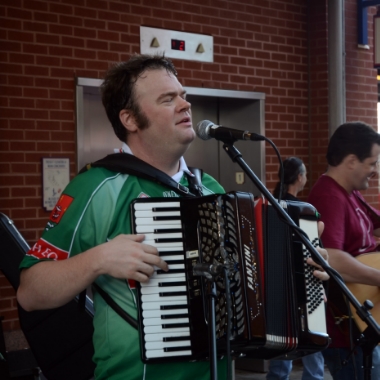
Bob Hurst will bring his Bogside Rogues to Canstatters this weekend.

Bob Hurst will bring his Bogside Rogues to Canstatters this weekend.

Canstatters in the Northeast is hosting a three-day Irish fest featuring a terrific lineup of performers, including Jamison, the Bogside Rogues, the Screaming Orphans, Celtic Connection, the Kilmaine Saints, the Highland Rovers and the Sean Fleming Band. The event starts with boxing tonight, with the Harrowgate fighters of Philadelphia facing the Holy Family boxers of Belfast.

Holy Family Boxers—doesn’t exactly inspire terror, does it? But I hear they’re fierce.

You Trentonians and other Jersey folk, the Mercer County Irish Fest takes place this weekend at Mercer County Park, with the Bantry Boys, the Broken Shillelaghs, Gaelic Mishap, Ballycastle, the Celtic Martins, Birmingham 6 and Jamison Celtic Rock.

Speaking of the Broken Shillelaghs, they’re also at the Dubh Linn Square Pub in Bordentown on Saturday.

Also this Saturday, the film, “A Terrible Beauty,” will be screened at International House in Philadelphia. The film takes a sharp focus on events leading up to the 1916 Easter Rising and is produced and directed by the brothers who did the film on Duffy’s Cut. The showing is a fundraiser for the Irish Immigration Center. For more information, read our story.

Next week, mark your calendars starting on Thursday night for the 40th Annual Philadelphia Ceili Group Festival of Irish Music and Dance at the Irish Center, featuring a singer’s night, a rambling house (a variety show), and a concert featuring the hot new Irish group, Full Set, and Sean Keane. Gabriel Donohue is running the Rambling House event and he’s been making noises on Facebook about bringing in some surprise guests to delight and amaze—though we can’t imagine anyone more delightful and amazing than last year’s guest, Joanie Madden of Cherish the Ladies. That was one for the books.

Coming up: Quizzo Night on September 19, a special benefit for the Irish Center Fundraising Campaign (which is only about $10,000 away from its $50,000 goal, thank you very much!). Teams will be competing for prizes, like restaurant gift certificates and t-shirts, and expect some tough competition and laughter at the losers’ expense.

Later this month: Bethlehem’s Celtic Classic and the Irish Fall Festival in North Wildwood. One features big burly men who toss their cabers, the other, big burly men who toss their cookies. Just checking to see who reads to the end. Have an Irish week!
People

A Second Homecoming for the New Rose

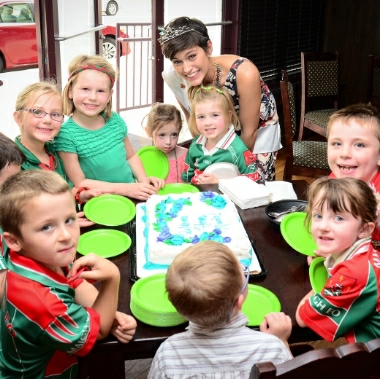
Rose of Tralee Maria Walsh--a definite kid magnet.

Rose of Tralee Maria Walsh–a definite kid magnet.

The cheers that rose when the International Rose of Tralee, Maria Walsh, walked in the front door of St. Declan’s Irish-American Pub on Walnut Street in Philadelphia last Saturday were only partly for her. The Mayo-Kerry semi-final Gaelic football match was on three TVs and Mayo had just scored.

“Oh,” said Walsh, a rabid Mayo supporter, as she craned her neck around to see the screen. “Maybe I should just walk in and out the door a few more times so they score.”

Sadly, that wouldn’t have helped. Mayo lost to Kerry which will be facing Donegal in the all-Irelands this year. But that didn’t dim the festivities for long. The crowd had come not just to watch the game but to cheer Walsh, the first Philadelphia Rose of Tralee ever to bring home the international crown.

Children clamored to sit on her lap while she watched the game, wearing the jersey given to her by the Mayo team after she attended a game during Rose week. Everyone wanted their photo taken with her, including a group of tourists from Tyrone who gathered under the tri-color—the Republic’s flag—flapping in the breeze outside the pub, which is owned by Irish immigrant Aidan Travers and American Marty Spellman, whose daughter, Elizabeth was the 2012 Philadelphia Rose.

A large contingent of the Philadelphia Mayo Association was also there—and again, not just to watch the game. That’s because Walsh grew up in Shrule, County Mayo, after being born and raised for the first seven years of her life in Boston. The Mayo Association has adopted her as one of their own, which she referenced when she made her first public speech as the new Rose, standing behind the bar with a mike in her hand.

Here’s what she had to say, which made them love her even more:

“Three years ago I moved to this great city of brotherly love and I didn’t know a soul. And somehow, a day later, I ended up on the Notre Dames [Ladies Gaelic] Football team, because, like all great Irish, they find you as soon as you enter a new city. There’s a GPS tracker I think on every Irish person that leaves the homeland.

“I fell in love with the city and fell in love with the Irish community and kind of fell into the Rose family here and they welcomed me with open arms. Of course, the Mayo Association. . . I believe I became a member but I didn’t know I became a member. Actually I think [member] Attracta O’Malley is down there asking me to pay my membership.

From all the homecomings I’ve had, for anyone watched me on TV, I have a bit of an identity crisis: Born in Boston, raised in Shrule, County Mayo, did a short stint in New York, and then I found my home, my favorite home in Philadelphia. A lot of people are claiming me, but it was a fantastic honor to hear Philadelphia being called Tuesday night last. This is home.”

Walsh had to fly back to Ireland this week to appear on the RTE program, “The Late, Late Show,” and after that, a whirlwind of other activities will take the Rose around the country and throughout the Delaware Valley during her year’s reign. To see her on Irish TV, where it’s expected that she will talk about the interview in the Irish Sun in which she told a reporter she is gay, go to the online streaming site of RTE on Friday September 5 at 4:30 PM.

View our photos of Maria’s homecoming party here.


News, People, Photo Essays

Happy Redhead Days!

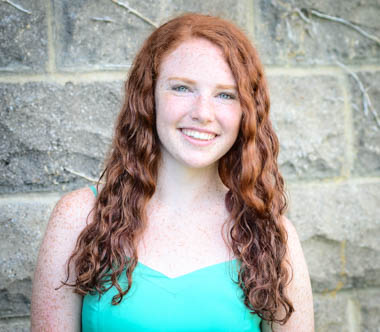
Courtney Vincent of Upper Dublin.

Courtney Vincent of Upper Dublin.

This weekend in the Dutch city of Breda, redheads from 80 countries will gather for Redhead Days, now an annual congruence of natural redheads that started unintentionally in 2005 when an artist, looking for models for paintings of redheads inspired by the redhead paintings of Dante Gabriel Rossetti and Gustav Klimt, put an ad in the local newspaper.

From 150 gingers (he only needed 15), the festival has grown to more than 7,000 redheads of every hue, from strawberry blond to carrot red to copper to auburn. This weekend the international gingers will party, compare hair color, consult with hair and fashion experts, have their photos taken, and enjoy the exhibit called “Red Hot,” photographs of sexy red-haired men shot by British photographer Thomas Knight. (It’s in New York this week. Here’s a preview.)

I had my own redhead festival of sorts over the last six weeks, photographing redheads like Courtney Vincent, above, all over the Delaware Valley. You can see our Ginger Snaps here or below. (There’s text and more photos on our flickr site.)

Why such an interest in a hair color that occurs in just about two percent of the world population? Well, it’s just that. Red is rare. If you’re Irish or Scottish, you may find that hard to believe since there are more redheads in the Celtic population than most others. The statistics are conflicting and confusing, but in general about 12 percent of the Irish and 15 percent of Scots have red hair. By one estimate, as many as 80 percent of people carry the recessive gene for red hair, even if there are no redheads in their families. So that Internet rumor that circulates every few years that redheads are going to become extinct? Unlikely.

Redheads are like the original X-men—mutants. The hair color is caused by a series of mutations of the melanocortin 1 receptor (MC1R) gene, which acts as a switch between red and yellow pigments and black and brown pigment. (If you’re looking for yours, it’s on chromosome 16.) Because it’s a recessive gene, both parents need to carry it for you to have red hair.

But the trait isn’t limited to the Celts. Two of the earliest known redheads were a 43,000-year-old Neanderthal from Spain and a 50,000-year-old Neanderthal from Italy. There were redheads among the ancient Greeks, and the Romans encountered plenty of redheads when they were conquering southern and western Germany, where they still abound.

While largely a European phenomenon, random redheads are found in the Middle East, Central Asia, and in China. A tribe called the Udmurts, living in the Volga Basin in Russia, are the only non-western Europeans to have a high incidence of red hair (10 percent of the population).

No matter where they think they come from, all redheads share a common ancestry that can be traced back to a single Y-chromosomal haplogroupL R1b. What’s a haplogroup? Glad you asked. Think of it as like a big clan. And if you have red
hair, you’re part of it. Because it’s linked to a Y chromosome, the ancestor you all share is a man. (Possibly those Neanderthals mentioned above, but more recenly a Norwegian: recent studies suggest that Vikings may have been involved in the spread of red.)

There are a few other things you redhead share, besides the pale skin and freckles.

About those freckles. They’re just nature’s way of saying you’re at risk for skin cancer. Even worse, that MC1R gene predisposes you to melanoma, the most lethal of all the skin cancers. Harvard researchers found that along with red hair, the gene may make redheads more susceptible to the damaging effects of ultraviolet rays of the sun, in part by getting in the way of the cancer-protective effects of a tumor-suppressor gene called PTEN.

One thing that may protect you is your pain tolerance. You don’t have much. You may avoid getting a sunburn because studies show that redheads feel pain more acutely than people with other hair colors. You’re especially sensitive to the cold. Scientists believe that the ginger gene causes another gene that determines cold sensitivity to become overactive.

Anecdotal evidence—that’s just unconfirmed reports from the field—suggests that redheads may need more anesthetic when undergoing surgical or dental procedures. In one small study, a researcher gave electric shocks to women of many different hair colors (yes, that’s how they do it) and found that the redheads needed about 20 percent more anesthetic to dull the pain. Redheads also bruise more easily.

Do cold-sensitive redheads nevertheless have fiery tempers? That one’s just myth. So if you’ve been trying to pass off your frequent outbursts as “my redhead coming out,” you are now officially busted.

[flickr_set id=”72157646975652906″]