Monthly Archives:

November 2013

Travel

A Wee Taste of Sligo

A day in the Sligo mountains.

A day in the Sligo mountains.

It’s not often that you get to hear one of Ireland’s foremost women writers singing “Frankie and Johnnie” at a shebeen-like pub tucked so deep in the countryside it would make a GPS sputter and give up.

But there we were, at Ellen’s Pub in Maugherow, County Sligo, for the Friday night sessions, having a beer and listening to 91-year-old Leland Bardwell, an acclaimed poet, novelist and playwright, belting out the old American folk tune like she was the female Elvis.

Elvis didn’t get quite so much murderous glee from the lines “Well, the story just goes to show you women that there ain’t no good in men” as Bardwell, who sang them twice, at the top of her lungs, accompanied by the handful of musicians who crowded in to the tiny, dark-as-a-mine pub.

(When I got home, I read Bardwell’s memoir, “A Restless Life.” She comes by her kinship to Frankie naturally: Married once, she gave birth to seven children fathered by several different men, many of whom, like Johnny, “done her wrong.” )

My husband Ed and I were spending a couple of days in Sligo at the invitation of my friend, Michael Waugh, who, with his wife, Trish, runs Wild West Irish Tours, a boutique-style, small-group tour service that touts that it takes visitors “to places only the locals know.”

Neither Ed nor I are “tour people.” We quake at the sight of tourists pouring from buses with their windbreakers and white walking shoes announcing them as Americans. We love to chart our own course and enjoy what my friend, Ned, calls “human moments,” those everyday encounters with total strangers whose lives touch yours for a short time. One of the highlights of our trip was the half hour of jokes and craic we had with the staff at Ennis Electric as they attempted to repair our portable transformer, which blew up the night before. And another was Leo.

Leo Leydon, a local farmer and archaeology enthusiast from nearby Cloghboley, took over tour guide duties from Michael who had to suddenly return to the States.

It was Leo who swung by our B&B in his van, his omnipresent companions, border collies Jeff and Rory, in the passenger seat, to lead us to the thatched-roof Ellen’s which, according to the painted bodhran over the bar, dates back to the 1600s. That made me marvel out loud. “Well,” said the clearly dubious Leo with a shrug, “it makes for a good story.”

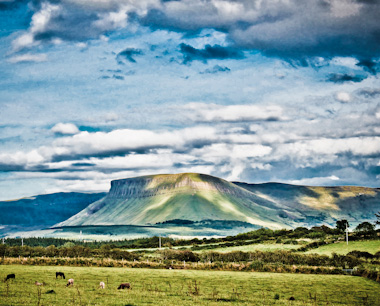
That same van took us through the rain-drenched fields of Leo’s farm to a high pasture to see his pride and joy–a dolman, a megalithic tomb known as the Cloghcor Portal Tomb, more than eight feet tall and 11 feet wide at its widest point. One stone has fallen and the capstone on this altar-like monument has also dipped. Leo’s cattle graze contentedly in the lower pasture, oblivious to the startling 360 beauty that leaves us speechless, from the ocean as sparkly as a chest of silver coins to the Dartry Mountains, the most famous of which is Benbulben, the iconic landmark of Yeats Country.

There are 2,000 or more such monuments throughout Ireland, but most of them are in the North, said Leo. He inherited this one—it’s the family farm where he spent his childhood–and seems to have felt the proprietary responsibility to get to know it intimately. He points out that the edges of the supporting stones have been carved to mimic the mountains in the distance. And that the stones were chosen and situated such that the stone facing the sun when it comes up turns white when the light hits it, and the stone facing west burns fiery red with the sunset. He knows so much about Sligo, from its stones to its history, that guests on Wild West Irish Tours nicknamed him Leopedia.

Standing at the top of Leo’s pasture, we absorb the archeology lesson and more. Leo’s own personal history touches us. Seventeen years ago, he tells us, his young wife, pregnant with their second child, died suddenly, leaving him with a small daughter to raise. He struggled—with many things—but in the end the land saved him. “Serenity,” he told us, “is being right with yourself.”

Gracie Thorpe, a Philadelphia native who lives in Limerick, PA, took a Wild West Irish Tour last spring, traveling by herself. The small group—no more than about 8 people who tour by van, or more likely, on foot—is perfect for the solo traveler who, like Thorpe, doesn’t want “to kiss the Blarney stone or run into other tourists.”

“It really felt like family. I felt such close connections with the other tour members and Leo, Michael and J.J. (J.J. O’Hara, who owns Castleview B&B, which hosts tour members),” said Thorpe, who is a sean nos singer and traces her family back to Galway and Cork. “And it was an adventure. We kind of had an itinerary, but it wasn’t a rigid kind of thing. Every day I learned something new and did something I never thought I’d do, like climbing a mountain, horseback riding on the beach, climbing Slieve League [in nearby Donegal]. I saw a calf just being born—being a city girl, you don’t see that kind of thing. We were even invited into homes along the beach. We met a woman named Kathleen who made woolens who had us in for tea and sandwiches. It was very welcoming.”

You can’t plan for magical moments, but, says Michael Waugh, they seem to happen in a place where both Queen Maeve and Yeats are buried (she on top of Knocknarae, he in the graveyard of St. Columba’s Anglican Church in Drumcliff, in sight of Benbulben). “One of the things I learned is to let Ireland be Ireland,” says Waugh, an American who lived in Sligo for many years and now divides his time between Virginia and Ireland. “Some of the best things that have ever happened were totally unexpected.”

Like the encounter with writer Dermot Healy, his next-door neighbor, whom he asked to recite some poetry for a tour member who was scattering her father’s ashes in Ireland. “He was working on his drainage because he was worried about erosion and he said he would. He read his own poem and then read some Yeats. But first we had to pick up shovels and help him with his drainage. He started reciting poetry and scattering ashes and you know, he had tears in his eyes. Where would you ever get this on a tour?”

This little taste of Waugh’s unique tourist enterprise has changed my thinking about tours. I’d take this one. Even our tiny taste was magic.

Find out more about Wild West Irish Tours at their website.

See some of my photos here.

See Gracie Thorpe’s photos here. 
Dance

Villanova Hosts First Intercollegiate Irish Dance Festival

The Villanova Irish Dance Team at practice.

The Villanova Irish Dance Team at practice.

The idea started small, but soon got pretty big. More than just big. It’s apparently a first.

Villanova’s Irish Dance Team will host an Intercollegiate Irish Dance Festival Saturday from 10 a.m to 4 p.m. at the university’s Jake Nevin Fieldhouse. Nine college and university dance teams from around the country will strut their stuff in a sanctioned competition.

When they first started talking about an Irish dance competition last semester, members of the Villanova team first thought such an event might be confined to Irish dancers who attend the university.

Then they thought: let’s really go for it.

“We wanted to do something different,” says senior Mattie Rowan, co-captain of the team from Albany, N.Y., and a double major in poli sci and Arab & Islamic Studies. “We started getting the idea in motion over the summer, and we really got going with it at the beginning of this semester. We are fairly certain that this is the first intercollegiate dance festival within North America. There are still competitions where individual dancers can compete, but in terms of university teams, this is the first of its kind.”

Turns out the Villanova dancers weren’t the only ones who thought an intercollegiate festival would be a good idea. In addition to the Villanova troupe, teams are coming from Georgetown, the Catholic University of America, the University of Dayton, Fordham, Boston College, the University of Rochester, Temple University and West Virginia University—more than 100 dancers. Says Rowan, “We have a pretty good mix.”

The university’s Irish Studies department also provided tremendous support, Rowan says.

Throughout the day, the teams will compete in four different events: the treble reel, four-hand, eight-hand, and what the organizers are calling a “fun number”—an opportunity for the teams to show off the unique routines they perform for university sporting events and other activities.

“It can be an original choreographed piece, or an adapted piece from a show like “Riverdance” or “Lord of the Dance,” Rowan says. “It should be something that you’ve made your own, modernized, and you can have free rein with it. Just have fun with it and show the versatility that can be found in Irish dance.”

Later that day, starting at 7:30, Villanova will host a Grand Irish Show, featuring RUNA and performances by the dance teams. Each of the teams will get a chance to perform.

For Rowan and all the other Villanova dancers, the first Intercollegiate Festival is more than just a chance to test their mettle—it’s an opportunity to mingle with other university-level dancers.

“Some of the dancers definitely do know each other from competing against each other, but there are also those of us who haven’t competed,” says Rowan. “You usually don’t get to interact with university dance teams. We’re really excited to meet other people who have continued their passion in college.”

People

Hoping the Luck of the Irish Is In the Cards

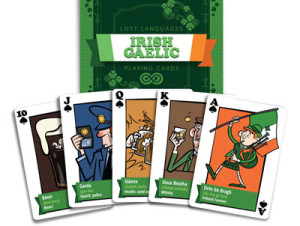
Irish Gaelic Playing CardsMichael Oraschewsky was attending the Philipps University of Marburg in 2001, majoring in political science and German linguistics. Most of his friends on campus were Irish. That’s when he discovered: those Irish people have a language all their own.

“They had their own secret language that no one else knew. Nobody had any clue what they were talking about. It was just what they learned at school. I thought that was cool. It’s a beautiful language. It sounds like something you would hear in “Lord of the Rings,” a really ancient language. It was like nothing else I’d ever heard.”

Though Oraschewsky never learned the language, he heard it spoken a good deal in the Irish Gaeltacht—areas of Ireland where Irish is spoken—when he joined his Irish friends of the Christmas holidays in 2001. He couldn’t afford a plane trip all the way back to the states, but a trip to Ireland was cheap. “My Irish friends invited me to come and travel around Ireland and stay at their houses,” Oraschewsky says. “It was just incredible. I absolutely loved my time in Ireland when I was abroad.”

Oraschewsky has always had a love of languages, and his interest in Ireland’s native language in particular always stuck with him. That interest came in handy when he and his partner, Eric Brewstein, came up with an idea to help non-native speakers learn handy Irish words of phrases—exactly 54 words and phrases.

The firm’s “Lost Languages: Irish Gaelic” playing cards recently raised $5,884 in start-up funds on the crowd-funding website Kickstarter. The initial goal was $5,750.

Each card contains an word or phrase, a translation, and phonetic pronunciation. Some of the useful words: “beoir” (beer), “uisce beatha” (whiskey), and “Slainte” (an Irish toast).

Also, “Garda” (police)—someone to look out for as you’re strolling back home in the wee hours after consuming too much beoir and uisce beatha. And saying “Slainte” way too many times.

Of course, most of the cards include translations of common greetings and salutations like “please” and “thank you,” and basic, sometimes essential, words like “mother,” “father,” “tea” and “men’s room.”

“You had to have ‘whiskey’ and ‘beer,’ and certain locations like Dublin and Cork, and things associated with family,’’ Oraschewsky says. “With every culture, family is paramount.”

Oraschewsky and his partner researched the most common and most useful words and phrases online, and then presented them to his cousin’s wife, the native Irish Claire Powers, for proofing. Next up: manufacturing the cards, and selling them online. As it happens, Oraschewsky and Brewstein already have a time-tested model for the whole process. It’s their first “Lost Languages” playing card deck in Yiddish.

“My partner Eric who started this with me is Jewish,” Oraschewsky says. “He promised his bubbe (grandmother) before she passed that he would use Yiddish more in his house with his son. That was a way of fulfilling her wish.”

If his last name isn’t already a dead giveaway, you won’t be surprised to learn that Oraschewsky has very little Irish heritage. “My connection with Ireland is solely from the friendships I forged in Europe. I have a grandfather who is part Irish, but that part is long distant. I’m much more aware of my own ancestry, which is German and Russian, with a little Greek and Italian in there, too.”

Although Oraschewsky expects Irish-Americans will constitute the primary audience for the new Irish Gaelic playing cards, he believes there are many other people like himself who aren’t Irish, but who nonetheless love Irish history and culture. The cards will be available online soon.

“On Kickstarter, there was definitely a broader audience,” says Oraschewsky. “That community is generally interested in cool new things. Going forward, we’re also going to focus on Irish gift shops, and people of Irish descent who want to get a cool gift for their grandmom or their kids. It shows you a little something about your heritage, totally unique. But were not talking about it as just for Irish, specifically. Ireland has a magical, mythical aura around it, so people who don’t have any special ties to it still want to see it. Ireland has a draw for everyone, with its history and its struggles. Most people can relate to their life.”

Genealogy

Recipe for a Tasty Irish Christmas

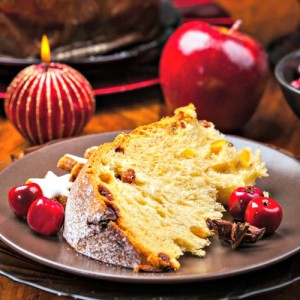
Pannetone Bread and Butter Pudding

Pannetone Bread and Butter Pudding

Margaret Johnson has been cranking out cookbooks about Irish cuisine since 1999. There are nine books in all. If you’ve read them, you know that recipes, while at the heart of it all, really only account for part of the picture.

Eye-catching photos of bustling Irish cities, quaint towns and coastal communities fill every book. Interspersed with the recipes and pictures are neat little vignettes, food for the soul, offering rare insights into Irish culture, customs and history—all, of course, as they relate to food.

Fans of Johnson’s cookbooks know that she’s on a mission to persuade readers—especially Irish Americans—that there is so much more to Irish cooking than lamb stew, soda bread and Dublin coddle. (Not that those aren’t wonderful things.)

Her new book, “Christmas Flavors of Ireland: Celebrating the Festive Season,” might be the prettiest and most scrumptious yet. And that would be saying something. You’ll find everything from savory starters to decadent desserts—and lots in between. Johnson has a lot of friends in the Irish culinary community—and, happily for all us, they’re willing to share their best stuff.

We chatted with Johnson about the Christmas book in particular—with occasional side trips.

Here’s what she had to say.

Q. Could we talk first about the graphics, and you seem to have contributions from many sources. The first photo you see in the book shows Christmas on Dublin’s Grafton Street, with all the lights. Inside, there’s a photo of the front door leading into Johnnie Fox’s Pub in Glencullen, a bright green wreath in the center. One of my favorites is a shot of the Giant’s Causeway, dusted with snow, with wispy clouds in the background. Why is good photography so important to you?

A. A lot of the people like to look at the pictures! I have heard that some people who buy my books never read one recipe. That’s actually how I sold my second cookbook. When I wrote my first book, I was an untested author. They didn’t invest any money in photography. All they used were stock photos that introduced the chapters. If it had photos, I think it would have sold many more. I said to them, you may not know Irish people the way I know them. They think of Ireland as this magical, mysterious place, and they all want to see pictures of them. So I convinced them.

Q. “Christmas Flavors of Ireland” obviously isn’t just about the food. The recipes are at the center of it all, but how much do you think about setting the scene, the context in which these great dishes are presented? What kind if research goes into finding and explaining Celtic holiday traditions that Americans might not be aware of. I’m thinking specifically of December 8, Big Market Day, for one.

A. I was never was aware of Big Fair Day. A friend had written it for an older book, and I asked him for permission to run it again for this book. I do like to put things like that in books. Right now, I’m working on “Favorite Flavors of Ireland.” It’s something of a retrospective. I’m going to take recipes from my previous books, and some new ones, and talk about why they are my favorites, and why those places are my favorites. People are always asking me, ‘So what’s your favorite recipe? What’s your favorite place. Whats your favorite ingredient?’ I thought the word “favorites” can encompass people and places and holidays and things of that sort. So it will be a combination of recipes—and a little more story-telling.

Q. As you approached the Christmas cookbook, were you thinking about changing people’s minds about how the Irish celebrate Christmas through food? It just seems like one more way of making the point that you can’t make assumptions about Irish cooking, that it’s all ham and cabbage. I’m thinking of the recipe for Italian Pannetone Bread and Butter Pudding, for one.

A. Probably 15 or 20 years ago, an Irishman wouldn’t have thought about Pannetone! Chef Sally Luykx presented that recipe about eight or 10 years ago. At that time, people had never heard of Pannetone. It wasn’t what Irish people were thinking about eating. But now, the Irish are very sophisticated in their tastes. Irish-Americans are not. They say, this is not what Irish people eat, but for me this is the whole point. It’s what Irish food is like these days. A lot of Irish-Americans dont want to accept that. They want the sheep and the cows. They think that’s what it’s like.

Q. Are you past the point where you’re surprised at what turns up on the Irish menu?

A. Sometimes, I am a little surprised. I think that some of the ideas are a little overdone. They they too hard. Let’s take black pudding, because that comes up a lot. Black pudding is something people have for breakfast, but I’ll find something like black pudding with pineapples on shrimp, or something crazy. A lot of chefs try to be so creative with authentic Irish food that it turns out to be ridiculous. Sometimes they go to extremes to make the point that they’re very sophisticated—to counter the old sterotype of stew and lamb chops. I would never put anything like that in any of my cookbooks.”

Q. Tell me about your dedication. It’s to Carl, your husband, “for his continued indulgence in all things Irish.” I know that he passed away recently of ALS (amyotrophic lateral sclerosis, often referred to as Lou Gehrig’s Disease).

A. Most of my previous cookbooks, I dedicated to him. I’d say, ‘We’re going back to Ireland,’ and he’d say: ‘Again?’ And then he’d say, ‘Well, OK, if you insist.’ But he would be the first one to have his bag packed. In 2012, we went three times. His mother was Italian, and his father was what they call a “brooding Swede.” At his funeral, I had them play the Phil Coulter’s song, “The Old Man.” You’re supposed to play liturgical music, but they said it would be fine. To say that some people were weeping uncontrollably would be an understatement. Someone told me afterward, he’s the only Swedish-Italian guy who had the most Irish sendoff they’d ever seen.

We thank Margaret Johnson for her continued and support of irishphiladelphia.com—and for her generosity.

If you’ve been waiting for an Irish Christmas recipe to sink your teeth into, here are two:

Pannetone Bread and Butter Pudding

1 lb. Pannettone, or any yeast bread with fruit
4 oz. butter, at room temperature
8 tbsp. lemon curd
5 large eggs
2 cups heavy whipping cream
1 cup granulated sugar
Vanilla ice cream, for serving

  • Preheat the over to 325 degrees. Butter 8 6-ounce ramekins.
  • Cut the Pannetone into 8 slices. Spread each slice with 1 tbsp. of butter, and then spread with the lemon curd. Cut each slice into squares and divide among the ramekins.
  • In a large bowl, whisk together the eggs, cream and sugar. Spoon the egg mixture over the bread, and then press down gently. Let the puddings soak for 5 to 10 minutes, and then spoon any remaining egg mixture over the bread to be sure it is soaked.
  • Bake for 30 minutes, or until the puddings are risen and the tops are lightly browned. Remove from the oven, run a long knife around the edge of the ramekins to loosen the puddings, and then transfer to serving plates. Serve with ice cream.

Burren Smoked Salmon on Potato Pancakes

Potato Pancakes

2 large potatoes, cooked and mashed
1 large egg, beaten
1 tbsp. all-purpose flour
1 tsp. baking powder
Salt and freshly ground pepper to taste
1/4 to 1/2 cup whole milk
Butter for frying
1/2 pound smoked salmon, cut into 24 1/2-inch-wide strips
1/2 cup sour cream or creme fraiche
Fresh chives for garnish

  • To make pancakes, put the potatoes, egg, flour, baking powder, salt and pepper into a food processor. Pulse 4 to 5 times to blend, and then gradually add enough milk to make a thick, smooth batter.
  • Heat a large skillet over medium-high heat. Brush the pan with butter. Drop spoonful of batter into the pan and cook for 2 to 3 minutes on each side, until browned and heated through. Repeat with additional butter and remaining batter. Cakes can be served immediately or refrigerated, covered, overnight; reheat in a hot oven.
  • To serve, put a spoonful of sour cream or creme fraiche on top of each pancake. Put a piece of rolled salmon on top, sprinkle with pepper, and garnish with chives.

If you’d like to experience the culinary side of Ireland firsthand, you can join Margaret as she leads a “Flavors of Ireland” tour in October 2014. For full details, visit www.irishcook.com after January 1.

People

The Irish Journey of Stanton Ross

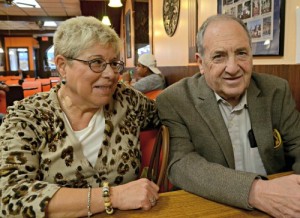
Miriam Stamm and Stanton Ross

Miriam Stamm and Stanton Ross

In the 1970s, Stanton Ross owned Premier Jewelers, a shop along Mill Street in Bristol Borough, Bucks County. He had always sold the kind of jewelry you would expect to find: rings, necklaces, bracelets, broaches, watches. But he remembers the day when a young couple visited his shop with what, at the time, seemed like an usual request.

“They wanted Irish wedding bands. I didn’t have them, but I found them for them,” says Ross. “Before long, I started getting a lot of requests for them. People came from all over, and they told their friends.”

Ross recognized an opportunity. Before long, he was stocking wedding bands, Claddagh rings, and other Celtic-themed jewelry, and those items proved to be popular with people of a certain ethnic background. But soon selling Celtic gewgaws and tchotchkes became more than just business. It was the beginning of a beautiful relationship with the local Irish community.

”I was invited to plenty of weddings after that,” Ross recalls. “They were customers first, but then they became friends.”

One thing led to another. Ross’ casual interest in Ireland soon blossomed into a full-blown passion. Some people might think this level of interest is unusual for a man with no Irish blood in his veins. Ross is of Romanian heritage. But to meet him is to almost instantly know him for the intellectually curious man he is.

“I knew it was about a lot more than wedding rings,” says Ross. He’s 82, with a modest, soft-spoken demeanor. “I became interested in the Irish culture. I read books about it, and I visited the Balch Institute. (The Balch Institute for Ethnic Studies, at 1300 Locust Street, houses a vast collection of Irish manuscripts and other historical documents.) I went to Ireland several times. I visited Doolin and Lisdoonvarna (in County Clare), and Dublin. I visited Trinity College and saw the Book of Kells. I went to visit Derry and Belfast. I just wanted to see what it was all about.”

Here and there in his travels, Ross compared notes with local jewelers, but his interest in the Emerald Isle always transcended commercial concerns. “It just seemed like an interesting place. They had all the odds stacked against them for hundreds of years, and they survived. It inspired me.”

Ross continued to soak up all things Irish, even after he closed his shop in Bristol in 1988, and went on to work at Carver W. Reed & Co., a firm that makes low-interest collateral loans on fine jewelry—where they had precisely no interest in Irish jewelry. He retired from the business in June, but it didn’t take long for his partner Miriam Stamm and daughter Lori Iller to notice his restlessness.

At their gentle urging, Ross came out of his brief retirement to return, in a modest way, to what he loved: selling Irish jewelry. This time around, he was going to take charge of the operation, from sophisticated computer-aided design to finished product. All the help he needs to do his work, he can find along Sansom Street—Jeweler’s Row. From his long years in the business, Ross knows all the local artisans, tucked away the often claustrophobia-inducing back shops where they produce 3D wax models, create custom casts, and polish precious metals.

And Ross was going to take the plunge and sell online. The new company, with Stamm and Ross’s daughter as partners, is called Relik. It’s been in operation just three months.

“He had always wanted to do this,” Stamm says. “It just seemed like a good time to do it. So the three of us started the company. We thought the name ‘Relik’ would set us apart. We’ve been putting our own money into it. You make some money, and you put it back in. We’re trying to be as smart as we can about it. It was his dream, and that was what pushed us into it.”

Stamm, whose folks come from Germany, is also an ardent lover of all things Irish.

The small company produces a limited number of modestly priced pieces—10 to 15 a month, Stamm says. Some of them they sell on the website (designed by Iller); others they sell at local craft fairs and farmers markets, including the big one in Glenside, Montgomery County.

Most of Relik’s designs are familiar—Celtic Trinity Knots, shamrocks, St. Brigid’s Crosses—and of course, the ubiquitous Claddagh.

Other designs are a bit different—inspired, Ross says, by Irish artwork he’s seen in his travels, snapshots brought back from trips to Ireland, and occasional estate sale finds. One such recent discovery was a hand-made, gold-plated pin from the Victorian era. Unfortunately, that particular pin won’t be part of the Relik collection. “It wasn’t beautiful,” Ross laughs. “It was just interesting.”

Ross draws inspiration from all of those outside sources for one particular reason. He’s no designer. Still, he knows what he likes, and it keeps him interested and engaged.

“Artists, we’re not,” says Ross. “But there’s a lot of stuff out there. I never knew the Tree of Life was Irish. It’s amazing.”

How to Be Irish in Philly

How To Be Irish in Philly This Week

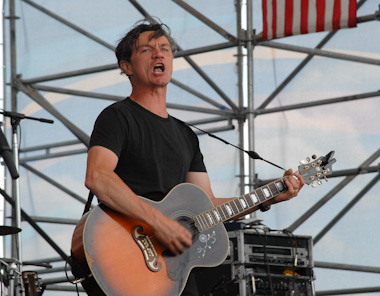
Luke Jardel will be performing for AOH charities on Sunday,

Luke Jardel will be performing for AOH charities on Sunday,


Some of your favorite Celtic rockers are jamming this weekend to support the Philadelphia AOH Freedom for All Ireland committee, which is dedicated to the reunification of Ireland. You can hear Luke Jardel (The Hooligans), Bob Hurst (the Bogside Rogues), Jamison, the Shantys, the Celtic Connect and many more. The $30 ticket to get into Finnigan’s Wake in Philadelphia covers food, draft beer, wine, soda, and your donation to the AOH FFAI charities. (Catch the Shantys at Paddywhacks on the Boulevard on Saturday afternoon!)

Also on Sunday, the Coyle School will be having its feis at the Sportsplex of PA in Feasterville, the Delaware Valley Irish Hall of Fame will induct four more Irish community stalwarts, and you can hear Paul Byrom, formerly of Celtic Thunder, at the Sellersville Theatre.

The play, “Once,” based on the movie set in Dublin, continues at the Academy of Music to rave reviews.

On Monday, Villanova University is sponsoring a talk by Maria McGarrity, associate professor of English at Long Island University, called “Framed Forever in the Last Century: James Joyce and Dublin Museum Culture in Derek Walcott’s Omeros.”

On Tuesday, dig up some ancestors with The Irish American Genealogical Society of Delaware County at the Irish Immigration Center in Upper Darby.

On Thursday, the Irish band Comas, featuring Isaac Alderson, will be at the Blue Ball Barn in Wilmington, DE.

And on Friday, catch Jamison at AOH 39 on Tulip Street in Philadelphia.

Check our calendar for more information and for late-breaking events.

Enjoy the week, and remember to be Irish responsibly.

News

Four to be Inducted Into the Hall of Fame

hall of fame logo
On Sunday, four stalwarts of the Irish community will be inducted into the Delaware Valley Irish Hall of Fame at a dinner and awards ceremony at The Irish Center in Philadelphia. Here are this year’s honorees:

Bob Gessler was president of Division 87 of the Ancient Order of Hibernians for eight years and served for more than a decade as president of the Philadelphia County Board of the AOH. In 2008, he was the recipient of the prestigious John F. Kennedy Medal, the highest award given by the AOh, in recognition of his founding of the Hibernian Hunger Project, a program that helps feed needy people and has been adopted by the AOH as its national charity.

In his nominating letter, James Coyne listed Gessler’s other accomplishments:

“He was instrumental in bringing a National and State AOH Convention to Philadelphia and hosting the unveiling of the Irish Immigration Stamp. . .He is the Past President of Blarney Political Action Committee, which provides a voice for the Delaware Valley Irish Community. He is the founder and Chairman of the Hibernian Community Development Corporation, an organization that rehabs houses for local families and provides educational opportunities to disadvantaged Philadelphians.

Bob is a member of various civic and Irish association Boards, including more than17 years on the Board of the Irish Memorial and is a member of the Friendly Sons of St. Patrick. He is the former co-chair of the Kevin Donnelly Memorial Scholarship Fund which provided over $75,000 in tuition assistance. Bob previously served on the Boards of KAN/KARP (a local CDC), the Commodore Barry Club (Irish Center), the Welcoming Center for New Pennsylvanians.

He is an Honorary Citizen of the City of Tralee, Co. Kerry and served as one of the Co-Chairs for the Jeannie Johnston Millennium Voyages Project. Bob has been recognized for his accomplishments on behalf of the Irish Community by a number of groups; Federation of Irish Societies (Delaware Valley), Philadelphia County Board of the Ladies AOH, Division 87, The Emerald Society, Irish Northern Aid,Clan na Gael, Philadelphia Irish Festival, Philadelphia Veterans Multi-Service Center, Mother of Divine Grace Parish and St. Malachy’s College (Belfast).”

In 1983, Eileen Lavin founded the Tara Gael Dancers, an adult Irish dance group that was the first group of adult Irish dancers in the region and consistently wins top prizes in the St. Patrick’s Day Parade. She has been teaching Irish dance since she left Cardinal Dougherty High School. And she learned from the best—Ed Reavy—whom she taught with for many years. She was named to the parade Ring of Honor in 2010. For many years this hairdresser had her own shop, and now operates out of Gloria Dei, a 55-plus independent living residence.

Anne Gallagher McKenna will receive the posthumous award this year. McKenna, who started McKenna’s Irish Shop in Havertown in 1950. She earned her first shillings as a 12-year-old, knitting mittens for a shop in Ardara, County Donegal, where she was born, and they helped buy her ticket to the US in 1947 when she was 17 years old. She met and married Joseph McKenna and they had five children.

After her family was raised, she opened the shop which sold imported wool sweaters, tweeds and woolens. She continued to make her own knitted clothing and her daughter, Nancy Durnin, said she continued to improve her skills, sticking to a project until she mastered it. She loved change, but was concerned that machinery and computers would make hand knitting a lost art. Her only regret, said her daughter, was that she wasn’t able to master and adapt these technologies.

Joseph T. Kelley, Jr., Esq. will receive a special award, from the Delaware Valley Irish Hall of Fame, for his generosity and service to the Commodore Barry Club, “Irish Center”. Kelley, whose family has roots in County Mayo, is the president of the Irish Immigration Center of Philadelphia and immediate Past- President of the Brehon Law Society. He was one of the founders of the US/Ireland Legal Symposium which is designed to bring together internationally minded in-house attorneys, private legal practitioners and business executives looking to invest in key sectors in Ireland, the US, and Europe.

Kelley is the founder, Chairman and CEO of Kelley Partners, Ltd., a law firm with offices in Philadelphia and Harrisburg, Pennsylvania. He focuses his practice on business and corporate law and governance, for both nonprofit and for profit companies, including general counsel services, corporate criminal defense, and healthcare law. As general counsel for large and small healthcare providers and for a host of other organizations.

Kelley is a member of the American, Pennsylvania, and Philadelphia Bar Associations, the Brehon Law Society and is a fellow of the Council on International Legal Studies, Salzburg, Austria. Mr. Kelley has also served the Irish and Irish American communities by his service as an organizer of the Philadelphia Emerald Society, a founder, Board Member and Past President of the Brehon Law Society and currently serves as Chairman of the Philadelphia Irish Immigration Center.

News

Aon Sceal

It’s back! We resurrecting our news briefs because there’s just so much going on in Philly’s Irish community, we just had to. For those of you who aren’t Irish speakers (full disclosure–neither are we), Aon Sceal means “what’s the story?” Feel free to send us your special announcements.

Major Honor for Two Local Musicians
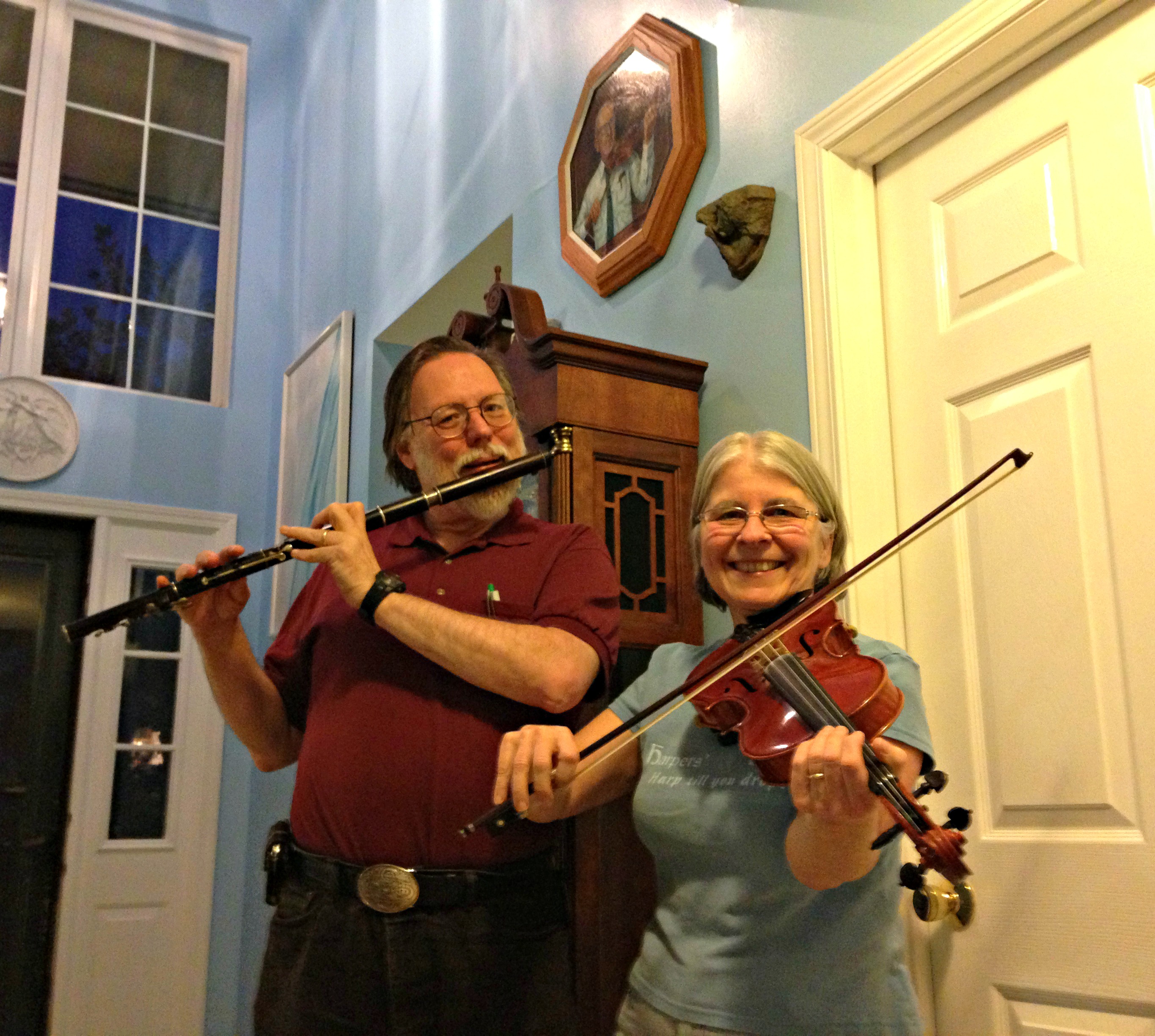
Musicians Dennis Gormley and Kathy DeAngelo will be inducted into the Comhaltas Ceoltoiri Eireann Mid-Atlantic Hall of Fame at the Provincial Fleadh and North American Convention in Parsippany, NJ, in April. The husband-and-wife duo have been performing together in the Delaware Valley as McDermott’s Handy since 1979. They are multi-intrumentalists who are also co-founders with Chris Brennan Hagy of The Next Generation, a group of student musicians who take instruction, play and perform together at the Irish Center and at events. Gormley and De Angelo have been teaching for more than 17 years. They will join an illustrious group of musicians and promoters of Irish culture and music in the Hall of Fame, including Mick MoloneyEd Reavy, the late Tommy Moffit, Cherish the Ladies’ Joanie Madden, and Kevin McGillian.

Comhaltas Ceoltoiri Eireann (pronounced coal-tis keeyol-tory air-in) is an international organization, based in Ireland, dedicated to the preservation and enjoyment of Irish music, dance, and culture with over 400 branches worldwide.

Ray Says a Musical Thanks
A few weeks ago, Tyrone born musician Raymond Coleman was awakened early in the morning by police. Someone had broken into his van and took all of his instrument and equipment. It started out as just about the worst day of his life. Coleman supports his family as a fulltime musician. But before the day was over, it turned into one of the best days he’s ever had.

Fellow musician Frank Daly of Jamison Celtic Rock started a crowd-funding campaign on giveforward.com to help Coleman replace his stolen guitars and equipment. By the next day, dozens of people—and a few foundations—had donated more than $3,000.

To say thanks to his donors, Coleman is holding an “Appreciation Night” at the Plough and the Stars, 123 Chestnut Street, Philadelphia, on November 21, starting at 7:30 PM. His brother, singer-songwriter Mickey Coleman, and several other guest performers will join Coleman on stage. If you helped this young musician out, you’re invited.

Win a Box of Goodies
You can win tins of biscuits, a Christmas stocking, tea, jam, sweets and loads of your favorite Irish goodies and support the Philadelphia Irish Center just by buying a raffle ticket.

The drawing for the basket, which contains hundred of dollars worth of treats, will be on Sunday, December 15. It benefits the Commodore Barry Club Real Estate Tax Fund. Contact members of the center’s board for tickets.

Tom Walsh, 215-843-8051
Vince Gallagher, 610-220-4142
Denise Hilpl, 215-527-8380
Tom Farrelly, 610-633-1803
Kathy Burns, 215-872-1305

Honors for Two Local Lawyers
Last month, Lisa Maloney, senior vice president of Capmark, and Mark Foley of
Philadelphia law firm Cozen O’Connor were among other members of the legal community nationwide to be honored at the Irish Legal 100 event. The program acknowledges the most accomplished lawyers of Irish descent from around the U.S. Past honorees include Supreme Court Chief Justice John Roberts, NJ Gov. Chris Christie (a former federal prosecutor) and Associate Supreme Court Justice Anthony Kennedy. The ceremony was held in Washington, DC, at the residence of Irish Ambassador Anne Anderson, who was named to her post in August.