Monthly Archives:

August 2013

How to Be Irish in Philly

How To Be Irish in Philly This Week

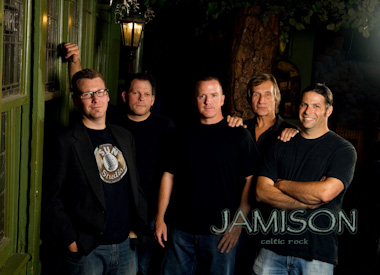
A fairly quiet week in Irish Philadelphia—we think most people are at the shore. And if you are and happen to be anywhere near Sea Isle or North Wildwood, you can catch Jamison Celtic Rock and parts thereof at several locations this weekend.

Jamison--they're everywhere!

Jamison–they’re everywhere!

They’ll be at Keenan’s in North Wildwood on Saturday night starting at 5 PM (they’ll be back there again the following Saturday), then Frank Daly and CJ Mills, who appear as Slainte, will be at The Anglesea in Wildwood starting at 10 PM.

Jamison will be at Shenanigans in Sea Isle on Sunday night. Then you can see Frank Daly solo next Thursday at Con Murphy’s, the Irish pub on the Parkway.

On Wednesday, Irish Thunder Pipes and Drums will be performing at Washington Memorial Chapel in Valley Forge National Park, right after the 7:30 PM carillon concert. BYO chairs and get there early for a good spot.

Local Irish musician Theresa Murtagh and her husband, Paul, are holding a benefit at their home in Media on Thursday for Cityteam, a Christian nonprofit that serves the poor and homeless in Chester, PA, and other locations on the West Coast. You can find out more about it here.

Next week, look for Barleyjuice at the World Café Live (August 17) and concertina player Edel Fox with fiddler Neill Byrne at the Coatesville Cultural Society (August 18).

On Monday, August 19, tune into www.rte.ie to see 31 Roses from around the world, including Philadelphia Rose of Tralee Brittany Killion, compete to become the International Rose.

There’s more information on these events on our calendar, which is not going with me to Ireland next week. It will be here, as will How to Be Irish in Philly, but under temporary new management. See you in a couple!

People

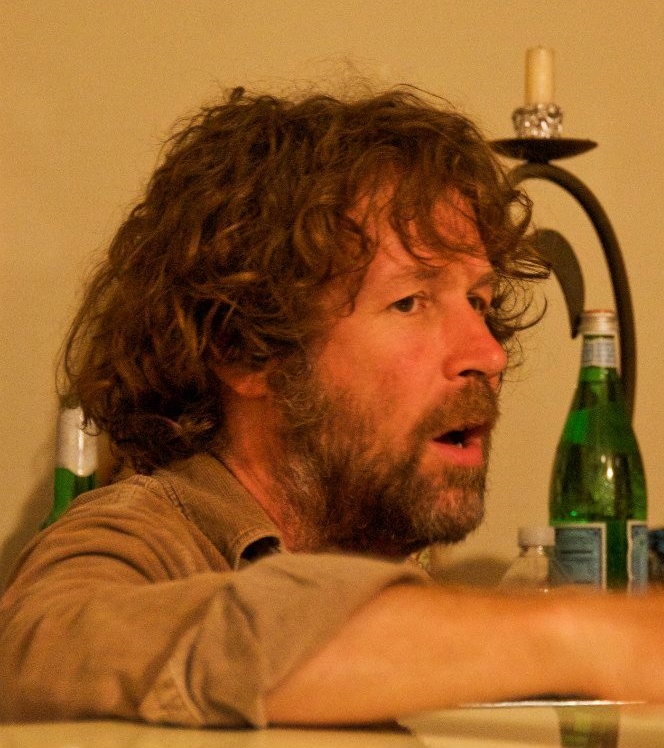
Liam Ó Maonlaí & Peter O’Toole Play a Barn Star House Concert


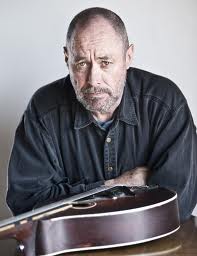
Liam Ó Maonlaí Photo by Denise Foley

Liam Ó Maonlaí
Photo: Denise Foley

The very essence of a house concert is the intimacy between performer and audience; when that performer is Liam Ó Maonlaí, the experience is like a heady whirlwind romance.

Thanks to Gabriel Donohue and Marian Makins, who are the architects and hosts behind the Barn Star concert series, and a mutual friend who set up the concert, this past Wednesday night brought Liam Ó Maonlaí and fellow Hothouse Flowers band mate Peter O’Toole to Philadelphia for a spectacular evening of music. To be among a limited crowd of 50, seated in a living room around a beautiful baby grand piano, listening to these two brilliant musicians play for three hours, is a singularly memorable event.

The concert is one of only a few that Ó Maonlaí is performing this trip. His focus has been the Dakota Nation Unity Ride, an event that began in July and is bringing Native Americans from as far away as Canada on horseback and in canoes to New York for an observance of peace and healing. The gathering continues throughout this weekend, and information can be found here, at the website of the Unity Ride.

For Ó Maonlaí, who is so passionate about Irish heritage, and culture, and the preservation of the Irish language, listening to his stories is as much a part of the experience as hearing the music. Before singing an original, as gaeilge version of “Carrickfergus,” he spoke of  his own awakening to music through a tape of Seán Ó Riada’s: “The language and the land and the music and the people and the work–it all dances in front of you…Seán Ó Riada realized that it’s the roots. The roots go on. And they go down and then you go forward…So that’s what we had at home. That was my introduction to a band and an audience, on this little tape. The rest of the stuff, it just seeped in through osmosis. When I was about 10, I started to play the whistle and these tunes were already in me, so they just came out through the holes.”

For which we, who were in attendance Wednesday night, are eternally grateful. Here is where you can see Liam Ó Maonlaí’s version of “Carrickfergus” captured on video  and also “Cailleach an Airgid” (“The Hag with the Money”), performed by Liam and Peter.

Here are a few photos from the evening.


Music

Farewell, Once Dear and Happy Country

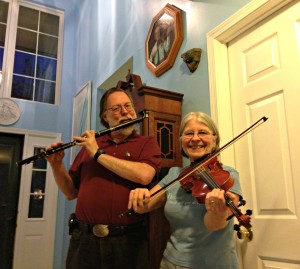
Dennis Gormley and Kathy DeAngelo ... with a portrait of Ed McDermott. He's always just over their shoulder.

Dennis Gormley and Kathy DeAngelo … with a portrait of Ed McDermott. He’s always just over their shoulder.

Isle of hope, isle of tears, isle of freedom, isle of fears, but it’s not the isle you left behind. That isle of hunger, isle of pain, isle you’ll never see again, but the isle of home is always on your mind.

—”Isle of Hope, Isle of Tears,” Brendan Graham

It’s called “Bound for Amerikay: The Irish Emigrant Experience: Coming to America as Told Through Music, Song & Story,” a new CD from McDermott’s Handy—also known as Kathy DeAngelo and Dennis Gormley. And it’s been a long time coming. A really long time.

“This CD has been a work in progress for many years,” Kathy explains over cups of Barry’s tea in the kitchen of the couple’s Voorhees home, the family parakeet Daisy chirping away in a nearby cage.

“Decades,” Dennis chimes in, in the manner of one who long ago learned to complete his wife’s thoughts.

By “decades,” you could also interpret that to mean the inspiration for the CD, which is the often painful, but perhaps equally hopeful history of Irish emigres who made their way to America. It’s a theme that has always resonated with Dennis and Kathy, and a particularly popular one, even among audience members who have no Irish roots.

The most immediate inspiration would be County Leitrim fiddler Ed McDermott, who left Ireland a year before the Easter Rising of 1916. He came to America, and settled down in New York, where he played for ceili bands in the 1940s. He laid down his fiddle for a number of years, until he was rediscovered during the folk revival of the late ’60s and early ’70s. Kathy came to know him at a “sing” in Middletown, N.J., in 1971, when she was playing guitar. She eventually performed with him for several years.

“Any time we play, even at a session,” that connection isn’t very far from our brains,” says Kathy. “Any time I’m teaching, I’m thinking of that. But for this person, I wouldn’t be doing this. I almost feel like I’m standing in an old person’s shoes.”

Dennis lends his own perspective. “We learned our music from Ed McDermott, who learned his music from his father. We can turn around and look over our shoulders back to the mid-18oos. That’s quite a time span.”

It was with that thought in mind, the sense of standing on the shoulders of giants, that Kathy and Dennis approached “Bound for Amerikay,” recorded and mixed in the couple’s basement studio, Kathy singing melody and playing fiddle and harp, Dennis on guitar, flute and whistle, and singing harmonies. It’s something of a departure from their first CD, “Come Take the Byroads,” when, Dennis says, “we made a concerted effort to pick songs that no one had heard of.”

But even then, he adds, “one of the things we dug up was “McDermott’s Farewell.” It was a big, long song about leaving Ireland, and what it meant to leave Ireland. That’s the kind of song we gravitated to.”

Twas on the quay of Limerick City, there I heard a young man say
“Farewell dear unhappy country, now I’m bound for Amerikay.
Doomed in a foreign land to wander, strangers faces for to see
Farewell, once dear and happy country, Ireland now, farewell to thee.

All of which led up to the most recent project, in which Dennis and Kathy draw heavily from their concert material. Many of the songs they sing recall, in a deeply emotional way, the story of Irish immigration.

One of those tunes, for example, is “Isle of Hope, Isle of Tears,” penned by Brendan Gallagher, documenting the experience of Annie Moore, the first immigrant to pass through Ellis Island. The first time she heard it sung, Kathy recalls, “I was just bawling my eyes out.” The two chose songs like that one “because they had this emotional impact.” Other tunes, she adds, such as “Thousands Are Sailing,” performed by Planxty, strike the same emotional chord. Both tunes are on the CD.

One of the most compelling aspects of “leaving Ireland” songs, Dennis says, is their broad appeal. In America, the immigrant experience is far from limited to the Irish. The story is still being played out.

“One of the things that comes home for us is that, for most ethnic groups who make up the tapestry of the American population, even though we’re saying this is what the Irish experienced, it’s directly applicable to other ethic groups, even up to today,” says Dennis. “We once played a concert in a library in Parsippany. Many in the audience were Southeast Asians, many of whom were first generation. They had come over so their children could have a better life than they would have on the Indian subcontinent, and they were very moved by those songs.”

In the end, it just wouldn’t be a McDermott’s Handy concert without such powerful stories and songs. “Any time we do a concert, that’s really one of the main focuses for our programs,” Kathy says. “That’s an indelible part of our music.”

You can listen to sound samples and purchase the new CD here.

And here’s the track listing:

  1. Rambling Irishman
  2. Paddy’s Green Shamrock Shore
  3. Nuair a Bhi Mise Og (When I Was Young)
  4. McDermott’s Handy (Reels)
  5. Star of the County Down
  6. Spancil Hill / Off to California
  7. Cad E Sin Don Te Sin? (What’s It to You?)
  8. Samhradh, Samhradh (Summer, Summer)
  9. Isle of Hope
  10. The Christmas Letter
  11. Gallagher’s Frolics / The Nightingale
  12. When I Was a Fair Maid
  13. Mo Ghile Mear (My Gallant Darling)
  14. Thousands Are Sailing
  15. Jenny Picking Cockles / My Love Is in America / Green Fields of America (Reels)

And if you want to celebrate the release, make your way to their CD release party Sunday, August 18, from 2 to 5 p.m., concert at 3 p.m., at the Center for the Arts in Southern New Jersey, Marlton. Details here.

Dance, Music

Festival Time Is Just Around the Corner

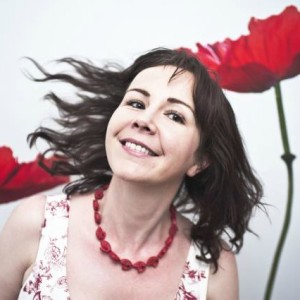
Nuala Kennedy

Nuala Kennedy

We’re just a year away from the 40th anniversary of the Philadelphia Ceili Group Festival. What started out as a one-day outdoor event at Fischer’s Pool, above Lansdale, is now a three-day celebration of Irish music, dance and culture headquartered at that most Irish of Philadelphia places, the Commodore Barry Club at Carpenter and Emlen in the city’s Mount Airy neighborhood.

We recently chatted with the Ceili Group’s Anne McNiff, to find out what to expect at this year’s festival.

Is it hard for you to believe this is the 39th anniversary?

No, I guess not for me. I’ve only been around for a couple of them. Some of my fellow board members are more generationally tied to it. It might be harder for them to believe. Fischer’s Pool was a big, sprawling property, and it was all outside. That must have been logistically interesting!

What’s new this year?

This year, one of the big changes is that we’re going to have, running currently with the ceili back in the ballroom is a “rambling house” in the Fireside Room in the front of the house. In past years we’ve had a concert on that night, but it just has never taken off the way we would have liked it to. We wanted to have another option for people on Friday night. The rambling house is a little less formal than a concert. Gabriel Donohue is hosting it, and he’s a great entertainer all by himself. He’s hosted the singers’ night in the past, so we know what a good host he is. He’ll invite people to come up and give a song or a recitation. He’ll have the opportunity to invite different musicians to come up and play, maybe along with him, maybe by themselves.

It’s a huge plus that he has relationships with many musicians, not just here in New York, but in New York. He’s gotten Joanie Madden to come here as a guest. She’s certainly going to be a draw. It will be much less formal than what a regular concert would be. That is a big change.

It seems like you have always favorites, some sure-fire hits, like (singer) Matt Ward.

Matt Ward is really a perennial favorite. We get a lot of comments about Matt; he doesn’t sing locally a lot. Frank Malley (longtime festival chairman) was the first to bring him on board. It’s become a tradition for Matt to be invited to come by on Singers’ Night. (Thursday the 12th.) People say they don’t get to see him, except at this place and this time.

Looks like the Saturday workshops are free for Ceili Group members.

Last year we had the lovely opportunity to offer our workshops for free. That aspect of the festival was being funded by a grant. We had such a great response to that. We used it as a way to attract people to the festival, and to get them to commit to membership. It was such a positive thing that, when we talked about what to do differently, we agreed that we wanted to carry that on again this year.

This year we have a couple of new workshops, including an Irish calligraphy workshop. Also very cool and a little bit of a departure, we have local author Kenneth Milano, who will be doing a workshop from 3:30 to 5:30 on the Philadelphia nativist riots.

This year for your Saturday night concert, you have Tony DeMarco’s band, and (singer and flutist) Nuala Kennedy. That’s an interesting pairing.

Tony, of course, has played at Philadelphia Ceili Group events before, so he has to be an old favorite. Nuala Kennedy, on the other hand … she’s new. She’s not played a lot in Philadelphia. She has a big following in Europe, and I believe in New York, I know she tours a lot. She is all over the place.

I saw her some time ago at Gene Shay’s Song Salon. He was hosting it in a small venue that had all kinds of eclectic acts, and Nuala Kennedy was one of them. She and I got to talking. I told her that we do a big festival, and I asked her, is this something you’d be interested in, and she was. Recently, we got back in contact. I found out she tours not just with (guitarist) John Doyle but also with (guitarist, bouzouki player and singer) Eamon O’Leary. I just love the idea of introducing her to a broader Philadelphia audience. People are going to love her.

Want to learn more? Click here for the full lineup.

Sports

A Championship Weekend for the Delco Gaels

http://www.cycgaa.org

http://www.cycgaa.org

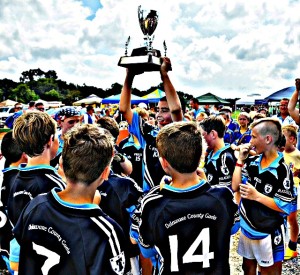
The Delco Gaels had plenty of cause for jubilation as three of their teams notched thrilling championship wins in the Continental Youth Championships this past weekend in Malvern.

In Under-16 Boys A and Under-12 Boys A, Gaels football teams emerged victorious, as did the Under-8 Boys A hurling team. At the end of the day, there were lots of medals dangling around lots of necks.

All of those championships probably took some of the sting out of a hard-fought, emotional finals loss by the Under-18 Boys B team. The Gaels were slightly younger than the winner, St. Raymond’s. Still, coach Louie Bradley expressed nothing but pride in his team.

“We had six under-18s (on the Gaels’ team), but the rest were all under-16s. We were making up the numbers,” Bradley explained. “We were never favored for that game, but they (the Gaels’ team) put up a good effort, they really did. The other team was just stronger. They were a legitimate under-18 team, and they were just stronger than us.”

Matters weren’t helped any by the fact that the team had just come back onto the field from their semi-final match after a rest of 20 minutes or so in a tent that probably did little to relieve the unrelenting heat of the day.

“We were just exhausted,” Bradley said. “We had just come off the field, having played a game, and that doesn’t help. I was glad to get to the final. Obviously, when we had gotten that far, I would love to have won it. But I’m still proud. They gave me a great effort out there.”

St. Raymond’s won it 2-11 to 1-6.

Another Gaels runner-up: The Under-14 A Ladies Camogie team.

All told, a memorable performance for a proud local club.

Another local coach had reason to be proud. Brendan Gallagher, of the brand-new Glenside Gaelic Club, clearly relished the club’s Under-8 Boys Football D fifth-place finish.

“We reached the finals in our very first year,” he said with a smile after posing for pictures with his medal-wearing youngsters. “We lost by just one point to San Diego. Not too bad, huh? It’s our first year as a club, so it’s very special, to say the least.”

We have what my partner Denise has described has “a gabillion photos” from the many weekend games. Yeah, really, that many. You can see them, above.

You can see the finals listings on the Continental Youth Championships website.

How to Be Irish in Philly

How to Be Irish in Philly This Week

Sean Tyrell will be at St. Stephen's Green in Philly on Thursday.

Sean Tyrell will be at St. Stephen’s Green in Philly on Thursday.


Some real treats this week, including a house concert with one of the Hothouse Flowers and a visit from musician-storyteller Sean Tyrell, plus some Celtic-flavored acts at Bethlehem’s Musikfest. The Gaelic sports season is also winding down and there are games all Sunday afternoon at Cardinal Dougherty field.

Here’s how we jig:

Saturday
At Musikfest: Emily Mure, a New York-born singer-songwriter who studied traditional Irish music at the University of Limerick and earned her chops busking on the streets of Galway after graduation.

At Musikfest: OCEAN, a multi-piece orchestra that plays Celtic and original tunes.

Down the shore: Jamison Celtic Rock at Casey’s in North Wildwood. We hear it’s fiddler C J Mills’ birthday—wish him a good one for us.

Sunday
Lazy Lanigan’s Publick House in Sewell, NJ, is hosting a fundraiser to help send two young remarkable local musicians, Emily Safko and Haley Richardson, to the Fleadh Cheoil in Derry this month. Festivites start at 1 PM.

At Musikfest: The Irish Stars Parker School of Irish Dance will be performing, and OCEAN will make a return visit.

At Musikfest: Burning Bridget Cleary, a popular local band, will be on stage at 3 PM.

The Theresa Flanagan Irish Band will be working the dancers into a frenzy at JD McGillicuddy’s in Kirklyn, starting at 4 PM.

The Tartan Terrors will offer their blend of music, dance and comedy at the Sellersville Theater at 7:30 PM.

Down the shore: Jamison will be at Shenanigan’s in Sea Isle City. CJ Mills will be one year and one day older.

Tuesday
At Musikfest: The Mickey Finns, a Celtic rock band with roots in trad and jig punk, will be on stage at 7 PM

Irish screenwriter and director Alan Brown will be bringing his award-winning film, The Minnitts of Anabeg, to The Irish Center on Tuesday night. The movie looks at the life of an English justice of the peace during the Irish potato famine. The film won the Best screenwriting Award at the Irish International Film Festival (2012). Brown will be on hand for a Q&A after the showing. Tea, coffee, and scones will be served. Admission is $10.

Wednesday
There are still a few tickets left for Liam O Maonlai, the All-Ireland bodhran winner and co-founder of the group, the Hothouse Flowers, who will be doing a house concert in center city. O’Maonlai is a fluent Irish speaker who also sings in Irish, so if you need some practice, here’s a way to get it. Email barnstarconcerts@gmail.com.

At Musikfest: Red Sea Pedestrians, a fusion band that includes Celtic goes on at 5 PM.

Thursday
The legendary Sean Tyrell, singer and storyteller, will be doing both at St. Stephen’s Green in Philadelphia on Thursday night. He’s mesmerizing. Sean goes on at 8 PM.

At Musikfest: Red Sea Pedestrians redux at 3:30 PM.

Friday
Major goings on:
Cherish the Ladies will be at the Sellersville Theatre. If you haven’t seen Joanie Madden and her gang before, you’re in for a treat. It’s a high-energy show with beaucoup talent on stage.

At Musikfest: Blackwater, a group from the Lehigh Valley that combines strong instrumentals with equally strong vocals, will be on stage at 7:30 PM.

At Musikfest: Enter the Haggis will be on stage starting at 9:30 PM

Jamison is going down the shore this weekend, but on Friday, they’ll be at Curran’s in Tacony.

Check the calendar for all the details.

Music

A Weekend of Music

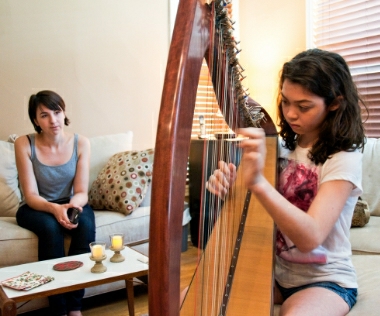
Emily Safko practices a tune under the watchful eye of her teacher, Alex Boatright.

Emily Safko practices a tune under the watchful eye of her teacher, Alex Boatright.

It was a real treat for young musicians Alexander Weir, 14, and Emily Safko, 11, to get some up close and personal time with their music teacher, All-Ireland harp champion Alex Boatright, last weekend. She was one of two instructors—the other, all-Ireland fiddle champ Dylan Foley—who taught at a two-day Irish music workshop in West Chester.

Though Boatright has been their teacher for some time, while she was getting her bachelor’s degree in music performance at Applachian State University in North Carolina, Alexander and Emily took their lessons from Boatright and her husband, Duncan, a composer and percussionist, over Skype. It may be traditional Irish music, where student learns at the feet of the master, but when you regularly earn a spot at the Fleadh Cheoil na Eireann—as Alexander and Emily do—sometimes it requires employing some nontraditional methods to hone your skills.

“Alexander and Duncan have really forged a bond over Skype. Duncan is teaching him music theory and they now also play video games together,” laughed Katherine Ball-Weir, Alexander’s mother, who organized and hosted this second annual weekend music workshops at just the perfect time—two weeks before the Fleadh, which this year is being held in Derry.

Though Alexander won’t be going (“next year in Sligo,” his mother promises), several of the other students, including Emily Safko, who tied for third in the All-Ireland last year, and singer and concertina player Alanna Griffin will be competing. As will their teachers. This year, both Alex Boatright and Dylan Foley will be competing in the senior division in harp and concertina (for Alex) and fiddle (for Dylan).

Boatright is also starting a PhD program at the University of Maryland and Foley has been touring with his band, The Yanks, with their eponymous debut CD. (The Yanks are a who’s who of the younger generation of Irish music in America: Along with Foley, there’s Dan Gurney who learned Irish music from legendary Galway concertina player Father Charlie Coen; three-time All-Ireland winner Isaac Alderson; and Sean Ernest, one of the most in-demand accompanists in Irish music today who has toured with Teada, McPeake, and the Paul McKenna Band.)

We spent some time at the workshop on Saturday. You can see our photo essay and watch a video of  Emily Safko practicing a tune on her harp.

On Sunday, there will be a fundraiser at Lazy Lanigan’s Publick House, 139 Egg Harbor Road, Sewell, NJ for Emily and young fiddler Haley Richardson who will be making a return trip to the Fleadh.

Music

Around the World With Bagpipes

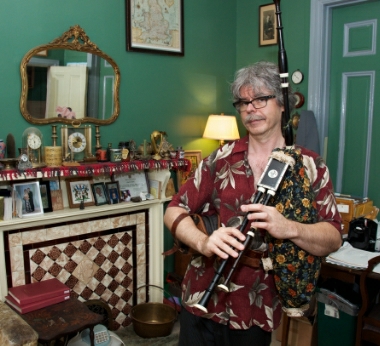
Charlie Rutan with his French bagpipe.

Charlie Rutan with his French bagpipe.

Roxborough’s Charlie Rutan had a musician father and grandparents from Scotland who loved the music they grew up with, so there was always music—specifically bagpipe music–playing in the house . As a small boy, he was given a practice chanter and taught himself a few tunes.

Growing up though, he cycled through a veritable orchestra of woodwind instruments, from the sax to the oboe, which he still plays. Then, as a young man, he spent some time in Ireland and Scotland and something happened. “There was something in the air, something calling to me. Charlie boy, the pipes are calling.”

Uh-huh, he really said it.

And for the last 25 years, whenever someone needs a bagpiper, it’s Charlie Rutan they call. He’s the owner of Bagpipes FAO (For All Occasions), supplying solo and group pipers and pipe bands for every conceivable event from weddings and funerals to store openings and retirement parties. On the face of it, it doesn’t seem like a lucrative career choice, but you’d be surprised how busy a bagpipe business can be.

“A week doesn’t go by that I don’t do a funeral,” says Rutan, who, when he’s not at someone’s special occasion, plays with the Celtic fusion group Sylvia Platypus. He’s done gigs as far away as Iowa and Virginia, and has seen some strange things, but be assured that Rutan doesn’t bagpipe and tell. He won’t tell stories. Well, except for tales of the long and varied history of an instrument that you either love or hate.

About that: Let’s take a little detour to talk about the relationship between the hearing public and bagpipes. Aficianados say the sound of the pipes—what they call “haunting” is produced by what is basically an air supply, bag, chanter (the melody pipe), and drone (supplying the harmonizing note)— strike an emotional chord, eliciting pride, joy, grief, and, occasionally, the desire to march into battle, though the bagpipes’ martial side is a relatively new wrinkle. But haters will hate. One Internet survey finds that 35% of people hate bagpipes. Bagpipe jokes abound. One common one: Why do bagpipers walk when they play? Answer: To get away from the sound. Famous folk have even weighed in: Alfred Hitchcock once said that bagpipes were obviously invented by someone who’d seen a man carrying “an indignant asthmatic pig” under his arm.

As comic Rodney Dangerfield might have put it, bagpipes “don’t get no respect.”

And yet, says Rutan, who has a couple of dozen of them,  there are “a plethora of bagpipes in every country in Europe, Northern Africa, the Urals, and the Middle East. In Italy, they have a different kind of bagpipe from one town to the next.”

And the bagpipe—which wasn’t invented in Scotland, despite what the Scots will tell you—is old. Ancient. There’s even something resembling small modern-day bagpipes in Italian frescos dating back to the 12th century. The Irish pipes–small, melodic instruments called uillean pipes (from the Gaelic piobai uillean, literally “pipes of the elbow” which describes how they’re inflated—pressed under the arm rather than inflated by the piper’s breath)–are a fairly recent entry into the “aerophone” genre. Uillean pipes may date back to the 17th century.  They’re also enjoying a resurgence. “Over the past 20 or 30 years, the uillean pipe trade has blossomed,” says Rutan. “A whole new generation has discovered them,” says Rutan.

You’ll find bagpipes in all kinds of cultures, some that might surprise you, he says. “I frequently get calls from the city’s French-speaking Haitian community. Their tradition is to have bagpipes at their events.”

Rutan even has a French bagpipe to play when those occasions arise. He pulled it out for me when I visited him on one of those few windows-open days we’ve had this summer. Unlike the Highland pipes used by pipe and drum bands, the French pipes are small, slim and highly decorated. His has finely wrought inlays and a floral bag, like a home-sewn drawstring purse. Another set of pipes (Bohemian) is its antithesis—so basic, the bag looks exactly like what it once was: a goat. The pipes, chanter and drone fit nicely where head and legs once were. The pipes from Turkey, common in the Middle East, is simpler still; when he plays it, the reedy, high-pitched sound recalls the call to prayer from the mosque.

When Rutan pulls out the Breton pipe—from the Celtic part of Brittany—he takes a few steps backward before he puts the chanter to his lips. “You might want to cover your ears,” he warns, before coaxing the most godawful, small-animal-being-tortured-to-death sound from the tiny set of pipes. It’s the musical version of waterboarding. I found myself wondering what Rutan’s neighbors—who could hear it through the open windows—were thinking. I might call 911. See photos of all of the bagpipes mentioned here.

There’s so much variation in pipes because, says Rutan, “for a long time they were a one-off instrument, made in some guy’s garage, in his spare time, as a labor of love, with no plans and no set of measurements.”

Because bagpipes were always DIY, “some European pipes were almost lost after the second world war,” he explains. “All the metal was confiscated for the war effort and many of the men who made them had passed on.” In one region of Italy, makers buried bagpipes in the mountains and unearthed them after the war, taking time to teach the younger generation who’d grown up without them how to make, repair, and play them.

Though he doesn’t say it, the Italian pipes, the large zampogna–double chantered pipes that can play chords and melody with a deep-throated sound–seem like Rutan’s favorite. He uses them most often in the winter months since they’re part of Italian holiday festivals. “It was traditionally played by shepherds as they tended their flocks and was supposed to be the first music the Christ child heard,” Rutan explains. You can hear him play a tune on the zampogna here.

But the zampogna will be front and center on Sunday, August 4, as part of a ceremony marking the merger of St. Leo the Great Parish and Our Lady of Consolation Parish in Tacony. St. Leo is a traditionally Irish parish, and OLC, an Italian parish, “So we’ll have an Irish piper leading the parishioners of St. Leo’s toward OLC, then midway on Disston Street I’ll step in with the zampogna and take them the rest of the way. That’s an ‘only in Philadelphia’ event,” he laughs.

You can also catch Rutan with Sylvia Playpus on Saturday night at Fergie’s Pub, 1214 Sansom Street in Philadelphia, at Havana at 105 Main Street, New Hope on August 21, and at the Bethlehem Sands Casino in Bethlehem on September 7.

And of course, you can hire “one splendidly attired solo piper” or a a 5- or 8-piece “micro pipe band” for anything from a wedding to a parade to a backyard barbecue from Bagpipes FAO.  Rest assured, that whatever happens there, stays there. Well, at least the piper won’t talk.