Monthly Archives:

March 2013

Genealogy, News, People

A Final Farewell to John Ruddy

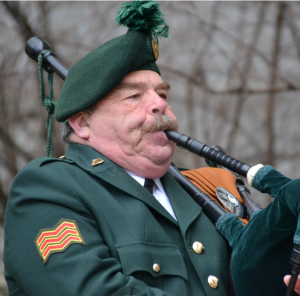
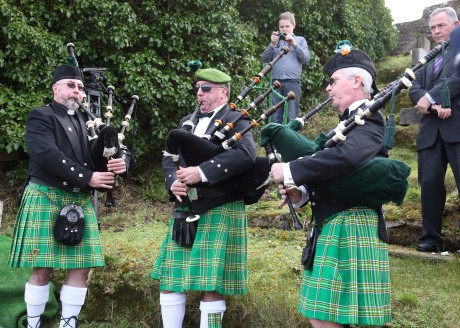
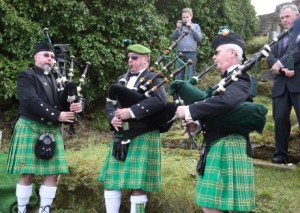
Frank and Bill Watson are joined by a third piper at the gravesite in Ardara, Donegal. Photo courtesy of Donegal News.

Frank and Bill Watson are joined by a third piper at the gravesite in Ardara, Donegal. Photo courtesy of Donegal News.

By Harry Walsh in Ardara
Reprinted with permission of the Donegal News

DONEGAL man John Ruddy was buried in Ardara on Saturday afternoon, 181 years after he was believed to have been murdered at Duffy’s Cut, 20 miles west of Philadelphia.

Ruddy, from Inishowen,was among a group of 57 Irish labourers were who sailed from Derry on the John Stamp in June 1832. Within five weeks of arriving, all had perished.

On Saturday afternoon, he was accorded honours denied during his short, cruel life as his remains were interred following a poignant burial ceremony conducted by Canon Austin Laverty, Parish Priest, Ardara.

The casket was carried to its final resting place by Earl Schandelmeier, a Historian at Immaculata University, which was the driving force behind the Duffy’s Cut project, accompanied by three pipers in kilts. They were closely followed by Sadie Ruddy, who lives in Portnoo, and her first cousins James and Bernard Ruddy from Quigley’s Point, all three of whom are direct descendants of the deceased.

Canon Laverty told those assembled that “this brings a form of closure to a sad and shameful chapter of American history and re-enforced how desperate times were in this country at the beginning of the nineteenth century.”

Looking out across the graveyard towards Loughros Bay and the Atlantic Ocean beyond, Canon Laverty noted that Slieve Tooey – visible in the distance – was possibly the last piece of Ireland that Mr Ruddy and those who left Derry in 1832 saw through the mists of their tears.

“In a strange way it’s appropriate that his mortal remains are laid here to rest in his native county,” Canon Laverty said.

Prof William Watson of the history department at Immaculata who spearheaded the research and excavation with his twin brother Frank Watson were then joined be fellow piper Tom Connors to play Amazing Grace.

Speaking afterwards a clearly emotional Mr Schandelmeier said that he had been overwhelmed by the whole project.

“This has gone from being something which was on a piece of paper, and time spent looking through the archives, to finding a guy whom we are able to bring back to his homeland today.

“Lots of things happened to allow that to happen – it was almost synchronisity. Things were lined up and it was as if he was almost delivered to us.

“The body we excavated had a one in a million anomaly. There are not a million Ruddys and there are not a million people in Donegal, and here’s a Ruddy and he has it and two of his aunts have it and they also have a story in the family of a guy coming over to the US in the 1830s, working on the rail road and vanishing. What are the odds of that? How could it not be him? It’s been truly miraculous and, as a result, today was incredibly moving,” he said.

“This is history which has been brought to life. It’s not just black and white any more. He has a face, teeth, we’ve uncovered the instruments he ate with – he’s a human being.
“Sad events like this happen every day all over the world. People die unnecessarily – their memories are lost and no one cares. It’s great to be able to give him some dignity – if it’s 181 year ago or if it was yesterday,” he said.

Philadelphia-Columbus railway

The story starts in 1828, when Irishman Philip Duffy won a contract to build Mile 59 of the Philadelphia-Columbus railway.

Mr Duffy enlisted “a sturdy looking band of the sons of Erin”, according to an 1829 newspaper article. The men moved heavy clay, stones and shale from the top of a hill to an adjacent valley, hence the name Duffy’s Cut. They were poor, Irish-speaking Catholics who would have been paid “$10 to $15 a month, with a miserable lodging, and a large allowance for whiskey” according to a British historian of the time.

Cholera broke out and the workers’ camp was quarantined. Some escaped but returned because the surrounding affluent Scotch-Irish population refused to help them.

“Of all the places in the world, this was the worst place for them to be,” Prof Watson explained. “They were expendable. Because they were recently arrived Irishmen, they were assumed to be the cause of the epidemic. It was anti-Catholic, anti-Irish prejudice; white-on-white racism.”

Prof Watson learned of the story in 2002, when he found a secret report that had been kept by his grandfather, an assistant to the president of the Pennsylvania Rail road.
In 2005, excavations near the Amtrak line unearthed old glass buttons, crockery and a clay pipe stamped with an Irish harp – “the oldest example of Irish nationalism in North America”, says Prof Watson.

Four more years passed, and the project enlisted the help of a geologist armed with a ground-penetrating radar. The first remains, those of John Ruddy, were discovered.
Mr Ruddy never grew an upper right first molar, a rare genetic defect. When the find was reported in Ireland, two dozen members of the Ruddy family contacted Watson. One of them, William Ruddy, travelled to Pennsylvania to give a DNA sample.

Prof Watson says “hundreds and hundreds, probably thousands” of Irishmen died building US rail roads and canals.

“The doors are opening slowly” to excavate the bones of the other 51 victims from Amtrak and private property at Duffy’s Cut.

Immaculata University is establishing an institute to explore at least six more mass graves in Pennsylvania and neighbouring states.

“The industrial revolution was made by Irishmen,” says Prof Watson. “Nobody talks about the toll it took on them. We’re looking at the seamy underside of the industrial revolution.”

See the story as it originally appeared in The Donegal News.

Special thanks to Sean Feeny of The Donegal News.
People

A Look Back at the 2013 Mount Holly Parade

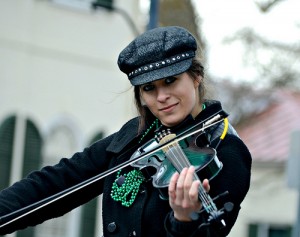
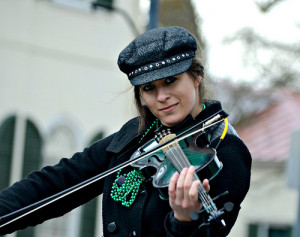
One of a flock of fiddlers in the parade

One of a flock of fiddlers in the parade

St. Patrick’s Day Parade-goers in Mount Holly bundled up but otherwise made no concession to the chilly 40-degree day. They certainly didn’t stay home Saturday afternoon. At the reviewing stand at the bottom of High Street, they stood two- and three-deep.

They had a lot to watch, from local bagpipe bands to Paddy rockers on floats (some of them wore kilts, too) to high-stepping Irish dancers. Scouts and Ancient Order of Hibernians members, fire engines, and at least one farm tractor also made the trek on what turned out to be a cool but (thankfully) dry day.

Of course, the spectators themselves, with their silly hats, green Mardi Gras beads and hair dyed green, are also worth watching.

Without further ado, here are the photos, and a video wrap-up of the day.


Genealogy, News, People

A Final Farewell to John Ruddy

Frank and Bill Watson are joined by a third piper at the gravesite in Ardara, Donegal. Photo courtesy of Donegal News.

Frank and Bill Watson are joined by a third piper at the gravesite in Ardara, Donegal. Photo courtesy of Donegal News.

By Harry Walsh in Ardara
Reprinted with permission of the Donegal News

DONEGAL man John Ruddy was buried in Ardara on Saturday afternoon, 181 years after he was believed to have been murdered at Duffy’s Cut, 20 miles west of Philadelphia.

Ruddy, from Inishowen,was among a group of 57 Irish labourers were who sailed from Derry on the John Stamp in June 1832. Within five weeks of arriving, all had perished.

On Saturday afternoon, he was accorded honours denied during his short, cruel life as his remains were interred following a poignant burial ceremony conducted by Canon Austin Laverty, Parish Priest, Ardara.

The casket was carried to its final resting place by Earl Schandelmeier, a Historian at Immaculata University, which was the driving force behind the Duffy’s Cut project, accompanied by three pipers in kilts. They were closely followed by Sadie Ruddy, who lives in Portnoo, and her first cousins James and Bernard Ruddy from Quigley’s Point, all three of whom are direct descendants of the deceased.

Canon Laverty told those assembled that “this brings a form of closure to a sad and shameful chapter of American history and re-enforced how desperate times were in this country at the beginning of the nineteenth century.”

Looking out across the graveyard towards Loughros Bay and the Atlantic Ocean beyond, Canon Laverty noted that Slieve Tooey – visible in the distance – was possibly the last piece of Ireland that Mr Ruddy and those who left Derry in 1832 saw through the mists of their tears.

“In a strange way it’s appropriate that his mortal remains are laid here to rest in his native county,” Canon Laverty said.

Prof William Watson of the history department at Immaculata who spearheaded the research and excavation with his twin brother Frank Watson were then joined be fellow piper Tom Connors to play Amazing Grace.

Speaking afterwards a clearly emotional Mr Schandelmeier said that he had been overwhelmed by the whole project.

“This has gone from being something which was on a piece of paper, and time spent looking through the archives, to finding a guy whom we are able to bring back to his homeland today.

“Lots of things happened to allow that to happen – it was almost synchronisity. Things were lined up and it was as if he was almost delivered to us.

“The body we excavated had a one in a million anomaly. There are not a million Ruddys and there are not a million people in Donegal, and here’s a Ruddy and he has it and two of his aunts have it and they also have a story in the family of a guy coming over to the US in the 1830s, working on the rail road and vanishing. What are the odds of that? How could it not be him? It’s been truly miraculous and, as a result, today was incredibly moving,” he said.

“This is history which has been brought to life. It’s not just black and white any more. He has a face, teeth, we’ve uncovered the instruments he ate with – he’s a human being.

“Sad events like this happen every day all over the world. People die unnecessarily – their memories are lost and no one cares. It’s great to be able to give him some dignity – if it’s 181 years ago or if it was yesterday,” he said.

Philadelphia-Columbus railway

The story starts in 1828, when Irishman Philip Duffy won a contract to build Mile 59 of the Philadelphia-Columbus railway.

Mr Duffy enlisted “a sturdy looking band of the sons of Erin”, according to an 1829 newspaper article. The men moved heavy clay, stones and shale from the top of a hill to an adjacent valley, hence the name Duffy’s Cut. They were poor, Irish-speaking Catholics who would have been paid “$10 to $15 a month, with a miserable lodging, and a large allowance for whiskey” according to a British historian of the time.

Cholera broke out and the workers’ camp was quarantined. Some escaped but returned because the surrounding affluent Scotch-Irish population refused to help them.

“Of all the places in the world, this was the worst place for them to be,” Prof Watson explained. “They were expendable. Because they were recently arrived Irishmen, they were assumed to be the cause of the epidemic. It was anti-Catholic, anti-Irish prejudice; white-on-white racism.”

Prof Watson learned of the story in 2002, when he found a secret report that had been kept by his grandfather, an assistant to the president of the Pennsylvania Rail road.
In 2005, excavations near the Amtrak line unearthed old glass buttons, crockery and a clay pipe stamped with an Irish harp – “the oldest example of Irish nationalism in North America”, says Prof Watson.

Four more years passed, and the project enlisted the help of a geologist armed with a ground-penetrating radar. The first remains, those of John Ruddy, were discovered.

Mr Ruddy never grew an upper right first molar, a rare genetic defect. When the find was reported in Ireland, two dozen members of the Ruddy family contacted Watson. One of them, William Ruddy, travelled to Pennsylvania to give a DNA sample.

Prof Watson says “hundreds and hundreds, probably thousands” of Irishmen died building US rail roads and canals.

“The doors are opening slowly” to excavate the bones of the other 51 victims from Amtrak and private property at Duffy’s Cut.

Immaculata University is establishing an institute to explore at least six more mass graves in Pennsylvania and neighbouring states.

“The industrial revolution was made by Irishmen,” says Prof Watson. “Nobody talks about the toll it took on them. We’re looking at the seamy underside of the industrial revolution.”

See the story as it originally appeared in The Donegal News.

Special thanks to Sean Feeny of The Donegal News.
News

Pre-Parade Frolic

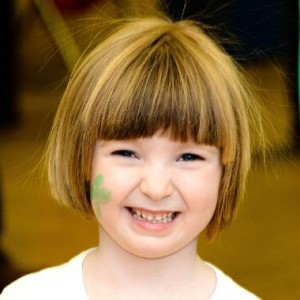
Irish-girlyIrish music played, little kids danced. grown-ups ate, talked, laughed, and plunked down money for dozens of raffle baskets. In other words, it was a typical fun Irish event–this one at Cardinal O’Hara High School in Springfield, Delaware County, to raise money for the Philadelphia St. Patrick’s Day Parade. The parade takes place Sunday, March 10, and will be broadcast live on CBS3. Check out our photos and join us along the parade route! We’ll be the ones with all the camera equipment.

People

A Look Back at the 2013 Mount Holly Parade

One of a flock of fiddlers in the parade

One of a flock of fiddlers in the parade

St. Patrick’s Day Parade-goers in Mount Holly bundled up but otherwise made no concession to the chilly 40-degree day. They certainly didn’t stay home Saturday afternoon. At the reviewing stand at the bottom of High Street, they stood two- and three-deep.

They had a lot to watch, from local bagpipe bands to Paddy rockers on floats (some of them wore kilts, too) to high-stepping Irish dancers. Scouts and Ancient Order of Hibernians members, fire engines, and at least one farm tractor also made the trek on what turned out to be a cool but (thankfully) dry day.

Of course, the spectators themselves, with their silly hats, green Mardi Gras beads and hair dyed green, are also worth watching.

Without further ado, here are the photos, and a video wrap-up of the day.

Food & Drink

Victory at QVC

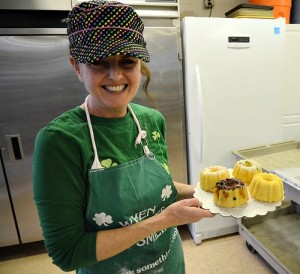
Deborah Streeter-Davitt

Deborah Streeter-Davitt

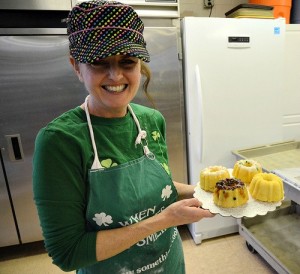
QVC introduced the world to the Diamonique. On Wednesday, March 13, at 5 p.m., the iconic West Chester-based cable shopping channel will introduce another gem: Deborah Streeter-Davitt’s priceless MacDougall’s Irish Victory Cakes.

Buttery, moist and rich, the bundt-shaped Irish Victory Cakes are a popular item at Celtic fairs, including the recent Mid-Winter Scottish & Irish Music Festival. You can also find them in small markets, or purchase them online. The recipe is a secret, handed down through the generations from Streeter-Davitt’s great-grandfather James MacDowell from Belfast. Cakes come in a wide variety of flavors, from just plain butter to tempting little items chock full of chocolate, butterscotch, or marshmallow—and all of them spiked with just a wee bit of whisky.

Demand for Victory Cakes peaks around St. Patrick’s Day, when Streeter-Davitt and a small workforce of friends and relatives band together for marathon baking sessions in a rented kitchen at Paoli Presbyterian Church. There, they turn out nearly a thousand four-inch “minis,” about 150 eight-inch “petite” cakes, and 20 or so of the aptly named 10-inch “mighty” cakes.

It’s a killer production schedule, but with a high-visibility spot on QVC, this St. Paddy’s Day is going to be challenging. And probably equal parts rewarding.

“St. Paddy’s is our Superbowl,” Streeter-Davitt says. “Production gears up over 300 percent to fulfill corporate gifts, inventory in the lovely shops, restaurants and farmers markets that carry our product, and our increased website orders.”

For the QVC campaign, the so-called “head caketress” has partnered with a team of bakers from the Reading area to produce cakes in much larger numbers. Streeter-Davitt says great-grandad’s recipe will remain unchanged, using locally-produced butter, eggs, chocolate and other fresh ingredients.

Streeter-Davitt concocted a new career as a baker a few years ago following a layoff from her job in the financial services industry. Ironically, a connection she made in her old job led to her upcoming QVC debut.

“When I was working in corporate America,” Streeter-Davitt says, “I met this amazing entrepreneur at an area diner. I saw her again shortly after I launched MacDougall’s Irish Victory Cakes, and told her about my new venture. She asked me for a sample and loved it, and through her incredible contacts and savvy she got a MacDougall cake in front of the buyers at QVC’”

Acceptance by the very particular QVC was nothing like a sure thing. Thousands of items are pitched to the QVC producers, but in the end MacDougall’s cakes made the cut—an outcome Streeter-Davitt attributes to the luck of the Irish—with more than a little help from her old corporate colleague. “This amazing lady was on our side. The buyers loved the MacDougall cake and our story, and here we are … on QVC!”

The story is as rich as the cake. “The recipe is my great-granddad’s gold medal-winning butter pound cake from Ireland,” says Streeter-Davitt. “He baked and beautifully decorated cakes for the rich and famous and royalty of the British Isles. Great-granddad sacrificed his fame and accolade to fulfill his dream of bringing his clan to the United States, where he worked in obscurity for his American sponsor in a tiny bakery in Syracuse, N.Y.”

Great-granddad’s cake, Streeter-Davitt says, is all about family, love and perseverance.

Judging by the incredible success of MacDougall’s Irish Victory Cakes, the tradition lives on.

News

It’s Irish Month in Philadelphia!

Philadelphia Emerald Society Piper Joe Tobin

Philadelphia Emerald Society Piper Joe Tobin

Why? It’s because his honor Michael Nutter says so.

The mayor read the proclamation aloud before a crowd of local Irish in an ornate City Hall reception room on Thursday.

As Nutter started to read the annual Irish Month proclamation, he acknowledged it was a little on the lengthy side: “It will be St. Patrick’s Day by the time I’m done reading it.”

Nutter seized the opportunity to present Irish Month as “just another example of our diversity. On this day we are all Irish.”

On a difficult day when, only a few blocks away, there were raucous protests against the closing of 23 schools, Nutter breezed into the room about halfway through the ceremony to have his brief say, but he paused for a few moments to watch a performance of Rosemarie Timoney’s Irish dancers. Maybe it was a welcome diversion. “I tried doing that myself,” he told Rosemarie in a bit of back and forth, “but I hurt myself.”

Philadelphia St. Patrick’s Day Observance Association President Bob Gessler was the emcee. Among his many responsibilities was introducing this year’s grand marshal Harry Marnie, together with members of the parade’s ring of honor. This year’s ring includes Timmy Kelly, widely acknowledged for his singing, and for his unofficial title as the parade’s “good luck charm.” Timmy led the crowd in singing “God Bless of America.”

Weather for the parade on Sunday looks pretty good, so maybe that luck thing is working for us.

Preceding the city hall ceremony, the Friendly Sons of St. Patrick gathered on the north side of city hall for a wreath-laying ceremony honoring Philadelphia’s Irish notables.

We have photos from the day’s activities.

Food & Drink, News, People

Victory at QVC

Deborah Streeter-DavittQVC introduced the world to the Diamonique. On Wednesday, March 13, at 5 p.m., the iconic West Chester-based cable shopping channel will introduce another gem: Deborah Streeter-Davitt’s priceless MacDougall’s Irish Victory Cakes.

Buttery, moist and rich, the bundt-shaped Irish Victory Cakes are a popular item at Celtic fairs, including the recent Mid-Winter Scottish & Irish Music Festival. You can also find them in small markets, or purchase them online. The recipe is a secret, handed down through the generations from Streeter-Davitt’s great-grandfather James MacDowell from Belfast. Cakes come in a wide variety of flavors, from just plain butter to tempting little items chock full of chocolate, butterscotch, or marshmallow—and all of them spiked with just a wee bit of whisky.

Demand for Victory Cakes peaks around St. Patrick’s Day, when Streeter-Davitt and a small workforce of friends and relatives band together for marathon baking sessions in a rented kitchen at Paoli Presbyterian Church. There, they turn out nearly a thousand four-inch “minis,” about 150 eight-inch “petite” cakes, and 20 or so of the aptly named 10-inch “mighty” cakes.

It’s a killer production schedule, but with a high-visibility spot on QVC, this St. Paddy’s Day is going to be challenging. And probably equal parts rewarding.

“St. Paddy’s is our Superbowl,” Streeter-Davitt says. “Production gears up over 300 percent to fulfill corporate gifts, inventory in the lovely shops, restaurants and farmers markets that carry our product, and our increased website orders.”

For the QVC campaign, the so-called “head caketress” has partnered with a team of bakers from the Reading area to produce cakes in much larger numbers. Streeter-Davitt says great-grandad’s recipe will remain unchanged, using locally-produced butter, eggs, chocolate and other fresh ingredients.

Streeter-Davitt concocted a new career as a baker a few years ago following a layoff from her job in the financial services industry. Ironically, a connection she made in her old job led to her upcoming QVC debut.

“When I was working in corporate America,” Streeter-Davitt says, “I met this amazing entrepreneur at an area diner. I saw her again shortly after I launched MacDougall’s Irish Victory Cakes, and told her about my new venture. She asked me for a sample and loved it, and through her incredible contacts and savvy she got a MacDougall cake in front of the buyers at QVC’”

Acceptance by the very particular QVC was nothing like a sure thing. Thousands of items are pitched to the QVC producers, but in the end MacDougall’s cakes made the cut—an outcome Streeter-Davitt attributes to the luck of the Irish—with more than a little help from her old corporate colleague. “This amazing lady was on our side. The buyers loved the MacDougall cake and our story, and here we are … on QVC!”

The story is as rich as the cake. “The recipe is my great-granddad’s gold medal-winning butter pound cake from Ireland,” says Streeter-Davitt. “He baked and beautifully decorated cakes for the rich and famous and royalty of the British Isles. Great-granddad sacrificed his fame and accolade to fulfill his dream of bringing his clan to the United States, where he worked in obscurity for his American sponsor in a tiny bakery in Syracuse, N.Y.”

Great-granddad’s cake, Streeter-Davitt says, is all about family, love and perseverance.

Judging by the incredible success of MacDougall’s Irish Victory Cakes, the tradition lives on.