Monthly Archives:

October 2010

Music, Travel

A Virtual Session at The Corner House in County Down

Fil Campbell performing at The Corner House, Rostrevor.

Fil Campbell performing at The Corner House, Rostrevor.

The Corner House in Rostrevor, County Down, Northern Ireland, is a postage-stamp sized pub in a particularly musical corner of the Mourne Mountains—home to folk singer/activist Tommy Sands, singer Fil Campbell and her husband, percussionist Tom McFarland, and the Fiddler’s Green International Festival, held every July, the highlight of which is 20 Singers, 20 Songs, a performance by local talent. That they can find 20 local singers worth listening to in a town so small you couldn’t finish humming an entire song while driving through it is nothing short of miraculous. 

I’d like to think that it’s the magic of the Mournes. Rostrevor is snuggled between these heather-covered granite mountains that sweep dramatically down to sea and are the subject of an 19th century folk song called, “Mountains O’ Mourne,” recorded by Donegal balladeer Daniel O’Donnell, the Kingston Trio and Don McLean. The Mournes also inspired C.S. Lewis to write “The Lion, the Witch and the Wardrobe” and, on a recent visit, resurrected for me the lines of a poem called “The Fairy Folk” that I was forced to memorize in grade school: “Up the airy mountain, down the rushing glen, we daren’t go a-hunting, for fear of little men.” 
There’s definitely something mystical there. There’s also Spring Records, the Sands’ family’s independent record label and studio, which is one reason Fil Campbell (a Fermanagh native) and Tom McFarland (Belfast-born) live there. “We were always here recording anyway,” Fil told me. 
But even the natives think “there’s something in the water.” Whatever it is, it makes the Friday night session at the Corner House a rare treat. 
I brought a little of it home with me, thanks to my little Kodak HD recorder, to share with you. Come with me to the virtual session:


And a little comedy from James, an estate agent who, when he’s not selling condos in Bulgaria, pens funny ditties.
 
 
News, People

Ghost Story 2


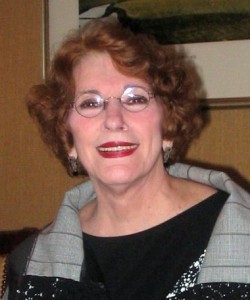
Kathy McGee Burns

Kathy McGee Burns

By S.E. Burns


When she was a child, Kathy McGee Burns had a close relationship with her uncle, Hugh McGee. Their bond never wavered, even after a business rift between her father and his brother tarnished the brothers’ relationship. When Kathy was in her early thirties, married, with nine children, her beloved uncle fell ill with lung cancer. She visited him at the Philadelphia Naval Hospital, and it was here that he gave her a mysterious message. At the end of her visit, she told him that she would come back to see him the following week. Her uncle said: “Don’t forget, and if they tell you I am gone…don’t believe them.”

The next message she got from her uncle came, unbeknownst to her,  after his death.  “One night my dead uncle appeared by my bedside,” says Burns, who is former president of the Donegal Association and the next president of the Philadelphia St. Patrick’s Day Observance Committee.

As someone with a strong interest in the paranormal—and, in the interest of full disclosure, Kathy’s daughter-in-law—I was impressed with how fearlessly Kathy shared her story and how much it sounds like other stories I have read and heard about people whose strong  connection in life survives the death of one. But that’s part of Kathy’s philosophy—to not be afraid to contemplate the unfathomable and embrace every experience that life sends her way, however perplexing it may seem.

Recently, we sat down at her kitchen table to talk about her experience with the man she called Uncle Hughie.

Can you describe your uncle’s appearance and where exactly you encountered him?

My uncle appeared at the foot of my bed. It was 1 in the morning and I woke up to see him there.  He looked like he did when he was a young man.

What were you feeling at this moment?

I was not startled. I knew he was dead and was appearing to me, so I wanted to ask him what it was like…being dead. He said he didn’t have time to tell me.

How did he communicate to you?

We communicated without speaking. We knew what the other was feeling and thinking.

What was the purpose of his visit?

He asked me to tell my Aunt Mary that he loved her (they did not have a happy marriage at the end). He said there was money hidden in the house and where to locate it. I specifically looked at the clock after he left me. It was 1 AM. I woke my husband Mike, and told him Uncle Hughie had just been there and what he said. Neither one of us was surprised. Maybe we should have been, but it seemed very natural to me. My mother called me at 8 AM. When I answered I said, ‘I know Uncle Hughie is dead.’ I asked her his time of death and she said 1 AM. I told her of my experience and she became furious with me and told me not to say a word to anyone. My family was very uptight about those kinds of things.

Why do you feel he chose you to share this with?

He chose me because we were very close. He and Aunt Mary had no children for a long time. My father and he were in business together and they lived seven houses away from us. I was always down at their home, visiting  or staying the night. I loved him very much. He served in World War II, in Iwo Jima. My aunt moved to Norfolk, Va. to be able to see him. Since she was alone there, my brother Timmy and I took turns staying with her.

Have you ever felt his presence since this encounter?

I have never felt his presence around me again. He said he would come back and tell me what it was like, but he didn’t.

At what age did you feel comfortable enough with yourself to share this story? 

I have always felt comfortable talking about this. I was a precocious child. I was always embarrassing my mother. I eventually told my aunt about the money and she found bank books exactly where he said they were.

If possible, is there one living person you would visit after you pass and why?

It goes without saying that I would love to visit my family, but if I were to only pick one person, it would be Denise Foley [editor/writer for www.irishphiladelphia.com].

For several reasons: She “gets” it. She is a wonderful woman with a deep spirit. She and I would be laughing our heads off. I could do some writing for the internet…IrishHeavenPhiladelphia.com.

Editor’s Note: Denise Foley edited this story and found the surprise ending very scary. Happy Samhain!


Music, News, People

Haunted by the Memories of Molly-O-Ween … All Very Good Ones

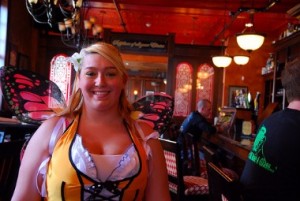
Katie, our winged hostess.

Katie, our winged hostess.

Off in the back, the kids were carving and scooping out jack-o-lanterns.

On stage, kilted performer Seamus Kennedy was singing songs, telling stories (funny ones, not ghostly ones), and occasionally flashing a jack-o-lantern grin.

Oh, yes, and Elvis was in the house … about an 8-year-old version of the king who came and went before we could get his (her?) picture.

This was the very first Molly-O-Ween celebration at Molly Maguire’s pub in Lansdale, but it probably won’t be the last.

Luckily, the day dawned bright and clear and, by the time the festival began, the temperatures had warmed up. A little too warm for some of the costumes, maybe, but, hey, they’re kids, and kids put comfort aside in the name of Halloween.

Shoppers kept the Irish vendors busy, and musicians (Kennedy, Celtic Spirit and Doc Freeman) kept many of the festival-goers up and on their feet. Food and beer, too, of course, and inside the tavern, business was brisk.

We have photos from the day.

News

A Much-Needed Boost for the Parade

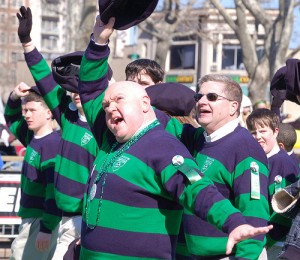
A timely donation worth cheering for.

A timely donation worth cheering for.

The Philadelphia St. Patrick’s Day Parade got a nice little shot in the arm this week.
 
U.S. Rep. Bob Brady, cable tycoon “Gerry” Lenfest and Joey Vento (he of Geno’s steaks) have come up with a large wad of cash that will help the city’s ethnic parades and festivals—including the St. Pat’s parade—offset some of its setup and cleanup costs.

The Greater Philadelphia Traditions Fund is what it’s called. According to the Inquirer, the fund has coughed up $200,000 for 2011 costs, with the $100,000 set pledged (so far) for 2012. What’s more, the story noted, the funds “will include reimbursement for expenses in 2009 and 2010.”

All of which came as welcome news to Michael F. Callahan, president of the board of the St. Patrick’s Day Observance Association.

“The way I understand it, this is for the City of Philadelphia’s costs, which include police and sanitation, the healthiest amount of costs,” said Callahan. “It also includes the EMT (emergency medical crews) costs as well.” Callahan estimates that the Traditions Fund donation could pare $30,000 to $35,000 off the costs of the parade.

That doesn’t mean the parade has anything like a free ride. Quite the contrary. “It costs about $110,000 to put the (St. Patrick’s Day) parade out,” Callahan said. “The costs just add up. So if they’re paying for $30,000 to $35,000, we still have to come up with the balance. We’re very grateful for their efforts. They’re allies of the ethnic traditions in the city. But we still need to get out there and beat the streets in tough economic times.”

Callahan credited Brady in particular for shepherding the deal through: “He’s a guy who gets things done, no doubt about it. He stepped up and said we needed a powerful voice, someone who has the ear of the money people and the people in City Hall. He was a godsend.”

Arts

Two Buzz-Worthy Irish Flicks Featured in Festival

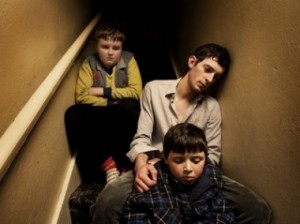
"The Brothers" of Paul Fraser's film playing at The Philadelphia Film Festival.

"The Brothers" of Paul Fraser's film playing at The Philadelphia Film Festival.

The 19th Philadelphia Film Festival is officially under way. The 10-day movie extravaganza, which features two superb Irish films, kicked off Thursday night with the screening of “The Black Swan.” (The festival runs from October 14 to 24.) Not set to be officially released until next December, the film starring Natalie Portman is already garnering the kind of buzz that foreshadows major awards.

That’s exactly the kind of excitement that the Philadelphia Film Society (PFS) is proud to generate.

“This year is the best line-up we’ve ever had. Of course, I said that last year,” laughed PFS Executive Director J. Andrew Greenblatt. “You want to top yourself every year, not in size, but in terms of quality.”

As of Wednesday, there were 112 films on the schedule.

“When we put together the first program guide, we had 107, but we’ve been continuing to add them. There are so many great films that we couldn’t stop; we couldn’t say no. And we never say ‘never’; there’s a chance 1 or 2 more could come in.”

A good portion of those 112 films don’t have distribution deals yet, Greenblatt said. “You many never see them anywhere again.”

Among the feast of films on offer this year are two acclaimed Irish films that have already played at other festivals, where the buzz on them began building.

The first of these is “My Brothers,“ by first-time director Paul Fraser. Filmed in Kerry, it’s a coming-of-age story (think, “Stand By Me”) that’s set over Halloween weekend in 1987.  Oldest brother Noel takes his dying father’s treasured watch (a cheap digital one that was won at an arcade in Ballybunion) and when it breaks during a fight (along with his wrist), Noel decides he has to replace it.  Unable to drive the bread van he “borrowed” without permission because of his injured wrist, Noel enlists his two younger brothers, 11-year-old Paudie and 7-year-old Scwally, to travel with him to Ballybunion to share in the driving. By turns both comic and heart-wrenching, the film follows the three brothers as they experience a journey that changes them forever.

“The Brothers” is showing on Sunday, October 17, at 1 p.m. at The Bryn Mawr Film Institute, and then again on Saturday, October 23, at 12 noon at The Ritz Five E.

The second movie, “Outcast,” directed by Colm McCarthy, is quite a bit different.  Greenblatt described it as “a lot darker, and a little twisted. It takes you into a subculture that hasn’t been explored on film before. I recommend it for anyone with ‘a tolerance.’ It’s pretty gripping.”

The subculture that Greenblatt is referring to is the world of the sidhe (pronounced shee). Tied to the fairy folklore of Ireland, the sidhe are a people of the mounds, able to shift shapes and in possession of great and dark power.

The Scottish director was raised on his Cork-born father’s dark tales of Celtic myth and legend, and based his film around the idea of how those stories would play out in the gloomy urban setting of Edinburgh and its castle estates.

On the run from a disturbing beast-like pursuer (James Nesbitt), mother Mary (Kate Dickie) and teen-age son Feargal (Niall Bruton) are Irish travelers caught up in their own world of dark ritual. Fergeal is also involved in a palpably ill-fated romance with Petronella (Hanna Stanbridge), a girl of Scottish-Romany descent. 

The movie’s trailer, which can be viewed here, http://www.youtube.com/watch?v=M9Jx1Xj5sgk&translated=1, gives a glimpse into the atmospheric darkness of “Outcast.”

“Outcast” is showing on Saturday, October 16 at 10:15 p.m. at The Ritz Five E, and again on Saturday, October 23, at 5:30 p.m. at The Ritz Five D.

“The Irish film industry is producing so many original movies these days. Just from what I’ve seen, things look good. There seems to be a big upswing. People should come out and see these films. If they like edgy, “Outcast” is for them. If they want something lighter, that’s still intriguing, captivating and fun, then they have to see “Two Brothers.”

For more information on the Philadelphia Film Festival, including a full list of the movies showing and their schedules, go to: http://www.filmadelphia.org/

Music

Five Questions for Breanndán Begley

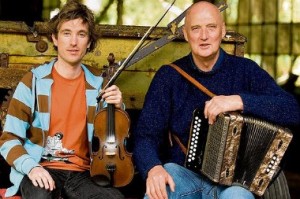
Caoimhín Ó Raghallaigh and Breanndán Begley

Caoimhín Ó Raghallaigh and Breanndán Begley

There is a ruggedness and a wildness to the West of Ireland. To Breanndán Begley, one of he most accomplished two-row button accordion artists in the world, it’s only natural that the music of the region should match its terrain.

West Kerry, where Begley makes his home, is also part of Ireland’s Gaeltacht—an Irish-speaking region. So if West Kerry music seems to have a slightly different flavor from, say, the music of the heartland, that ancient language wields its own influence, too, says Begley.

Begley appears with his playing partner Caoimhín Ó Raghallaigh (kwee-veen o-Rye-a-lah) in two Philly-area concerts this weekend, the first, at the Coatesville Traditional Irish Music Series Saturday night at 8, and the second Sunday night at 8 at the Philadelphia Irish Center. (Details on our calendar.) To Begley, his Gaeltacht roots are a point of pride, and he clearly exults in the sound of the popular West Kerry dance music.

We tracked him down last week as he and Ó Raghallaigh made their way along the tour route that would bring them to our front door.

Q. To a lot of people, Irish music is Irish music. For the uninitiated, what is Kerry music and how is it different?

A. First of all, musically Ireland is a very big place and Kerry just has a dialect of its own. Even within the dialects, there are variations as well. In Kerry (for example), there would be the West Kerry style, which would have its own little differences. (West Kerry music) is more for dancing, first and foremost—slides, polkas and reels, for example. The dancing would be a very important
thing. You (also) have a lot of variety in Kerry music. Airs are valued in a session.

West Kerry is a rugged place, and the music reflects that. The music in the middle of the country is very different. The ruggedness in the music is (expressed) in the ornamentation. It’s something you wouldn’t shy away from. It’s a part of the sound within the sound. It’s rugged and lively—it’s everything.

Q. Your family background is musical, as it so often is when we interview Irish traditional artists. Have you ever stopped to ponder the old “nature/nurture” argument, and which is it?

A. It’s a mixture of all those things. I feel very lucky to be able to play like I do. It’s what I do best. It’s good that the background is there but it’s not necessary to be a great player. Breeding is better than feeding, they say, but I think it’s pure luck, really.

Q. Who taught you, and how did it influence your style of play?

A. I learned Irish music the same way I learned the language. My father played and sang. it was all around the place. Kids today have the computer; we had the accordion.

I never had any formal training. I don’t read music. It’s all by ear. It’s an oral tradition; it comes from the people. You didn’t even know you were playing music. All the musicians I knew in Kerry, none of them read music.

Q. You sing as well as play. Did one evolve later than the other, or did they come about more or less concurrently?

A. We did it (sang) all the time, more or less. I find the bridge between a Gaelic speaker and a musician is bridged by the singing. When you sing you’re doing both. In my youth there was hardly any radio. The only music you heard was live. The singing was live.

I didn’t really start singing on stage until the band Beginish (one of the notable ensembles to which he has belonged; another is Boys of the Lough) was formed. We didn’t have a singer so I started singing. I really love it. I love the songs.

The older I get, the more important I think the language is. The Irish language goes back farther than anything we have. It’s a living art form. It predates any of our poetry, and I’m sure a form of Gaelic was spoken by the Newgrange people. (In singing) I’m speaking my first language. In West Kerry youre never asked to “sing” a sing. You’re asked to “say” a song.

Q. How does collaborating with other musicians, which you’ve certainly done a lot, influence your play? How does playing with Caoimhín Ó Raghallaigh influence you?

A. In Boys of the Lough, I didn’t try to put my own stamp on it., (although) when it came to a solo, I’d do it exactly the way I wanted to do it myself. With Beginish, in one way it was easier because it was all Irish musicans. It was a kind of a melting pot playing with them.

I can safely sayer that I find so much freedom playing with Caoimhín. Music with him is definitely music of the moment. There’s a plan, but rarely do we ever do exactly like the plan. If you do anything else, you’re going by memory, or you’re doing an imitation of what sounded good last night. No two nights are the same, with Caoimhín and me together. It’s a great feeling playing with Caoimhín. Do I get bored? Never! Tired? Maybe.

Columns, How to Be Irish in Philly

How to Be Irish in Philly This Week

Can you carve one of these bad boys? Test your punkin-carvin' mettle at Molly-O-Ween.

Can you carve one of these bad boys? Test your punkin-carvin' mettle at Molly-O-Ween.

We’re heading into a big, fat honkin’ weekend, including one big fall festival, not-to-be-missed concerts, and a couple of really fun benefits.

All the Saturday action is concentrated into the nighttime hours. You may have a very hard time making up your mind.

Here’s what’s on tap:

  • Two of the most talented and creative Irish traditional musicians appear together in a Coatesville Traditional Irish Music Series concert. Breanndán Begley and Caoimhin Ó Raghallaigh (Kwee-veen O-Rye-allah, if you want to say it right) take the stage at 8 p.m. at the Coatesville Cultural Society (a very cozy venue indeed), 143 East Lincoln Highway in Coatesville. For tickets, contact Frank Dalton at (610) 486-2220. 
  • The Spring Hill House Concert Series hosts Aoife Clancy—she of the amazing voice and hair—starting at 8 p.m. You may know her from her stint with Cherish the Ladies. The daughter of Bobby Clancy, Aoife (“EE-fa”) sings pretty much everything. For you singers, there’s a workshop before the concert. The show takes place in one of our favorite (and most intimate) settings, the home of Bob Hendren and Bette Conway, 136 East Third Street in Lansdale. For details, call (215) 368-0525.
  • Blackthorn takes the stage, starting at 8 p.m., for a beef and beer benefit for St. Laurence Parish, 8245 West Chester Pike in Upper Darby. Tickets are 40 bucks per person, including food, beer and set-ups. The boys of Blackthorn never fail to entertain. You just know you’ll be on your feet the whole night. To order tickets, call Ann Char at (610) 789-6960 or e-mail her at achar@stlaurence.org.
  • Also Saturday night, The Martin Family Band returns for their third year in an Evening of Celtic Music, Song & Dance at Bucks County Community College Gateway Auditorium, 275 Swamp Road in Newtown, Bucks County. Showtime is 7:30.
  • If you want to hear a very talented Scot (Irish, Scottish … we don’t discriminate), lend an ear to singer-songwriter Brian McNeill (founder of the Battlefield Band) Saturday at 8 p.m. at Lower Brandywine Presbyterian Church, 101 Old Kennett Road, in Wilmington. This is a presentation of the Green Willow Folk Club, and they know how to put on a show.

Sunday is almost as crowded:

  • If you’re a golfer, you can start your Sunday on the links and help the Philadelphia Irish Center at the same time. The Irish Center will host a benefit golf outing at Walnut Lane Golf Course, 800 Walnut Lane (near Henry Avenue), with tee time set for 9:30. Call John Nolan at (215) 843-8051 for details. The fee is $60, but it includes a lot: greens fee, cart, awards, luncheon & on-course refreshments. And plan on Saturday night Mass.
  • Later in the day, you’re likely to run into lots of your Irish compatriots at Molly-O-Ween, a free (we like “free”) festival at Molly Maguire’s Pub, Main and Wood Streets in Lansdale, Sunday from 1 to 8 p.m. Carve pumpkins! Slip into your Halloween costume, and win a prize! (If you’re looking for ideas, I read a story predicting Lady Gaga and the cast of “Jersey Shore” will be the most popular costumes this year. But I digress, and the mental images are just too disturbing to continue.) There’ll be plenty of great food and drink, of course, plus music by Seamus Kennedy, Celtic Spirit, the Doc Freeman Band, and a local bagpipe band. The Timoney irish Dancers will also take the stage throughout the day.
  • Later on that night, Breanndán Begley and Caoimhin Ó Raghallaigh will appear in concert at the Irish Center, 6815 Emlen Street in the Mount Airy section of town, starting at 8 p.m. So if you miss them at Coatesville, you get a second chance. Better yet, see them both nights.

And that, folks, is just the weekend!

Inis Nua Theatre Company’s presentation of the Leo Butler play “The Early Bird” continues throughout the week at The Playground Theatre at the Adrienne, 2030 Sansom St., in Center City. Show times vary. Check the Web site for details.

Music, People

Luka Bloom Debuts His Latest CD in the US Next Week

Irish folk-rocker Luka Bloom will appear at the Sellersville Theatre.

Irish folk-rocker Luka Bloom will appear at the Sellersville Theatre.

Luka Bloom has a pretty good plan for his current east coast tour of the U.S. He’s timed it to coincide with the turning of the leaves from summer’s green to their full burst of autumnal glory. The Irish singer-songwriter, who spent a good number of years living in New York, knows his fall foliage.

The man who was born Kevin Barry Moore, and re-purposed himself as Luka Bloom when he launched his career in the States in 1987, was en route from Maine to Vermont when we talked on the phone about his tour (it’s a brief two and a half weeks), his latest CD (“Dreams in America”)and his nephew Donnacha Rynne’s recently published book (it was his idea).

Although a short one, his tour includes a stop at The Sellersville Theatre on October 7. “I’ve always had great shows in the Philadelphia area,” he said. “I’ve played at The World Café, The Tin Angel, The Chestnut Cabaret. I’m really looking forward to this one.”

He’s bringing with him some old songs that have been reinvented for his latest CD, “Dreams in America.”

“It’s really a celebration of twenty years of writing songs and recording them. I’m not a huge fan of nostalgia,” Bloom acknowledged. “I think it’s highly overrated. But it’s okay to take a look back and reflect. It’s like hitting the pause button.”

The songs on the album, eleven of them including the new incarnations of “The Acoustic Motorbike,” “Bridge of Sorrow” and “Don’t Be So Hard On Yourself,” represent Bloom’s determination to “live in the nowness of life,” a thought borrowed from his wheelchair-bound nephew.

“This gave me the chance to go back and revisit where I was when I originally wrote the songs. I didn’t necessarily want to re-record the ones that became popular. In some cases, I loved the song but not the original recording. They’re more stripped down, raw versions on this album. I recorded it in my living room in Ireland last December.”

And Bloom felt it was time to include a song new for him as well: the traditional “Lord Franklin.” A very beautiful, simple interpretation, he sings it as a tribute to a late friend of his, Micheal O’Domhnaill, whose rendition he considers “the definitive one.”

Two live tracks, “I Hear Her, Like Lorelei” and “Love is a Monsoon,” recorded in the National Concert Hall in Dublin in August 2009, round out the CD that Bloom ultimately wants to be a thank you to “the places and people who opened their hearts and minds to the songs of a Kildareman…The period of 1987 to 1991 was an unbelievably exciting one. Things took off for me in America, particularly in New York. It’s a very nice exercise to reflect back on that time and be grateful.”

There’s another current project that is close to Bloom’s heart: the publication of his nephew’s book “Being Donnacha” (read the story in this week’s irishphiladelphia). Donnacha, born with cerebral palsy, and later diagnosed with multiple sclerosis, is a source of inspiration to Bloom. In fact, he wrote a song, “Doing the Best I Can” for him (the lyrics are included in the book).

“It’s a very important book, there are so many levels to it. It will be beneficial to so many people to hear his voice; he gives a voice to people who haven’t been heard. People who are themselves disabled, their families and their carers will all find it meaningful.”

“Donnacha lives constantly in the nowness of life. He gives a voice to living with a disability that needs to be heard. He has tough days but his strengths have always been very apparent. And something about writing this book has given him fresh strength to go on.”

“There’s something very poignant in seeing the first American article about Donnacha’s book published in Philadelphia. A very dear friend of the family, Lester Conner, lived most of his life in Philadelphia. He died about five years ago. He was a professor at Chestnut Hill College for a number of years, a great literary giant and highly academic man who was an expert on W.B. Yeats. He published “A Yeats Dictionary.” My sister Anne met him back in 1967 when he lectured at Trinity College, and he became godfather to her oldest son. He would visit every year, and Donnacha was very important to him. He would have loved to have seen Donnacha’s book.”

“It’s an important bit of serendipity.”

Visit Luka’s website for more information on his CD and his upcoming concerts: http://www.lukabloom.com/