Monthly Archives:

June 2010

People

How Would You Like to Be Queen… of Your Own Life?

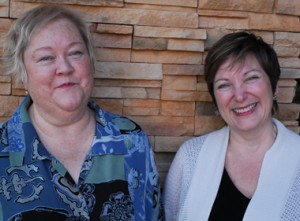
Kathy Kinney and Cindy Ratzlaff

Kathy Kinney and Cindy Ratzlaff

Cindy Ratzlaff could see her layoff coming two years out, like a far-off storm on the horizon. As vice president and director of book marketing at Rodale, Inc., she’d overseen the selling of “The South Beach Diet,” which became one of the first blockbusters for the Lehigh Valley publisher of health and fitness books and magazines in 2003, hitting #4 on the New York Times bestseller list. Subsequent books from the South Beach franchise hit the ground at #1 and catapulted this little publisher in the valley into the big leagues after almost 60 years of churning out books with titles like “200 Fabulous Frugal Uses for Baking Soda” and “The Doctors’ Book of Home Remedies.”

But one media-killing recession later, Cindy found herself out of work. “Although I saw it coming, I was surprised at how it made me feel,” she said. “I felt like someone had punched me in the stomach. I felt like all those years I was like a gypsy con artist, that I was never any good and all my success was just smoke and mirrors.”

Then she called her friend and traveling companion of 30 years, Kathy Kinney, who had some succinct words of wisdom for her. “I said ‘Snap out of it,’” said Kathy, the Irish-American comic actress best known for her role as the makeup-impaired Mimi Bobeck on “The Drew Carey Show.” “I told her ‘jobs come and go. You don’t change.’”

Kathy had had a disturbing wake-up call of her own. While surfing the internet for an explanation for why her feet felt so hot all the time, she found several sites that informed her that she had reached her “crone years.”

She was shocked.

“There are people who believe ‘crone’ means ‘old wise woman who lives at the edge of the forest,’” said Kathy, as the three of us enjoyed the filleted trout at Seasons 52 in Cherry Hill, NJ, a few weeks ago. “It does not. It means ‘dead flesh.’ I do not want to be known as dead flesh for the last half of my life.”

So, instead, Cindy Ratzlaff and Kathy Kinney became Queens. Of their own lives. “Queen of Your Own Life” is the name of their new book, published not by Rodale but by Harlequin (yes, the romance publisher). Its subtitle says it all: “The Grown-Up Woman’s guide to Claiming Happiness and Getting the Life You Deserve.”

It’s a self-help book that’s laugh-out-loud funny, not surprising from two women who performed together in New York City in various comedy troupes, including Funny Ladies, Belles Jeste and Prom Night. Both wiseass and wise, “Queen of Your Own Life” encourages women to shuck off the various hats they wear—the ones they hide under, the ones that declare their lack of self-esteem, the ones that hide their beauty from themselves and everyone else—and replace them with crowns. Real ones if they can get them.

Cindy and Kathy held their first “crowning ceremony” during their annual girlfriends getaway trip. During dinner their first night in Prague, after congratulating one another for “not being on any kind of medication,” they hatched the Queen idea and based the crowning ceremony on a New Year’s ritual of Kathy’s—to ask and answer two questions: “What do you want to let go of or leave behind that no longer works for you, and what do you want to keep that’s still working for you?”

So, over ghoulash and pilsner, watching the swans floating in the Vlatava River, they celebrated who they were. As Cindy describes it: “We were two small town girls from Wisconsin who lived for a couple of decades in New York and got to high points in our careers and there we were, sitting in Prague. And wow, we really had to admire the journey. It was pretty impressive.” They toasted their future—as queens of their own lives, not crones.

When they returned from Prague, they found that all their friends wanted to have the same experience. And so, while visiting a friend in Las Vegas, they bought one another rhinestone broaches in the shape of a crown and performed the ritual again. They did it again with a group of New York girlfriends.

After a few more clamored-for crowning ceremonies, Cindy’s publishing instincts kicked in. “This could be a book,” she said. Using Skype and iChat, Cindy in Allentown and Kathy in Los Angeles started writing a proposal for a book that they believed would help other women get back in touch with their inner royalty.

“At some point,” said Kathy, “you have to be wise enough to poop or get off the pot. You have to come to the point in your life when you decide how you feel about yourself, some time before you’re on your deathbed. In my life I’ve dealt with the fear of failure, the fear of success, the fear of being alive. To survive on a day-to-day basis it takes the basic faith that everything is going to be allright. What’s it going to be—fear or faith?”

The book outlines seven gifts that will propel any woman to the throne—and not just to clean it—including taking time to admire the person you’ve become, guarding your borders (setting boundaries so your time and energies aren’t sucked away, and, perhaps most important, creating your “court:” the people in your life who, when you are beating yourself up over losing your job will not hesitate to tell you to “snap out it” because you’re the same worthy person you were when you were gainfully employed.

Of course, that’s something Cindy Ratzlaff and Kathy Kinney know plenty about.

“I can’t imagine going through life without a good friend,” said Cindy. “My friendship with Kathy has lasted because she has no agenda for me and I have no agenda for her. It’s unconditional—I don’t have to lost weight or do this or that for her to be my friend. I’m confident she will be my friend no matter what.”

Her advice: “When you’re choosing the people you want to be with, you want to choose the best.”

So sayeth the Queen.

Yes, They’re Irish

“My father always said we came from County Clare,” said Kathy Kinney. “But I know there were Kinneys in Roscommon and Dublin. Nobody ever really pinned it down.”

She does know that her family’s journey didn’t end when they hit American shores. “They promptly moved to the center of Wisconsin which was as barren and green as Ireland. They were ‘in lumber,’ which was a polite way of saying they cut down some trees.”

Cindy Ratzlaff’s family were the Selfs (“not one of the big clans”) who left New York to end up in Minnesota, where she was born, “passing the Kinneys along the way,” she joked.
Arts

In Jersey, They’re Getting Ready to Re-Joyce

If James Joyce had envisioned a western-themed sequel to his classic novel “Ulysses,” it might have been called: “Leopold Bloom Rides Again. And Again, and Again, and Again.”

“Ulysses” is recalled by Joyce fans around the world (with Dublin as the observance’s epicenter) every June 16. It’s a tradition dating back many, many years.) The event is named after protagonist Leopold Bloom.

June 16 is the day in 1904 in which all of the events of “Ulysses” take place. Anyone and everyone who loves the Irish writer gets in on the act: Pubs do it. Museums do it. Probably educated (very educated) fleas do it.

In Philadelphia, the day has long been celebrated with a street fair sponsored by the famous Rosenbach Museum and Library on Delancey Place. (It’s set for Wednesday, June 16, between noon and 7.) There’s also a program called “Bloomsday 101” at Fergie’s Pub, 1214 Sansom Street, on Monday, June 14, from 6 to 8 p.m.

The Irish folks across the river are no strangers to Bloomsday. The immortal publican Billy Briggs hosted a Bloomsday reading for years at his landmark Tir na nÓg in Hamilton Township, near Trenton.

This year, the Dublin Square Pub in Bordentown is picking up on the tradition on Sunday, June 13, starting at 7 p.m. (following the weekly Irish music session) and lasting until 8:30 (or whenever).

Bill O’Neal, the musician who anchors the Sunday session (during the week, he teaches English at Trenton High School), says the idea was hatched by flutist and ER surgeon Dr. Nancy Ferguson, who also has a musical history at Tir na nÓg.

“Nancy’s done this before,” O’Neal said. “They did it at Billy Briggs’ place, but it’s been maybe eight years.” O’Neal says Ferguson suggested the idea to Dublin Square principal owner Michael McGeough back around St. Patrick’s Day. “Michael was raised in Dublin, so he thought it was a great idea,” O’Neal says.

Taking part in the reading will be Ferguson and her group An Fleadh Liteartha, which celebrates the Irish arts. Also scheduled to read will be Jack McCarthy III, a Princeton lawyer and author of “Joyce’s Dublin,” and Joyce scholar Lee Harrod. (Story-teller Tom Slattery might also make an appearance.)

It was Harrod, O’Neal says, who helped inspire his own love of Joyce. “Dr. Harrod was a teacher at the College of New Jersey,” he says. “I took a course on Joyce with him many years ago. After that, he invited me back to the class every year to sing songs from that period.”

O’Neal will perform songs at the Dublin Square event, too.

No one is completely sure how pub denizens will take to the reading, but, O’Neal says, “I think they’ll enjoy it. Most of them will probably wonder at first, what is going on here? But I know when they did it at Tir na nÓg, it went very well.”

Ready to get your Joyce on? Head to the pub on June 13. It’s at 167 Route 130. (609) 298-7100.

Music

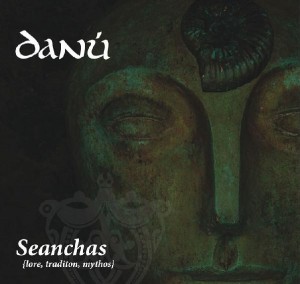
Review: “Seanchas” by Danú

Danu Seanchas“When All is Said and Done,” the 2005 CD by the always thrilling Irish traditional group Danú, exploded out of the gate with a room-rocking set of reels. With the possible exception of lead singer Muireann Nic Amhlaoibh’s soulful rendition of “Cailin Deas ag Crúite na mBo,” the rest of the largely bright, uptempo recording followed suit.

The new, self-produced “Seanchas” (pronounced: “shan-ahas”) shows a more reflective but no less passionate side of the band. There are some foot-stompers in the mix, to be sure—a breathtaking set of polkas on the second track (“Glenn Cottage,” “John Brosnan’s” and “Peata an Mhaoir”) springs to mind. There’s also a pretty set of jigs (“Snug in the Blanket” and “Patsy Geary’s”) at track 4, and a playful pairing of “Murphy’s Hornpipe” and “Lord Gordon’s Reel” at track 6. But “Seanchas” in the Irish language refers to folklore and mythos, and this Celtic concept album is seriously, and at times soberly, rooted in the historical and the traditional. Maybe it’s just more balanced than the last CD.

Consider Nic Amhlaoibh’s interpretation of two standards, “Mollai na gCuach Ni Chuilleanain” and “The Boys of Barr na Sráide,” both of them often recorded. In Nic Amhlaoibh’s capable and caring hands, both are presented with a kind of aching tenderness.

For those who have followed Danú since 1995, there is a special treat. Tenor Ciarán O Gealbháin, who was the band’s lead singer back in the day, joins Nic Amhlaoibh on “Cailín na nUrla Donn” (The Girl of the Brown Locks), a tune typically sung in a mishmosh of Irish and English. (The literal translation includes this gem, “Your waist and bones are nicely situated,” which has to be one of the worst pickup lines of all time.) It’s a sensitive, restrained performance that showcases both singers’ evident talents.

On the instrumental front, of course, Danú has lost nothing, even as some members seem to come and go. (And come back again.) A particular favorite is a pair of tunes, “Clancy’s Farewell to Whiskey” (written by guitarist Dónal Clancy) and the Breton piece, “An Dro des Petitis Bateaux.” Clancy, a founding member of the band, sets the tone for both pieces and turns in a delicate, enchanting performance. It’s the guitar-playing equivalent of diamond cutting. (By the way, the CD is dedicated to the memory of his father, the legendary Liam Clancy.)

As I say, things do liven up with some frequency, especially on the instrumentals. Box player Benny McCarthy is his usual rock-solid wondrous—especially on the aforementioned set of reels, and again on a later jig-reel combination, “Fiona’s Arrival” (written and also played beautifully by fiddler Oisín McAuley) into yet another standard, “O’Connell’s Trip to Parliament.” On bouzouki, Eamon Doorley provides solid backing throughout.

Besides O Gealbháin, other Danú-ites show up on several tracks, including Donnchadh Gough on bodhrán (but, sadly, not on uilleann pipes), and Tom Doorley on flute. Martin O’Neill contributes piano for “The Boys of Barr na Sráide.”

All told, a lovely and memorable piece of work—and perhaps their most musically mature outing to date.

News

What Do You Think of Our Web Site?

A few weeks ago, we posted a survey on behalf of The Reynolds Journalism Institute at the Missouri School of Journalism. They’re doing some cool research (yes, research can be cool) on small community Web sites like irishphiladelphia.com.

They want to know: What does irishphiladelphia.com mean to you? Do you like us? Do you trust us? Do we help build the community?

They’ve gotten a few responses from you guys, but they’re looking for more. It would mean a lot to us if you could help them out. 

Here’s the survey. It’ll take you less than 10 minutes:

http://rjisurvey.irishphiladelphia.sgizmo.com/s3/