Monthly Archives:

January 2008

People

For Conshy Grand Marshal Pete Hand, the Third Time Was the Charm

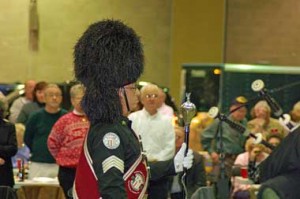
Drum majoring at a recent AOH tribute in honor of fallen Philadelphia police officer Chuck Cassidy.

Drum majoring at a recent AOH tribute in honor of fallen Philadelphia police officer Chuck Cassidy.

You’ve been very active in the Ancient Order of Hibernians for quite some time. Obviously, it means a lot to you, but why?

The AOH means a lot to me because our organization has really grown over the years to helping people, schools and churches in need. The Notre Dame Division of which I’m a member received the AOH National Charity Award at the last national convention two years ago. This was a great moment for our division.

To be in the AOH, you have to a.) be a Catholic guy, and b.) come from an Irish family on one or both sides. What’s your background? What generation are you? Do you know where your family is from and how they wound up in Philadelphia?

My Irish roots come from my father’s side of the family, Bill Hand. His grandmother on his mom’s side, Jane McCann, whose maiden name was Tierney, came here to America from County Mayo. His mom’s name was Jenny and was cousin to the past mayor of Philadelphia, James Tate, who was a great Irishman himself.

On my father’s dad’s side, his roots go back to beyond the Revolutionary War. A Hand has served in every war up to Vietnam. My great, great uncle Christy lost his leg in the Civil War. My grandfather Jim Hand, who lived in Philly, lost everything when the Market crashed. He had a garage down off the Parkway around 22nd street. He owned just about the whole block and had the city contacts for vehicle repairs, along with other contracts. Well, he lost everything and to get by they began making their own beer and selling it. The neighbors used to call them the Irish Mafia. My dad used to say they had to eat corn flakes three times a day at times, just to have something to eat. A loaf of bread was only a nickel … but nobody had a nickel.

What do you do when you’re not being president of the AOH Division in Swedesburg, drum majoring for the Irish Thunder pipe band, chairing the Conshohocken St Patrick’s Day Parade Committee, putting out fires with the Swedesburg Fire Company, going to church, and generally hanging out with Bernadette, your wife of 32 years, and your four kids Jeannie, Denise, Pete and Patrice? (Oh, and sleeping from time to time.) In other words, what do you do for a living? Tell us a bit about that.

Well, you’re right about that sleeping. Seems like when I hit the lounge chair I have no trouble falling asleep.

I’m an employee of the Pennsylvania Turnpike Commission . I have been with the turnpike for 27 years. I collected tolls for 25 years and now I work in the maintenance office at Plymouth Meeting. I’m the production control clerk, which involves keeping track of the trades people, electricians, plumbers, carpenters, and welders, and of their work, material, purchase of materials and time.

By the way, I’m an active member of the Swedesburg Firehouse, but I do not fight fires. I’m more of a member who supports the firehouse functions.

You’ve been drum major of Irish Thunder Pipes and Drums for quite some time. How did you get involved in that? Why did you want to do that?

Well I always had a liking for bands. I used to live in the Fairmount area by the Parkway and, as you know, there was always a parade for something and my parents always took me down to them. I became involved with the Irish Thunder, first, by marching with the division color guard, which participates with the band in events. Our drum major John Sargent became ill and was not able to return.

After a couple months without John, there was talk of needing a drum major. I told the band members that I would like to try it and Verne Leedom, another past drum major of the Thunder, gave me some lessons to get me started.

I have being drum major for 18 months now and I’m planning to go to my first workshop for drum majors in February down in Baltimore.

Were you surprised by your selection as Grand Marshal of the 2008 St. Patrick’s Day Parade in Conshohocken? How did you find out? What was your reaction?

Well, you never know who is going to get the Grand Marshal. I was nominated three times prior to this year and I turned it down every time. I decided to take the nomination at the end of last year’s parade if I was nominated this year. Many members and friends were upset that I turned it down again. My reason was that I was too young. But a fellow member spoke to me after the parade last year and said, if nominated next year, I should take it. You never know what’s going to happen. And that set in after I lost two friends, both in their early 50s. Even with that you don’t know who is going to be nominated. I was very happy as well with my family and friends. At the age 51 I’m the youngest Grand Marshal ever nominated in the Saint Patrick’s Parade in Montgomery County.
Music

His Life Was Music and Family

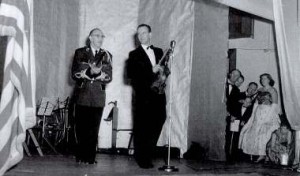
Ed Reavy Sr. and Andy McGann at the Irish Center in the '50s.

Ed Reavy Sr. and Andy McGann at the Irish Center in the '50s.

After publishing the Ed Reavy Sr. song book in 1980, the famed composer’s sons, Joe and Ed Jr., sat down with him after a reception in his honor at Cheltenham High School, where a popular ceili band of the time, the Taproom Band, played some of the hundreds of tunes Reavy had written.

“We asked him if he could come up with 100 traditional Irish tunes that were good for listening and for dancing, some that were easy to play and others that were more difficult,” recalls Ed Reavy Jr.

It seemed like a logical request. The elder Reavy, now considered one of the most important composers of Irish traditional music, was known for his computer-like memory for songs. “We had people from all over the world come to Ed Reavy’s house, not to listen to his latest composition, but because he was the greatest man in the world to have in a session,” says Ed. “His musical recall was unbelievable. He would start on a tune, and you’d hear a musician sputter, ‘Ed, how did you bring that up? I haven’t played that since I was 16,’ and he’d say, ‘Oh, I play it every once in a while.’ There was never a point in the session if Ed Reavy was there that he couldn’t plug in a tune or a set of tunes. One would remind him of another, a sister tune or something from the same era. That would charm the musicians in the session and that’s why they flocked to Ed Reavy’s house.”

So it shouldn’t have been hard for the man from Cavan to produce 100 songs, even with all the parameters set by his sons. But two and a half months later, their father still hadn’t mentioned it. “I was working with him in his plumbing business at the time,” recalls Ed. “We were tearing out an old galvanized pipe in the home of one of his fiddler friends, and I asked him, ‘Dad, are you done with those 100 tunes?’ and he said, ‘No, I’m still working on it.’ I said, ‘Dad, a hundred tunes should be a piece of cake.’ And he said, ‘Eddie, you don’t understand. Five hundred tunes is a piece of cake. One hundred is not.’ He had to whittle down the 100 tunes we wanted from 500 tunes he had in his head. Amazing, and he was in his 70s at the time.”

Weeks later, he brought his sons a marble copybook with eleven pages, both sides, filled with tunes. “He threw the book down in front of me on the desk and said, ‘Here’s the cursed thing and I never want anything to do with it in the future!’ I told him, ‘put some of yours in there,’ tunes he loved, and he did include about 7 of his own songs. But the thing was driving him crazy.”

When Ed Reavy Sr. arrived in the US as a teenager in 1912, it’s hard to know how many songs he carried with him in his head. He settled in the part of West Philadelphia then known as Corktown, because of the many Irish immigrants who lived there. It was a serendipitous place for a musician to land because, no matter where in Ireland people came from—Mayo, Donegal, Cavan—there were the old traditional tunes to bind them and give them solace so far from home. St. Agatha’s Parish Hall is where the music lived and thrived, as well as in the local taverns, private clubs, and ubiquitous house parties.

Reavy may have been inspired early on, but he didn’t begin composing himself until the 1930s. Over 40 years, he became one of the most prolific creators of Irish traditional tunes, each one so uniquely handcrafted that defining an “Ed Reavy tune” is nearly impossible. “Louis Quinn, the famed promoter and fiddler, was once asked, ‘How can you tell an Ed Reavy tune,’” says Ed. “Well, he rubbed his chin like he did, and said, ‘That’s a loaded question. Let me put it this way, if a tune does not have a good melody, an original good melody, and if it doesn’t have rolls and runs and triplets and double stops that are actually part of the tune, not ornamentation, and it doesn’t play from the E to G string, it’s probably not an Ed Reavy tune.’”

If you’re a musician, you probably got that. But if you’re not, like me, that’s a little too “inside baseball.” So I asked Ed what he meant. “Always something new every time was what he was after,” he explained. “He often commented that the basic problem with Irish traditional music is that it’s played on the first two strings of the fiddle and none of his tunes played on just the first two strings of the fiddle. He felt strongly about that and it’s reflected in the tunes he composed. He composed in keys no one else composed in, and would sometimes change keys in the middle of a tune.”

In these modern times, when surveys reveal the greatest goals of American children is “fame and fortune,” you might think that Ed Reavy Sr. was a fortunate man. Though there’s generally little money in traditional music, he certainly experienced fame in his lifetime. His tunes were played in sessions all over the world, and his recordings—homemade and otherwise—aired on Irish radio programs both here and in Ireland, turning them quickly into standards.

But it didn’t much matter to Reavy. “He was very humble, he was so humble to the point that he was a pain in the ass,” laughs his son. “He was the kind of a guy who would stand in the back of the room and not blow his own horn. I would say, ‘For God’s sake, Dad. Let people know what you’ve done.’ And he would say, ‘Oh Eddie, you know that’s sinful.’ He was a very devout man, very devoted to his Catholic faith. He was really a living saint. And I would say, ‘Well, you’ve got a lot of sinful people composing garbage and pushing it on us.”And he would say, ‘Well, that’s true, Eddie, that’s true.’”

It was still impossible to compliment him. “I remember that he thought (Limerick-born fiddler and noted music teacher) Martin Mulvihill was a genius because he taught so many champions,” recalls Ed. “ Martin loved Dad’s composition, ‘Munster Grass,’ the hornpipe. He said it was the greatest hornpipe ever written. And Dad said, ‘That’s not true. Martin just says that because it suits his style of playing so beautifully.’ That’s just the way he was.”

He was also a man who loved two things more than anything, says his son. “Music and family—that’s all he ever thought about.”

You can meet some of Ed Reavy’s family, and hear his music played by a group of talented trad musicians, on Saturday, January 20, at 8 PM at the Irish Center in Mt. Airy. See our calendar for more details.

To learn more about Ed Reavy Sr., go to the Web site of the Reavy Foundation, where there are CDs, videos, and song books for sale.

Columns, How to Be Irish in Philly

How To Be Irish in Philly This Weekend

The best way to be Irish this weekend is to head over to the Irish Center on Saturday night to hear a quartet of talented musicians bring to life the music of Traditional Music Hall of Famer Ed Reavy. If you’ve ever been to a session—that’s an informal gathering of musicians—you’ve probably heard a Reavy tune or two. (For more info, read Part 1 and Part 2 of our story on Reavy.) Since most of his famous pieces are hornpipes, you probably tapped your feet or drummed your table too. Maybe you even got up and danced.

Well, you can get up and dance on Saturday night too. You’ll certainly be joined by Reavy’s son, Ed Jr., who, with his wife, Mary, is as smooth as butter on the dance floor. (He’s been a dance teacher for decades, since before the resurgence of interest in Irish dancing. “I started teaching so I could find a partner,” he told us recently.)

The Reavy concert, which will feature fiddler Jim Eagan, bodhran player Myron Bretholz, banjo player Peter Fitzgerald, and guitarist Andy Thurston, is also your chance to relive a little Philadelphia history, to go back to a time when this music was played in a parlor, cleared of furniture so the dancers would have a place to twirl.

If you’re in Delaware, Green Willow is presenting an inventive program of fiddling featuring five masters of Scottish, Irish, and Appalachian styles, also on Saturday night.

Music

Let Ed Reavy Jr. Tell You a Story Or Two

If Ed Reavy Jr. ever says to you, “Let me tell you a story,” grab a cuppa, pull up a chair, and prepare to listen.

Reavy is not unlike his father, the legendary hornpipe king of Cavan and Philadelphia, who, session legend has it, could fiddle without stopping all night because one tune always reminded him of another. The younger Reavy can’t tell a story without it bringing up another and then another. If you have the time, it’s a delightful cascade of funny, poignant tales of a life steeped in music, humor, and love.

We were talking the other day (well, he talked, I listened) about the upcoming Ed Reavy Sr. tribute, scheduled for January 19 at the Irish Center in Mt. Airy. Fiddler Jim Eagan, who has recorded a CD of the elder Reavy’s tunes, will be joined by banjo player Peter Fitzgerald, bodhran player Myron Bretholz, and guitarist Andy Thurston in this tribute to the plumber from Cavan who began composing in the 1930s in Philadelphia. Reavy’s traditional tunes, mostly hornpipes, are now played worldwide by everyone from mediocre session players to top trad performers like Eagan, John Carty, Maeve Donnelly, Liz Carroll, Mick Moloney, and many others. (Carroll and fiddle virtuoso Eileen Ivers played Reavy tunes when they won their All-Irelands.)

Ed recalled the first time he met Jim Eagan, a tale that morphed into the back story of one of his father’s “lesser” compositions, “Hughie’s Cap” and a recounting of how his brother Joe’s unceasing dedication and sacrifice saved their father’s music. The story starts with a phone call from bodhran master Myron Bretholz, asking if he and Eagan could talk to Ed and his brother, Joe, about recording a CD of Reavy songs. But, here, let Ed tell it:

“Jimmy came sat in my livingroom and we said, ‘What are you going to play for us? And he said, ‘I can play anything you want.’ I looked at my brother Joe and Joe looked at me. We asked, ‘Don’t you have tunes you already learned to play?’ He said, ‘No, I read them out of the song book.’ So I said, ‘How about playing Kipeen Scanlan’s Horpipe,’ which is my favorite and the most famous Ed Reavy hornpipe in Cavan town. So he opened to book and played it perfectly. We asked him to play Never Was Piping So Gay, and he played that one just about perfectly. After that, he played 8 or 10 more tunes out of the book. Then he said, ‘I also like Hughie’s Cap.’ Well, Joe and I laughed. We thought it was among the least of Dad’s tunes. But we’d heard Seamus Egan and Solas play it, the North American Scottish fiddle champ had put it on his CD, and John Carty of Ireland came up with it as one of his signature tunes. When I met John at the Irish Center, I asked him about it. ‘Hughie’s Cap,’ he said”—here, Reavy shifts into an Irish accent—“’Aw, that’s an awesome piece of music.’ I said, ‘Jesus, John, I don’t believe it. Here, let me tell you a story.’”

This next story takes us back decades, when Philadelphia was an even more Irish city than it is today, and you could go to a house party—where they invited local musicians and pushed the furniture aside for dancing–just about every weekend. Let Ed pick it up again:

“Dad played at house parties all the time. He played in Grays Ferry many many times with John McGettigan, a singer and a bit of a fiddle player. At every house party in Grays Ferry, Hughie McCorkle was invited. Now, he looked for every inch of him a club fighter. He had the pug ears, the flat nose and no hair at all, and he wore this old cap pulled down over his brow. Whenever there was a question of a quarrel or a fight in Grays Ferry, Hughie was there to stick his head in to say”—Reavy raises his voice—“’What’s the problem here?’ and the problem would go away.”

During one house party, a shoving match broke out on the porch. The owner of the house called to a young man at the party. “Go down to the cellar and get Hughie.”

“That’s where the booze was,” Reavy explains. “By God, though, when Hughie came up he didn’t have his cap on, so he didn’t look as menacing. So the owner calls to the boy, ‘Hey kid, run down and tell Annie to give you Hughie’s cap. It’s an emergency.’ So Hughie put on the cap, went out to the porch and said”—Reavy’s voice gets loud again—“’What’s the problem here?’ And then the fight broke up. Joe and I always said that the best thing about the tune was the story.”

Ed and I were both laughing, and it occurred to me that the story he was telling was his Dad’s story, passed down, like the music, to generations. But if it hadn’t been for Ed’s brother, Joe, Ed Reavy’s music might not have been passed down credited to Ed Reavy. Perhaps the finest tribute to his tunes is that they sound like they’ve been handed from one musician to another for centuries, like folklore, so they’re sometimes still found attributed to “anonymous” or, worse, to other composers. “By other noted composers,” Ed adds.

It’s understandable. With the advent of faster, cheaper travel between the US and Ireland and better recording devices (Reavy recorded his own records on a “monstrous” recorder “with about 150 tubes in it” at home, says his son), Reavy’s hornpipes and reels easily made the transatlantic crossing in the ’40s and ’50s. Ed recalls sometimes having to sleep on the floor to accommodate an Irish musician who’d come to Philadelphia to meet with the composer of “Reavy’s tunes,” as they were often called. And fiddler and promoter Louis Quinn, an Armagh man from New York, often brought Reavy recordings to Ireland, where they quickly became part of performers’ repetoires and session staples and were played on Radio Eireann. As Mick Moloney once wrote, the Reavy tunes were happily “adopted,” but in some cases, since they weren’t written down, took on the name of their adoptive “parents.”

But in the 1960s, Joe Reavy began transcribing and annotating his father’s music, not only from the homemade 78s, but from the elder Reavy’s head. It took him seven years, but Joe, who graduated from Penn, eventually produced the first Ed Reavy Sr. songbook, the one that Jim Eagan played from in Ed Reavy Jr.’s livingroom. “No one really knows what that man did for his father’s music,” says Ed admiringly. “He has a disabled daughter, so it was a terrible sacrifice for him and for his wife. I don’t know how he did it, but his wife insisted that he do it.”

Then there were the ones that got away. “Let me tell you another story,” Ed said. “Yes, please,” I answered.

“Before I went back to college I worked with my father in his plumbing and heating business. Every Wednesday I would stay over and work on estimates and bills at an old desk , one of those where the center portion pulled up and a typewriter would come up with it. Dad insisted on doing all the typing, which he did with three fingers on both hands. There was a stack of homemade recordings in the corner of the desk against the wall. It was at least 10 inches high. I had never really noticed them until one night, when he was typing, the vibrations caused them to fall into the typewriter well. He reached in a put them back in the corner, then went on typing. Well, they fell down again, so he took the whole batch and threw them in the wastebasket. I asked him why he did that. He said, ‘They’re getting on my nerves and they’re just barn dances.’ I didn’t know he was composing barn dances (a type of Irish tune). So I asked him again why he threw them away. He said, ‘You know, Eddie, I give a tune an hour, and if I can’t do anything with it, I discard it. I won’t discard it if I like the melody, and if I like the melody, I make a barn dance out of it. Now Eddie, barn dances are here today and gone tomorrow and no one cares who composes them.’

“Well, I’m a dancer,” says Ed Reavy, Jr, who has the enviably slim build to prove it . “So you would think I would have reached into that wastebasket and pulled those records out. But I didn’t. I still don’t know to this day why I didn’t. If I had, we would have had a whole book of Ed Reavy barn dances today.”

People

One More Honor for Jack McNamee

By Kathy McGee-Burns

Add a new laurel for Jack McNamee, a 30-year board member, past president and past treasurer of the Philadelphia St. Patrick’s Day Observance Association. This year, he will march up Broad Street as the parade’s grand marshal.

With 235 continuous years of marching in honor of St. Patrick, the Parade is the 2nd oldest in the country, outdone only by New York.

Jack started out as a parade marshal. He is first-generation Irish-American, with roots to be found in County Donegal. His parents, John McNamee, of Glenties, and Catherine Murray, of Creeslough, came to Philadelphia at separate times. They met at (surprise) a dance.

John worked for SEPTA for 38 years, while Catherine was a stay-at-home Mom. There were three McNamee children, Margie, Mary Jo and the youngest, Jack.

There was company every Friday night at the McNamee house with singing, dancing and great conversation. Margie would play the piano and family and friends would congregate. Jack loved the Irish music and his favorite song to sing was and still is “Four Green Fields.”

The children attended St. Benedict’s School, which was predominantly an Irish parish. Each year there would be a St. Patrick’s Play and Jack was always in it. Jack also remembers that each Friday, they would go to the post office and send money back to the Murray family in Donegal.

Jack graduated from Cardinal Dougherty and began to work with the Williamson Family and eventually was general manager of their City Line restaurant. Jim Williamson had nothing but praise for Jack. He had total faith and trust in his general manager. They were disappointed when they lost him but were thrilled at his success. Jim said a lot of people gave Jack advice and he took every bit of it. He took it to heart, filed it away and used it to make his own restaurant a triumph. This career spanned 29 years.

Jack decided to strike out on his own and opened CJ McGee’s, in Springfield, Delaware County. The C was for Catherine, J for John and McGee was his father’s nickname. With his excellent business skills he turned this into a highly successful venture. The family; Jack, wife, Loretta and Son, Sean, have worked this Irish Pub/Restaurant together for 16 years. They recently sold it.

Jack McNamee is a 30year member of the AOH Joseph E. Montgomery Division 65 and a member of the Donegal Association.

Jack McNamee’s generosity knows no limits. He is not showy about it and would never want anyone to know about it. He is a donor to his alma mater, Cardinal Dougherty.

During times of hardships to various organizations, he kept them afloat with donations and fundraisers. To the St. Patrick’s Day Observance Committee, he is the most giving.

His entrepreneurial skills are behind every event that is held. Jack McNamee has hosted virtually every committee and marshals meeting including the Annual Golf Outing. To Jack, being honored by your peers is an incredible experience

When association president Michael Bradley nominated Jack for this honor, he listed 10 reasons for why he was a worthy candidate. The first nine listed his accomplishments. The tenth summed up McNamee the man. In Bradley’s words: “While doing all the above quietly, he has never tooted his own horn, jumped in front of the camera, looked for recognition, accepted accolades, never complained or even once asked what’s in it for me.”

This, ladies and gentlemen, is Jack McNamee.

Kathy is 2nd vice president of the Philadelphia St. Patrick’s Day Observance Association.

Columns, How to Be Irish in Philly

How to Be Irish in Philly This Week

St. Peter’s Lutheran Church is holding its annual Boar’s Head and Yule Log event (see last week’s How to Be Irish), featuring a cast of more than 200 and the Cameron Highlanders, on Saturday at various times. Get there early–this holiday celebration filled with pomp and music is a must on many lists every year. There will be crowds.

On Saturday night, at the AOH Hall in Bristol, three great local Irish bands– the Bogside Rogues, the Shantys and the Birmingham Six–will be performing at a benefit for Project Children, a program started by a New York City police officer to bring Protestant and Catholic children to the US for some respite from the violence. Ticket price of $25-$30 covers everything, including food, beer, and soda. Doors open at 7 PM.

For those who never get tired of hearing Karen Boyce sing (count us in), her group Causeway is reuniting for a performance at Brittingham’s on Friday night. The show starts at 9 PM.

Looking ahead: Four great musicians will be performing the traditional music of Cavan-born Philadelphia composer Ed Reavy Sr. at the Irish Center on January 19. Make sure you go to our calendar and have it send you a notice, put it on your calendar, or text you on your phone (it can do all that!). This is a not-to-be-missed event.

News

Come Have a Ball!

Get ready for the Conshohocken St. Patrick’s Day Parade and toast the new grand marshal at the same time.

The Grand Marshal’s Ball will be held March 8 at the Jeffersonville Banquet Hall in East Norriton.

The Grand Marshal for the 2008 parade will be Pete Hand, a resident of Swedesburg, Upper Merion Township. Ed Halligan, Grand Marshal of the 2007 parade, will turn over the reins to Pete that night, with the 2008 Grand Marshal Sash and walking cane that is passed on to the next Grand Marshal each year

The parade will be on March 15 starting, at 2 p.m at 11th and Fayette Streets. The theme of the parade is “Sharin’ of the Green.”

Tickets for the Grand Marshal’s Ball are $25 each. The bash starts at 6 p.m. and continues until 10. The ticket price includes dinner, beer, wine and soda. There will be a cash bar for mixed drinks.

Entertainment will be provided by Irish Thunder Pipes & Drums, Irish dancers from the Coyle School of Irish Dance, and D.J. Jim Mulholland, who will provide plenty of dance music all night long.

For tickets and more information please call (610) 666-1989. Deadline to purchase tickets will be February 25.

Columns, How to Be Irish in Philly

How To Be Irish In Philly

It’s thankfully quiet after the holidays, Celtically speaking, but there’s an event coming up that needs some explanation. On January 13, St. Peter’s Lutheran Church in Lafayette Hill (around the corner from Brittingham’s) is holding a Boar’s Head and Yule Log Festival.

Like you, at first I wondered what fascination the Lutherans had with lunch meat.  Really pricey lunch meat, too. But I did some digging. This pageant–a British import dating back to 1340–harks back to a time when boar was the first dish served at a medieval banquet. It was the prime rib of its day. A secular tradition, it eventually took on Christian overtones: The boar’s head, served at Christmas time, began to symbolize the triumph of the infant Jesus over sin, good over evil.

 Legend has it the holiday event was born when a scholar at Queen’s College in Oxford encountered a wild boar on his travels and, having no other weapon, rammed a philosophy book down its throat, choking it to death. Later that night, the scholar and his colleagues enjoyed roasted boar’s head, which was brought into the dining hall by carolers singing “in honor of the King of Bliss.”

As time went on, the Boar’s Head pageant included the story of the nativity, the Three Kings, Good King Wencelas, carolers, mince pie and plum pudding, and a Yule log, lit from last year’s ember.

The festival was first celebrated in the US the 1800s in Troy, NY, with music described as “exquisite.”

 Expect beautiful music and pageantry at St. Peter’s annual staging (delayed this year because of renovations to the beautiful 256-year-old church), which includes some 200 performers, crew, and prop masters, not to mention the Cameron Highland Pipe Band (ah, you knew there was a Celtic connection, didn’t you?). A harpist will play “Silent Night” with a full orchestra accompaniment. You’ll think you’re in the 14th century.

For more information, go to www.stpeterslafayettehill.org, or call 610-828-3098.

Looking ahead: Irish Northern Aid rescheduled its 26th annual testimonial dinner for Saturday, January 26, at the Irish Center. Among the honorees are Kathy McGee Burns of the Donegal Society and the St. Patrick’s Day Observance Association; Charlie Schlegel of Irish Northern Aid and the Ancient Order of Hibernians, and Bob Grover of Clan na Gael. There will also be a mass in observance of the 26th anniversary of what is called Bloody Sunday, the clash between Irish protestors and British Troops in Derry that rekindled a war that has only recently given way to a wary peace.

That same evening, there will be a Beef and Beer Benefit for the family of slain Philadelphia police officer Chuck Cassidy–a long-time AOHer–at the National Guard Armory in northeast Philadelphia. For more information, contact the 35th District at 215-685-2854. Tickets are $25.

As always, see our calendar for more details and maps.